Introduction: Understanding the Fundamental Differences
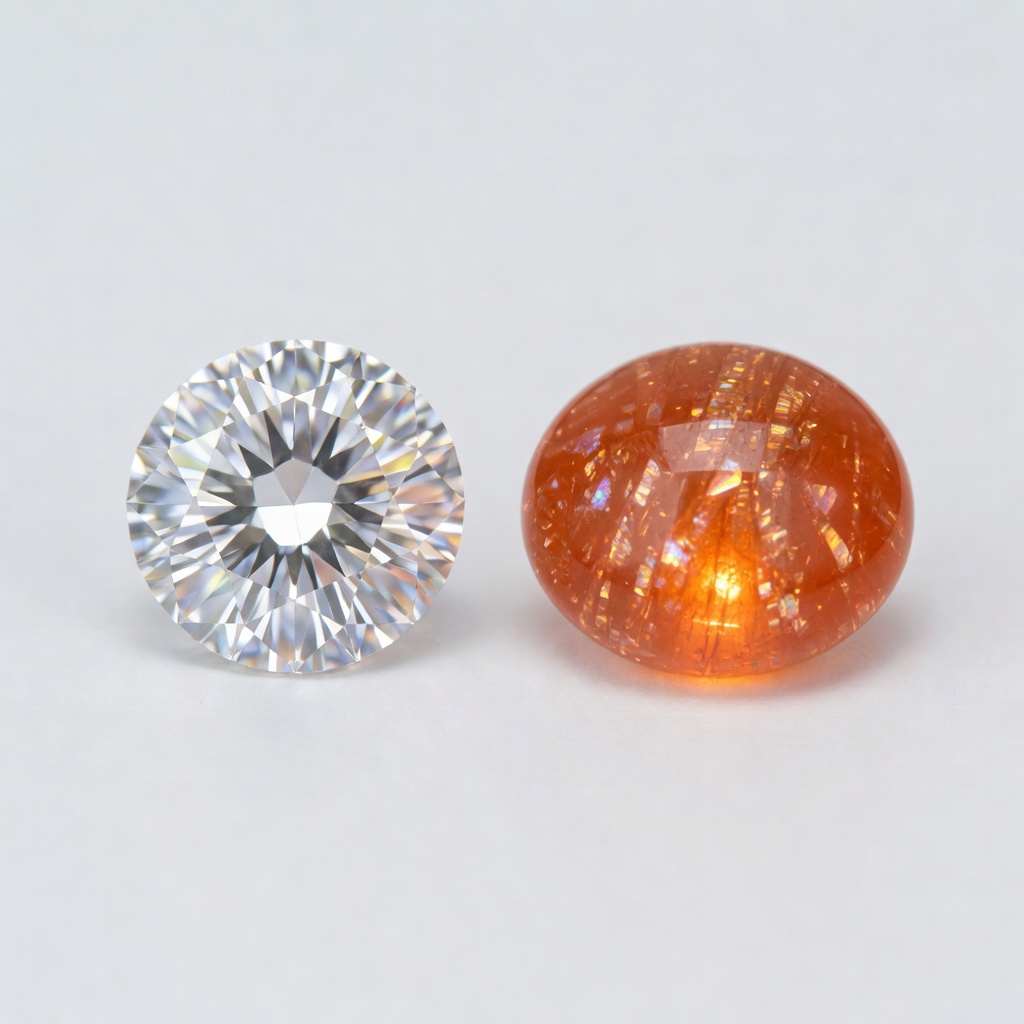
When selecting the perfect gemstone for fine jewelry, the choice between traditional prestige and distinctive character often leads collectors to explore Diamond vs Sunstone options. Diamonds have reigned as the ultimate symbol of luxury and commitment for centuries, prized for their unparalleled hardness and brilliant light performance. In contrast, sunstone emerges as a captivating feldspar variety that offers a wholly different aesthetic appeal through its mesmerizing metallic glitter and warm, earthy color palette. Understanding these fundamental distinctions requires examining not just their visual differences, but their geological origins, structural integrity, and practical applications in jewelry design.
The primary distinction lies in their chemical composition and formation processes, which directly influence their durability, value, and optical properties. While diamonds represent pure crystallized carbon formed under immense pressure deep within the earth's mantle, sunstones develop as feldspar minerals in igneous and metamorphic environments, incorporating unique metallic inclusions that create their signature sparkle. This comparison will navigate through critical evaluation criteria including durability metrics, investment potential, aesthetic characteristics, and suitability for various jewelry applications to help you make an informed decision based on your lifestyle, budget, and stylistic preferences.
Physical Properties and Chemical Composition
Diamonds constitute pure crystalline carbon arranged in an isometric crystal system, representing nature's hardest known substance with a perfect diamond hardness scale rating of 10 on the Mohs scale. This exceptional hardness stems from the strong covalent bonding between carbon atoms, creating a structure that resists scratching from virtually any other material. With a specific gravity of approximately 3.5, diamonds feel noticeably heavier than many other gemstones of similar size, and they typically form in kimberlite pipes or lamproite volcanic structures under extreme pressure conditions ranging from 45 to 60 kilobars.
Sunstone, conversely, belongs to the feldspar mineral family, specifically varieties of oligoclase or orthoclase characterized by a triclinic crystal system and sunstone gemstone properties that include a Mohs hardness of only 6 to 6.5. This significant hardness differential means sunstone can be scratched by common materials including steel tools, quartz dust, and even other jewelry pieces. With a specific gravity between 2.6 and 2.7, sunstone feels lighter than diamond, and it forms in environments ranging from basaltic lava flows to metamorphic gneisses, where slow cooling allows the formation of copper or hematite platelet inclusions essential to its optical effects.
Optical Characteristics and Visual Appeal
Diamonds achieve their legendary status through superior optical performance characterized by three distinct light behaviors: brilliance (white light reflection), fire (spectral color dispersion), and scintillation (sparkle with movement). With a refractive index of 2.42 and a dispersion rating of 0.044, diamonds bend and separate light more effectively than nearly any other gemstone, creating that signature "disco ball" effect when precision-cut. Master diamond cutters utilize complex facet arrangements with specific angles and proportions to maximize these optical properties, ensuring that even in dim lighting, a quality diamond maintains its luminous presence.
Sunstone offers a completely different visual experience centered on sunstone optical phenomena known as aventurescence, a glittering effect caused by microscopic metallic inclusions of hematite or copper suspended within the feldspar matrix. When light strikes these platelet inclusions, it reflects back as golden or coppery flashes that appear to move across the stone's surface as it rotates. Unlike diamond's cool brilliance, sunstone presents warm hues ranging from pale yellow and champagne to rich orange, red, and green, with Oregon sunstones occasionally displaying dichroic color shifting. For an aventurescent gemstone comparison, consider that while diamonds require precise faceting to perform optimally, sunstones often showcase their best effects in cabochon cuts or smooth domes that highlight the metallic schiller without interrupting the flash with too many facets.
Durability and Everyday Wearability
The practical longevity of gemstone jewelry depends heavily on hardness, toughness, and stability against environmental factors, creating significant divergences in diamond vs sunstone engagement rings feasibility. Diamonds excel in daily wear scenarios due to their unmatched hardness, resistance to scratching, and good toughness despite having perfect cleavage in four directions. This durability allows diamond rings to survive decades of continuous wear during activities ranging from office work to household chores without showing significant wear, making them the traditional choice for bridal jewelry that symbolizes eternal commitment.
Sunstone jewelry durability presents substantial limitations for everyday wear due to its moderate hardness and distinct cleavage planes that make it vulnerable to chipping, cracking, and abrasion. Practical testing demonstrates that sunstone can develop surface scratches from contact with everyday objects including door handles, countertops, and even dust particles containing quartz. Jewelry designers recommend protective bezel settings that encircle the gemstone's girdle for sunstone pieces, whereas diamonds thrive in prong settings that maximize light exposure. For active individuals or those seeking heirloom-quality engagement rings, diamond's superior impact resistance and lack of chemical reactivity provide peace of mind that sunstone cannot match without constant vigilance and protective wear protocols.
Price and Value Comparison
Understanding gemstone value comparison between these two materials reveals stark economic disparities that influence purchasing decisions for both collectors and casual buyers. Diamond pricing follows the established 4Cs framework (cut, color, clarity, carat weight), with certified engagement-quality stones commanding $2,000 to $15,000+ per carat depending on quality grades. Market dynamics include De Beers' historical supply control and modern certification requirements from laboratories like GIA, creating a standardized valuation system where prices increase exponentially with size due to rarity of large, inclusion-free crystals.
Sunstone occupies an entirely different economic bracket, offering accessibility as one of the most affordable diamond alternative stones with quality specimens ranging from $10 to $100 per carat. Even exceptional Oregon sunstones with rare copper schiller rarely exceed $500 per carat for museum-quality pieces. This affordability stems from abundant raw material availability and the absence of cartel-controlled supply chains, though prices vary based on color intensity, aventurescence strength, and clarity. While a 2-carat diamond might represent a significant financial investment of $8,000 to $20,000, a comparable sunstone remains under $200, allowing for larger statement pieces without budgetary strain.
Comparative Analysis Table
| Characteristic | Diamond | Sunstone |
|---|---|---|
| Mohs Hardness | 10 (Highest possible) | 6-6.5 (Moderate) |
| Refractive Index | 2.42 (Exceptional brilliance) | 1.53-1.55 (Subtle glow) |
| Specific Gravity | 3.52 (Heavy/dense) | 2.65 (Light) |
| Average Price per Carat | $3,000-$15,000+ | $10-$100 |
| Optical Phenomenon | Brilliance, Fire, Scintillation | Aventurescence (Metallic glitter) |
| Best Jewelry Application | Daily wear rings, heirlooms | Pendants, earrings, occasional wear |
| Maintenance Level | Minimal (ultrasonic safe) | High (gentle cleaning only) |
| Investment Liquidity | High (established resale market) | Low (collector niche only) |
| Toughness | Good (resists chipping) | Poor (cleavage planes) |
| Color Range | Colorless to fancy colors | Champagne, orange, red, green |
Jewelry Applications and Best Use Cases
Diamonds dominate the bridal industry and fine jewelry markets due to their versatility across design aesthetics from classic solitaires to avant-garde architectural settings. Their durability supports intricate precision cutting styles including round brilliants, princess cuts, and emerald cuts that maximize light return, while their neutral coloration pairs seamlessly with platinum, white gold, yellow gold, and rose gold mountings. Case studies from major jewelry houses demonstrate that diamond engagement rings retain structural integrity for 50+ years of daily wear, making them the pragmatic choice for wedding bands, anniversary bands, and signature pieces intended as family heirlooms.
Sunstone finds its niche in bohemian, artisan, and nature-inspired jewelry collections where its warm tones and organic glitter complement textured metalwork and organic design motifs. Rather than competing in the diamond vs sunstone engagement rings market directly, sunstone excels in pendant necklaces and drop earrings where the stones face minimal impact risk and can be positioned to catch light effectively. Designer examples include copper wire-wrapped sunstone pendants that enhance the stone's metallic inclusions, or mixed-metal settings using yellow gold and rose gold to amplify the gem's natural warmth. For rings, sunstone works best in cocktail or fashion ring contexts with protective bezel or halo settings worn occasionally rather than continuously.
Symbolism, Healing Properties, and Cultural Significance
Diamonds carry millennia of symbolic weight representing invincibility, eternal love, and purity across numerous cultures, reinforced by modern marketing that positioned them as the ultimate expression of romantic commitment during the 20th century. As the April birthstone and the traditional gift for 60th wedding anniversaries, diamonds connect to themes of clarity, strength, and unbreakable bonds. Metaphysical practitioners attribute diamond energy with amplification properties, enhancing the strengths of other stones and promoting courage, creativity, and spiritual evolution through its connection to the crown chakra.
Sunstone offers distinct sunstone gemstone properties rooted in solar symbolism, historically associated with ancient Norse navigation and Native American trade networks where it represented the sun's life-giving energy. Modern crystal healers value sunstone for promoting joy, leadership qualities, and personal power, believing it clears negative energy while encouraging optimism and enthusiasm. Unlike diamond's cool, clarifying energy, sunstone connects to the sacral and solar plexus chakras, supporting creative expression and confidence. Historical records indicate Vikings used sunstone as a navigation aid to locate the sun's position through clouds, while indigenous peoples of Oregon (where premium specimens originate) considered it a sacred stone of the sun god, using it in medicine wheels and ceremonial objects.
Care, Cleaning, and Maintenance Requirements
Maintaining diamond jewelry requires minimal effort due to the stone's chemical inertness and extreme hardness, allowing owners to utilize ultrasonic cleaners, steam cleaning, and standard jewelry cleaning solutions without risk of damage. Routine maintenance involves simple warm water and mild soap baths with soft brushing to remove oils and lotions that might dull the surface luster, though professional inspections every six months help ensure prong settings remain secure. The diamond hardness scale rating ensures that diamonds can be stored with other jewelry pieces without scratching concerns, though separate storage prevents mechanical damage to softer gems in the collection.
Sunstone jewelry durability demands significantly more cautious handling protocols to preserve the stone's surface integrity and internal structure. Owners must avoid ultrasonic cleaners entirely, as the vibrations can weaken cleavage planes and cause internal fracturing, while steam cleaning risks thermal shock that might crack the feldspar matrix. Cleaning requires only lukewarm water with mild dish soap and a soft cotton cloth, avoiding brushes that might scratch the relatively soft surface. Storage necessitates individual soft pouches or separate compartments to prevent contact with harder gems like diamonds, sapphires, or quartz that would scratch sunstone's surface. Additionally, sunstone should be removed before exposure to household chemicals, extreme temperature changes, or physical activities that might result in impact against hard surfaces.
Investment Potential and Resale Value
Evaluating gemstone value comparison from an investment perspective reveals diamonds as established tangible assets with relatively liquid secondary markets, particularly for GIA-certified stones with documented provenance. High-quality diamonds historically appreciate at modest rates comparable to inflation, serving as wealth preservation instruments rather than speculative growth vehicles. The resale market operates through auction houses, certified dealers, and upgrade programs offered by major retailers, though retail buyers typically face significant depreciation when reselling due to industry markups.
Sunstone presents limited investment potential outside of specialized collector markets focused on rare Oregon material displaying intense copper schiller and unique color combinations like bicolor red-green specimens. Unlike diamonds, sunstone lacks standardized grading systems and broad market liquidity, making resale challenging and value appreciation speculative. Exceptional museum-grade sunstones might interest mineral collectors or metaphysical practitioners, but the stone functions primarily as an affordable decorative gem rather than a financial instrument. Prospective buyers should purchase sunstone for aesthetic and personal enjoyment rather than portfolio diversification, recognizing that while diamond alternative stones offer budget-friendly beauty, they rarely provide returns on investment comparable to precious metals or certified diamonds.
Final Verdict: Which Gemstone Is Right for You?
Selecting between Diamond vs Sunstone ultimately depends on aligning gemstone characteristics with lifestyle requirements, aesthetic preferences, and budget constraints. Choose diamond if you seek a daily-wear heirloom capable of withstanding decades of continuous use while maintaining maximum brilliance and resale liquidity. Diamond suits individuals with active lifestyles, those desiring traditional bridal symbolism, or collectors viewing jewelry as long-term stores of value. The stone's versatility across classic and contemporary designs ensures timeless elegance that transcends fashion trends.
Opt for sunstone when prioritizing unique visual character, budget-conscious purchasing, or distinctive bohemian style statements over durability and investment potential. Sunstone appeals to collectors who appreciate sunstone optical phenomena and warm color palettes, or those seeking meaningful stones connected to solar energy and leadership metaphors without substantial financial outlay. Hybrid approaches offer creative solutions, such as designing engagement rings with diamond center stones accented by sunstone side gems, combining durability with distinctive color. Remember that personal value transcends market prices; the right gemstone resonates with your individual story, whether that involves the eternal clarity of diamond or the glittering warmth of sunstone.
Frequently Asked Questions
Which gemstone is harder, diamond or sunstone?
Diamond is significantly harder with a perfect Mohs hardness of 10, while sunstone ranks at 6-6.5. This makes diamond the hardest natural substance on Earth, capable of scratching any other material, whereas sunstone is susceptible to scratches from everyday objects like steel (hardness 5.5) and quartz (hardness 7). This hardness differential means diamond jewelry maintains its polish and surface integrity indefinitely under normal wear, while sunstone requires protective settings and careful handling to avoid abrasion damage.
Can sunstone be used in engagement rings like diamonds?
While possible, sunstone is not recommended for daily-wear engagement rings due to its softness and cleavage planes that create vulnerability to chipping and cracking. Diamonds' superior durability and resistance to scratching make them ideal for engagement rings intended for continuous wear over decades. Sunstone works better for occasional wear rings, pendants, or earrings where the gemstone faces less exposure to impact and abrasion, or for alternative commitment ceremonies where the ring serves symbolic rather than daily functional purposes.
What causes the sparkle difference between diamond and sunstone?
Diamond's sparkle comes from its high refractive index and precision faceting that creates brilliance (white light reflection), fire (spectral color separation), and scintillation (flashes with movement). Sunstone's glittering effect, called aventurescence, is caused by light reflecting off tiny metallic inclusions of hematite or copper platelets within the stone, creating a spangled appearance similar to glitter suspended in the gem. While diamond sparkles through light refraction, sunstone sparkles through light reflection off these internal metallic crystals.
How much cheaper is sunstone compared to diamond?
Quality sunstone typically costs $10-$100 per carat, while diamonds average $2,000-$15,000+ per carat for engagement-quality stones. A 1-carat diamond might cost $4,000-$8,000 depending on cut, color, and clarity grades, whereas a similar-sized sunstone would be under $100, making sunstone approximately 98-99% less expensive. This dramatic price difference allows buyers to purchase significantly larger sunstones or allocate savings toward elaborate settings while still achieving impressive visual presence.
Is sunstone a good alternative to diamond for a unique engagement ring?
Sunstone offers uniqueness and affordability but requires careful design choices to compensate for durability limitations. Opt for protective bezel settings that encase the stone's edges, avoid daily wear or remove the ring during physical activities, and consider it for alternative engagement rings, promise rings, or commitment ceremonies rather than traditional daily-wear bridal jewelry. For active lifestyles or careers involving manual work, diamond remains the practical choice, though sunstone appeals to those prioritizing individuality, warm color aesthetics, and bohemian style over traditional durability expectations.
How can I distinguish real sunstone from imitation materials?
Authentic sunstone displays metallic glitter (aventurescence) that moves as you rotate the stone under light, with the flash appearing to shift across the surface rather than remaining static. Genuine sunstone has natural inclusions, slight color variations, and a hardness that scratches glass but can be scratched by steel. Imitations like aventurine glass have uniform, evenly distributed sparkle and lower hardness, while plastic imitations feel warm and lightweight. Professional gemological testing can confirm feldspar composition and the presence of copper or hematite inclusions through microscopy and refractive index testing.
Which gemstone requires more maintenance?
Sunstone requires significantly more maintenance due to its moderate hardness and sensitivity to environmental factors. It needs gentle cleaning without ultrasonic equipment, protection from scratches and impacts, and careful storage in separate soft pouches isolated from harder gems. Diamonds are virtually maintenance-free, tolerating ultrasonic cleaning, steam treatments, harsh chemicals, and can be stored with other jewelry without risk of surface damage. Diamond owners need only periodic professional inspections of settings, while sunstone owners must remain vigilant against thermal shock and mechanical damage.
Do diamonds and sunstone have similar investment value?
No, diamonds have established investment value with certified stones (GIA) retaining worth and maintaining liquidity in the secondary market through auction houses and dealers. Sunstone has limited investment potential, primarily restricted to rare specimens like Oregon copper-bearing material with exceptional color and clarity. Diamonds are considered stores of value and inflation hedges in tangible asset portfolios, while sunstone is mainly a collector or decorative gemstone with minimal resale market and no standardized grading system to ensure consistent valuation.