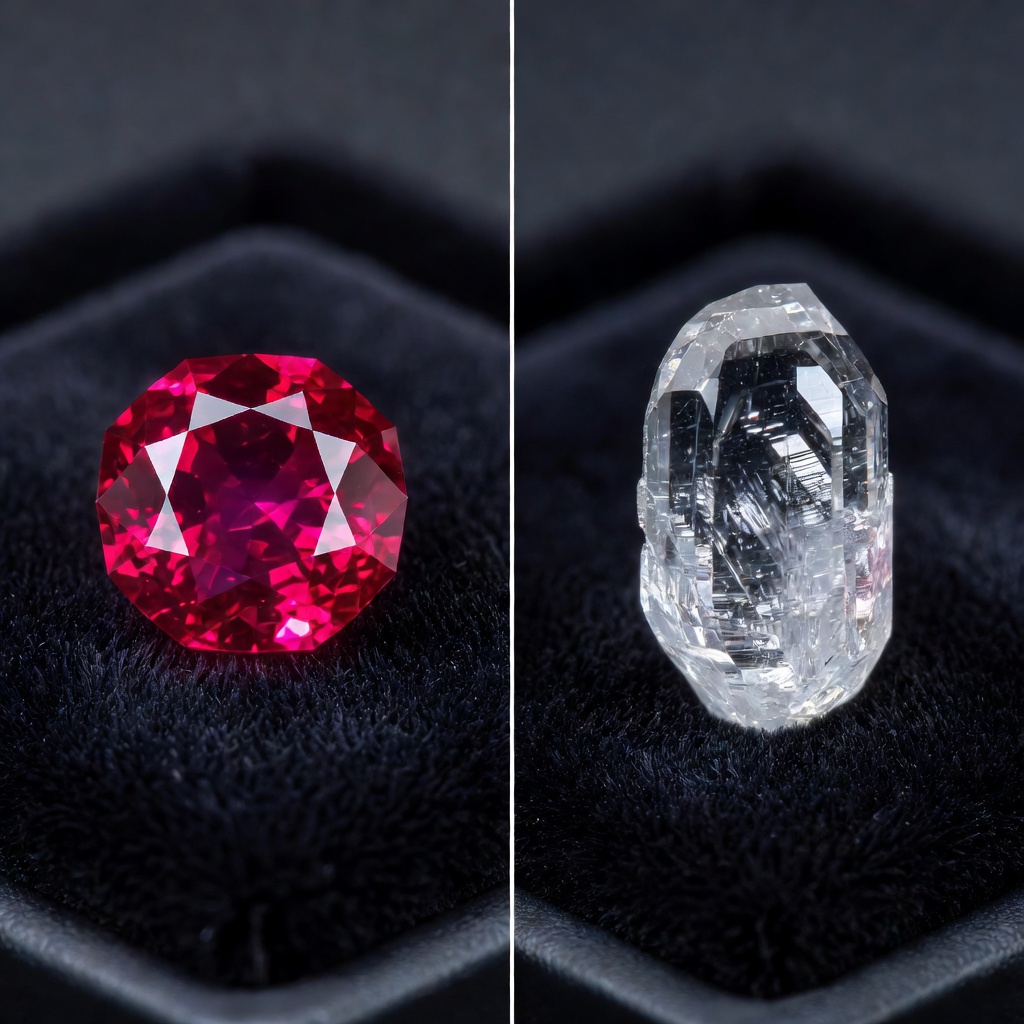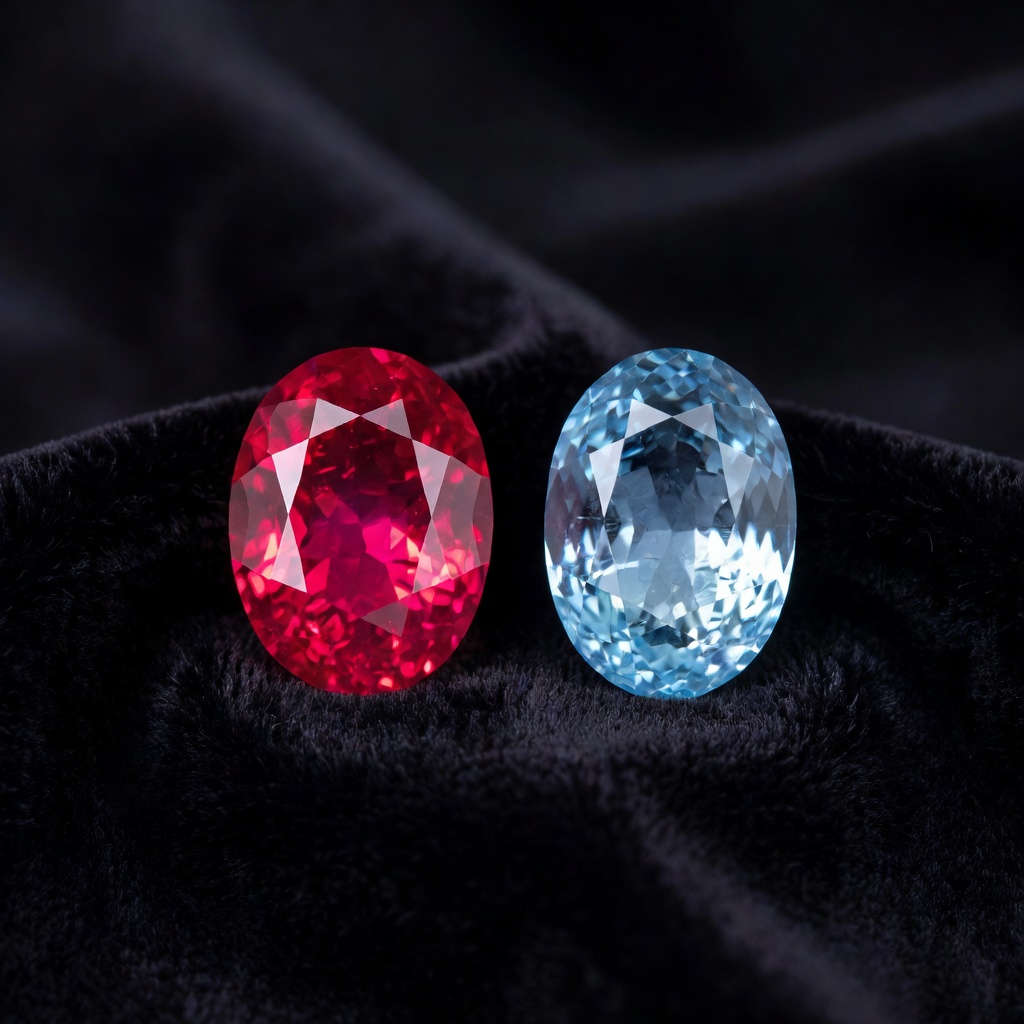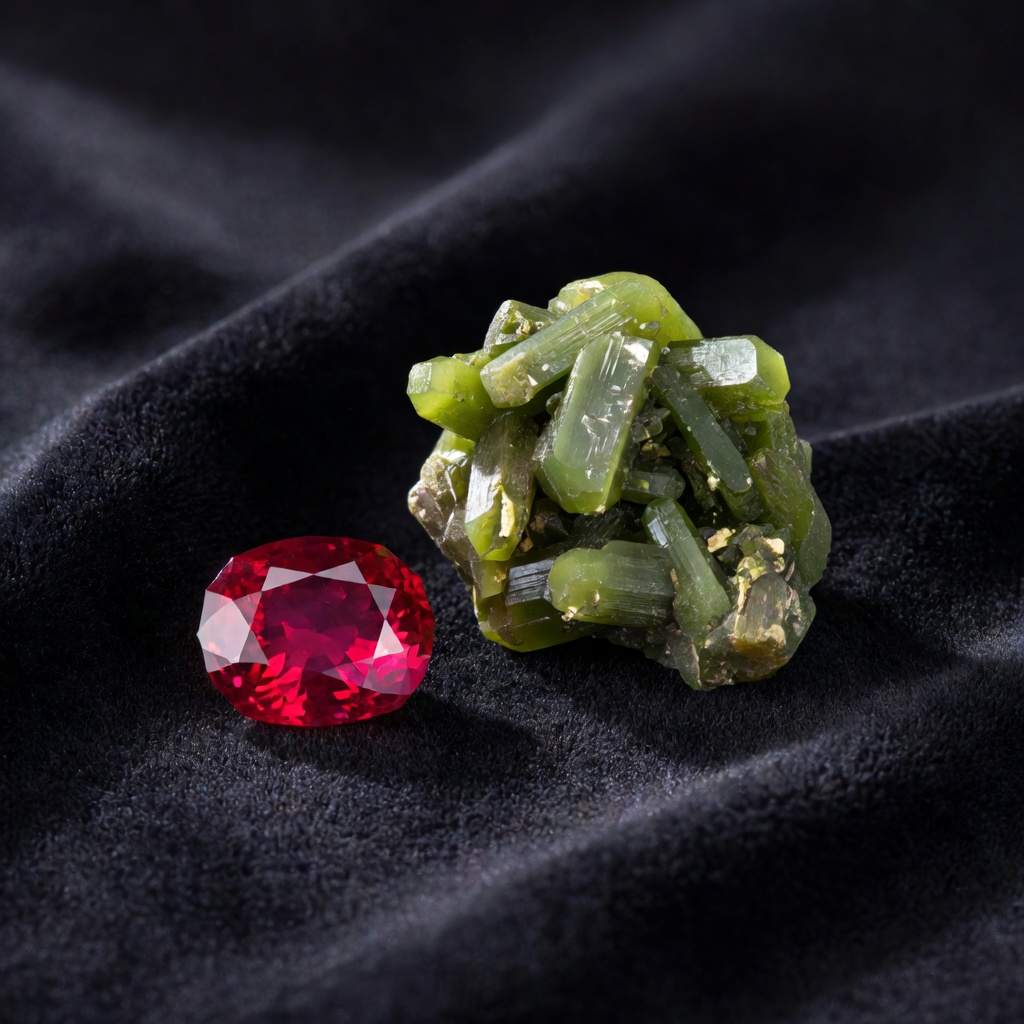
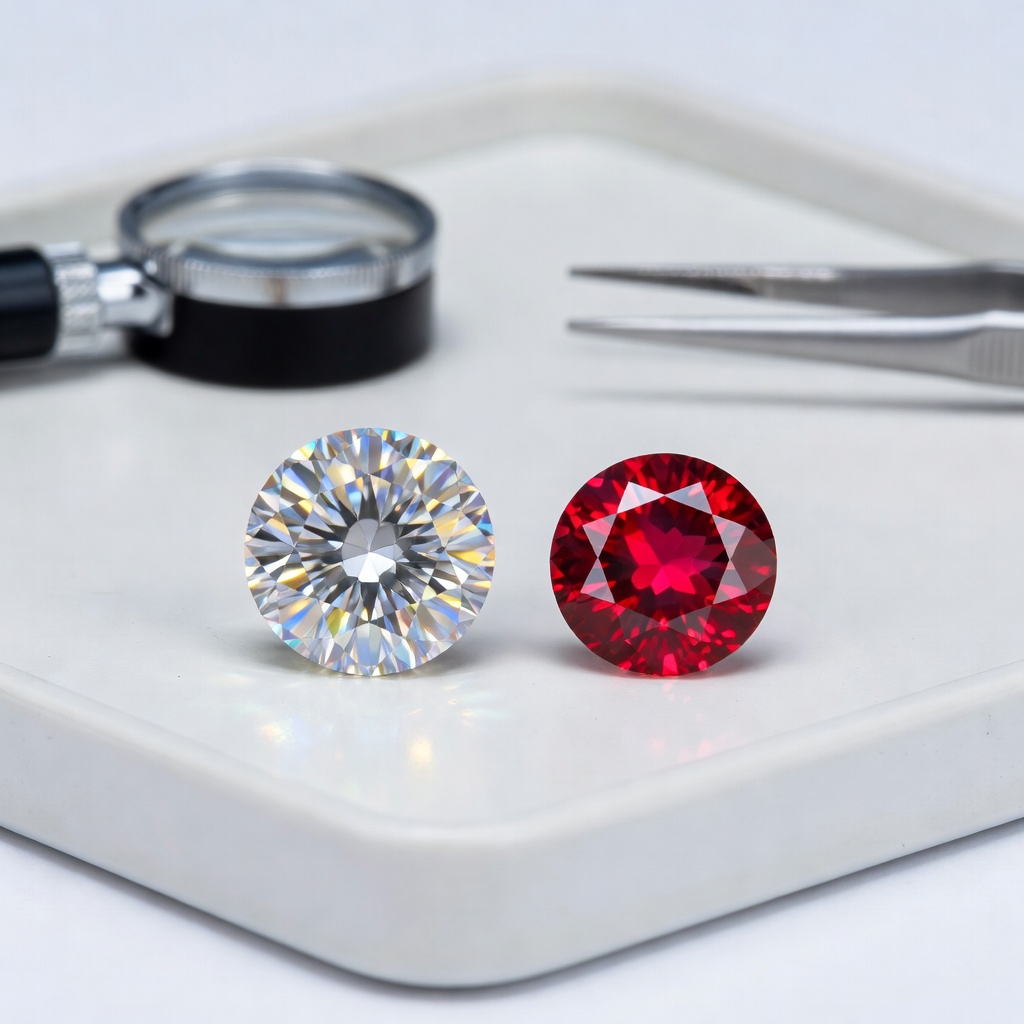
Introduction: Understanding the Diamond vs Spinel Debate
For centuries, diamonds have reigned supreme as the ultimate symbol of luxury, commitment, and social status, commanding the global gemstone market through strategic marketing and cultural entrenchment. When couples envision engagement rings or collectors seek investment-grade stones, diamonds immediately come to mind as the default choice for precious jewelry. However, a quiet revolution is occurring among informed buyers who are discovering spinel as a sophisticated, vibrant alternative that offers exceptional beauty without the premium markup associated with diamond cartels.
The diamond vs spinel conversation has gained significant momentum as modern consumers prioritize uniqueness, ethical sourcing, and value retention over traditional norms. Historically, spinel suffered from a case of mistaken identity, with famous "rubies" like the Black Prince's Ruby in the British Crown Jewels later identified as actually being red spinel. This historical confusion masked spinel's true worth for generations, but contemporary gemologists and jewelry designers now celebrate spinel as a distinct, prestigious gemstone in its own right.
When evaluating these two remarkable stones, buyers must consider critical factors including durability for daily wear, optical performance and brilliance, long-term investment potential, and the ethical implications of their sourcing methods. Whether you are a bride-to-be seeking a non-traditional spinel vs diamond engagement ring, a collector diversifying your portfolio, or simply a jewelry enthusiast fascinated by gemstone properties, understanding the nuanced differences between these cubic-structured gems will empower you to make an informed decision aligned with your personal values and lifestyle needs.
Chemical Composition and Natural Formation
Diamonds represent one of nature's most extraordinary creations, consisting of pure carbon atoms arranged in an isometric crystal structure formed under immense pressure and temperature approximately 140 to 190 kilometers beneath Earth's surface. These conditions occur within the stable portions of continental lithosphere known as cratons, where carbon-bearing materials undergo transformation over billions of years. The volcanic eruptions that bring diamonds to the surface occur through kimberlite and lamproite pipes, rare geological formations that act as elevators carrying these treasures from the depths to mineable depths.
Spinel, scientifically classified as magnesium aluminum oxide (MgAl₂O₄), crystallizes in the cubic system similar to diamond but forms under distinctly different geological conditions within metamorphic and igneous rocks. Unlike diamonds, which require subduction zone pressures, spinel develops in contact metamorphosed limestones and marble deposits where aluminum-rich rocks interact with magnesium-bearing fluids at high temperatures. This formation process creates the diverse color palette that distinguishes spinel gemstone properties from other precious stones, with trace elements like chromium creating vivid reds and cobalt producing electric blues.
The geological sources for these gems reveal fascinating contrasts in global distribution and extraction methods. Major diamond mining operations dominate Botswana, Russia, Canada, and Australia through massive industrial operations processing kimberlite ore, while significant spinel deposits occur in Myanmar's Mogok region, Tanzania's Mahenge mines, Vietnam's Luc Yen district, and Tajikistan's Pamir Mountains. Paradoxically, while diamonds benefit from extensive marketing suggesting extreme rarity, high-quality gem-grade spinel—particularly in sizes exceeding three carats with vivid saturation—proves genuinely rarer than commercial-quality diamonds, creating intriguing supply dynamics that influence collector markets.
Hardness and Durability for Everyday Wear
When selecting a gemstone for daily wear jewelry, particularly engagement rings subjected to constant exposure and potential impact, understanding the Mohs hardness scale becomes essential for predicting long-term performance. Diamonds occupy the pinnacle position with a perfect hardness rating of 10, making them the hardest known natural material capable of scratching any other substance. Spinel demonstrates respectable hardness at 7.5 to 8 on the Mohs scale, comparable to emerald and topaz, providing sufficient resistance to surface scratching for most jewelry applications while requiring slightly more mindful wear than diamond.
However, hardness represents only one component of gemstone durability comparison, as toughness and cleavage characteristics significantly impact a stone's resistance to breakage and chipping. Diamonds possess perfect cleavage in four directions, meaning that sharp impacts against hard surfaces can cause them to split along specific crystal planes—a vulnerability that surprises many owners who assume invincibility from the hardness rating alone. Conversely, spinel lacks cleavage planes entirely and exhibits excellent toughness, distributing impact forces throughout its structure rather than concentrating stress along vulnerable lines, making it surprisingly resilient against the chips and cracks that occasionally plague diamond jewelry.
For active individuals or those working with their hands, these durability differences translate into practical wearing strategies that may favor spinel despite its lower hardness rating. While diamond remains superior for resisting scratches from dust particles (which contain silica at hardness 7), spinel's chip resistance makes it suitable for protective settings like bezels or halos that safeguard the girdle edges. Regular maintenance for both stones should include ultrasonic cleaning caution—diamonds can withstand these vibrations but may loosen in settings, while spinel requires gentler cleaning methods—and annual prong inspections to ensure the setting continues securing the stone against daily stresses.
Optical Properties: Brilliance, Fire, and Color Range
The visual distinction between diamonds and spinels stems primarily from their differing refractive indices and dispersion values, which dictate how each gemstone interacts with light to create sparkle and spectral color separation. Diamonds boast a high refractive index of 2.42, meaning they bend incoming light dramatically to maximize internal reflection and return brilliance to the viewer's eye with exceptional intensity. Spinel exhibits a lower refractive index ranging from 1.71 to 1.73, resulting in a more subdued, velvety luster rather than the explosive brilliance associated with diamonds, creating an aesthetic preference that some connoisseurs describe as more "elegant" or "sophisticated" than diamond's flash.
Dispersion, the optical property responsible for fire—the rainbow flashes of color seen when rotating a gemstone—further differentiates these stones with diamonds showing a dispersion value of 0.044 compared to spinel's modest 0.020. This means that while a well-cut diamond will display vivid spectral colors when moved under direct lighting, spinel produces minimal fire, relying instead on body color and luster for its visual appeal. When considering a spinel vs diamond engagement ring, buyers seeking maximum sparkle and light performance will prefer diamond, while those desiring rich, saturated color with subtle glow will find spinel's optical character more appealing.
Color diversity represents perhaps the most striking difference between these gemstones, with spinel offering a natural palette that diamonds cannot match without artificial treatment. While fancy colored diamonds command astronomical prices for blues, pinks, and reds, spinel produces these hues naturally and vividly, including the rare cobalt-blue varieties from Vietnam, hot pink and red "Jedi" spinels from Myanmar, and gray-blue specimens that exhibit color-change phenomena similar to alexandrite. Colorless or "white" spinel exists but remains exceptionally rare in nature, whereas diamond's colorless grades (D-F) represent the most commonly marketed variety, creating distinct aesthetic identities where diamond emphasizes purity and brilliance while spinel celebrates chromatic intensity.
Price Comparison and Market Value Analysis
The economic landscape separating these gemstones reveals one of the most compelling arguments for considering diamond alternative gemstones, with spinel price vs diamond differences often exceeding tenfold for comparable sizes and visual impact. Premium natural diamonds typically command $5,000 to $20,000 or more per carat for high-color, high-clarity stones with excellent cut grades, with prices escalating exponentially for fancy colors and large sizes. Fine quality spinel, by contrast, generally ranges from $500 to $5,000 per carat depending on color intensity and origin, with even exceptional specimens rarely approaching the per-carat costs of equivalent-sized diamonds, allowing buyers to acquire substantially larger stones within modest budgets.
Value drivers for these markets operate on fundamentally different principles that reflect historical marketing success versus genuine geological scarcity. Diamond pricing relies heavily on the standardized 4Cs grading system (cut, color, clarity, carat) established by the Gemological Institute of America, creating liquid pricing structures that facilitate comparison shopping but also embed significant retail markups and brand premiums. Spinel valuation prioritizes color saturation above all other factors, with vivid reds and cobalt blues commanding premium prices, followed by clarity and size considerations, though the lack of standardized grading creates opportunities for knowledgeable buyers to acquire exceptional stones before broader market recognition drives prices higher.
| Characteristic | Diamond | Spinel |
|---|---|---|
| Mohs Hardness | 10 (Highest) | 7.5-8 |
| Refractive Index | 2.42 | 1.71-1.73 |
| Dispersion (Fire) | 0.044 (High) | 0.020 (Low) |
| Cleavage | Perfect (4 directions) | None |
| Price per Carat (Fine Quality) | $5,000-$20,000+ | $500-$5,000 |
| Natural Color Range | Colorless to Fancy Colors (Rare) | Red, Blue, Pink, Purple, Gray (Common) |
| Brilliance | Exceptional (High RI) | Subtle, Velvety |
| Best Setting Style | Delicate Prongs, Open Settings | Bezels, Protective Halos |
| Investment Liquidity | High (Established Market) | Moderate (Collector Market) |
The affordability advantage of spinel extends beyond initial acquisition costs to include insurance premiums and replacement values, making it an attractive option for younger couples or those prioritizing travel and experiences over material expenditure. While diamonds maintain their position as luxury status symbols supported by century-old marketing campaigns, spinel offers entry into the world of precious colored gemstones without the financial burden, allowing buyers to select larger center stones or more intricate custom settings while remaining within reasonable budget constraints. This value proposition proves particularly compelling for second marriages, right-hand rings, or fashion jewelry where traditional expectations matter less than personal expression.
Jewelry Applications and Design Versatility
The jewelry industry's evolving approach to diamond vs spinel integration reflects shifting consumer preferences away from rigid traditionalism toward personalized expression and color-driven design. Engagement rings traditionally dominated by colorless diamonds now increasingly feature spinel center stones for non-traditional brides seeking uniqueness, with designers creating stunning three-stone arrangements pairing spinel with diamond accents or using rose gold settings to complement pink and red spinel varieties. The growing acceptance of colored gemstone engagement rings among celebrities and influencers has legitimized spinel as a sophisticated choice rather than a budget compromise, particularly for individuals born in August (spinel's modern birthstone designation).
Setting considerations differ significantly between these stones due to their distinct hardness and cleavage properties, requiring jewelers to adapt their techniques accordingly. Diamond's extreme hardness allows for delicate prong settings with minimal metal coverage, maximizing light return through the pavilion and creating the floating appearance popular in solitaire designs. Spinel requires more protective mounting strategies, with bezel settings, half-bezels, or halo designs providing essential protection for the girdle edges while complementing spinel's color-focused aesthetic; tension settings should be avoided for spinel due to the pressure exerted on the stone.
Fashion jewelry applications reveal complementary rather than competitive relationships between these gems, with designers often combining them for maximum visual impact. Diamond's neutral brilliance pairs seamlessly with any metal type from platinum to yellow gold, serving as the universal accent stone that enhances without competing. Spinel excels in statement pieces and cocktail rings where its vivid colors—particularly the electric blues and hot pinks unavailable in untreated diamonds—create focal points that command attention. Historical precedents support both stones' regal associations, with spinel appearing in numerous crown jewels throughout Asia and Europe (often misidentified as ruby) while diamonds became synonymous with Western royalty and imperial power, offering buyers connection to rich historical narratives regardless of their choice.
Treatments, Enhancements, and Synthetic Options
Understanding the enhancement landscape proves crucial for informed purchasing decisions in both markets, as treatments significantly affect value, durability, and disclosure requirements. Diamonds commonly undergo fracture-filling with leaded glass to improve apparent clarity, laser drilling to remove dark inclusions, and high-pressure high-temperature (HPHT) treatments to alter color grades, all of which require explicit seller disclosure under FTC guidelines. Natural spinel frequently receives heat treatment at relatively low temperatures (800-1000°C) to improve color saturation and clarity, a practice widely accepted in the trade when disclosed, though untreated specimens from Myanmar or Tajikistan command substantial premiums for their natural state.
The emergence of lab grown diamond vs natural spinel considerations introduces complex ethical and economic calculations for modern consumers. Laboratory-grown diamonds created through HPHT or chemical vapor deposition (CVD) processes possess identical chemical, optical, and physical properties to mined diamonds at 30-40% lower prices, offering an alternative for those concerned about mining impacts. Synthetic spinel produced through flame fusion methods creates affordable simulants widely used in costume jewelry and industrial applications, though these lack the rarity and value of natural spinel; buyers should verify natural origin through certification when investing in fine jewelry.
Detection methods and certification importance cannot be overstated when navigating these markets, as sophisticated treatments and synthetics challenge visual identification alone. Reputable gemological laboratories like GIA (Gemological Institute of America), AGL (American Gemological Laboratories), and Gübelin provide essential documentation verifying natural origin, treatment status, and quality parameters for both diamonds and spinel. Advanced testing including spectroscopy, luminescence imaging, and refractive index measurement distinguishes natural from synthetic stones and identifies treatments that might affect long-term stability or value, protecting consumers from misrepresentation and ensuring fair pricing aligned with actual material characteristics.
Ethical Sourcing and Environmental Impact
The ethical gemstone sourcing conversation surrounding diamonds has evolved significantly since the Kimberley Process Certification Scheme's implementation in 2003, though significant limitations persist in monitoring human rights and environmental standards. While the Kimberley Process successfully reduced the flow of conflict diamonds funding rebel movements, critics note its narrow definition excludes state-sponsored violence and worker exploitation, leaving gaps in consumer protection. The environmental footprint of large-scale diamond mining includes extensive land disturbance, water table disruption, and carbon emissions from extraction and processing operations, particularly in open-pit mines like those in Canada's Northwest Territories or Botswana's Jwaneng mine.
Spinel mining presents a contrasting profile dominated by artisanal and small-scale mining (ASM) operations in Myanmar, Tanzania, Vietnam, and Tajikistan, where individual miners and small cooperatives extract stones using hand tools rather than heavy machinery. These operations typically generate lower carbon emissions per carat and cause less ecosystem disruption than industrial diamond mining, though they face challenges regarding worker safety standards, child labor prevention, and fair compensation. The recent political instability in Myanmar has complicated spinel sourcing ethics, prompting responsible dealers to seek traceable supply chains from Tanzania's Mahenge region or Vietnam's Luc Yen deposits where artisanal mining supports rural communities with lower environmental impact.
Fair trade considerations and traceability challenges affect both markets, requiring buyers to research their jeweler's supply chain commitments and sourcing policies. Blockchain technology and mine-to-market documentation increasingly provide transparency for diamonds through programs like Tracr, while spinel dealers often build direct relationships with small-scale miners to ensure ethical extraction. Consumers prioritizing environmental sustainability might favor lab-grown diamonds to avoid mining entirely, though these require significant energy consumption (250-750 kWh per carat), or select natural spinel from verified artisanal sources that support traditional mining communities with minimal ecological disruption.
Investment Potential and Resale Market
Evaluating these gemstones as financial instruments requires understanding liquidity differences, market infrastructure, and appreciation trajectories that distinguish collector markets from consumer retail. Diamonds maintain a highly liquid resale market supported by standardized grading, allowing owners to sell through auction houses, consignment jewelers, or online platforms with relative ease, though sellers should expect significant retail markup losses—typically recovering only 50-70% of original purchase price for high-quality stones and substantially less for commercial grades. The diamond investment market favors rare fancy colors (pink, blue, red) and large flawless whites, while standard engagement ring quality stones function better as stores of value than appreciation vehicles.
Fine spinel represents an emerging investment opportunity within the colored gemstone sector, with specific varieties showing remarkable price appreciation over the past decade as collector awareness grows. Untreated vivid red "Jedi" spinels from Myanmar's Mogok region, cobalt-blue specimens from Vietnam's Luc Yen mines, and color-change varieties have demonstrated value increases exceeding 200% between 2010 and 2023, outpacing many traditional investment categories. However, spinel's investment market remains narrower and less predictable than diamonds, requiring specialized knowledge to identify quality parameters and longer holding periods to realize gains, as the collector base, while expanding, remains smaller than the mass diamond market.
Documentation importance escalates significantly when viewing these purchases as alternative investments rather than mere adornment. GIA certification provides the gold standard for diamond authentication and quality grading, essential for resale and insurance valuation, while premium spinel requires documentation from respected laboratories like AGL, SSEF (Swiss Gemmological Institute), or Gübelin that can identify geographic origin—a major value determinant for spinel. Investors should prioritize untreated stones with exceptional color saturation, avoid fashion-forward cuts in favor of classic shapes that maintain broader appeal, and maintain detailed provenance records to maximize future resale potential in whichever gemstone category they select.
Final Verdict: Choosing Between Diamond and Spinel
Budget-conscious buyers seeking maximum visual impact and size will find spinel offers exceptional value propositions that diamonds cannot match at comparable price points, allowing for three to five carat center stones with vivid color saturation within moderate budgets. For engagement rings specifically, spinel provides distinctive beauty that stands apart from the ubiquitous diamond solitaire, signaling individuality and sophisticated taste while maintaining sufficient durability for daily wear when properly set and cared for. Couples prioritizing travel, home ownership, or other financial goals alongside their jewelry purchases may view spinel as the intelligent choice that sacrifices no beauty for significant cost savings.
Traditionalists and those viewing jewelry primarily as investment or status signaling will likely prefer diamond despite higher costs, benefiting from the established resale infrastructure, cultural recognition, and timeless associations with enduring commitment. Individuals working in conservative professional environments where diamond engagement rings represent social expectations may find the traditional stone facilitates easier social navigation, while those in creative industries might appreciate spinel's uniqueness as a conversation starter reflecting personal style. Active lifestyle considerations actually favor spinel for certain wearers, as the absence of cleavage planes provides better resistance to the chips that occasionally damage diamonds during sports or manual labor, provided the setting offers adequate protection.
Ultimately, the diamond vs spinel decision hinges on personal values regarding uniqueness versus tradition, color versus brilliance, and budget allocation versus status signaling. Spinel rewards the educated buyer with extraordinary beauty, genuine rarity in fine qualities, and ethical sourcing opportunities through artisanal mining communities, while diamond offers unmatched hardness, maximum light performance, and liquid asset status. Neither choice represents compromise when selected with full knowledge of each stone's characteristics; instead, they offer distinct pathways to owning a piece of Earth's geological history that resonates with individual identity and practical needs.
Frequently Asked Questions
Is spinel durable enough for an engagement ring compared to diamond?
Spinel's Mohs hardness of 7.5-8 makes it suitable for engagement rings with proper care. While not as hard as diamond (10), it lacks diamond's perfect cleavage, making it more resistant to chipping from side impacts. Choose protective settings like bezels or halos for active lifestyles, and remove during heavy manual work.
Can jewelers and non-experts visually distinguish diamonds from colorless spinel?
Trained gemologists can distinguish them using magnification and refractive index testing. To the naked eye, diamonds show more brilliance and fire due to higher RI and dispersion. Colorless spinel appears more 'sleepy' or glassy. Professional gemological equipment like a refractometer or thermal conductivity tester provides definitive identification.
Why are diamonds so much more expensive than spinel if both are natural gemstones?
Diamond pricing reflects century-long marketing (De Beers), controlled supply, and established grading infrastructure. While diamonds are more abundant than previously thought, their luxury positioning is entrenched. High-quality spinel is genuinely rarer, especially in sizes over 3 carats, but lacks diamond's resale market and cultural significance, keeping prices lower.
Do spinels come in colorless varieties that mimic diamonds?
Natural colorless (white) spinel exists but is extremely rare. Most 'white spinel' in jewelry is actually very pale pink or blue. Colorless synthetic spinel is common and inexpensive, often used in costume jewelry. For a diamond alternative, colored spinel (blue, red, pink) is more popular than attempting to mimic diamond's colorlessness.
Which gemstone holds its value better: diamond or spinel?
Diamonds have a more liquid resale market and established value retention, but expect 30-50% loss from retail price when reselling. Fine spinel (especially untreated vivid colors from Myanmar) has shown strong appreciation among collectors, but the market is smaller and less predictable. Neither should be viewed as financial investment without expert guidance.
Are lab-grown diamonds a better choice than natural spinel for ethical buyers?
Lab-grown diamonds avoid mining impacts but require significant energy (often 250-750 kWh per carat). Natural spinel from artisanal sources supports small-scale miners with lower environmental impact per carat. The best choice depends on priorities: lab-grown diamonds offer diamond properties without mining, while ethical spinel supports traditional mining communities. Look for traceable sources for either.
How do diamond fluorescence and spinel color-change phenomena compare?
Diamond fluorescence (blue glow under UV light) can improve or detract from appearance depending on color strength. Spinel's color-change phenomenon (alexandrite-like effect from gray-blue to purple) is rare and highly valued. While fluorescence is common in diamonds, true color-change spinel is exceptionally rare, making it more valuable per carat than fluorescent diamonds.
What size spinel equals a 1-carat diamond in visual appearance?
Due to lower specific gravity (3.6 vs diamond's 3.52), spinel is slightly lighter per volume, but the difference is minimal. A 1-carat spinel will appear about 5-8% larger face-up than a 1-carat diamond with similar cutting proportions. For example, a 6.5mm round diamond (1ct) vs a 6.7mm spinel (1ct) - barely noticeable without side-by-side comparison.