Understanding the Diamond vs Sardonyx Comparison
When exploring the fascinating world of gemstones, the comparison between Diamond vs Sardonyx presents a compelling study in contrasts that spans from ancient civilizations to modern jewelry design. While diamond stands as the quintessential precious stone associated with April birthdays and eternal romance, sardonyx serves as one of the meaningful August birthstone alternatives, offering historical depth and artistic versatility. This comparison attracts diverse audiences including serious collectors seeking unique specimens, individuals researching birthstone options, and jewelry buyers looking for distinctive alternatives to conventional precious gems. Understanding the fundamental differences between these stones—ranging from their atomic structures to their symbolic meanings—empowers buyers to make informed decisions aligned with their personal values, lifestyle needs, and aesthetic preferences.
The distinction between precious vs semi-precious stones becomes immediately apparent when examining these two gems side by side. Diamonds represent the pinnacle of carbon crystallization formed under extreme geological pressure, commanding premium prices and investment-grade status. In contrast, sardonyx belongs to the chalcedony family, a banded agate variety that has adorned humanity for millennia through intricate cameos and seals rather than brilliant faceted displays. Whether you prioritize the unmatched hardness and sparkle of diamond or the earthy, layered beauty and historical significance of sardonyx, this comprehensive guide examines every critical factor from durability to value retention.
Chemical Composition and Physical Properties
Diamonds possess a remarkably simple yet extraordinary chemical identity as pure carbon arranged in an isometric crystal system, where each carbon atom forms strong covalent bonds with four neighbors in a tetrahedral structure. This configuration occurs only under extreme conditions approximately 90 to 120 miles beneath Earth's surface, where temperatures exceed 2,000 degrees Fahrenheit and pressures reach 725,000 pounds per square inch. The gemstone reaches the surface through rare volcanic eruptions that create kimberlite pipes, making each natural diamond a geological time capsule millions to billions of years old. This unique formation process results in a material with exceptional thermal conductivity and optical properties that no other gemstone can replicate.
Sardonyx represents a completely different geological story as a variety of microcrystalline quartz known as chalcedony, specifically characterized by alternating parallel bands of sard (reddish-brown chalcedony) and onyx (black and white banded chalcedony). Unlike diamond's singular element composition, sardonyx forms through sedimentary deposition processes in volcanic rocks and ancient lava cavities, where silica-rich waters deposit microscopic crystals over thousands of years. The distinctive banding patterns that define banded agate vs diamond aesthetics result from varying impurities and environmental conditions during formation, creating layers that skilled artisans exploit for detailed relief carvings. While diamond ranks as a singly refractive material with a specific gravity of 3.52, sardonyx demonstrates cryptocrystalline structure with a specific gravity of approximately 2.60 to 2.65 and typically appears opaque to translucent rather than transparent.
Visual Characteristics and Aesthetic Appeal
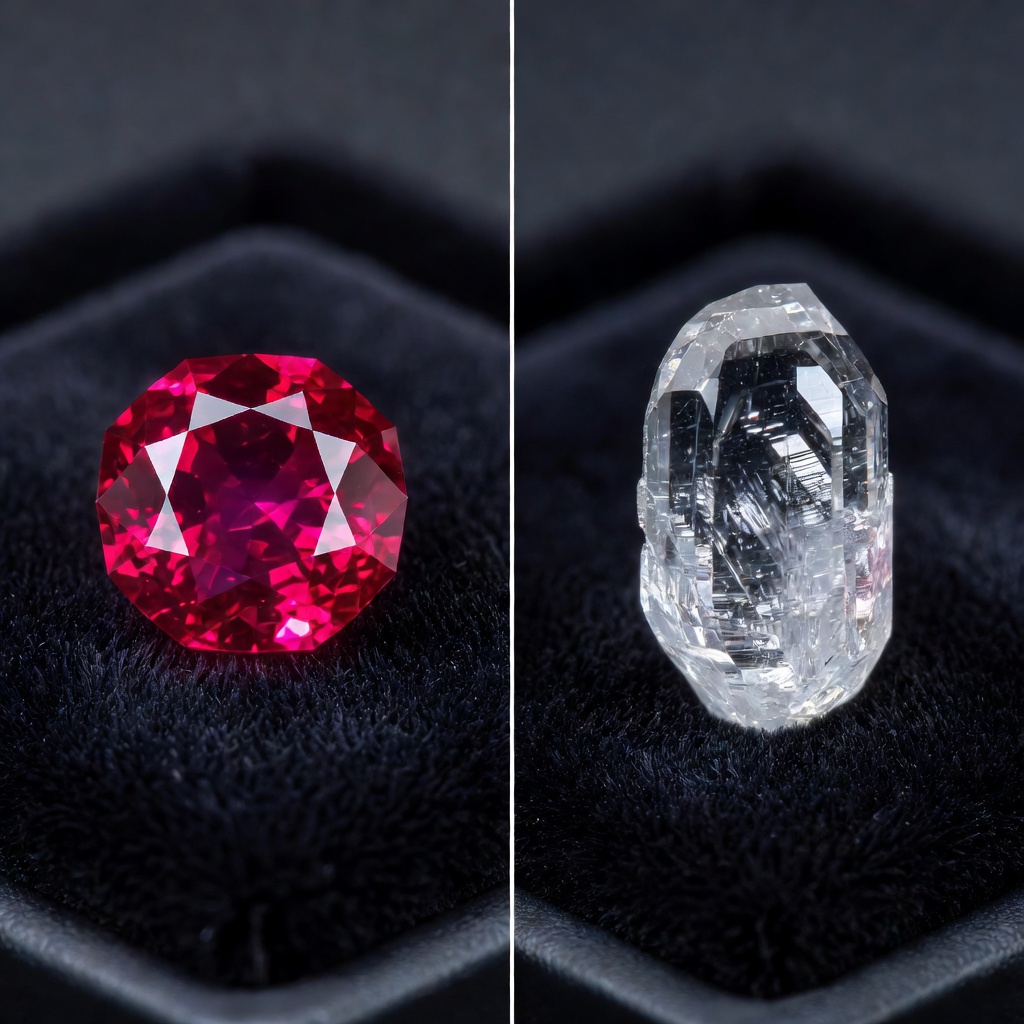
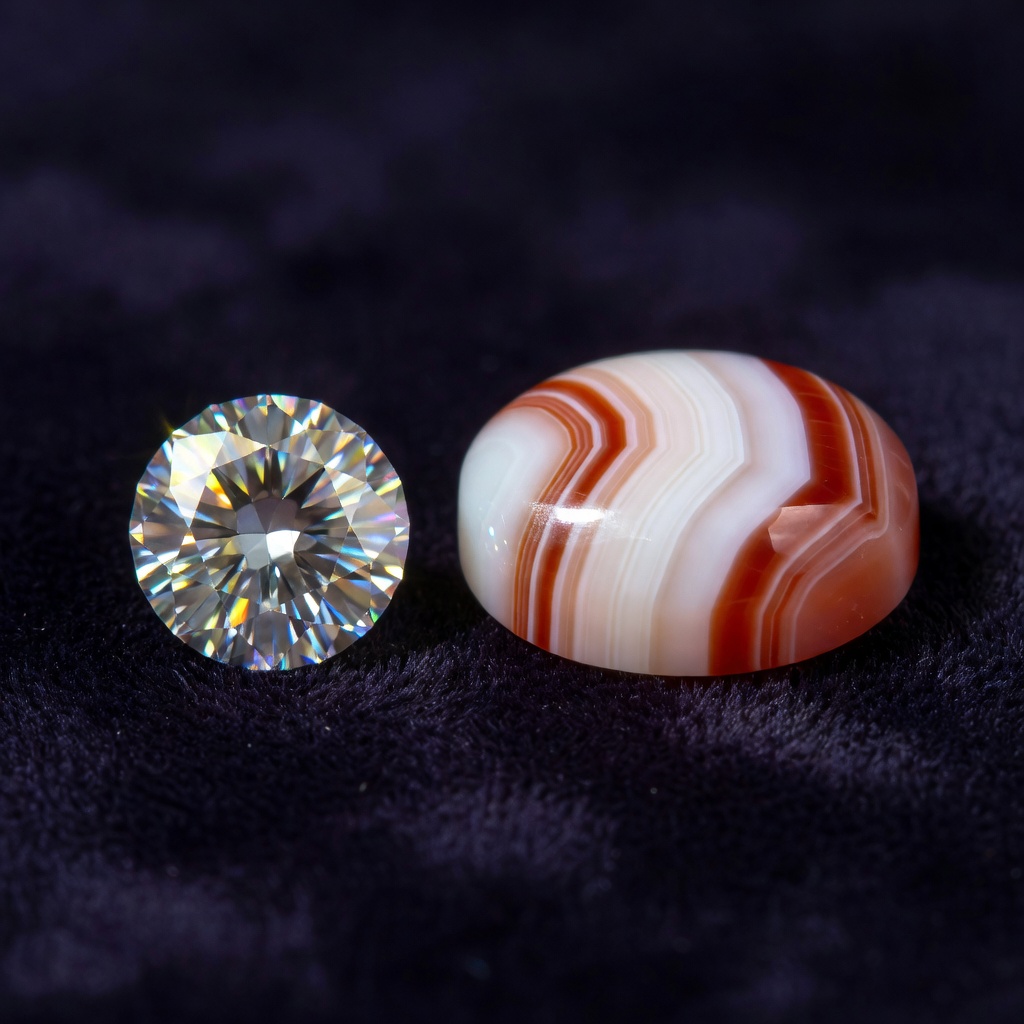
The visual distinction between these gemstones could not be more pronounced, beginning with diamond's celebrated interaction with light through brilliance, fire, and scintillation. When expertly faceted using precise angles that maximize light return, diamonds disperse white light into spectral colors while creating sharp flashes of white light and contrasting dark areas that give the stone life and movement. Modern cutting techniques such as the round brilliant cut with 57 or 58 facets optimize these optical properties, though fancy shapes like cushions, ovals, and emeralds offer alternative personalities while maintaining exceptional sparkle. Color variations in diamonds range from the coveted colorless D-grade stones through fancy yellows, pinks, blues, and rare reds, with clarity characteristics graded from flawless to included under 10x magnification.
Sardonyx appearance offers an entirely different aesthetic language rooted in earth tones and artistic craftsmanship rather than optical physics. The gemstone displays distinctive parallel banding in combinations of white, reddish-brown, black, and occasionally orange or amber hues, creating natural landscapes within each specimen. Unlike diamond's faceted geometry, sardonyx traditionally receives cabochon cuts that display smooth domed surfaces emphasizing the banding patterns, or more commonly appears as the primary material for cameo jewelry materials where artisans carve raised relief images against contrasting background layers. Clarity in sardonyx functions differently than in diamonds; while inclusions diminish diamond value, the natural banding and occasional dendritic patterns or moss-like inclusions enhance sardonyx character and prove essential for the artistic carving traditions that have utilized this material since ancient Roman times.
Hardness, Durability and Wearability Analysis
Understanding gemstone durability for daily wear requires examining both hardness and toughness, two distinct properties where these gemstones present interesting contrasts despite their different rankings. The Mohs hardness scale comparison reveals diamond at the absolute pinnacle with a rating of 10, making it the hardest known natural material capable of scratching any other substance including sapphire and ruby. However, hardness alone does not guarantee invincibility; diamond possesses perfect cleavage in four directions, meaning a sharp blow can split the stone along specific atomic planes, a vulnerability that requires protective settings and careful handling despite its scratch resistance.
Sardonyx ranks 6.5 to 7 on the Mohs scale, significantly softer than diamond but still suitable for many jewelry applications when properly set and cared for. While it cannot resist scratching from harder materials including dust (which contains quartz particles), sardonyx actually demonstrates superior toughness compared to diamond due to its cryptocrystalline structure composed of interlocking microscopic crystals. This granular composition lacks cleavage planes, meaning sardonyx resists chipping and breaking from impact better than its hardness rating might suggest, though it remains vulnerable to abrasion over time. For active individuals or those seeking rings for daily wear, diamond offers superior longevity, while sardonyx performs admirably in pendants, earrings, and occasional-wear rings protected by bezel settings that guard the edges from direct impact.
Value, Pricing and Investment Potential
The economic disparity between these gemstones reflects their relative rarity, mining complexity, and market positioning within the jewelry industry. Diamond value derives from controlled supply chains, extensive marketing establishing cultural significance, and genuine geological scarcity of gem-quality crystals suitable for faceting. Prices typically range from several thousand dollars per carat for commercial qualities to tens or hundreds of thousands for rare fancy colors and flawless clarities, with investment-grade stones requiring specific color, clarity, cut, and carat weight combinations that appreciate over decades. Certified diamonds from reputable laboratories like GIA or AGS maintain liquidity in global markets, making them suitable for wealth preservation and intergenerational transfer.
Sardonyx price points remain remarkably accessible, typically costing mere dollars per carat for standard qualities and reaching only modest three-figure sums for exceptional specimens with sharp contrast between bands or rare color combinations suitable for museum-quality carvings. This affordability stems from abundant deposits found in locations including India, Brazil, Uruguay, and Germany, where large rough pieces allow for substantial cameos and decorative objects impossible with diamond rough economics. While sardonyx lacks investment-grade status and does not appreciate monetarily, collector value exists for antique cameos, historically significant engraved gems, or specimens exhibiting particularly artistic natural patterns. Buyers should note treatment disclosures: while diamonds may undergo enhancement through laser drilling or fracture filling, sardonyx occasionally receives dye treatments to intensify banding contrast or appears as assembled doublets with colorless quartz caps, practices that should be disclosed by ethical sellers.
Historical Significificance and Symbolism
The metaphysical and historical narratives surrounding these gemstones reveal fascinating divergences in cultural significance spanning millennia. Sardonyx meaning and properties trace back to ancient civilizations, particularly Roman culture where the stone's layered structure made it ideal for intricate cameos depicting mythological scenes, official seals, and amulets worn by soldiers heading into battle. Roman historian Pliny the Elder documented sardonyx as a stone of courage and protection, while medieval traditions associated it with eloquence and virtuous behavior, recommending it for public speakers and those seeking marital happiness. The stone's connection to August birthstone alternatives connects to these historical virtues of strength, stability, and protection, offering those born in late summer a connection to ancient warrior traditions and artistic craftsmanship.
Diamonds, by contrast, acquired their dominant symbolic associations relatively recently despite ancient recognition of their hardness. While Indian texts from 400 BCE mentioned diamonds as religious icons and Chinese dynasties used them for cutting jade, the modern association with eternal love and April birthstone status emerged primarily from twentieth-century marketing campaigns. However, diamond's metaphysical reputation spans cultures as a stone of purity, clarity, and spiritual enlightenment, believed to amplify energy and create deep connections between individuals. Where sardonyx grounds and stabilizes through its earthy banding and historical connection to physical courage, diamond elevates and illuminates through its clarity and brilliance, representing the triumph of light over darkness and the permanence of commitment.
Jewelry Applications and Design Versatility
Contemporary jewelry design utilizes these materials in distinctly different contexts that leverage their unique physical and aesthetic properties. Engagement ring traditions overwhelmingly favor diamonds for center stones due to their durability, brilliance, and cultural associations with permanence, though alternative engagement rings featuring sardonyx appeal to vintage enthusiasts and those seeking non-traditional expressions of commitment. When incorporated into bridal jewelry, sardonyx typically appears as accent stones, carved motifs in brooches, or estate pieces rather than solitaire center stones, though Art Deco and Victorian revival designs increasingly feature sardonyx for its distinctive banding and historical resonance.
The art of glyptography—engraving on gemstones—showcases sardonyx as the preeminent material for cameo jewelry materials, utilizing the contrasting bands to create raised relief images in one color against backgrounds of another. Master carvers exploit the white and brown layers to render classical profiles, mythological scenes, and botanical motifs with remarkable detail impossible in uniformly colored stones. Diamonds complement these carvings as accent stones in pavé settings or halo arrangements, providing sparkle that contrasts with sardonyx's matte luster. Metal pairing recommendations follow aesthetic traditions: diamonds typically mount in white gold or platinum to enhance their colorless quality, while sardonyx traditionally pairs with yellow gold that harmonizes with its warm earth tones, though modern designers increasingly mix metals and materials for eclectic statements.
Care, Cleaning and Maintenance Requirements
Proper gemstone care guide protocols differ significantly between these stones due to their chemical and physical disparities. Diamonds tolerate aggressive cleaning methods including ultrasonic cleaners and steam systems that remove accumulated oils and debris from behind settings, though these methods require checking prong security beforehand to prevent stone loss. Regular maintenance involves simple soap and water baths with soft brushes for home care, professional inspections every six months for engagement rings, and removal during activities involving harsh chemicals or potential hard impacts despite diamond's hardness.
Cleaning sardonyx requires gentler approaches that respect its chalcedony composition and potential treatments. Avoid ultrasonic cleaners and steam which can damage assembled stones or worsen existing fractures, and never expose sardonyx to acids, ammonia, or prolonged direct sunlight that might fade natural or enhanced colors. Instead, use lukewarm water with mild dish soap and a soft-bristled brush, drying immediately with a lint-free cloth to prevent water spots in surface irregularities. Storage solutions necessitate separate compartments or individual soft pouches, as diamond jewelry can easily scratch sardonyx if stored together in jewelry boxes. For carved sardonyx cameos, avoid contact with cosmetics, perfumes, and household chemicals, and consider periodic professional repolishing every few years to restore luster worn away by skin oils and environmental exposure.
Buyer's Decision Guide: Which Gemstone to Choose?
Selecting between these gemstones requires honest assessment of budget parameters, lifestyle factors, and personal values regarding jewelry ownership. Budget-conscious buyers seeking maximum visual impact under $500 will find sardonyx offers extraordinary value, providing large, impressive cabochons or intricate carvings impossible with diamond economics at that price point. Conversely, those viewing jewelry as long-term investments or heirlooms should prioritize diamond for its value retention, liquidity, and ability to withstand daily wear for generations without visible degradation.
Lifestyle compatibility plays crucial roles in this gemstone buying guide: active individuals, healthcare workers, or those using their hands professionally should strongly consider diamond for rings and bracelets due to its scratch resistance, while sardonyx suits collectors, art historians, or fashion-forward individuals who appreciate rotating their jewelry collection and wearing statement pieces for specific occasions. Aesthetic preferences ultimately drive many decisions; those drawn to brilliance, fire, and modern minimalism gravitate toward diamond, while individuals appreciating organic patterns, historical artistry, and earthy color palettes find sardonyx more aligned with their sensibilities. Symbolic meaning priorities similarly divide buyers: those seeking representations of romantic permanence and spiritual clarity choose diamond, while those valuing protection, courage, and historical continuity connect more deeply with sardonyx's ancient legacy.
Final Verdict: Making Your Selection
This comprehensive gemstone comparison reveals that neither stone universally surpasses the other; rather, they serve entirely different purposes within a well-rounded jewelry collection. The following table summarizes key distinguishing characteristics:
| Characteristic | Diamond | Sardonyx |
|---|---|---|
| Mohs Hardness | 10 (Highest) | 6.5-7 |
| Crystal Structure | Cubic (Isometric) | Cryptocrystalline (Hexagonal) |
| Transparency | Transparent | Opaque to Translucent |
| Typical Cut | Faceted (Brilliant, Step) | Cabochon, Carved Cameo |
| Price per Carat | $1,000-$50,000+ | $1-$50 |
| Primary Use | Engagement rings, Fine jewelry | Cameos, Vintage jewelry, Beads |
| Birthstone Month | April | August (Alternative) |
| Care Requirements | Ultrasonic safe, Steam cleanable | Gentle soap only, Avoid heat/acids |
| Symbolism | Eternal love, Purity | Strength, Protection, Courage |
| Investment Potential | High (Certified stones) | Low (Collector interest only) |
Choose diamond when seeking longevity, prestige, and heirloom value capable of withstanding daily wear for decades while maintaining monetary worth and symbolic significance. This selection suits traditional engagement scenarios, milestone celebrations, and individuals prioritizing brilliance and durability above all other factors. Opt for sardonyx when desiring uniqueness, artistic expression, and historical connection to ancient glyptographic traditions, particularly for cameo pendants, statement rings for occasional wear, or collecting carved art pieces that tell stories through their layered bands.
The sophisticated jewelry collector ultimately benefits from incorporating both stones into their wardrobe, using diamond for daily-wear foundational pieces like solitaire necklaces or stud earrings while reserving sardonyx for conversation-starting vintage pieces and artistic expressions. By understanding the distinct value propositions of Diamond vs Sardonyx, buyers can build collections that honor both the eternal brilliance of carbon crystals and the earthy, historical artistry of banded chalcedony.
Frequently Asked Questions
Which is harder, diamond or sardonyx?
Diamond ranks 10 on the Mohs hardness scale, making it the hardest known natural material, while sardonyx ranks 6.5-7. This means diamond can easily scratch sardonyx, but sardonyx cannot scratch diamond.
Is sardonyx suitable for an engagement ring?
While sardonyx can be used in engagement rings, its 6.5-7 Mohs hardness makes it susceptible to scratching and abrasion with daily wear. It's better suited for protective settings like bezels or for occasional wear rings rather than everyday engagement rings.
What are the main visual differences between diamond and sardonyx?
Diamonds are transparent to translucent with brilliant sparkle, fire, and scintillation when faceted. Sardonyx is opaque with distinctive parallel bands of white and reddish-brown colors, typically cut as cabochons or carved into cameos rather than faceted.
Which gemstone is more expensive, diamond or sardonyx?
Diamonds are significantly more expensive, often costing thousands of dollars per carat depending on quality. Sardonyx is an affordable semi-precious stone, typically costing only dollars per carat, making it accessible for large statement pieces and carved art.
Are both diamond and sardonyx considered birthstones?
Diamond is the primary birthstone for April. Sardonyx is recognized as an alternative birthstone for August alongside peridot and spinel. Both carry birthstone significance but for different months.
How do I clean and care for sardonyx compared to diamond?
Diamonds can be cleaned with ultrasonic cleaners, steam, or soap and water. Sardonyx requires gentler care—use only lukewarm soapy water and a soft brush, avoiding ultrasonic cleaners, steam, acids, and prolonged sunlight which can damage the chalcedony.
Can sardonyx be used as a diamond substitute?
Sardonyx is not a suitable diamond substitute if you want sparkle and brilliance, as it lacks transparency and refraction. However, it serves as an excellent alternative for those seeking unique, vintage-style jewelry with historical significance and artistic banding patterns.
What is the spiritual meaning of sardonyx versus diamond?
Diamonds symbolize purity, eternal love, and spiritual enlightenment, believed to amplify energy. Sardonyx represents strength, protection, and virtuous behavior, historically worn by Roman soldiers for courage and believed to promote stability and happiness in relationships.