Understanding the Diamond vs Sapphire Debate
The timeless question of diamond vs sapphire continues to captivate couples and collectors navigating the luxury jewelry market. These two gemstones have dominated high-end jewelry for centuries, yet they offer distinctly different value propositions that extend far beyond mere aesthetics. While diamonds have traditionally symbolized eternal commitment and unparalleled prestige, sapphires have emerged as sophisticated alternatives that combine durability with vibrant personality.
Many misconceptions cloud this comparison, leading buyers to assume diamonds always represent superior quality or that sapphires lack the durability necessary for daily wear. In reality, both stones rank among the hardest natural substances on Earth, with sapphires sitting just one step below diamonds on the Mohs hardness scale. Furthermore, the assumption that diamonds universally command higher prices overlooks the extraordinary value of Kashmir or Burmese sapphires, which can surpass diamond prices per carat due to extreme rarity.
This comprehensive diamond and sapphire comparison examines every critical factor from geological properties to investment potential, helping you make an informed decision based on your specific needs rather than marketing hype. Whether you are selecting an engagement ring, anniversary gift, or personal investment piece, understanding the nuanced differences between these remarkable gemstones ensures your choice aligns perfectly with your lifestyle, budget, and aesthetic preferences.
Mohs Hardness: Why Diamonds Reign Supreme
When evaluating gemstone hardness and durability, the Mohs scale provides the definitive standard for measuring scratch resistance and structural integrity. Diamonds occupy the pinnacle position at 10, representing the hardest known natural material, while sapphires closely follow at 9. This numerical difference might appear negligible, but it reflects an exponential gap in hardness; diamond is actually four times harder than sapphire, creating distinct practical implications for jewelry that experiences daily wear.
The perfect 10 rating means diamonds can scratch virtually any material except another diamond, making them virtually impervious to damage from everyday encounters with household surfaces, keys, or other jewelry. Sapphires, despite their impressive 9 rating, can theoretically be scratched by diamonds but resist damage from almost everything else, including steel files and quartz countertops. For engagement rings subjected to constant daily activities, both stones offer exceptional protection against surface scratches, though diamonds maintain their polish indefinitely while sapphires may develop microscopic surface wear over decades of heavy use.
Practical durability extends beyond scratch resistance to include chip and fracture resistance. Diamonds possess cleavage planes that can cause splitting under sharp impacts, particularly if the stone has inclusions near the girdle. Sapphires, being slightly less brittle in certain orientations, sometimes withstand accidental knocks better than diamonds, though their softer surface accumulates tiny abrasions more readily. When setting these stones, jewelers often recommend protective settings like bezels or half-bezels for sapphires in high-impact environments, while diamonds typically tolerate prong settings even in active lifestyles.
Diamond and Sapphire Comparison: Key Differences at a Glance
| Characteristic | Diamond | Sapphire |
|---|---|---|
| Mohs Hardness | 10 (Highest possible) | 9 (Excellent) |
| Price Range (Natural, per carat) | $3,000 - $30,000+ | $500 - $5,000 (up to $50,000+ for Kashmir) |
| Color Options | Colorless to fancy colors (rare) | Blue, pink, yellow, green, purple, padparadscha |
| Brilliance/Refractive Index | 2.42 (Exceptional sparkle) | 1.77 (Subtle vitreous luster) |
| Daily Wear Suitability | Excellent (all settings) | Very Good (protective settings recommended) |
| Investment Liquidity | High (standardized market) | Moderate to High (origin-dependent) |
| Lab-Created Availability | Widely available (HPHT/CVD) | Widely available (flux-grown) |
Price Comparison: What Your Budget Gets You
Conducting a thorough sapphire price comparison reveals dramatic differences in purchasing power between these two gemstones. Natural diamonds typically command $3,000 to $30,000 per carat depending on cut, color, clarity, and carat weight, with premium D-color flawless stones reaching even higher. In contrast, high-quality natural blue sapphires generally range from $500 to $5,000 per carat, allowing buyers to secure significantly larger stones or allocate savings toward intricate settings and accent diamonds.
Several factors influence pricing beyond basic material costs. For diamonds, the Four Cs (cut, color, clarity, carat) create standardized valuation metrics, with colorless stones (D-F grades) and flawless clarity commanding premium prices. Sapphire pricing depends heavily on color saturation and origin, with velvety blue Kashmir sapphires and vivid "pigeon's blood" Burmese stones fetching $10,000 to $50,000 per carat—rivaling or exceeding diamond prices. Ceylon (Sri Lankan) sapphires offer excellent value at $1,000 to $3,000 per carat, while Montana or Australian sapphires provide affordable entry points under $1,000 per carat.
The emergence of lab-created sapphires has revolutionized the market, offering chemically identical stones for $50 to $200 per carat—70% to 90% less than natural counterparts. This price differential allows couples to choose sapphire vs diamond engagement rings based purely on aesthetic preference rather than budget constraints. However, rare natural sapphires from historic mines appreciate as collectible assets, while mass-market diamonds typically depreciate 30% to 50% immediately after purchase, despite maintaining stronger resale liquidity than sapphires.
Color and Brilliance: White Sparkle vs Vibrant Hues
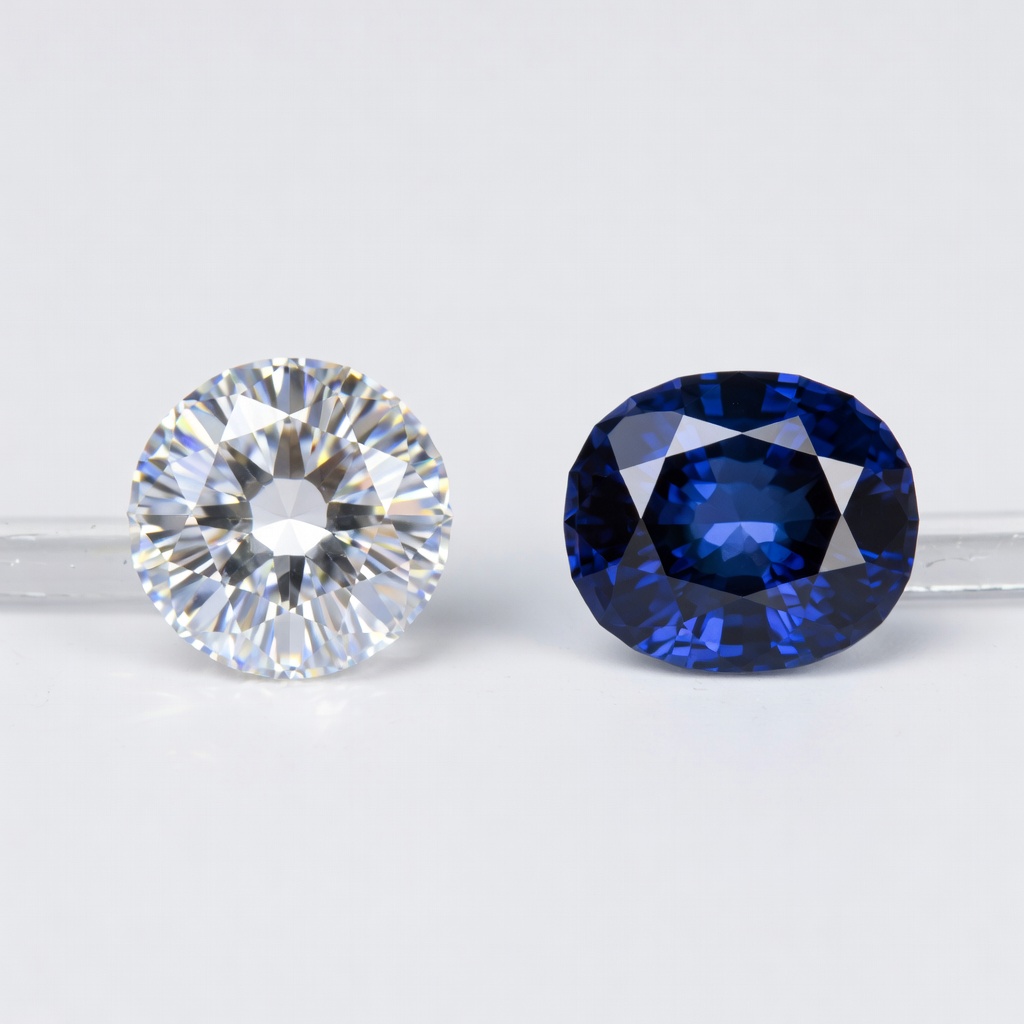
The optical performance of diamonds and sapphires diverges dramatically, offering buyers distinct aesthetic experiences. Diamonds possess a refractive index of 2.42 and exceptional dispersion (0.044), creating the characteristic "fire"—rainbow flashes of color—combined with brilliant white light return. This intense sparkle makes diamonds appear larger and more dynamic than their actual dimensions, particularly under jewelry store lighting designed to maximize this effect. The ideal colorless diamond acts as a prism, splitting white light into spectral colors while maintaining a bright, icy appearance.
Sapphires offer a completely different visual appeal centered on body color rather than brilliance. With a refractive index of 1.77, sapphires display more subtle, vitreous luster rather than explosive sparkle. While blue remains the most recognized variety, colored gemstone alternatives include pink sapphires (ranging from bubblegum to hot magenta), yellow sapphires (sunny to golden), padparadscha (rare pink-orange), teal, green, purple, and even color-change varieties that shift between blue and purple under different lighting. This spectrum allows for personalization impossible with traditional white diamonds unless investing in extremely rare fancy-colored diamonds that command 10 to 100 times the price of white stones.
Personal style should drive this decision decisively. Those drawn to classic, timeless elegance and maximum light performance will prefer diamonds, particularly for traditional solitaire settings where brilliance takes center stage. Individuals seeking unique expression, vintage aesthetics, or symbolic color meanings (blue for loyalty, pink for romance) will find sapphires more aligned with their identity. Modern jewelry designers increasingly combine both stones, using sapphires as centerpieces surrounded by diamond halos to balance color with sparkle, offering a compromise that leverages the strengths of each gemstone.
Engagement Ring Showdown: Setting and Style Choices
The choice between sapphire vs diamond engagement rings involves navigating tradition, practicality, and personal symbolism. Diamonds have maintained dominance in Western engagement culture since De Beers' mid-20th century marketing campaigns, becoming the default expectation for bridal jewelry. This established tradition ensures diamonds face no questions about appropriateness or permanence, and they pair seamlessly with platinum or white gold settings that emphasize their colorless nature. The versatility of diamonds allows for any setting style, from delicate pavé bands to bold tension settings, without durability concerns.
Celebrity influence has significantly elevated sapphire's status in bridal jewelry, most notably through Kate Middleton's 12-carat oval blue sapphire engagement ring, originally belonging to Princess Diana. This high-profile visibility demonstrated that sapphires carry royal pedigree and romantic significance equal to diamonds. Following this trend, colored gemstone engagement rings increased by 200% among millennials seeking distinctive alternatives to conventional choices. Celebrities like Penélope Cruz (vintage sapphire), Elizabeth Hurley (square blue sapphire), and Gwyneth Paltrow (asscher-cut sapphire) have further normalized sapphires as legitimate centerstones for commitment jewelry.
Durability considerations should inform setting selection regardless of stone choice. For sapphires, protective settings like bezels, partial bezels, or halo designs safeguard the girdle and corners from chipping during daily activities. Prong settings work well for both stones but require more frequent inspections for sapphires (every 6-12 months) to ensure claws remain tight. Active individuals or those working with their hands should consider low-profile settings that sit flush against the finger, reducing impact exposure. Diamonds tolerate high-set prong configurations better due to their superior hardness, though they still risk chipping if struck at the wrong angle.
Investment and Resale Value Over Time
When evaluating gemstones as financial assets, diamonds offer superior market stability and liquidity compared to sapphires, though both can serve as stores of value under specific conditions. The diamond market benefits from standardized grading systems (GIA certification) and established resale channels, allowing owners to liquidate stones relatively quickly at 40% to 60% of retail value. Natural diamonds over one carat with excellent cuts and high color/clarity grades maintain value best, while smaller commercial-grade stones depreciate significantly after purchase.
Sapphire investment potential concentrates heavily on provenance and rarity rather than standardized metrics. Kashmir sapphires, mined briefly in the late 19th century before depletion, command astronomical prices at auction ($50,000 to $200,000 per carat for fine examples) and appreciate consistently as irreplaceable historical artifacts. Burmese (Myanmar) sapphires face ethical sourcing restrictions that increase prices for pre-embargo stones, while Ceylon sapphires offer steady appreciation at more accessible price points. Unlike diamonds, sapphires lack uniform pricing guides, making expert verification from laboratories like AGL (American Gemological Laboratories) or GIA essential for documenting origin and treatment status, which dramatically affects value.
Certification serves as the cornerstone of gemstone investment for both categories. GIA reports for diamonds detail the Four Cs with precision, while AGL reports for sapphires specifically identify geographic origin, heat treatment status, and clarity enhancement. Untreated natural sapphires command 300% to 500% premiums over heated stones, creating a complex valuation landscape requiring specialist knowledge. For buyers prioritizing investment alongside adornment, natural, untreated sapphires from prestigious origins offer appreciation potential that matches or exceeds diamonds, while lab-created sapphires and mass-market diamonds function purely as consumption goods with minimal resale value.
Lab Created Sapphire vs Natural Diamond: Modern Ethical Considerations
The modern jewelry market presents consumers with complex choices regarding origin, particularly when comparing lab created sapphire vs natural diamond options. Laboratory-grown sapphires, created through flux-growth or hydrothermal processes, share identical chemical compositions (aluminum oxide with trace elements) and physical properties with mined sapphires. These stones offer 70% to 90% cost savings compared to natural sapphires, allowing buyers to secure large, flawless blue stones for under $500 total rather than thousands. The quality of lab sapphires often exceeds natural stones in clarity, as controlled environments eliminate the inclusions and zoning common in earth-mined crystals.
Natural diamonds, whether mined or lab-grown, present different ethical and environmental considerations. Traditional diamond mining faces scrutiny regarding environmental degradation, energy consumption, and historical conflict issues, though the Kimberley Process has reduced conflict diamond circulation. Lab-grown diamonds (HPHT and CVD methods) offer ethical alternatives with 40% to 50% price reductions compared to mined diamonds, yet they lack the geological rarity that drives natural diamond prestige. Conversely, lab-created sapphires face less stigma regarding "authenticity" than lab diamonds, as the sapphire market has accepted synthetic stones for industrial and jewelry use since the early 20th century.
Environmental impact calculations favor lab-created sapphires over both natural diamonds and natural sapphires. Mining operations for any gemstone disturb ecosystems, consume significant water resources, and generate carbon emissions through heavy machinery use. Lab creation requires energy but eliminates habitat destruction and mining hazards for workers. For ethically conscious consumers, lab sapphires provide the most sustainable option, offering durability and beauty without environmental extraction costs. However, artisanal sapphire mining in Sri Lanka and Madagascar supports local economies, creating complex trade-offs between environmental protection and community livelihoods that informed buyers should consider.
Care and Maintenance Requirements
Maintaining the pristine appearance of both diamonds and sapphires requires understanding their specific vulnerabilities despite their impressive durability rankings. Gemstone durability encompasses hardness, toughness (resistance to breaking), and stability (resistance to chemicals and heat). Diamonds, while immune to scratching, attract grease and oils more readily than sapphires due to their carbon composition, requiring frequent cleaning to maintain brilliance. Sapphires resist grease but may accumulate soap residue in pavilion facets, dulling their luster over time.
Safe cleaning methods for both stones include warm water mixed with mild dish soap, applied with a soft toothbrush to reach under settings and behind stones. Ultrasonic cleaners generally prove safe for untreated diamonds and sapphires but pose risks for fracture-filled diamonds or heavily included sapphires, where vibrations might expand internal flaws. Steam cleaning works well for diamonds but should be avoided for sapphires with surface-reaching inclusions or those that have undergone fracture filling or diffusion treatment. Professional cleaning every six months ensures settings remain secure and stones receive inspection for loose prongs or chips.
Storage practices prevent damage when jewelry is not worn. Diamonds should be stored separately from sapphires and other jewelry, as they can scratch virtually any other material, including gold settings and platinum bands. Sapphires, while softer than diamonds, still scratch most other gemstones except rubies (also corundum) and diamonds, warranting individual storage in soft cloth pouches or compartmentalized jewelry boxes. Insurance considerations vary by value; high-value natural sapphires and diamonds require appraisals every two to three years to ensure coverage matches current replacement costs, particularly for rare origin sapphires whose values fluctuate with collector market trends.
How to Make Your Final Decision
Selecting between diamond vs sapphire ultimately requires honest assessment of your lifestyle, aesthetic preferences, and financial parameters. Active individuals who rock climb, work in healthcare, or engage in manual labor should prioritize protective settings regardless of stone choice, though diamonds tolerate prong settings slightly better than sapphires under extreme conditions. Those working in conservative professional environments might prefer diamonds for their traditional associations, while creative professionals often find sapphires better express individual style without compromising professionalism.
Budget constraints heavily influence optimal choice. With $5,000, buyers might acquire a 0.5-carat high-quality diamond or a 2 to 3-carat exceptional sapphire. If size matters more than brand recognition, sapphires deliver impressive visual impact at lower price points. However, if long-term resale value concerns outweigh immediate size considerations, diamonds offer more predictable secondary markets. Couples should also consider future upgrade policies; many jewelers allow trading up diamonds but rarely offer similar programs for sapphires, potentially affecting long-term flexibility.
Symbolism and personal meaning often break ties in close decisions. Diamonds traditionally represent eternal love, invincibility, and clarity of commitment, making them ideal for couples valuing these metaphors. Sapphires carry associations with wisdom, loyalty, nobility, and divine favor across numerous cultures and historical periods. Birthstone considerations also play roles; September-born individuals might prefer sapphires as personal talismans, while April birthdays connect to diamonds. Ultimately, the "right" choice reflects the wearer's personality and the couple's shared values more than market trends or external expectations.
Final Thoughts: Choosing What's Right for You
This diamond and sapphire comparison reveals two exceptional gemstones suited to different priorities rather than hierarchical ranking. Diamonds offer unmatched hardness, standardized valuation, brilliant light performance, and cultural ubiquity that ensures acceptance in any social context. Sapphires provide extraordinary color variety, excellent durability at superior value points, historical significance, and distinctive personality that sets wearers apart from conventional choices. Both stones withstand daily wear for generations when properly set and maintained, capable of becoming cherished family heirlooms.
Neither gemstone represents an objectively superior choice; instead, each serves distinct aesthetic and practical purposes. The traditionalist seeking maximum sparkle and investment liquidity will find diamonds perfectly suited to their needs. The individualist prioritizing color, size, and unique expression will discover sapphires offer advantages no diamond can match. Modern jewelry increasingly embraces both, with three-stone rings pairing diamond flanks with sapphire centers, or wedding stacks mixing diamond bands with sapphire anniversary rings.
Trust your instincts and personal preferences over marketing pressures or temporary trends. Visit jewelers to compare stones side-by-side, observing how diamonds and sapphires perform under natural daylight, office fluorescent lighting, and evening candlelight. Consider how each stone makes you feel when worn—confident, connected to tradition, or joyfully unique. Whether you choose the timeless brilliance of diamond or the vivid character of sapphire, selecting a gemstone that resonates with your personal story ensures your jewelry remains meaningful throughout your lifetime and beyond.
Frequently Asked Questions
Is sapphire better than diamond?
Neither is inherently 'better' - diamonds excel in hardness and brilliance, while sapphires offer vibrant colors at lower prices. Your choice depends on budget, style preference, and intended use.
Which is more expensive, diamond or sapphire?
Diamonds are typically 3-10x more expensive than sapphires of comparable quality. However, rare Kashmir or Burmese sapphires can command diamond-like prices, while lab-created sapphires cost 70-90% less.
Can sapphire scratch like a diamond?
No, sapphires can be scratched by diamonds but not by most other materials. With a Mohs hardness of 9, sapphires resist scratches from everyday objects, while diamonds (rating 10) can only be scratched by another diamond.
Is a sapphire engagement ring durable enough for daily wear?
Yes, sapphires are excellent for engagement rings. While slightly softer than diamonds, their 9/10 hardness makes them highly resistant to scratching. Choose a protective setting like bezel or halo for extra security.
Do sapphires hold their value like diamonds?
High-quality natural sapphires from prestigious origins can appreciate, but diamonds generally have more stable resale value due to established market infrastructure. Lab-created sapphires have minimal resale value.
What's the main visible difference between diamonds and sapphires?
Diamonds display exceptional white sparkle and fire due to superior light refraction. Sapphires exhibit rich, saturated color (most famously blue) with more subtle brilliance. Sapphires also come in pink, yellow, and other hues.
Are lab-created sapphires worth buying?
Lab sapphires offer identical chemical composition to natural stones at 70-90% less cost. They're excellent for budget-conscious buyers prioritizing appearance over rarity or investment value, with the same durability as natural sapphires.