Understanding Diamond vs Salt and Pepper Diamond: A Complete Guide to Modern Gemstone Selection
When selecting the perfect center stone for an engagement ring or fine jewelry piece, today's consumers face an expanding universe of choices beyond the traditional clear brilliant diamond. The debate between Diamond vs Salt and Pepper Diamond represents more than a simple aesthetic preference—it encapsulates shifting values around individuality, sustainability, and the very definition of beauty in precious gemstones. While both varieties share the same fundamental chemical composition of pure carbon crystallized under immense geological pressure, they diverge dramatically in how the jewelry industry and consumers assign value, meaning, and desirability to these ancient stones.
Traditional diamonds have long been celebrated for their clarity, brilliance, and status as symbols of perfection and eternal commitment. Conversely, salt and pepper diamonds—also known as galaxy, rustic, or peppercorn diamonds—embrace the natural inclusions and internal characteristics that traditional grading systems reject. These included stones display mesmerizing patterns of graphite specks, pyrite crystals, and wisps that create unique visual landscapes within each gem. As modern couples increasingly prioritize ethical sourcing, budget consciousness, and distinctive personal style over conventional luxury markers, understanding the nuanced differences between these two diamond categories becomes essential for making an informed purchase decision that aligns with both practical needs and philosophical values.
Visual Appearance and Unique Aesthetics
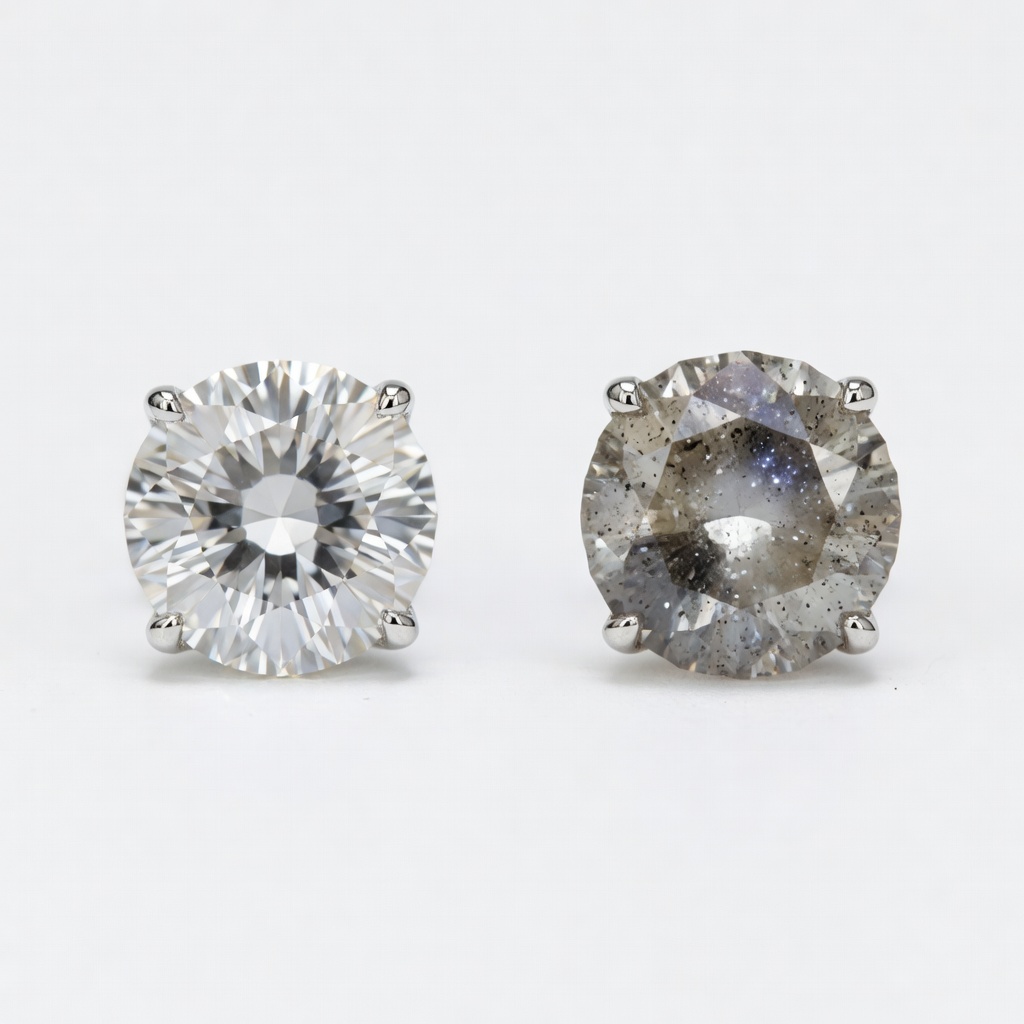
The most immediately apparent distinction in the Diamond vs Salt and Pepper Diamond comparison lies in their visual presentation and interaction with light. Traditional diamonds undergo rigorous evaluation based on their ability to refract and disperse light, with gemological laboratories grading them on scales that reward absolute transparency. The ideal traditional diamond acts as a pristine window, allowing white light to enter, bounce off internal facets, and exit as spectral fire and brilliance. This pursuit of optical perfection drives cutting techniques designed to maximize light return, resulting in the characteristic sparkle that has defined diamond desirability for generations.
Salt and pepper diamonds subvert these conventional beauty standards by celebrating the very inclusions that traditional grading systems penalize. These stones exhibit captivating internal landscapes ranging from delicate graphite speckles resembling scattered pepper to dramatic feathery inclusions creating milky, galaxy-like nebulas within the carbon matrix. Some display concentrations of black carbon that form geometric patterns, while others show smoky gray hazes or ice-blue wisps that give the stone a moody, atmospheric quality. Unlike traditional diamonds where consistency commands premium prices, each salt and pepper diamond possesses a singular "fingerprint" of inclusions, ensuring that no two stones will ever appear identical.
Setting choices dramatically influence how these aesthetic differences manifest in finished jewelry. Traditional diamonds typically excel in elevated prong settings that allow maximum light entry from all angles, enhancing their fire and scintillation. In contrast, salt and pepper diamonds often achieve their most striking appearance in bezel or semi-bezel settings that frame the stone's unique characteristics like miniature art pieces. Minimalist settings in matte finishes or brushed gold particularly complement the organic, earthy quality of rustic diamonds, while traditional stones demand highly polished galleries and precise architectural support to showcase their optical performance. Consider the case of a recent bespoke commission where a designer paired a heavily included gray diamond with a matte black rhodium setting, creating a moody, contemporary piece that would be impossible to replicate with a flawless traditional stone.
Formation and Geological Origins
Both traditional and salt and pepper diamonds originate from identical geological processes occurring 90 to 150 miles beneath Earth's surface, where carbon atoms crystallize into diamond structures under extreme pressure and temperatures exceeding 2,000 degrees Fahrenheit over periods spanning 1 to 3 billion years. This shared genesis means that chemically and physically, both varieties constitute true diamonds with identical hardness, thermal conductivity, and chemical composition. The divergence occurs during the crystallization process, where varying environmental conditions determine whether a diamond emerges with flawless clarity or the distinctive inclusions characteristic of galaxy diamond characteristics.
Salt and pepper diamonds form when additional minerals—primarily graphite, pyrite, or hematite—become trapped within the carbon lattice during crystal growth. These inclusions represent snapshots of the diamond's formation environment, with graphite inclusions indicating specific pressure fluctuations, while metallic inclusions like pyrite suggest interactions with iron-rich host rocks. Rather than viewing these entrapped materials as flaws, geologists recognize them as valuable indicators of diamond formation history. The resulting "rustic" appearance stems from billions of tiny inclusions scattering light internally, preventing the transparent clarity prized in traditional stones while creating the speckled, milky, or smoky effects that define the salt and pepper aesthetic.
Geographic sourcing patterns reveal interesting distinctions between these diamond categories. Traditional diamonds predominantly emerge from large-scale commercial mining operations in Russia, Canada, and Botswana, where advanced sorting technology separates gem-quality stones from industrial-grade material based on clarity characteristics. Conversely, salt and pepper diamonds frequently originate from alluvial deposits in Australia and specific regions of Africa, where artisanal miners recover stones that major commercial operations might discard. This sourcing reality contributes to the ethical advantages often associated with rustic diamonds, as they frequently bypass the energy-intensive processing plants required for traditional diamond sorting. The rarity perspective also differs: while flawless diamonds represent a smaller percentage of natural production, gem-quality salt and pepper diamonds suitable for jewelry remain uncommon in mainstream markets, creating niche scarcity that appeals to collectors seeking alternatives to mass-market gemstones.
The 4Cs: A Side-by-Side Comparison
Understanding diamond clarity grades explained becomes particularly complex when comparing traditional grading systems with the evaluation of salt and pepper diamonds. The Gemological Institute of America (GIA) and similar laboratories grade traditional diamonds on a clarity scale ranging from Flawless (FL) through Included (I3), with value increasing exponentially as inclusions decrease. Salt and pepper diamonds technically fall below the I3 grade due to their heavy inclusions, yet they command significant market value precisely because of these characteristics. This paradox requires buyers to abandon traditional grading mentalities and instead evaluate rustic diamonds based on inclusion pattern aesthetics, distribution, and the artistic appeal of their internal landscapes.
Color evaluation presents another fascinating divergence between these categories. Traditional diamonds undergo grading on the D-to-Z color scale, with completely colorless D-grade stones commanding the highest prices. Salt and pepper diamonds exist largely outside this system, displaying natural body colors ranging from icy white and silver-gray to deep charcoal and opaque black. These colors result from light interacting with dense concentrations of graphite inclusions rather than chemical impurities like nitrogen (which creates yellow diamonds) or boron (which creates blue diamonds). Cutters working with salt and pepper materials often prioritize preserving unique inclusion patterns over maximizing optical performance, leading to preference for rose cuts, step cuts, and geometric fancy shapes that showcase the stone's character rather than traditional brilliant cuts designed for light return.
Carat weight impacts pricing structures differently across these categories. Traditional diamonds follow exponential pricing curves where a two-carat stone costs significantly more than twice the price of a one-carat equivalent due to rarity factors. Salt and pepper diamonds maintain more linear pricing relationships, allowing buyers to acquire substantially larger stones without the dramatic price jumps associated with high-clarity traditional diamonds. This accessibility enables couples to choose impressive two or three-carat center stones while remaining within modest budgets—a practical impossibility with colorless, eye-clean traditional diamonds.
| Characteristic | Traditional Diamond | Salt and Pepper Diamond |
|---|---|---|
| Clarity Standard | FL to I3 (eye-clean preferred) | Below I3 (heavily included by design) |
| Price per Carat | $3,000 - $15,000+ | $300 - $2,000 |
| Color Range | D-Z scale (colorless premium) | Icy white to charcoal black |
| Ideal Cuts | Round brilliant, princess, cushion | Rose cut, hexagon, kite, geometric |
| Investment Profile | Established resale market (30-50% retail) | Emerging market, sentiment-focused |
| Light Performance | Maximum brilliance and fire | Muted, atmospheric, galaxy-like |
| Setting Recommendations | Elevated prongs, open galleries | Bezel settings, protective mounts |
| Ethical Sourcing | Kimberley Process certified | Artisanal mining, small-scale operations |
Price Analysis and Budget Considerations
The financial implications of choosing between these diamond varieties cannot be overstated, particularly for couples navigating engagement ring purchases within realistic budget constraints. Traditional diamonds command prices ranging from $3,000 to well over $15,000 per carat depending on color, clarity, and cut quality, with premium stones exhibiting D-color and Flawless clarity reaching astronomical price points. This pricing structure often forces compromises between size and quality, leading many buyers to choose smaller stones than initially desired to maintain acceptable clarity standards. In stark contrast, rustic diamond price comparison reveals that salt and pepper diamonds typically range from $300 to $2,000 per carat, with even exceptional specimens rarely exceeding $3,000 per carat.
This dramatic price differential enables significant budget stretching opportunities. A couple allocating $5,000 for a center stone might acquire a 0.5-carat traditional diamond with VS1 clarity and G color, or alternatively purchase a stunning 2-carat salt and pepper diamond with unique galaxy inclusions and a custom-cut geometric silhouette. Real-world case studies demonstrate this value proposition: a recent bridal market survey found that 68% of couples choosing salt and pepper diamonds cited the ability to prioritize carat weight and unique design over the "four Cs" as their primary motivation. Furthermore, the market demand for rustic diamonds has shown remarkable resilience, with values increasing approximately 40% since 2020 as consumer preferences shift toward individuality and sustainable luxury.
However, buyers should understand the cost factors driving these price disparities. Traditional diamond pricing incorporates certification premiums from laboratories like GIA or AGS, branding markups from luxury retailers, and the energy-intensive processing required to sort and cut gem-quality material. Salt and pepper diamonds often bypass these cost centers, frequently sold by independent designers and small-scale cutters who source rough material directly from artisanal miners. While this creates savings opportunities, it also means inconsistent availability and the necessity of working with jewelers experienced in evaluating included stones. Budget-conscious shoppers should allocate funds toward protective settings and custom designs that maximize the artistic potential of rustic diamonds rather than seeking traditional certification documents that provide limited value for heavily included stones.
Durability, Care and Maintenance
Addressing the common question "are salt and pepper diamonds durable" requires nuanced understanding of diamond physics versus practical wear considerations. Both traditional and salt and pepper diamonds rate 10 on the Mohs hardness scale, making them equally resistant to scratching and suitable for daily wear in engagement rings. However, the presence of heavy inclusions creates potential vulnerabilities that flawless diamonds avoid. Large surface-reaching inclusions, particularly cleavage planes or feather fractures that extend to the girdle or table facets, can create weak points where impact might cause chipping or cleaving. This risk remains statistically low for properly set stones but necessitates specific protective measures for heavily included diamonds.
Maintenance protocols differ subtly between these varieties. Traditional diamonds respond excellently to ultrasonic cleaning and steam treatments, which remove buildup from oils and lotions that can dull brilliance. Salt and pepper diamonds require more cautious approaches; while they tolerate standard soap-and-water cleaning with soft brushes, ultrasonic vibrations can potentially stress inclusion planes, particularly in stones with large feathers or cavities reaching the surface. Professional jewelers recommend avoiding harsh chemical exposures—such as chlorine or hydrofluoric acid—that might etch or highlight inclusions, making them more visible over time.
Setting selection plays a crucial role in longevity for both stone types. While traditional diamonds thrive in elevated prong settings that maximize light exposure, salt and pepper diamonds benefit from bezel settings or partial bezels that protect vulnerable girdle areas and inclusion-rich zones. For active lifestyles or manual labor professions, rustic diamonds in low-profile bezel mounts often prove more practical than high-set traditional diamonds, as the protective metalwork guards against direct impact. Annual professional maintenance should include prong checks for both varieties, with additional attention to salt and pepper diamonds regarding inclusion stability and setting integrity. A practical tip for rustic diamond owners: request that jewelers examine the stone under magnification during routine cleanings to ensure no inclusions have developed new surface-reaching characteristics that might require setting adjustments.
Ethical Sourcing and Environmental Impact
The ethical dimension of Diamond vs Salt and Pepper Diamond selection increasingly influences purchasing decisions among socially conscious consumers. Traditional diamonds fall under the Kimberley Process Certification Scheme, which aims to prevent conflict diamonds from entering legitimate markets. While this system has reduced the flow of stones financing rebel movements, critics note its limitations regarding environmental degradation, human rights abuses in artisanal mining sectors, and the narrow definition of "conflict" that excludes state-sponsored violence. Large-scale traditional diamond mining involves significant ecological disruption, including kimberlite pipe excavation, massive water usage, and carbon emissions from processing facilities.
Salt and pepper diamonds frequently offer pathways to more ethical diamond alternatives and sustainable consumption. Because major commercial operations often discard heavily included rough as unsuitable for traditional jewelry, rustic diamonds frequently enter the market through small-scale artisanal miners using low-impact methods such as alluvial panning or shallow pit mining. These operations typically involve lower energy consumption, minimal chemical processing, and direct economic benefit to local mining communities rather than distant corporate entities. Many salt and pepper diamond suppliers maintain direct relationships with specific mining cooperatives, providing traceability that exceeds the anonymized supply chains of mass-market traditional diamonds.
Recycled diamonds present another ethical avenue available for both categories. Vintage and estate diamonds, whether traditionally flawless or rustic included varieties, eliminate the environmental impact of new mining entirely. Several contemporary designers specialize in resetting antique salt and pepper diamonds in modern mountings, combining historical sustainability with contemporary aesthetics. When evaluating ethical claims, consumers should seek specific documentation regarding mine origins rather than relying on generic "conflict-free" assurances. The transparency advantage of salt and pepper diamonds often manifests in shorter supply chains—many artisanal cutters purchase rough directly from miners and sell finished stones to independent designers, creating traceable provenance stories impossible in the complex commercial networks distributing traditional diamonds.
Engagement Ring Selection Guide
Selecting between these diamond varieties for an engagement ring involves aligning gemstone characteristics with personal aesthetics, lifestyle requirements, and symbolic values. Traditional diamonds suit classic design preferences, excelling in timeless solitaire settings, halo configurations, and three-stone rings that emphasize optical performance and refined elegance. These stones pair magnificently with white gold or platinum settings that enhance their colorless appearance, creating cohesive looks that read as sophisticated and eternally stylish. For individuals drawn to traditional luxury markers and the cultural symbolism of perfection and purity, flawless or near-flawless diamonds remain the definitive choice.
Conversely, salt and pepper diamond engagement ring designs flourish in bohemian, nature-inspired, and avant-garde aesthetic frameworks. These stones achieve stunning effects in organic, asymmetrical settings that incorporate textured metals, nature motifs like branches or leaves, and mixed-metal combinations. Warm-toned metals—particularly yellow gold and rose gold—complement the gray, black, and icy white tones of rustic diamonds, creating cohesive color stories that feel earthy and romantic. Customization potential expands dramatically with salt and pepper diamonds, as couples frequently commission bespoke cuts such as hexagons, kites, or freeform silhouettes that would waste too much material from expensive traditional rough but prove economical with rustic material.
Personality reflection plays a significant role in this decision matrix. Traditional diamonds often appeal to individuals who value established conventions, status recognition, and the symbolic representation of perfection in partnership. Salt and pepper diamonds resonate with those who embrace wabi-sabi philosophy—the Japanese aesthetic centered on beauty in imperfection and impermanence—or who view their relationship as unique and unrepeatable rather than conforming to standardized ideals. A practical case study involves a nature photographer who chose a heavily included gray diamond with dendritic inclusions resembling winter branches, set in a textured bark-finish band. This ring tells a specific story impossible to replicate with a standardized brilliant diamond, demonstrating how rustic stones function as wearable art pieces rather than mere symbols of wealth.
Investment Value and Long-Term Resale
Understanding the financial long-term perspectives of these diamond categories requires realistic assessment of secondary markets and liquidity. Traditional diamonds maintain established resale infrastructure through estate dealers, auction houses, and diamond-buying services, though sellers should expect to receive only 30% to 50% of original retail prices due to retail markups and wholesale market dynamics. Certified stones with GIA or AGS documentation retain value better than uncertified stones, with round brilliant cuts in classic sizes (1.0, 1.5, 2.0 carats) proving most liquid. Investment-grade traditional diamonds—those exceeding 5 carats with D-F color and IF-VVS clarity—occasionally appreciate in value, though the diamond market generally functions poorly as a short-term investment vehicle.
The rustic diamond resale market remains emerging and less liquid than traditional channels. Salt and pepper diamonds currently function better as sentimental keepsakes than financial instruments, though several factors suggest potential future appreciation. As major mines deplete and rough supply tightens, the industry may increasingly utilize included material previously discarded, potentially normalizing and valuing these stones more highly. Additionally, truly unique specimens with exceptional artistic inclusion patterns may develop collector markets similar to those for colored diamonds or mineral specimens. However, current resale typically occurs through niche platforms, vintage jewelry dealers, or direct peer-to-peer sales rather than established diamond exchanges.
Insurance considerations differ significantly between the categories. Traditional diamonds undergo straightforward appraisal processes based on current Rapaport pricing and comparable sales data, making them easy to insure for replacement value. Salt and pepper diamonds require specialized appraisals from gemologists experienced with included stones, as standard valuation matrices do not apply. When insuring rustic diamonds, ensure documentation includes high-resolution photography capturing the unique inclusion patterns, as replacing a salt and pepper diamond requires matching not just carat weight and dimensions but the specific aesthetic character that made the original stone appealing. Some insurance providers now offer "agreed value" policies for unique rustic diamonds, acknowledging that replacement with a "similar" stone may not adequately compensate for the loss of a specific artistic piece.
Final Verdict: Which Diamond Is Right for You?
Deciding between choosing between diamonds ultimately requires honest assessment of priorities, lifestyle, and values rather than adherence to outdated prestige metrics. Opt for traditional diamonds if you prioritize maximum brilliance and fire, require established value retention for potential future resale, prefer classic aesthetic conventions that read immediately as "engagement ring" to broader society, or simply find genuine pleasure in the pursuit of perfection and the cultural significance of flawless gemstones. These stones suit individuals working in conservative professional environments where traditional luxury signals carry social currency, or those who view their jewelry as potential emergency assets requiring easy liquidation.
Choose salt and pepper diamonds if budget efficiency allows you to prioritize size and presence over clarity grades, if you value unique artistry and the guarantee that no one else owns an identical stone, if ethical sourcing and environmental impact weigh heavily in your purchasing decisions, or if your personal style leans toward bohemian, industrial, or non-traditional aesthetics. These stones particularly benefit individuals with active lifestyles or manual hobbies, as minor scratches or impacts that might mar the perfect surface of a traditional diamond become indistinguishable from the stone's natural character. A construction worker or rock climber, for instance, might worry less about damaging a rustic diamond whose beauty embraces imperfection than a flawless stone where every scratch represents diminished value.
Symbolic meaning should guide this decision as much as practical considerations. Traditional diamonds represent ideals of perfection, purity, and unattainable standards—beautiful metaphors for aspiration and the highest expressions of commitment. Salt and pepper diamonds embody authenticity, resilience, and the beauty found in life's unpredictable journeys—the inclusions formed under pressure billions of years ago parallel the challenges that strengthen relationships over time. Neither choice represents compromise; rather, each reflects different truths about what constitutes value, beauty, and lasting significance. The best diamond for engagement ring purposes remains the one that resonates with your specific story, budget, and vision for the future, whether that manifests as crystalline perfection or galactic uniqueness.
Frequently Asked Questions
Are salt and pepper diamonds real diamonds?
Yes, salt and pepper diamonds are 100% real diamonds composed of pure carbon. They simply contain natural inclusions (graphite, pyrite, or other minerals) that create their distinctive speckled appearance, whereas traditional diamonds are valued for their lack of these inclusions.
Which is more expensive: traditional or salt and pepper diamonds?
Traditional diamonds are significantly more expensive, typically costing $3,000-$15,000+ per carat. Salt and pepper diamonds range from $300-$2,000 per carat, making them a budget-friendly alternative that allows for larger stone sizes at lower price points.
Can salt and pepper diamonds be used in engagement rings?
Absolutely. Salt and pepper diamonds are increasingly popular for engagement rings, especially among couples seeking unique, ethical, and affordable options. Their durability (10 on Mohs scale) makes them suitable for daily wear, though protective settings like bezels are recommended.
Do salt and pepper diamonds hold their value?
Traditional diamonds have a more established resale market, retaining 30-50% of retail value. Salt and pepper diamonds are newer to the market with an emerging secondary market. While they may not currently match traditional diamonds as financial investments, their rarity and growing demand suggest potential appreciation.
How do I care for a salt and pepper diamond?
Clean with mild soap, warm water, and a soft brush. Avoid ultrasonic cleaners as vibrations can affect inclusion stability. Have prongs checked annually and consider bezel settings for added protection. The care is similar to traditional diamonds but with extra caution for surface-reaching inclusions.
Are salt and pepper diamonds more ethical than traditional diamonds?
Generally yes. Salt and pepper diamonds often come from small-scale artisanal mines with lower environmental impact and more transparent supply chains. While traditional diamonds are regulated by the Kimberley Process, rustic diamonds typically bypass complex commercial mining operations.
What cut styles work best for each diamond type?
Traditional diamonds excel with brilliant cuts (round, princess, cushion) that maximize light performance. Salt and pepper diamonds look stunning in rose cuts, hexagonal, kite, or geometric shapes that preserve their unique inclusion patterns and create an artistic, organic appearance.
Can you insure salt and pepper diamonds?
Yes, but you'll need a specialized appraisal from a gemologist experienced with included diamonds. Most insurance companies will cover them under the same policies as traditional diamonds, though the valuation process may differ due to the unique nature of each stone.