Introduction: The Rarity Spectrum of Carbon Gems
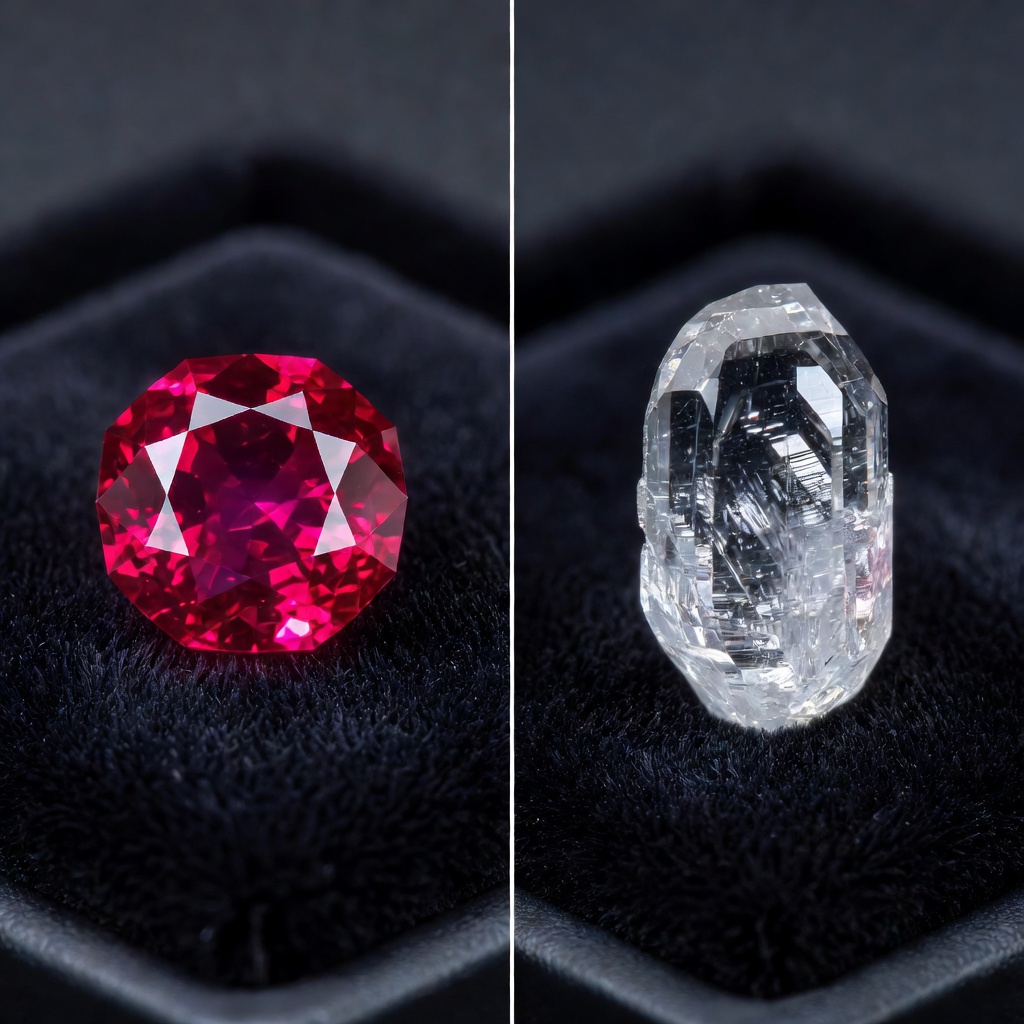
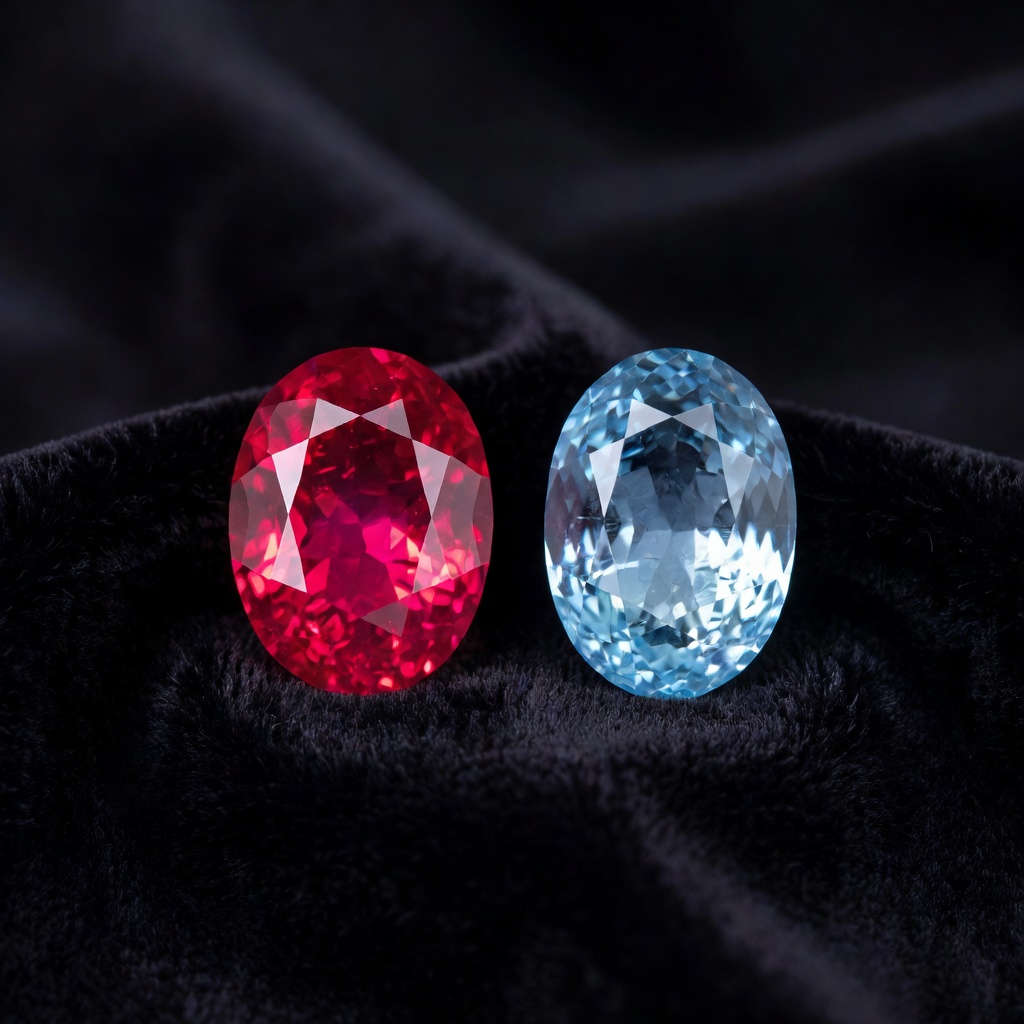
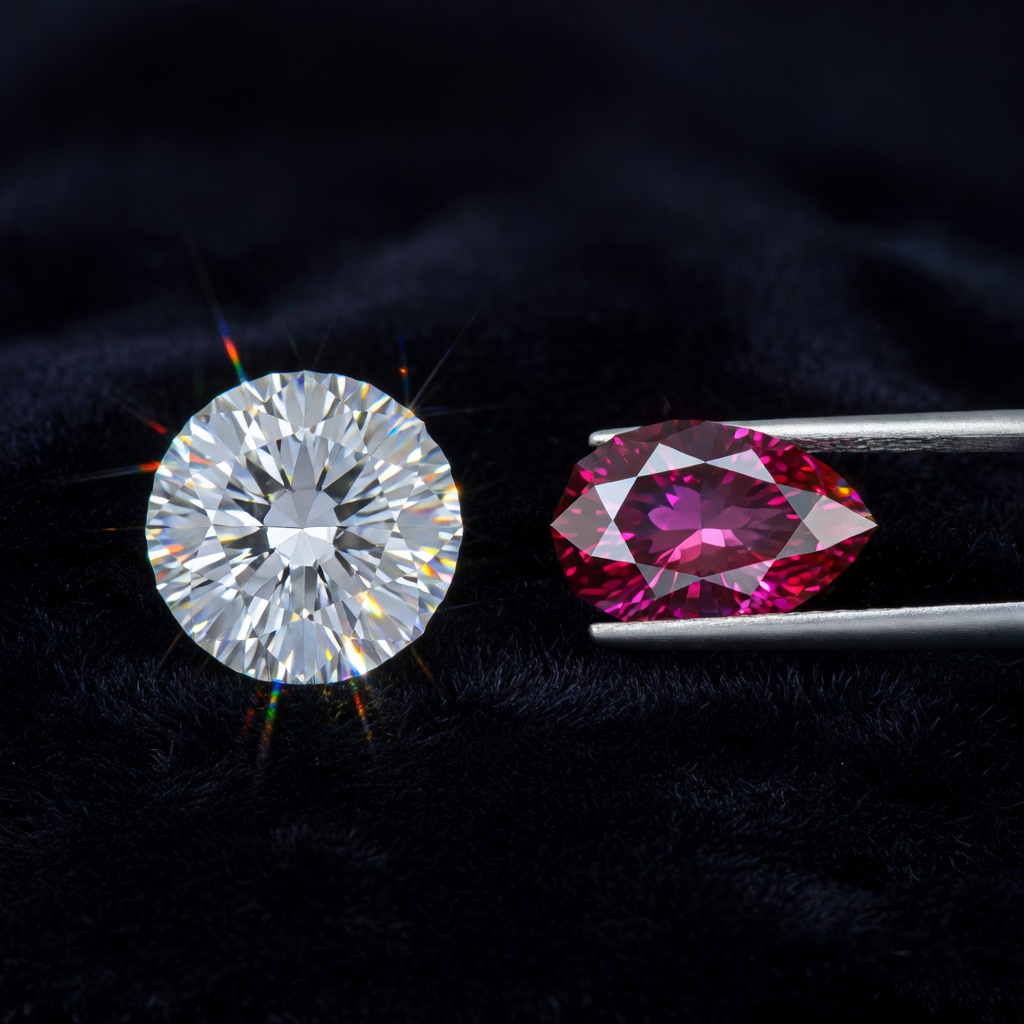
When examining the fascinating world of precious gemstones, the comparison of Diamond vs Red Diamond reveals one of nature's most striking paradoxes. Chemically, both varieties consist of 100% pure crystallized carbon arranged in an isometric crystal structure, making them identical at the molecular level. Yet these gems occupy opposite extremes of the rarity spectrum, with red diamonds representing the absolute pinnacle of scarcity while colorless diamonds flow through global markets by the millions of carats annually. This stark contrast creates a price disparity that shocks even seasoned collectors, as natural Fancy red diamond specimens routinely command 50 to 100 times more per carat than their colorless counterparts of equivalent size and clarity.
The geological lottery that creates these crimson marvels involves a specific and extraordinarily rare deformation process during formation, unlike the relatively common conditions that produce white diamonds. While colorless diamonds form in stable environments with pure carbon lattices, red diamonds require intense pressure that physically扭曲 the crystal structure at the atomic level, trapping light in ways that produce their signature hue. Understanding this distinction helps collectors appreciate why the Hancock Red sold for $880,000 per carat in 1987—a price that seems modest today when modern Fancy red diamond auctions regularly exceed $2 million per carat.
Understanding Colorless Diamonds: The Standard of Brilliance
The modern diamond industry operates on a sophisticated Diamond color scale comparison system developed by the Gemological Institute of America (GIA), ranging from D (completely colorless) to Z (light yellow or brown). Most consumers seeking "white" diamonds actually purchase stones in the G-H-I range, which appear face-up colorless to the untrained eye but cost significantly less than true D-color specimens. This grading scale measures the absence of color, with each letter representing a subtle shift in tint that dramatically affects pricing, particularly in the premium D-F range where differences require laboratory conditions to detect reliably.
Unlike their crimson cousins, colorless diamonds benefit from abundant supply chains that deliver over 130 million carats of gem-quality rough annually from mines across Botswana, Russia, Canada, and Australia. This volume enables the standardized Four Cs grading system—Cut, Color, Clarity, and Carat—to function as a reliable marketplace framework. When selecting a traditional diamond for daily wear, buyers should prioritize Cut quality above all factors, as an Excellent or Ideal cut maximizes light return and fire, potentially making a G-color stone appear more brilliant than a poorly cut D-color diamond. Practical purchasing strategies include selecting VS2 or SI1 clarity grades to avoid paying for invisible inclusions, and choosing H-color center stones set in yellow gold to mask any subtle warmth.
The Phenomenon of Red Diamonds: Nature's Rarest Masterpiece
Natural red diamond formation represents perhaps the rarest geological event in gemology, with fewer than 30 authenticated specimens exceeding 0.5 carats known to exist worldwide. These extraordinary gems command Fancy Vivid or Fancy Deep red classifications on the GIA scale, with the most valuable examples displaying pure red hues without secondary modifiers like purple or brown undertones. Unlike other fancy colored diamonds that obtain their hues from chemical impurities—nitrogen creates yellow, boron creates blue—red diamonds derive their color solely from plastic deformation, a process where extreme pressure扭曲 the crystal lattice to absorb green light while transmitting red wavelengths.
The Argyle red diamond rarity factor intensified dramatically following the 2020 closure of Australia's Argyle Mine, which historically produced 90% of the world's pink-to-red diamonds. During its 37-year operation, the Argyle Mine yielded only a handful of true red diamonds, with most weighing less than 0.25 carats. The statistical improbability of finding larger specimens explains why the 5.11-carat Moussaieff Red remains one of the largest known natural red diamonds in existence. For collectors seeking these crimson treasures, auction houses like Christie's and Sotheby's represent the only viable acquisition channels, as red diamonds essentially never appear in traditional retail jewelry stores due to their multi-million-dollar price points and extreme scarcity.
Case Study: The Argyle Cardinal Discovery
In 2014, Rio Tinto's Argyle Mine unveiled the Argyle Cardinal, a 1.21-carat radiant-cut Fancy red diamond that exemplified the mine's exceptional production. This particular stone, named for the Northern Cardinal bird, sold for over $2 million at the annual Argyle Tender, demonstrating how even sub-carat red diamonds (after cutting) command premiums exceeding comparable colorless diamonds by factors of 100 or more. The Cardinal's discovery highlighted the mine's unique ability to produce red hues with superior saturation compared to Brazilian or African sources, a quality that has driven post-closure prices even higher as supply permanently constrained.
Geological Origins: How Color Forms Differently
Understanding Natural red diamond formation requires examining the distinct crystallization environments that separate these gems from their colorless counterparts. Standard diamonds form approximately 140 to 190 kilometers beneath Earth's surface under stable pressure of 45-60 kilobars and temperatures around 900-1,300°C, creating perfect carbon tetrahedrons that transmit all visible light equally, resulting in colorless appearance. These conditions exist in relatively stable cratonic roots beneath continental plates, explaining why diamond mines dot ancient landmasses like Africa, Canada, and Siberia with predictable, albeit finite, yields.
Red diamonds require an additional, violent geological episode where tectonic plate movement subjects already-formed diamonds to extreme shear stress, causing plastic deformation along specific crystallographic directions. This process creates glide planes and structural defects within the lattice that selectively absorb green spectrum light (around 550 nm), leaving the complementary red color visible to human eyes. Unlike chemical coloration from nitrogen or boron inclusions, which occurs during initial growth, red coloration happens during the kimberlite eruption transport phase or subsequent mountain-building events. Brazilian alluvial deposits and the Argyle lamproite pipe represent the only known sources where these specific deformation conditions occurred, explaining the extreme geographic limitation of red diamond discoveries.
Practical Tip: Understanding Origin Reports
When evaluating high-value colored diamonds, request detailed origin reports that specify whether deformation-related coloration occurred naturally or through laboratory treatment. Natural red diamonds display specific strain patterns visible under cross-polarized filters, showing a distinctive "tatami" pattern of intersecting lamellae that gemologists use to verify authenticity. Treated stones, often created through irradiation and annealing of brownish diamonds, lack these natural strain signatures and command prices significantly lower than natural specimens.
Rarity Comparison: Supply and Market Availability
The supply disparity between Diamond vs Red Diamond categories defies conventional market economics. Annual global production of gem-quality colorless diamonds exceeds 130 million carats, with major mining operations like De Beers' Jwaneng Mine in Botswana or Alrosa's Udachnaya Pipe in Russia each contributing millions of carats annually to stable, liquid markets. This abundance supports a robust secondary market, standardized pricing mechanisms, and consumer accessibility across virtually every economic demographic, from $500 quarter-carat studs to $500,000 five-carat investment pieces.
Conversely, essentially zero new red diamonds enter the market following the Argyle Mine closure, creating a finite supply scenario where existing specimens trade hands only through estate sales or high-end auctions. Before 2020, the Argyle Tender released approximately 50-60 pink diamonds annually, with true reds appearing perhaps once every two to three years. Brazilian alluvial deposits occasionally yield small red crystals, but these rarely exceed 0.3 carats in polished form. This supply constraint explains why red diamond investment value has appreciated consistently even during diamond market downturns, as collector demand from ultra-high-net-worth individuals in Asia and the Middle East continues growing while supply remains fixed or diminishes through attrition.
Market Impact Analysis: Post-Argyle Dynamics
Since the Argyle Mine's November 2020 closure, prices for Argyle red diamond rarity specimens have increased 200-300% at auction, with the 2022 New York Magnificent Jewels sale setting records for both total red diamond offerings and per-carat prices. Collectors now face a permanent supply ceiling, as no known geological formations currently under exploration show Argyle-type lamproite chemistry capable of producing red diamonds. This reality transforms every existing natural red diamond into a irreplaceable museum-grade asset rather than a mere commodity.
Investment Value and Price Analysis
When analyzing Red diamond investment value against traditional colorless stones, the financial divergence becomes starkly apparent. Quality colorless diamonds in the D-F, VS1-VVS2 range typically trade between $5,000 to $15,000 per carat depending on cut quality and market conditions, representing accessible entry points for moderate investors. These diamonds generally appreciate at modest rates of 2-3% annually, tracking inflation but rarely outperforming equity markets, while offering excellent liquidity through buy-back programs, pawn shops, and secondary dealers.
Fancy red diamonds operate in an entirely different investment universe, with per-carat values ranging from $400,000 for smaller stones with slight modifiers to over $2 million for pure red specimens exceeding one carat. Over the past two decades, red diamonds have appreciated approximately 300-500%, significantly outpacing traditional diamonds, gold, and many equity indices. However, this appreciation comes with liquidity constraints, as selling a multi-million-dollar red diamond requires months of preparation, specialized auction house consignment, and buyer verification processes unlike the immediate cash conversion available for colorless stones.
| Characteristic | Colorless Diamond | Fancy Red Diamond |
|---|---|---|
| Average Price per Carat | $5,000 - $15,000 (D-F color, VS+ clarity) | $400,000 - $2,000,000+ (depending on saturation) |
| Annual Global Production | 130+ million carats | 0 new supply (Argyle closed 2020); previously <1 carat annually |
| 20-Year Appreciation Rate | 40-60% total return | 300-500% total return |
| Market Liquidity | High (immediate buy-back available at most jewelers) | Low (requires specialized auction house consignment, 3-6 month sales cycle) |
| Optimal Use Case | Daily wear jewelry, engagement rings, moderate investment portfolios | Museum collections, ultra-high-net-worth asset allocation, generational wealth transfer |
| Grading Standards | Strict clarity requirements; D-Z color scale | Color grading prioritizes hue/saturation; clarity standards more lenient |
| Size Availability | Readily available up to 10+ carats | Extremely rare above 1 carat; largest known is 5.11 carats (Moussaieff Red) |
| Color Origin | Absence of chemical impurities or lattice defects | Plastic deformation (lattice distortion) without chemical impurities |
Portfolio Allocation Strategy
Financial advisors specializing in tangible assets recommend limiting red diamond exposure to 1-2% of ultra-high-net-worth portfolios (minimum $50M liquid assets) due to concentration risk and insurance complexities. For investors with $1-5 million portfolios, colorless diamonds offer better diversification when purchased through investment-grade programs like the Fancy Color Research Foundation's indices. Crucially, red diamonds require specialized insurance riders covering mysterious disappearance and market appreciation, whereas standard colorless diamonds fall under standard jewelry coverage with minimal documentation requirements.
Physical Properties and Durability
Both Diamond vs Red Diamond varieties share identical physical properties that make diamond the ultimate gemstone for durability and daily wear. Both register 10 on the Mohs hardness scale, resist scratching from any other material, and exhibit exceptional thermal conductivity—properties that remain constant regardless of color origin. This hardness derives from the strong covalent bonding between carbon atoms, creating a lattice that withstands daily impacts that would damage sapphires, rubies, or emeralds.
However, red diamonds often contain unique internal characteristics resulting from their traumatic formation that require different setting considerations than colorless stones. The plastic deformation creating red color frequently produces internal graining and stress patterns that, while not affecting hardness, can create cleavage planes or weakness zones along specific crystallographic directions. Master cutters working with red rough must navigate these stress patterns carefully, often sacrificing maximum yield to avoid fractures. When setting red diamonds, jewelers recommend protective bezel settings rather than exposed prong settings, particularly for stones with visible graining, to prevent cleavage damage from sharp impacts.
Maintenance Considerations
While ultrasonic cleaning remains safe for both varieties, red diamonds with significant internal graining should undergo periodic professional inspection to ensure settings haven't developed stress points. Colorless diamonds tolerate repolishing and recutting to remove chips or abrasion, but red diamonds—due to their extreme value and the risk of color alteration through heating—should never undergo aggressive mechanical treatments without spectroscopic analysis to confirm stability.
Grading Nuances: Why Red Diamonds Break the Rules
The Diamond color scale comparison between colorless and fancy red varieties reveals fundamentally different philosophical approaches to gemological assessment. Colorless diamonds undergo evaluation based on the absence of color, with laboratories using master comparison stones under controlled lighting to detect minute traces of yellow or brown. This system rewards purity and transparency, with D-color stones commanding premiums for achieving absolute colorlessness.
Fancy red diamonds flip this paradigm entirely, utilizing a descriptive system based on hue, tone, and saturation rather than absence metrics. GIA grading reports for Fancy red diamond specimens describe color using terms like "Fancy Red," "Fancy Purplish Red," or "Fancy Brownish Red," with pure red commands premiums exceeding those of modified hues by 300% or more. Unlike other fancy colors where slight modifiers might reduce value marginally, red diamonds show extreme sensitivity to secondary hues—a purplish modifier might reduce value by 50%, while a brownish modifier could reduce it by 80%. Additionally, clarity standards relax significantly for red diamonds; whereas an investment-grade colorless diamond requires VS1 or higher clarity, a red diamond with SI2 clarity but pure color commands higher prices than a VVS1 with brownish modifiers.
Reading the Certificate: A Practical Example
When comparing GIA certificates, a colorless diamond report focuses heavily on inclusion plotting diagrams and precise color grades like "F" or "G," while a red diamond report emphasizes color origin (Natural versus Treated) and color description nuances. A red diamond graded "Fancy Deep Brownish Red" might cost $200,000 per carat, while an identical-sized "Fancy Vivid Red" could command $1.8 million—demonstrating why understanding these grading nuances prevents catastrophic overpayment for uninformed buyers.
Famous Examples and Historical Significance
The pantheon of Most expensive colored diamond records remains dominated by red specimens, with the Moussaieff Red (formerly the Red Shield) standing as the largest known Fancy red diamond at 5.11 carats. Discovered by a Brazilian farmer in the 1990s and cut into a triangular brilliant shape, this stone exemplifies the purplish-red hue characteristic of super-deep formation. By contrast, famous colorless diamonds like the Cullinan I (530.2 carats) or the Koh-i-Noor (105.6 carats) showcase the size potential available in colorless rough, with historical significance tied to colonial history and royal regalia rather than geological rarity.
The 1987 Christie's New York auction of the Hancock Red, a 0.95-carat Fancy Purplish Red diamond, fundamentally altered Red diamond investment value perception by selling for $880,000—nearly $926,000 per carat, which tripled previous records and established red diamonds as legitimate alternative investments. This sale triggered institutional interest from museums and investment trusts, transforming red diamonds from geological curiosities into asset-class collectibles. Celebrity ownership patterns differ markedly between varieties: while colorless diamonds dominate red carpet events through loaner programs with major houses like Harry Winston, red diamonds appear almost exclusively in private collections, with occasional public display at the Smithsonian or Victoria and Albert Museum.
Exhibition Trends and Public Access
The Natural History Museum of Los Angeles County displayed the Argyle Everglow (a 2.11-carat Fancy Vivid Purplish Pink, near-red) in 2017, drawing record attendance and demonstrating public fascination with these ultra-rare gems. Conversely, colorless diamonds of historical significance like the Hope Diamond (technically a blue-gray Fancy Dark Greyish-Blue) remain permanent museum fixtures, suggesting that while red diamonds generate temporary exhibition frenzy due to rarity, colorless diamonds anchor permanent collections through historical narrative.
Buying Guide: Which Should You Choose?
For consumers navigating the Diamond vs Red Diamond decision, practical considerations should drive selection beyond mere aesthetics. Colorless diamonds suit engagement rings, daily wear jewelry, and moderate investment portfolios ($5,000-$100,000 range) due to their durability, design versatility, and liquidity. When purchasing colorless stones, prioritize cut quality and seek GIA or AGS certification to ensure accurate grading, while avoiding over-investment in clarity characteristics invisible to the naked eye.
Fancy red diamonds should only enter consideration for ultra-high-net-worth individuals (liquid assets exceeding $30 million) seeking long-term wealth preservation with 20+ year horizons. These gems function as "disaster insurance" assets—portable, internationally recognized stores of value that transcend currency fluctuations—but require specialized storage, insurance, and eventual sale through auction houses. Critical warnings apply: the market contains numerous irradiated and annealed diamonds treated to simulate red color, which sell for 1/100th of natural prices. Always demand GIA certification specifically stating "Natural Color" and "Red" without quotation marks (which indicate treatment), and avoid "clarity enhanced" red diamonds that have undergone fracture filling, as these treatments compromise both value and durability.
Verification Protocol for High-Value Purchases
Before acquiring any red diamond exceeding $100,000, engage an independent gemological laboratory to perform spectroscopic analysis confirming natural origin. Reputable sellers should provide Argyle Tender documentation for Australian stones, or detailed provenance records for Brazilian alluvial finds. For colorless diamonds, verification requires only standard GIA reports and laser inscription matching, available through any certified appraiser.
Frequently Asked Questions
Are Red Diamonds Actually Diamonds or a Different Gemstone?
Red diamonds are 100% natural diamonds composed of crystallized carbon with the same chemical formula (C) and Mohs hardness (10) as colorless diamonds. The red color comes from plastic deformation during formation, not chemical impurities, making them the rarest diamond color variety. While rubies and red spinels might appear similar in color, they constitute entirely different mineral species (aluminum oxide and magnesium aluminum oxide respectively), whereas red diamonds maintain the pure carbon composition and crystalline structure that defines diamond.
Why Are Red Diamonds More Expensive Than Regular Diamonds?
Red diamonds command premium prices due to extreme scarcity—fewer than 30 authenticated natural red diamonds exist over 0.5 carats globally. While millions of carats of colorless diamonds are mined annually, essentially no new red diamonds enter the market, creating supply-demand economics that push prices to $1-2 million per carat. Additionally, the closure of the Argyle Mine in 2020 eliminated the primary source of red diamonds, ensuring that existing specimens become progressively rarer as collectors permanently remove them from circulation.
Can Red Diamonds Be Lab-Created or Are They Only Natural?
Both natural and lab-grown red diamonds exist. HPHT (High Pressure High Temperature) and CVD (Chemical Vapor Deposition) methods can create red diamonds by introducing controlled lattice deformations. However, natural red diamonds from the now-closed Argyle Mine hold significantly higher investment value and rarity status than synthetic alternatives. Laboratory-grown reds typically sell for 70-80% less than natural specimens and lack the appreciation potential and collectibility that drive the natural red diamond market.
Do Red Diamonds Sparkle Less Than White Diamonds?
Red diamonds exhibit brilliance and fire similar to colorless diamonds due to identical refractive indices, but the intense body color can mask some light return. Ideal cutting is crucial for reds to maximize light performance, though they typically face-up darker than D-color diamonds due to light absorption in the red spectrum. When properly cut with excellent symmetry and polish, red diamonds display scintillation patterns comparable to colorless stones, though the visual effect emphasizes depth and color saturation rather than the "flash" associated with white diamonds.
Which Is Better for Investment: Colorless or Red Diamonds?
For pure investment, natural red diamonds have historically outperformed colorless diamonds, appreciating 300-500% over two decades. However, colorless diamonds offer better liquidity and lower entry points ($5,000+ vs $400,000+). Red diamonds suit ultra-high-net-worth portfolios, while colorless diamonds work for moderate investors seeking tangible assets. Colorless diamonds function better as inflation hedges with quarterly liquidity, whereas reds serve as long-term generational wealth preservation vehicles requiring 10-20 year holding periods to realize optimal returns.
How Can I Tell if a Red Diamond Is Real Versus Treated?
Always require GIA or Argyle certification. Natural red diamonds show specific strain patterns under cross-polarized light and lack color concentrations along fractures (indicative of irradiation treatment). Treated diamonds often show unnatural color distribution, while natural reds command 100x premiums over treated stones. Advanced testing using Raman spectroscopy can detect the distinctive absorption patterns at 550 nm that characterize natural plastic deformation, while treated stones show different spectral signatures or evidence of irradiation-induced color centers.
Are Argyle Red Diamonds Different from Other Red Diamonds?
Argyle red diamonds, sourced from Australia's now-closed Argyle Mine (1985-2020), represent 90% of the world's pink-to-red diamond supply and are considered the 'crown jewels' of red diamonds. They typically display unique purplish-red hues and command higher premiums than red diamonds from Brazil or Africa due to provenance and superior color saturation. The Argyle Mine's unique lamproite volcanic chemistry created diamonds with higher nitrogen aggregation states, producing more vivid saturation than alluvial Brazilian reds, which often show brownish modifiers that reduce value.