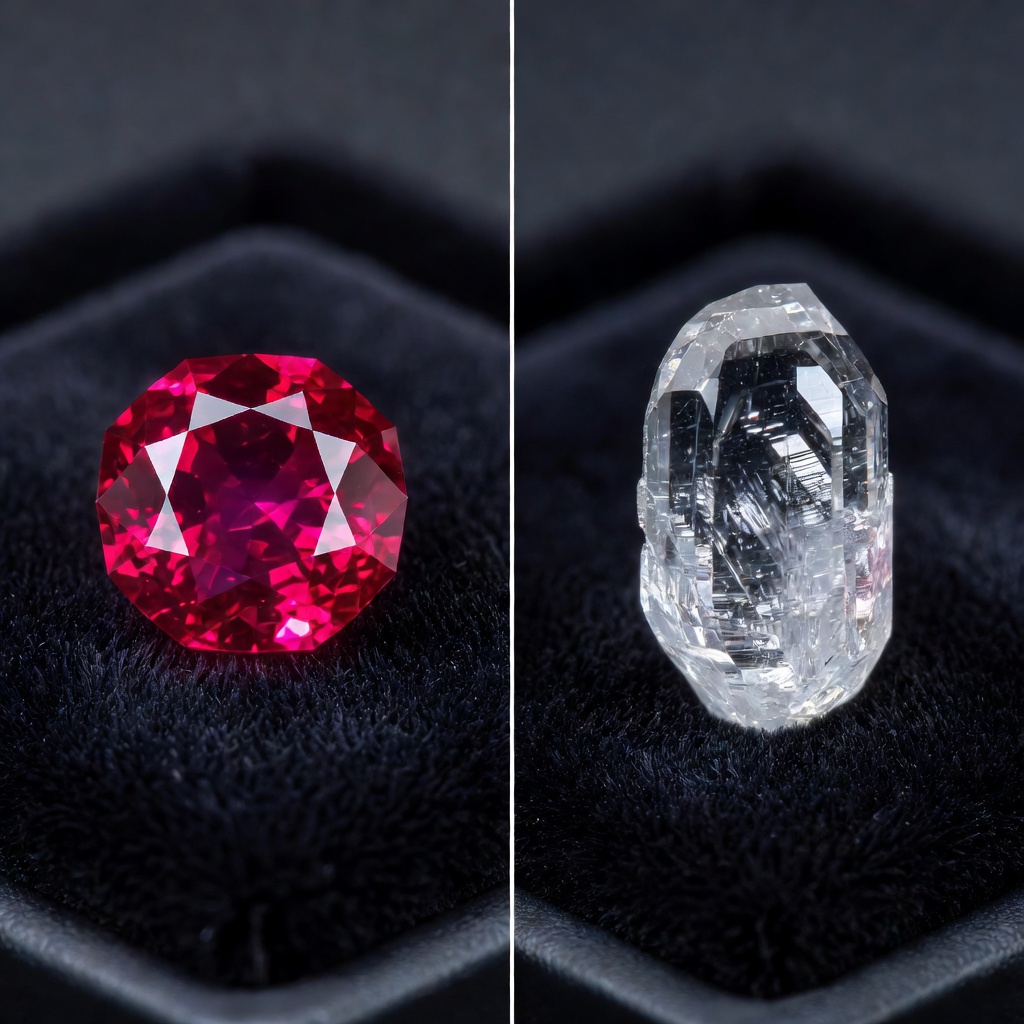
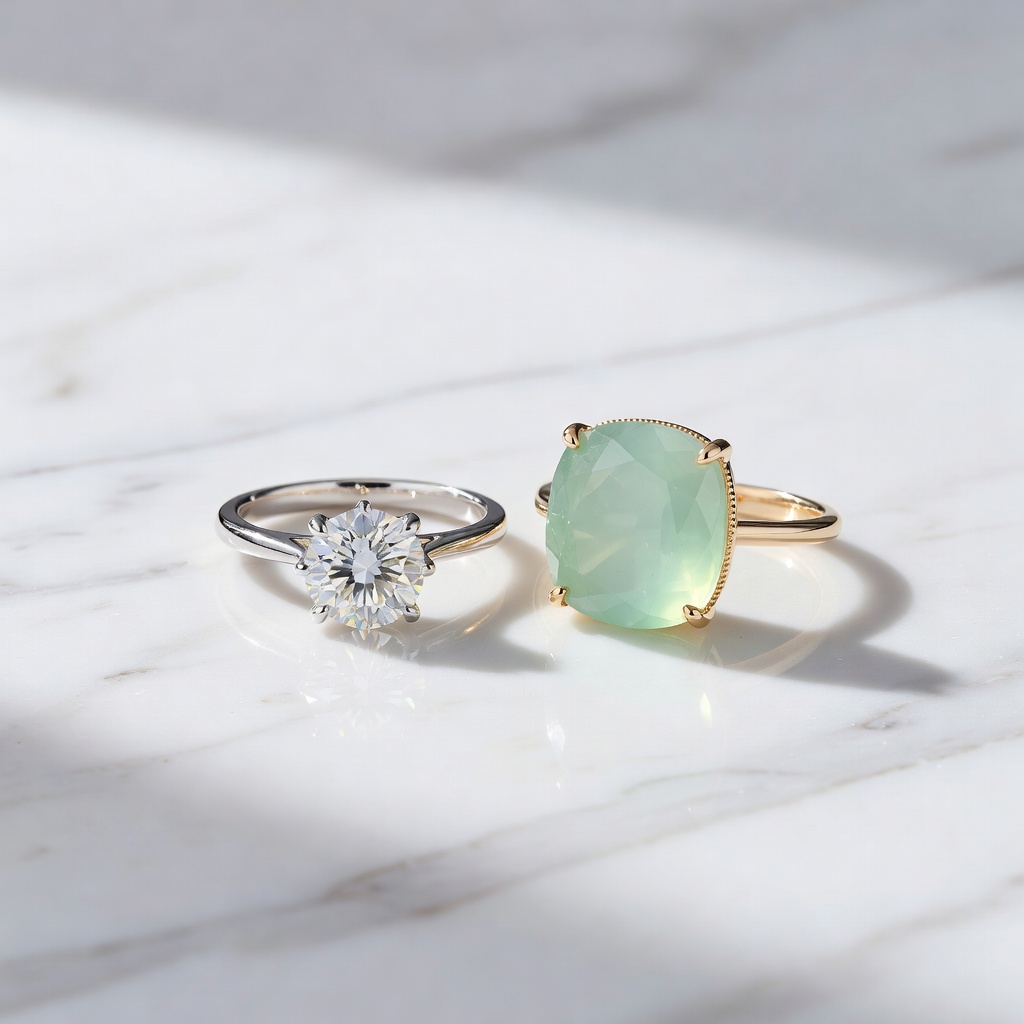
Introduction: Understanding Diamond and Prasiolite
When exploring the world of fine jewelry, the comparison between diamond vs prasiolite represents one of the most striking contrasts between luxury gemstones and affordable alternatives. Diamonds represent the pinnacle of geological rarity, formed from carbon atoms arranged in an isometric cubic crystal structure under extreme pressure deep within the earth's mantle. These remarkable stones achieve the highest possible rating on the Mohs hardness scale at 10, making them the standard against which all other gemstones are measured for durability and brilliance.
Prasiolite, commonly marketed as "green amethyst" in jewelry stores, presents a fascinating case study in gemstone transformation and value engineering. This pale green variety of quartz is not found naturally in significant quantities; instead, nearly all prasiolite available today is created through the controlled heat treatment of purple amethyst or certain varieties of yellow citrine. The heating process alters the oxidation states of iron impurities within the quartz crystal structure, resulting in the distinctive minty green to yellowish-green hue that has gained popularity among budget-conscious jewelry enthusiasts seeking unique color options.
The reason these two vastly different materials are frequently compared stems from the growing demand for affordable diamond alternatives that still offer visual distinction and wearability. While diamonds command premium prices due to their rarity, exceptional optical properties, and cultural significance, prasiolite offers an accessible entry point into colored gemstone jewelry at a fraction of the cost. Understanding what is prasiolite and how it fundamentally differs from diamond composition, formation, and performance characteristics enables buyers to make informed decisions aligned with their lifestyle needs and financial parameters.
Physical Properties and Durability Comparison
The physical disparity between these gemstones becomes immediately apparent when examining their resistance to wear and environmental factors. When evaluating quartz vs diamond hardness, the difference is substantial: diamonds rank at the maximum 10 on the Mohs scale, while prasiolite, as a variety of quartz, sits at 7. This three-point difference translates to a significant variance in scratch resistance, as Mohs hardness is logarithmic rather than linear. A diamond can scratch any other material, including prasiolite, whereas prasiolite can be scratched by harder substances like topaz, corundum (sapphire and ruby), and obviously diamonds themselves.
Beyond surface hardness, the internal structure of these gemstones affects their durability in markedly different ways. Diamonds possess perfect cleavage in four directions, meaning they can split along specific planes if struck with sufficient force at the correct angle, though their extreme hardness makes them resistant to scratching. Conversely, prasiolite exhibits a conchoidal fracture pattern typical of quartz, breaking with curved, shell-like surfaces rather than flat planes. While this eliminates the cleavage risk, prasiolite durability concerns center on its susceptibility to chipping and abrasion during daily activities, particularly along facet edges and points.
For consumers considering prasiolite engagement ring options or daily wear jewelry, these physical limitations require serious consideration. A diamond ring can withstand decades of continuous wear including household cleaning, gardening, and gym activities without showing significant wear. Prasiolite, however, will gradually accumulate surface scratches and potentially chip if subjected to sharp impacts against hard surfaces like granite countertops or metal door handles. Jewelry professionals typically recommend reserving prasiolite for occasional wear pieces, pendants, or earrings rather than rings that endure constant abrasion, unless protective settings are employed to shield the gemstone from direct contact.
Visual Appearance: Color, Clarity, and Brilliance
The optical performance of these gemstones creates distinctly different aesthetic experiences that appeal to varying personal preferences and style sensibilities. Diamonds are renowned for their exceptional brilliance, characterized by high refractive index and strong dispersion that separates white light into spectral colors, creating the "fire" effect visible as rainbow flashes. This intense light return and scintillation make diamonds appear alive with movement, catching attention across crowded rooms even in subdued lighting conditions. The prasiolite color, by contrast, offers a subtle, sophisticated presence with its translucent pale green to yellowish-green tones that suggest natural serenity rather than dazzling spectacle.
Clarity characteristics also diverge significantly between these stones. Diamonds are graded on a comprehensive clarity scale from Flawless to Included, with most jewelry-grade stones containing microscopic inclusions that serve as birthmarks confirming natural origin. These inclusions can affect light performance depending on their size and placement. Prasiolite typically offers excellent clarity with fewer visible inclusions due to quartz's tendency toward transparency, though natural amethyst sources may contain characteristic inclusions like "tiger stripes" or healing fractures that persist after heat treatment. When comparing diamond brilliance vs prasiolite, one must consider whether the priority lies in spectacular light performance or gentle color saturation.
Cut quality affects these materials differently due to their distinct optical properties. Diamonds achieve maximum beauty through brilliant cuts with numerous facets designed to optimize light return, with the round brilliant cut remaining the industry standard for maximizing fire and scintillation. Prasiolite responds better to cuts that emphasize color depth and minimize windowing (areas where light passes through without reflection), such as emerald cuts, cushion cuts, or checkerboard patterns. Step cuts that work beautifully for diamonds to emphasize clarity can sometimes make prasiolite appear washed out or overly pale, whereas deeper pavilions help concentrate the green hue for more vivid appearance. Jewelry designers often choose rose cuts or cabochon styles for prasiolite to create unique vintage aesthetics impossible to achieve with diamond's requirement for precise faceting.
Origins, Treatments, and Natural Rarity
The journey from raw material to finished gemstone reveals fundamental differences in geological rarity and human intervention. Natural diamond formation occurs approximately 100 miles beneath the earth's surface under pressures exceeding 725,000 pounds per square inch and temperatures around 2,000 degrees Fahrenheit, conditions that exist only in the mantle's stable portions. These crystals ascend via volcanic eruptions through kimberlite pipes, with mining operations spanning Canada, Russia, Botswana, Australia, and various African nations. The billions of years required for natural diamond crystallization, combined with the economic and environmental costs of extraction, contribute significantly to their market valuation and status symbols.
Heat treated prasiolite represents an entirely different paradigm of gemstone production, one rooted in human ingenuity rather than geological time. Natural prasiolite occurs so rarely that it is essentially a collector's curiosity rather than a commercial product; verified natural specimens have been found in limited quantities in Poland and Canada, but the jewelry industry relies almost exclusively on treated material. The process involves heating amethyst (purple quartz) or specific iron-rich citrine to temperatures between 300-500 degrees Celsius, which oxidizes the iron impurities from Fe3+ to Fe4+, shifting the absorption spectrum to produce green coloration. This treatment is permanent under normal wearing conditions, though excessive heat during jewelry repair can alter or destroy the color.
Ethical considerations and traceability vary dramatically between these gemstones. The diamond industry has implemented the Kimberley Process to prevent conflict diamonds from entering legitimate markets, though concerns persist regarding environmental degradation from mining operations and labor practices in certain regions. Consumers increasingly choose laboratory-created diamonds to bypass these concerns while achieving identical chemical and optical properties. Prasiolite offers inherently lower environmental impact due to its quartz origins—one of earth's most abundant minerals—and the relatively low-energy heat treatment process. However, buyers should request disclosure of treatments from sellers, as federal trade regulations require jewelers to inform customers that green amethyst vs diamond discussions inherently involve comparing a treated gemstone to a natural or lab-grown material with different intrinsic value propositions.
Price Analysis and Investment Potential
The economic disparity between these gemstones represents one of the most significant factors influencing purchasing decisions for both bridal jewelry and fashion accessories. Current market values illustrate the dramatic prasiolite price vs diamond differential: high-quality diamonds typically range from $3,000 to $30,000 or more per carat depending on cut, color, clarity, and carat weight, while prasiolite generally sells between $10 to $50 per carat for fine quality material. This means a two-carat prasiolite center stone might cost less than $100, whereas a comparable sized diamond could command $15,000 or higher, creating opportunities for substantial statement pieces at accessible price points.
Investment potential and value retention follow distinctly different trajectories for these materials. Diamonds, particularly those with exceptional color grades (D-F), clarity (VVS and above), and cut quality, have historically maintained or appreciated in value over decades, serving as portable wealth and heirlooms passed through generations. The secondary market for diamonds remains robust, with established buyback programs and auction house recognition. Prasiolite, as an abundant, treated quartz variety, carries minimal investment value and negligible resale market; it should be purchased for aesthetic enjoyment rather than asset appreciation. The stone's value lies entirely in its setting and design rather than intrinsic material worth.
Strategic allocation of jewelry budgets often leads consumers to consider affordable diamond alternatives for specific applications. Prasiolite excels in cocktail rings, pendant necklaces, and statement earrings where large gemstone presence is desired without proportional cost. For example, a 10-carat prasiolite ring might cost $300-500 including setting, creating dramatic visual impact impossible to achieve with diamond at similar budgets. However, for pieces intended to serve as financial security or legacy items, diamonds remain the superior choice. Some buyers opt for hybrid approaches, selecting diamond accent stones to frame a prasiolite center, or investing in a high-quality diamond engagement ring while purchasing prasiolite fashion pieces for variety without compromising the primary investment's integrity.
| Characteristic | Diamond | Prasiolite |
|---|---|---|
| Chemical Composition | Carbon (C) | Silicon Dioxide (SiO₂) |
| Mohs Hardness | 10 (Maximum) | 7 |
| Refractive Index | 2.42 (High brilliance) | 1.54-1.55 (Vitreous luster) |
| Color Range | Colorless to fancy colors (rare) | Pale green to yellowish-green |
| Price per Carat | $3,000 - $30,000+ | $10 - $50 |
| Durability | Excellent for daily wear | Moderate (requires care) |
| Treatment Status | Natural or Lab-grown (untreated) | Heat-treated amethyst/citrine |
| Best Applications | Engagement rings, heirlooms, investment pieces | Fashion jewelry, pendants, occasional wear rings |
| Care Requirements | Ultrasonic cleaning safe | Mild soap only; avoid heat/sun |
Jewelry Applications and Setting Considerations
The practical implementation of these gemstones in wearable art requires distinct approaches to setting design and wearability expectations. When evaluating prasiolite engagement ring viability, jewelers must balance the stone's moderate hardness against the symbolic permanence associated with bridal jewelry. While not impossible, using prasiolite for daily-wear rings demands protective settings that shield the stone's edges and pavilion from direct impact. Bezel settings, where metal surrounds the entire gemstone circumference, provide superior protection compared to prong settings, though they may slightly reduce light entry and visual size. Half-bezels or heavy prong configurations offer compromises between protection and brilliance.
Diamond jewelry settings enjoy virtually unlimited flexibility due to the stone's exceptional durability. Prong settings, tension settings, pavé arrangements, and channel settings all work excellently for diamonds without risking damage to the gemstone during normal wear or professional cleaning procedures. The metal choice becomes purely aesthetic for diamonds—whether platinum, white gold, yellow gold, or rose gold—whereas prasiolite benefits from specific metal pairings that enhance its color. Rose gold and yellow gold settings tend to warm the appearance of prasiolite, emphasizing any yellowish tones, while white metals like platinum or white gold emphasize the cool mint-green qualities most buyers seek.
Case studies from jewelry designers reveal optimal applications for each material. For active professionals or individuals working with their hands, diamond solitaires or three-stone rings remain the practical choice for daily wear durability. Prasiolite performs admirably in pendant necklaces where the stone remains protected from impact, or in earrings that avoid surface contact during daily activities. Statement cocktail rings featuring prasiolite work beautifully for evening wear or special occasions where the risk of hitting the stone against hard surfaces remains minimal. Some innovative designers create convertible jewelry pieces where prasiolite components can be removed or protected during high-risk activities, offering versatility impossible with permanently set diamond bridal jewelry.
Symbolism, Meaning, and Metaphysical Properties
Beyond physical attributes, these gemstones carry distinct cultural and spiritual significance that influences selection for ceremonial and personal wear. Diamond symbolism spans millennia and civilizations, representing invincible strength, purity, and eternal love due to their status as the hardest natural substance and their enduring brilliance that resists dimming over time. The tradition of diamond engagement rings, popularized by De Beers in the twentieth century but rooted in earlier European aristocratic customs, has cemented diamonds as the ultimate expression of commitment and permanence in romantic relationships. Diamonds also correspond to the 60th and 75th wedding anniversaries, marking lifetime achievements of marital endurance.
Prasiolite meaning and properties align more closely with themes of growth, renewal, and heart-centered healing within metaphysical traditions. As a stone associated with the heart chakra, prasiolite is believed to facilitate emotional healing, attract prosperity, and bridge the gap between the physical and spiritual realms. Its green coloration connects it to nature, springtime, and personal development, making it popular among individuals seeking gemstones that support transformation rather than static permanence. Unlike diamonds' association with clarity and invincibility, prasiolite encourages flexibility and adaptation, resonating with those who view relationships as evolving partnerships rather than unchangeable structures.
Birthstone traditions offer additional context for selection. Diamonds serve as the traditional birthstone for April, while prasiolite, as a green quartz variety, sometimes substitutes for peridot (August) or emerald (May) in alternative birthstone charts. Anniversary gifting presents different opportunities: diamonds dominate 10th, 30th, 60th, and 75th anniversary celebrations, while prasiolite suits informal "just because" gifting or milestone celebrations where the giver wishes to emphasize growth and new beginnings rather than retrospective permanence. Couples choosing green amethyst vs diamond for commitment jewelry often cite prasiolite's unique color as representing the distinctiveness of their relationship, while diamond traditionalists value the stone's alignment with established ceremonial conventions and its capacity to serve as a multigenerational family heirloom.
Care, Cleaning, and Maintenance Requirements
Proper maintenance protocols differ substantially between these gemstones due to their varying responses to cleaning methods and environmental stressors. Diamond care tips emphasize the stone's resilience: ultrasonic cleaners, steam cleaning, and commercial jewelry solutions all prove safe for diamonds due to their chemical inertness and exceptional hardness. The primary concern with diamond maintenance involves securing the setting rather than the stone itself, as prongs can wear down or loosen over time, risking stone loss. Annual professional inspections ensure settings remain tight and diamonds secure, while home cleaning with mild dish soap and soft brushes maintains brilliance between professional services.
Learning how to clean prasiolite requires gentler approaches that acknowledge its quartz composition and heat-treated origins. Warm water with mild soap and a soft cloth or brush remains the safest cleaning method, as ultrasonic vibrations can potentially loosen stones in their settings or aggravate existing fractures within the quartz. Steam cleaning poses risks for prasiolite, as excessive heat can alter or fade the heat-induced color centers that create the green hue. Chemical exposure should also be minimized, as acids and harsh solvents can damage the surface luster or affect any fillers used to improve clarity in lower-grade material.
Storage and wear precautions specifically relevant to prasiolite include protection from prolonged sunlight exposure, which can cause fading over months or years of continuous wear. Storing prasiolite jewelry in dark jewelry boxes or pouches when not in use helps preserve color intensity. Temperature extremes present additional hazards: removing prasiolite rings before cooking, sauna use, or hot tub immersion prevents thermal shock that could crack the stone or alter its color. For both gemstones, separate storage prevents scratching—diamonds can damage prasiolite if stored together loose in a jewelry box. Implementing a rotation system where prasiolite pieces rest while diamonds handle daily duty extends the lifespan of the softer quartz variety significantly.
Making Your Final Decision
Selecting between these gemstones ultimately requires honest assessment of lifestyle factors, aesthetic priorities, and long-term expectations. Choosing between diamond and prasiolite demands evaluating wear patterns: individuals with active lifestyles involving manual labor, sports, or frequent hand-washing should prioritize diamond's durability despite higher costs, while those seeking occasional statement pieces for social events or office wear might find prasiolite perfectly adequate. Consider the specific jewelry application carefully—a diamond makes sense for an engagement ring worn daily for decades, whereas prasiolite suits a "right-hand ring" worn selectively or a pendant viewed but not touched during wear.
Budget allocation strategies can optimize spending across a jewelry collection. Rather than viewing the decision as binary, consider hybrid approaches: investing in a modest but high-quality diamond for primary bridal jewelry while allocating savings toward larger prasiolite pieces for fashion variety. Some couples choose prasiolite for promise rings or initial engagements with plans to upgrade to diamond later, while others select diamond center stones with prasiolite accent stones to incorporate green coloration without compromising structural integrity. The affordability of prasiolite enables experimentation with avant-garde designs or vintage-inspired settings that might prove prohibitively expensive with diamond carat weights.
Style considerations ultimately determine satisfaction regardless of material value. Classic tastes favoring timeless brilliance, maximum light performance, and traditional luxury align naturally with diamonds, particularly colorless stones in brilliant cuts. Avant-garde fashionistas, nature enthusiasts drawn to organic green tones, or those seeking distinctive alternatives to conventional bridal jewelry may find prasiolite's subtle color and quartz clarity more aligned with personal expression. When comparing green amethyst vs diamond, remember that jewelry serves the wearer rather than serving as abstract investment—selecting the stone that brings daily joy and confidence, whether through diamond's eternal sparkle or prasiolite's serene green glow, ensures lasting satisfaction beyond monetary considerations.
Frequently Asked Questions
Is prasiolite a real diamond?
No, prasiolite is not a diamond. It is a variety of quartz (silicon dioxide) that displays a pale green color, typically created by heat-treating amethyst or citrine. Diamonds are composed of carbon and are significantly harder, rarer, and more valuable than prasiolite.
Can prasiolite be used for engagement rings?
While prasiolite can be used in engagement rings, its 7 Mohs hardness makes it susceptible to scratching and chipping with daily wear. It requires protective settings like bezels and is better suited for occasional wear or right-hand rings rather than everyday engagement rings compared to diamond's superior durability.
Why is prasiolite so much cheaper than diamond?
Prasiolite is affordable because it is abundant quartz that undergoes heat treatment to achieve its green color, whereas diamonds form naturally under extreme pressure over billions of years. Additionally, diamond's superior hardness, brilliance, and cultural significance as a luxury item drive its significantly higher market value.
Does prasiolite fade in sunlight?
Yes, prasiolite can fade when exposed to prolonged direct sunlight or high heat. The heat-induced color center in the quartz structure is somewhat unstable, meaning the pale green hue may lighten over time if the stone is worn constantly in bright sun or stored near heat sources.
Is prasiolite the same as green amethyst?
Prasiolite is commonly called 'green amethyst' in the jewelry trade, though this is technically a misnomer. Amethyst by definition is purple quartz, while prasiolite is the green variety of quartz. The term persists commercially because prasiolite is typically produced by heating purple amethyst.
Which gemstone is better for daily wear, diamond or prasiolite?
Diamond is superior for daily wear due to its 10 Mohs hardness rating, making it highly resistant to scratching and chipping. Prasiolite, at 7 Mohs, can withstand regular wear but requires more careful handling and protective settings to prevent damage during everyday activities.
Can the average person tell diamond and prasiolite apart?
Yes, the differences are visually obvious. Diamonds exhibit exceptional brilliance and fire (rainbow flashes), while prasiolite has a more subdued vitreous luster. Additionally, prasiolite's distinctive pale green color contrasts sharply with the colorless or white appearance of most diamonds used in jewelry.
What cuts work best for prasiolite compared to diamond?
While both gemstones suit various cuts, prasiolite often looks best in emerald, cushion, or oval cuts that enhance its color depth and minimize visibility of inclusions. Diamonds excel in brilliant cuts (round, princess) that maximize light return and fire, though they also perform well in step cuts like emerald.