The Ultimate Rarity Showdown: Diamond vs Poudretteite
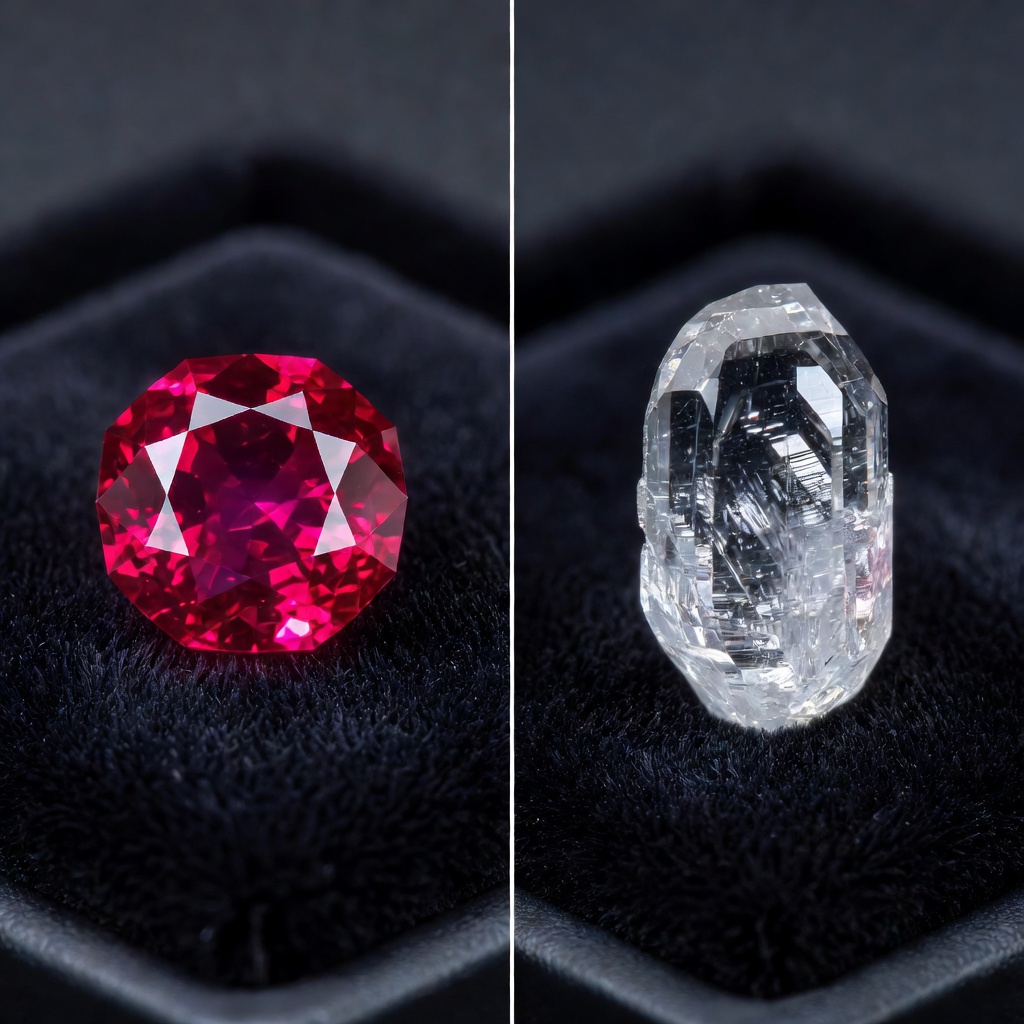
When discussing the Diamond vs Poudretteite comparison, we encounter one of the most fascinating dichotomies in the gemstone world. Diamonds represent the pinnacle of durability and commercial abundance, having become the universal symbol of eternal love and commitment through decades of masterful marketing and genuine geological wonder. In stark contrast, poudretteite stands as one of the rarest gemstones in the world, a mineral so scarce that fewer than twenty-five faceted specimens are known to exist globally, making it a holy grail for ultra-high-net-worth collectors and mineralogists alike. This comprehensive analysis examines these two extraordinary gems through the lenses of geological formation, physical properties, market dynamics, and investment potential, revealing why one dominates jewelry counters while the other resides primarily in museum vaults.
Geological Origins and Discovery History
The formation histories of these gemstones illustrate radically different journeys through deep time and space. Diamonds crystallize approximately 100 to 200 miles beneath Earth's surface within the mantle's kimberlite pipes, where extreme pressure (725,000 pounds per square inch) and temperatures exceeding 2,000 degrees Fahrenheit transform carbon atoms into the hardest natural substance known to science over periods ranging from one to three billion years. These ancient stones eventually reach the surface through violent volcanic eruptions that create carrot-shaped geological formations known as kimberlite pipes, with major mining operations currently active in Botswana, Russia, Canada, and Australia extracting millions of carats annually.
Poudretteite, conversely, emerges from far more specific and limited geological conditions within pegmatite rocks, most famously at Mont Saint-Hilaire in Quebec, Canada. This locality represents a unique alkaline intrusive complex formed approximately 125 million years ago during the Cretaceous period, where rare elements including boron, sodium, and potassium concentrated in pegmatitic pockets under unusual chemical conditions. The mineral received its name in 1987 following its discovery by the Poudrette family, who operated the quarry where this Mont Saint-Hilaire mineral first emerged, though gem-quality material later appeared in Myanmar's Mogok Stone Tract, providing the only other significant source for this vanishingly rare species.
Practical implications for collectors include understanding that while diamond mining represents a multi-billion dollar global industry with established supply chains and consistent output, poudretteite discovery remains entirely opportunistic and unpredictable. A case study from 2000 illustrates this disparity: while the Argyle diamond mine in Australia produced over 35 million carats that year, the total global yield of facetable poudretteite amounted to less than half a carat of crystals suitable for cutting. For investors considering ultra rare gem collecting, this supply differential fundamentally shapes acquisition strategies, requiring relationships with specialized mineral dealers and auction houses rather than traditional jewelry retailers.
Chemical Composition and Crystal Structure
At the molecular level, diamond represents nature's ultimate expression of elemental simplicity and structural perfection. Composed entirely of carbon atoms arranged in an isometric cubic crystal system, diamond features each carbon atom covalently bonded to four neighboring atoms in a tetrahedral configuration that creates extraordinary stability. This specific arrangement results in the diamond hardness Mohs scale rating of 10, the maximum possible value, meaning diamonds can scratch any other material while resisting scratches themselves, with the notable exception of other diamonds or nanocrystalline synthetic aggregates.
Poudretteite presents a starkly different chemical signature with the complex formula KNa₂B₃Si₁₂O₃₀, classifying it as a borosilicate mineral within the osumilite/milarite group. Its hexagonal crystal system produces prismatic crystals often exhibiting perfect cleavage along specific planes, creating structural vulnerabilities absent in diamond's isometric system. The presence of boron, potassium, and sodium in its composition requires highly evolved pegmatitic environments where fractional crystallization has concentrated these elements to unusual degrees, explaining why poudretteite occurs in perhaps two localities worldwide while diamonds appear on every continent except Antarctica.
Structural differences directly impact gemological applications and durability expectations. Diamond's cubic structure lacks cleavage planes, contributing to its excellent toughness despite extreme hardness, allowing it to withstand the impact forces encountered in daily wear engagement rings. Poudretteite's hexagonal structure with perfect basal cleavage means the mineral can split cleanly with relatively little force, making it unsuitable for jewelry subjected to mechanical stress. Gem cutters working with poudretteite must orient the table facet precisely to minimize cleavage exposure, whereas diamond cutters focus primarily on maximizing weight retention and optical performance without worrying about cleavage-induced breakage during setting.
Visual Characteristics and Optical Performance
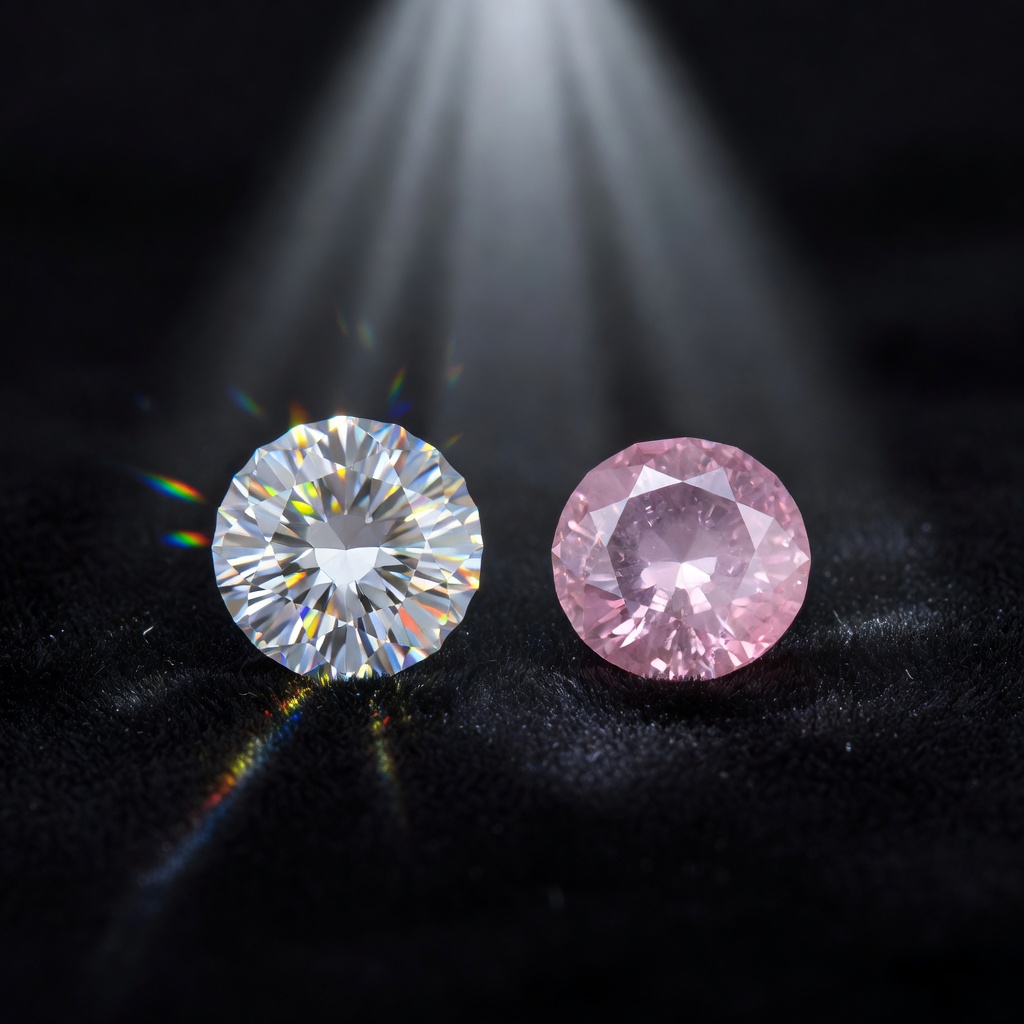
The optical distinction between these gemstones becomes immediately apparent upon visual inspection, revealing why diamonds dominate the jewelry market while poudretteite remains a collector's curiosity. Diamond exhibits a refractive index of 2.42 and dispersion of 0.044, creating the characteristic brilliance (white light reflection) and fire (spectral color separation) that define modern gemological beauty standards. When expertly cut, diamonds return approximately 17% of incident light as brilliance, creating the scintillation patterns that captivate observers across crowded rooms, a performance metric no other natural gemstone can match consistently.
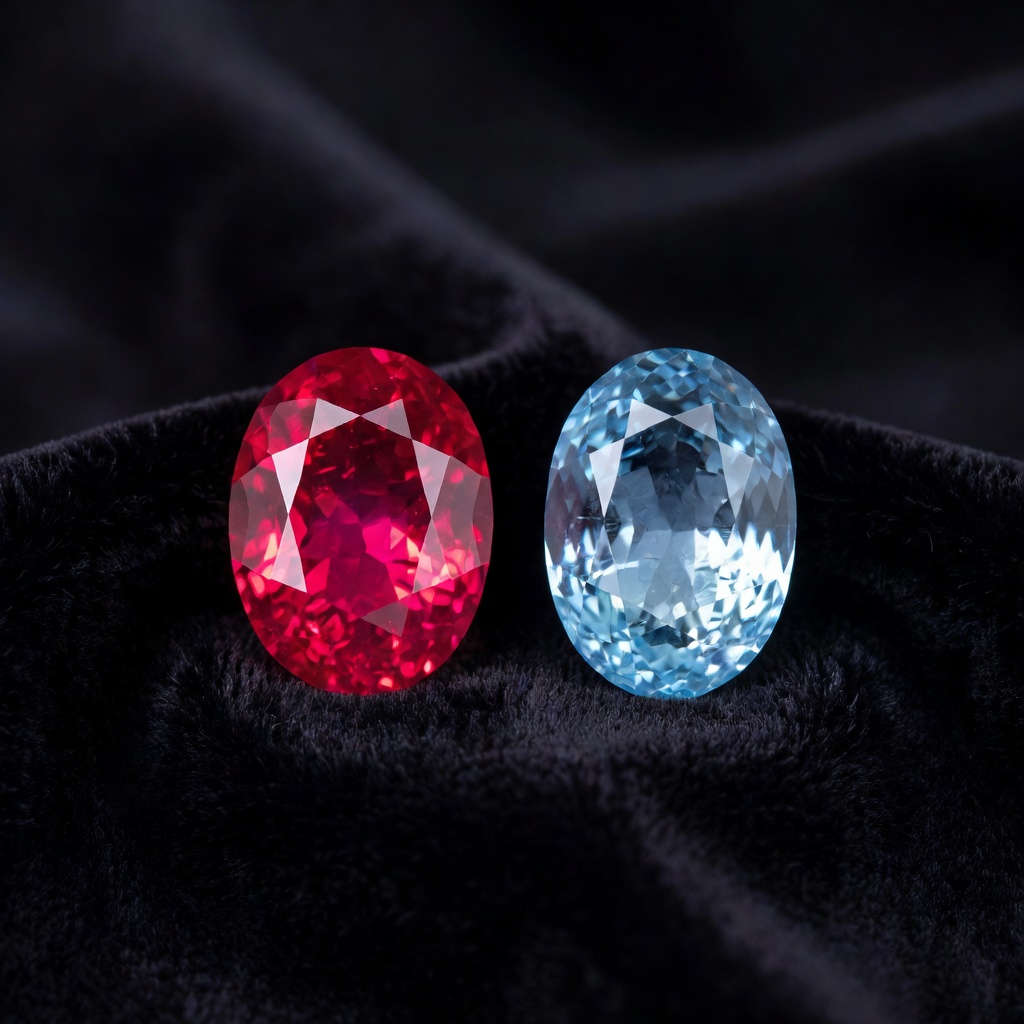
Poudretteite displays a more subdued vitreous to greasy luster with a refractive index typically ranging between 1.511 and 1.532, significantly lower than diamond, resulting in less brilliant reflection and minimal fire. These pink rare gemstones typically appear in delicate pale pink to rose hues, occasionally presenting colorless or brownish-tinted specimens, with the most valuable examples showing saturated pink coloration reminiscent of fancy pink diamonds. However, unlike diamonds which range across the D-Z color scale and fancy color spectrum including blues, yellows, and reds, poudretteite's color range remains relatively narrow, with pink saturation determining value rather than hue variety.
Clarity considerations differ significantly between these species due to their respective formation environments. Diamonds often contain characteristic inclusions such as feathers, crystals, or pinpoints, with the clarity grading scale (Flawless to Included) well-established by the Gemological Institute of America. Poudretteite specimens almost invariably contain inclusions and growth tubes characteristic of their pegmatitic origins, yet these internal features rarely detract from value given the mineral's extreme rarity; a heavily included poudretteite still commands higher prices than a flawless quartz simply by virtue of species rarity. Collectors should prioritize color intensity and crystal preservation over clarity perfection when evaluating poudretteite acquisitions.
Rarity Analysis: Abundance vs. Scarcity
The statistical comparison between these gemstones reveals a disparity so vast it challenges comprehension. Global diamond production consistently exceeds 130 million carats annually, with current reserves estimated to sustain mining operations for decades to come, despite the closure of historically significant mines like Australia's Argyle. This apparent abundance, however, masks the reality of gem-quality material, as only approximately 20% of mined diamonds achieve jewelry quality, with the remainder serving industrial applications. Nevertheless, the commercial diamond market maintains sufficient inventory that consumers can select from thousands of stones at any major metropolitan jeweler.
Poudretteite exists at the absolute opposite end of the abundance spectrum, representing perhaps the most extreme example of ultra rare gem collecting available to private collectors. Since its discovery in 1987, the total global production of facetable poudretteite likely totals less than three carats, with individual crystals rarely exceeding one carat in finished size. The mineral appears in significant specimens so infrequently that major auction houses might handle poudretteite jewelry once every five to seven years, compared to diamond jewelry appearing in weekly sales worldwide. This scarcity creates a fascinating market paradox where poudretteite price per carat can exceed commercial diamond prices despite inferior physical properties, driven entirely by geological lottery-winner rarity.
The concept of controlled scarcity versus natural rarity further distinguishes these markets. Historically, De Beers maintained diamond prices through strategic stockpile management and supply control, creating artificial scarcity for a relatively abundant material. Poudretteite requires no such market manipulation; its rarity is absolute and immutable, determined by the specific geochemical conditions necessary for its formation that occur perhaps twice in Earth's history at accessible localities. For investors, this distinction matters significantly: diamond prices fluctuate based on mining economics and cartel strategies, while poudretteite values respond solely to collector demand against a fixed, vanishingly small supply, potentially offering superior long-term appreciation for those with the capital to acquire specimens when they surface.
Market Value and Investment Potential
Current market pricing reflects the fundamental differences between commercial accessibility and collector exclusivity. Commercial diamonds typically range from $3,000 to $30,000 per carat depending on color, clarity, cut, and carat weight, with investment-grade fancy colored diamonds (particularly pinks and blues) commanding $100,000 to $1 million-plus per carat at auction. These prices benefit from liquid, transparent markets with established resale channels through dealers, auction houses, and diamond bourses worldwide, making diamonds relatively secure stores of value despite price volatility in the commercial segment.
Poudretteite pricing remains less standardized due to extreme rarity, with rough material commanding $2,000 to $6,000 per carat, while faceted specimens can achieve exponentially higher prices when they appear at specialized mineral auctions or through private treaty sales. A 0.50-carat faceted poudretteite might retail for $25,000 to $50,000, translating to $50,000 to $100,000 per carat, despite the gem's softness and unsuitability for daily wear. This gemstone investment comparison reveals that poudretteite functions as an alternative asset comparable to rare stamps or vintage automobiles rather than a commodity investment like diamonds.
Liquidity considerations heavily favor diamonds for investors requiring portfolio flexibility. A certified diamond can sell within days through numerous dealers or online platforms, with pricing transparency provided by Rapaport reports and auction comparables. Poudretteite requires months or years to liquidate, depending on finding the appropriate collector with sufficient interest and capital, often necessitating consignment to specialized mineral auctions with significant buyer's premiums. However, for investors with multi-generational horizons, poudretteite offers non-correlated asset protection; while diamond prices declined during the 2008 financial crisis and 2020 pandemic, rare mineral specimens maintained or appreciated in value as ultra-high-net-worth individuals sought tangible assets with guaranteed scarcity.
Durability and Jewelry Applications
The practical applications of these gemstones diverge dramatically based on hardness and toughness characteristics. Diamond's diamond hardness Mohs scale rating of 10, combined with its excellent toughness (resistance to breaking), makes it the ultimate gemstone for daily wear applications, particularly engagement rings subjected to decades of mechanical abuse. Diamonds resist scratching from household dust (quartz, hardness 7), maintain their polish indefinitely, and withstand thermal shock and chemical exposure that would damage lesser gemstones, explaining their dominance in bridal jewelry across cultures.
Poudretteite's hardness of 5 to 6 on the Mohs scale places it in a category unsuitable for rings or bracelets subjected to daily impact. At this hardness level, poudretteite can be scratched by ordinary household dust, steel files, and common gemstones including quartz, topaz, and corundum. More critically, poudretteite exhibits perfect cleavage in one direction, meaning a sharp blow can split the crystal cleanly, rendering it vulnerable to damage from accidental impacts against door frames, countertops, or other hard surfaces. Gemologists universally recommend against using poudretteite in engagement rings or daily wear jewelry.
Setting strategies must accommodate these durability differences. Diamonds thrive in various settings including tension mounts, delicate prong settings, and pavé arrangements that expose the stone to light while protecting it adequately. Poudretteite requires protective bezel settings that surround the gem's girdle with metal, preferably mounted in pendants or earrings where impact risk remains minimal. A practical example illustrates these limitations: while a diamond ring can survive decades of gardening, dishwashing, and gym workouts, a poudretteite ring would likely suffer scratches, chips, or complete cleavage failure within weeks of similar treatment. Collectors should reserve poudretteite for occasional wear pieces or mineral specimen displays rather than functional jewelry.
Care, Maintenance, and Longevity
Maintaining diamond jewelry requires straightforward protocols that accommodate the gem's exceptional durability. Owners can safely clean diamonds using ultrasonic cleaners, steam cleaners, or simple solutions of warm water with mild dish soap and a soft brush. These methods effectively remove accumulated oils, lotions, and environmental grime without risking damage to the stone or setting. Annual professional inspections ensure prongs remain secure, but diamonds themselves require no special environmental considerations beyond avoiding direct blows that might chip the girdle or culet.
Pink rare gemstones like poudretteite demand significantly more restrictive care regimens to preserve their appearance and structural integrity. Owners must clean poudretteite using only warm soapy water and a soft cloth or brush, strictly avoiding ultrasonic cleaners whose vibrations can exploit cleavage planes and cause internal fracturing. Steam cleaning proves equally dangerous due to thermal shock risks, while household chemicals including chlorine, ammonia, and acids can attack the borosilicate composition, potentially etching the surface or altering coloration.
Storage considerations highlight another practical difference between these gems. Diamonds can be stored together with minimal risk, as only other diamonds can scratch them. Poudretteite requires isolated storage in soft cloth pouches or individual compartments, completely separate from other gemstones, watches, or jewelry that might contact the surface. Even contact with gold or silver jewelry can scratch poudretteite given its relative softness. For long-term preservation, poudretteite specimens should be stored in stable environments away from direct sunlight (which might fade some color varieties) and extreme temperature fluctuations, ideally within climate-controlled mineral collections rather than jewelry boxes.
Authentication and Certification Challenges
Verification processes for these gemstones reflect their respective market positions and rarity levels. Diamonds benefit from the Gemological Institute of America's comprehensive grading system, with millions of stones annually receiving detailed reports documenting the Four Cs (carat, color, clarity, cut), fluorescence characteristics, and treatment history. Laser inscription of report numbers on girdles provides traceability, while established laboratories worldwide can consistently identify natural versus laboratory-grown diamonds using standard spectroscopic techniques.
Authenticating poudretteite presents significant challenges due to its status among the rarest gemstones in the world. No standardized grading system exists for this species, and most commercial gemological laboratories have never encountered the mineral, lacking reference samples for comparison. Advanced analytical methods including Raman spectroscopy and X-ray diffraction become essential for definitive identification, as poudretteite can visually resemble pink tourmaline, morganite, or even pink spinel to the unaided eye. Buyers must often rely on provenance documentation from recognized mineral dealers and academic institutions rather than commercial laboratory reports.
Common simulants and treatments require different vigilance levels for each gem. The diamond market faces challenges from high-quality laboratory-grown diamonds and treated stones (HPHT color enhancement, fracture filling), requiring sophisticated detection equipment to identify. Poudretteite faces minimal treatment issues given its rarity, but confusion with more common pink gemstones remains problematic. A practical tip for collectors: when examining a potential poudretteite acquisition, request specific gravity testing (poudretteite ranges 2.52-2.57) and pleochroism examination (poudretteite shows weak to moderate pleochroism in pink shades), distinguishing it from pink tourmaline (higher specific gravity) or morganite (lower refractive index). Always purchase poudretteite from dealers who provide detailed analytical data and provenance history, accepting nothing less than full disclosure of the mineral's Mont Saint-Hilaire or Myanmar origin.
Comparative Analysis: Diamond vs Poudretteite
| Characteristic | Diamond | Poudretteite |
|---|---|---|
| Hardness (Mohs Scale) | 10 (Maximum) | 5-6 (Moderate) |
| Global Annual Production | 130+ million carats | <0.5 carats (facetable) |
| Price per Carat (Retail) | $3,000-$30,000 (commercial) | $50,000-$100,000+ (faceted) |
| Primary Sources | Botswana, Russia, Canada, Australia | Mont Saint-Hilaire (Canada), Myanmar |
| Best Application | Daily wear jewelry, engagement rings | Museum collections, mineral specimens |
| Optical Brilliance | High (RI 2.42, dispersion 0.044) | Low-Moderate (RI 1.51-1.53) |
| Typical Colors | Colorless to fancy (all hues) | Pale pink, rose, colorless, brownish |
| Cleaning Methods | Ultrasonic, steam, soap safe | Warm soapy water only |
| Investment Liquidity | High (global markets) | Very Low (specialized collectors) |
| Chemical Formula | C (Pure Carbon) | KNa₂B₃Si₁₂O₃₀ (Borosilicate) |
Final Verdict: Which Gemstone Wins?
Declaring a universal winner in the Diamond vs Poudretteite comparison proves impossible without context, as these gems serve entirely different purposes within the luxury and collector markets. For bridal jewelry, daily wear accessories, and liquid investments seeking broad market appeal, diamonds remain the unequivocal choice, offering unmatched durability, optical performance, and resale liquidity. A two-carat, D-color, internally flawless diamond set in platinum represents the pinnacle of practical luxury, capable of withstanding generations of daily wear while maintaining stable value through economic cycles.
Conversely, poudretteite serves an exclusive niche within gemstone investment comparison portfolios: the ultra-high-net-worth collector seeking non-correlated alternative assets where absolute rarity trumps practical utility. Private mineral collectors and museums prioritize poudretteite for its geological significance and scarcity value, accepting that the gem functions as a mineralogical trophy rather than wearable jewelry. For these buyers, the thrill of owning something rarer than red diamonds or musgravite justifies the six-figure per-carat prices and the need for specialized insurance and storage protocols.
Creative collectors might consider hybrid approaches that capture the benefits of both gems. Commissioning an engagement ring featuring a central diamond for daily durability, accented with small poudretteite melee in protected bezel settings, creates a piece of ultimate exclusivity while maintaining practicality. Alternatively, maintaining separate collections—diamond jewelry for wear and poudretteite specimens for investment—allows enthusiasts to participate in both markets without compromising the integrity of either gemstone. Ultimately, diamonds reward those seeking timeless beauty and practical durability, while poudretteite rewards the patient collector who values geological lottery-winner rarity above all other considerations.
Frequently Asked Questions
What exactly is poudretteite and why is it so rare?
Poudretteite is an extremely rare borosilicate mineral first discovered in 1987 at the Poudrette quarry in Mont Saint-Hilaire, Quebec. Its rarity stems from highly specific geological conditions required for formation, with fewer than 25 faceted specimens known to exist worldwide, making it rarer than red diamond or musgravite.
Is poudretteite harder than diamond?
No, poudretteite ranks only 5-6 on the Mohs hardness scale, while diamond ranks 10 (the maximum). This significant difference means poudretteite can be scratched by common materials like dust (quartz, hardness 7), whereas diamonds can only be scratched by other diamonds.
Why is poudretteite expensive if it's softer than diamond?
Poudretteite commands high prices due to extreme scarcity and collector demand rather than practicality. While diamonds are relatively abundant commercially, gem-quality poudretteite is geological lottery-winner rare, with specimens appearing at auction only once every few years, often fetching $2,000-$6,000 per carat for rough material.
Can I wear poudretteite in an engagement ring?
Gemologists strongly discourage poudretteite for engagement rings due to its softness (5-6 Mohs) and perfect cleavage, making it vulnerable to chipping, scratching, and breaking during daily wear. It is best suited for occasional wear pieces, protected pendant settings, or mineral collections.
Where can I buy authentic poudretteite?
Authentic poudretteite is available only through specialized high-end mineral dealers, prestigious auction houses (Sotheby's, Christie's), and select gemological institutions. Due to extreme rarity, it never appears in standard jewelry stores. Always demand Raman spectroscopy verification and provenance documentation when purchasing.
Which is a better investment, diamond or poudretteite?
Diamonds offer better liquidity and stable long-term value for standard investment portfolios, while poudretteite suits ultra-high-net-worth collectors seeking non-correlated alternative assets. Poudretteite offers higher potential appreciation due to scarcity but carries liquidity risk due to limited buyer pools.
What colors does poudretteite come in?
Poudretteite typically appears in pale pink to rose hues, occasionally colorless or with brownish tints. The most valuable specimens display saturated pink colors similar to high-quality pink diamonds, though poudretteite lacks diamond's brilliance and fire due to lower refractive index.
How can I tell the difference between poudretteite and pink diamond?
Key differences include hardness testing (diamond scratches glass easily, poudretteite does not), brilliance (diamond shows intense fire and scintillation, poudretteite appears more glassy), and specific gravity. Laboratory testing using Raman spectroscopy provides definitive identification due to completely different chemical compositions.