Understanding Diamond vs Pink Diamond: A Comprehensive Guide
When selecting the perfect gemstone for fine jewelry, collectors and couples increasingly face a compelling choice between traditional colorless diamonds and the extraordinarily rare fancy pink varieties. While both share the same fundamental chemical composition of pure carbon crystallized under intense heat and pressure, their visual characteristics, valuation metrics, and symbolic meanings diverge dramatically in the luxury market. The debate of diamond vs pink diamond extends beyond mere aesthetics into considerations of geological rarity, investment potential, and personal expression that can significantly impact purchasing decisions. Understanding these distinctions requires examining how fancy color diamonds occupy a unique position in the gemstone hierarchy, offering distinct advantages and considerations compared to their colorless counterparts that have dominated engagement ring traditions for centuries.
Historically, pink diamonds remained largely unknown to mainstream consumers until the 1980s when the Argyle mine in Australia began marketing these rose-hued treasures specifically to Asian markets, where the color symbolizes good fortune and romance. Recent market trends show a significant shift toward individuality in bridal jewelry, with millennial and Gen-Z buyers increasingly prioritizing uniqueness over tradition, driving demand for fancy color diamonds across all price points. Consumers now choose between colorless and pink stones based on factors ranging from budget constraints and investment goals to skin tone compatibility and the desire for a conversation-starting centerpiece that defies conventional expectations.
Color Grading Systems: D-Z Scale vs Fancy Color Scale
The Gemological Institute of America (GIA) employs fundamentally different grading methodologies for colorless versus colored diamonds, creating distinct value hierarchies that confuse many first-time buyers. For traditional white diamonds, the D-Z diamond color grading scale evaluates the absence of color, with D representing completely colorless stones and Z indicating light yellow or brown tinting that remains outside the fancy color range. This scale prioritizes purity and transparency, where even subtle differences between D and F grades can command significant price premiums due to the rarity of completely nitrogen-free crystals.
Fancy color diamonds, however, utilize a separate grading system that celebrates rather than penalizes color presence, evaluating hue, tone, and saturation across nine distinct levels from Faint to Fancy Vivid Pink. The hierarchy progresses from Faint, Very Light, and Light through Fancy Light, Fancy, Fancy Intense, Fancy Vivid, Fancy Deep, and Fancy Dark, with Fancy Vivid representing the most saturated and valuable color expression achievable. Unlike colorless diamonds where microscopic tinting decreases value, fancy pink diamonds see exponential price increases as color intensity strengthens, with Fancy Vivid stones commanding ten to twenty times the price per carat of Fancy Light specimens due to their extraordinary rarity and visual impact.
Practical implications for buyers include understanding that a D-color colorless diamond and a Fancy Light pink diamond might command similar prices despite representing opposite ends of the color spectrum, while investment-grade stones typically require Fancy Intense or Vivid grades for pink diamonds versus D-F for colorless. When examining stones side-by-side, request comparative lighting conditions that reveal how colorless diamonds maximize brilliance through light return while fancy pinks prioritize color face-up appearance, sometimes sacrificing optimal light performance for deeper pavilions that intensify hue saturation.
Rarity and Formation: The Science Behind the Colors
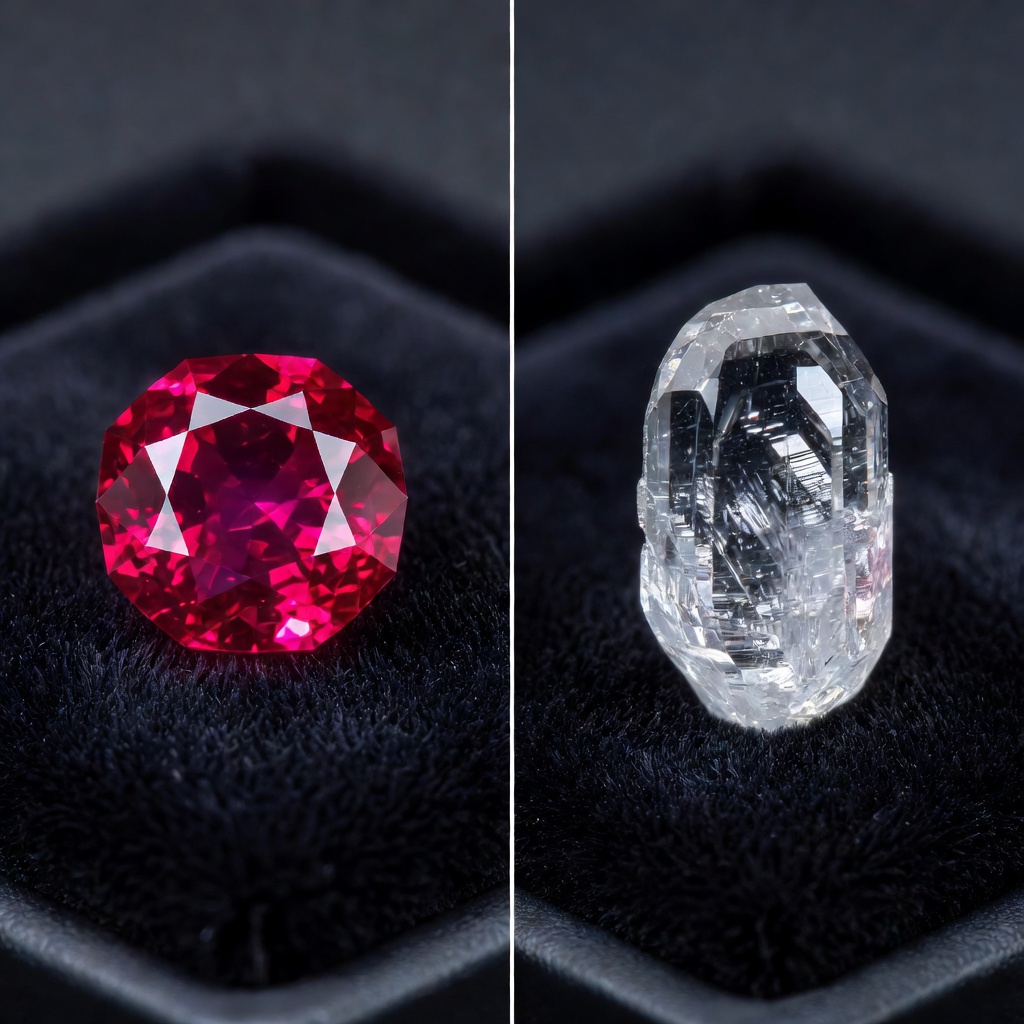
The geological processes creating pink diamond rarity differ fundamentally from colorless diamond formation, involving unique structural anomalies rather than chemical impurities that cause blue or yellow coloration. While nitrogen creates yellow diamonds and boron produces blues, pink and red diamonds result from plastic deformation during their journey through Earth's mantle, where extreme pressure alters the crystal lattice structure to absorb light differently, reflecting pink wavelengths. This distinction means that how pink diamonds are formed requires specific tectonic conditions that occur rarely in nature, explaining why these stones represent less than 0.1% of global diamond production compared to the millions of carats of near-colorless stones mined annually.
Statistical comparisons reveal the stark reality of scarcity: for every one million carats of rough diamonds extracted from kimberlite pipes, approximately one carat qualifies as gem-quality pink, making these stones rarer than authentic blue diamonds in absolute terms. Primary source locations historically included the Argyle mine in Western Australia, which produced 90% of the world's supply, alongside sporadic discoveries in Brazil's Minas Gerais region, Russia's Yakutia mines, and recent finds in Canada's Diavik mine. Mining challenges specific to pink diamond recovery include the extreme hardness of Argyle lamproite ore, which requires specialized processing equipment, and the microscopic size of most pink crystals, with the average high-quality stone weighing less than 0.20 carats in rough form.
Case studies from major auction houses demonstrate this rarity quantitatively: between 2000 and 2020, only twenty pink diamonds exceeding five carats appeared at Christie's and Sotheby's major sales combined, compared to thousands of comparable colorless stones. For collectors seeking acquisition opportunities, understanding that most pink diamonds occur as tiny satellite crystals surrounding larger colorless rough means that one-carat finished pink diamonds statistically required the mining and processing of approximately 15,000 tons of kimberlite ore, creating environmental and economic constraints that ensure continued scarcity regardless of market demand fluctuations.
The Argyle Legacy: Why Mine Closure Changed Everything
The Rio Tinto-operated Argyle mine, situated in the remote East Kimberley region of Western Australia, revolutionized the Argyle pink diamonds market between its 1983 opening and November 2020 closure, establishing the modern standard for these rare gems. Unlike traditional kimberlite pipe mines, Argyle operated as a lamproite volcano, producing predominantly small, included stones that nonetheless displayed the most intense pink coloration ever documented in natural diamonds, including the coveted Fancy Vivid Purplish Pink grades. The mine's unique geology created a distinctive color signature characterized by purple secondary hues and exceptional saturation rarely found in Australian pink diamonds from other regions or Brazilian sources.
The permanent cessation of Argyle operations in late 2020 eliminated the source of approximately 90% of global pink diamond supply, creating immediate market dislocation that continues affecting availability and pricing structures today. Prior to closure, Argyle produced roughly 30-40 million carats annually of all diamond colors, yet only 0.01% qualified for the prestigious Argyle Pink Diamonds Tender, an annual invitation-only auction featuring the mine's fifty to sixty best stones. Post-closure, authenticated Argyle origin stones command 30-50% premiums over similarly graded pink diamonds from Brazil or Africa, with provenance documentation becoming as crucial as the 4Cs for valuation purposes.
Authentication methods for Argyle origin stones require specific documentation including the Argyle Certificate of Authenticity, laser inscription of the unique Argyle lot number on the girdle, and matching reports from GIA or Argyle's own laboratory that verify the distinctive spectral characteristics of these Western Australian stones. Buyers should verify that any claimed Argyle stone includes documentation from the final 2020 tender or earlier annual sales, as post-closure "Argyle-type" stones from other locations lack the specific geological provenance that drives investment demand. Reputable dealers now utilize spectral analysis comparing absorption patterns at 415nm and 450nm wavelengths to distinguish authentic Argyle material from other sources, ensuring that premium prices reflect genuine provenance rather than generic pink coloration.
Price Comparison and Investment Potential
Current market analysis reveals that pink diamond price per carat ranges create the most dramatic value differential in the gemstone world, with high-quality Fancy Vivid pinks commanding 20 to 50 times the price of equivalent colorless stones. A one-carat, VS1 clarity, D-color round brilliant diamond currently trades between $12,000 to $18,000 retail, whereas a one-carat Fancy Vivid Pink of similar clarity demands $300,000 to $600,000, with the most exceptional stones exceeding $1 million per carat at auction. This pricing structure reflects not merely aesthetic preference but fundamental supply constraints, as the annual production of significant pink diamonds (those exceeding one carat) numbers fewer than fifty stones globally, compared to millions of carats of high-quality colorless diamonds.
Diamond investment performance history favors fancy pink diamonds for appreciation velocity, with Argyle stones demonstrating 400-500% value increases over the past two decades compared to roughly 50-80% appreciation for equivalent colorless diamonds during the same period. However, liquidity considerations favor colorless stones, which can be sold through numerous dealers, pawn shops, and auction houses within days, whereas pink diamonds require specialized auction channels or private treaty sales that may take months to complete. Investment portfolios typically allocate pink diamonds as alternative assets representing 5-10% of holdings, accepting illiquidity in exchange for scarcity-driven appreciation that remains uncorrelated with stock market fluctuations.
Comparative Analysis: Colorless vs Pink Diamonds
| Characteristic | Colorless Diamond | Pink Diamond |
|---|---|---|
| Color Grading Focus | D-Z scale (absence of color); D-F commands premium | Fancy scale (presence of color); Fancy Vivid commands highest premium |
| Rarity Factor | Abundant; millions of carats mined annually | Extremely rare; less than 0.1% of global production |
| Price Range (1 Carat, High Quality) | $4,000 - $25,000 depending on cut and clarity | $30,000 - $1,000,000+ depending on color intensity |
| Primary Value Driver | Cut precision and clarity grade | Color saturation and hue distribution |
| Investment Profile | Stable, liquid asset with modest appreciation | High appreciation potential, illiquid, requires specialized resale channels |
| Optimal Setting Metals | Platinum or white gold enhance brilliance; any metal compatible | Rose gold enhances color; platinum/white gold create contrast; yellow gold may mute lighter pinks |
| Size Availability | Readily available up to 5+ carats in fine quality | Rare above 1 carat; 2+ carat exceptional stones appear at auction only |
| Certification Requirements | GIA standard report sufficient | Requires GIA Fancy Color report or Argyle Certificate; origin documentation crucial |
Practical investment strategies differ significantly between the two categories, with colorless diamonds suiting buyers seeking portable wealth storage with immediate liquidity, while pink diamonds appeal to long-term collectors with holding periods exceeding ten years. When evaluating specific stones for acquisition, consider that pink diamonds under 0.50 carats offer accessible entry points at $10,000-$30,000 for Fancy Light grades, providing appreciation potential without the concentrated risk of six-figure purchases. Diversification within colored diamond portfolios might include Fancy Intense pinks as the "sweet spot" balancing color impact with availability, whereas institutional investors focus exclusively on Fancy Vivid stones exceeding one carat with Argyle provenance documentation.
The 4Cs Revisited: Different Standards for Different Diamonds
Traditional diamond 4Cs evaluation requires significant modification when assessing fancy color diamond grading, as color intensity supersedes the cut and clarity priorities that dominate colorless stone valuation. While colorless diamonds maximize value through ideal cut proportions that return maximum light to the eye, pink diamonds often utilize modified brilliant or step cuts with deeper pavilions and thicker girdles specifically designed to retain color saturation rather than optimize brilliance. A "Very Good" cut grade in a pink diamond may actually indicate superior color performance compared to an "Excellent" cut, as the slight reduction in light return intensifies the body color visible face-up, creating the desirable "face-up" appearance that commands premium pricing.
Clarity expectations diverge dramatically between the categories, with colorless diamonds requiring VS2 or higher clarity for investment grade, whereas pink diamonds frequently contain inclusions that appear less visible due to the masking effect of strong body color. SI1 or even SI2 clarity pink diamonds with attractive color distribution often outperform VVS colorless stones at auction, provided the inclusions do not affect durability or create obvious dark spots within the color pattern. Carat weight premiums follow exponential rather than linear progressions in pink diamonds, where a two-carat Fancy Vivid might command five to eight times the per-carat price of a one-carat equivalent, compared to the typical doubling seen in colorless stones, reflecting the extreme scarcity of large pink crystals.
Practical selection tips include prioritizing "even" color distribution across the entire stone when examining pink diamonds, as uneven zoning or color concentration in corners significantly reduces value despite high average color grades. For colorless diamonds, insist on Triple Excellent (cut, polish, symmetry) grades for rounds, whereas pink diamond buyers should request "phenomenon reports" examining how the stone appears under various lighting conditions, including daylight, incandescent, and LED environments. When balancing budget constraints, a 0.90-carat Fancy Intense pink with SI1 clarity often provides superior visual impact and investment potential compared to a 1.00-carat Fancy Light with VVS clarity, inverting the traditional advice given for colorless stone selection.
Symbolism, Trends, and Personal Expression
The symbolic vocabulary surrounding pink diamond engagement ring selections has evolved significantly as colored diamond jewelry trends shift away from traditional representations of purity and permanence toward expressions of individuality and romantic passion. Colorless diamonds historically symbolized eternal love, clarity of intention, and unblemished commitment through their pristine transparency, associations cemented by decades of De Beers marketing campaigns emphasizing "forever" qualities. Pink diamonds, conversely, carry associations of femininity, creativity, and rare fortune across Asian cultures, while Western markets increasingly view them as representations of unconventional love stories and confident personal style that rejects mass-market conformity.
Celebrity influence has accelerated pink diamond acceptance into mainstream bridal culture, most notably when Ben Affleck presented Jennifer Lopez with a 6.10-carat Fancy Vivid Pink diamond engagement ring in 2002, valued at approximately $1.2 million, creating immediate demand for accessible alternatives. Blake Lively received a 12-carat oval pink diamond from Ryan Reynolds, while Victoria Beckham and Mariah Carey have showcased significant pink stones in their jewelry collections, normalizing these gems as legitimate alternatives to traditional white diamonds for high-profile commitments. This visibility has catalyzed a broader trend where couples prioritize "unique" over "traditional," with colored diamond sales increasing 15-20% annually in the bridal sector while colorless diamond engagement ring sales remain relatively static.
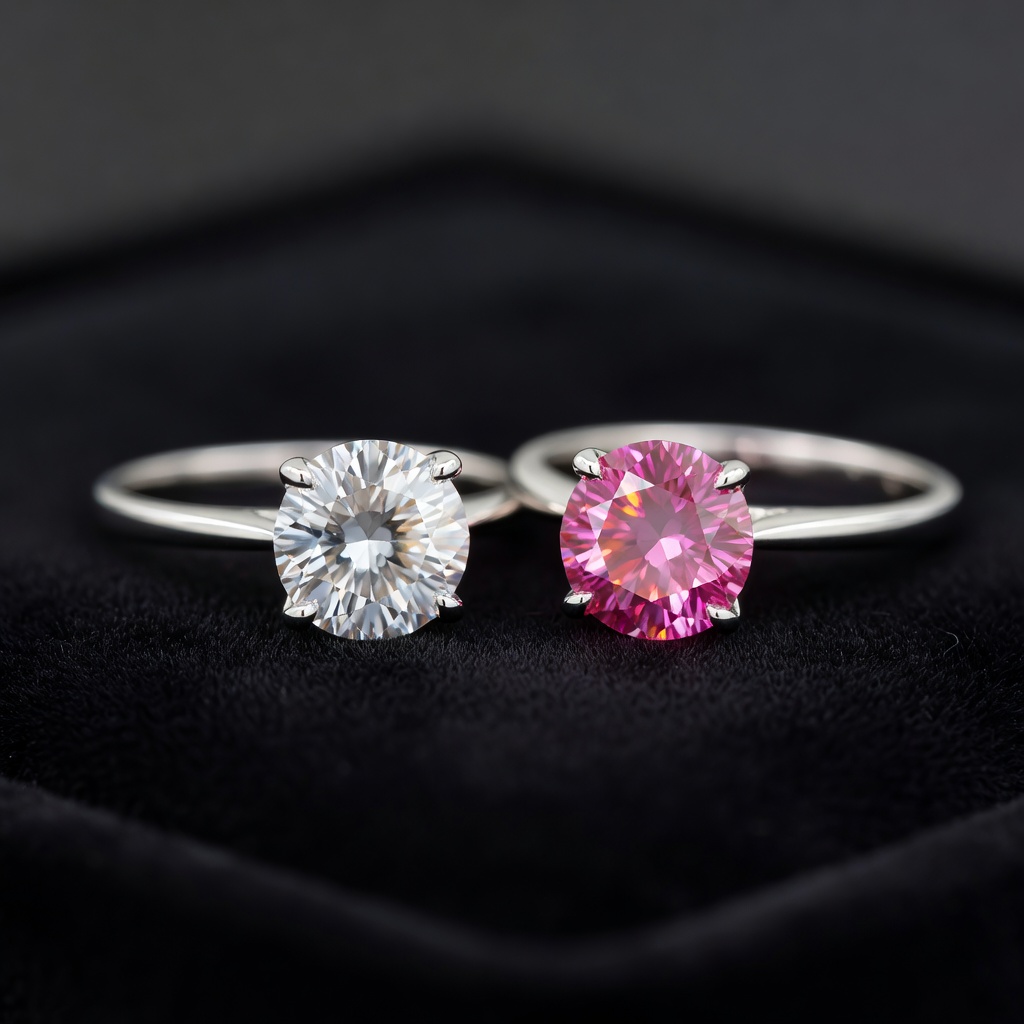
Practical style considerations include understanding how skin tone interacts with pink coloration, where warm undertones complement the subtle peachy-pink hues of Fancy Light stones, while cooler complexions enhance the purplish-pink tones found in Argyle material. Fashion-forward buyers increasingly select pink diamonds for "reveal" moments, concealing the colored stone within classic solitaire settings that appear traditional from a distance, only to surprise viewers with the unexpected hue upon closer inspection. For those seeking the pink aesthetic without premium pricing, consider Fancy Light pinks set in rose gold, where the metal's warm tones visually intensify the diamond's color, creating the appearance of a more expensive Fancy Intense stone at significantly reduced cost.
Authentication and Treatments: Buyer Beware
The high value associated with natural pink diamonds has incentivized sophisticated treatment methods that require vigilant diamond certification scrutiny when buying pink diamonds in the secondary market. Common enhancement techniques include irradiation combined with annealing, which creates stable pink colors indistinguishable from natural origin without laboratory equipment, High Pressure High Temperature (HPHT) processing that alters nitrogen aggregation states to produce pink hues, and surface coating using microscopic layers of pink substances that wear off over time. These treatments can reduce value by 70-90% compared to natural stones, yet unscrupulous sellers occasionally offer them without disclosure, exploiting consumer unfamiliarity with fancy color documentation requirements.
Authentication reliance on GIA (Gemological Institute of America) or Argyle-specific laboratory reports remains non-negotiable for significant purchases, with reports specifically stating "Natural Fancy" color origin rather than simply "Fancy" or omitting origin entirely. Red flags indicating potential treatment or synthetic origin include prices significantly below market rates (natural Fancy Vivid pinks rarely sell below $50,000 per carat regardless of size), absence of laser inscriptions matching the certificate number, and sellers reluctant to provide full grading reports before purchase. Advanced detection methods available to laboratories include spectroscopy identifying the 415nm "cape line" absorption in natural diamonds versus the 595nm or 637nm lines typical of irradiated stones, along with photoluminescence mapping that reveals growth patterns impossible to replicate in treated material.
Protective measures for buyers include requiring "origin of color" statements in purchase contracts, submitting stones to independent GIA verification even when accompanied by existing reports, and avoiding "bargain" pink diamonds offered through online marketplaces without established gemological credentials. When examining stones personally, observe color distribution carefully: natural pink diamonds typically show subtle color zoning or graining under magnification, whereas treated stones often display unnaturally uniform coloration or concentrations along facet junctions where irradiation penetration varied. Establish relationships with dealers who specialize specifically in fancy colors rather than general diamond merchants, as specialized expertise proves crucial for identifying the subtle characteristics distinguishing $100,000 natural pinks from $5,000 treated alternatives.
Durability, Settings, and Care Requirements
Both colorless and pink diamonds share identical diamond durability characteristics, ranking 10 on the Mohs hardness scale and possessing the same cleavage planes and toughness properties that make them suitable for daily wear in engagement rings and jewelry. However, gemstone care protocols and setting considerations differ significantly due to the value concentration in pink diamonds and their frequent cutting into fancy shapes (ovals, cushions, pears) that expose vulnerable points requiring protection. While a round brilliant colorless diamond might survive in a delicate four-prong setting indefinitely, a similarly set pear-shaped pink diamond presents higher chipping risk at the pointed end, necessitating protective V-prongs or bezel settings that add metal weight but preserve the substantial investment value.
Metal selection significantly impacts pink diamond appearance and requires strategic matching to the specific color grade. Rose gold settings enhance Fancy Light and Fancy pink diamonds through complementary color reflection, making the stone appear one to two color grades more intense than graded, while platinum or white gold create stark contrast that makes Fancy Vivid stones "pop" with dramatic effect. Yellow gold settings generally detract from pink coloration by imparting warm undertones that muddy the hue, though vintage-inspired designs occasionally utilize this effect intentionally for antique aesthetics. For optimal color presentation, request that jewelers use minimal metal under the pavilion (bottom portion) of pink diamonds, as excessive metal backing can create artificial color reflection that misrepresents the stone's true body color.
Cleaning and maintenance protocols emphasize protecting the color appearance through specific techniques: ultrasonic cleaners remain safe for both diamond types but should be avoided if the pink diamond has significant inclusions reaching the surface, as vibration can expand existing fractures. Ammonia-based cleaners excellent for colorless diamonds may slightly alter the appearance of certain treated pink diamonds over time, making gentle soap and warm water the safest universal cleaning method. Storage requires separate compartments for pink diamonds, not due to hardness concerns but because their extreme value warrants protection against loss or mixing with less valuable jewelry, with insurance appraisals requiring updates every two to three years due to the rapid appreciation of high-quality fancy pinks compared to the stable pricing of colorless stones.
Final Verdict: Making Your Decision
Navigating the choosing diamonds process requires honest assessment of budget parameters, personal style preferences, and long-term ownership goals outlined in this diamond buying guide. Budget allocation strategies suggest that buyers with $10,000-$20,000 might select a 1.00-1.25 carat, G-color, VS2 clarity colorless diamond with excellent cut, or alternatively a 0.30-0.40 carat Fancy Intense pink diamond with SI clarity, representing the choice between size/brilliance versus rarity/color intensity. Those with $50,000+ budgets can consider significant pink diamonds exceeding 0.50 carats in Fancy Vivid grades, entering the investment-quality tier where appreciation potential justifies the premium over colorless stones of equivalent cost.
Personal style matching extends beyond aesthetic preference to lifestyle compatibility; professionals in conservative industries may find colorless diamonds more appropriate for daily wear, while creatives and entrepreneurs often embrace pink diamonds as personal brand statements. Skin tone analysis suggests that very fair complexions pair beautifully with purplish-pink Argyle stones that avoid washing out the wearer, while olive and deeper skin tones spectacularly complement the warmer, salmon-pink hues of Brazilian-origin stones. Consider also the "storytelling" aspect of ownership: colorless diamonds offer timeless tradition, while pink diamonds provide narrative opportunities regarding geological rarity, Argyle mine history, and investment foresight that colorless stones cannot match.
Long-term value appreciation versus immediate aesthetic gratification presents the final calculus, with colorless diamonds offering stable, liquid assets that maintain purchasing power but rarely generate significant investment returns, while pink diamonds provide potential for substantial appreciation balanced against liquidity constraints and higher insurance costs. For engagement rings specifically, consider whether the recipient values tradition or uniqueness, as removing a pink diamond ring for certain activities (heavy lifting, travel to high-crime areas) proves more stressful than with replaceable colorless stones. Ultimately, the diamond vs pink diamond decision reflects individual priorities regarding scarcity, symbolism, and financial strategy, with neither choice proving objectively superior—only more aligned with specific personal values and life circumstances.
Frequently Asked Questions About Diamond vs Pink Diamond
Are pink diamonds real diamonds or a different gemstone entirely?
Pink diamonds are 100% real diamonds with the same chemical composition (pure carbon) and hardness (10 on the Mohs scale) as colorless diamonds. Their pink hue results from unique structural defects during formation, not chemical impurities like nitrogen or boron.
Why are pink diamonds so much more expensive than white diamonds?
Pink diamonds command premium prices due to extreme rarity—they represent less than 0.1% of global diamond production. Additionally, the closure of the Argyle mine in 2020 eliminated the primary source of high-quality pink diamonds, creating supply scarcity that drives prices 10 to 50 times higher than equivalent colorless stones.
How can I tell if a pink diamond is natural or treated?
Only laboratory certification from GIA or Argyle can definitively distinguish natural from treated pink diamonds. Treated stones typically show uneven color distribution or unusual fluorescence patterns. Always request a full grading report specifically noting 'Natural Fancy' color origin before purchasing.
Do pink diamonds sparkle less than colorless diamonds?
Pink diamonds can exhibit excellent brilliance, but intense color saturation sometimes requires deeper cuts that slightly reduce light return compared to ideal brilliant-cut colorless diamonds. However, Fancy Vivid pinks with excellent cut grades display remarkable fire and scintillation alongside their color.
Is a pink diamond a better investment than a colorless diamond?
Historically, high-quality Argyle pink diamonds have appreciated faster than colorless diamonds, with prices increasing 400-500% over the past two decades. However, they have lower liquidity (harder to sell quickly) and require larger initial capital. Colorless diamonds offer more stable, liquid markets but slower appreciation rates.
What metal setting works best for pink diamond jewelry?
Rose gold enhances the pink coloration through complementary tones, while platinum and white gold create contrast that makes the pink appear more vivid. Yellow gold can sometimes impart unwanted warm tones to lighter pink diamonds. The setting choice depends on the specific color grade—Faint pinks benefit from rose gold, while Fancy Vivid stones pop against white metals.
Can I find affordable pink diamonds for an engagement ring?
Yes, by considering Fancy Light or Faint pink grades, smaller carat weights (0.30-0.50ct), or lab-grown pink diamonds which cost 60-80% less than natural. Alternatively, pink sapphires offer similar color at significantly lower prices, though they differ in hardness and brilliance.
What happened to pink diamond prices after the Argyle mine closed?
Since the Argyle mine's closure in November 2020, prices for high-quality pink diamonds have increased 30-50%, with vivid pinks seeing the steepest appreciation. Industry experts predict continued upward pressure as existing inventory depletes and no new major pink diamond sources have been discovered.