Introduction to Diamond vs Phantom Quartz
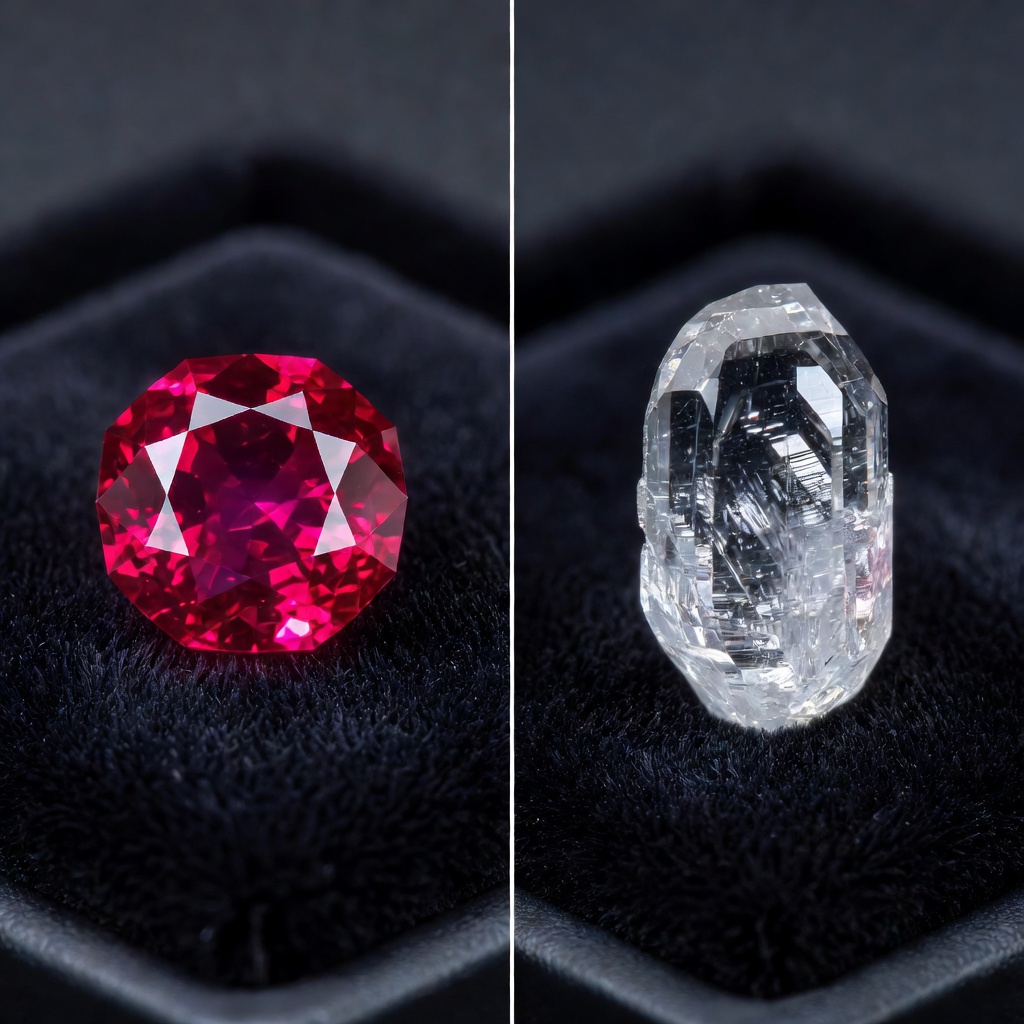
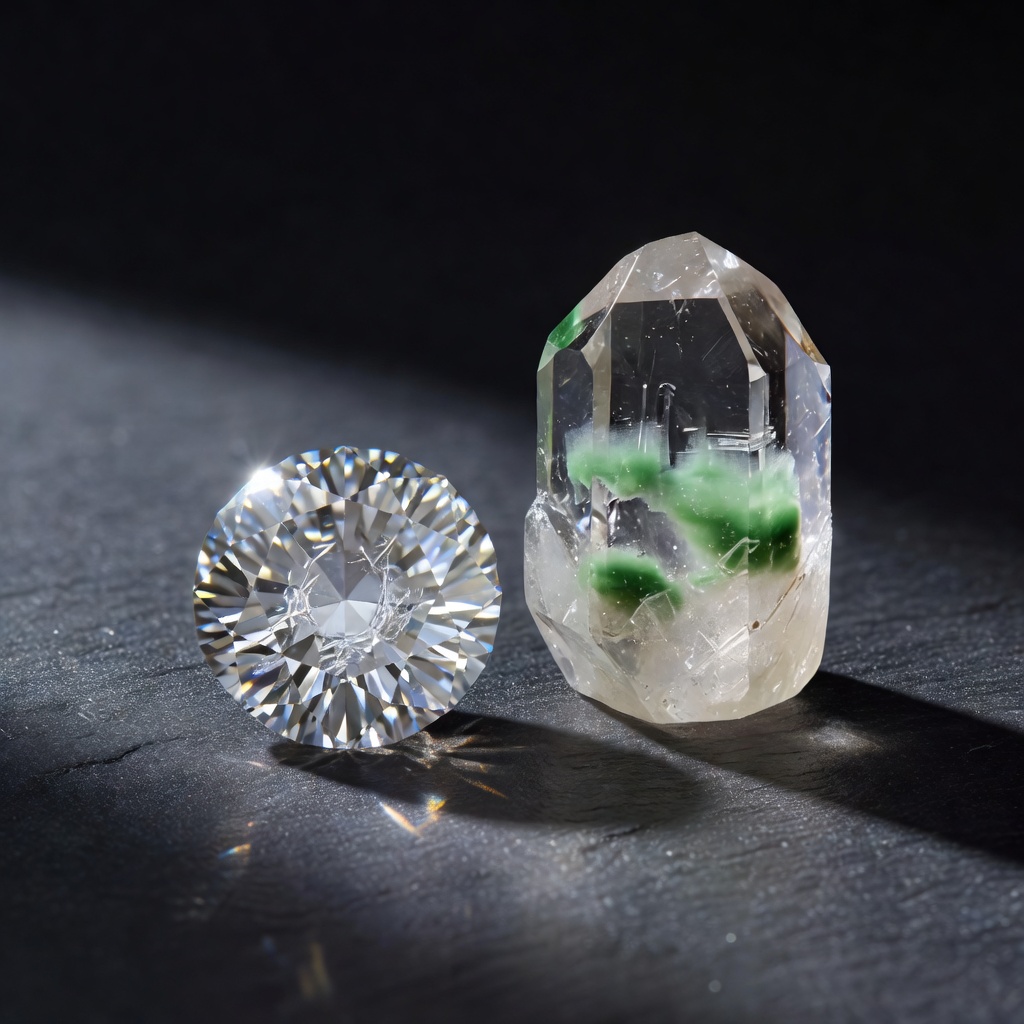
When selecting a gemstone for jewelry or metaphysical purposes, consumers often find themselves weighing the merits of diamond versus phantom quartz, two crystals that occupy vastly different positions in the gemological spectrum. Diamond represents the pinnacle of precious stones—a pure carbon crystalline mineral renowned for unmatched hardness and brilliance—while phantom quartz, also known as ghost quartz crystal, belongs to the silicon dioxide family distinguished by its mesmerizing internal mineral inclusions. Though these stones may seem incomparable at first glance, modern buyers increasingly evaluate both for their clarity characteristics, aesthetic uniqueness, and value propositions in contemporary jewelry designs. This comprehensive gemstone comparison guide examines the physical properties, geological origins, market values, and metaphysical attributes of both stones to help you make an informed decision aligned with your specific needs and intentions.
Chemical Composition and Crystal Structure
Understanding the fundamental building blocks of these gemstones reveals why they exhibit such divergent physical properties and visual characteristics. Diamond consists exclusively of carbon atoms arranged in an isometric cubic crystal system, formed under extreme pressure approximately 87 to 120 miles beneath Earth's surface where temperatures exceed 2,000 degrees Fahrenheit. In contrast, phantom quartz composition centers on silicon dioxide (SiO2) crystallizing in a hexagonal system, but with a fascinating twist—interrupted growth cycles trap additional minerals within its structure, creating the signature phantom layers that define this included quartz variety.
The atomic bonding differences between these stones fundamentally determine their durability and optical properties. Diamonds feature strong covalent bonds where each carbon atom connects to four neighbors in a tetrahedral arrangement, creating the hardest natural substance known to science. Phantom quartz relies on a framework silicate structure where silicon and oxygen atoms form a continuous three-dimensional network, leaving spaces that accommodate the chlorite, hematite, or clay deposits responsible for the stone's ghostly internal landscapes. These structural distinctions explain why diamond achieves perfect symmetry and hardness while phantom quartz offers unique visual storytelling through its mineral inclusions.
Hardness, Durability and Everyday Wear
The gemstone hardness comparison between these two materials significantly impacts their suitability for different jewelry applications and lifestyle requirements. On the diamond hardness scale, diamond ranks at the maximum level of 10, making it the hardest natural substance and exceptionally resistant to scratching from daily wear or accidental impacts. Phantom quartz registers at 7 on the same Mohs scale, which while sufficiently hard for jewelry use, renders it vulnerable to abrasion from harder materials including household dust, which often contains silica particles that can gradually dull quartz surfaces over time.
Practical durability extends beyond simple scratch resistance to include toughness and fracture resistance, areas where these stones behave quite differently. Diamond possesses perfect cleavage in four directions, meaning that despite its extreme hardness, a sharp blow at the correct angle can split the stone cleanly—an important consideration for ring settings that may experience impacts. Phantom quartz exhibits conchoidal fracture patterns without cleavage planes, making it less likely to split under impact but more prone to chipping or surface scratching during daily activities. For engagement rings or bracelets subject to constant wear, diamond's superior hardness provides peace of mind, while phantom quartz jewelry benefits from protective settings and occasional wear schedules.
Case Study: The Active Lifestyle Test
Consider the experience of a rock climbing instructor who wore both stones during different activities. Her diamond engagement ring maintained its polish and facet edges after three years of daily wear including belaying and equipment handling, while her phantom quartz pendant showed noticeable surface scratches and clouding after similar treatment. This real-world example demonstrates why gemstone durability comparison charts consistently recommend diamonds for high-impact jewelry and phantom quartz for protected settings like pendants or earrings that experience less physical contact.
Visual Characteristics: Brilliance vs Phantom Inclusions
The optical performance and aesthetic appeal of these gemstones cater to distinctly different sensibilities in jewelry design and personal adornment. Diamond exhibits superior fire, brilliance, and scintillation due to its high refractive index of 2.42 and dispersion rate of 0.044, creating the rainbow flashes and mirror-like reflections that have made it the standard for engagement rings and formal jewelry. Master diamond cutters exploit these optical properties through precise facet arrangements that maximize light return, ensuring that even smaller stones command attention through their intense sparkle and life.
Phantom quartz offers an entirely different visual experience centered on depth, mystery, and natural artistry rather than geometric brilliance. The stone displays ghost-like mineral layers suspended within transparent quartz, often appearing as faint outlines of crystal growth stages trapped in time. These phantom inclusions typically consist of chlorite creating green phantoms, hematite producing red or brown layers, or white clay minerals forming snowy internal landscapes. Unlike diamonds, where clarity grading prioritizes the absence of inclusions, phantom quartz value increases when these internal formations appear distinct, colorful, and aesthetically positioned within the crystal structure.
Practical Tip: Lighting Considerations
When photographing or displaying these gemstones, lighting requirements differ dramatically. Diamonds perform best under direct point-source lighting that creates sharp reflections and fire, explaining their popularity in spotlighted retail environments and candlelight dinners. Phantom quartz reveals its beauty under diffused, transmitted light that illuminates the internal phantom layers from behind, making these stones particularly striking in window-lit pendants or illuminated display cases where light can pass through the crystal to highlight the ghost formations.
Formation Process and Geological Origins
The journey from raw geological material to finished gemstone involves vastly different timescales and environmental conditions for diamonds versus phantom quartz. Diamonds form in the Earth's mantle under high-pressure high-temperature (HPHT) conditions spanning 900 to 1,300 degrees Celsius, requiring between one billion to three billion years to crystallize into gem-quality stones. These crystals travel to the surface via rare volcanic eruptions called kimberlite pipes, which act as elevators bringing the stones from depths of 140 to 190 kilometers to accessible mining locations.
Phantom quartz forms through markedly different processes in hydrothermal veins or pegmatite deposits much closer to Earth's surface, typically requiring only millions rather than billions of years. The formation involves interrupted growth cycles where quartz crystal development temporarily ceases due to changes in temperature, pressure, or mineral availability. During these pauses, surrounding minerals deposit onto the crystal faces, creating a layer that becomes encased when growth resumes—documenting the crystal's history like geological tree rings. Primary sources for gem-quality diamonds include Botswana, Russia, Canada, and Australia, while premium phantom quartz originates primarily from Brazil, Madagascar, and the Alpine regions of Switzerland where specific mineral combinations create the most vivid phantom colors.
Geological Timeline Comparison
A diamond crystal polished today may have begun forming during the Precambrian era when Earth's continents were still assembling, while a phantom quartz crystal might have started growing during the dinosaur age. This difference in formation timescales means that diamonds often contain ancient inclusions of minerals that no longer exist on the surface, while phantom quartz preserves snapshots of more recent geological episodes, offering scientists and collectors windows into different periods of Earth's history.
Metaphysical Properties and Crystal Healing
Beyond their physical characteristics, both stones carry significant metaphysical weight in crystal healing traditions and spiritual practices, though they serve different energetic purposes. Diamond amplifies energy, provides clarity of thought, and symbolizes eternal love and invincibility across numerous cultural traditions. The stone's extreme hardness translates metaphysically into properties of strength, endurance, and the ability to cut through illusion or confusion, making it valuable for meditation practices focused on mental clarity and manifesting abundance. Crown chakra associations dominate diamond healing lore, where the stone supposedly connects the wearer to higher consciousness and divine light.
Phantom quartz meaning centers on accessing past-life memories, facilitating spiritual growth, and overcoming stagnation through what practitioners call "ghost" energy or layers of time. The visible growth interruptions within the crystal correspond metaphysically to the user's own life stages, making this stone particularly popular for shadow work and understanding personal evolution. While diamond resonates primarily with the crown chakra, phantom quartz connects strongly with the third eye chakra for intuition and specialized past-life chakras located behind the ears. Crystal healers often recommend phantom quartz for clients experiencing repetitive patterns or feeling "stuck," suggesting that the stone's documented growth interruptions mirror the ability to overcome obstacles and resume development.
Practical Application: Meditation Techniques
Practitioners working with these stones employ different techniques to access their energies. Diamond meditation typically involves placing the stone on the crown of the head or holding it in the right hand (receiving hand) to amplify intentions and clear mental fog. Phantom quartz sessions often involve gazing into the stone's layers while practicing breathwork, using the visible phantoms as focal points for journeying into past memories or future possibilities. Many crystal workers combine both stones, using diamond to amplify the phantom quartz's grounding, growth-oriented energies during deep healing sessions.
Market Value and Investment Potential
The economic considerations separating precious vs semi-precious stones become starkly apparent when comparing the market values of these two materials. Diamond pricing typically ranges from $2,000 to $25,000 or more per carat depending on the four Cs (cut, color, clarity, and carat weight), with fancy colored diamonds or flawless stones commanding significantly higher premiums. This pricing reflects both the gemstone's rarity in nature and the controlled supply chains that have historically characterized the diamond industry, along with sustained consumer demand for bridal jewelry and luxury goods.
Phantom quartz occupies a more accessible price bracket, generally ranging from $5 to $200 per carat depending on the distinctness, color, and aesthetic appeal of the phantom formations. While standard clear quartz remains abundant and inexpensive, included quartz varieties like phantom quartz derive value from the uniqueness and clarity of their internal landscapes rather than standardized grading systems. Investment outlooks differ accordingly: diamonds historically retain value better and offer easier liquidity through established resale markets, while phantom quartz appeals primarily to mineral collectors and crystal enthusiasts rather than traditional investors. However, exceptional specimens featuring rare color combinations or exceptional clarity can appreciate significantly within specialized collector communities.
Value Retention Case Study
A 2023 analysis of secondary gemstone markets revealed that a one-carat, VS1 clarity diamond purchased in 2010 retained approximately 70% of its retail value when sold to a private buyer twelve years later. In contrast, a high-quality phantom quartz sphere purchased for $300 in the same timeframe sold for $450 to a collector specializing in included quartz varieties, representing a 50% appreciation but requiring a longer selling period and access to niche markets. This illustrates the liquidity difference between these markets while acknowledging that rare mineral specimens can outperform traditional precious stones in specialized collecting circles.
Jewelry Design Applications and Setting Requirements
Jewelry designers approach these materials with distinctly different technical considerations based on their physical properties and aesthetic strengths. Diamonds offer versatility across all jewelry types with minimal protective settings required due to their extreme hardness, allowing for delicate prong settings that maximize light exposure and brilliance. The stone's durability permits intricate cutting styles including sharp-edged princess cuts and fragile-looking marquise shapes that maintain their integrity through decades of daily wear. Platinum and white gold remain popular choices for diamond settings, though the stone pairs beautifully with yellow gold and rose gold for vintage-inspired designs.
Phantom quartz requires more thoughtful approach to gemstone jewelry design, particularly regarding protective settings that prevent surface damage to the quartz while showcasing the internal phantom layers. Bezel settings or halo designs work optimally for phantom quartz rings, protecting the stone's edges from impact while allowing light to enter from above to illuminate the phantom formations. Jewelry makers often prefer phantom quartz for pendants and earrings rather than rings or bracelets, as these locations experience less physical contact during daily activities. Both stones pair well with precious metals, though phantom quartz demands gentler setting techniques to avoid creating internal fractures near the phantom layers that could compromise the stone's structural integrity.
Design Innovation: The Hybrid Approach
Contemporary designers increasingly create pieces that combine both materials, leveraging the strengths of each stone. A popular design features a phantom quartz center stone representing growth and journey, surrounded by a diamond halo that provides durability and brilliance while drawing attention to the quartz's internal features. Another approach uses diamond accent stones in the band of a phantom quartz ring, protecting the softer center stone with the harder surrounding material while creating visual contrast between the brilliant diamonds and the mysterious phantoms.
Authentication and Buying Guide
Navigating the purchasing process for these gemstones requires different verification strategies and awareness of potential treatments or synthetics. Diamond certification importance cannot be overstated for significant purchases—reputable laboratories including GIA (Gemological Institute of America), AGS (American Gem Society), or IGI (International Gemological Institute) provide reports verifying the 4Cs and detecting treatments like HPHT color enhancement or fracture filling. These certificates provide assurance of authenticity and serve as essential documentation for insurance and future resale, with laser inscriptions on the girdle offering additional security against stone switching.
Identifying natural phantom quartz requires different expertise, as no standardized grading system exists for included quartz varieties. Buyers should examine phantom layers for irregular, organic patterns rather than perfectly geometric shapes that might indicate synthetic manufacturing or painted inclusions. Natural phantoms often show slight variations in color intensity and irregular boundaries where mineral deposition followed the natural crystal faces, whereas artificial treatments typically appear too uniform or perfectly centered. Red flags to avoid include phantom quartz with obvious painted rather than natural inclusions (often revealed under magnification as surface deposits rather than internal features), or stones sold without disclosure of dye treatments that enhance phantom colors artificially.
Shopping Checklist
When buying gemstones of either type, request documentation of treatments for phantom quartz (which may be color-enhanced) and insist on independent laboratory certificates for diamonds exceeding $1,000 in value. Examine phantom quartz under magnification to verify that inclusions appear three-dimensional and integrated within the crystal structure rather than sitting on the surface. For diamonds, verify that the certificate number matches any laser inscription on the stone itself, and consider purchasing stones with "excellent" or "very good" cut grades to ensure optimal light performance.
Final Verdict: Choosing Between Diamond and Phantom Quartz
The decision between these remarkable stones ultimately depends on your priorities regarding durability, investment, aesthetics, and spiritual intentions. Choose diamond for lifetime daily wear, investment value, and traditional brilliance that symbolizes enduring commitment and clarity. Diamond remains the superior choice for engagement rings, wedding bands, and heirloom pieces intended to withstand generations of continuous wear while maintaining their optical performance and market value.
Choose phantom quartz for spiritual work, unique aesthetic appeal, and budget-friendly statement pieces that celebrate natural artistry over geometric perfection. This ghost quartz crystal serves collectors, healers, and jewelry enthusiasts who value the stone's story and metaphysical properties over conventional precious stone status. Consider hybrid approaches that place phantom quartz center stones with diamond accents, combining the durability and brilliance of carbon crystals with the mysterious, growth-oriented energy of included quartz varieties. Whether selecting a diamond for its invincibility or phantom quartz for its depth, both stones offer genuine beauty—one forged in Earth's deepest pressures, the other recording time's passage in mineral layers.
Diamond vs Phantom Quartz Comparison Table
| Characteristic | Diamond | Phantom Quartz |
|---|---|---|
| Chemical Composition | Pure Carbon (C) | Silicon Dioxide (SiO2) with mineral inclusions |
| Mohs Hardness | 10 (Hardest natural substance) | 7 (Can be scratched by harder materials) |
| Crystal System | Isometric Cubic | Hexagonal |
| Formation Depth | 87-120 miles (Earth's mantle) | Near surface (hydrothermal veins) |
| Formation Time | 1-3 billion years | Millions of years |
| Refractive Index | 2.42 (High brilliance) | 1.54-1.55 (Lower brilliance) |
| Primary Sources | Botswana, Russia, Canada, Australia | Brazil, Madagascar, Switzerland |
| Price Range (per carat) | $2,000 - $25,000+ | $5 - $200 |
| Inclusion Value | Decreases value (clarity grade) | Increases value (phantom layers) |
| Best Jewelry Use | Daily wear rings, all jewelry types | Pendants, earrings, occasional wear |
| Setting Requirements | Minimal protection needed | Bezel or protective settings recommended |
| Cleaning Method | Ultrasonic, steam, or soap safe | Mild soap and water only |
| Metaphysical Focus | Amplification, clarity, invincibility | Growth, past-life work, overcoming stagnation |
| Chakra Association | Crown Chakra | Third Eye and Past-Life Chakras |
| Investment Potential | High liquidity, retains value | Collector market, niche appreciation |
Frequently Asked Questions
Is phantom quartz a type of diamond?
No, phantom quartz is not a diamond. While both are crystals, diamond consists of pure carbon formed under extreme mantle pressure, whereas phantom quartz is silicon dioxide (quartz) containing visible mineral inclusions that create 'phantom' layers. They differ significantly in hardness (10 vs 7 on Mohs scale), value, and chemical composition.
Can phantom quartz scratch glass like diamond can?
Yes, phantom quartz (hardness 7) can scratch glass (hardness 5.5), but not as easily as diamond (hardness 10). However, diamond can easily scratch and damage phantom quartz, so these gemstones should never be stored together. For daily wear jewelry, diamond's superior scratch resistance makes it far more practical than quartz.
Which is better for an engagement ring: diamond or phantom quartz?
Diamond is the superior choice for engagement rings intended for daily wear due to its unmatched hardness (10) and durability. Phantom quartz (hardness 7) is prone to scratching, chipping, and clouding over time with daily wear. If choosing phantom quartz for engagement jewelry, reserve it for occasional wear or protective settings like pendants rather than rings.
What causes the phantom formations inside phantom quartz?
Phantoms form when quartz crystal growth temporarily stops, allowing minerals like chlorite (green), hematite (red), or clay to deposit on the crystal faces. When growth resumes, new transparent quartz encases these mineral layers, creating visible ghost-like outlines of the earlier crystal shape suspended within the stone.
Is phantom quartz valuable compared to diamond?
Phantom quartz is significantly more affordable than diamond, typically ranging from $5 to $200 per carat depending on phantom clarity and color, whereas diamonds start around $2,000 per carat. While not a traditional investment like diamond, rare phantom quartz specimens with distinct, colorful phantoms can command premium prices among mineral collectors.
Can you clean phantom quartz the same way as diamond?
No, phantom quartz requires gentler cleaning than diamond. While diamonds withstand ultrasonic cleaners and steam, phantom quartz should be cleaned with mild soap and lukewarm water using a soft brush. Avoid harsh chemicals, extreme heat, and ultrasonic cleaning for phantom quartz, as these can damage the internal phantom layers or fracture the stone.
Do both stones have inclusions, and how do they differ?
Yes, both can have inclusions, but they differ fundamentally. Diamond inclusions are typically foreign crystals, feathers, or clouds that usually reduce value. Phantom quartz inclusions are layered mineral deposits that document growth history and actually increase value when distinct and aesthetically pleasing. Phantom inclusions are integral to the stone's identity rather than flaws.
Which gemstone has stronger metaphysical or healing properties?
Both possess strong but different energies. Diamond amplifies all energies, promotes clarity, and symbolizes purity and invincibility. Phantom quartz specializes in spiritual growth, accessing past-life wisdom, and overcoming emotional blockages through its 'layers of time' energy. The 'stronger' stone depends on your specific intention: choose diamond for amplification and clarity, phantom quartz for deep healing and growth work.