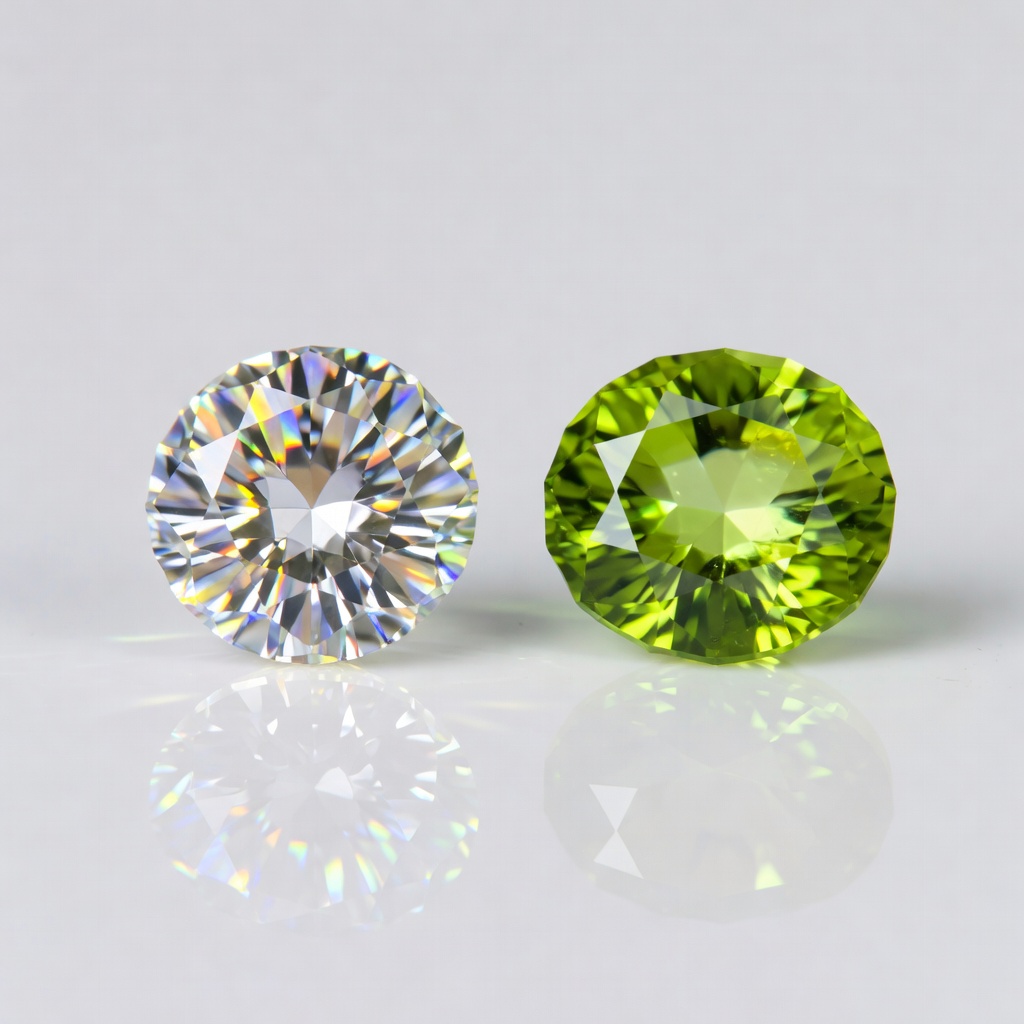
Understanding Two Distinct Gemstones
When exploring the world of precious gemstones, the comparison between Diamond vs Peridot represents one of the most striking contrasts between traditional luxury and vibrant affordability. Diamonds have reigned as the ultimate symbol of eternal commitment and wealth for centuries, commanding premium prices in markets worldwide and establishing themselves as the benchmark for fine jewelry durability. In contrast, peridot emerges as the fresh, lively August birthstone with its distinctive olive-green brilliance, offering consumers an accessible entry point into colored gemstone ownership without sacrificing visual impact or historical significance.
The fundamental differences between these two gems extend far beyond their visual appearance, encompassing complex variations in geological formation, market positioning, and practical wearability. While diamonds form under immense pressure deep within the Earth's mantle over billions of years, peridot crystallizes in volcanic environments, creating distinct physical properties that directly impact their suitability for different jewelry applications. Understanding these nuances helps collectors and jewelry enthusiasts make informed decisions based on lifestyle needs, budget constraints, and aesthetic preferences rather than simply following traditional marketing narratives.
This comprehensive analysis examines critical comparison criteria including gemstone hardness comparison metrics, optical performance characteristics, investment potential, and cultural symbolism to provide a balanced perspective on each stone's unique value proposition. Whether you are considering a peridot engagement ring as an unconventional expression of love or evaluating diamond alternative gemstones for an expanding jewelry collection, understanding the specific strengths and limitations of each option ensures satisfaction with your final selection.
Physical Properties and Durability Comparison
The durability differential between diamond and peridot represents perhaps the most significant practical consideration for jewelry buyers, directly impacting long-term wearability and maintenance requirements. On the Mohs hardness scale, which measures a mineral's resistance to scratching from 1 (talc) to 10 (diamond), diamonds achieve the maximum rating of 10, making them the hardest known natural material. Conversely, peridot durability concerns arise from its position at 6.5 to 7 on the same scale, placing it in the same range as quartz and significantly more vulnerable to surface damage from everyday encounters with harder materials.
Crystal structure analysis reveals why these hardness differences manifest so dramatically in real-world conditions. Diamonds possess an isometric cubic crystal system where each carbon atom bonds tetrahedrally with four neighbors, creating an incredibly dense, three-dimensional lattice that resists deformation from any angle. Peridot (olivine) crystallizes in the orthorhombic system, featuring isolated silica tetrahedrons bonded by magnesium and iron atoms in a less compact arrangement that contains planes of structural weakness. This structural distinction means that while diamonds can withstand decades of daily wear without showing scratches, peridot jewelry requires protective settings and mindful wearing habits to prevent surface abrasion.
Specific gravity measurements further distinguish these gemstones, with diamonds weighing approximately 3.52 grams per cubic centimeter compared to peridot's 3.34 density, though this difference remains imperceptible to wearers. More practically significant are cleavage planes—diamonds possess perfect cleavage in four directions, making them vulnerable to chipping if struck at specific angles, while peridot exhibits poor cleavage but conchoidal fracture patterns. For active individuals or those seeking heirloom-quality pieces, diamond jewelry offers superior peace of mind, whereas peridot pieces function best as occasional wear items or protected centerpieces in earrings and pendants where impact risk remains minimal.
Color, Brilliance and Optical Characteristics
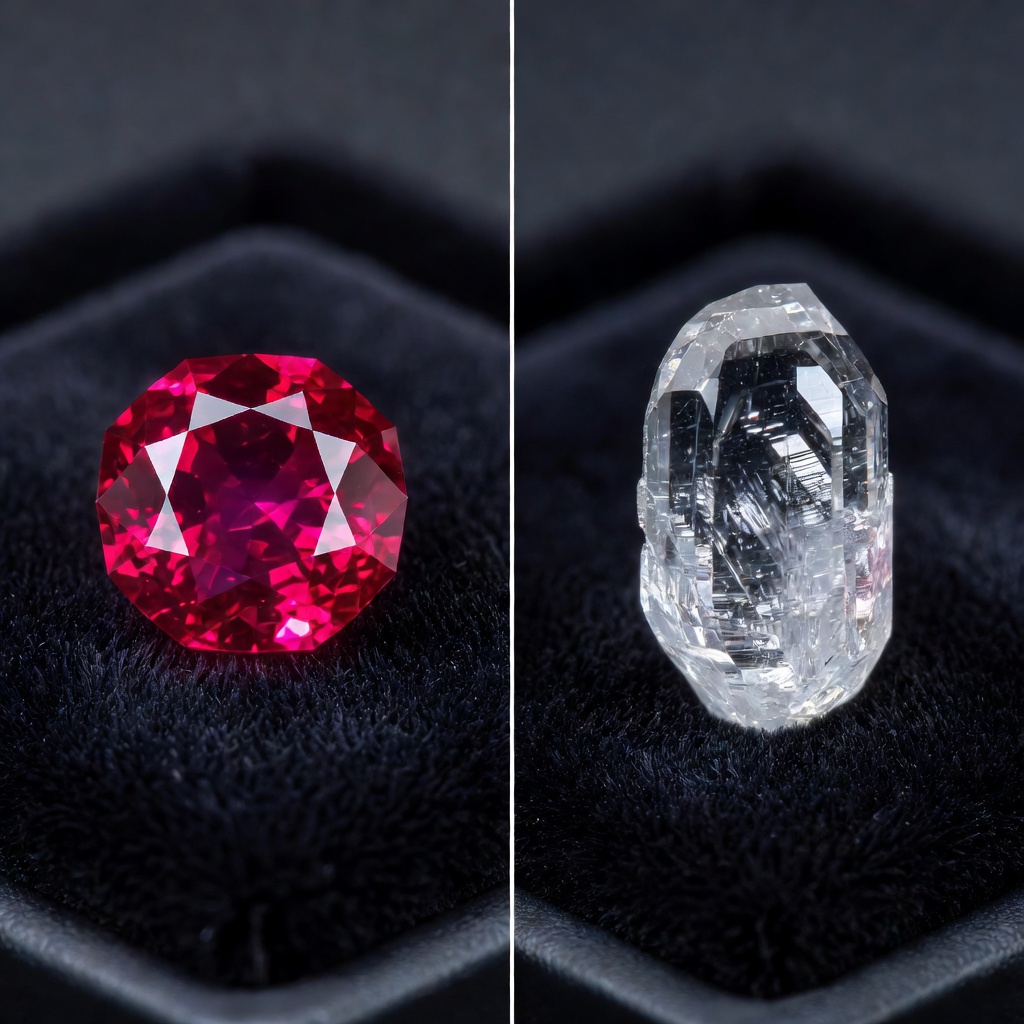
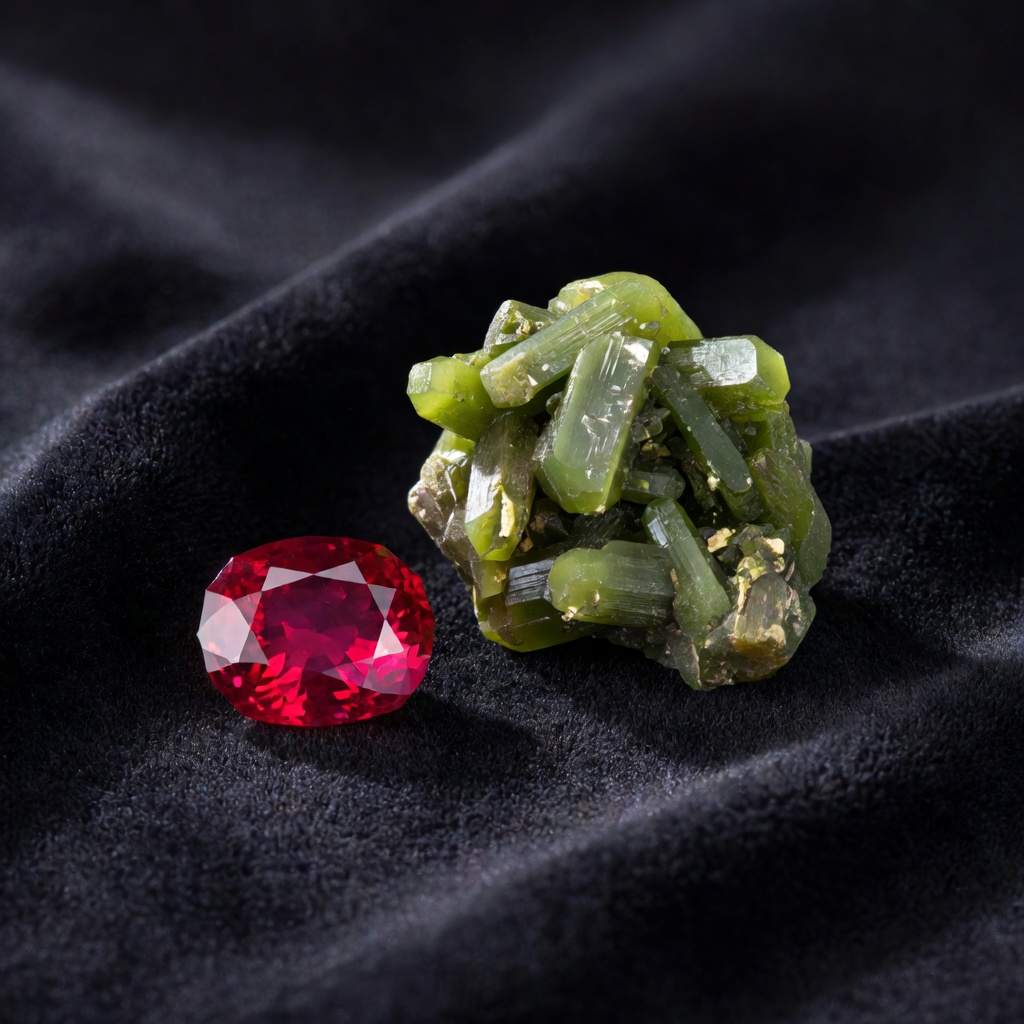
Visual distinction between these gemstones begins with their fundamental color profiles, where diamond's celebrated neutrality contrasts sharply with peridot's unmistakable verdant personality. Diamonds occur across a spectrum from completely colorless (graded D-F) to fancy vivid colors including yellow, blue, and pink, with the most valuable traditional diamonds appearing as clear, colorless prisms that maximize light return. Peridot offers no such colorless variety; instead, it presents exclusively in shades ranging from yellowish-green to deep olive, caused by iron content within the crystal structure, with the most prized specimens displaying a pure "lime green" hue without brownish undertones that diminishes green gemstone value.
Optical performance diverges significantly when examining refractive indices and light behavior. Diamonds boast a refractive index of 2.42, among the highest of any transparent gemstone, creating the spectacular brilliance and rainbow dispersion (fire) that makes diamond jewelry sparkle intensely under lighting changes. Peridot's refractive index of 1.65 produces a more subdued, velvety luster often described as "sleepy" or "oily," accompanied by strong double refraction (birefringence of 0.036) that can create visible doubling of facet junctions when viewed through the table with magnification. This optical phenomenon gives peridot a distinctive soft glow rather than diamond's sharp, brilliant flashes.
Practical implications of these optical differences influence setting choices and lighting environments for each gemstone. Diamond engagement rings maximize their fire and scintillation through open prong settings that allow light entry from multiple angles, performing spectacularly under direct lighting such as sunlight or spotlights. Peridot jewelry benefits from bezel or closed-back settings that enhance its body color and protect its softer surface, displaying best under diffused lighting where its rich green tone appears most saturated without the harsh reflections that might emphasize surface scratches. Collectors seeking maximum visual impact in varying lighting conditions typically prefer diamond's consistent brilliance, while those drawn to peridot appreciate its consistent color saturation regardless of lighting intensity.
Pricing and Value Factors Analysis
The economic disparity between these gemstones creates distinct market segments, with peridot vs diamond price comparisons revealing gaps of 95 to 98 percent for equivalent carat weights. Diamond pricing follows the rigorous Four Cs methodology (carat, cut, color, clarity), where a one-carat round brilliant diamond with G color and VS2 clarity typically ranges from $4,000 to $6,000, while flawless D-color specimens can exceed $20,000 per carat. This pricing structure reflects not only natural rarity but also sophisticated marketing, certification costs, and established resale infrastructure that supports diamond's position as a portable store of value.
Peridot affordability stems from its relatively abundant supply and efficient mining operations, with fine quality specimens ranging from $50 to $400 per carat depending on size and color intensity. Exceptional peridots exceeding ten carats with pure green coloration and minimal inclusions command premium prices up to $800 per carat, though these remain accessible compared to diamond equivalents. This dramatic price differential makes peridot an attractive diamond alternative gemstone for fashion jewelry, statement pieces, or budget-conscious consumers seeking large center stones without five-figure investments. For example, a three-carat peridot solitaire might cost $600, while a comparable diamond would range from $15,000 to $60,000.
Value stability differs significantly between these markets, with diamonds maintaining relatively stable pricing through controlled supply chains and established retail networks, though resale values typically range from 20 to 60 percent of original purchase price depending on certification and market conditions. Peridot experiences greater price volatility based on mining yields, particularly from the historic San Carlos Apache reservation in Arizona, which produces significant quantities affecting global supply. While diamonds serve as emergency currency and investment vehicles in many cultures, peridot functions primarily as a decorative acquisition where value derives from aesthetic pleasure rather than asset appreciation, making it ideal for collectors prioritizing color variety and size over portfolio diversification.
Origins, Mining and Rarity
Geological origins fundamentally distinguish these gemstones, with diamonds forming approximately 90 to 150 miles beneath Earth's surface in the mantle's high-pressure, high-temperature environment, transported violently upward by kimberlite and lamproite volcanic eruptions occurring 1 to 3 billion years ago. This extreme formation process limits diamond deposits to ancient continental cratons, with major mining operations concentrated in Botswana, Russia, Canada, and Australia, where extraction requires significant capital investment, advanced technology, and complex processing to separate microscopic diamonds from tons of host rock. The controlled nature of diamond mining, dominated by a few major corporations, creates artificial scarcity that supports premium pricing despite technically abundant global reserves.
Peridot crystallizes in much shallower environments within basaltic lavas and volcanic deposits, forming as magma cools and olivine-rich rocks reach the surface. Primary sources include the San Carlos Apache Indian Reservation in Arizona, which produces the majority of American peridot, alongside historic mines in Pakistan's Kashmir region and Myanmar's Mogok Stone Tract, where the finest deep green specimens originate. Unlike diamond mining's industrial scale, peridot extraction often involves smaller operations, artisanal mining, and surface collection from volcanic fields, resulting in lower environmental impact and extraction costs but inconsistent supply chains that can affect market availability.
Rarity perceptions require nuanced examination, as gem-quality diamonds suitable for jewelry represent a small fraction of total diamond production, with industrial-grade stones comprising the majority of mined material. However, fine peridot over five carats with exceptional clarity becomes genuinely scarce, as the mineral typically forms smaller crystals within volcanic matrices. Meteoritic peridot, found in rare pallasite meteorites, represents the ultimate rarity, with extraterrestrial specimens occasionally incorporated into high-end jewelry commanding extraordinary premiums. For collectors, August birthstone vs April birthstone comparisons reveal that while diamond maintains prestige through marketing-controlled scarcity, peridot offers natural geological rarity in larger specimen sizes at accessible price points.
Birthstone Significance and Symbolism
Cultural associations and symbolic meanings add intangible value to both gemstones, with April's diamond representing eternal love, invincibility, and clarity across Western traditions, derived from the Greek word "adamas" meaning unconquerable. Ancient Romans believed diamonds were splinters of fallen stars, while medieval cultures attributed healing properties and protection against poison to these hardest of gems. As the modern engagement ring standard since De Beers' 1947 "A Diamond is Forever" campaign, diamonds carry immense social significance regarding marital commitment, success, and family heritage, making them the default choice for significant life milestones and generational wealth transfer.
August birthstone peridot offers equally rich but distinct symbolic traditions, historically associated with light, prosperity, and protection against nightmares and evil spirits. Ancient Egyptians called peridot the "gem of the sun," mining it from Zabargad Island (St. John's Island) in the Red Sea as early as 1500 BCE, while Hawaiian mythology connects peridot to Pele's tears, believing the volcanic gem embodies the goddess of fire and volcanoes. Unlike diamond's universal associations with romantic love, peridot historically symbolizes strength, fame, and dignity, with medieval and Renaissance jewelry often featuring peridot for ecclesiastical and royal regalia representing spiritual insight and moral purity.
Zodiac associations further differentiate these stones, with diamond traditionally linked to Aries (March 21-April 19) and peridot associated with Leo (July 23-August 22) and Virgo (August 23-September 22), though modern birthstone lists standardize diamond for April and peridot for August. Gift-giving traditions reflect these associations, with diamond jewelry marking 60th and 75th wedding anniversaries (diamond jubilees), while peridot celebrates 16th wedding anniversaries. For those born in August seeking personalized jewelry, peridot provides authentic birthstone representation with unique color distinction, while April-born individuals might consider peridot as a secondary collection piece representing summer vitality and growth rather than winter endurance.
Jewelry Applications and Best Use Cases
Practical jewelry design considerations leverage each gemstone's properties to maximize beauty while minimizing damage risk, with diamonds dominating engagement rings, wedding bands, and daily wear pieces where durability remains paramount. The superior hardness of diamonds allows for delicate prong settings, shared settings in eternity bands, and intricate designs featuring exposed girdles without significant wear concerns over decades of continuous use. Diamond tennis bracelets, solitaire necklaces, and stud earrings withstand gym workouts, gardening, and office environments alike, making them ideal for "set it and forget it" jewelry wardrobes requiring minimal removal.
Peridot engagement ring designs require thoughtful engineering to protect the softer stone while showcasing its distinctive color. Bezel settings, which wrap the gem's perimeter in protective metal, represent the optimal choice for peridot rings intended for regular wear, preventing edge chipping and surface scratching. Halo designs featuring diamond accents around a peridot center provide additional protection while enhancing the green stone's color through complementary contrast. However, jewelers generally recommend reserving peridot for earrings, pendants, and brooches where impact risk remains lower, or for "right-hand rings" worn occasionally rather than daily.
Case studies illustrate these applications effectively: a marketing executive might wear a platinum diamond solitaire daily without concern, while keeping a peridot cocktail ring for weekend social events. Bridal jewelry combinations increasingly feature peridot as accent stones in brooches or hairpieces for August weddings, providing color coordination without the durability demands of daily wear rings. For those seeking green gemstones in engagement contexts, emerald or tsavorite garnet (hardness 7.5-8) offer intermediate durability options, though peridot remains viable for couples prioritizing color and budget over generational longevity, provided they accept the maintenance responsibilities of softer stones.
Care, Cleaning and Maintenance Requirements
Maintenance protocols differ dramatically between these gemstones, reflecting their hardness and chemical stability variations. Diamond jewelry requires minimal special care beyond standard precautions, safely tolerating ultrasonic cleaners, steam cleaning, and commercial jewelry cleaning solutions without risk of damage to the stone itself. The primary maintenance concern for diamond settings involves checking prong integrity every six to twelve months to prevent stone loss, with professional cleaning recommended annually to remove accumulated lotions and oils that diminish brilliance. Home cleaning involves simple warm water with mild dish soap and a soft toothbrush, making diamonds the ultimate low-maintenance luxury.
Peridot care demands significantly more attention due to the gem's sensitivity to thermal shock, acids, and mechanical abrasion. Ultrasonic cleaners and steamers pose serious risks, as peridot's internal stress fractures may expand under rapid temperature changes or vibration, potentially causing cleavage. Chemical exposure presents additional hazards, as acids found in household cleaners, cosmetics, and even perspiration can etch peridot's surface over time, dulling its polish. Cleaning should be limited to brief soaks in warm, soapy water followed by gentle pat-drying with a soft cloth, avoiding brushes that might scratch the surface.
Storage recommendations emphasize separation, as peridot's 6.5-7 hardness allows harder gemstones (sapphires, rubies, diamonds) to scratch it easily when jumbled in jewelry boxes. Fabric-lined compartments or individual soft pouches prevent contact damage, while avoiding extreme temperature environments—such as leaving peridot jewelry in hot cars or wearing it in saunas—prevents thermal stress. For peridot rings, removal before cooking (exposure to acids), cleaning (chemicals), exercise (impact risk), and sleeping (pressure damage) significantly extends the stone's pristine appearance. Professional jewelers should inspect peridot settings every six months for loose stones, as the softer material wears down prongs more quickly than diamond settings require.
Investment Potential and Resale Value
Financial considerations beyond initial purchase price reveal stark differences in secondary market performance, with diamonds functioning as quasi-currency in many global markets due to standardized grading systems, GIA certification, and liquid resale channels. Investment-grade diamonds—typically those exceeding one carat with D-F color and IF-VVS clarity—maintain value stability and can appreciate during economic uncertainty, though retail buyers typically face significant markdowns when selling to dealers (often 20-50 percent below replacement value). The establishment of diamond investment funds and futures markets supports diamond's position as a tangible asset class, particularly for rare fancy colors and large, flawless whites.
Peridot resale value remains limited by abundant supply, inconsistent grading standards, and lack of certification infrastructure comparable to diamond's GIA system. While exceptional specimens from Kashmir or large clean stones over 15 carats may interest collectors, most peridot jewelry sells at estate sales and auctions for fractions of original retail prices, functioning as costume or fashion jewelry in secondary markets rather than investment vehicles. Unlike diamonds, which maintain consistent demand across economic cycles, peridot demand fluctuates with fashion trends, experiencing revival during "green" jewelry movements but lacking the timeless, recession-proof appeal that supports diamond liquidity.
Documentation strategies differ accordingly: diamond purchases should always include GIA or AGS certification to maximize future resale potential, with laser inscription providing theft recovery benefits. Peridot acquisitions rarely warrant expensive certification given the cost relative to gem value, though reports from recognized laboratories like GIA or GRS add value for exceptional specimens. For buyers prioritizing investment security, diamond remains the superior choice despite higher entry costs, while peridot serves purely aesthetic and emotional purposes where value derives from wearing pleasure rather than asset appreciation. Savvy collectors might allocate 90 percent of serious gemstone budgets to diamonds and precious colored stones (rubies, sapphires, emeralds) while using peridot for accessible color variety without financial expectations.
Diamond vs Peridot Comparison Table
| Characteristic | Diamond | Peridot |
|---|---|---|
| Mohs Hardness | 10 (Maximum) | 6.5-7 (Moderate) |
| Color Range | Colorless to Fancy Colors (D-Z scale) | Yellowish-Green to Olive Green only |
| Refractive Index | 2.42 (Exceptional brilliance) | 1.65 (Soft, velvety luster) |
| Price per Carat | $2,000-$20,000+ (Fine quality) | $50-$400 (Fine quality) |
| Best Jewelry Use | Daily wear, engagement rings, heirlooms | Earrings, pendants, occasional rings |
| Care Requirements | Ultrasonic safe, low maintenance | Avoid heat/chemicals, gentle cleaning only |
| Primary Origins | Botswana, Russia, Canada, Australia | Arizona (USA), Pakistan, Myanmar |
| Investment Value | High liquidity, stable resale markets | Limited resale, fashion-driven demand |
| Birthstone Month | April | August |
Frequently Asked Questions
Is Peridot Harder Than a Diamond?
No, peridot is significantly softer than diamond. Diamond ranks 10 on the Mohs hardness scale (the highest possible), while peridot scores 6.5-7. This means peridot can be scratched by everyday materials like steel or quartz, while diamond can only be scratched by another diamond. For jewelry applications, this hardness difference dictates that diamonds suit daily wear including engagement rings and bracelets, whereas peridot requires protective settings and occasional wear to prevent surface damage.
How Much Cheaper Is Peridot Compared to Diamond?
Peridot costs approximately 95-98% less than diamond. Fine quality peridot ranges from $50-400 per carat, while a comparable one-carat diamond typically costs $2,000-20,000+ depending on cut, color, and clarity. This makes peridot an excellent budget-friendly alternative for green gemstone lovers. For example, a stunning three-carat peridot center stone might cost under $1,000, while a three-carat diamond of similar visual presence would command $15,000 or more.
Can You Wear Peridot in an Engagement Ring?
Yes, but with precautions. Due to its 6.5-7 hardness, peridot requires protective settings like bezels or halos and should be removed during manual activities. For daily wear engagement rings, diamond is superior, but peridot works beautifully for those who prioritize color over durability and accept more careful maintenance. Couples choosing peridot engagement rings should consider their lifestyle—office workers may succeed with careful wear, while those in construction, healthcare, or active sports should select harder alternatives or reserve peridot for special occasions.
What Is the Main Visual Difference Between Diamond and Peridot?
The most obvious difference is color—diamonds are typically colorless (or fancy colored) while peridot displays a distinctive lime-green to olive-green hue. Optically, diamonds show exceptional brilliance and rainbow fire due to their high refractive index (2.42), whereas peridot exhibits double refraction and a more subdued, oily luster. When placed side by side under lighting, diamonds sparkle with sharp white and colored flashes, while peridot glows with a consistent green body color and softer light return.
Which Gemstone Is Rarer: Diamond or Peridot?
Gem-quality diamonds are rarer than gem-quality peridot. However, the perception is complex—industrial diamonds are common, but diamonds suitable for jewelry are rare. Peridot is relatively abundant in the Earth's crust, though large, clean specimens over 10 carats are uncommon. The controlled diamond market also creates artificial scarcity. While diamonds benefit from marketing-driven rarity perceptions and controlled supply chains, peridot occurs more frequently in nature but rarely in large, inclusion-free crystals suitable for fine jewelry.
How Do I Properly Clean Peridot Jewelry Compared to Diamond?
Diamonds can be cleaned with ultrasonic cleaners, steam, and harsh jewelry solutions safely. Peridot requires gentler care: use warm soapy water with a soft brush only, avoid ultrasonic cleaners and temperature shocks, and never expose to acids or harsh chemicals that can damage the stone's surface. For routine maintenance, soak peridot pieces for no more than a few minutes in mild dish soap solution, rinse thoroughly, and pat dry immediately. Never use commercial jewelry dips or ammonia-based cleaners on peridot, as these can cause permanent etching or color changes.
Are Peridots Valuable Gemstones?
Peridots are moderately valuable as semi-precious gemstones but don't command premium prices like diamonds. Fine peridots over 5 carats with excellent color and clarity can reach $400+ per carat. Their value lies in their unique green color and affordability rather than investment potential or rarity. Unlike diamonds, which function as stores of value and status symbols, peridot offers accessibility and distinctive color for jewelry enthusiasts. Exceptional specimens from historic Kashmir mines or extraterrestrial peridot from meteorites command collector premiums, but commercial peridot remains an affordable luxury for most buyers.