The Celebrity vs The Phantom: Understanding Diamond vs Painite
When discussing the pinnacle of gemstone prestige, two extraordinary minerals occupy opposite ends of the spectrum in the luxury market. Diamonds have reigned supreme for centuries as the ultimate symbol of wealth, romance, and permanence, adorning engagement rings and royal collections worldwide. Yet lurking in the shadows of obscurity exists painite, a boron-aluminum-zirconium silicate that holds the distinction of being the rarest gemstone in the world. This juxtaposition creates a fascinating paradox: while diamonds are marketed aggressively as scarce treasures, painite remained virtually unknown to science until the 21st century, with only two authenticated crystals existing in museums before 2001.
The Diamond vs Painite comparison reveals fundamental differences in how we perceive value, rarity, and desirability in precious stones. While diamonds dominate retail jewelry cases and investment portfolios, painite specimens hide within climate-controlled mineral collections, traded quietly among elite collectors at specialized auctions. Understanding these distinctions requires examining durability standards, true scarcity metrics, jewelry practicality, and long-term appreciation potential. Whether you are a collector seeking mineral specimen investment opportunities or a jewelry enthusiast exploring beyond traditional choices, this comprehensive analysis illuminates the stark contrasts between commercial ubiquity and genuine geological rarity.
Origins and Discovery History
Ancient Diamonds and Modern Painite
Diamonds carry a legacy spanning millennia, with archaeological evidence suggesting human interaction with these carbon crystals dating back to the 4th century BC in India, where they were initially gathered from rivers and streams. Major diamond deposits subsequently emerged in Brazil during the 1700s, followed by the transformative discovery of kimberlite pipes in South Africa in 1866, which revolutionized commercial mining. Today, significant production occurs across Russia's Yakutia region, Canada's Northwest Territories, and Botswana's Orapa mine, creating a global supply chain that processes approximately 150 million carats annually.
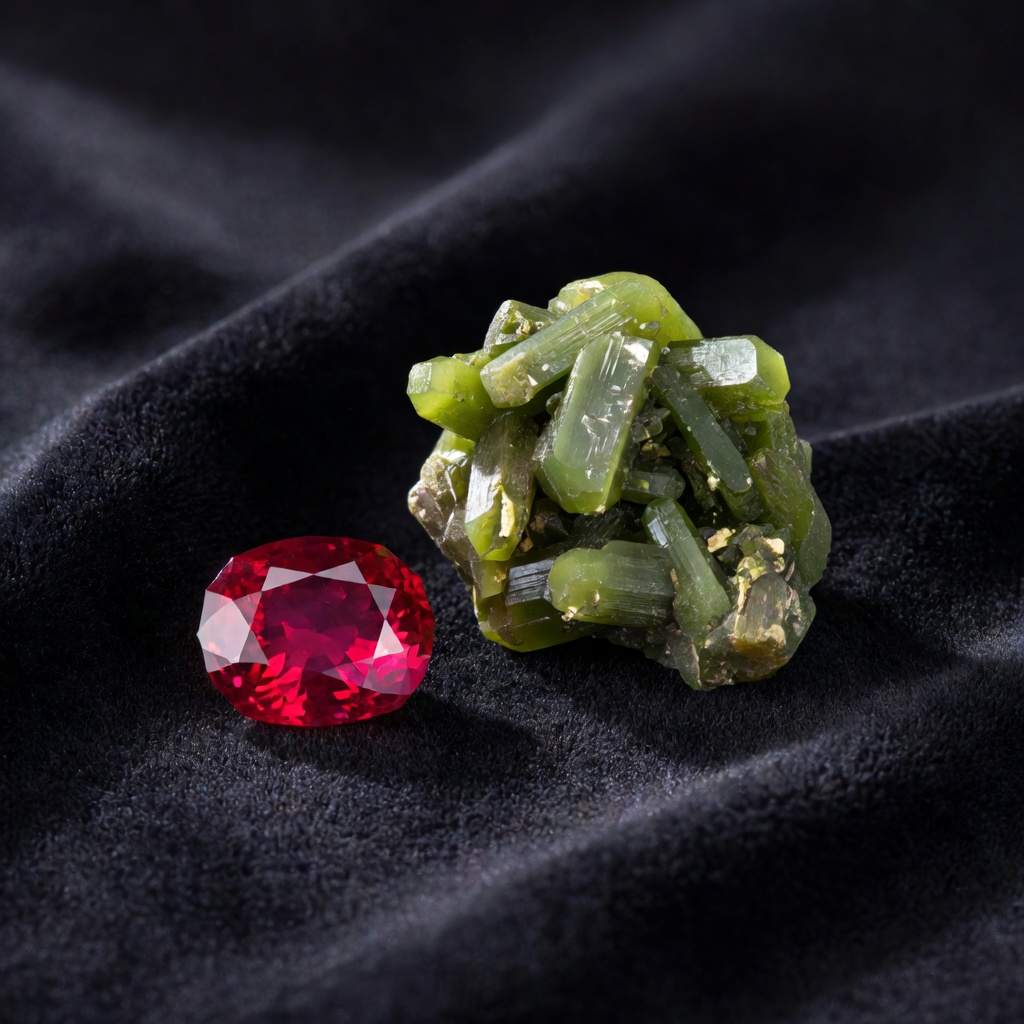
Conversely, the burmese painite crystal represents one of geology's most recent revelations to the scientific community. British mineralogist Arthur C.D. Pain discovered the first specimen in 1951 in the Mogok Stone Tract of Myanmar (formerly Burma), initially mistaking the deep red crystal for an exceptional ruby or spinel. The mineral remained so scarce that for five decades, only two painite crystals were known to exist worldwide, both residing in the British Museum's mineral collection. Not until 2001 did additional specimens emerge from the same Myanmar region, revealing that painite formed under extraordinarily specific contact metamorphism conditions where limestone and granite interacted.
Geological Formation Distinctions
The formation environments of these gemstones could not differ more dramatically. Diamonds crystallize approximately 150 kilometers beneath Earth's surface under intense pressure of 50 kilobars and temperatures exceeding 1,200 degrees Celsius within the mantle's peridotitic or eclogitic zones. Volcanic eruptions through kimberlite or lamproite pipes rapidly transport these crystals to the surface, preserving their isometric cubic structure. This process occurs globally wherever ancient cratons provide the necessary geological stability.
Painite requires an almost alchemical combination of elements rarely found together in nature. The mineral forms exclusively in high-pressure, low-temperature skarn deposits where hexavalent cation substitution occurs, incorporating calcium, zirconium, aluminum, and boron in precise proportions. This unique geochemistry occurs only in Myanmar's Mogok region, specifically within the contact zones between marble and intrusive granite pegmatites. Unlike diamonds, which form abundantly under mantle conditions worldwide, painite's formation requires the rare convergence of specific chemical precursors that geologists have yet to discover elsewhere on Earth.
Physical Properties and Durability Face-Off
The Mohs Scale Reality
When evaluating gemstones for jewelry applications or long-term preservation, hardness serves as a critical durability indicator. The diamond hardness mohs scale rating of 10 represents the absolute pinnacle of mineral hardness, meaning diamonds can scratch every other material and only another diamond can mark their surface. This exceptional hardness stems from the covalent bonding between carbon atoms in an isometric crystal lattice, creating three-dimensional structural integrity that resists abrasion during daily wear.
Painite registers 8 on the Mohs hardness scale, positioning it alongside topaz and harder than quartz but significantly softer than corundum (ruby and sapphire) and diamond. This rating indicates that painite can scratch materials like quartz and feldspar but remains vulnerable to scratching from everyday dust (which often contains quartz particles) and can be damaged by contact with harder gemstones. For collectors and jewelers, this distinction proves crucial: while diamonds withstand decades of daily wear without surface damage, painite requires protective settings and careful handling to prevent abrasions that would diminish its value and appearance.
Crystal Structure and Toughness
Diamonds crystallize in the isometric cubic system, exhibiting perfect octahedral cleavage along four distinct planes. While this cleavage allows diamond cutters to shape stones with precision, it also creates vulnerability to splitting if struck at specific angles. However, diamond's exceptional toughness—the resistance to breaking or chipping—generally compensates for this cleavage tendency, making them suitable for engagement rings and daily-wear jewelry.
Painite crystallizes in the hexagonal system, forming prismatic crystals with distinct pleochroic properties. Unlike diamond's cleavage planes, painite exhibits conchoidal to uneven fracture patterns and brittle tenacity, meaning it shatters rather than bends when stressed. This brittleness, combined with its lower hardness, makes painite unsuitable for jewelry subjected to impact or abrasion. Mineral collectors typically store painite specimens in padded cases with controlled humidity, treating them as irreplaceable geological artifacts rather than wearable adornments.
Visual Characteristics: Brilliance vs Mystery
Diamond's Optical Performance
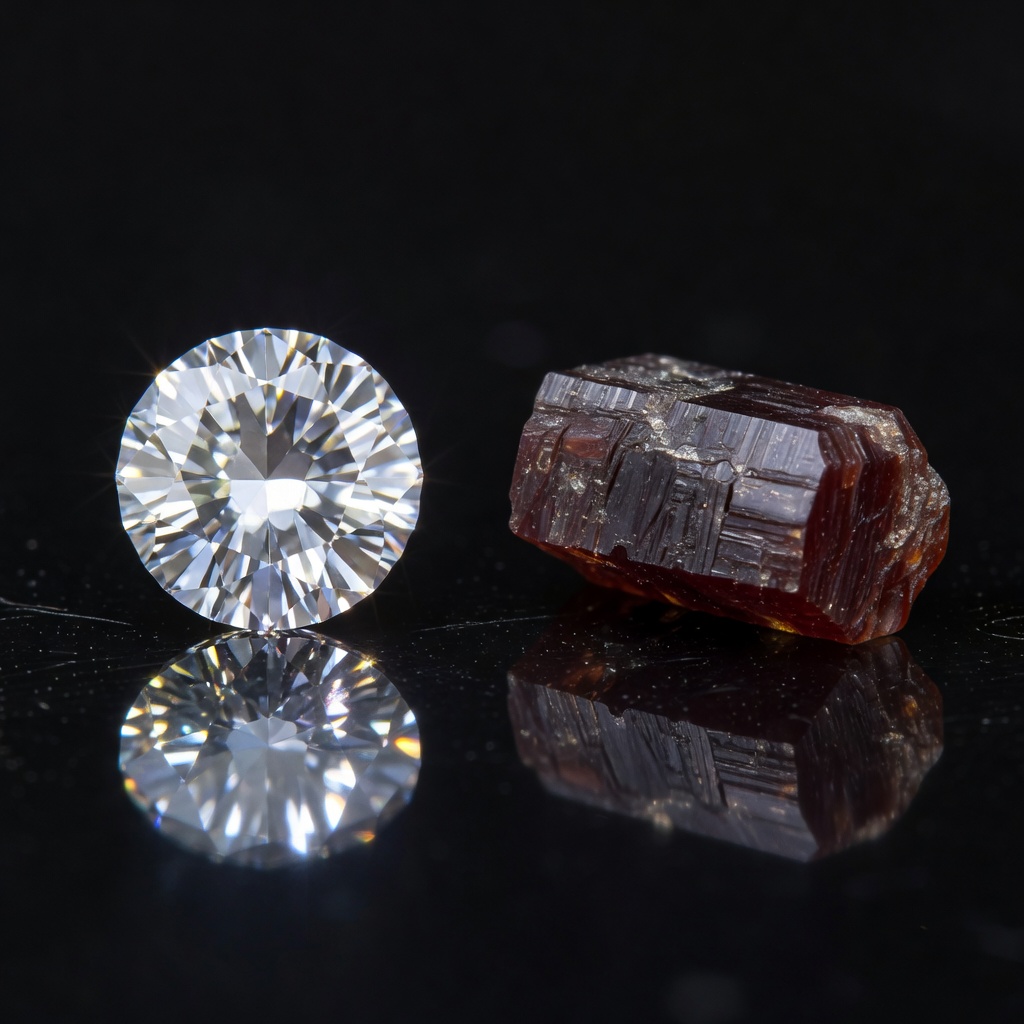
Diamonds captivate observers through three distinct optical phenomena: brilliance (white light reflection), fire (spectral dispersion into rainbow colors), and scintillation (flashes of light when moved). With a refractive index of 2.417 and dispersion rating of 0.044, diamonds bend light dramatically, creating the signature sparkle that has defined luxury jewelry for generations. The Gemological Institute of America (GIA) grades diamond color from D (colorless) to Z (light yellow or brown), with fancy colored diamonds—including pink, blue, and red varieties—commanding premium prices due to their rarity and distinct hue saturation.
Painite's Enigmatic Appearance
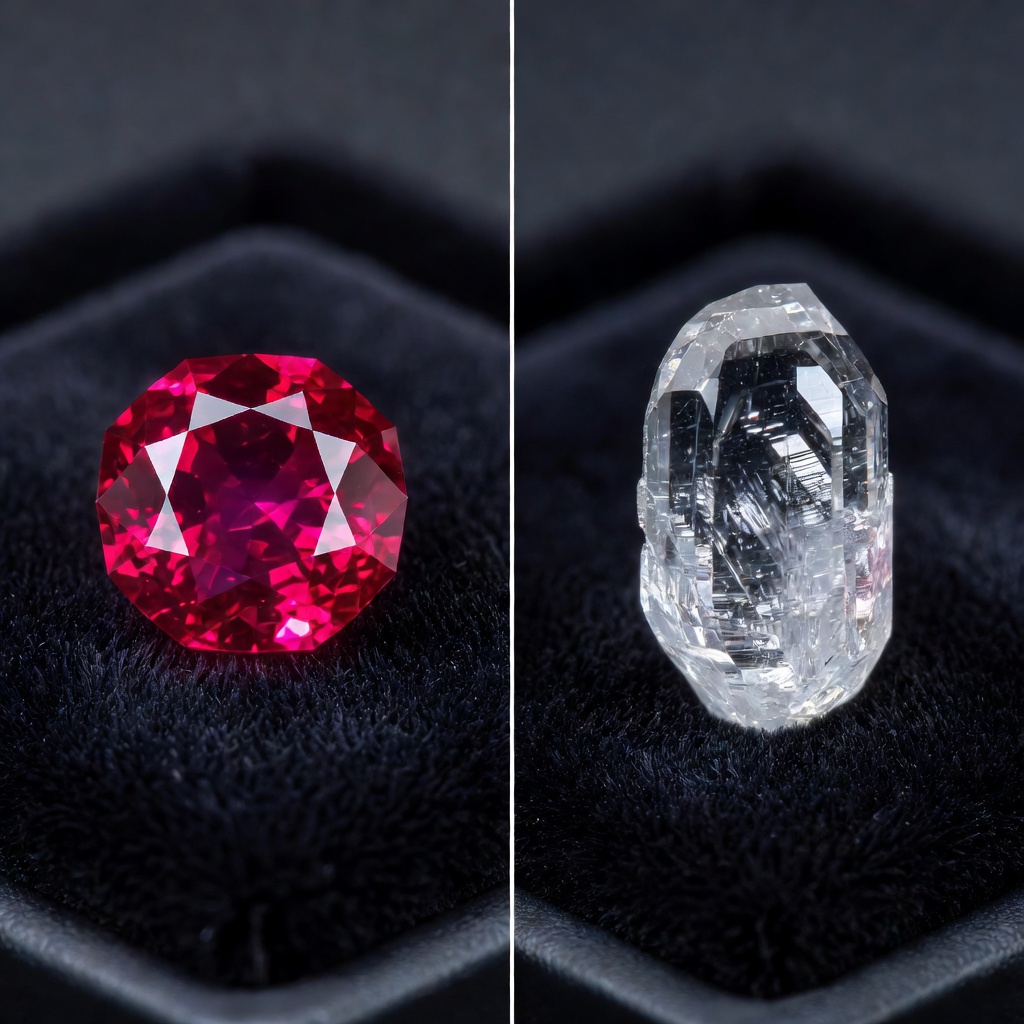
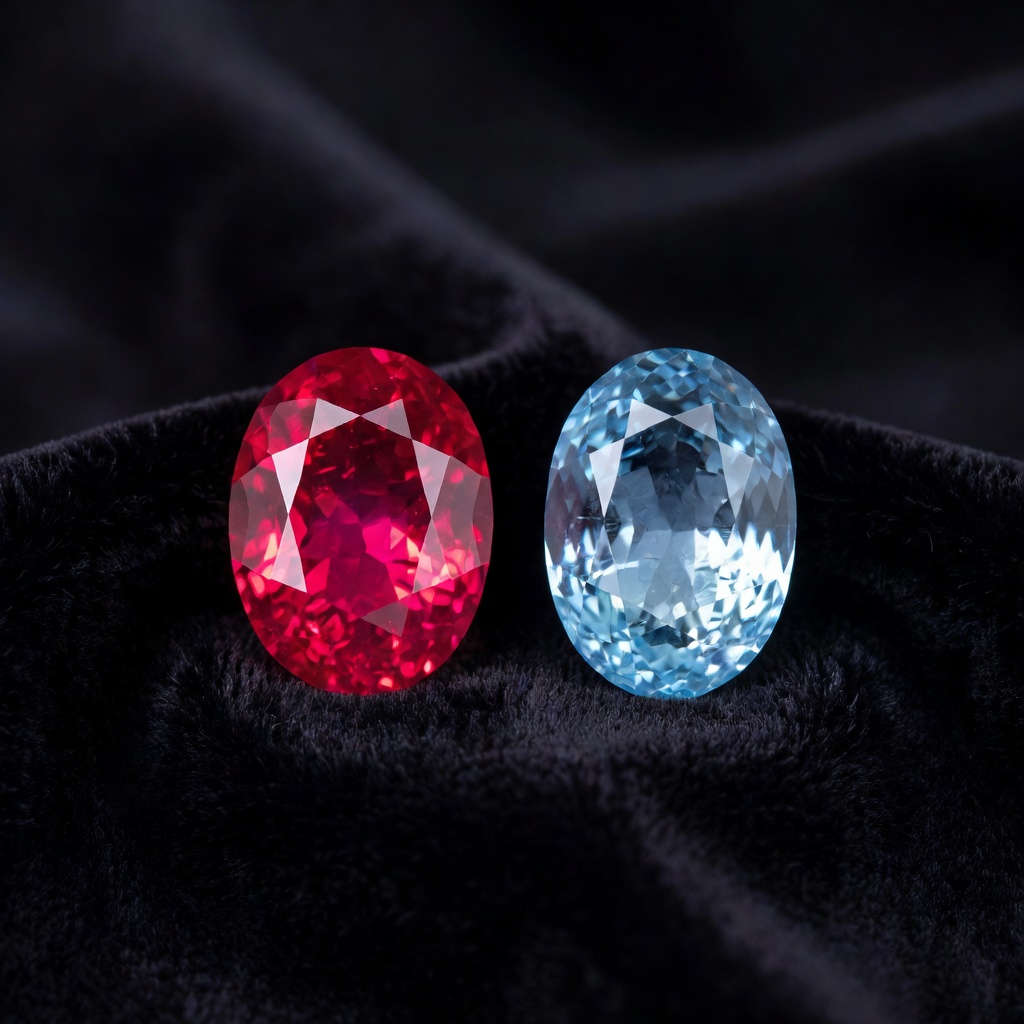
Painite presents a distinctly different visual character, typically appearing in hexagonal prismatic crystals ranging from reddish-brown to orange-brown or deep bordeaux-red hues. The painite stone value derives partly from its strong pleochroism, meaning the crystal displays different colors when viewed from different angles—typically showing brown, orange, and red variations depending on orientation. This optical property requires cutters to orient painite crystals carefully to maximize color intensity.
Transparency presents another stark contrast between these gemstones. While diamonds range from internally flawless to heavily included, the gem industry accepts various clarity grades for jewelry use. Painite specimens, however, are typically translucent to transparent with visible inclusions, and perfectly clear painite crystals remain extraordinarily rare. Unlike diamonds, which undergo enhancement treatments to improve clarity, painite's value lies in its natural, unmodified state as a mineral specimen, with collectors prizing crystal formation and color depth over flawless transparency.
The Rarity Factor: Controlled vs Genuine Scarcity
The Diamond Production Reality
The concept of diamond rarity has been carefully cultivated through marketing campaigns, particularly De Beers' historic "A Diamond is Forever" strategy, which created artificial scarcity by controlling release rates from massive stockpiles. Despite this marketing narrative, global diamond production reaches approximately 150 million carats annually, with industrial-grade stones comprising the majority of output. Even gem-quality diamonds number in the millions of carats yearly, making them readily available through retail channels worldwide. This controlled scarcity maintains price stability but does not reflect genuine geological limitation.
Painite: The Genuine Rarity
Painite stands as the undisputed rarest gemstone in the world based on documented specimens. Between its discovery in 1951 and the year 2001, exactly two painite crystals were known to exist globally, both housed in the British Museum. Following renewed mining efforts in Myanmar's Mogok region, approximately 25 to 30 faceted painite stones exist today, with raw crystal specimens numbering fewer than 100 documented examples. This extreme scarcity earned painite the Guinness World Record designation as the world's rarest gemstone from 2005 until 2020, when gemologists began debating whether red beryl or tanzanite might challenge this title—though painite remains significantly scarcer by specimen count.
Practical tip for collectors: When evaluating claims of painite ownership, request documented provenance tracing the specimen to Myanmar's Mogok mines. Authentic painite should accompany laboratory certification from institutions like the Gemological Institute of America (GIA) or the Swiss Gemmological Institute (SSEF), as its similarity to red spinel and garnet has historically caused misidentification.
Market Value and Investment Analysis
Price Per Carat Comparison
The mineral specimen investment landscape reveals dramatic price differentials between these gemstones. Commercial diamonds typically range from $2,000 to $20,000 per carat depending on the Four Cs (carat, cut, color, clarity), with exceptional D-flawless stones commanding higher premiums. This pricing structure reflects established market liquidity, standardized grading, and consistent consumer demand.
Painite operates in an entirely different economic stratosphere due to its extreme scarcity. Quality painite specimens exceeding one carat can command $50,000 to $60,000 per carat at specialized mineral auctions, with larger crystals potentially reaching six-figure valuations. Unlike diamonds, painite pricing follows mineral specimen conventions rather than gemological standards, with matrix specimens (crystals attached to host rock) sometimes commanding premiums over loose stones due to their geological significance.
| Characteristic | Diamond | Painite |
|---|---|---|
| Mohs Hardness | 10 (Maximum hardness) | 8 (Vulnerable to scratching) |
| Annual Production | ~150 million carats globally | Less than 1 kilogram total known |
| Price Per Carat | $2,000 - $20,000 (gem quality) | $50,000 - $60,000+ (faceted) |
| Crystal System | Isometric Cubic | Hexagonal |
| Primary Use | Jewelry, industrial applications | Mineral collections, investment |
| Geographic Source | Global (Botswana, Russia, Canada) | Exclusive to Myanmar (Burma) |
| Market Liquidity | High (retail and auction) | Very Low (specialized collectors) |
| Optical Property | High brilliance and fire (RI 2.417) | Pleochroic, vitreous luster (RI 1.815-1.823) |
Liquidity and Appreciation Trends
Diamonds maintain robust liquidity through established resale markets, pawn shops, and diamond exchanges, though retail buyers typically recoup only 20-50% of purchase prices due to markup structures. Price appreciation remains relatively stable, tracking inflation with occasional spikes during supply disruptions.
Painite presents an illiquid but potentially lucrative investment scenario. The gemstone trades almost exclusively through high-end mineral auctions (Christie's, Sotheby's natural history sales) and private collector networks. However, appreciation potential appears exponential—specimens purchased for $10,000 per carat in 2005 now command five to six times that value as new deposits remain undiscovered and existing specimens enter permanent museum collections. Case study: A 2.02-carat painite sold at auction in 2018 for $120,000, representing a 400% increase from its 2005 valuation, while comparable diamonds appreciated approximately 30% over the same period.
Jewelry Applications and Wearability
Diamond Versatility
Diamonds dominate the jewelry industry precisely because they withstand the mechanical stresses of daily existence. Their perfect hardness prevents surface scratching, while adequate toughness resists chipping during normal activities. This durability makes diamonds ideal for engagement rings, bracelets, and daily-wear pieces. Jewelers can set diamonds in any metal—from soft 24-karat gold to platinum—without worrying about the setting process damaging the stone. Prong settings expose maximum surface area to light, enhancing brilliance, while bezel settings provide additional protection for active lifestyles.
Painite Limitations
Painite's gemstone rarity comparison to diamonds reveals it as entirely unsuitable for conventional jewelry applications. With only approximately 25 faceted stones known to exist, removing painite from its mineral collection context for jewelry purposes would constitute an irreplaceable loss to geological science. Furthermore, its Mohs hardness of 8 and brittle tenacity make it vulnerable to damage during setting, wearing, or cleaning.
On the rare occasions when painite appears in jewelry, it requires highly protective settings. Bezel settings with full metal rims provide the necessary protection against impact, while avoiding prong settings that concentrate stress points. Heat sensitivity during manufacturing necessitates specialized mounting techniques that avoid high-temperature soldering near the stone. For the few collectors who do commission painite jewelry, pieces remain occasional-wear pendants or brooches rather than rings or bracelets, stored in vaults when not displayed.
Authentication and Certification Challenges
Standardized Diamond Grading
The diamond industry benefits from universal standardization through GIA's 4Cs grading system (Cut, Color, Clarity, Carat). Each certified diamond receives a detailed report documenting precise measurements, proportions, and inclusions, often accompanied by laser inscriptions on the girdle for identification. This standardization creates consumer confidence and fraud prevention, as any jeweler worldwide can verify a diamond's characteristics against its certificate.
Painite Verification Complexity
Authenticating burmese painite crystal requires sophisticated mineralogical analysis unavailable at standard jewelry appraisals. Due to painite's visual similarity to red spinel, garnet, and ruby, verification demands advanced spectroscopic techniques including Raman spectroscopy and Fourier-transform infrared spectroscopy (FTIR). X-ray diffraction (XRD) analysis confirms the hexagonal crystal structure distinct from cubic spinels or trigonal corundum.
Fraud risks differ significantly between these stones. Diamond simulants (cubic zirconia, moissanite) flood the market but are easily detected by trained gemologists using basic refractive index testing or thermal conductivity probes. Painite fraud remains rare simply because authentic material is so scarce, but substitution risks involve dealers selling red spinel or hessonite garnet as painite to unwary collectors. Always insist on certification from laboratories equipped with Raman spectroscopy, and verify that the certificate specifically identifies the mineral as "Painite" with chemical formula CaZrAl9O15(BO3), not merely "red gemstone" or "spinel variety."
Care, Maintenance, and Longevity
Diamond Durability
Diamonds require minimal maintenance to retain their appearance across generations. Ultrasonic cleaners safely remove accumulated dirt and oils from diamond jewelry, while steam cleaning restores brilliance without chemical damage. Diamonds resist acids, bases, and organic solvents, making them suitable for exposure to household chemicals and cosmetics. Thermal stability extends beyond 800 degrees Celsius, allowing jewelers to repair settings without removing stones. Annual professional inspections ensure prongs remain secure, but diamonds themselves remain essentially eternal with proper care.
Painite Preservation
Maintaining painite stone value requires museum-quality conservation protocols. The mineral exhibits sensitivity to hydrochloric acid and thermal shock, meaning sudden temperature changes can cause fracturing. Clean painite only with distilled water and soft brushes, never ultrasonic cleaners or steam systems that might induce thermal stress. Store specimens in padded cases with stable humidity levels to prevent dehydration of any included minerals.
Insurance considerations highlight practical ownership differences. Diamonds receive standard jewelry insurance riders based on appraised values, with replacement stones readily available through commercial channels. Painite requires specialized collector's insurance policies covering mineral specimens, with premiums reflecting the stone's irreplaceable nature. Documented provenance—including mine location, discovery date, and previous ownership chains—proves essential for both insurance valuation and future resale, as mineral specimen investment legitimacy depends entirely on traceable authenticity.
Frequently Asked Questions
Is painite more valuable than diamond?
High-quality painite specimens command higher per-carat prices than commercial diamonds due to extreme scarcity, with fine painite reaching $50,000-$60,000 per carat compared to $2,000-$20,000 for most diamonds. However, large flawless diamonds (10+ carats) still exceed painite values due to established luxury market demand.
Why is painite so rare compared to diamond?
Painite forms only under extremely specific geological conditions involving hexavalent cation substitution in contact metamorphism zones, found exclusively in Myanmar's Mogok region. Unlike diamonds, which form globally under high-pressure mantle conditions, painite requires rare chemical elements (calcium, zirconium, aluminum, boron) to combine in exact proportions.
Can painite be worn in an engagement ring?
Painite is unsuitable for engagement rings due to its Mohs hardness of 8 (vulnerable to scratching) and extreme brittleness. With only approximately 25 faceted stones known to exist worldwide, painite belongs in mineral collections rather than daily-wear jewelry. Diamond remains the superior choice for engagement rings due to its perfect hardness and toughness.
How can I verify if a painite is authentic?
Authentic painite requires laboratory verification through Raman spectroscopy or X-ray diffraction due to its similarity to rubies and garnets. Genuine painite exhibits hexagonal crystal structure, strong orange-red fluorescence under UV light, and specific refractive indices (1.815-1.823). Always request certification from gemological laboratories like GIA or SSEF when purchasing.
Which gemstone is a better investment, diamond or painite?
Painite offers higher appreciation potential for serious collectors due to genuine scarcity, while diamonds provide liquidity and stability. Diamonds suit investors seeking easily tradable assets, whereas painite appeals to mineral collectors accepting illiquidity for potential exponential value gains if new deposits remain undiscovered.
What colors do painite and diamond come in?
Painite typically appears reddish-brown, orange-brown, or bordeaux-red due to iron and titanium trace elements, showing strong pleochroism. Diamonds naturally occur colorless (most valuable) but also form in fancy colors including yellow, blue, pink, green, and red, with colorless D-grade diamonds being most prized for jewelry.
Where can I legally purchase painite?
Painite is available exclusively through high-end mineral dealers, specialized gemstone auctions (Christie's, Sotheby's), and established collectors' networks. Due to its extreme rarity, painite rarely appears in retail jewelry stores. Buyers should verify ethical sourcing given Myanmar's complex mining regulations and ensure proper export documentation.
Does painite sparkle like a diamond?
No, painite does not exhibit diamond's characteristic brilliance and fire. While painite has good refractive properties (RI 1.815-1.823), it lacks diamond's exceptional dispersion (0.044) that creates rainbow flashes. Painite typically shows a more subdued, vitreous to sub-adamantine luster and is often included, reducing transparency compared to fine diamonds.