Diamond vs Opal: Understanding the Fundamental Differences
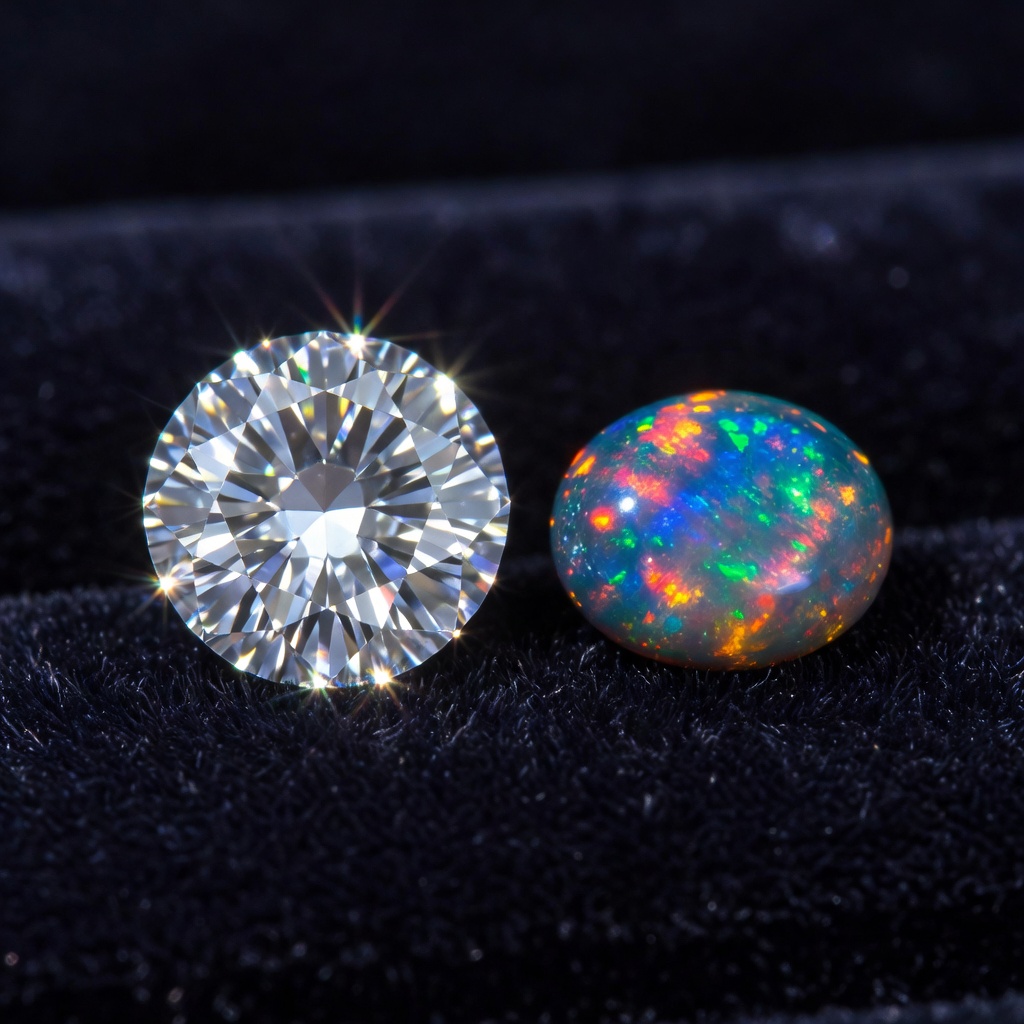
When selecting a gemstone for fine jewelry, the choice between diamond vs opal represents a fundamental decision between timeless durability and ethereal beauty. Diamonds consist of pure crystalline carbon arranged in an isometric crystal structure, creating the hardest natural substance known to science, while opals comprise amorphous hydrated silica spheres that diffract light to create their signature spectral displays. These distinct compositions result in vastly different physical properties, visual characteristics, and care requirements that every informed buyer must understand before making a significant jewelry investment.
Consumers frequently compare these precious gemstones when considering engagement rings, anniversary gifts, or personal statement pieces because both offer exceptional beauty but cater to different lifestyles and aesthetic preferences. The diamond vs opal debate intensifies as modern couples seek alternatives to traditional diamond engagement rings while weighing concerns about durability, daily wear practicality, and long-term value retention. Understanding the core differences between these gems helps prevent costly mistakes, such as choosing a delicate opal for a high-impact daily wear setting or overlooking the unique character that opals bring to special occasion jewelry.
Key decision factors when evaluating diamond vs opal include hardness and durability for lifestyle compatibility, initial purchase price and long-term investment potential, visual impact and personal style alignment, and the ongoing maintenance commitment each gemstone demands. This comprehensive guide examines these critical comparison points through the lens of geological science, jewelry craftsmanship, and practical wear scenarios to help you determine which gemstone best suits your specific needs, budget constraints, and aesthetic vision.
Geological Formation: How Nature Creates These Gems
The Genesis of Diamonds: Extreme Pressure Over Eons
Diamonds form approximately 100 to 150 miles beneath Earth's surface in the mantle layer, where temperatures exceed 2,000 degrees Fahrenheit and pressure reaches 725,000 pounds per square inch. Under these extreme conditions, carbon atoms bond in a tetrahedral structure, creating the dense, crystalline lattice that gives diamonds their legendary hardness and thermal conductivity. This formation process requires between one billion and 3.3 billion years, making each diamond a literal piece of Earth's ancient history brought to the surface through volcanic eruptions via kimberlite and lamproite pipes.
Major diamond mining operations concentrate in specific geological regions, with significant production coming from Russia's Yakutia region, Botswana's Orapa mine, Canada's Northwest Territories, and various locations across Angola and the Democratic Republic of Congo. Each location produces diamonds with subtle characteristic differences; for instance, Canadian diamonds often exhibit high clarity with minimal inclusions, while African diamonds historically dominated the large gem-quality market. Modern extraction involves complex open-pit and underground mining techniques that must process approximately 250 tons of ore to recover a single one-carat gem-quality diamond, explaining the scarcity and value associated with these carbon crystals.
The Formation of Opals: Silica Solutions in Rock Cavities
Unlike diamonds formed through igneous processes deep underground, opals develop through sedimentary processes when silica-rich water percolates through rock fractures and cavities over thousands of years. As water evaporates from these solutions, it leaves behind microscopic spheres of hydrated silica arranged in a grid-like pattern, with water content ranging from 3% to 21% by weight. The size and arrangement of these silica spheres determine the quality and intensity of the opal's play-of-color, with sphere sizes between 150 and 300 nanometers producing the most vivid spectral displays across the visible light spectrum.
Australia dominates global opal production, particularly the Lightning Ridge region famous for black opals, Coober Pedy for white and crystal varieties, and Queensland for boulder opals. Ethiopia has emerged as a significant source of hydrophane opals since 2008, while Mexico produces distinctive fire opals with transparent to translucent body colors. Unlike diamond mining, which requires massive industrial operations, opal mining often involves smaller-scale operations where miners follow "levels" or seams of opal-bearing clay within sedimentary rock formations, using jackhammers and hand tools to carefully extract the delicate gemstones without fracture.
Visual Characteristics: Brilliance vs Play-of-Color
Diamond Optics: The Science of Sparkle
Diamonds captivate viewers through three distinct optical properties: brilliance (white light reflection), fire (dispersion of light into spectral colors), and scintillation (the pattern of light and dark areas and the flashes of light when the diamond moves). Master diamond cutters exploit the gem's high refractive index of 2.42 and strategic facet arrangements to maximize these effects, creating the iconic sparkle that has defined luxury jewelry for centuries. The precision of the cut determines how effectively light enters the stone, reflects internally between facets, and returns to the viewer's eye, with ideal cut proportions sacrificing maximum carat weight for superior optical performance.
The color grading scale for diamonds ranges from D (colorless) to Z (light yellow or brown), with completely colorless stones commanding premium prices due to their rarity and ability to transmit pure white light without interference. Fancy colored diamonds, including pink, blue, and yellow varieties, follow separate grading criteria where intense saturation increases value contrary to the D-Z scale. When comparing precious gemstones, diamonds offer consistent, predictable beauty based on standardized grading systems, whereas opals present more variable aesthetic qualities that appeal to collectors seeking one-of-a-kind specimens.
The Opal Phenomenon: Diffraction and Spectral Play
Opals produce their mesmerizing visual effects not through faceting and refraction like diamonds, but through diffraction caused by the regular arrangement of microscopic silica spheres. When light enters an opal, it diffracts around these spheres and breaks into spectral colors, creating the characteristic "play-of-color" that can display the entire rainbow within a single stone. This phenomenon varies dramatically between opal types: black opals from Lightning Ridge display vivid colors against dark body tones, white opals from Coober Pedy show softer pastel hues against milky backgrounds, boulder opals incorporate ironstone host rock for earthy contrasts, and crystal opals offer transparent to semi-transparent bodies with intense color flashes.
Unlike diamonds, where larger stones generally provide greater visual impact, opal evaluation considers pattern, brightness, and color range alongside carat weight. A smaller opal displaying rare "harlequin" or "pinfire" patterns with intense red flashes often exceeds the value of larger stones with common "flash" patterns limited to blue and green. For jewelry designers, this variability offers creative opportunities; while diamond jewelry relies on precise symmetry and cut standards, opal jewelry celebrates organic freeform shapes and unique color combinations that ensure no two pieces are identical. This distinction makes opals particularly appealing for artistic statement pieces where individuality takes precedence over standardized brilliance.
Durability & Hardness: The Mohs Scale Reality Check
Diamond Superiority: The Ultimate Hardness
Diamonds rank 10 on the Mohs hardness scale, representing the hardest known natural material and approximately 150 times harder than the next hardest mineral, corundum (sapphires and rubies). This exceptional hardness means diamonds resist scratching from any other substance encountered in daily life, including other diamonds, ensuring that faceted edges and polished surfaces remain pristine through decades of wear. For engagement rings and daily wear jewelry, this durability translates to minimal maintenance beyond regular cleaning, as the stone withstands impacts, abrasion, and environmental exposure that would damage softer gemstones.
Beyond surface hardness, diamonds exhibit excellent toughness (resistance to chipping and breaking) due to their perfect cleavage in four directions, though they can fracture under extreme impact at specific angles. In practical terms, this means a diamond engagement ring survives household chores, gym workouts, and accidental bumps without visible damage, making it the preferred choice for medical professionals, athletes, and tradespeople who cannot remove jewelry during work activities. When conducting a gemstone durability comparison, diamonds set the benchmark against which all other gems are measured, particularly for heirloom jewelry intended to last multiple generations.
Opal Vulnerabilities: Softness and Sensitivity
Opals register between 5.5 and 6.5 on the Mohs hardness scale, comparable to glass or steel, making them significantly more susceptible to surface scratches and abrasion than diamonds. This relative softness means that everyday dust (which contains microscopic quartz particles ranking 7 on the Mohs scale) can gradually dull an opal's polish through normal wear, requiring periodic professional repolishing to restore luster. More critically, opals contain internal water content and an amorphous structure lacking crystalline stability, rendering them vulnerable to "crazing"—the development of internal cracks due to dehydration or sudden temperature changes.
Impact resistance presents another major concern for opal jewelry; while diamonds absorb impact through their crystalline structure, opals can crack or shatter from relatively minor blows against hard surfaces. Temperature sensitivity further complicates opal wear, as sudden shifts from cold outdoor air to heated indoor environments can cause thermal shock. For these reasons, jewelers typically recommend protective settings such as bezels or halos for opal rings, and advise removing opal jewelry before swimming, cleaning with chemicals, or engaging in physical activities. While these precautions might seem burdensome compared to diamond care, they reflect the trade-off for owning a gemstone with uniquely captivating optical properties impossible to replicate in harder materials.
Price & Value Factors: What Drives the Cost?
Diamond Pricing: The Standardized Four Cs
Diamond valuation follows a highly standardized system based on the Four Cs: Carat weight, Cut quality, Color grade, and Clarity rating. This standardization allows consumers to compare diamonds across different retailers using consistent grading reports from laboratories like GIA or AGS, creating a transparent market where price correlates directly with measurable quality characteristics. A one-carat round brilliant diamond with D color (colorless) and IF (internally flawless) clarity commands significantly higher prices than a one-carat stone with J color and SI1 clarity, with price jumps occurring at specific thresholds like the one-carat mark due to psychological demand factors.
Beyond the Four Cs, diamond prices reflect market controls and branding premiums, with natural diamonds generally ranging from $2,000 to $25,000 per carat for consumer-grade stones, and fancy colored or exceptionally large diamonds reaching millions per carat. Lab-grown diamonds have disrupted this market recently, offering chemically identical stones at 60-70% lower prices, though they lack the resale value retention of mined diamonds. For investment purposes, diamonds above one carat with D-F color and VVS clarity maintain liquidity through established resale channels, while smaller or lower-grade stones depreciate significantly upon purchase similar to new cars leaving the dealership.
Opal Valuation: Subjective Beauty and Rarity
Opal pricing lacks the standardized grading of diamonds, relying instead on subjective assessment of body tone, brightness, play-of-color pattern, color range, and origin. Black opals from Lightning Ridge command the highest prices, with exceptional specimens fetching $10,000 to $20,000 per carat, while Ethiopian crystal opals might range from $50 to $500 per carat depending on color intensity. The most valuable opals display rare patterns like "harlequin" (large angular patches of color), "ribbon" (rolling bands), or "Chinese writing" (striated patterns), combined with red or orange spectral colors that occur less frequently than blue and green.
Unlike diamonds where clarity refers to internal inclusions, opal clarity concerns transparency and the absence of fractures or potch (common opal without play-of-color). Boulder opals, which include ironstone matrix as part of the finished gem, offer larger apparent sizes at lower per-carat prices than solid black opals, making them popular for bold designer pieces. When evaluating opal value factors, collectors prioritize stones with high dome cabochons that maximize color visibility, stable water content indicating resistance to crazing, and distinctive patterns that distinguish the stone from mass-market specimens.
| Characteristic | Diamond | Opal |
|---|---|---|
| Mohs Hardness | 10 (Highest possible) | 5.5-6.5 (Moderate softness) |
| Primary Visual Appeal | Brilliance, Fire, Scintillation | Play-of-Color, Pattern |
| Daily Wear Suitability | Excellent - Resistant to scratches and impact | Poor to Fair - Requires protective settings |
| Price Range (Per Carat) | $2,000 - $25,000+ (Natural) | $50 - $20,000+ (Depending on type) |
| Cleaning Method | Ultrasonic, Steam, Soap and Water | Soft Damp Cloth Only |
| Investment Liquidity | High - Established resale market | Low to Moderate - Collector-dependent |
| Water Content | None (Pure Carbon) | 3-21% Hydrated Silica |
| Best Jewelry Applications | Engagement Rings, Daily Wear | Pendants, Earrings, Occasional Rings |
Jewelry Applications: Best Uses for Each Gemstone
Diamond Versatility: From Engagement Rings to Heirlooms
Diamonds dominate the bridal jewelry market because their exceptional durability accommodates the rigorous demands of daily wear engagement rings and wedding bands worn continuously for decades. Prong settings, which expose maximum diamond surface area to light while securing the stone with minimal metal, work perfectly for diamonds because the gem's hardness prevents the setting from damaging the stone during normal wear. Beyond bridal jewelry, diamonds excel in tennis bracelets, stud earrings, and pendant necklaces that withstand exposure to perfumes, lotions, and physical activities without requiring removal or special precautions.
For professional jewelers, diamonds offer design flexibility through various cutting styles including round brilliant, princess, cushion, emerald, and oval cuts, each optimizing different aesthetic preferences while maintaining durability. High-end watchmakers incorporate diamonds into timepiece bezels and dials, confident that the stones will resist the micro-impacts and vibrations inherent in wristwatch wear. When advising clients on diamond vs opal engagement ring choices, jewelers consistently recommend diamonds for clients with active lifestyles, careers involving hand-intensive work, or those seeking low-maintenance luxury that requires only occasional professional cleaning to maintain optimal appearance.
Opal Applications: Strategic Placement for Protection
Opals achieve their safest and most striking presentation in jewelry designs that minimize exposure to impact and environmental hazards. Pendant necklaces position opals away from hand contact and hard surfaces, significantly reducing scratch and fracture risks compared to rings. Earrings, particularly drop or stud styles, offer excellent opal security when set in bezels that wrap the gem's edges in protective metal rims, preventing the chips and cracks common in exposed opal ring settings. Brooches and cocktail rings designed for occasional wear rather than daily use allow opal enthusiasts to enjoy these gems during special events without subjecting them to routine wear hazards.
Setting selection critically impacts opal jewelry longevity; bezel settings provide superior protection compared to prong settings by creating a metal collar around the opal's circumference, while doublet or triplet constructions (where thin opal layers are backed by black potch or capped with quartz) offer durability advantages for budget-conscious buyers. Australian jewelers have pioneered protective opal designs incorporating the gem into heavy gold or silver bezels with substantial galleries that absorb impact before it reaches the stone. For those determined to wear opals daily despite durability concerns, choosing lower-profile cabochons in recessed gypsy or flush settings minimizes protrusion and snagging risks, though regular inspection for loose stones remains essential.
Care & Maintenance Requirements
Diamond Maintenance: Minimal Effort, Maximum Shine
Diamonds tolerate aggressive cleaning methods that would destroy other gemstones, making maintenance remarkably straightforward for owners. Ultrasonic cleaners safely remove accumulated dirt and oil from diamond jewelry through high-frequency sound waves, while steam cleaners blast away residues using pressurized vapor without risking thermal damage to the stone. For home care, soaking diamond jewelry in warm water mixed with mild dish soap followed by gentle brushing with a soft toothbrush restores brilliance, though care should be taken to check prong security periodically as the cleaning process cannot damage the diamond but might loosen settings.
Chemical resistance represents another diamond advantage; these stones withstand exposure to chlorine, bleach, and household cleaners that would etch or discolor softer gems or precious metals. However, diamonds can scratch other jewelry pieces, necessitating separate storage in individual soft pouches or compartmentalized jewelry boxes to prevent damage to gold bands or pearl strands. Despite their durability, diamonds benefit from annual professional inspections where jewelers check for loose stones, worn prongs, and accumulated damage to the setting that might risk stone loss, ensuring that heirloom pieces remain secure through generations of wear.
Opal Care: Managing Hydration and Handling
Opal jewelry care requires understanding the gem's relationship with water and environmental conditions. Solid opals contain natural water content that requires stable humidity levels; storing opals in overly dry environments like safety deposit boxes or near heating vents can cause dehydration leading to crazing (surface cracking). Conversely, immersing opals in water, particularly doublets and triplets where water can seep between layers, causes delamination and clouding that permanently damages the stone. The optimal cleaning method involves wiping with a soft, damp microfiber cloth without submerging the stone, followed by immediate drying with a soft towel.
Temperature management proves crucial for opal longevity; removing opal rings before washing hands in hot water or stepping from air-conditioned spaces into summer heat prevents thermal shock fractures. Chemical exposure presents another hazard, as perfumes, hairsprays, and cleaning agents can deposit films that dull opal play-of-color or attack the adhesive layers in composite stones. For storage, wrapping opals in cotton wool slightly dampened with water (for solid opals only) and placing them in sealed plastic bags maintains humidity during long-term storage, while keeping them separate from harder gems prevents scratching. Professional jewelers recommend having opal jewelry inspected every six months for signs of crazing or loose settings, catching potential problems before catastrophic stone loss occurs.
Symbolism, Meaning & Cultural Significance
Diamond Heritage: Eternity and Unbreakable Bonds
Diamonds carry rich symbolic weight rooted in their physical properties, representing eternal love, unbreakable commitment, and invincible strength across numerous cultures and historical periods. The ancient Greeks named the stone "adamas," meaning unconquerable or invincible, believing that diamonds were splinters from stars or the tears of gods, while medieval Europeans thought they could cure ailments and provide protection in battle when worn as talismans. The modern association between diamonds and romantic engagement originated with Archduke Maximilian of Austria's 1477 proposal to Mary of Burgundy, solidifying over centuries into the De Beers "A Diamond Is Forever" campaign that established the gem as the universal symbol of marriage.
Beyond romantic contexts, diamonds symbolize purity, clarity of thought, and spiritual enlightenment in various religious traditions, with the April birthstone connection reinforcing associations with spring renewal and lasting vitality. Royal families historically incorporated diamonds into crown jewels and regalia to demonstrate power and divine right, with stones like the Hope Diamond and Koh-i-Noor carrying centuries of legend and political significance. For contemporary buyers, choosing a diamond engagement ring signals adherence to traditional values and the desire for a permanent, unchanging symbol of relationship commitment, contrasting with the more fluid, creative associations of alternative gemstones.
Opal Mystique: Creativity and Emotional Depth
Opals have inspired both reverence and superstition throughout history, with the October birthstone representing hope, innocence, and creativity while once bearing the unfortunate label of "bad luck" due to Sir Walter Scott's 1829 novel "Anne of Geierstein," where an enchanted opal loses its color upon contact with holy water. Ancient Romans prized opals above all other gems, believing the stone combined the virtues of all colored gems due to its rainbow appearance, while Arabic cultures thought opals fell from heaven during lightning storms, capturing the lightning within their fiery depths. Queen Victoria helped rehabilitate opal's reputation during her reign, popularizing the gem through royal gifts and personal adornment.
Metaphysically, opals associate with emotional expression, artistic inspiration, and individuality, appealing to those who view jewelry as personal art rather than standardized luxury. The stone's play-of-color symbolizes shifting perspectives and the multifaceted nature of human personality, making opal jewelry particularly meaningful for creative professionals, writers, and artists seeking talismans that reflect their imaginative spirits. Unlike diamonds with their uniform brilliance, each opal's unique pattern suggests that the wearer values originality over convention, choosing a gem that requires special care and understanding rather than one that withstands rough handling without attention.
Investment & Resale Value Considerations
Diamond Liquidity: The Established Marketplace
Diamonds maintain superior investment liquidity compared to opals due to standardized grading systems and established resale infrastructure including auction houses, diamond exchanges, and certified pre-owned dealers. High-quality diamonds above one carat with GIA or AGS certification retain approximately 50-70% of their retail value upon resale, with exceptional rare stones (fancy vivid colors, flawless clarities, or historic provenance) appreciating significantly over time. The diamond market benefits from universal recognition; a D-color, internally flawless diamond commands similar prices whether sold in New York, Antwerp, or Tokyo, providing geographic flexibility for investors seeking to liquidate assets.
However, retail buyers should recognize that commercial-grade diamonds purchased from jewelry stores rarely appreciate above inflation rates, with markups covering manufacturing, marketing, and retail overhead eroding immediate resale value. Investment-grade diamonds require substantial initial capital ($20,000+ per carat for top-tier stones) and professional storage, making them impractical for small investors compared to traditional financial instruments. For the average consumer purchasing diamond alternatives or bridal jewelry, diamonds offer security through intrinsic value and salvage options (resetting into new designs, trading up through upgrade programs) rather than speculative appreciation.
Opal Appreciation: The Collector's Market
High-quality opals, particularly black opals from Lightning Ridge with exceptional play-of-color, have appreciated steadily at 10-15% annually over the past two decades, outperforming many traditional investments for knowledgeable collectors. Unlike diamonds, where market supply is controlled by major mining corporations, fine opals grow scarcer as Australian mines deplete and Ethiopian production faces quality inconsistencies, creating genuine rarity for museum-grade specimens. Investment success in opals requires expertise; factors like pattern stability, body tone consistency, and absence of treatments (smoking, dying, or synthetic infusion) dramatically affect value, necessitating purchases from reputable dealers who provide origin certificates and disclosure of any enhancements.
The opal resale market remains fragmented compared to diamonds, relying primarily on specialized auctions, collector networks, and high-end jewelry consignment rather than standardized exchanges. While this limits immediate liquidity, it also means that well-curated opal collections face less price volatility than diamond markets subject to synthetic diamond disruptions and shifting bridal trends. For investors passionate about gemology, opals offer the dual satisfaction of aesthetic enjoyment and potential appreciation, provided they purchase rare, high-quality specimens rather than commercial-grade stones mass-produced for tourist markets. The key to opal investment lies in buying the best possible example within budget constraints—a smaller, exceptional black opal outperforms a larger, mediocre stone in both appreciation potential and collector desirability.
Making Your Final Decision: Which Gemstone Is Right for You?
Selecting between diamond vs opal requires honest assessment of your lifestyle, personal aesthetic, and practical constraints regarding maintenance and budget. Active individuals who work with their hands, engage in regular physical fitness, or prefer low-maintenance luxury should default to diamonds for rings and daily wear pieces, reserving opals for protected pendant or earring styles worn during sedentary activities. Those with artistic temperaments, professions in creative fields, or strong individualistic style preferences may find that opals better express their personality despite the additional care requirements, accepting that beauty sometimes necessitates vigilance.
Budget considerations often favor opals for achieving visual impact at lower price points; a $2,000 budget might purchase a modest quarter-carat diamond or a spectacular 3-carat black opal with vivid play-of-color, offering significantly more surface area and color presence for the investment. However, buyers must factor in the long-term costs of opal maintenance, potential repairs, and the reality that opals lack the heirloom durability to pass through multiple generations without degradation. For milestone gifts like engagement rings intended to last fifty years or more, diamonds provide the only practical option for daily wear, while opals suit anniversary gifts, birthday presents, or self-purchase treats where the recipient understands and accepts the gem's delicate nature.
Occasion-based recommendations suggest diamonds for bridal jewelry, professional daily wear, and pieces intended as financial safety nets or legacy heirlooms, while opals excel in cocktail jewelry, artistic statement pieces, and gifts for October birthdays or 14th wedding anniversaries (opal's traditional anniversary designation). Some jewelry enthusiasts choose both, maintaining a diamond engagement ring for constant wear while collecting opal jewelry for rotation during special events or low-risk environments. Ultimately, the diamond vs opal decision reflects your values: choosing durability and tradition versus uniqueness and artistic expression, recognizing that neither choice is superior objectively, but rather that each gemstone serves different human needs and desires.
Frequently Asked Questions
Which is more valuable, a diamond or an opal?
Generally, diamonds are more valuable per carat than opals, but top-quality black opals can exceed the price of low-grade diamonds. Diamond value follows standardized 4Cs grading, while opal value depends on play-of-color intensity, pattern, and rarity. A high-grade diamond typically costs $5,000-$15,000 per carat, while exceptional opals can range from $500 to $20,000 per carat depending on rarity.
Can I wear an opal ring every day like a diamond engagement ring?
Opal rings require more careful wear than diamonds. While diamonds can withstand daily wear for decades, opals are softer (5.5-6.5 on Mohs scale) and prone to scratching, chipping, and cracking. For daily opal wear, choose protective bezel settings, remove during activities, and accept that maintenance will be higher. Diamonds remain the superior choice for everyday rings worn during all activities.
What makes diamonds more durable than opals?
Diamonds score 10/10 on the Mohs hardness scale, making them the hardest natural substance. Their crystalline carbon structure resists scratches, chips, and breakage. Opals are amorphous silica gel with 5.5-6.5 hardness, making them vulnerable to scratches, impacts, temperature changes, and dehydration. Opals can crack from sudden temperature shifts or dry conditions, while diamonds remain stable.
Are opals a good alternative to diamonds for engagement rings?
Opals offer unique beauty at lower cost but aren't ideal for traditional engagement rings meant for daily wear. Consider opals if: you work in low-impact environments, appreciate unique aesthetics, and commit to careful maintenance. Choose diamonds for: active lifestyles, heirloom durability, and traditional symbolism. Some couples opt for both — diamond for daily wear, opal for special occasions.
How do I properly care for opals compared to diamonds?
Clean diamonds with ultrasonic cleaners, steam, or soap and water — they're chemically resistant. Clean opals only with a soft damp cloth; avoid ultrasonic cleaners, chemicals, and prolonged water exposure. Store diamonds separately to prevent scratching other gems. Store opals in humidified environments (not safety deposit boxes) to prevent cracking. Have opals professionally checked annually for crazing.
Which gemstone is rarer, diamond or opal?
High-quality precious opal is significantly rarer than commercial diamonds. While diamonds are relatively abundant in nature, gem-quality diamonds represent a small fraction. However, black opal from Lightning Ridge accounts for less than 0.1% of global opal production. That said, the diamond market is larger and more controlled, making fine opals harder to source and more variable in price.
Do opals scratch easily compared to diamonds?
Yes, opals scratch much more easily than diamonds. At 5.5-6.5 Mohs hardness, opals can be scratched by common household dust (quartz, 7 hardness), steel tools, and even harder gemstones. Diamonds can only be scratched by other diamonds. This is why opals need protective settings and should be stored separately from harder jewelry pieces.
Can opals hold investment value like diamonds?
Opals can appreciate but are riskier investments than diamonds. The diamond market is standardized with established resale channels. Opal investment requires expertise — only rare, high-quality specimens with exceptional play-of-color appreciate significantly. Most commercial opals have limited resale value. For investment purposes, certified diamonds above 1 carat or museum-quality opals are preferable to consumer-grade stones.