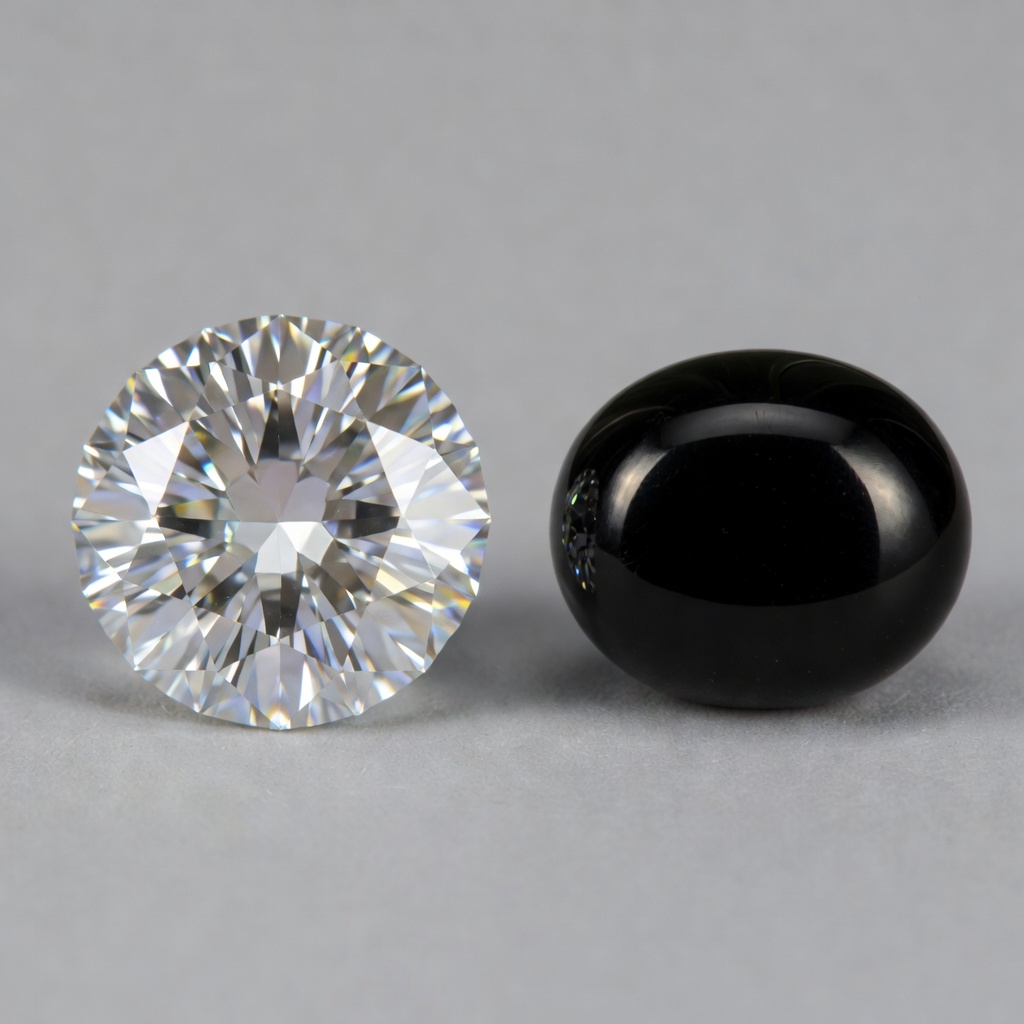
Diamond vs Onyx: Understanding Two Distinct Gemstones
When shoppers begin exploring gemstone options for jewelry, the comparison between diamond and onyx often emerges as a study in dramatic contrasts. While one represents the pinnacle of precious gemstone prestige and investment value, the other offers accessible elegance with bold visual impact that has captivated civilizations for millennia. Understanding the fundamental diamond and onyx differences helps consumers navigate the vast spectrum of gemstone choices, ensuring selections align with practical budgets, lifestyle demands, and personal aesthetic preferences. Whether you are selecting a center stone for a milestone engagement ring or seeking a dramatic fashion statement piece, these two gemstones serve distinctly different purposes despite both enjoying enduring popularity in fine jewelry collections worldwide.
Diamonds reign supreme as the ultimate precious gemstone, formed from pure carbon under extreme mantle conditions over billions of years, commanding premium prices that reflect their rarity, optical superiority, and cultural status. In contrast, onyx belongs to the chalcedony family of semi-precious stones, a variety of microcrystalline quartz valued for its sleek, opaque appearance and remarkable affordability that democratizes luxury styling. The decision between these stones ultimately depends on several critical factors including your available budget, daily activity level, desired symbolic meaning, and whether you prioritize brilliant sparkle or sophisticated darkness in your jewelry collection. This gemstone comparison guide examines every aspect of these stones to empower your purchasing decision with scientific facts and practical wisdom.
Physical and Chemical Properties: The Science Behind Each Stone
The fundamental distinction between diamond and onyx begins at the molecular level, where their divergent chemical compositions create vastly different physical characteristics. Diamonds consist of 99.95% pure carbon atoms arranged in an isometric cubic crystal structure, with each carbon atom bonded to four others in an incredibly strong tetrahedral pattern that creates the hardest natural substance known to humanity. This unique atomic arrangement explains the famous diamond hardness scale rating of 10 on the Mohs scale, making diamonds resistant to scratching from any other material. Conversely, onyx stone properties reveal a silicon dioxide (SiO₂) composition classified as microcrystalline or cryptocrystalline quartz, where tiny intergrown crystals create a compact, fine-grained structure without the organized geometric lattice found in diamonds.
The formation processes of these gemstones differ by billions of years and geological environments, directly influencing their availability and value. Diamonds form approximately 100 miles beneath Earth's surface under extreme pressure of 725,000 pounds per square inch and temperatures exceeding 2,000 degrees Fahrenheit, then travel to the surface via volcanic kimberlite pipes during rare geological events. This ancient formation process, occurring 1 to 3 billion years ago, contributes to diamond scarcity and prestige. Onyx forms through much more recent hydrothermal processes in volcanic rock cavities, where silica-rich solutions deposit layers of chalcedony over thousands of years, creating the characteristic parallel bands or solid black varieties seen in jewelry today. Understanding these formation differences helps explain why diamonds command precious stone status while onyx remains classified as semi-precious, despite both requiring skilled lapidary work to reveal their beauty.
Interpreting Hardness Ratings for Daily Wear
When evaluating gemstone durability for jewelry applications, the Mohs hardness scale provides crucial guidance for predicting how stones withstand daily challenges. While diamonds achieve the perfect 10 rating, meaning only another diamond can scratch their surface, onyx registers between 6.5 and 7, making it susceptible to scratching from everyday materials including household dust (which often contains quartz particles rated 7). Practical application of this knowledge suggests that diamond jewelry maintains pristine facet junctions and polish even after decades of daily wear, whereas onyx rings show surface abrasions and diminished luster within months of continuous contact with hard surfaces. For active professionals or those working with their hands, this hardness differential significantly impacts long-term satisfaction and maintenance requirements.
Visual Characteristics: Sparkle, Color, and Light Performance
The optical properties distinguishing diamond vs onyx appearance create radically different aesthetic experiences that appeal to distinct style sensibilities. Diamonds exhibit adamantine luster, the highest degree of reflectivity seen in gemstones, combined with a refractive index of 2.42 that bends light entering the stone and returns it to the eye as brilliance. This optical performance, enhanced by dispersion that separates white light into spectral colors (fire), creates the mesmerizing sparkle that has defined luxury jewelry for centuries. Master cutters leverage these gemstone optical properties through precise faceting angles that maximize light return, ensuring diamonds appear to glow from within even under subdued lighting conditions.
Onyx presents a completely different visual paradigm based on opacity rather than transparency, absorbing light rather than refracting it through the stone's body. Quality black onyx displays a smooth, waxy to vitreous luster with complete opacity that appears as a deep, velvety void absorbing surrounding light, creating dramatic contrast when paired with metallic settings or adjacent gemstones. While diamonds range from colorless (D grade) through fancy yellows, pinks, and blues, onyx typically presents as solid black, though natural specimens often reveal white, brown, or gray parallel banding that lapidaries may dye to achieve uniform color for jewelry use. This fundamental difference in light interaction means diamonds serve as light sources in jewelry designs, while onyx functions as a design element providing negative space, depth, and graphic contrast.
Design Implications for Jewelry Selection
Jewelry designers leverage these optical differences to create specific emotional responses and stylistic statements. For example, a diamond halo setting creates a brilliant light show that draws attention across crowded rooms, making it ideal for engagement rings meant to signal commitment status. Conversely, an onyx signet ring or pendant absorbs light, creating a mysterious, sophisticated presence that complements minimalist or gothic aesthetics without competing with outfit colors. When selecting between these stones, consider your wardrobe palette and lifestyle lighting conditions; diamonds perform brilliantly under office fluorescents and restaurant candlelight alike, while onyx shows best under direct lighting where its polished surface creates sharp reflections rather than internal sparkle.
Durability and Wearability for Daily Use
Understanding gemstone durability requires looking beyond hardness ratings to consider toughness, stability, and setting protection in real-world wearing conditions. While diamonds possess supreme hardness resisting surface scratches, they exhibit perfect cleavage in four directions, meaning a sharp blow at the correct angle can split a diamond along its crystal planes, a vulnerability that requires protective prong settings in rings. Professional jewelers recommend inspecting diamond settings every six months to ensure prongs remain tight, preventing the catastrophic loss of a center stone during active wear. For daily wear rings subjected to bumps against door frames, desk edges, and gym equipment, diamonds generally outperform softer stones but still require mindfulness regarding hard impacts.
Onyx presents different challenges regarding daily wearability despite its reasonable hardness rating of 6.5-7. The stone's compact microcrystalline structure lacks cleavage planes but remains vulnerable to scratching from common materials including quartz countertops (hardness 7), steel keys (hardness 5.5-6.5), and household dust. A practical case study reveals that an onyx ring worn daily for office work shows visible surface scratches and dulled polish within 12-18 months, requiring professional repolishing to restore its original glassy finish. Additionally, onyx's relative brittleness makes it susceptible to chipping at girdle edges or corners if struck against hard surfaces, explaining why experienced jewelers recommend bezel settings or protective halos for onyx rings rather than exposed prong settings.
Optimal Jewelry Applications by Stone
Selecting appropriate jewelry styles maximizes the longevity and beauty of each gemstone based on their durability profiles. Diamonds excel in solitaire engagement rings, tennis bracelets, and stud earrings designed for continuous wear, their hardness ensuring that adjacent diamonds in eternity bands do not scratch each other while maintaining brilliance through decades of marriage. Onyx performs best in pendants, earrings, and brooches that experience minimal physical contact with hard surfaces, or in rings reserved for occasional evening wear rather than daily occupational use. For men seeking durable signet rings, onyx requires protective bezels and removal during manual labor, whereas diamond accents in wedding bands withstand construction work and sports activities with minimal risk of damage beyond periodic tightening of settings.
Value and Pricing: From Affordable to Investment Grade
The economic disparity between these gemstones reflects their rarity, mining costs, and market demand structures, creating distinct value propositions for different buyer profiles. Diamond pricing follows a complex per-carat model based on the 4Cs (cut, color, clarity, and carat weight), with quality one-carat stones ranging from $1,500 to $20,000 or more depending on certification from laboratories like GIA or AGS. This pricing structure reflects the capital-intensive nature of diamond mining, sorting, and cutting, plus the established infrastructure supporting diamond as a tradeable commodity. Investment-grade diamonds with exceptional color (D-F) and clarity (IF-VVS) command premium prices that appreciate over time, particularly for rare fancy colors like vivid blue or pink.
Onyx pricing operates on an entirely different economic model, typically sold per piece or by weight in kilograms rather than per carat, with retail jewelry pieces ranging from $10 for small beads to $500 for large, finely crafted cabochons in designer settings. The semi-precious classification reflects abundant supply from deposits in Uruguay, Brazil, India, and Madagascar, where large rough boulders yield multiple finished stones with minimal waste. Value factors for onyx emphasize craftsmanship quality, size consistency, and the absence of visible banding in dyed black varieties, rather than intrinsic material rarity. While a diamond solitaire represents a significant financial asset, onyx allows fashion-forward consumers to acquire substantial, impressive jewelry without budget strain.
| Comparison Aspect | Diamond | Onyx |
|---|---|---|
| Mohs Hardness | 10 (Highest possible) | 6.5-7 (Moderate) |
| Chemical Composition | Pure Carbon (C) | Silicon Dioxide (SiO₂) |
| Luster Type | Adamantine (Brilliant) | Waxy to Vitreous |
| Transparency | Transparent to Translucent | Opaque |
| Price Range | $1,500-$20,000+ per carat | $10-$500 per piece |
| Formation Timeline | 1-3 Billion Years | Thousands of Years |
| Classification | Precious Gemstone | Semi-Precious Stone |
| Best Jewelry Use | Daily Wear Rings, Bridal | Pendants, Earrings, Occasional Rings |
| Investment Liquidity | High (Certified stones) | Low (Decorative value) |
| Maintenance Needs | Professional cleaning, prong checks | Scratch avoidance, gentle cleaning |
Budget Allocation Strategies
Practical financial planning for gemstone purchases requires understanding these value structures in the context of personal wealth building and discretionary spending. A young professional allocating $3,000 for jewelry might purchase a modest 0.5-carat diamond solitaire that retains 60-70% of its value for future trade-up programs, effectively storing wealth in a wearable asset. The same budget could acquire an extensive onyx jewelry wardrobe including cocktail rings, pendant necklaces, and cufflinks, providing maximum stylistic versatility but minimal financial return. For collectors building generational wealth, certified diamonds above one carat with excellent cut grades offer portfolio diversification, while onyx acquisitions should be viewed purely as consumption expenditures similar to fashion clothing, valuable for personal enjoyment but not asset appreciation.
Symbolism, History, and Cultural Significance
The cultural narratives surrounding these gemstones reveal fascinating insights into human values across civilizations and historical periods. Diamond symbolism centers on concepts of eternal love, invincibility, and unbreakable commitment, largely cemented by De Beers' mid-20th century marketing campaigns establishing "A Diamond is Forever" as the cultural standard for engagement rituals. As April's birthstone and the traditional gem for 60th and 75th wedding anniversaries, diamonds represent achievement, status, and the permanence of marital bonds across Western cultures. The stone's name derives from the Greek "adamas" meaning unconquerable, reflecting ancient recognition of its superior hardness and enduring nature.
Black onyx meaning traces back over 4,000 years to ancient Roman and Greek civilizations, where soldiers carried carved onyx amulets into battle believing the stone provided courage and protection from harm. In crystal healing traditions, onyx associates with grounding energy, emotional strength, and the absorption of negative vibrations, making it popular among those seeking stability during life transitions. As an alternative birthstone for Leo (July 23-August 22) and the traditional gift for 7th wedding anniversaries, onyx carries associations of steadfastness and the mystery of night. The stone's historical significance in cameo carving and intaglio art, where artisans exploited its layered structure to create contrasting raised and recessed images, demonstrates humanity's long appreciation for onyx's workability and dramatic appearance.
Metaphysical Applications in Modern Wellness
Contemporary crystal healing practices utilize these stones for distinctly different energetic purposes, influencing purchasing decisions among spiritually-minded consumers. Practitioners recommend diamonds for crown chakra activation, clarity of thought, and amplifying the energy of other stones, suggesting placement in meditation spaces or wearing during important decision-making processes. Conversely, black onyx serves root chakra grounding, protection from electromagnetic frequencies, and absorbing environmental stress, with users often placing specimens near entryways or wearing them during travel for psychic protection. While these metaphysical properties lack scientific validation, they contribute significantly to the emotional value and personal connection owners develop with their jewelry, justifying premium prices for high-quality specimens within spiritual communities.
Jewelry Applications and Design Versatility
The divergent physical properties of diamond and onyx directly influence their optimal applications in jewelry design, with each stone dominating distinct aesthetic categories. Diamonds command the bridal jewelry market, fine jewelry collections, and luxury watch accents, requiring precise faceting with 57 or 58 facets for round brilliants to maximize light performance. High jewelry houses like Cartier and Tiffany utilize diamonds in intricate settings featuring micro-pavé, halo surrounds, and three-stone arrangements that showcase the gem's fire and scintillation. The precision required for diamond cutting means that even small melee diamonds (0.001-0.02 carats) contribute significant labor costs to finished pieces, explaining the premium pricing of diamond-intensive designs.
Onyx dominates alternative jewelry categories including Art Deco revival pieces, men's jewelry, bold statement rings, and bohemian-style pendants that utilize cabochon cuts (smooth, domed tops) rather than faceted surfaces. The stone's opacity allows designers to create graphic, architectural looks featuring geometric shapes, sharp edges, and substantial carat weights without the prohibitive costs associated with large diamonds. Metal compatibility differs significantly between the stones; diamonds traditionally pair with platinum and white gold to enhance their colorless appearance and modern aesthetic, while onyx creates striking visual contrast against yellow gold, rose gold, and oxidized sterling silver that emphasizes its dark, mysterious nature. This versatility makes onyx ideal for vintage-inspired designs, gothic aesthetics, and unisex jewelry lines.
Case Study: Art Deco Revival Design
A compelling example of design versatility emerges in Art Deco revival jewelry, where both stones serve distinct but complementary roles. A 1920s-inspired platinum brooch might feature a central 2-carat Old European cut diamond surrounded by calibre-cut onyx baguettes forming geometric sunburst patterns, utilizing the diamond's brilliance as a focal point while employing onyx to create sharp linear definition and negative space. This combination, popularized by designers like Jean Desprès and still produced by houses like Van Cleef & Arpels, demonstrates how onyx's affordability allows for substantial material presence in large statement pieces that would cost hundreds of thousands if executed solely in diamonds. For contemporary consumers seeking this aesthetic on a budget, onyx provides the graphic impact while small accent diamonds supply necessary sparkle.
Care and Maintenance Requirements
Proper maintenance protocols differ significantly between these gemstones due to their hardness and chemical sensitivity variations, directly impacting long-term ownership satisfaction. Diamond maintenance benefits from the stone's chemical inertness and hardness, allowing safe cleaning through ultrasonic cleaners, steam cleaning systems, or simple soap solutions that dissolve accumulated oils and lotions. However, diamonds attract grease and oils more readily than other gemstones due to their carbon composition, requiring weekly cleaning to maintain optimal brilliance, particularly for stones worn daily in rings that contact hand creams and cooking oils. Professional jewelers recommend annual inspections of diamond settings to verify prong integrity, preventing stone loss through wear-induced metal fatigue.
Cleaning onyx stone requires significantly gentler approaches due to its porosity and structural characteristics. The gemstone care guide for onyx strictly prohibits ultrasonic cleaners and steam, which can cause thermal shock resulting in internal fractures or loosening of dyes used to enhance color uniformity. Owners should clean onyx using only a soft, damp cloth with mild soap, immediately drying the stone to prevent water spots, and storing pieces separately from harder gemstones that might scratch their surfaces. Common maintenance mistakes include wearing onyx rings during household cleaning (exposure to bleach and ammonia damages the surface), leaving onyx in direct sunlight for extended periods (which can fade dyed varieties), and storing onyx loose in jewelry boxes where contact with diamond earrings or ruby pendants creates abrasion patterns.
Maintenance Schedules for Longevity
Establishing appropriate care routines ensures maximum lifespan for jewelry investments across both stone types. Diamond owners should schedule professional cleanings and inspections every six months for rings worn daily, using at-home ultrasonic cleaners monthly for pieces without fragile inclusions or fracture fillings. For onyx jewelry, monthly wiping with a microfiber cloth prevents buildup of skin oils that dull the waxy luster, while annual professional polishing removes microscopic scratches that accumulate despite careful wear. When traveling, pack onyx pieces in individual soft pouches, never in compartmentalized jewelry cases where diamond jewelry might contact and scratch the softer stone during transport.
Investment Potential and Resale Value
The financial trajectory of these gemstones after purchase reveals stark differences in their utility as investment vehicles versus consumption goods. Diamonds function as tangible assets within diversified portfolios, particularly certified stones above one carat with D-F color and IF-VVS clarity grades that maintain liquidity through auction houses, dealer buy-back programs, and private sales. The diamond resale value typically retains 50-70% of retail purchase price immediately after acquisition, with well-documented provenance and GIA certification supporting higher recovery rates. Fancy colored diamonds, particularly pinks and blues from Argyle or Golconda mines, demonstrate auction performance exceeding traditional investments, with some specimens appreciating 10-15% annually over decades.
Onyx occupies the opposite end of the investment spectrum, possessing negligible intrinsic value as a commodity while deriving worth entirely from artistic craftsmanship, historical significance, or designer provenance. Vintage Art Deco onyx pieces by Cartier or Boivin may command thousands at auction, but this value reflects the gold work, diamond accents, and collectible designer signatures rather than the onyx material itself. Unlike diamonds, no standardized grading system exists for onyx quality, preventing establishment of liquid secondary markets where owners might easily convert pieces to cash. While buying gemstones for investment purposes requires diamond acquisition through reputable dealers with certification, onyx purchases should be approached as decorative arts acquisitions valued for aesthetic pleasure rather than financial return.
Wealth Preservation Strategies
For buyers viewing jewelry as portable wealth, specific acquisition strategies maximize future liquidity. Investment-grade diamonds require purchase of round brilliants or emerald cuts above 1.5 carats with triple excellent ratings (cut, polish, symmetry) and fluorescence rated none to faint, avoiding milky or hazy stones that trade at discounts. Documentation including GIA reports, original purchase receipts, and appraisal updates every three years supports future resale values. Conversely, onyx acquisitions should prioritize vintage pieces with documented maker's marks, signed settings by recognized houses, or exceptional cameo carving artistry that might appreciate based on antique value rather than material worth. Treat onyx as you would fine furniture—valuable for use and beauty, but not a retirement asset.
Making the Final Decision: Which Gemstone Is Right for You?
Selecting between diamond and onyx ultimately requires honest assessment of budget constraints, lifestyle realities, and personal style preferences that transcend marketing narratives. Budget-driven choices clearly favor onyx for consumers seeking bold style statements under $500, allowing acquisition of substantial, impressive pieces that deliver visual impact without financial strain. Conversely, diamonds suit milestone investments starting at $1,000 where the purchase represents a significant life event such as engagements, anniversaries, or career achievements worthy of commemoration through durable, valuable assets. When you choose diamond or onyx, consider whether you prioritize wearing art that stores value or wearing fashion that expresses current aesthetic preferences.
Lifestyle considerations heavily influence practical satisfaction with either gemstone selection. Active individuals working with their hands, engaging in sports, or maintaining young children benefit from diamond's scratch resistance and durability in engagement ring alternatives or wedding bands that withstand daily challenges without constant removal. Fashion-forward collectors who change jewelry frequently to match outfits, or those working in creative industries where bold statements matter more than traditional status signals, often prefer onyx's dramatic presence and affordability that allows for extensive variety. Style matching extends to wardrobe analysis; classic, minimalist wardrobes benefit from diamond's timeless sparkle that elevates simple outfits, while dramatic, avant-garde, or gothic aesthetics find perfect complement in onyx's opaque sophistication.
Decision Framework for Buyers
Create your personalized selection criteria by ranking these factors: If budget flexibility exceeds $5,000 and you seek heirloom-quality pieces worn daily for decades, select certified diamonds with protective settings. If budget limits fall below $1,000 or you desire multiple pieces for rotation, choose onyx set in protective bezels for occasional wear. For mixed solutions, consider diamond accents surrounding onyx centers, combining the durability of small diamonds with the graphic impact of large onyx specimens at moderate price points. Remember that precious vs semi-precious stones distinction matters less than how the jewelry makes you feel when worn; the best gemstone choice aligns with your authentic self-expression while respecting practical constraints.
Frequently Asked Questions
Is onyx more expensive than diamond?
No, diamonds are significantly more expensive than onyx by several orders of magnitude. Quality diamonds start around $1,500 per carat for commercial grades and can exceed $20,000 per carat for fine specimens, while onyx typically costs $10 to $50 per piece for standard jewelry sizes. Onyx is classified as a semi-precious stone with abundant global deposits, whereas diamonds are precious gems with established geological rarity and market demand driving premium pricing structures. The price differential reflects mining costs, cutting complexity, and cultural status rather than mere beauty, as both stones offer distinct aesthetic values appropriate for different purposes and budgets.
Can you wear onyx everyday like a diamond?
Onyx requires more careful wear than diamonds and is not recommended for daily ring wear in most situations. With a Mohs hardness of 6.5-7, onyx can scratch from daily contact with quartz particles (hardness 7) commonly found in household dust, sand, and granite countertops. Diamonds, possessing hardness 10 on the Mohs scale, resist scratches from virtually all everyday materials except other diamonds. Onyx performs adequately in earrings and pendants worn daily, but for rings subjected to frequent contact with hard surfaces, diamonds maintain their polish and integrity far better. If choosing onyx for daily wear, select protective bezel settings and remove the jewelry during cleaning, cooking, or manual tasks.
What is the main visual difference between diamond and onyx?
The primary visual difference lies in light performance and transparency. Diamonds are transparent to translucent with adamantine luster, high brilliance, and rainbow sparkle resulting from light dispersion as it travels through the stone's facets and returns to the eye. Onyx is completely opaque with a smooth, waxy luster and deep, solid black appearance that absorbs light rather than reflecting it internally. When observing a diamond, you see into and through the stone, watching light dance within its body, while onyx presents as a solid surface that reflects light only from its polished exterior like a dark mirror. This distinction makes diamonds appear lively and glowing, while onyx appears mysterious and substantial.
Which is better for engagement rings: diamond or onyx?
Diamonds are objectively superior for traditional engagement rings due to their extreme hardness (10) that withstands daily wear for decades without scratching or abrading. Onyx's softer nature (6.5-7) makes it vulnerable to scratching, chipping, and surface dulling when worn continuously in ring settings subjected to impacts and abrasions. However, onyx can work for non-traditional couples prioritizing unique style over longevity, particularly in protective bezel settings that guard the edges and surface from direct contact. For those seeking black stone alternatives to diamonds, black diamonds or black sapphires offer better durability than onyx for daily-wear rings, though onyx remains suitable for promise rings or engagement jewelry intended for occasional wear.
Does black onyx have any real value compared to diamond?
Onyx possesses decorative and artisan value but lacks the investment value and liquidity of diamonds. Fine onyx jewelry can be worth hundreds to thousands of dollars based on exceptional craftsmanship, designer provenance, or historical significance, but the stone itself has minimal intrinsic material value compared to its setting and artistry. Diamonds retain 50-70% of retail value on secondary markets and function as tangible assets with established resale channels through dealers, auctions, and buy-back programs. While a high-quality onyx piece provides aesthetic value and personal enjoyment, it should not be purchased with expectation of financial appreciation or easy conversion to cash, whereas appropriately selected diamonds maintain wealth preservation characteristics alongside their beauty.
How can I test if my black stone is onyx or black diamond?
Several simple tests distinguish these stones without laboratory equipment, though professional gemological testing provides definitive answers. The fog test works reliably: breathe on the stone—diamond clears instantly within one to two seconds due to superior heat conductivity, while onyx stays fogged for five seconds or longer. Diamonds scratch glass easily; onyx will not scratch glass and may be scratched by a steel knife blade. Under magnification, diamonds show sharp, crisp facet junctions and possible natural inclusions, while onyx displays a uniform, slightly waxy surface without internal reflections. Professional gemologists use thermal conductivity testers that beep or light up for diamonds but remain inactive for onyx, providing immediate identification.
What does onyx symbolize versus diamond?
Onyx symbolizes protection, grounding, and inner strength in crystal healing and metaphysical traditions, historically worn as amulets by Roman soldiers for courage and by Mediterranean cultures to ward off evil spirits and the evil eye. Diamonds represent eternal love, invincibility, commitment, and social status—meanings largely cemented by De Beers' twentieth-century marketing campaigns establishing diamonds as the universal symbol of marriage. Diamonds serve as April's birthstone and commemorate 60th wedding anniversaries, while onyx associates with Leo birthdays and seventh wedding anniversaries. Culturally, diamonds signal achievement and romantic commitment in Western societies, whereas onyx carries associations with mystery, sophistication, and protective energy across various spiritual traditions.
Can diamonds and onyx be worn together in jewelry?
Yes, diamonds and onyx create striking aesthetic contrast in Art Deco and contemporary high-contrast designs, with diamonds' brilliance highlighting onyx's deep opacity through complementary rather than competing visual effects. This combination appears frequently in luxury jewelry collections from houses like Cartier and Van Cleef & Arpels, featuring onyx geometric borders surrounding diamond centers or onyx cabochons accented by diamond halos. However, storage requires separation—diamonds can easily scratch onyx if tossed together in jewelry boxes. In multi-stone pieces, jewelers typically mount onyx in protective settings preventing direct contact with adjacent diamonds while maintaining design cohesion. This combination works particularly well in black-tie jewelry, men's dress sets, and architectural statement pieces where graphic contrast creates visual impact.