Fundamental Nature: Crystalline vs. Amorphous Structure
When examining Diamond vs Obsidian, the most fundamental distinction lies in their atomic architecture and geological origins. Diamonds represent nature's ultimate crystalline triumph, formed from carbon atoms subjected to crushing pressures 150 to 200 kilometers beneath Earth's surface, where temperatures range between 900°C and 1300°C. This brutal environment, maintained for 1 to 3.5 billion years, allows carbon atoms to arrange themselves into an isometric crystal lattice that creates the diamond's characteristic octahedral structure and exceptional stability.
In stark contrast, obsidian emerges from the rapid cooling of felsic lava at Earth's surface, transforming from molten rock to solid within moments to weeks depending on environmental conditions. This swift solidification prevents the formation of crystalline structures, resulting in a disordered atomic arrangement that classifies obsidian as a mineraloid rather than a true mineral. Geologists distinguish these materials immediately through X-ray diffraction analysis, where diamonds produce sharp, ordered patterns characteristic of crystalline solids, while obsidian yields broad, diffuse halos confirming its amorphous, glassy nature.
Practical Identification Techniques
Gemologists utilize several field methods to differentiate these materials based on their structural properties. A simple streak test reveals that diamonds leave no streak on unglazed porcelain due to their hardness and crystalline cohesion, while obsidian typically produces a white or gray streak. Additionally, when viewed under magnification, diamonds often display natural crystal faces, trigons, or growth patterns, whereas obsidian shows flow lines, spherulites, or tension cracks resulting from its rapid cooling history. Understanding this volcanic glass vs crystal dichotomy is essential for proper classification and valuation in gemological practice.
Physical Properties and Scientific Metrics
The Mohs hardness scale reveals the most dramatic difference between these materials, with diamonds achieving the maximum rating of 10, while obsidian ranks merely 5 to 5.5, comparable to ordinary window glass. This disparity in absolute hardness—diamonds measuring 1500-1600 on the absolute hardness scale versus obsidian's significantly lower value—means that diamond can effortlessly scratch obsidian, while obsidian cannot mark a diamond's surface. Density measurements further distinguish these gems, with diamonds weighing in at 3.5 to 3.53 grams per cubic centimeter, making them substantially heavier than obsidian's lighter 2.2 to 2.4 grams per cubic centimeter density.
Structural weaknesses manifest differently in each material due to their atomic arrangements. Diamonds exhibit perfect octahedral cleavage along four planes, allowing skilled cutters to split rough crystals with precise blows, but potentially creating fracture risks if struck at specific angles. Conversely, obsidian gemstone specimens display conchoidal fracture patterns that create razor-sharp, curved edges without cleavage planes, a property that made obsidian invaluable to prehistoric toolmakers. Modern surgeons have revived this ancient technology, utilizing obsidian blades for certain procedures because these fractured edges can achieve sharpness down to 30 angstroms, far exceeding the 300-600 angstroms of standard surgical steel.
Scientific Testing Applications
Laboratory gemologists employ sophisticated hardness testing equipment to verify these properties when authenticating specimens. The Vickers hardness test confirms that diamonds require tremendous force to indent, while obsidian shows relatively soft indentation characteristics similar to opal or apatite. Specific gravity testing using heavy liquids or hydrostatic weighing provides quick differentiation, as diamonds sink rapidly in methylene iodide solutions where obsidian floats or suspends. These measurable diamond properties establish definitive benchmarks for quality control in jewelry manufacturing and geological surveys.
Optical Characteristics and Light Performance
The optical performance of Diamond vs Obsidian demonstrates how atomic structure directly influences visual brilliance and market desirability. Diamonds possess an exceptionally high refractive index of 2.42 combined with strong dispersion of 0.044, creating the famous "fire"—the rainbow flashes of spectral color—and brilliance that has captivated humanity for millennia. These optical properties result from the diamond's ability to bend and slow light significantly, internally reflecting it back to the viewer's eye with maximum efficiency when properly cut.
Obsidian presents a completely different optical personality, featuring a refractive index of only 1.45 to 1.55, similar to ordinary bottle glass, which produces a subtle vitreous luster without dispersion or fire. Black obsidian properties include a deep, mirror-like reflectivity that absorbs most light rather than returning it, creating an mysterious, opaque appearance that ranges from jet black to translucent gray depending on thickness and lighting conditions. Unlike diamonds, which are prized for flawless transparency, obsidian varieties such as snowflake obsidian (containing cristobalite inclusions), mahogany obsidian (with iron oxide patterns), and rainbow obsidian (showing iridescent sheens) derive their value from unique visual textures rather than clarity or brilliance.
Gemological Assessment Methods
Professional gemologists use refractometers to immediately distinguish these materials, as diamonds exceed the standard refractometer's measurement limits (typically maxing at 1.81), while obsidian readings fall comfortably within the measurable range. Polariscope testing reveals diamonds as isotropic singly refractive under cross-polars, while obsidian may show anomalous double refraction or strain patterns due to internal stress from rapid cooling. When examining transparency, gem-quality diamonds range from internally flawless to included, while obsidian specimens are evaluated for the quality of their glassy surface and the attractiveness of any included patterns or color bands.
Durability Assessment for Jewelry Applications
Gemstone durability encompasses more than simple hardness, requiring analysis of toughness, stability, and resistance to wear in daily conditions. Diamonds excel in everyday jewelry applications due to their unparalleled resistance to scratching, maintaining their polish and facet edges indefinitely even when worn constantly in engagement rings or bracelets. However, diamonds possess only fair to good toughness due to their perfect cleavage, meaning a sharp blow at the correct angle can potentially split a diamond, though such occurrences are rare in normal wear scenarios.
Obsidian presents a cautionary tale in durability assessment, as its Mohs hardness of 5-5.5 suggests moderate resistance to scratching, but its very poor toughness makes it extremely brittle and prone to chipping or shattering upon impact. This fragility stems from the internal tension and lack of crystalline bonding in volcanic glass, causing obsidian to fracture conchoidally when struck or dropped. Consequently, while diamonds are classified as precious vs semi-precious stones based on rarity and tradition, obsidian's practical limitations relegate it to protective settings and occasional wear pieces despite its aesthetic appeal.
Wear Testing Case Studies
Jewelry industry studies tracking six-month daily wear patterns demonstrate that diamond rings show virtually no surface damage or facet wear regardless of the wearer's lifestyle activities. Conversely, obsidian rings subjected to identical daily conditions—including handwashing, desk work, and minor impacts—exhibited micro-chipping along edges and surface scratches within weeks, with several samples developing significant fractures requiring replacement. These empirical results confirm that while obsidian suits pendants and earrings protected from direct impact, it remains unsuitable for bracelets or rings intended for continuous daily wear.
| Characteristic | Diamond | Obsidian |
|---|---|---|
| Chemical Composition | Carbon (C) | Silicon Dioxide (SiO₂) with impurities |
| Atomic Structure | Crystalline (Isometric) | Amorphous (Volcanic Glass) |
| Mohs Hardness | 10 (Maximum) | 5 - 5.5 |
| Density | 3.5 - 3.53 g/cm³ | 2.2 - 2.4 g/cm³ |
| Refractive Index | 2.42 | 1.45 - 1.55 |
| Optical Dispersion | 0.044 (High Fire) | None |
| Fracture Pattern | Octahedral Cleavage | Conchoidal Fracture |
| Toughness | Fair to Good | Very Poor |
| Transparency | Transparent to Opaque | Translucent to Opaque |
| Price Range (per carat) | $2,000 - $20,000+ | $2 - $50 |
| Primary Jewelry Use | Daily Wear, Engagement Rings | Pendants, Earrings, Carvings |
| Cleaning Method | Ultrasonic, Steam, Chemical | Soft Cloth, Mild Soap Only |
Market Value and Economic Considerations
The economic disparity between Diamond vs Obsidian reflects their relative rarity, formation requirements, and market positioning within the jewelry industry. Natural diamonds command prices ranging from $2,000 to over $20,000 per carat for gem-quality stones, with valuations based on the internationally recognized 4Cs system evaluating carat weight, cut quality, color grade, and clarity characteristics. Rare fancy colored diamonds—particularly red, blue, and pink varieties—can achieve millions of dollars per carat at auction, establishing diamonds as legitimate alternative investment vehicles alongside precious metals.
Obsidian occupies a dramatically different market segment, with gem-quality material typically retailing between $2 and $50 per carat, with value determined primarily by artistic merit, carving quality, and unique visual patterns rather than mineral rarity. The obsidian market focuses on ornamental carvings, spiritual tools, and distinctive jewelry components rather than investment-grade gemstones. While diamonds generally retain 30 to 60 percent of their retail value in secondary markets, obsidian possesses minimal liquidity as an investment, appealing instead to collectors seeking aesthetic or metaphysical value rather than financial appreciation.
Evaluating Diamond Alternatives
Consumers exploring diamond alternatives should understand that while obsidian offers unique aesthetic qualities, it cannot functionally replace diamond in most fine jewelry applications. Lab-grown diamonds present a more viable economic alternative to natural diamonds, offering identical physical and optical properties at 40 to 60 percent lower cost while eliminating mining concerns. For those seeking black gemstones specifically, black diamonds, black spinel, or black tourmaline provide superior durability compared to obsidian while maintaining the dark aesthetic, though none replicate obsidian's distinctive glassy luster and conchoidal fracture patterns.
Jewelry Design Applications and Best Practices
Professional jewelry designers leverage the unique obsidian gemstone characteristics for specific applications while reserving diamonds for high-wear items. Diamonds excel in every jewelry category, from solitaire engagement rings to delicate pavé earrings, tennis bracelets, and statement necklaces, tolerating secure prong settings that expose maximum surface area to light. Their extreme hardness allows for minimal metal settings, intricate openwork designs, and daily wear scenarios without significant maintenance beyond occasional cleaning and annual prong inspections.
Obsidian requires protective design strategies that account for its brittleness and vulnerability to impact damage. Jewelry artisans typically set obsidian in bezel settings, thick rim mounts, or protective frames that cushion the stone from direct blows, making it suitable for pendants, brooches, and earrings but generally avoiding ring applications unless designed for occasional wear. Design specifications for obsidian include thicker girdles than diamond standards, protected edges that avoid exposed points, and settings that absorb shock rather than transmitting it to the glassy material.
Setting Selection Guidelines
For diamond jewelry, four-prong and six-prong settings maximize light exposure while providing secure retention, with tension settings and flush mounts offering modern alternatives that showcase the stone's brilliance. Obsidian demands fully enclosed bezel settings, halo designs with protective surrounds, or recessed channel settings that prevent edge contact with hard surfaces. Jewelry makers working with obsidian must also account for thermal shock sensitivity, ensuring settings allow for gradual temperature changes and avoiding designs that place the stone under tension or pressure.
Symbolic Meaning and Cultural Significance
Diamonds carry profound cultural weight as symbols of eternal love, unyielding strength, clarity of purpose, and invincibility, serving as the traditional April birthstone and the designated gemstone for 60th wedding anniversaries. Ancient Greeks believed diamonds were tears of the gods or splinters from falling stars, while Roman soldiers wore them into battle believing the stones provided courage and protection. In metaphysical practices, diamonds are believed to amplify energy, enhance the properties of other crystals, and promote clarity of thought, making them popular in meditation and energy healing modalities.
Black obsidian properties center on protection, grounding, truth-telling, and emotional healing, with the stone serving as a spiritual shield against negativity in many traditions. Ancient Mesoamerican civilizations fashioned obsidian into sacred tools, weapons, and scrying mirrors, believing the volcanic glass connected the physical and spiritual realms through its reflective, mirror-like surface. Modern crystal practitioners utilize obsidian for shadow work, emotional release, and grounding exercises, believing the stone absorbs negative energies and environmental pollutants while promoting self-reflection and karmic clarity.
Historical Utilization Contexts
Archaeological evidence demonstrates that obsidian served practical and ritual purposes for over 700,000 years, with prehistoric knappers crafting surgical-grade cutting tools, arrowheads, and ceremonial blades long before metalworking emerged. Diamonds remained largely inaccessible until Indian diamond mines opened in antiquity, and even then, they were reserved for royalty and religious icons due to their extreme rarity. This historical accessibility difference explains why obsidian features prominently in indigenous spiritual practices worldwide, while diamonds became associated with European aristocracy and modern consumer luxury.
Geographic Sources and Rarity Factors
The geological requirements for diamond formation limit viable mining operations to specific regions including Russia, Botswana, Canada, Australia, and the Democratic Republic of Congo, with additional production from Angola and South Africa. Natural diamonds form exclusively in ancient cratons—stable portions of continental crust billions of years old—making them genuinely rare despite modern mining capabilities. Laboratory-grown diamonds now supplement natural supplies, created through High Pressure High Temperature (HPHT) or Chemical Vapor Deposition (CVD) methods that replicate natural formation conditions in weeks rather than eons.
Obsidian deposits occur wherever rhyolitic volcanism has produced felsic lava flows, with significant sources in Oregon and California's Medicine Lake Highlands, Mexico's Sierra de las Navajas, Iceland's volcanic fields, and Japan's Honshu island. Unlike diamonds, obsidian forms relatively abundant deposits that can yield tons of material from single flows, though specific varieties like snowflake obsidian from Utah or rainbow obsidian from Mexico command premium prices due to limited pattern distributions. The volcanic glass vs crystal formation process means that while gem-quality diamonds over one carat remain statistically rare, fine obsidian suitable for lapidary work is geographically widespread though culturally significant sources face protection restrictions.
Sustainability of Sourcing
Diamond mining operations require massive capital investment, significant energy consumption, and extensive land disruption to extract kimberlite pipes or alluvial deposits, contributing to the material's high cost and environmental footprint. Obsidian collection typically involves surface gathering or shallow excavation at volcanic sites, though responsible sourcing requires respecting indigenous cultural heritage sites and protected parklands where collection may be prohibited. Smart consumers researching diamond properties and origins increasingly prioritize Canadian diamonds with blockchain traceability or lab-grown alternatives to ensure ethical provenance.
Maintenance, Care, and Cleaning Protocols
Proper maintenance protocols reflect the vastly different gemstone durability profiles of these materials. Diamonds tolerate aggressive cleaning methods including ultrasonic cleaners, steam cleaners, and ammonia-based solutions without damage, though annual inspections by professional jewelers remain essential to check for loose prongs or structural damage to the setting. The stone's chemical inertness means diamonds resist damage from household chemicals, perfumes, and lotions, though chlorine exposure over time may attack the mounting metal rather than the diamond itself.
Obsidian demands gentle, meticulous care to preserve its glassy surface and prevent structural damage. Clean obsidian jewelry using only a soft, lint-free cloth dampened with mild soap and lukewarm water, avoiding ultrasonic cleaners entirely as the vibrations can initiate or extend internal fractures within the volcanic glass. Harsh chemicals, abrasive cleaners, and sudden temperature changes pose significant threats to obsidian, potentially causing thermal shock or surface etching that permanently damages the stone's characteristic luster.
Storage and Transportation
Diamonds can be stored together in jewelry boxes without risk of mutual damage, though individual soft pouches prevent scratching of other jewelry pieces by the diamond's abrasive surface. Obsidian requires individual wrapping in soft cloth or placement in padded compartments to prevent contact with harder gemstones or metal settings that could scratch or chip its surface. When traveling, obsidian pieces should be packed in rigid, cushioned containers that prevent pressure or impact, while diamond jewelry travels well in standard jewelry rolls with standard security precautions against loss or theft.
Ethical Considerations and Modern Alternatives
The diamond industry continues addressing historical concerns regarding conflict mining, environmental degradation, and labor practices through initiatives like the Kimberley Process Certification Scheme, though critics argue for more comprehensive blockchain traceability and carbon-neutral mining operations. Diamond alternatives including moissanite, white sapphire, and lab-grown diamonds offer consumers ethical and budget-friendly options that reduce environmental impact while maintaining desirable optical characteristics. These alternatives provide the durability necessary for daily wear without the geological rarity premiums associated with natural diamond extraction.
Obsidian mining generally presents minimal environmental impact compared to diamond extraction, as surface collection requires little energy or chemical processing, though collectors must respect Native American sacred sites and protected geological areas where removal may be illegal or culturally insensitive. When choosing between Diamond vs Obsidian for specific applications, consumers should select diamonds for heirloom jewelry, daily wear pieces, and investment-grade acquisitions, while reserving obsidian for statement pieces, spiritual tools, and artistic collections where its unique metaphysical associations and glassy aesthetics outweigh durability concerns.
Future Market Trends
The jewelry industry increasingly embraces lab-grown diamonds as the primary ethical alternative, with technology improvements producing larger, higher-quality stones at decreasing price points annually. Simultaneously, artisan jewelers are rediscovering obsidian for contemporary designs that highlight its primitive, elemental qualities in contrast to high-tech precision-cut diamonds. This bifurcation allows consumers to make values-based decisions, selecting sustainable diamonds for permanence and legacy pieces while exploring obsidian for its raw, volcanic character and spiritual significance in meditation jewelry and artistic expressions.
Frequently Asked Questions
Which Is Harder, Diamond or Obsidian?
Diamond is significantly harder than obsidian, representing the extreme ends of the hardness spectrum in gemological applications. Diamond ranks 10 on the Mohs hardness scale, which is the maximum possible rating, while obsidian scores only 5 to 5.5, making it comparable to ordinary window glass or knife blades in terms of scratch resistance. This profound difference means that a diamond can easily scratch, cut, or abrade obsidian surfaces, while obsidian cannot leave any mark on a diamond's crystalline structure regardless of the pressure applied.
Can Obsidian Be Used in Engagement Rings?
Obsidian is generally not recommended for daily-wear engagement rings due to its inherent brittleness and tendency to chip, fracture, or shatter upon impact during everyday activities. While obsidian can be set in highly protective bezel settings for occasional wear or ceremonial purposes, it lacks the toughness required to withstand the knocks, temperature changes, and physical stresses that engagement rings typically endure over decades. Diamond remains the superior choice for engagement rings because of its exceptional hardness, resistance to scratching, and ability to maintain its polish and structural integrity through generations of continuous wear.
Why Is Diamond More Expensive Than Obsidian?
Diamonds command significantly higher prices due to their extreme geological rarity, requiring billions of years of specific high-pressure, high-temperature conditions deep within Earth's mantle that occur in limited geographic locations. The global diamond industry has additionally invested heavily in marketing campaigns establishing diamonds as symbols of eternal love and status, while the technical difficulty of cutting and polishing diamonds adds labor costs that obsidian—being relatively soft and easy to work—does not incur. Obsidian forms rapidly at Earth's surface wherever rhyolitic volcanism occurs, making it relatively abundant and simple to collect and shape, resulting in prices that reflect its status as an ornamental stone rather than a precious gem.
Is Obsidian Considered a Real Gemstone?
Obsidian is classified mineralogically as a mineraloid rather than a true mineral because it lacks the crystalline structure required for mineral classification, instead consisting of amorphous volcanic glass with disordered atomic arrangement. Within the jewelry trade, obsidian is considered a semi-precious ornamental stone or gemstone material, prized for its distinctive glassy luster, sharp conchoidal fractures, and unique varieties such as snowflake or rainbow obsidian. While it does not hold the same status as precious gemstones like diamond, ruby, or sapphire, obsidian is legitimately used in jewelry and lapidary arts, particularly for carvings, beads, and protective pieces where its aesthetic and metaphysical properties are valued.
Do Diamonds and Obsidian Require Different Cleaning Methods?
Yes, diamonds and obsidian require fundamentally different cleaning approaches due to their disparate durability characteristics and internal structures. Diamonds can safely withstand ultrasonic cleaning, steam cleaning, and immersion in commercial jewelry cleaning solutions without suffering damage to their crystalline structure or surface polish. Obsidian must be cleaned gently using only mild soap, lukewarm water, and a soft cloth, as ultrasonic vibrations can cause internal fractures to propagate through the glassy material, and harsh chemicals may etch or dull the volcanic glass surface.
Can Obsidian Scratch Glass Like a Diamond Can?
No, obsidian cannot scratch glass because it shares approximately the same hardness as window glass on the Mohs scale, rating between 5 and 5.5 compared to glass's typical 5.5 rating. Diamonds, with their perfect 10 rating on the Mohs hardness scale, can easily scratch glass, metals, and virtually all other materials except other diamonds. In fact, because glass and obsidian possess similar hardness values, they can potentially scratch each other, which is why obsidian jewelry must be stored separately from glass and other obsidian pieces to prevent surface damage.
What Are the Main Visual Differences Between Diamond and Obsidian?
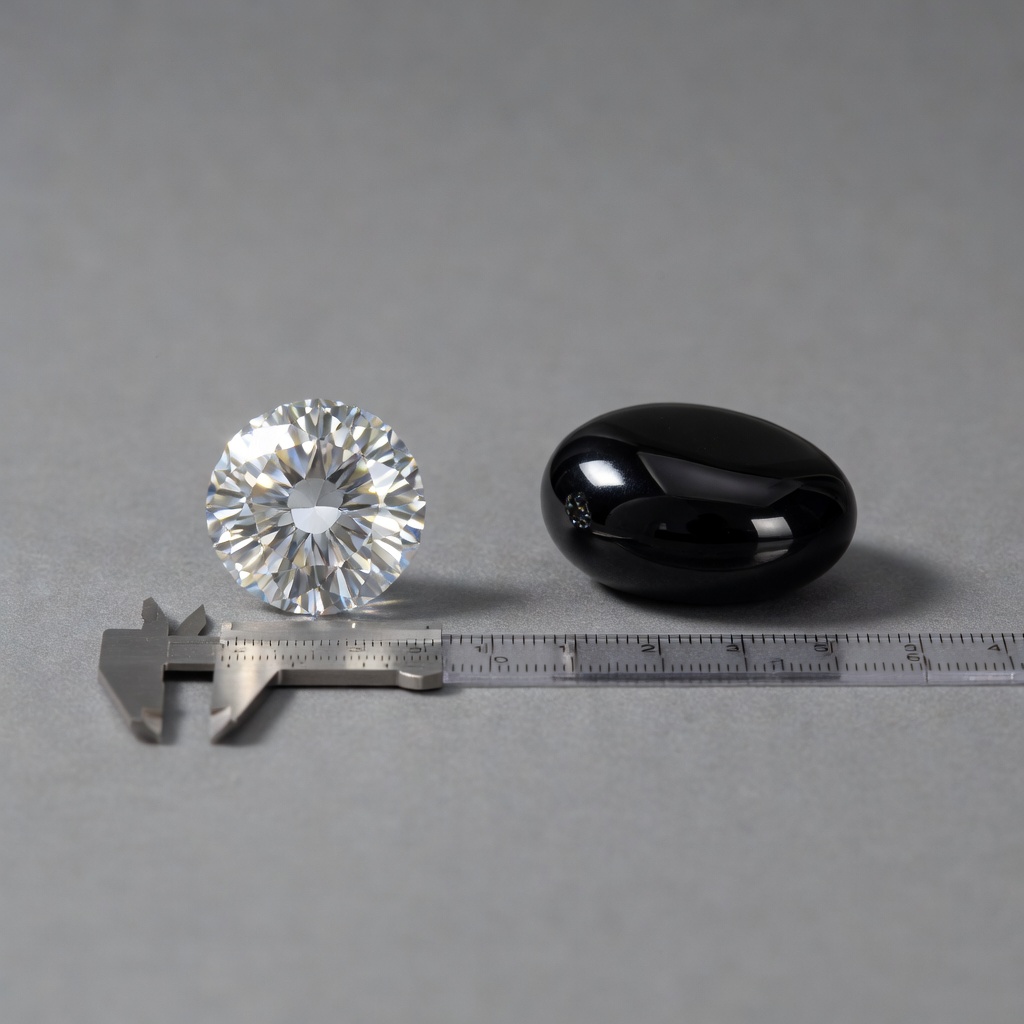
The most immediate visual distinction lies in light performance, as diamonds display brilliant white sparkle and rainbow-colored fire due to their high refractive index of 2.42 and strong dispersion, while obsidian exhibits a deep, glassy, reflective luster without sparkle or dispersion effects. Diamonds are typically transparent to translucent and colorless in their standard form, though fancy colored diamonds occur in various hues, while obsidian is characteristically opaque to translucent with colors ranging from solid black to dark brown, mahogany, or snowflake patterns containing white cristobalite inclusions. Under magnification, diamonds reveal crystalline growth patterns, inclusions, and faceting precision, whereas obsidian shows flow lines, bubbles, or conchoidal fracture patterns indicative of its volcanic glass origins.
Is Black Obsidian Valuable for Collecting?
Black obsidian holds modest monetary value, typically ranging from $2 to $50 per carat for gem-quality material, but remains highly collectible for its aesthetic appeal, metaphysical significance, and historical importance in tool-making and spiritual practices. Standard black obsidian is relatively common, but specific varieties such as snowflake obsidian with white radial clusters, rainbow obsidian displaying iridescent sheens, or mahogany obsidian with brown swirls command premium prices among lapidary artists and crystal collectors. While obsidian does not function as a financial investment like diamonds, collectors value well-crafted obsidian carvings, ancient artifacts, and specimens from historically significant or protected geological sites for their cultural and artistic merit.