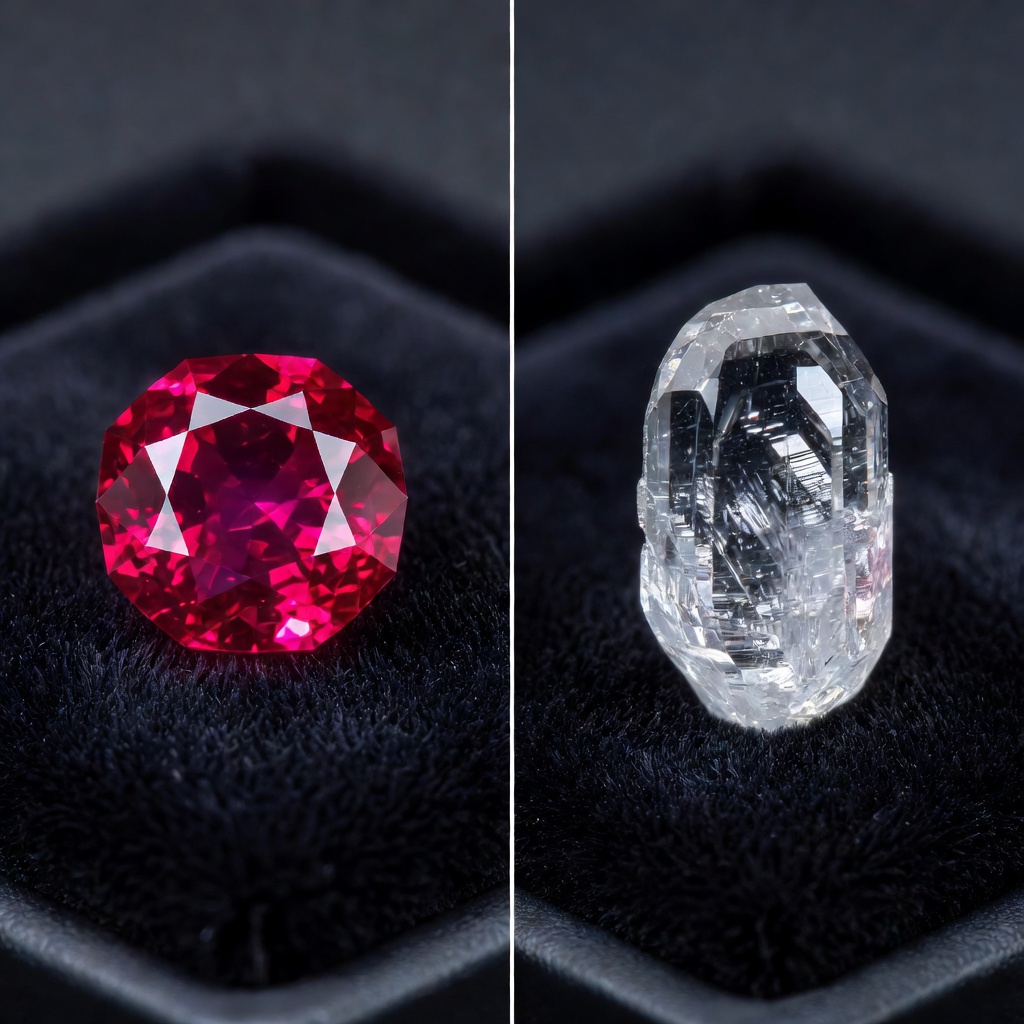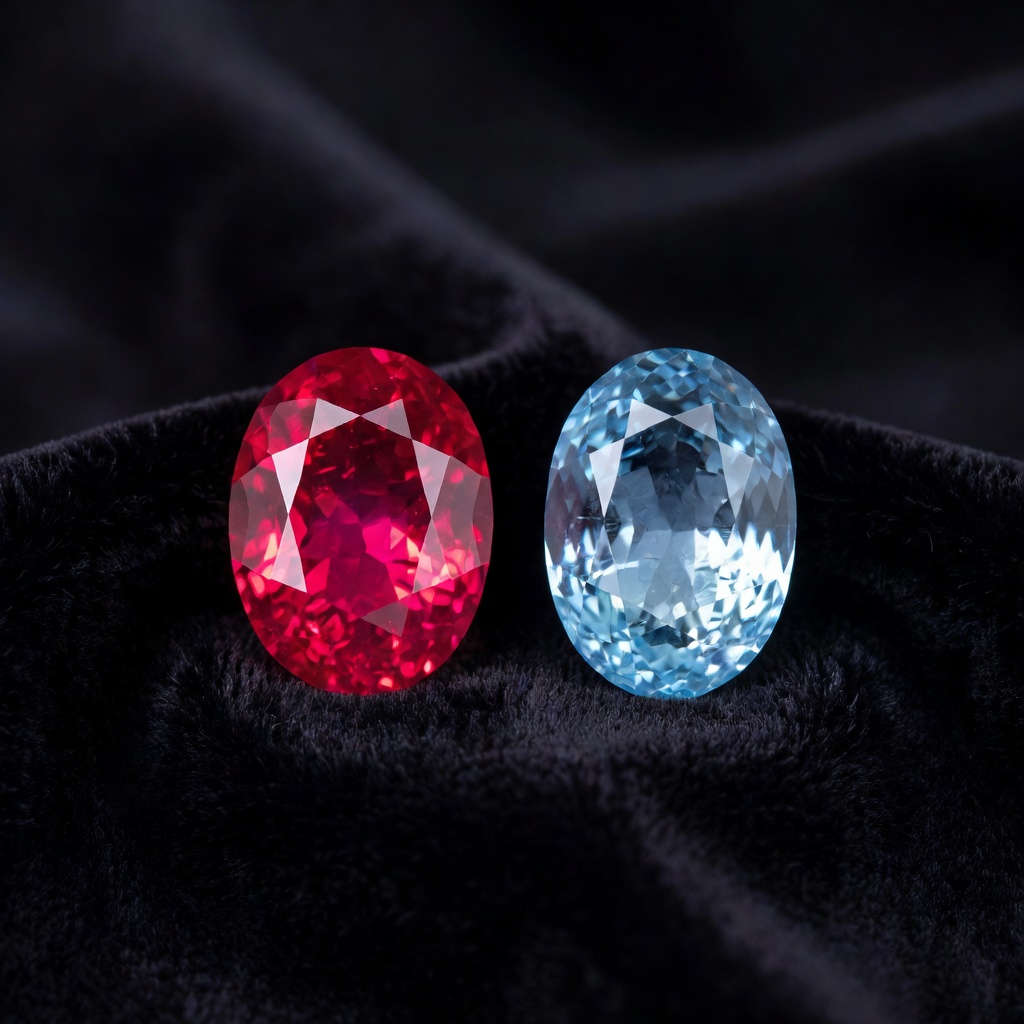
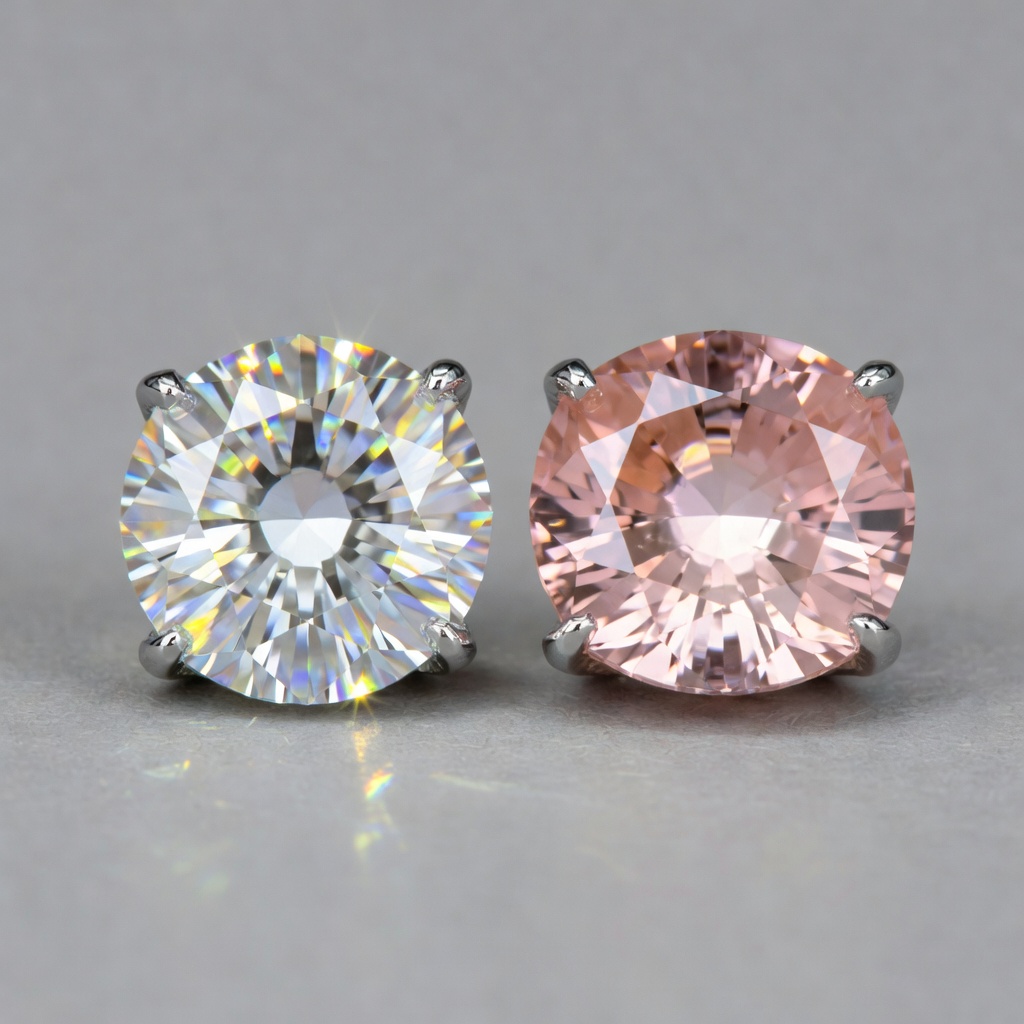
Introduction: Why Compare Diamond vs Morganite?
The landscape of bridal jewelry has shifted dramatically over the past decade, with couples increasingly seeking alternatives to traditional clear stones for their symbolic centerpieces. Morganite has emerged as a frontrunner in this revolution, captivating modern brides with its romantic peach-pink hues and accessible price points that challenge the supremacy of conventional diamond choices. When evaluating diamond vs morganite for an engagement ring, buyers face a decision that extends beyond mere aesthetics to encompass lifestyle compatibility, long-term value, and personal expression.
This comprehensive comparison delves into the geological origins, physical resilience, optical performance, and financial implications of selecting between these two distinct gemstones. Whether you prioritize the timeless prestige and unmatched hardness of carbon crystals or the warm, feminine glow of this beryl variety, understanding their fundamental differences ensures your investment aligns with both your practical needs and romantic vision. We examine everything from Mohs hardness ratings to resale markets, providing actionable insights for navigating this significant purchase with confidence.
Origins and Geological Formation
Diamonds represent one of Earth's most ancient treasures, formed approximately one to three billion years ago under extraordinary conditions deep within the planet's mantle. These carbon crystals crystallize roughly 100 to 150 miles beneath Earth's surface, where temperatures exceed 2,000 degrees Fahrenheit and pressure reaches 725,000 pounds per square inch. Volcanic eruptions then transport these stones rapidly to the surface via kimberlite pipes, preserving their structure against the odds of geological time. Major mining operations currently extract these gems from Russia, Botswana, and Canada, with each region producing stones exhibiting slightly different trace element characteristics that affect clarity and color grading.
Morganite, classified scientifically as a pink beryl gemstone, shares its mineral family with emerald and aquamarine but forms under distinctly different circumstances within pegmatite deposits. These coarse-grained igneous rocks allow large crystals to develop slowly, often resulting in eye-clean specimens with fewer inclusions than their emerald cousins. The pink coloration arises from manganese impurities within the beryl structure, with heat treatment commonly enhancing the salmon-peach tones that make this stone desirable. Primary sources include Brazil's Minas Gerais region, Madagascar, and Afghanistan, where artisanal mining operations typically extract smaller volumes compared to industrial diamond ventures.
Both gemstones now offer lab-created alternatives that mirror their natural counterparts' chemical compositions. Laboratory-grown diamonds utilize High Pressure High Temperature (HPHT) or Chemical Vapor Deposition (CVD) methods to replicate natural formation conditions, while synthetic morganite grows through hydrothermal processes that accelerate the pegmatite crystallization timeline. These engineered options present identical physical properties to mined stones but typically carry reduced environmental impact and more accessible price points, particularly for diamond alternatives where the cost differential between natural and lab-grown can exceed 40%.
Physical Properties and Durability Face-Off
When selecting engagement ring stones intended for daily wear across decades, understanding gemstone durability proves paramount to preserving your investment's integrity. Diamonds reign supreme on the Mohs hardness scale with a perfect score of 10, meaning they resist scratching from virtually any other material and maintain their polish indefinitely under normal conditions. However, hardness measures only scratch resistance, not overall toughness; diamonds possess perfect cleavage in four directions, making them susceptible to chipping or splitting if struck with sufficient force at specific angles. This paradox explains why a diamond can scratch steel yet crack when dropped on a hard tile floor.
Morganite registers 7.5 to 8 on the Mohs scale, indicating significantly lower scratch resistance than diamond but still suitable for jewelry with appropriate precautions. This hardness level places it below sapphire and ruby (9) but above quartz (7), meaning everyday dust particles containing silica could theoretically abrade its surface over years of wear. More concerning than scratching is morganite's brittle tenacity and tendency toward cleavage fractures when impacted. While it won't scratch easily during normal office work, accidental strikes against door frames or granite countertops pose genuine risks for chipping the stone's edges or girdle.
For active professionals such as nurses, fitness instructors, or mechanics, these durability differences translate into practical lifestyle constraints. Consider the case of Sarah, a pediatric nurse who chose a 1.5-carat morganite solitaire: within eight months, she noticed micro-abrasions on the table facet from frequent hand sanitizing and contact with hospital bed rails. Conversely, her colleague's diamond engagement ring showed no wear after five years of identical working conditions. Those selecting morganite should prioritize protective settings like bezels or halos that shield the girdle, remove rings during gym sessions or heavy cleaning, and accept that professional repolishing may become necessary every five to ten years to restore optimal luster.
Appearance: Brilliance, Fire, and Color
The optical performance disparity between these gemstones fundamentally shapes their visual character and emotional impact. Diamonds possess a refractive index of 2.42, the highest of any natural transparent gemstone, enabling them to bend light dramatically and return exceptional brilliance—the white light reflected back to the eye. Combined with a dispersion rate of 0.044, diamonds separate white light into spectral colors, creating the coveted "fire" or rainbow flashes that characterize premium cuts. This intense light performance allows diamonds to maintain their sparkle even in dim restaurant lighting or candlelight, ensuring constant visual presence.
Morganite exhibits a refractive index of approximately 1.58, similar to other beryl varieties, resulting in a gentler, more subtle interaction with light. Rather than explosive brilliance, morganite vs diamond brilliance comparisons reveal a soft, glowing luster that emphasizes the stone's color over light return. The dispersion remains minimal, preventing rainbow fire but creating a serene, moonstone-like glow that many find romantic and understated. This optical personality suits wearers who prefer their jewelry to whisper rather than shout, complementing rose gold settings particularly well through warm color harmony.
Color constitutes the most immediate differentiator, with diamonds traditionally prized for colorlessness (graded D-Z) while morganite celebrates its spectrum of pink, peach, and salmon hues. The most valuable morganite displays intense pink tones without brownish or orange overtones, though personal preference often favors the softer peach-pink "champagne" varieties. Cut quality significantly impacts both stones' performance: diamonds require precise facet alignment to maximize light return, with round brilliants offering optimal sparkle, while morganite performs admirably in step cuts like emerald or asscher shapes that emphasize clarity and color over brilliance. When selecting morganite, prioritize stones with medium saturation—too pale appears washed out, while overly intense hues may indicate heat treatment or artificial coloration.
Price and Value Comparison
The financial contrast between these gemstones represents perhaps the most compelling argument for couples exploring diamond alternatives. Current market rates position quality morganite at $300 to $600 per carat for stones with good color and clarity, while comparable diamonds command $5,000 to $15,000 per carat depending on cut, color, clarity, and carat weight specifications. This dramatic morganite vs diamond price differential means a two-carat morganite center stone costs less than a modest dinner for two, while an equivalent diamond might exceed the budget for an entire wedding.
Pricing structures differ fundamentally between the categories. Diamond valuation follows the rigorous 4Cs system established by the Gemological Institute of America, with each clarity grade and color step creating exponential price jumps. Morganite pricing emphasizes color intensity and clarity, with deeply saturated pink stones commanding premiums over pale peach varieties, though the overall range remains narrow. This affordability enables strategic budget allocation: rather than compromising on a small, included diamond, couples can select a flawless three-carat morganite and invest savings into intricate platinum settings, custom design work, or future financial goals.
Consider the practical example of a $4,000 engagement ring budget. Allocating these funds toward a diamond yields approximately a 0.4-carat, SI1 clarity, H-color stone in a simple solitaire setting. The same budget with morganite allows for a 2.5-carat, eye-clean, vividly colored center stone surrounded by a diamond halo and pavé band in 18K gold. However, buyers should recognize that while the initial acquisition cost favors morganite dramatically, the long-term value proposition differs; diamonds generally maintain stable market values and established resale channels, whereas morganite's secondary market remains limited, with resale values typically recovering only 20-30% of original purchase prices.
| Characteristic | Diamond | Morganite |
|---|---|---|
| Mohs Hardness | 10 (Highest Possible) | 7.5-8 (Good, but Scratchable) |
| Refractive Index | 2.42 (Exceptional Brilliance) | 1.58 (Gentle Luster) |
| Color Range | Colorless to Fancy Colors (D-Z Scale) | Pink, Peach, Salmon, Violet-Pink |
| Average Cost (1 Carat) | $5,000 - $15,000+ | $300 - $600 |
| Durability for Daily Wear | Excellent (Chip-Resistant with Care) | Moderate (Requires Protective Settings) |
| Brilliance/Fire | High Dispersion (Rainbow Fire) | Low Dispersion (Soft Glow) |
| Best Setting Type | Versatile (Any Style Suitable) | Bezel or Halo (Protection Needed) |
| Maintenance Requirements | Minimal (Occasional Cleaning) | Moderate (Repolishing Every 5-10 Years) |
| Investment/Resale Value | Strong Secondary Market | Limited Resale Demand |
Engagement Ring Practicality and Lifestyle Fit
Selecting a morganite engagement ring requires honest assessment of daily routines and occupational hazards that might compromise the stone's longevity. While diamonds accommodate virtually any setting style—from delicate tension settings to exposed cathedral solitaires—morganite demands protective architecture. Bezel settings that wrap the stone's circumference provide optimal security against lateral impacts, while halo configurations add sacrificial metal that absorbs blows before they reach the center stone's vulnerable edges. Six or eight-prong settings offer superior protection compared to four-prong designs, though they slightly obscure more of the pink surface area.
Activity level significantly influences this decision matrix. Elementary school teachers, healthcare workers, and rock climbing enthusiasts face higher trauma risks than those with desk-bound professions. Take the case of Michael and Jennifer, an active couple who hike and kayak weekly. They initially selected a large morganite solitaire but, after consulting with their jeweler, opted instead for a diamond center with morganite accent stones in the band—achieving the desired color pop while ensuring the primary stone withstands their adventurous lifestyle. Conversely, Amanda, a graphic designer working primarily on digital tablets, has worn her morganite engagement ring for three years without incident, appreciating the large visual presence her budget allowed.
Social perception and trend cycles also merit consideration. Diamonds carry century-old associations with permanence and marital commitment, reinforced by decades of cultural marketing and their presence in royal collections. Morganite, discovered in Madagascar in 1910 and named after banker J.P. Morgan, represents a newer aesthetic that appeals to non-traditionalists and those seeking unique expression. Celebrity influences including Kate Middleton's sapphire and various influencers' colored stone choices have normalized alternatives, reducing the stigma once associated with non-diamond engagement rings. However, in conservative professional environments or traditional family structures, diamond choices may still face less scrutiny than pink gemstone selections.
Care and Maintenance Requirements
Maintenance protocols diverge significantly between these diamond alternatives and their harder counterparts, affecting long-term ownership satisfaction and costs. Diamonds tolerate ultrasonic cleaners, steam cleaning, and aggressive brushing without damage, making home maintenance straightforward. Their non-porous surfaces resist oils and lotions, though regular cleaning maintains optimal light performance. Most diamond owners require only annual professional inspections to ensure prongs remain secure, with cleaning intervals depending on exposure to cosmetics and kitchen grease.
Morganite demands more nuanced care due to its relative softness and potential treatments. Many morganites undergo heat treatment to enhance pink coloration, and some receive fracture filling to improve apparent clarity—treatments that ultrasonic vibrations or steam heat can damage or reverse. Home cleaning requires lukewarm water, mild dish soap, and soft brushes only, with immediate drying to prevent water spots. Professional jewelers should repolish morganite every five to ten years to remove accumulated surface scratches that dull the luster, a service costing approximately $50-150 depending on setting complexity. Unlike diamonds, which rarely need repolishing during a lifetime, this recurring maintenance represents a hidden ownership cost.
Storage practices also differ: while diamonds can scratch other jewelry (and each other), morganite requires protection from harder stones like sapphires, rubies, and yes, diamonds. Store morganite rings in individual soft pouches or compartmentalized jewelry boxes to prevent contact damage. When traveling, carry morganite in carry-on luggage rather than checked bags to prevent temperature extremes and rough handling that might stress fracture-prone stones. Those who frequently use hand sanitizer—which can leave filmy residues—or work with abrasive materials should consider removing morganite rings during these activities, whereas diamond wearers face fewer such restrictions.
Investment Potential and Resale Value
While emotional significance typically supersedes financial considerations in engagement ring selection, understanding the secondary market for engagement ring stones prevents future disappointment. Diamonds benefit from highly liquid, established resale markets through auction houses, consignment jewelers, and specialized online platforms. Certified diamonds with GIA or AGS documentation typically retain 50-70% of retail value in private sales, with exceptional rare stones (fancy colors, large flawless whites) potentially appreciating over time. This liquidity provides insurance replacement value anchors and emergency liquidity options that softer stones cannot match.
Morganite occupies a niche collector's market without standardized grading or broad consumer demand. While exceptional specimens—intense hot pink colors in sizes exceeding five carats with no treatments—command attention among beryl collectors, standard peach-pink engagement ring sizes face limited resale channels. Pawn shops and gold buyers typically offer only melee prices (roughly $50-100 per carat) regardless of original purchase price, while specialized gem dealers might pay 30% of retail for exceptional pieces. This reality positions morganite as a consumption good rather than a store of value, similar to purchasing a luxury handbag or custom artwork.
Insurance considerations reflect these value disparities. Diamond rings require appraisals every few years to account for market fluctuations, with premiums based on replacement costs that generally trend upward. Morganite insurance focuses primarily on the setting's metal value and labor costs, as the stone itself represents a smaller portion of the total insured value. When filing claims, insurers typically replace diamonds with equivalent certified stones, while morganite claims may result in cash settlements or substitutions with similar pink gemstones like pink sapphire or spinel, depending on policy language. For buyers viewing their ring as a potential emergency asset, diamond's superior portability and recognition provide tangible advantages.
Ethical and Environmental Impact
Modern consumers increasingly scrutinize the provenance of their jewelry, weighing the ethical implications of mining operations against aesthetic desires. Natural diamond mining has historically faced scrutiny regarding conflict financing, leading to the Kimberley Process Certification Scheme designed to prevent "blood diamonds" from entering legitimate markets. However, critics argue this system contains loopholes allowing stones from questionable regions to mix with certified parcels. Canadian diamonds with specific origin tracking and Botswana's partnership model, where mining revenues fund public infrastructure, represent more ethical natural options, though they command price premiums of 10-15%.
Morganite mining typically occurs on smaller scales than diamond extraction, often through artisanal operations in Brazil and Madagascar that employ local communities without the industrial infrastructure associated with kimberlite mining. However, these smaller operations sometimes lack the regulatory oversight of major diamond producers, potentially raising concerns about worker safety and environmental restoration. Fair trade morganite sources are emerging, though less prevalent than ethical diamond channels, requiring buyers to request specific documentation from retailers regarding mine origin and labor practices.
Lab-created options offer compelling sustainability narratives for both gemstones. Lab diamonds reduce land disruption and eliminate mining hazards entirely, though they require significant energy inputs for HPHT and CVD processes. Some manufacturers now utilize renewable energy sources, particularly in facilities located in regions with hydroelectric or solar dominance. Lab morganite similarly avoids earth-moving operations but remains less common than natural material due to the already accessible pricing of mined pink beryl. For the ethically minded buyer prioritizing environmental impact, recycled vintage diamonds or lab-created stones present the lowest-impact options, while morganite's small-scale mining generally creates less ecological disruption than industrial diamond operations, provided specific mines follow environmental best practices.
Final Verdict: Making Your Decision
Choosing between diamond vs morganite ultimately requires balancing budget constraints, lifestyle realities, aesthetic preferences, and long-term expectations. Budget-conscious buyers seeking maximum visual impact should seriously consider morganite, as the cost savings enable larger center stones, elaborate custom settings, or allocation of funds toward honeymoons and housing. If you prioritize size and color over traditional prestige, and your lifestyle involves minimal manual labor or impact risks, morganite delivers exceptional beauty without financial strain.
Traditionalists and durability-focused buyers should select diamond, particularly those in medical fields, construction, fitness instruction, or active parenting roles where ring trauma remains likely. Diamond's scratch resistance ensures the ring maintains its pristine appearance through decades of daily wear without maintenance beyond cleaning, while its timeless appeal transcends fashion cycles. For those viewing the ring as a family heirloom intended for generational transfer, diamond's superior hardness and cultural significance provide the longevity and recognition necessary for such purposes.
Style preference guides the middle path: romantic, vintage-inspired aesthetics pair beautifully with morganite's warm tones, particularly in rose gold Art Deco settings, while modern, architectural designs often favor diamond's crisp brilliance in platinum or white gold. Hybrid approaches offer creative solutions—consider a diamond center stone for durability and sparkle flanked by morganite accents or side stones to incorporate pink tones, or select morganite for a right-hand ring or anniversary gift while keeping a diamond for the primary engagement piece. Ultimately, the "right" choice validates your personal values and practical needs, ensuring the ring remains a source of joy rather than anxiety throughout your marriage.
Frequently Asked Questions
Is morganite durable enough for an engagement ring I'll wear daily?
Morganite can work for engagement rings with proper care, but its 7.5-8 Mohs hardness means it's more prone to scratches than diamond. Protective settings like bezels or halos, removing during strenuous activities, and accepting it may need repolishing every 5-10 years are essential for longevity.
How much money will I save choosing morganite over diamond?
Expect to save 85-95% on the center stone. A 1-carat quality morganite costs $300-600 vs $5,000-10,000+ for a comparable diamond. This allows you to either allocate budget to an elaborate setting or save significantly while still getting a large, beautiful gemstone.
Does morganite sparkle like a diamond?
No—morganite has a gentler, more subtle sparkle with a refractive index of 1.58 compared to diamond's 2.42. Diamonds exhibit more intense brilliance and rainbow fire (dispersion). Morganite's appeal lies in its romantic peach-pink color and soft glow rather than dramatic sparkle.
Can people easily tell my morganite isn't a diamond?
Yes, the pink-peach color immediately distinguishes morganite from colorless diamonds. Even in white/morganite hybrids, the optical performance differs. Most people won't judge the choice, but gemologists and jewelers can identify it instantly with basic testing tools.
What setting best protects a morganite center stone?
Bezel settings provide maximum protection by encircling the stone's edges. Heavy prong settings with 6-8 prongs offer good security. Avoid high, exposed settings like classic tiffany-style solitaires. Halo settings both protect and enhance the center stone's appearance.
Will my morganite ring hold its value over time?
Unlike diamonds, morganite has minimal resale value and limited secondary market demand. It's not an investment piece. Purchase morganite for its beauty and personal meaning, not as a financial asset. The setting's precious metal retains more value than the stone itself.
Why is morganite so much cheaper than diamond?
Morganite is more abundant, easier to mine, and lacks diamond's century-long marketing dominance and controlled supply chain. Diamond pricing reflects not just rarity but also market perception, cutting complexity, and established luxury status that morganite doesn't yet command.
Can morganite be lab-created like diamonds?
Yes, lab-created morganite exists and has identical properties to natural morganite at 20-30% lower cost. However, most morganite on the market is already affordably priced natural material, so lab-created versions are less common than lab diamonds which offer more dramatic savings over natural diamonds.