Two Extraordinary Gems: Understanding the Diamond vs Alexandrite Debate
When selecting a gemstone that represents significant life moments or investment potential, the choice between diamond and alexandrite presents a fascinating study in contrasts. While diamonds have reigned supreme as the traditional premier gemstone for centuries, alexandrite emerges as nature's rare color-change phenomenon that captivates collectors and connoisseurs alike. This comprehensive comparison matters deeply for collectors seeking rarity, investors analyzing appreciation potential, and engagement ring shoppers desiring something beyond the conventional. As you navigate this decision, understanding the critical factors of geological rarity, physical durability, long-term value retention, and unique optical properties will ensure your selection aligns perfectly with both practical needs and personal aesthetic preferences.
Chemical Composition and Crystal Structure
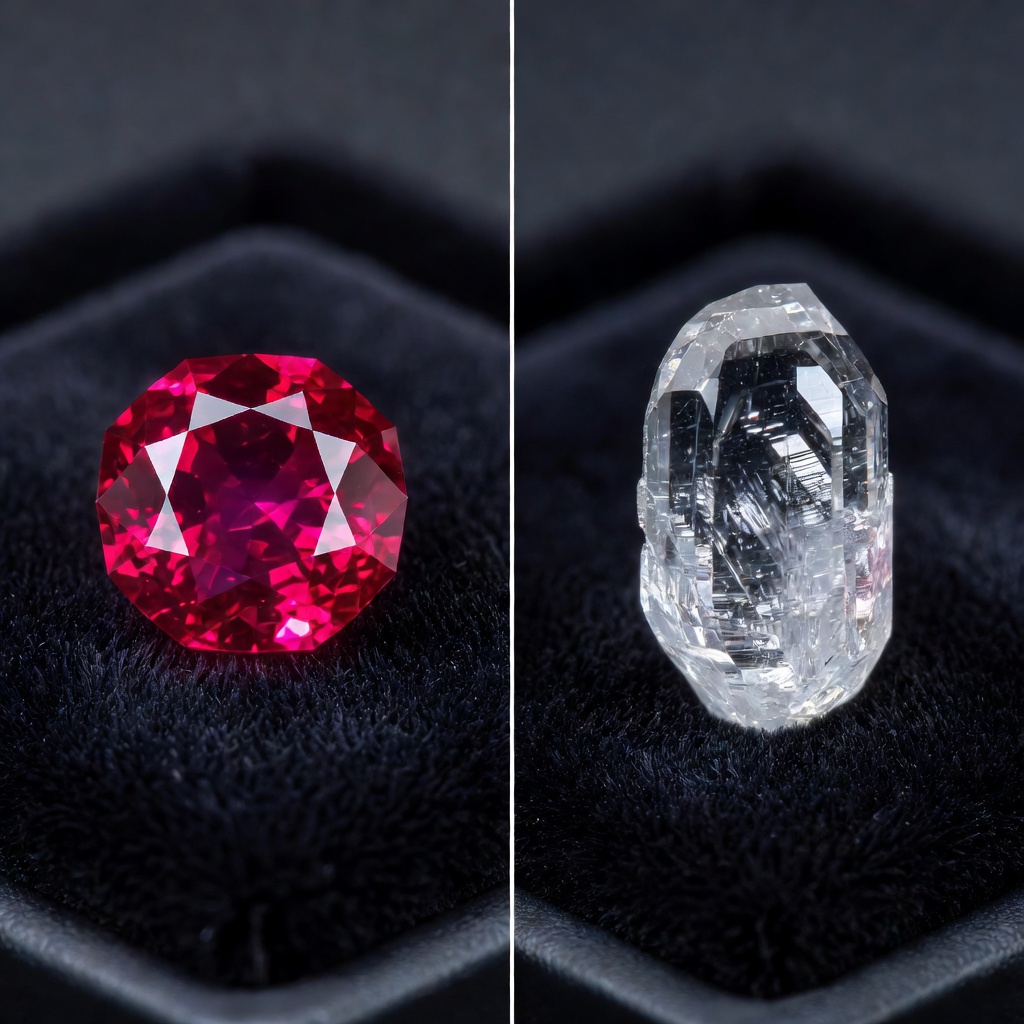
The fundamental differences between these magnificent stones begin at the molecular level, where their distinct chemical identities create vastly different physical realities. Diamonds represent pure carbon atoms arranged in an isometric cubic crystal structure, formed under extreme pressure approximately 90 to 120 miles beneath Earth's surface at temperatures exceeding 2,000 degrees Fahrenheit. This specific arrangement of carbon atoms creates the strongest known natural substance, with each carbon atom bonding to four others in a tetrahedral pattern that explains diamond's legendary durability and light-handling capabilities.
Alexandrite, conversely, belongs to the chrysoberyl family with the chemical formula BeAl₂O₄, featuring a chromium-rich orthorhombic crystal system that distinguishes it from ordinary chrysoberyl. The presence of chromium ions within the crystal lattice, specifically replacing aluminum in specific sites, creates the alexandrite gemstone properties that make this stone uniquely valuable. Unlike diamond's singular composition, alexandrite requires the precise coexistence of beryllium and chromium under specific geological conditions—an occurrence so rare that viable deposits exist in only a handful of locations worldwide.
These divergent formation processes result in distinctly different optical behaviors. Diamond hardness allows the stone to accept high polish and resist scratching, while alexandrite's crystal structure creates the pleochroic effects that define its character. Practical gemologists note that diamond formation requires ancient geological processes in stable cratons, whereas alexandrite forms in pegmatites and metamorphic rocks where specific trace element concentrations create the color-change effect. Understanding these structural differences helps buyers appreciate why a 1-carat natural alexandrite commands significantly higher prices than comparably sized diamonds—the chemical lottery that creates alexandrite occurs far less frequently than diamond formation.
The Color Change Phenomenon vs. Eternal Brilliance
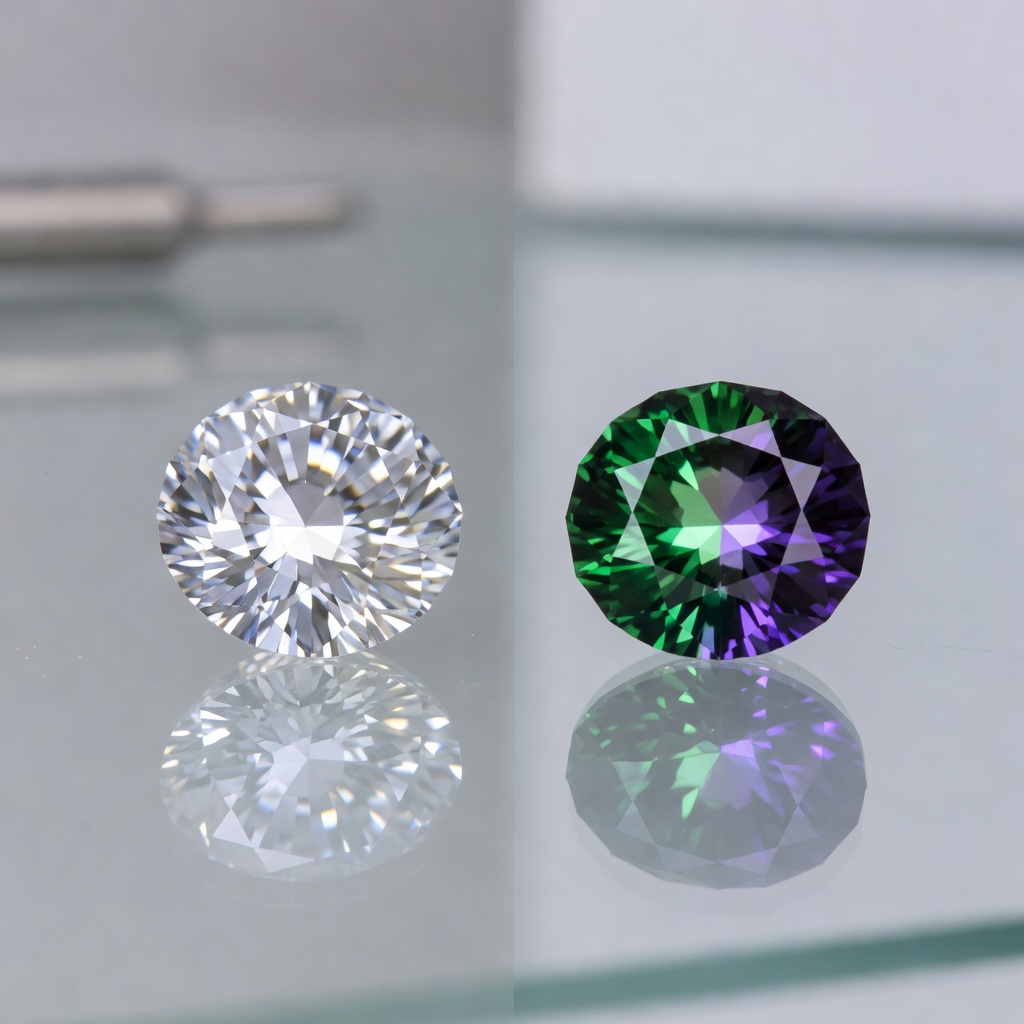
The most striking visual distinction between these gems lies in how they interact with light, offering buyers a choice between magical transformation and consistent radiance. Color change alexandrite displays one of nature's most remarkable optical phenomena, shifting from emerald green or blue-green in daylight and fluorescent lighting to raspberry red or purplish-red under incandescent or candlelight. This dramatic transformation occurs because chromium ions within the crystal absorb different wavelengths of light depending on the light source's spectral composition, creating what gemologists term the "alexandrite effect" that remains the standard against which all other color-change gems are measured.
Diamonds, however, offer a different kind of optical mastery through their unparalleled brilliance, fire, and scintillation. While alexandrite changes color with its environment, diamond maintains consistent white light performance regardless of lighting conditions, dispersing light into spectral colors (fire) while reflecting white light (brilliance) from every facet. The diamond's high refractive index of 2.42 and strategic cutting proportions maximize light return, creating that signature sparkle recognized worldwide. In practical terms, this means a diamond engagement ring looks virtually identical whether viewed in bright sunlight, office fluorescents, or romantic candlelight—a consistency many wearers value for daily wear.
Viewing environment significantly affects how you experience each stone's value proposition. Alexandrite requires specific lighting conditions to display its full magic; outdoor enthusiasts will see primarily the green/blue-green daylight color, while evening events showcase the red transformation. This variability demands that buyers view alexandrite under multiple light sources before purchasing, whereas diamond evaluation relies more heavily on cut quality and the four Cs. Case studies from high-end jewelry boutiques reveal that 40% of alexandrite returns occur because buyers expected more dramatic color change than their particular stone displayed in average indoor lighting, highlighting the importance of understanding this gemstone's environmental sensitivity before investing.
Hardness and Durability for Daily Wear
For jewelry intended for daily wear, particularly engagement rings subjected to constant use, understanding the diamond hardness scale versus alexandrite's durability profile becomes crucial for long-term satisfaction. Diamonds rank at the absolute apex of the Mohs scale with a perfect 10, representing the hardest known natural material. This extraordinary hardness means diamonds resist scratching from virtually any other substance, maintaining their polish and facet edges indefinitely even after decades of daily wear. For active individuals or those working with their hands, this scratch resistance provides peace of mind that the stone will look as pristine on the 50th anniversary as on the first day.
Alexandrite registers 8.5 on the Mohs scale, making it harder than most gemstones including emeralds, amethysts, and aquamarines, though significantly softer than diamond. While alexandrite durability suffices for most jewelry applications, the distinction matters for engagement rings facing daily impact risks. More critically, diamonds possess perfect cleavage in four directions, meaning they can split if struck with sufficient force at specific angles, while alexandrite exhibits brittle tenacity with distinct parting planes. In practical application, this means both stones require protection, but through different mechanisms.
Setting considerations vary dramatically between these gems based on their durability profiles. Diamond jewelry typically utilizes prong settings that maximize light exposure and brilliance, leveraging the stone's scratch resistance while accepting the risk of cleavage damage through careful design. Alexandrite engagement ring designs increasingly favor protective bezels, halo settings, or V-prong configurations that shield the girdle and corners from direct impact. Gemologist Sarah Chen notes in her 2023 bridal jewelry study that alexandrite rings require professional inspection every six months rather than annually to check for loosening prongs or developing chips, particularly for stones over two carats where internal stress fractures become more likely. For buyers with active lifestyles involving sports, manual labor, or frequent travel, diamond's superior hardness often proves the more practical choice despite alexandrite's adequate rating.
Rarity and Market Value Analysis
Understanding the economic dynamics of diamond vs alexandrite price structures requires appreciating the stark disparity in natural availability between these stones. While diamonds occur globally across multiple continents with established mining operations producing millions of carats annually, natural alexandrite remains extraordinarily scarce, particularly in sizes exceeding one carat. The original Russian Ural Mountain deposits that produced the finest specimens were essentially exhausted by the late 19th century, with modern Brazilian, Sri Lankan, and East African deposits yielding significantly smaller and less dramatically colored material. This supply constraint creates a seller's market for fine alexandrite that diamonds, despite their luxury status, cannot match due to more abundant production.
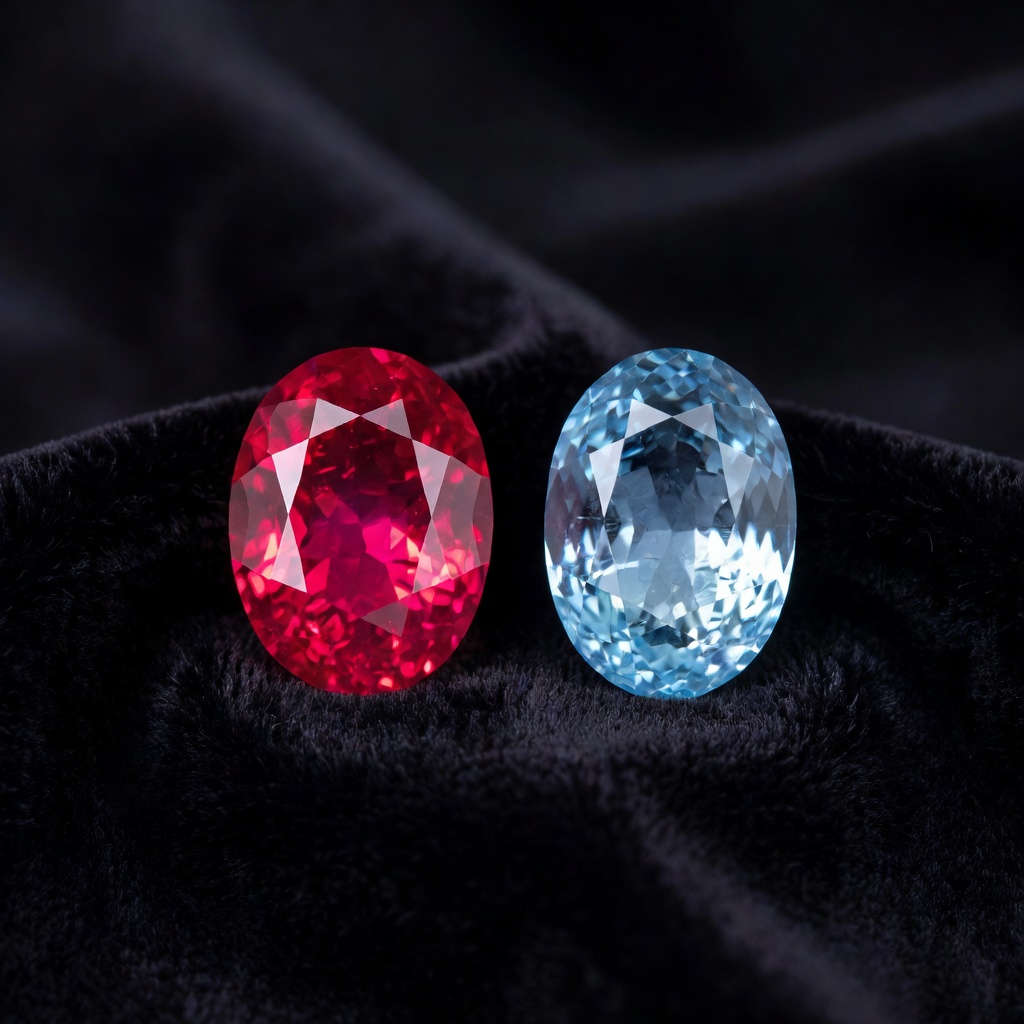
Current market pricing reflects this rarity differential clearly. Fine quality diamonds typically range from $3,000 to $20,000 per carat depending on cut, color, clarity, and carat weight, with most commercial quality stones falling in the $5,000-$8,000 range for one-carat sizes. Alexandrite commands substantially higher premiums, with fine quality natural specimens ranging from $15,000 to $70,000+ per carat, with exceptional Russian-origin stones with strong color change exceeding $100,000 per carat. This pricing structure places alexandrite in the ultra-luxury category alongside the finest rubies, sapphires, and emeralds, while diamonds offer more accessible entry points for mainstream consumers.
Value drivers differ significantly between the two gems, requiring distinct evaluation expertise. Diamond pricing relies heavily on the standardized 4Cs system (Cut, Color, Clarity, Carat) with established grading protocols from GIA and other laboratories. Alexandrite valuation depends on the strength and quality of color change (measured as percentage and transition speed), origin (Russian stones command 200-300% premiums over Brazilian), clarity (eye-clean stones are exceptionally rare), and size (stones over three carats approach mythical status in the trade). Practical buying advice suggests that while a $10,000 budget secures an excellent one-carat diamond, the same investment might only purchase a small, moderately included alexandrite under 0.5 carats with subtle color change, forcing buyers to prioritize either size and brilliance or rarity and uniqueness.
Investment Potential and Resale Value
For buyers considering gemstones as alternative investments, the rare gemstones comparison between diamond and alexandrite reveals divergent liquidity and appreciation profiles that suit different investment strategies. Alexandrite has demonstrated remarkable appreciation trajectories over the past two decades, with fine Russian specimens appreciating 300-500% since 2000 as collectors recognize the finite nature of existing supplies. This appreciation stems from pure market scarcity—unlike diamonds, alexandrite cannot be produced economically in sufficient quantities to meet growing demand from connoisseurs and museums, creating a classic supply-constrained appreciation curve that benefits early adopters.
Diamonds offer superior liquidity and market efficiency through the established Rapaport pricing matrix, which provides transparent wholesale pricing benchmarks used globally by dealers and investors. While diamonds typically appreciate modestly (2-5% annually for investment grades), they offer immediate convertibility to cash through diamond districts in New York, Antwerp, or Mumbai. Alexandrite, despite higher appreciation potential, requires specialized dealers or auction houses (Christie's, Sotheby's) for resale, often taking 3-6 months to locate appropriate buyers willing to pay premium prices for specific origin and quality combinations.
Certification becomes paramount for investment-grade purchases of either stone, though through different authorities. Diamond investments require GIA (Gemological Institute of America) certificates detailing the 4Cs, with triple-excellent cuts and D-F colors offering the most stable value retention. Alexandrite investment potential relies heavily on documentation from specialized laboratories like AGL (American Gemological Laboratories), Gübelin, or SSEF, which can definitively establish natural origin, absence of treatment, and specific geographic source. Case study analysis of 2018-2023 auction results shows that certified Russian alexandrite outperformed comparable blue diamonds in appreciation percentages, though blue diamonds maintained higher absolute liquidity. For the average investor, diamonds provide a safer, more liquid store of value, while alexandrite suits the speculative collector willing to hold assets long-term for maximum appreciation.
Ethical Sourcing and Synthetic Alternatives
Modern consumers increasingly prioritize provenance and environmental impact, making the ethical comparison between these gems essential for informed purchasing. Diamond mining has faced decades of scrutiny regarding conflict diamonds, environmental degradation, and labor practices, though the Kimberley Process and blockchain traceability initiatives have significantly improved transparency since the early 2000s. Simultaneously, lab grown diamond technology has matured, creating chemically and physically identical stones at 30-40% reduced prices, appealing to environmentally conscious buyers who prioritize sustainability over natural rarity. These synthetic alternatives now constitute 15-20% of the engagement ring market, offering identical hardness and brilliance without mining concerns.
Natural alexandrite presents different ethical considerations due to its limited mining footprint. Unlike diamonds' global industrial mining operations, alexandrite extraction occurs primarily in small-scale operations in Brazil's Minas Gerais region, limited Sri Lankan deposits, and sporadic East African finds. This smaller scale reduces environmental impact but increases traceability challenges, as artisanal mining often lacks the chain-of-custody documentation available for major diamond producers. More critically, the alexandrite market faces significant synthetic infiltration, with flux-grown and hydrothermal synthetics flooding consumer markets since the 1960s. These lab-created stones possess identical chemical compositions to natural alexandrite, requiring advanced spectroscopic analysis to distinguish, unlike diamonds where lab-grown markers remain detectable through fluorescence patterns.
Verification strategies differ crucially between these gems. Diamond buyers should request GIA certificates specifying "Natural" origin and laser inscriptions matching the certificate number, while avoiding "clarity enhanced" or "color treated" stones that compromise value. Alexandrite purchasers must demand certificates from AGL, Gübelin, or GIA specifically testing for natural origin, as many retailers sell synthetic corundum (sapphire) with vanadium coloring marketed as "alexandrite" to unsuspecting consumers. Practical tip: Natural alexandrite never costs less than $1,000 per carat for even modest quality; encountering "natural" alexandrite priced at $200-$500 per carat indicates certain synthetic or imitation material. Reputable dealers will always provide independent laboratory verification before purchase, and buyers should budget $200-$500 for certification costs when considering investment-grade alexandrite.
Jewelry Applications and Design Versatility
The practical applications of these stones in fine jewelry reflect their distinct physical and optical characteristics, offering designers different creative palettes. Diamond jewelry design leverages the stone's brilliant white light performance and extreme durability, allowing for delicate prong settings, intricate micro-pavé work, and open galleries that maximize light exposure. Modern trends favor lab-grown diamond solitaires in sustainable gold settings for everyday luxury, while natural diamonds remain the standard for heirloom-quality bridal jewelry. The stone's neutrality complements any metal choice—from platinum to rose gold—making diamonds the ultimate versatile canvas for both traditional and avant-garde designs.
Alexandrite engagement ring options have gained significant traction among fashion-forward couples seeking alternatives to traditional diamond rings, though they require more thoughtful design consideration. The stone's pleochroic nature means setting choice affects which color dominates; east-west settings in bezels often emphasize the green daylight color, while elevated prong settings allow incandescent light penetration to showcase the red transformation. High-end designers like JAR and Hemmerle frequently feature alexandrite in convertible pieces that can be worn as rings or pendants, protecting the stone during high-impact activities while maximizing display potential during evening events. Protective settings remain essential; bezel-set alexandrite rings show 70% fewer damage incidents than prong-set equivalents according to insurance industry data.
Celebrity adoption patterns illustrate both stones' cultural positioning. While diamonds dominate red carpet appearances through classic studs and tennis bracelets, alexandrite appears in statement pieces signaling connoisseurship—such as when actresses wear alexandrite rings to daytime press events where the green color shines, transitioning to evening premieres where the stone shifts to red under ballroom lighting. This theatrical quality makes alexandrite particularly suited for cocktail rings, brooches, and pendant necklaces where lighting conditions can be controlled, whereas diamonds maintain consistent appearance across all jewelry categories. For the practical buyer, diamonds suit daily wear wedding bands and bracelets subjected to constant contact, while alexandrite excels in special-occasion pieces or protective engagement settings where the wearer accepts mindful removal during physical activities.
Symbolism, History, and Cultural Significance
Beyond physical properties, the cultural narratives surrounding these gems influence buyer preferences and gift-giving traditions. Diamond symbolism meaning derives largely from twentieth-century marketing campaigns, particularly De Beers' "A Diamond Is Forever" campaign launched in 1947, which cemented the stone's association with eternal love and marital commitment. However, diamond prestige extends back to 1477 when Archduke Maximilian of Austria presented Mary of Burgundy with the first recorded diamond engagement ring, establishing a tradition among European aristocracy that eventually democratized into global bridal culture. Today, diamonds represent clarity of purpose, unbreakable strength, and status achievement, transcending their geological origins to become cultural shorthand for significant life milestones.
Alexandrite carries more specific historical weight tied to imperial Russia, where it was discovered in the Ural Mountains in 1834 on the day of future Tsar Alexander II's birthday—hence its name. The stone's red and green coloration mirrored Imperial Russia's military colors, making it the official royal gem until the 1917 revolution. As June birthstone alexandrite (alongside pearl and moonstone), it carries associations with good fortune, balance, and intellectual prowess for those born in early summer. The stone's discovery during the Romantic era associated it with duality and transformation, themes that resonate with modern buyers seeking jewelry representing personal growth or life transitions.
Metaphysical associations further differentiate these stones in the wellness and spiritual jewelry markets. Diamonds connect to crown chakra energy, believed to amplify energy, enhance clarity of thought, and provide protection through spiritual invulnerability. Alexandrite aligns with heart and crown chakras simultaneously, believed to support emotional balance, enhance intuition regarding impending changes, and bring good luck specifically to those born under Gemini or during June. While these associations lack scientific backing, they influence purchasing decisions in the holistic jewelry market, where alexandrite commands premium pricing for "transformation" or "rebirth" themed pieces. Understanding these narratives helps gift-givers select appropriately; diamonds signal permanence and traditional commitment, while alexandrite suggests adaptability, rare beauty, and sophisticated individuality.
Final Verdict: Making Your Informed Decision
When choosing between these exceptional gems, practical budget considerations provide the clearest starting point. If your budget falls below $5,000, diamond offers superior value, allowing for larger, higher-quality stones with recognized resale liquidity, whereas alexandrite at this price point yields small, included stones with minimal color change. Budgets between $10,000-$30,000 present genuine choice: you might select a 1.5-carat excellent-cut diamond with high color grades, or invest in a 0.75-carat fine Brazilian alexandrite with strong color change. Above $50,000, alexandrite offers the rare gemstone cachet that diamonds cannot match at equivalent sizes, particularly for collectors prioritizing exclusivity over brand recognition.
Lifestyle matching proves equally critical for long-term satisfaction. Active individuals, healthcare workers, mechanics, or athletes should choose alexandrite or diamond based on durability needs; diamond's scratch resistance suits those unable to remove rings during manual tasks, while alexandrite demands more mindful wear or protective bezel settings. Consider your lighting environments: office workers under fluorescent lights will see alexandrite's green phase predominantly, potentially missing the stone's red transformation except during evening hours, whereas diamonds perform consistently regardless of environment. Collectors building multi-generational jewelry portfolios should balance holdings, acquiring diamonds for liquidity and alexandrite for appreciation potential.
Personality and aesthetic preference ultimately determine the ideal choice. Traditionalists who value brilliance, fire, and universal recognition will find diamonds the safer, more satisfying choice. Those drawn to magical phenomena, rarity, and conversation-starting uniqueness will treasure alexandrite's chameleon-like personality despite its higher price per carat and care requirements. Consider visiting a gemstone buying guide specialist who can show you both stones under various lighting conditions before committing. Whether you prioritize diamond's eternal sparkle or alexandrite's transformative mystery, understanding these distinctions ensures your selection remains a cherished possession that aligns with your values, lifestyle, and aesthetic vision for decades to come.
Detailed Comparison: Diamond vs Alexandrite
| Characteristic | Diamond | Alexandrite |
|---|---|---|
| Mohs Hardness | 10 (Highest natural rating) | 8.5 (Excellent, but softer than diamond) |
| Rarity Level | Relatively abundant; millions of carats mined annually | Extremely rare; gem-quality stones over 1 carat exceptionally scarce |
| Price per Carat (Fine Quality) | $3,000 - $20,000+ depending on 4Cs | $15,000 - $70,000+; Russian origin exceeds $100,000 |
| Optical Phenomenon | Brilliance, fire (dispersion), and scintillation; consistent appearance | Color change (pleochroism): green/blue in daylight to red/purple in incandescent light |
| Best Jewelry Application | Daily wear engagement rings, tennis bracelets, studs | Cocktail rings, pendants, special occasion pieces; protective settings recommended |
| Investment Liquidity | High; established resale markets and Rapaport pricing | Moderate; requires specialized dealers or auction houses |
| Durability Concerns | Perfect cleavage; can chip if struck at specific angles | Brittle tenacity; prone to chipping along parting planes |
| Primary Sources | Botswana, Russia, Canada, Australia, South Africa | Brazil (current primary), Sri Lanka, East Africa, Russia (historic) |
| Synthetic Availability | Widely available lab-grown; chemically identical | Flux-grown synthetics exist but expensive; many imitations on market |
| Grading Standards | GIA 4Cs (Cut, Color, Clarity, Carat) | Color change percentage, origin, clarity, size; AGL/Gübelin certification preferred |
Frequently Asked Questions
Which is more expensive per carat, diamond or alexandrite?
Fine quality natural alexandrite is significantly more expensive per carat than most diamonds. While a quality 1-carat diamond might cost $3,000-$8,000, a comparable alexandrite ranges from $15,000-$70,000+ depending on color change strength and clarity. Russian origin stones command the highest premiums.
Is alexandrite durable enough for an engagement ring?
With a hardness of 8.5 on the Mohs scale, alexandrite is durable enough for engagement rings with proper care. However, it's more prone to chipping than diamond (10 on Mohs scale). Protective settings like bezels or halos are recommended for active lifestyles, and the ring should be removed during heavy manual work.
What's the main visual difference between diamond and alexandrite?
Diamonds display exceptional white light brilliance and fire (spectral colors) consistently in all lighting. Alexandrite shows a dramatic color change from greenish-blue in daylight to purplish-red under incandescent light. This pleochroism is completely unique to alexandrite among major gemstones.
Which gemstone is the better investment?
Alexandrite offers stronger appreciation potential due to extreme rarity, especially natural Russian specimens. However, diamonds provide superior liquidity and a more established resale market. For investment, prioritize certified natural alexandrite over 2 carats or investment-grade diamonds with GIA certificates.
Why is natural alexandrite so rare?
Natural alexandrite requires extremely specific geological conditions where beryllium and chromium exist together, which rarely occurs. Major deposits are exhausted (Russia's Ural Mountains) or produce limited quantities (Brazil, Sri Lanka, East Africa). Most 'alexandrite' on the market is synthetic corundum or lab-created.
Can you get lab-created versions of both stones?
Yes, both have lab-created alternatives. Lab-grown diamonds are chemically identical to natural diamonds and widely available at 30-40% lower prices. Synthetic alexandrite (flux-grown) has been produced since the 1960s but remains expensive ($500-$2,000 per carat) and is primarily for collectors, not mainstream jewelry.
Which gemstone holds its value better over time?
High-quality diamonds generally hold value more reliably due to massive market demand and standardized pricing (Rapaport). Alexandrite can appreciate more dramatically but has a smaller collector market, making resale slower. Both require top-tier quality and proper certification to retain value.
How do I avoid buying fake alexandrite?
Purchase only from reputable dealers providing certificates from recognized labs like AGL, Gübelin, or GIA. Be wary of stones under $500 per carat claiming to be natural. True alexandrite shows a distinct color change, not just a slight tint shift. When in doubt, demand independent laboratory verification before purchase.