Diamond vs Moonstone: The Complete Guide to Choosing Your Perfect Gemstone
When selecting a center stone for fine jewelry or an engagement ring, the choice between diamond and moonstone represents a fascinating crossroads of durability, aesthetics, and personal expression. While diamonds have dominated the bridal market for nearly a century, moonstone has emerged as a compelling alternative for those seeking ethereal beauty and spiritual significance. Understanding the fundamental distinctions between these gemstones requires examining their geological origins, optical properties, and practical wearability to make an informed decision that aligns with your lifestyle and values.
The Fundamental Differences: Composition and Formation
The chemical and structural disparities between diamond and moonstone create the foundation for their divergent characteristics in jewelry applications. Diamond consists of pure crystalline carbon atoms arranged in an isometric crystal system, formed approximately 100 to 200 miles beneath Earth's surface under extreme pressure of 725,000 pounds per square inch and temperatures exceeding 2,000 degrees Fahrenheit. These conditions occur in the upper mantle, where volcanic eruptions eventually transport diamond-bearing kimberlite pipes to surface levels, creating deposits that range from one to three billion years old.
Moonstone, conversely, belongs to the feldspar mineral family, specifically composed of alternating layers of orthoclase and albite that formed as magma cooled slowly underground over millions of years. This layered structure, known as perthitic intergrowth, creates the stone's signature optical phenomenon when light interacts with these microscopic strata. Unlike diamonds' single-element composition, moonstone's complex silicate chemistry makes it significantly more vulnerable to environmental stresses and physical impacts.
The Mohs hardness scale reveals the most practical difference for jewelry wearers: diamonds rank at the maximum level of 10, representing the hardest known natural material, while moonstone measures only 6 to 6.5. This disparity means diamond can scratch virtually any substance without sustaining damage itself, whereas moonstone can be scratched by common household dust (which contains silica at 7 hardness), steel files, or even prolonged contact with other jewelry pieces. For a practical example, consider a registered nurse who wears her ring daily while donning latex gloves and washing hands frequently; a diamond would maintain its polish indefinitely under these conditions, while moonstone would show surface abrasions within months without protective measures.
Visual Characteristics: Brilliance vs Adularescence
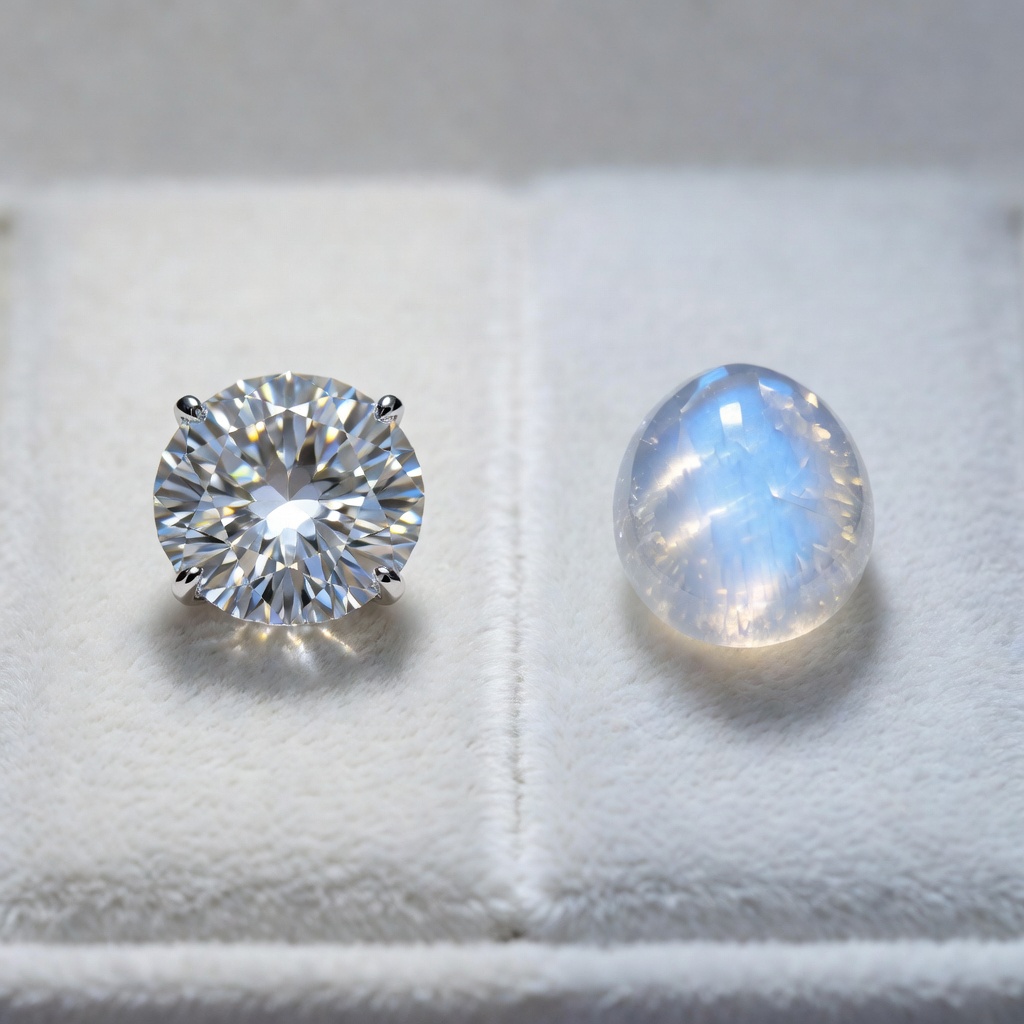
The optical performance of these gemstones creates distinctly different aesthetic experiences that appeal to varying sensibilities and style preferences. Diamonds exhibit what gemologists term the "triple threat" of brilliance (white light reflection), fire (dispersion of light into spectral colors), and scintillation (sparkle from movement), achieved through precise mathematical cutting angles that maximize light return. A well-cut round brilliant diamond returns approximately 98% of incident light through the crown, creating that unmistakable dazzling effect recognized across cultural boundaries.
Moonstone offers a completely different visual poetry through adularescence, a phenomenon where light scatters between the thin layers of feldspar, creating a billowy, moonlight-like sheen that appears to float across the stone's surface. This effect ranges from a subtle blue glow in traditional blue moonstone to rainbow refractions in multicolored varieties, with the most valuable specimens displaying a centered, high-contrast adularescence against a colorless background. Unlike diamond's sharp, geometric sparkles, moonstone's glow is diffuse and organic, evoking misty landscapes and celestial mystery.
Clarity characteristics further distinguish these gems: diamonds undergo rigorous grading from Flawless to Included based on microscopic inclusions visible under 10x magnification, with these imperfections sometimes serving as identifying fingerprints. Moonstone typically contains characteristic inclusions called "centipedes," which appear as tension cracks resembling the multi-legged creature, along with stress marks and two-phase inclusions that are actually accepted as proof of authenticity rather than detractors from value. When photographing these stones for insurance purposes, diamonds require specific lighting setups to capture their fire without overexposure, while moonstone demands diffused, indirect lighting to properly showcase its adularescence without washing out the delicate color play.
Price and Value Analysis: Investment vs Affordability
The economic disparity between these gemstones reflects their relative rarity, extraction costs, and market demand, creating vastly different entry points for consumers. Natural diamonds currently command prices ranging from $3,000 to over $20,000 per carat depending on the four Cs (cut, color, clarity, and carat weight), with fancy colored diamonds reaching significantly higher premiums. This pricing structure places traditional diamond engagement rings at an average cost of $6,000 in the United States, representing a substantial financial commitment for many couples.
Moonstone occupies the opposite end of the price spectrum, with quality specimens averaging between $10 to $100 per carat, and even premium large stones rarely exceeding $500 per carat unless exhibiting exceptional clarity and adularescence. This affordability allows couples to allocate budgets toward intricate custom settings or larger stone sizes without compromising financial stability. However, lab-grown diamond alternatives have disrupted this binary, offering stones with identical chemical and physical properties to natural diamonds at 60-80% cost reductions, effectively bridging the gap between diamond quality and moonstone affordability.
The total cost of ownership extends beyond initial purchase: diamonds retain approximately 50-80% of their resale value through established secondary markets, with rare specimens appreciating significantly over decades, while moonstone functions primarily as decorative adornment with minimal investment liquidity. Consider the case of a couple with a $4,000 budget; they might choose a 0.7-carat natural diamond solitaire, a 1.5-carat lab-grown diamond with halo setting, or a 5-carat premium moonstone with intricate vintage-inspired metalwork, each option representing different value propositions regarding longevity, status, and aesthetic impact.
| Characteristic | Diamond | Moonstone |
|---|---|---|
| Chemical Composition | Pure Crystalline Carbon (C) | Potassium Aluminum Silicate (Feldspar) |
| Mohs Hardness | 10 (Maximum) | 6-6.5 (Moderate) |
| Formation Process | High-pressure mantle crystallization (1-3 billion years) | Magma cooling and layer separation (millions of years) |
| Price per Carat | $3,000-$20,000+ (natural); $800-$4,000 (lab-grown) | $10-$100 (standard); $300-$500 (premium) |
| Optical Effect | Brilliance, Fire, and Scintillation | Adularescence (Billowy Sheen) |
| Durability Rating | Excellent for daily wear | Fair; requires protective settings |
| Best Setting Type | Prong, Bezel, Tension, or Pavé | Bezel or Halo (protective) |
| Investment Potential | High resale value; appreciates over time | Minimal; sentimental value primary |
| Cleaning Method | Ultrasonic, steam, or chemical cleaners | Mild soap and water only |
| Ethical Sourcing | Kimberley Process; CanadaMark; Lab-grown options | Limited standardized protocols; Sri Lankan mines preferred |
Durability and Daily Wear Considerations
The practical longevity of gemstone jewelry depends significantly on hardness, toughness, and stability against environmental factors, areas where diamond vs moonstone comparisons reveal stark contrasts. Diamond's perfect 10 rating on the Mohs scale translates to exceptional resistance against scratching and abrasion, making it ideal for engagement rings worn continuously through decades of household chores, professional activities, and recreational pursuits. Additionally, diamonds possess "perfect" cleavage in four directions but rank high in toughness due to strong atomic bonding, meaning they resist chipping despite potential splitting along cleavage planes if struck precisely.
Moonstone's 6-6.5 hardness places it in a vulnerable category for daily wear, comparable to opal or turquoise, requiring protective settings such as bezels or halos that shield the girdle and crown from direct impacts. The stone's two cleavage directions and brittle tenacity make it susceptible to cracking from temperature shocks, such as stepping from freezing outdoor temperatures into heated buildings, or from accidental impacts against granite countertops or metal door handles. Professional jewelers typically recommend removing moonstone rings before activities involving hand tools, weightlifting, or gardening.
Thermal and chemical stability further differentiate these gems: diamonds withstand ultrasonic cleaning, steam treatments, and exposure to household chemicals including chlorine and ammonia without degradation. Moonstone requires strictly gentle care, as thermal shock from steam cleaning can cause internal fractures, and ultrasonic vibrations may exacerbate existing cleavages. A practical case study involves a kindergarten teacher considering an engagement ring; her daily activities involving children, art supplies, and frequent handwashing would eventually damage an unprotected moonstone, whereas a diamond would remain pristine despite similar conditions, though a moonstone set in a low-profile bezel might survive with conscious care.
Engagement Ring Suitability: Tradition vs Individuality
The cultural significance and symbolic weight of engagement ring stones influence emotional satisfaction and social perception, creating distinct narratives around diamond vs moonstone engagement rings. Diamonds maintain their position as the traditional choice representing eternal love, unbreakable commitment, and social status, reinforced by decades of marketing and their association with durability. The stone's unmatched brilliance serves as a public declaration of investment in the relationship, with sizes and qualities often scrutinized as indicators of commitment levels within certain social circles.
Moonstone engagement rings cater to couples prioritizing individuality, spiritual connection, and bohemian aesthetic over conventional status markers. The stone's ethereal glow aligns with vintage-inspired, Art Nouveau, or nature-themed settings, appealing to artistic personalities and those seeking alternatives to the "diamond industrial complex." Setting design becomes crucial for moonstone: while diamonds accommodate any setting style from delicate shared-prong bands to dramatic tension settings, moonstone demands protective architectures that sacrifice some light performance for physical security.
Celebrity influence has accelerated moonstone's acceptance in bridal jewelry, with stars like Emma Stone and Zoe Kravitz selecting moonstone engagement rings that generated significant media coverage and Pinterest inspiration boards. For couples designing custom rings, a practical approach involves creating a "wear trial" using temporary settings; one couple reported that after wearing a placeholder moonstone ring for two weeks during their hiking-intensive vacation, they observed micro-scratches that convinced them to choose a lab-grown diamond for the permanent ring, while another couple found that their office-based lifestyle posed no threat to a bezel-set moonstone, allowing them to prioritize its unique aesthetic.
Symbolic Meaning and Cultural Significance
Beyond physical properties, the metaphysical associations and cultural histories of these gemstones resonate differently with individual belief systems and heritage backgrounds. Diamonds symbolize invincibility, clarity of purpose, and everlasting commitment throughout Western cultures, derived from the Greek word "adamas" meaning unconquerable. These associations emerged from the stone's indestructible nature and transparency, representing the clarity and strength desired in marital partnerships across Christian, Jewish, and secular Western wedding traditions.
Moonstone carries profound spiritual significance in Hindu mythology, where it is believed to be solidified moonbeams embodying divine feminine energy, intuition, and the cyclical nature of life's phases. Roman cultures associated moonstone with lunar deities and believed it protected travelers, particularly at night, while Victorian-era jewelers utilized it to represent tender love and floral femininity. These associations make moonstone particularly meaningful for those practicing New Age spirituality, Wicca, or seeking to honor Eastern spiritual traditions.
Birthstone connections provide additional personal relevance: diamond serves as April's birthstone, while moonstone offers a modern alternative to pearl for June birthdays. Metaphysical practitioners attribute emotional balance, hormonal regulation, and enhanced intuition to moonstone, whereas diamonds are associated with mental clarity, abundance manifestation, and aura purification. A practical example involves a bride choosing moonstone to honor her grandmother who wore the gem during her own 1960s bohemian wedding, creating a continuity of feminine wisdom, while another might select diamond to align with family traditions where the stone represents the "rock" of the family unit across generations.
Ethical and Environmental Impact
Contemporary consumers increasingly prioritize provenance and ecological footprint when selecting gemstones, revealing different challenges and solutions within the diamond and moonstone supply chains. Natural diamond mining historically raised significant environmental concerns regarding habitat destruction, water usage, and carbon emissions, though the industry has implemented the Kimberley Process Certification Scheme to prevent conflict diamonds from entering legitimate markets. However, critics note that the Kimberley Process does not address environmental degradation or labor conditions comprehensively, prompting the emergence of CanadaMark diamonds that guarantee Canadian origin with strict environmental protocols.
Lab-grown diamond alternatives present the most ethical and eco-friendly option for diamond enthusiasts, requiring significantly less energy and water while eliminating mining entirely. These stones possess identical physical, chemical, and optical properties to mined diamonds, making them indistinguishable without specialized equipment. The carbon footprint of lab-grown diamonds varies by manufacturer, with some utilizing renewable energy sources to further minimize environmental impact.
Moonstone mining generally involves smaller-scale operations with lower environmental impact than industrial diamond mining, particularly in traditional sources like Sri Lanka and India where artisanal miners use manual extraction methods. However, the moonstone market lacks standardized ethical sourcing protocols comparable to the Kimberley Process, making traceability challenging. Responsible consumers should seek moonstone from fair-trade verified Sri Lankan mines known for ethical labor practices, or from American dealers who maintain direct relationships with small-scale Indian cutters. A case study of a sustainably-minded couple revealed their decision process: they initially considered moonstone for its lower environmental footprint but ultimately selected a lab-grown diamond certified by a renewable-energy producer, achieving both durability and ecological consciousness.
Care and Maintenance Requirements
Proper maintenance protocols ensure longevity and sustained beauty, with diamond vs moonstone requiring fundamentally different care regimens reflecting their hardness disparities. Diamonds tolerate aggressive cleaning methods including ultrasonic cleaners, steam jets, and ammonia-based solutions that dissolve accumulated lotions and oils. Annual professional inspections focus primarily on checking prong security and ensuring the setting hasn't loosened through daily wear, with cleaning recommended every six months to maintain maximum brilliance.
Moonstone demands meticulous, gentle care to prevent cumulative damage. Home cleaning requires only mild soap, lukewarm water, and a soft-bristled brush, avoiding temperature extremes that could induce thermal shock. The stone must never undergo ultrasonic cleaning, steam treatment, or exposure to harsh chemicals including bleach, acids, or abrasive toothpaste, all of which can worsen internal fractures or dissolve surface layers. Professional jewelers recommend inspecting moonstone settings every six months rather than annually, as the softer stone exerts different pressures on prongs that may loosen more quickly.
Storage practices differ significantly: diamonds can be stored touching other diamonds or gemstones without risk, though they may scratch gold or platinum settings. Moonstone requires individual soft pouches or dedicated compartments to prevent contact with harder gems like sapphires, rubies, or even quartz, which would scratch its surface. A practical tip for moonstone owners involves removing rings before applying hand sanitizer, as the alcohol content can dry out the stone's surface layers over time, potentially affecting its adularescence, whereas diamond owners need not modify their sanitizing routines.
Investment and Resale Value Comparison
The financial trajectory of gemstone ownership varies dramatically between these options, affecting long-term asset management and estate planning considerations. Natural diamonds maintain established resale markets through auction houses, estate dealers, and upgrade programs at major retailers, typically retaining 50-80% of original purchase value depending on certification and market conditions. Rare natural diamonds—those exceeding two carats with D-color and Flawless clarity, or fancy vivid colors—often appreciate significantly over decades, serving as legitimate alternative investments comparable to fine art or vintage wines.
Moonstone lacks standardized grading systems and established resale infrastructure, functioning primarily within artisanal and craft markets rather than investment circles. While antique moonstone jewelry from the Art Nouveau period commands premiums among collectors, contemporary moonstone rings possess negligible liquidity and rarely appreciate beyond inflation. The value remains predominantly sentimental, representing emotional significance rather than financial asset growth.
Certification impacts value retention substantially: GIA-certified diamonds command premiums in secondary markets due to verified specifications, whereas moonstone typically sells without laboratory reports, relying on dealer reputation and visual assessment. Market trends indicate growing interest in colored diamonds as alternative investments, particularly pink and blue varieties, while moonstone remains confined to niche aesthetic markets. For practical financial planning, a couple might consider that a $5,000 natural diamond ring could fund emergency expenses through pawn or resale if necessary, whereas a $500 moonstone ring provides no similar financial safety net, though the lower initial outlay may align better with risk-averse budgeting philosophies.
Making Your Final Decision: Which Gemstone Is Right for You?
Selecting between diamond and moonstone ultimately requires honest assessment of lifestyle factors, aesthetic preferences, and value systems rather than following universal prescriptions. Choose diamond if your daily activities involve hands-on work, frequent handwashing, or outdoor recreation; if you prioritize traditional symbolism and maximum sparkle; if investment value and heirloom longevity matter for future generations; or if you desire the flexibility of various setting styles without protective constraints. Lab-grown diamond alternatives offer particular appeal for those seeking the prestige and durability of diamonds with reduced environmental impact and financial outlay.
Choose moonstone if you are drawn to unique, non-traditional aesthetics with vintage-bohemian appeal; if you maintain a relatively gentle lifestyle that accommodates careful jewelry handling; if spiritual symbolism and intuitive energy align with your personal beliefs; or if budget constraints necessitate affordable beauty without sacrificing size or setting complexity. Moonstone particularly suits those who view jewelry as temporary adornment for specific life phases rather than permanent heirlooms.
Hybrid approaches offer creative compromises: consider a diamond center stone with moonstone accents in a three-stone or halo design, combining durability with ethereal beauty. One couple commissioned a ring featuring a lab-grown oval diamond flanked by pear-shaped moonstones, achieving both practicality and distinctive aesthetic. Before finalizing your selection, conduct a two-week "lifestyle audit" noting how often your hands encounter hard surfaces, chemicals, or temperature changes, then consult with a graduate gemologist who can demonstrate both stones under various lighting conditions. Remember that the perfect gemstone reflects not just light, but your authentic self and relationship values.
Frequently Asked Questions
What is the main difference between diamond and moonstone?
The primary difference is composition and hardness. Diamond is pure crystalline carbon (Mohs 10) while moonstone is a feldspar mineral (Mohs 6-6.5). Diamonds display brilliant sparkle; moonstone shows a unique moonlight-like adularescence sheen.
Is moonstone durable enough for an engagement ring?
Moonstone requires protective settings like bezels or halos due to its 6-6.5 hardness. It's suitable for careful wearers but not ideal for hands-on lifestyles. Diamonds remain the superior choice for daily wear durability.
Which gemstone is more expensive, diamond or moonstone?
Diamonds are significantly more expensive, costing $3,000-$20,000+ per carat versus moonstone's $10-$100 per carat. However, lab-grown diamonds and premium moonstone can narrow this gap for budget-conscious buyers.
Can moonstone be used in engagement rings?
Yes, moonstone is increasingly popular for alternative engagement rings, offering vintage-bohemian appeal. Celebrities have embraced this trend. However, it requires careful setting design and maintenance compared to diamonds.
What does moonstone symbolize compared to diamond?
Moonstone symbolizes intuition, divine feminine energy, and new beginnings, while diamonds represent eternal love, strength, and purity. Diamonds are traditional commitment symbols; moonstone appeals to those seeking unique spiritual meaning.
How do lab-grown diamonds compare to moonstone for engagement rings?
Lab-grown diamonds offer 60-80% cost savings over natural diamonds while maintaining superior durability (Mohs 10) and brilliance. They bridge the gap between diamond quality and moonstone affordability, making them an excellent compromise.
Do diamonds and moonstone look similar in jewelry?
No, they have distinctly different appearances. Diamonds exhibit sharp brilliance and rainbow fire, while moonstone displays a soft, floating adularescence with a dreamy, ethereal quality. Their aesthetic appeals are completely different.
Which gemstone is better for long-term investment?
Diamonds, particularly natural GIA-certified stones, are superior for investment with established resale markets and appreciation potential. Moonstone holds sentimental value but has minimal financial investment return or standardized resale market.