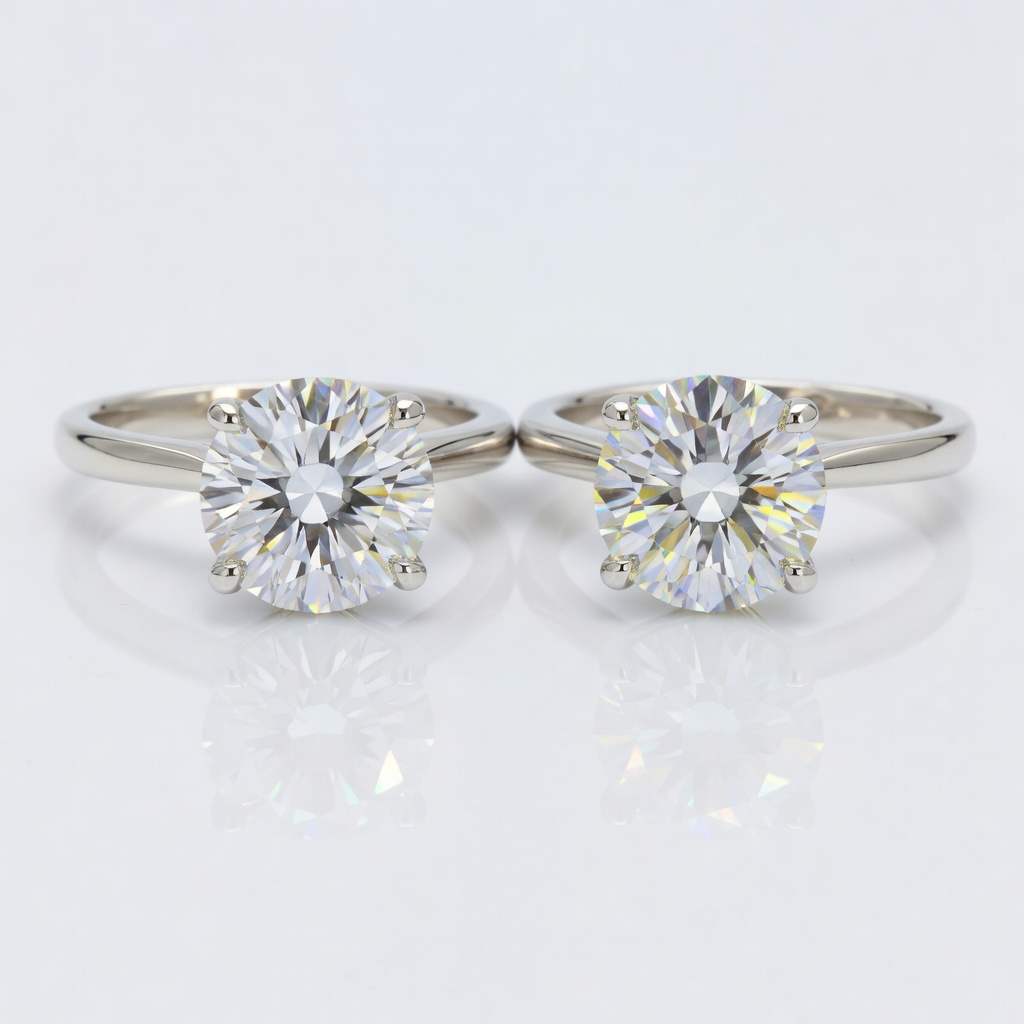
Understanding the Diamond vs Moissanite Debate
Choosing the perfect center stone for an engagement ring represents one of the most significant jewelry decisions you will make, and the diamond vs moissanite comparison has become increasingly relevant for modern couples in 2024. As ethical considerations, budget constraints, and aesthetic preferences evolve, more shoppers are exploring diamond alternatives that offer exceptional beauty without traditional markup. Whether you are drawn to the timeless prestige of natural diamonds or intrigued by the space-age origins of moissanite, understanding the fundamental differences between these gemstones will empower you to make a confident, informed purchase that aligns with your values and lifestyle.
The decision between these two remarkable gemstones extends far beyond mere appearance, encompassing critical factors such as long-term durability, cost efficiency, environmental impact, and investment potential. While diamonds have dominated the engagement ring market for nearly a century, moissanite engagement rings have surged in popularity among savvy consumers seeking maximum brilliance at a fraction of the cost. This comprehensive guide will walk you through every aspect of the diamond vs moissanite conversation, providing practical insights, real-world budget scenarios, and expert recommendations tailored to your specific situation.
What Is Moissanite? The Space-Age Gemstone Explained
Moissanite possesses one of the most fascinating origin stories in the gemstone world, first discovered in 1893 by French scientist Henri Moissan while examining rock samples from a meteor crater in Arizona. Initially mistaking these crystals for diamonds, Moissan later identified the mineral as silicon carbide, a compound rarely found naturally on Earth but abundant in stardust and meteorites. Due to the extreme scarcity of natural moissanite, virtually all stones available in jewelry today are laboratory-created through advanced thermal growing processes that replicate the conditions of space-born formation, resulting in ethical, sustainable gemstones with extraterrestrial origins.
Unlike diamonds, which consist entirely of carbon atoms arranged in an isometric crystal structure, moissanite comprises silicon carbide, creating a unique hexagonal crystal system that produces distinct optical properties. This chemical composition gives moissanite a higher refractive index than diamond and noticeable double refraction, meaning light entering the stone splits into two rays, creating that signature rainbow "fire" that many find even more spectacular than diamond brilliance. When shopping for moissanite engagement rings, understanding these material differences helps dispel the common misconception that moissanite constitutes a "fake" diamond—it is, in fact, an entirely distinct gemstone with its own legitimate place in fine jewelry, much like rubies differ from sapphires despite both being corundum.
Diamonds Demystified: Natural vs Lab-Grown Options
Natural diamonds form deep within the Earth's mantle under extreme pressure and temperature conditions over billions of years, eventually traveling to the surface through volcanic eruptions contained in kimberlite pipes. This geological rarity, combined with complex mining operations and extensive supply chains, contributes significantly to the premium pricing of natural diamonds. When selecting a natural stone, buyers should familiarize themselves with the 4Cs grading system—Cut, Color, Clarity, and Carat—which provides standardized criteria for evaluating quality and ensuring you receive appropriate value for your investment.
Lab-grown diamonds have revolutionized the industry by offering chemically, physically, and optically identical stones to their natural counterparts, created through High Pressure High Temperature (HPHT) or Chemical Vapor Deposition (CVD) methods in controlled laboratory environments. These sustainable alternatives typically cost 40-60% less than mined diamonds while eliminating environmental degradation and ethical concerns associated with extraction. Whether you choose natural or lab-grown diamonds, certification from reputable laboratories such as GIA or IGI ensures authenticity and quality grading, providing peace of mind that your gemstone meets rigorous industry standards for your engagement ring.
Visual Comparison: Brilliance, Fire, and Sparkle Differences
When examining gemstone brilliance comparison between these two options, moissanite actually exceeds diamond in refractive index, measuring 2.65 compared to diamond's 2.42, resulting in more intense light return and sparkle. However, moissanite also exhibits double refraction, causing light to split as it enters the stone and creating a disco-ball effect with pronounced rainbow flashes, whereas diamonds display single refraction with white light brilliance and subtle fire. Under natural daylight, both stones appear remarkably similar to casual observers, though moissanite's colorful fire becomes more apparent under direct lighting or in larger carat weights exceeding one carat.
The moissanite vs diamond appearance debate often centers on color performance, as traditional moissanite historically displayed a slight yellow or green tint in certain lighting, though modern Forever One and Super Premium grades now achieve colorless D-E-F ranges comparable to high-quality diamonds. Certain cuts perform differently in each material; brilliant round cuts minimize color in moissanite while maximizing fire, whereas step cuts like emerald or Asscher may highlight any residual tint and show more double refraction. For couples prioritizing a classic, understated sparkle similar to vintage jewelry, diamonds offer subtle white light return, while those seeking dramatic, eye-catching radiance often prefer moissanite's intense prismatic effects.
Durability & Hardness: Will They Last a Lifetime?
The Mohs hardness scale provides the standard measurement for gemstone durability, with diamonds ranking at the maximum 10, representing the hardest known natural material, while moissanite scores an impressive 9.25, making it the second-hardest gemstone used in jewelry. This exceptional hardness ensures that moissanite engagement rings resist scratching from daily wear, household dust, and accidental impacts, maintaining their polish and surface integrity for decades. In practical terms, while diamonds can theoretically scratch moissanite, moissanite cannot scratch diamonds, and both stones will easily resist damage from any other material you encounter in normal life.
Interestingly, moissanite durability exceeds diamond in terms of toughness, referring to resistance against chipping, cracking, and breaking under force. Diamonds possess perfect cleavage planes along which they can split if struck at specific angles, whereas moissanite's crystal structure lacks these weak points, making it less prone to catastrophic damage during accidental impacts. Both stones withstand extreme heat during jewelry repairs, though moissanite actually tolerates higher temperatures than diamond before degrading. For active individuals working with their hands, healthcare professionals, or outdoor enthusiasts, moissanite offers superior resilience against the knocks and bumps of vigorous lifestyles while requiring minimal maintenance beyond occasional professional cleaning.
Price Analysis: Cost-Per-Carat Breakdown
The moissanite vs diamond price differential represents the most dramatic distinction between these gemstones, with high-quality moissanite typically costing 90-95% less than natural diamonds of equivalent size and visual quality. While a one-carat natural diamond of good quality ranges from $4,000 to $6,000, premium moissanite of the same size costs approximately $400 to $600, allowing couples to allocate budget toward elaborate settings, wedding bands, or future financial goals. Lab-grown diamonds occupy a middle position, generally priced 40-60% below natural diamonds but still significantly higher than moissanite, typically ranging $1,200 to $2,500 per carat.
Consider these realistic budget scenarios when planning your purchase: with $2,000, you might afford a 0.4-carat natural diamond solitaire, a 0.8-carat lab-grown diamond, or a stunning 2-carat moissanite with an intricate halo setting. At the $5,000 level, options expand to a 0.8-carat natural diamond, a 1.5-carat lab-grown stone, or a 3-carat moissanite with a custom platinum setting. For $10,000 budgets, couples choosing moissanite can create elaborate three-stone designs totaling 4-5 carats with premium metalwork, while diamond buyers might secure a 1.2-carat natural stone or 2-carat lab-grown option. Remember that setting costs, insurance premiums, and future maintenance represent hidden expenses where moissanite's affordability continues providing value throughout ownership.
Ethical and Environmental Impact Comparison
Traditional diamond mining requires moving approximately 250 tons of earth per carat of diamond recovered, resulting in significant habitat destruction, water table disruption, and carbon emissions throughout the extraction and transportation process. While the Kimberley Process Certification Scheme aims to prevent conflict diamonds from entering legitimate markets, critics note loopholes allowing stones from questionable sources to enter supply chains, particularly from regions with human rights concerns. For ethically conscious consumers, the provenance of natural diamonds often remains obscured through multiple intermediary transactions, making truly ethical sourcing challenging despite industry improvements.
Both lab-grown diamonds and moissanite offer compelling ethical jewelry alternatives, eliminating mining entirely while reducing the carbon footprint associated with gemstone procurement. However, environmental impact varies among laboratories; some facilities utilize renewable energy and carbon capture, while others rely on fossil fuel-powered operations. Moissanite production generally requires less energy than diamond growth due to shorter creation times and lower temperature requirements, though specific environmental credentials depend on individual manufacturers' practices. When prioritizing conflict-free gemstones, request documentation regarding laboratory locations and energy sources, choosing vendors who transparently disclose their sustainability practices and carbon-neutral commitments.
Value & Investment: Resale and Long-Term Worth
Contrary to popular belief, natural diamonds rarely serve as profitable investments, typically reselling for 30-50% of retail purchase price through secondary markets, while lab-grown diamonds command even lower resale values of 20-40% due to continuous technological improvements reducing production costs. Moissanite possesses virtually no established resale market or investment value, functioning similarly to other consumer purchases where value derives from use and enjoyment rather than appreciation. When evaluating diamond resale value, consider that emotional significance and daily wear utility provide the true return on investment for engagement rings, rather than financial speculation.
Insurance considerations differ significantly between these options, with natural diamonds requiring higher premiums and more frequent appraisals due to market price fluctuations, while moissanite insurance costs remain minimal given lower replacement values. Some couples appreciate that moissanite's modest price reduces anxiety about loss or theft, allowing worry-free daily wear, whereas expensive diamonds may cause stress during travel or active pursuits. Ultimately, neither gemstone represents a liquid asset, and both should be purchased for their symbolic meaning and aesthetic pleasure rather than anticipated financial appreciation.
How to Choose: Decision Framework for Your Situation
Selecting between these gemstones requires honest assessment of your lifestyle, budget priorities, and partner expectations. Active professionals such as nurses, construction workers, or athletes may benefit from moissanite's superior toughness and lower replacement anxiety, while those in conservative corporate environments might prefer diamonds for traditional prestige. Consider conducting subtle reconnaissance regarding your partner's preferences—do they value maximum size and sparkle, or prioritize brand recognition and heirloom potential? Some couples find success discussing moissanite openly as a pragmatic choice allowing larger stones within budget constraints, while others prefer the surprise of a traditional diamond proposal.
Timeline considerations also influence your decision, as custom moissanite engagement rings often require 2-3 weeks for creation, whereas specific natural diamond specifications may necessitate longer sourcing periods depending on rarity factors. If ethical sourcing represents your primary concern but you prefer diamond aesthetics, lab-grown diamonds offer a middle path, though at higher cost than moissanite. For couples prioritizing affordable engagement rings without compromising visual impact, moissanite enables substantial savings for honeymoon experiences, home down payments, or debt reduction while still providing a stunning, durable symbol of commitment.
Final Verdict: Making Your Informed Decision
The diamond vs moissanite conclusion ultimately depends on which factors you prioritize in your unique relationship and financial situation. Neither choice represents compromise when made intentionally—both gemstones offer exceptional beauty, durability, and symbolic significance suitable for lifelong wear. Consider the following comparison table when finalizing your decision:
| Aspect | Natural Diamond | Lab-Grown Diamond | Moissanite |
|---|---|---|---|
| Hardness (Mohs) | 10 | 10 | 9.25 |
| Brilliance (Refractive Index) | 2.42 | 2.42 | 2.65 |
| Fire (Dispersion) | 0.044 | 0.044 | 0.104 |
| Price Per Carat | $4,000-$6,000 | $1,200-$2,500 | $400-$600 |
| Environmental Impact | High (mining) | Medium (lab energy) | Low (efficient lab) |
| Resale Value | 30-50% of retail | 20-40% of retail | Minimal |
| Optical Appearance | White brilliance | White brilliance | Rainbow fire |
| Availability | Geologically limited | Scalable production | Readily available |
Choose moissanite if you prioritize maximum size for your budget, appreciate intense rainbow sparkle, lead an active lifestyle requiring chip-resistant stones, or value sustainable, conflict-free origins without premium pricing. Opt for natural diamonds if traditional symbolism, potential heirloom status, and established resale markets matter significantly to you or your partner. Lab-grown diamonds suit those seeking authentic diamond composition with improved ethics and reduced cost, though the savings gap compared to moissanite remains substantial.
When purchasing, seek vendors offering lifetime warranties, ethical sourcing documentation, and generous return policies regardless of which gemstone you select. For moissanite, prioritize Forever One or Super Premium grades for colorless appearance, while diamond buyers should insist on GIA or AGS certification. Remember that the sentiment behind your choice far outweighs the material composition—both stones brilliantly symbolize enduring love when selected with care and intention.
Frequently Asked Questions
Can people tell the difference between diamond and moissanite with the naked eye?
To the untrained eye, diamond and moissanite look nearly identical, especially in smaller sizes. However, trained jewelers can spot differences in brilliance patterns—moissanite displays more rainbow 'fire' and double refraction under magnification. In stones over 1 carat, the colorful sparkle is more noticeable to discerning observers.
Is moissanite as durable as diamond for everyday wear?
Moissanite scores 9.25 on the Mohs hardness scale (vs diamond's 10), making it the second-hardest gemstone used in jewelry. It's extremely resistant to scratching and suitable for daily wear in engagement rings. While diamonds are slightly harder, moissanite's toughness and heat resistance actually exceed diamond, making it less prone to chipping.
Will moissanite pass a diamond tester?
Most basic diamond testers only measure thermal conductivity, which moissanite can pass because it shares similar heat-dispersing properties. However, professional jewelers use electrical conductivity testers or dual-mode testers that can distinguish moissanite from diamond. Moissanite will fail these advanced tests.
Why is moissanite so much cheaper than diamonds?
Moissanite is lab-created in controlled environments, eliminating mining costs, geological rarity, and extensive supply chains. The production process is efficient and scalable. Diamonds command premium prices due to perceived rarity, marketing, and traditional market control. Natural diamonds take billions of years to form, while moissanite can be grown in weeks.
Does moissanite lose its sparkle or get cloudy over time?
No, moissanite maintains its brilliance indefinitely and will not become cloudy. Unlike cubic zirconia, moissanite is highly stable and resistant to chemicals, heat, and UV rays. Any cloudiness is typically due to dirt, oils, or soap residue buildup on the stone's surface, which can be easily cleaned with professional jewelry cleaning.
Which is better for an engagement ring: moissanite or diamond?
The 'better' choice depends on your priorities. Choose moissanite if budget, ethics, and maximizing size matter most—you'll get a larger, equally brilliant stone for 90% less. Choose diamonds if traditional prestige, heirloom value, and investment potential are priorities. Both are durable enough for lifelong daily wear. Consider your partner's preferences and lifestyle.
What is the resale value of moissanite compared to diamonds?
Moissanite has virtually no resale value and no established secondary market. Natural diamonds typically resell for 30-50% of retail price, while lab-grown diamonds have even lower resale value (20-40%). Neither gemstone is a true investment. Buy for emotional value, not financial return—moissanite's value is in its beauty and savings, not appreciation.
Can moissanite be insured like diamonds?
Yes, moissanite can be insured through most jewelry insurance providers, though premiums are lower due to the stone's replacement cost. Some insurers may require special riders or appraisals. Always disclose the gemstone type when insuring. Replacement policies typically cover moissanite with moissanite, not diamond upgrades.