Introduction: Two Worlds of Gemstones
When exploring the vast world of gemstones, few comparisons present such a striking contrast as diamond vs malachite. These two stones represent opposite ends of the gemological spectrum, from the ultra-premium precious stone coveted for engagement rings to the earthy, artistic semi-precious material prized for its distinctive appearance. Understanding the diamond and malachite differences helps jewelry buyers, collectors, and enthusiasts make informed decisions aligned with their budgets, lifestyles, and aesthetic preferences. Whether you seek a heirloom investment piece or a unique fashion statement, this comprehensive guide explores the fundamental differences in formation, durability, value, and ideal use cases that distinguish these remarkable stones.
Origins and Chemical Composition
The Billion-Year Journey of Diamond Formation
Deep beneath the Earth's crust, approximately 100 to 150 miles below the surface, diamonds form under extraordinary conditions that exist nowhere else on the planet. These pure carbon crystals develop over 1 to 3 billion years under intense pressure of 725,000 pounds per square inch and temperatures exceeding 2,000 degrees Fahrenheit. Volcanic eruptions through kimberlite pipes eventually transport these ancient treasures to the surface, where they are mined in locations such as Botswana, Russia, Canada, and Australia. This remarkable formation process explains why diamonds command such premium prices and symbolize eternal strength.
Malachite's Surface-Level Creation
In stark contrast to diamond's subterranean origins, malachite forms through secondary processes near the Earth's surface where copper ore deposits undergo weathering and oxidation. This copper carbonate hydroxide mineral develops over thousands of years as acidic solutions percolate through copper-rich rocks, creating the stone's characteristic concentric bands. Primary sources include the Democratic Republic of Congo, Zambia, Russia, and Australia, specifically within the oxidized zones of copper deposits rather than deep volcanic pipes. Understanding these malachite gemstone properties helps explain its relative abundance and accessible pricing compared to precious stones.
Hardness, Durability and Daily Wearability
Understanding the Mohs Scale Comparison
The most dramatic distinction between these gemstones lies in their hardness, measured on the Mohs scale of mineral hardness. Diamonds rank at the absolute maximum of 10, making them the hardest known natural substance capable of scratching any other material. Malachite occupies a much softer position at 3.5 to 4, comparable to fluorite or calcite, meaning it can be scratched by a copper penny or even a fingernail with sufficient pressure. This diamond hardness vs malachite disparity fundamentally determines their appropriate uses in jewelry and their longevity under different wearing conditions.
Toughness vs Hardness in Practical Terms
While diamond hardness ensures resistance to surface scratches during daily wear, these stones possess perfect cleavage that makes them vulnerable to chipping from hard impacts. Malachite jewelry durability concerns center on its softness and sensitivity to acids found in perspiration, cosmetics, and household cleaners, requiring protective bezel settings and occasional wear rather than daily exposure. When selecting jewelry for active lifestyles, diamonds withstand the rigors of constant wear, whereas malachite demands careful consideration of setting design and wearing frequency. This Mohs scale comparison reveals that hardness alone does not determine a gemstone's suitability for all applications.
Visual Characteristics and Optical Properties
Diamond's Optical Brilliance
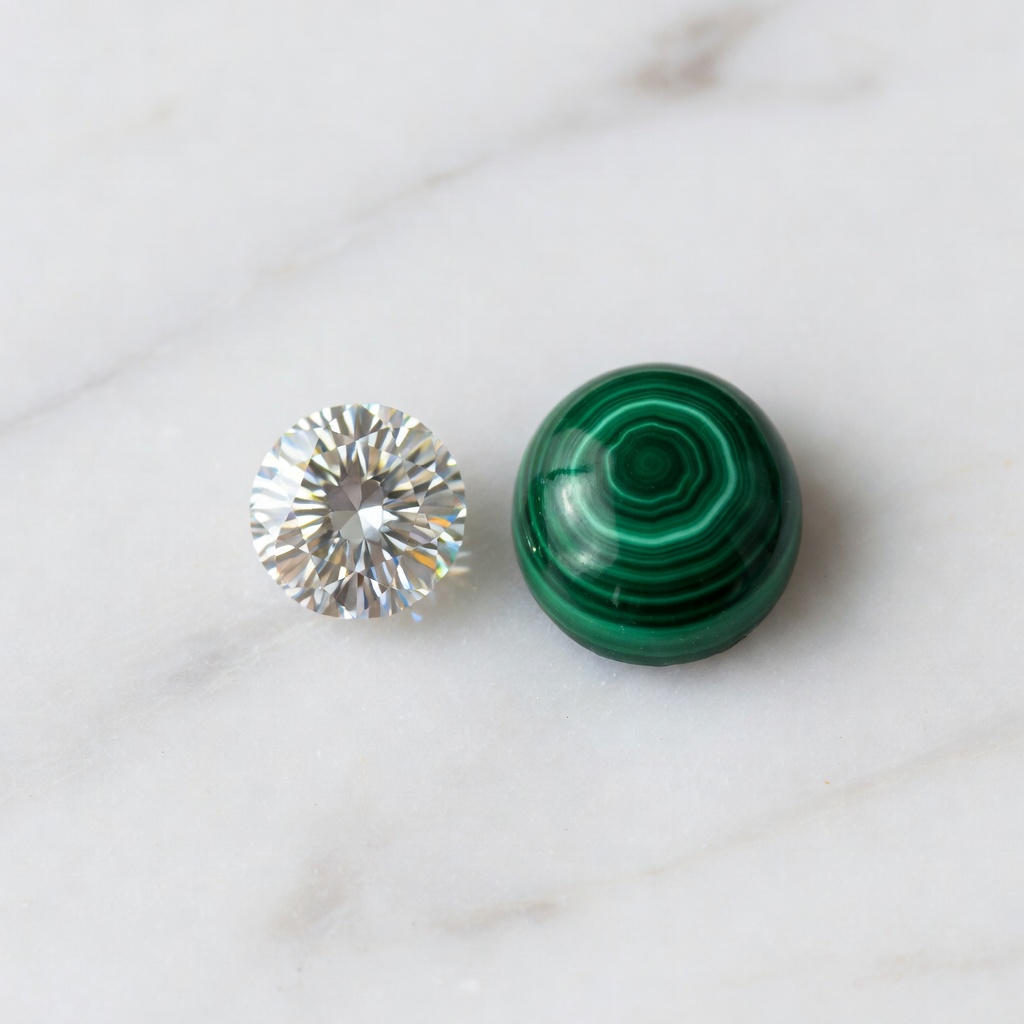
Diamonds captivate viewers through their exceptional optical performance, characterized by brilliance (white light reflection), fire (spectral color dispersion), and scintillation (sparkle from movement). With a refractive index of 2.42 and high dispersion of 0.044, round brilliant cut diamonds maximize light return through precisely angled facets. While typically prized in colorless to near-colorless grades (D-Z scale), fancy colored diamonds occur in rare hues including yellow, blue, and pink, each commanding premium prices based on intensity and saturation. These gemstone optical properties make diamonds the undisputed champions of sparkle and light performance in fine jewelry.
Malachite's Distinctive Aesthetic Appeal
Malachite presents an entirely different visual experience, trading optical fire for deep, saturated green hues ranging from pastel to deep forest green. This opaque gemstone displays distinctive concentric banding patterns, often described as "bull's eyes" or swirls, created by variations in formation conditions over time. Lapidaries typically cut malachite as cabochons, carvings, or decorative objects rather than faceted stones, as polishing enhances its sub-vitreous to matte luster while showcasing the mesmerizing patterns that make each piece unique. The malachite appearance appeals to those seeking organic, artistic beauty rather than geometric precision and brilliance.
Market Value and Pricing Factors
Diamond Investment and the Four Cs
The gemstone value comparison between these stones reveals staggering economic disparities driven by rarity, demand, and marketing. Diamond pricing follows the strict methodology of the Four Cs: carat weight, cut quality, color grade, and clarity rating, with fine quality stones commanding $1,500 to $20,000 or more per carat. Investment-grade diamonds over one carat with excellent cut, D-F color, and VS clarity or better retain significant value, often maintaining 50-70% of retail prices in secondary markets. Certified stones from reputable laboratories like GIA or AGS provide the documentation necessary for resale and insurance purposes.
Malachite Affordability and Value Drivers
Malachite offers an accessible entry point into gemstone collecting, with jewelry-grade material typically costing between $1 and $10 per carat depending on pattern intensity, banding contrast, and polish quality. While common malachite remains affordable, exceptional specimens displaying rare bull's-eye patterns or large, flawless cabochons from depleted mines command premium prices among collectors. Unlike diamonds, malachite does not function as a traditional investment vehicle, though vintage pieces and antique carvings may appreciate based on craftsmanship and historical significance rather than material value alone. This dramatic price differential illustrates the distinction between precious vs semi-precious stones in the modern market.
Jewelry Applications and Design Styles
Diamond Dominance in Fine Jewelry
Diamonds dominate the fine jewelry landscape, serving as the traditional centerpiece for solitaire engagement rings, tennis bracelets, diamond stud earrings, and luxury timepieces. Their durability supports delicate prong settings that maximize light exposure while withstanding decades of daily wear. Modern designers incorporate diamonds into stackable bands, eternity rings, and mixed-metal creations, leveraging the stone's versatility to complement platinum, white gold, yellow gold, and rose gold settings. When considering malachite jewelry vs diamond options, the latter clearly suits those seeking permanent, everyday pieces that require minimal maintenance.
Malachite in Statement and Artistic Pieces
Malachite excels in bold statement necklaces, wide cuff bracelets, carved pendants, and vintage-inspired brooches that showcase its artistic potential. The stone's relative softness necessitates protective settings such as bezels, flush mounts, or thick prongs that shield edges from impact and abrasion. Bohemian and artisan designers favor malachite for its organic, earthy aesthetic, often pairing it with sterling silver, brass, or copper settings that complement its green tones while providing affordable alternatives to precious metal and diamond combinations. These pieces work best as occasional wear items reserved for special events rather than daily accessories.
Symbolism, Healing Properties and Cultural Significance
Diamond Symbolism Through History
Throughout history, diamonds have symbolized eternal love, unbreakable strength, and invincibility, making them the quintessential choice for engagement rings and 60th wedding anniversary celebrations. As the traditional birthstone for April, diamonds represent clarity, abundance, and perfection across various cultural traditions. Royal families and political leaders have worn diamonds as symbols of power and authority, from the Crown Jewels of England to the elaborate collections of Indian maharajas. This rich heritage continues to influence modern purchasing decisions and gift-giving traditions.
Malachite Meaning and Metaphysical Properties
Malachite carries profound metaphysical associations, particularly regarding transformation, protection, and emotional healing, leading ancient Egyptians to designate it the "stone of transformation." Crystal healing practitioners believe malachite absorbs negative energies and pollutants while encouraging risk-taking and positive change, though these properties remain spiritually rather than scientifically validated. Historically, civilizations from the ancient Greeks to Victorian England utilized malachite for amulets, decorative inlays, and even ground pigment for green paint, valuing its color more highly than its durability. Understanding malachite meaning helps collectors appreciate the stone's cultural significance beyond its physical beauty.
Care, Cleaning and Maintenance Requirements
Diamond Maintenance Protocols
Maintaining diamond jewelry requires minimal effort due to the stone's exceptional chemical and physical stability. Owners can safely clean diamonds using ultrasonic cleaners, steam cleaners, or simple solutions of warm water and mild dish soap applied with a soft brush. Annual professional inspections ensure prongs remain secure and stones undamaged, though diamonds resist scratching from contact with other jewelry items and can be stored together without concern for abrasion. This ease of care makes diamonds ideal for busy professionals who desire brilliant jewelry without complicated maintenance routines.
Protecting Sensitive Malachite Pieces
Malachite demands vigilant care due to its extreme sensitivity to acids, ammonia, heat, and prolonged water exposure, which can dull its polish or damage its surface. Clean malachite only with a damp soft cloth, avoiding immersion, ultrasonic cleaners, steam, and all chemical cleaning agents including jewelry dips and ammonia-based solutions. Store malachite pieces individually wrapped in soft cloth or acid-free tissue, separated from harder gemstones like diamonds that could scratch its surface, and remove malachite jewelry before washing hands, applying cosmetics, or engaging in physical activities. Learning how to clean malachite properly prevents irreversible damage to these beautiful but delicate stones.
Investment Potential and Collectibility
Diamonds as Financial Assets
Serious collectors view certified natural diamonds over one carat with excellent cut grades and high color and clarity ratings as portable wealth and inflation hedges. The diamond market has faced disruption from laboratory-grown alternatives, making provenance documentation increasingly crucial for investment-grade stones. When purchased wisely through reputable dealers with GIA or AGS certification, high-quality diamonds demonstrate value retention superior to most luxury goods, though resale typically yields 50-70% of original retail prices unless sold through private networks. This established resale market distinguishes diamonds from most other gemstones.
Malachite as a Collector's Stone
While not a traditional investment vehicle, malachite attracts collectors seeking rare specimens from depleted mines such as the legendary Ural Mountain deposits or certain Zambian localities. Museum-quality pieces featuring exceptional bull's-eye patterns, chatoyancy, or historical significance (such as Russian imperial lapidary work) command premium prices at specialty auctions. As open-pit copper mining faces environmental scrutiny and certain deposits become exhausted, fine natural malachite from closed locations may experience appreciation driven by scarcity rather than standardized grading systems. These collectible gemstones appeal to connoisseurs who value geological rarity and artistic craftsmanship over liquidity.
Diamond vs Malachite: Detailed Comparison
When evaluating these distinct gemstones side by side, several critical factors emerge that influence purchasing decisions. The following comparison table outlines the key differences in physical properties, value, and practical applications to help you determine which stone best suits your specific needs and preferences.
| Characteristic | Diamond | Malachite |
|---|---|---|
| Chemical Composition | Pure Carbon (C) | Copper Carbonate Hydroxide (Cu₂CO₃(OH)₂) |
| Hardness (Mohs Scale) | 10 (Hardest natural substance) | 3.5-4 (Soft, easily scratched) |
| Formation Time | 1-3 billion years | Thousands of years |
| Typical Price per Carat | $1,500-$20,000+ (fine quality) | $1-$10 (jewelry grade) |
| Optical Properties | Transparent, brilliant, high dispersion | Opaque, banded patterns, matte luster |
| Best Jewelry Use | Engagement rings, daily wear pieces | Statement pieces, occasional wear |
| Cleaning Method | Ultrasonic, steam, soap and water | Damp soft cloth only, no chemicals |
| Investment Potential | High liquidity, certified stones retain value | Collectible rarity, limited liquidity |
| Durability for Daily Wear | Excellent, resistant to scratches and damage | Poor, scratches easily, sensitive to acids |
Final Verdict: Choosing Between Diamond and Malachite
When choosing between diamond and malachite, financial considerations often drive the initial decision, with diamonds representing significant long-term investments and malachite offering accessible luxury for fashion-forward collectors. Those seeking heirloom pieces that retain value across generations should prioritize certified diamonds, while individuals desiring unique artistic expression without substantial financial commitment find malachite an excellent choice. Your budget determines whether you invest in a timeless precious stone or acquire an affordable semi-precious gemstone for rotating fashion collections.
Active professionals or those seeking daily-wear engagement rings should select diamonds for their unmatched durability and low-maintenance requirements. Malachite suits collectors who appreciate rotating their jewelry collection, attending special occasions where statement pieces shine, and accepting the responsibility of delicate care protocols. Consider your daily activities, occupation, and willingness to maintain delicate pieces when making this crucial lifestyle determination.
Personal aesthetic ultimately determines the ideal choice, with classic, timeless elegance favoring the brilliant sparkle of diamonds in traditional settings. Artistic souls, vintage enthusiasts, and bohemian fashionistas often prefer malachite's organic patterns and rich green tones that complement earth-toned wardrobes and eclectic design sensibilities. This gemstone buying guide suggests that neither stone is objectively superior; rather, each serves distinct purposes in a well-rounded jewelry collection, with diamonds providing eternal sparkle for daily life and malachite offering artistic expression for special moments.
Frequently Asked Questions
Is Malachite More Expensive Than Diamond?
No, diamonds are significantly more expensive. Fine diamonds cost $1,500-$20,000+ per carat, while malachite typically ranges from $1-10 per carat. A high-quality diamond can cost 1,000 to 2,000 times more than malachite of similar weight.
Can Malachite Be Worn Every Day Like a Diamond?
Malachite is not suitable for daily wear due to its low hardness (3.5-4 on Mohs scale) and sensitivity to acids, sweat, and moisture. Diamonds, with a hardness of 10, are ideal for everyday jewelry. Malachite should be reserved for occasional wear in protective settings.
What Is the Main Difference Between Diamond and Malachite Formation?
Diamonds are pure carbon formed 100+ miles deep under extreme heat and pressure over billions of years, brought to the surface by volcanic eruptions. Malachite forms near the surface when copper ore deposits weather over thousands of years, creating copper carbonate hydroxide.
Does Malachite Really Have Healing Properties?
While malachite has been associated with emotional healing and protection in crystal healing traditions for centuries, these claims are not scientifically proven. Its 'healing' value is spiritual and cultural, not medical. Diamonds similarly symbolize strength but have no proven therapeutic effects.
Why Is Diamond So Much Harder Than Malachite?
Diamond's carbon atoms form an extremely strong covalent bond in a tetrahedral crystal structure, making it the hardest natural substance (10 on Mohs scale). Malachite's copper carbonate structure has much weaker ionic bonds, resulting in significantly lower hardness (3.5-4) and easy scratching.
Can You Wear Diamond and Malachite Jewelry Together?
Yes, but with caution. Diamonds can scratch malachite easily due to their extreme hardness difference. If worn together, ensure the pieces don't touch—consider wearing them on different hands or ensuring settings prevent contact. Many designers create pieces combining both stones in separate, protected areas.
How Should I Clean Malachite Jewelry Versus Diamond Jewelry?
Clean diamonds with warm soapy water, a soft brush, or ultrasonic cleaners. Malachite should only be wiped gently with a damp, soft cloth—never soaked, exposed to chemicals, or cleaned ultrasonically. Malachite is sensitive to water, acids and heat, while diamonds are extremely durable.
Is Malachite a Good Alternative to Diamond for Engagement Rings?
Malachite is generally not recommended for engagement rings due to its softness, fragility, and sensitivity to daily wear. While it offers unique beauty at a fraction of the cost, it requires extremely protective settings and frequent replacement. Moissanite or sapphire are better diamond alternatives for daily wear.