Introduction: Understanding the Gems
When selecting the perfect center stone for fine jewelry, the comparison of Diamond vs London Blue Topaz presents a fascinating study in contrasts between traditional luxury and accessible elegance. Diamonds have reigned supreme as the premier precious gemstone for centuries, formed from pure carbon under immense geological pressure to create the ultimate symbol of endurance and commitment. In contrast, London Blue Topaz has emerged as a compelling semi-precious alternative, offering a distinctive deep blue coloration that captures attention at a fraction of the cost of fancy blue diamonds. Modern jewelry buyers increasingly face the decision between these two stones based on four critical factors: budget constraints, durability requirements for daily wear, personal color preferences, and the symbolic meaning they wish to convey through their jewelry choices.
Both gemstones occupy significant but distinctly different positions in contemporary jewelry markets, with diamonds representing the pinnacle of precious stone hierarchy while London Blue Topaz provides an entry point into colored gemstone ownership. The decision between these stones ultimately reflects lifestyle needs, as diamonds offer unmatched longevity for heirloom pieces, whereas London Blue Topaz delivers impressive visual impact for fashion-forward designs. Understanding the fundamental differences in their formation, physical properties, and market positioning enables consumers to make informed choices that align with both their aesthetic desires and practical wearing needs.
Composition and Geological Origin
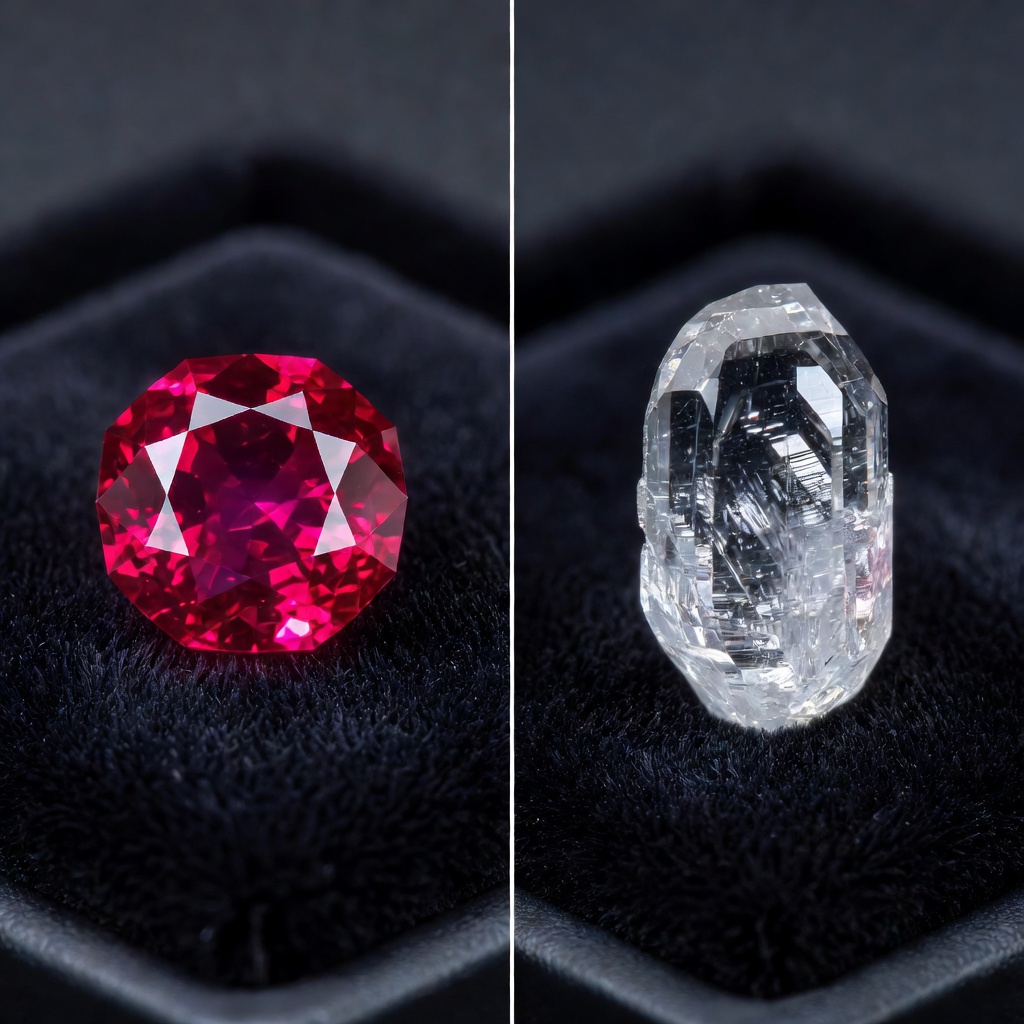
Diamonds represent one of Earth's most remarkable creations, consisting of pure crystalline carbon atoms arranged in an isometric crystal structure formed approximately 90 to 120 miles beneath the planet's surface. These extraordinary gems develop over 1 to 3 billion years under temperatures exceeding 2,000 degrees Fahrenheit and pressures reaching 725,000 pounds per square inch, eventually reaching the surface through volcanic eruptions that create kimberlite pipes. This ancient and violent journey from the mantle to the crust explains why diamonds command their status among precious vs semi-precious stones, possessing not only rarity but also the fundamental chemical purity that contributes to their legendary durability and brilliance.
London Blue Topaz, classified technically as an aluminum fluorosilicate mineral, undergoes a dramatically different formation process within igneous rocks and pegmatites, typically crystallizing from fluorine-rich vapors during the final stages of magma cooling. While natural blue topaz exists in extremely limited quantities, virtually all London Blue Topaz available in London Blue Topaz jewelry markets today begins as colorless or pale blue rough material that undergoes standardized neutron radiation followed by controlled heat treatment to achieve its signature deep teal-blue coloration. This treatment process, conducted in specialized nuclear reactors or linear accelerators, alters the crystal's electron structure to create the stable, permanent blue hue that distinguishes this variety from lighter Swiss Blue or Sky Blue Topaz.
Ethical sourcing considerations play crucial roles in the procurement of both gemstones, though the challenges differ significantly between the two markets. The diamond industry operates under the Kimberley Process Certification Scheme, designed to prevent conflict diamonds from entering legitimate trade channels, though consumers should still request specific documentation regarding Canadian, Russian, or African origins to ensure ethical provenance. For London Blue Topaz, ethical concerns center primarily on transparency regarding treatment disclosure, as reputable dealers must clearly indicate that the deep color results from irradiation rather than natural processes, ensuring buyers understand exactly what they are purchasing.
Color Range and Visual Appearance
Diamonds traditionally undergo rigorous color grading on the GIA D-to-Z scale, which measures the absence of color in white diamonds, with D representing absolutely colorless and Z showing noticeable light yellow or brown tinting. While these near-colorless stones dominate the engagement ring market, fancy colored diamonds—including natural blues—command astronomical prices due to their extreme rarity, with some vivid blue diamonds selling for millions per carat at auction. This vast spectrum allows diamond shoppers to select from icy colorless stones that maximize light return to warm-toned vintage-style gems, though truly blue diamonds remain prohibitively expensive for most consumers.
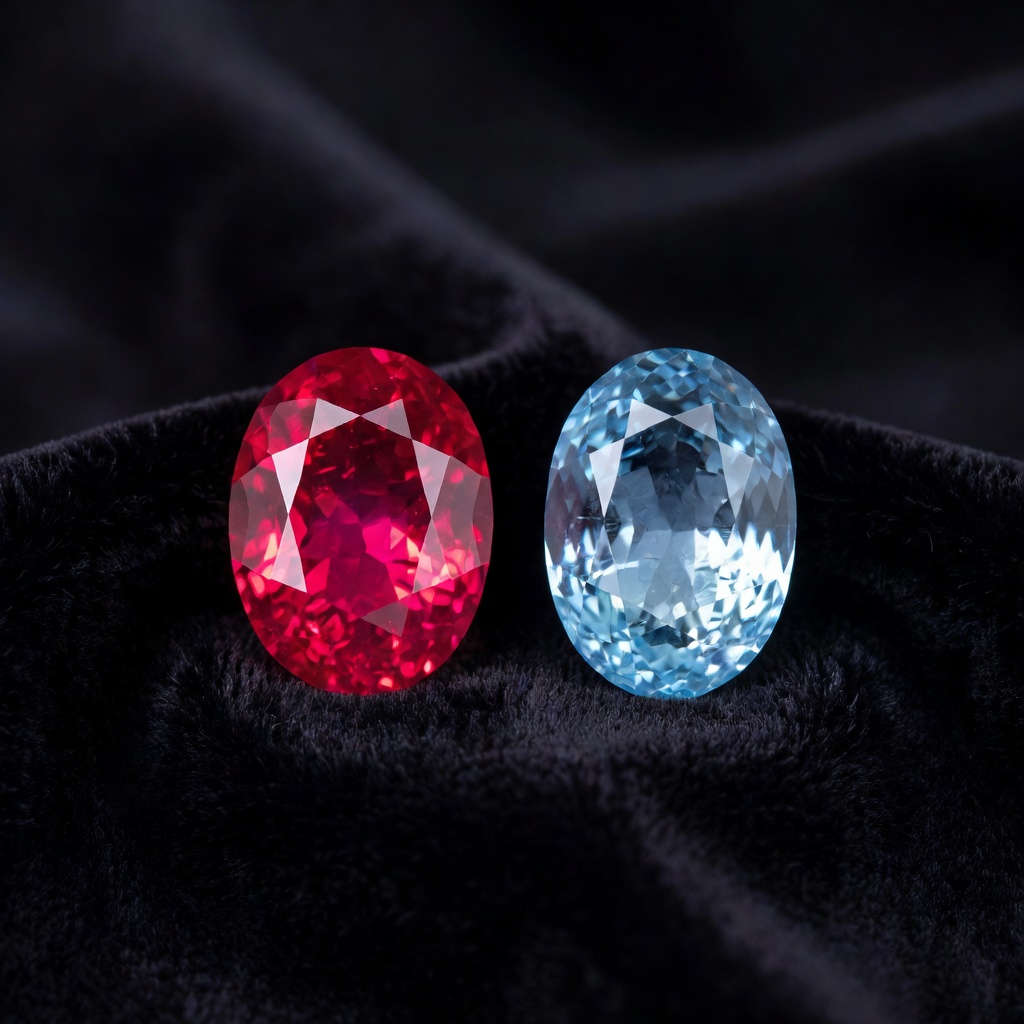
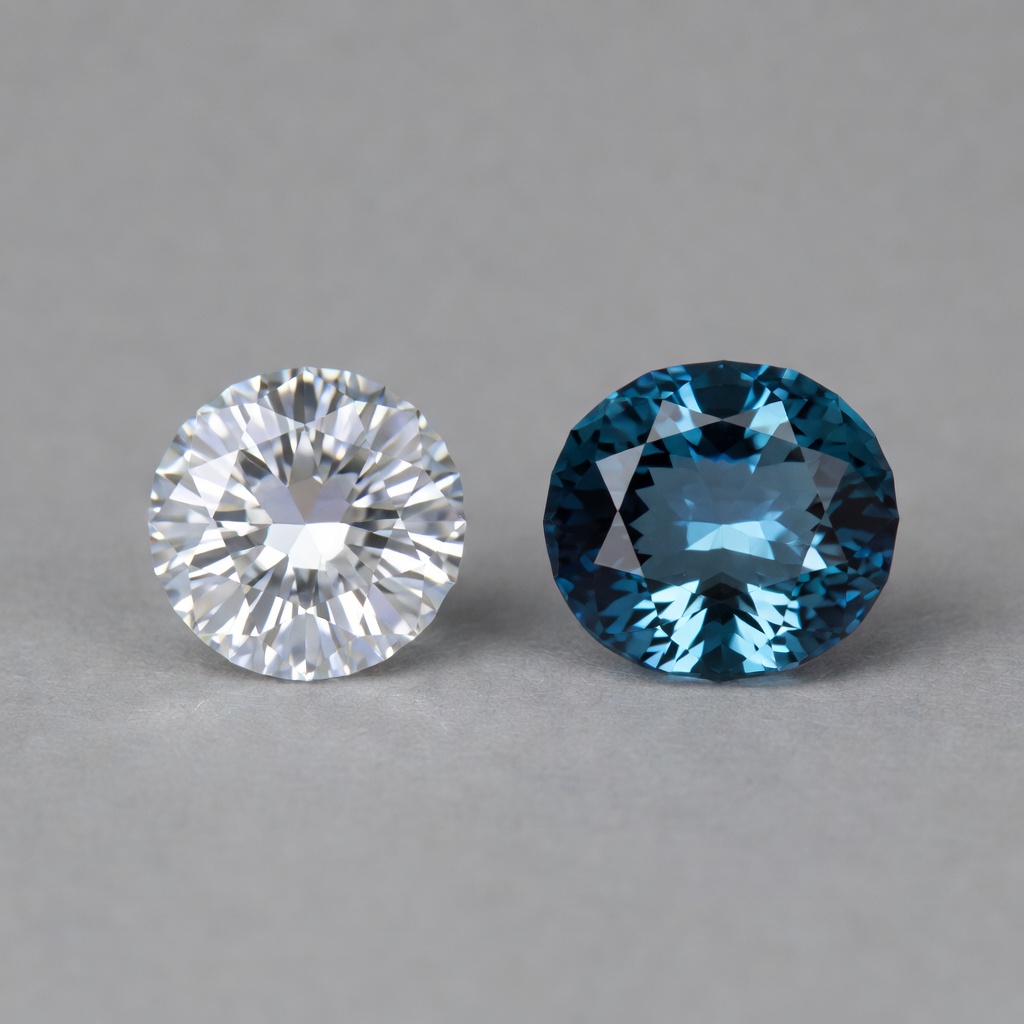
London Blue Topaz presents a singular, consistent color profile that has made it increasingly popular for blue gemstone engagement rings and statement jewelry pieces seeking bold color without luxury pricing. The stone exhibits a unique deep teal-blue to inky blue coloration with distinctive gray undertones that distinguish it dramatically from other blue topaz varieties and create a sophisticated, moody aesthetic unlike the bright electric blue of Swiss Blue Topaz or the pale sky tones of lighter varieties. Unlike diamonds, which show subtle color variations even within the same grade that require careful comparison, London Blue Topaz offers remarkable color consistency, allowing jewelers to match multiple stones perfectly for earrings, bracelets, or elaborate necklace designs.
Lighting environments impact these gemstones differently, creating distinct visual experiences throughout the day and across various settings. Diamonds maintain their brilliance and fire under virtually all lighting conditions, from harsh fluorescent office lights to romantic candlelight, though they perform spectacularly under direct spot lighting where their dispersion creates rainbow flashes. London Blue Topaz responds beautifully to natural daylight, where its deep blue color appears richest and most saturated, but may appear darker and less lively in dim evening settings, requiring thoughtful consideration regarding when and where the jewelry will predominantly be worn.
Hardness and Durability Comparison
The gemstone hardness comparison between diamond and London Blue Topaz reveals the most significant practical difference affecting long-term wearability and maintenance requirements. Diamond ranks at the absolute maximum of 10 on the Mohs scale of mineral hardness, making it the hardest natural substance known to humanity, capable of scratching any other material while remaining virtually impervious to damage from daily contact with household dust, metal surfaces, or accidental impacts. This supreme hardness explains why diamonds have become the default choice for engagement rings and daily-wear pieces expected to last generations without showing signs of surface wear.
London Blue Topaz measures 8 on the Mohs hardness scale, which while still relatively hard compared to many gemstones, places it in a vulnerable position for jewelry subjected to daily wear and tear. At this hardness level, the stone can be scratched by common environmental quartz dust (which also rates 7-8 on the scale) and is significantly more susceptible to chipping along facet edges or girdles when subjected to sharp impacts against hard surfaces like granite countertops or metal door handles. Perhaps more critically, topaz possesses perfect basal cleavage in one direction, meaning it can split cleanly if struck at the correct angle, whereas diamonds have four directions of cleavage but resist fracturing better due to their superior overall toughness.
Practical wearability considerations should guide setting selection and wearing habits for each stone, with diamond rings suitable for continuous daily wear including during household chores, exercise, and professional activities. For London Blue Topaz, jewelers recommend protective settings such as bezels or halos that shield the girdle and corners from direct impact, and advise removing topaz rings during activities involving potential blows to the hands. Bracelets and earrings present fewer durability concerns for topaz since these items receive less direct impact than rings, making them excellent applications for showcasing this beautiful diamond alternative without compromising the stone's longevity.
Brilliance, Fire, and Optical Performance
Optical performance represents perhaps the most dramatic differentiator in the Diamond vs London Blue Topaz comparison, with diamonds possessing a refractive index of 2.42 that creates unmatched brilliance and exceptional dispersion (comm called fire) when properly cut. This high refractive index causes light entering the diamond to bend dramatically and reflect internally multiple times before exiting through the table, creating the characteristic sparkle that has made diamonds the standard for fine jewelry. The combination of high refractive index and strong dispersion (0.044) produces those spectacular rainbow flashes that diamonds display when moved under light sources, a visual phenomenon that remains the benchmark against which all other gemstones are measured.
London Blue Topaz exhibits a refractive index ranging from 1.61 to 1.64, resulting in significantly less intense sparkle but possessing a beautiful vitreous luster that emphasizes its rich color rather than light performance. While a well-cut topaz will still reflect light attractively, it lacks the explosive brilliance of diamond, instead offering a more subdued, glass-like shine that complements its deep blue body color without competing for attention. This difference becomes particularly noticeable in dim lighting conditions, where diamonds continue to flash and sparkle while topaz appears more muted and color-focused rather than light-focused.
Cut quality impacts each stone differently, with diamonds requiring precise mathematical proportions to maximize light return, often utilizing brilliant cuts with 57 or 58 facets designed specifically to enhance fire and scintillation. London Blue Topaz typically receives step cuts, emerald cuts, or mixed cuts that emphasize color retention and clarity over optical fireworks, though brilliant cuts are also used to add some sparkle to the stone's inherent beauty. Size perception also differs between the materials; due to diamond's superior light performance, a one-carat diamond often appears brighter and can look larger than a same-carat topaz when viewed face-up, despite having identical dimensions.
Price and Value Proposition
The economic comparison between these gemstones presents one of the most compelling arguments for considering affordable blue gemstones like London Blue Topaz over traditional diamonds. London Blue Topaz typically retails between $5 and $60 per carat depending on quality, size, and cut, while quality diamonds command prices ranging from $2,000 to $20,000 or more per carat for stones with excellent cut, color, and clarity grades. This dramatic price differential means a stunning 3-carat London Blue Topaz center stone might cost less than $150, whereas a 3-carat diamond of comparable visual quality could easily exceed $30,000, creating entirely different accessibility levels for budget-conscious consumers.
Value retention trajectories diverge significantly between these stones, with diamonds historically maintaining value better over time due to their established resale markets, though retail markup recovery remains low for both materials. Treated London Blue Topaz possesses minimal resale value beyond its intrinsic metal setting worth, as the abundant supply and treatment processes prevent these stones from appreciating or holding value as collectibles. However, for buyers prioritizing immediate visual impact and wearability over investment potential, the London Blue Topaz value proposition remains exceptional, allowing the acquisition of substantial, beautiful jewelry without the financial burden associated with diamond purchases.
Size equivalency calculations reveal stark contrasts in purchasing power, as a 2-carat London Blue Topaz typically costs less than a 0.25-carat diamond of decent quality, enabling buyers to choose between a modest diamond accent or a substantial colored centerpiece. Insurance considerations also favor the topaz option, as annual premiums for jewelry insurance scale with appraised value, meaning a London Blue Topaz piece costs significantly less to insure than its diamond equivalent while still providing aesthetic satisfaction. For collectors building jewelry wardrobes, this affordability allows diversification across multiple pieces rather than concentrating resources in a single high-value item.
| Characteristic | Diamond | London Blue Topaz |
|---|---|---|
| Mohs Hardness | 10 (Highest possible) | 8 (Vulnerable to scratching) |
| Refractive Index | 2.42 (Exceptional brilliance) | 1.61-1.64 (Subdued luster) |
| Color Range | D-Z colorless to fancy colors | Deep teal-blue with gray undertones |
| Price per Carat | $2,000 - $20,000+ | $5 - $60 |
| Treatment | Usually untreated; some laser drilling | Always irradiated and heat-treated |
| Durability | Excellent for daily wear | Requires protective settings |
| Best Applications | Engagement rings, daily jewelry | Earrings, pendants, occasional rings |
| Value Retention | Moderate to good | Minimal resale value |
Treatments, Ethics, and Market Availability
All London Blue Topaz undergoes treatment through neutron radiation followed by heat application to achieve its characteristic deep blue color, a standard industry practice that remains stable and permanent under normal wearing conditions. This treatment process requires disclosure under Federal Trade Commission guidelines and international jewelry standards, with reputable sellers clearly labeling these stones as "treated" or "irradiated" to maintain transparency with consumers. The radiation process occurs in certified nuclear facilities, with stones held in secure environments until radiation levels decay to safe ranges, ensuring that finished jewelry poses no health risks to wearers while providing beautiful, consistent coloration impossible to find in natural blue topaz.
Diamond treatments include laser drilling to remove inclusions, fracture filling to improve apparent clarity, and color enhancement through irradiation or high-pressure high-temperature processes, though such treatments significantly impact value and must always be disclosed. Unlike topaz, where treatment is expected and accepted, treated diamonds trade at substantial discounts compared to untreated stones of similar appearance, making disclosure documentation essential for diamond purchases. Buyers should request laboratory certification from GIA, AGS, or equivalent organizations to verify that diamonds are natural and untreated, or to understand exactly what enhancements have been applied.
Ethical sourcing frameworks differ between these precious vs semi-precious stones, with diamonds falling under the Kimberley Process Certification Scheme designed to prevent conflict diamonds from funding violence in producing regions. While imperfect, this system provides a baseline for ethical procurement, supplemented by blockchain traceability initiatives from companies like De Beers and Alrosa. For London Blue Topaz, ethical concerns focus on the environmental and safety standards of irradiation facilities, with responsible suppliers sourcing rough material from established Brazilian or Nigerian mines and processing it through certified treatment centers that follow strict safety protocols for radiation handling and worker protection.
Best Jewelry Applications for Each Stone
Diamonds excel in applications requiring maximum durability and daily wear resistance, making them the undisputed choice for blue gemstone engagement rings (in fancy blue varieties) and traditional colorless diamond engagement settings, wedding bands, and anniversary jewelry intended as lifetime investments. Their superior hardness allows for delicate prong settings that expose maximum surface area to light while maintaining security, and their neutral color complements any metal choice from platinum to rose gold without clashing. For professionals wearing jewelry daily in active environments, diamonds provide peace of mind regarding both physical durability and timeless style appropriateness across decades of changing fashion trends.
London Blue Topaz finds its ideal applications in earrings, pendants, and cocktail rings where the stone receives less physical impact than daily-wear rings while maximizing visual impact through its striking color. Statement necklaces featuring large London Blue Topaz center stones create dramatic focal points at formal events, while stud earrings showcase the color beautifully without the vulnerability issues associated with ring wear. When set in rings, this gemstone performs best in protective bezel settings or as accent stones rather than solitaire center pieces subjected to daily knocks and bumps.
Design versatility differs between the materials, with diamonds accommodating intricate micro-pavé settings, tension mounts, and delicate filigree work due to their exceptional durability and the high value that justifies complex labor-intensive designs. London Blue Topaz suits bold, substantial settings that emphasize the stone's size and color, often paired with white gold or platinum to enhance the cool blue tones, or with yellow gold for striking contrast. Fashion jewelry markets increasingly feature London Blue Topaz in trendy, accessible designs targeting younger consumers seeking diamond alternatives that prioritize color and size over traditional status symbols.
Care and Maintenance Requirements
Diamond jewelry maintenance remains remarkably straightforward due to the stone's chemical inertness and physical durability, allowing owners to utilize ultrasonic cleaners, steam cleaning, and rigorous brushing with jewelry cleaning solutions without risk of damage. The hardness of diamond prevents scratching during cleaning, though owners should still secure settings to prevent stones from loosening due to prong wear rather than stone damage. Professional jewelers recommend annual inspections for diamond rings to check for loose stones and worn prongs, with cleaning every six months to maintain maximum brilliance by removing accumulated lotions and oils that dull light return.
London Blue Topaz requires significantly more delicate care to preserve its beauty, necessitating gentle cleaning with mild soap, warm water, and a soft brush while strictly avoiding ultrasonic cleaners and steam cleaning that can exacerbate existing fractures or cause thermal shock. The stone should never be exposed to harsh chemicals, including chlorine from swimming pools or household cleaning agents, which can potentially damage the surface or affect the stability of any filling materials used in fracture-filled specimens. When storing affordable blue gemstones like topaz, separate compartments are essential to prevent contact with harder stones like diamonds, sapphires, or rubies that could scratch the surface.
Professional maintenance schedules should occur more frequently for topaz jewelry than diamond pieces, with inspections recommended every six months for rings and annual checks for earrings and pendants to ensure settings remain secure and stones show no signs of chipping or abrasion. Travelers should pack topaz jewelry in padded individual cases rather than throwing pieces together in luggage, and should consider removing topaz rings before activities involving potential impact. While these additional care requirements demand more attention than diamond maintenance, they remain manageable for owners who appreciate the stone's unique color and accessible price point.
Final Verdict: Making Your Choice
Selecting between these gemstones ultimately depends on prioritizing either heirloom-quality durability and investment value or immediate visual impact and budget efficiency. Choose diamond when seeking a lifetime daily-wear piece that will maintain its appearance through decades of continuous use, retain some monetary value for future generations, and symbolize enduring commitment through the hardest natural substance on Earth. This choice suits traditional engagements, milestone celebrations, and individuals with active lifestyles who cannot constantly worry about removing jewelry before physical activities.
Select London Blue Topaz when budget constraints limit options but desire for a substantial, colorful gemstone remains strong, or when seeking a distinctive diamond alternative that offers personality and uniqueness rather than following conventional choices. This stone particularly appeals to fashion-forward individuals who rotate jewelry regularly, collectors building varied gemstone wardrobes, or those seeking specific color coordination with wardrobes featuring cool tones. The ability to acquire a large, impressive stone without financial strain allows for creative jewelry experimentation and personal expression.
Many jewelry enthusiasts adopt a hybrid approach, selecting diamonds for primary pieces like engagement rings and wedding bands while incorporating London Blue Topaz into fashion jewelry, anniversary gifts, or "right-hand rings" that provide color variety without the commitment of daily wear. This strategy leverages the strengths of both materials, using diamonds where durability matters most while enjoying topaz's aesthetic contributions in protected settings. Personal style considerations should guide the final decision, as both stones offer genuine beauty—the choice depends on whether you value the icy brilliance and permanence of diamond or the deep, mysterious allure of this accessible blue gem.
Frequently Asked Questions
Is London Blue Topaz a Good Alternative to Diamond for Engagement Rings?
London Blue Topaz works for engagement rings if you prioritize color and budget over durability. However, its 8 Mohs hardness makes it more prone to scratching than diamond's perfect 10, requiring careful setting selection and lifestyle adjustments. Consider protective settings like bezels and remove the ring during strenuous activities, manual labor, or sports to prevent chipping along the cleavage plane. For daily lifelong wear without constant worry, diamond remains the superior choice, though topaz serves beautifully as a temporary or fashion-forward engagement option for couples prioritizing uniqueness over tradition.
How Much Cheaper is London Blue Topaz Compared to Diamond?
London Blue Topaz costs approximately $5 to $60 per carat, while quality diamonds start around $2,000 per carat and can exceed $20,000 for fine specimens. A 2-carat London Blue Topaz might cost $50 to $100 total, whereas a comparable 2-carat diamond of decent quality could easily surpass $10,000 to $15,000. This represents roughly a 99% cost reduction, making topaz an extremely affordable option for achieving large, colorful jewelry pieces that would be financially impossible with diamond. The dramatic price difference allows buyers to allocate savings toward elaborate settings, additional accent stones, or other life priorities while still enjoying beautiful jewelry.
Can You Tell the Difference Between Diamond and London Blue Topaz Just by Looking?
Yes, the differences are immediately apparent to the naked eye without requiring gemological training or magnification. London Blue Topaz displays a distinctive deep teal-blue to inky blue color with subtle gray undertones, while diamonds are typically colorless or show only faint yellow, brown, or extremely rare natural blue tints. Diamonds exhibit far superior brilliance and fire with intense white light return and rainbow flashes, whereas topaz shows a more subdued, glass-like luster. With magnification, gemologists observe double refraction in topaz (doubling of back facets) while diamonds show single refraction, providing a definitive diagnostic difference between the two materials.
Does London Blue Topaz Sparkle Like a Diamond?
No, London Blue Topaz does not match diamond's legendary sparkle due to fundamental differences in optical properties. Diamond's refractive index of 2.42 creates exceptional brilliance and dispersion (fire), while topaz at 1.61-1.64 produces a softer, more subdued luster that emphasizes color over light performance. Topaz reflects significantly less light back to the eye and shows fewer rainbow flashes compared to diamond's intense light performance under various lighting conditions. While a well-cut topaz certainly shines and catches light attractively, it lacks the explosive scintillation that makes diamonds appear to dance with internal fire.
Is London Blue Topaz Valuable or Just Cheap?
London Blue Topaz is appropriately described as affordable rather than merely cheap, possessing genuine value as a natural aluminum fluorosilicate mineral that undergoes stable, permanent treatment to achieve its desirable color. While it lacks diamond's investment value, rarity, and strong resale market, it remains a legitimate gemstone prized for its beautiful consistent color, clarity, and size availability that democratizes access to fine jewelry. The low price reflects abundant natural supply of colorless rough topaz, standardized industrial treatment processes, and market positioning as a semi-precious stone rather than any deficiency in beauty or wearability. For consumers prioritizing aesthetic impact and accessibility over asset appreciation, London Blue Topaz delivers substantial value.
Which Is More Durable for Everyday Wear, Diamond or London Blue Topaz?
Diamond is significantly more durable with perfect 10 Mohs hardness, resisting scratches from all other materials including the quartz dust present in everyday environments that can abrade softer gems. London Blue Topaz at 8 Mohs can be scratched by common household dust, chipped by minor impacts against hard surfaces, and possesses perfect cleavage making it vulnerable to splitting if struck at the correct angle. For rings worn daily during activities like cooking, cleaning, typing, or commuting, diamonds require minimal special handling while topaz demands constant awareness of potential hazards. The durability difference makes diamond the clear choice for wedding bands and daily-wear heirlooms, while topaz suits occasional wear or protected settings.
Are London Blue Topaz Stones Treated or Natural?
All London Blue Topaz is treated, as natural blue topaz of this deep coloration is virtually nonexistent in commercial quantities. The deep blue color results from irradiating colorless or pale blue topaz (usually sourced from Brazil or Nigeria) using neutron bombardment followed by controlled heat treatment to stabilize the color centers. This stable, permanent treatment is standard industry practice accepted by gemological laboratories and jewelry professionals worldwide, though ethical sellers always disclose this treatment to buyers. The irradiation process creates no health risks in finished jewelry, as stones undergo cooling periods to allow radiation to decay to safe levels before entering consumer markets.