Understanding Two Distinct Gemstone Worlds
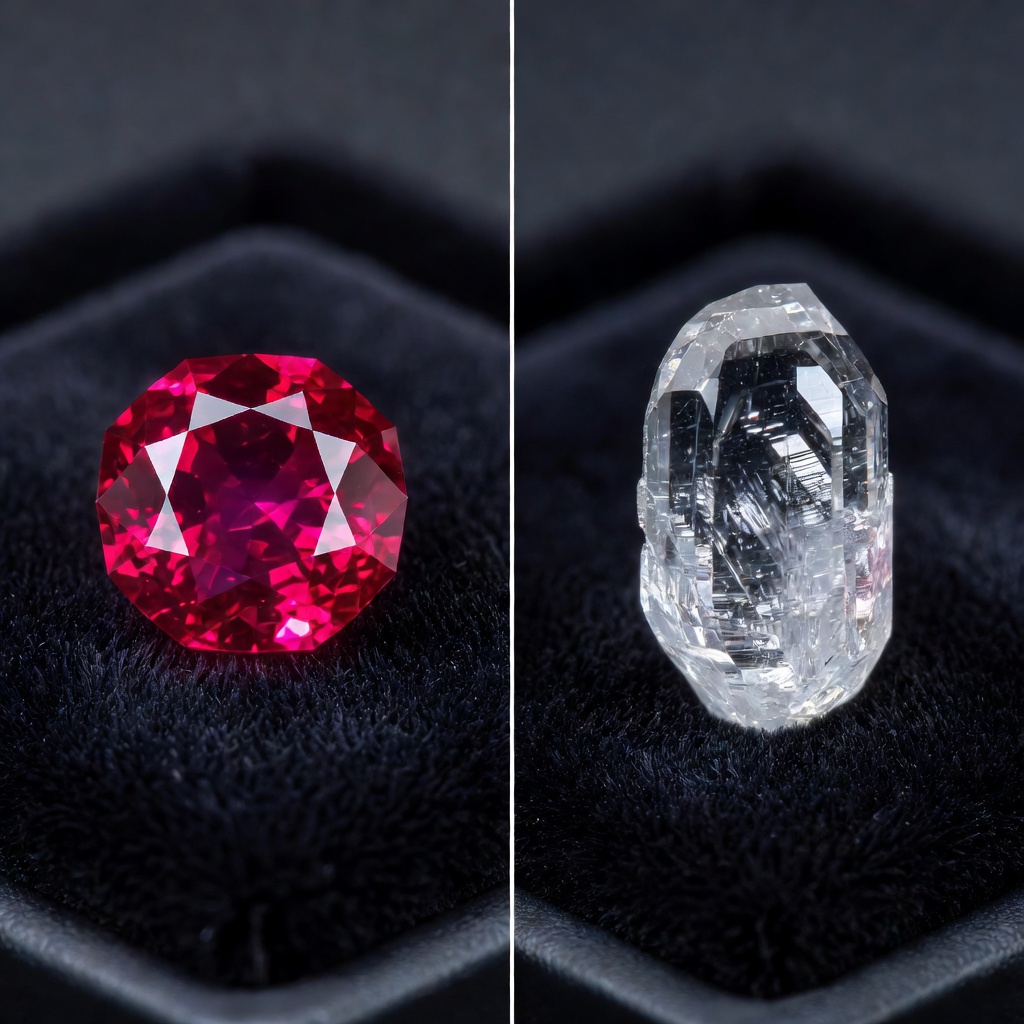
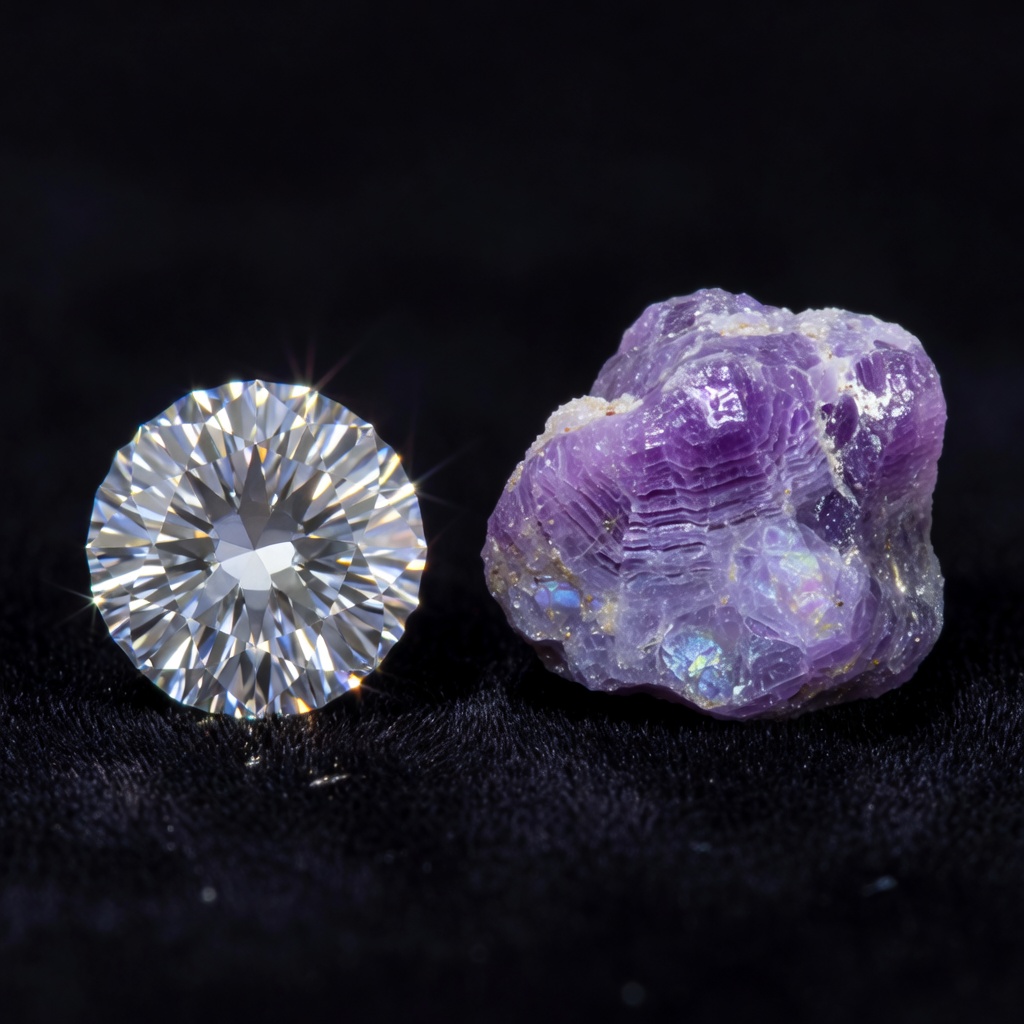
When exploring the vast spectrum of Earth's mineral treasures, few comparisons illuminate the diversity of the gemstone kingdom quite like examining Diamond vs Lepidolite. On one end of the spectrum lies diamond, the quintessential symbol of eternal luxury and the hardest known natural substance, formed billions of years ago under crushing mantle pressures. At the opposite extreme rests lepidolite, a delicate lithium-rich mica mineral that captivates crystal healers and mineral collectors with its soothing purple hues and flaky, sheet-like structure. Understanding the stark contrasts between these two geological extremes provides invaluable insights for collectors, jewelry enthusiasts, and spiritual practitioners seeking to make informed acquisition decisions based on durability requirements, aesthetic preferences, and metaphysical intentions.
The comparison between these stones transcends mere curiosity about precious stones vs mineral specimens; it represents a fundamental lesson in gemstone selection criteria. While diamonds command attention in high-end jewelry cases worldwide, prized for their brilliance and investment potential, lepidolite quietly serves those seeking emotional balance and anxiety relief through its natural lithium content. Whether you are selecting a lifetime engagement ring or curating a meditation crystal collection, recognizing how these materials differ in hardness, value propositions, and practical applications will prevent costly mistakes and ensure each stone serves its intended purpose effectively.
Chemical Composition and Geological Formation
The Carbon Architecture of Diamonds
Diamonds represent nature's ultimate triumph of pressure and heat, consisting of pure carbon atoms arranged in an isometric crystal structure approximately 150 to 200 kilometers beneath Earth's surface. These extraordinary gems form under intense mantle pressures exceeding 50 kilobars and temperatures around 1,200 degrees Celsius, where volcanic pipes of kimberlite and lamproite eventually transport them rapidly upward to prevent degradation into graphite. The ancient origins of most gem-quality diamonds, dating between one billion to 3.5 billion years old, contribute significantly to their mystique and market value, with each stone encapsulating geological epochs within its flawless lattice structure.
Lepidolite's Lithium-Rich Mica Structure
In stark contrast, lepidolite crystal properties derive from its classification as a phyllosilicate mineral within the mica group, specifically a potassium lithium aluminum silicate hydroxide fluoride with the complex chemical formula K(Li,Al)₃(Al,Si,Rb)₄O₁₀(F,OH)₂. Unlike diamonds' singular element composition, lepidolite forms in the final stages of pegmatite crystallization, where residual fluids rich in lithium, rubidium, and cesium accumulate and create the distinctive scaly, plate-like aggregates. These formations occur significantly closer to Earth's surface in massive, layered deposits predominantly found in Brazil, Afghanistan, and Madagascar, making lepidolite relatively abundant compared to the scarce, deep-earth origins of its carbon counterpart.
Geographic Sourcing and Rarity Factors
The procurement of these materials involves vastly different mining methodologies and economic scales, with African and Canadian diamond operations requiring massive industrial infrastructure to extract kimberlite pipes, while lepidolite is often recovered as a byproduct of lithium mining operations. Major diamond sources include the Diavik and Ekati mines in Canada, the Jwaneng mine in Botswana, and various alluvial deposits across Russia and Australia, each representing billion-dollar extraction enterprises. Conversely, significant lepidolite deposits in Minas Gerais, Brazil, and the Nuristan province of Afghanistan supply the metaphysical market with specimens that, while beautiful, lack the extreme rarity factors driving diamond valuation. For mineral collectors, understanding these geological contexts helps distinguish between investment-grade diamonds and decorative lepidolite specimens that serve primarily aesthetic and energetic purposes.
Physical Properties and Mohs Hardness Comparison
Extreme Hardness Disparities
The diamond hardness mohs scale rating of 10 represents the maximum value on this qualitative ordinal scale, meaning diamonds can scratch every other mineral and can only be scratched by another diamond. This exceptional hardness stems from the strong covalent bonding between carbon atoms in a tetrahedral arrangement, creating a three-dimensional network of unparalleled resistance to abrasion. In practical jewelry applications, this property ensures that diamond engagement rings maintain their polish and facet edges indefinitely, even after decades of daily wear against metals, other gemstones, and environmental particulates.
Lepidolite's Delicate Nature
Lepidolite presents a dramatically different physical profile, ranking merely 2.5 to 4 on the Mohs hardness scale, comparable to materials like gypsum, calcite, or fluorite. This softness results from its micaceous structure composed of weakly bonded silicate sheets, allowing the mineral to flake apart with minimal pressure—indeed, the name derives from the Greek "lepidos" meaning scale. A simple practical demonstration reveals this vulnerability: while a diamond will effortlessly scratch glass and steel, lepidolite can be scratched by a copper coin or even a fingernail, making it entirely unsuitable for jewelry applications requiring impact resistance or surface longevity.
Cleavage, Toughness, and Durability Factors
Beyond simple hardness, gemstone durability comparison must consider cleavage patterns and toughness, where both stones exhibit surprising vulnerabilities despite their hardness differences. Diamonds possess perfect octahedral cleavage in four directions, meaning a sharp blow at specific angles can split even the hardest gem, as demonstrated historically in the cutting of the Cullinan Diamond. Lepidolite displays perfect basal cleavage in one direction, causing it to separate into thin, flexible sheets similar to pages in a book, exhibiting flexibility but zero resistance to crushing or abrasion. Specific gravity measurements further distinguish them: diamonds measure 3.52 (relatively heavy for their size), while lepidolite ranges from 2.8 to 3.0, feeling noticeably lighter and less substantial in hand specimens. These physical realities dictate that while diamonds require protection from sharp impacts, lepidolite demands complete isolation from contact pressure, moisture, and handling to preserve its structural integrity.
Visual Characteristics and Aesthetic Appeal
Optical Performance and Light Behavior
The visual distinction between these stones could hardly be more pronounced, with diamonds exhibiting extraordinary brilliance, fire, and scintillation resulting from their high refractive index (2.42) and dispersion (0.044). When expertly cut, diamonds return up to 100% of incident light to the viewer's eye, creating the characteristic sparkle that has defined luxury jewelry for centuries. This optical performance makes diamonds the undisputed champions of reflective beauty, capable of transforming even modest lighting conditions into spectacular displays of spectral colors and geometric light patterns.
Lepidolite Color and Luminosity
Lepidolite color typically manifests in delicate shades of lilac, rose-purple, pink, and violet, occasionally presenting gray or colorless variations when lithium content varies. Unlike the adamantine brilliance of diamonds, lepidolite displays a pearly to vitreous luster on cleavage surfaces, with massive specimens appearing almost waxy or dull compared to faceted gems. The stone's translucent to opaque nature means it absorbs rather than refracts light, creating a soft, soothing visual presence prized in meditation spaces and crystal grids rather than the dazzling reflectivity sought in fine jewelry. Collectors often seek specimens with deep purple saturation and visible mica "books" or rosette formations, aesthetic qualities entirely distinct from the clarity and cut metrics used to evaluate diamonds.
Crystal Habits and Transparency Differences
Diamonds crystallize in the isometric system, commonly forming octahedrons, cubes, or dodecahedrons with sharp edges and glass-like transparency that allows light to penetrate deeply into the stone. Gemologists use this transparency to assess clarity characteristics, inclusions, and cut precision through magnification. Lepidolite, conversely, typically presents as scaly aggregates, massive formations, or pseudo-hexagonal "books" of micaceous plates that are never transparent in the gemological sense. While diamonds are fashioned through cutting and polishing to maximize optical performance, lepidolite is usually displayed in its natural state or simply polished into palm stones, spheres, or freeforms that showcase its organic texture and color rather than geometric precision. For interior designers and collectors, this difference translates to diamonds serving as focal points of brilliance and lepidolite providing subtle, calming color accents in mineral displays.
Comprehensive Comparison: Diamond vs Lepidolite
To fully appreciate the practical implications of choosing between these materials, the following comparison table summarizes the critical distinctions across key evaluative criteria:
| Characteristic | Diamond | Lepidolite |
|---|---|---|
| Mohs Hardness | 10 (Maximum) | 2.5 - 4 |
| Chemical Composition | Pure Carbon (C) | K(Li,Al)₃(Al,Si,Rb)₄O₁₀(F,OH)₂ |
| Refractive Index | 2.42 (High) | 1.53 - 1.56 (Low) |
| Specific Gravity | 3.52 | 2.8 - 3.0 |
| Transparency | Transparent to Semitransparent | Translucent to Opaque |
| Typical Colors | Colorless, Yellow, Brown, Fancy Colors | Lilac, Purple, Pink, Rose |
| Market Value (Per Carat) | $3,000 - $30,000+ | $2 - $20 |
| Jewelry Suitability | Excellent for All Applications | Poor - Occasional Wear Only |
| Primary Use | Luxury Jewelry, Investment | Collection, Healing, Display |
| Cleaning Methods | Ultrasonic, Steam, Chemical | Dry Cloth Only |
| Water Sensitivity | None | High (Lithium Leaching Risk) |
Jewelry Applications and Everyday Wearability
Diamond's Versatility in Fine Jewelry
Diamond jewelry represents the gold standard for daily wear durability, with these stones serving as the centerpiece for engagement rings, wedding bands, tennis bracelets, and statement earrings worn continuously for decades without degradation. The stone's resistance to scratching ensures that facet edges remain crisp and reflective even after years of contact with household surfaces, metals, and accidental impacts. Jewelers can confidently set diamonds in prong settings that expose the maximum surface area to light, secure in the knowledge that the gem will not abrade or lose polish through normal wear patterns, making them ideal for heirlooms intended to pass through generations.
Lepidolite Limitations and Appropriate Settings
Soft stone jewelry care becomes paramount when considering lepidolite for adornment, as its fragility restricts its use to protected settings such as pendants, brooches, or earrings that experience minimal contact with external surfaces. Even in these applications, lepidolite requires protective bezel settings that encircle the stone's perimeter with metal walls, preventing the edges from chipping or flaking during wear. Case studies from jewelry repair shops consistently demonstrate that lepidolite rings suffer damage within weeks of regular use, with the mica layers separating or the surface developing scratches from simple activities like reaching into pockets or typing on keyboards.
Risk Assessment for Combined Use
Practical risk assessment reveals that while diamonds pose virtually no durability concerns in any setting, lepidolite demands a conservative approach limited to occasional ceremonial wear or display pieces. For collectors seeking to incorporate lepidolite into jewelry collections, experts recommend reserving these pieces for meditation events, energy work sessions, or special occasions rather than daily adornment. Additionally, storing lepidolite jewelry requires individual soft pouches or padded compartments, as contact with harder materials—including diamonds themselves—will inevitably damage the softer mica mineral. This fundamental incompatibility in hardness means that combined jewelry pieces featuring both stones should incorporate protective barriers or be avoided entirely to prevent the diamond from scratching the lepidolite through normal movement.
Market Value, Pricing, and Investment Potential
Price Per Carat Analysis
The economic disparity between these materials reflects their vastly different supply dynamics, industrial applications, and cultural valuations, with quality diamonds commanding $3,000 to $30,000 or more per carat depending on the Four Cs (cut, color, clarity, and carat weight). Fancy colored diamonds, particularly pinks and blues, can exceed $100,000 per carat at auction, representing concentrated wealth in portable, universally recognized form. In contrast, lepidolite price points range from $2 to $20 per carat for specimen-quality pieces, with even museum-grade examples rarely exceeding $100 per carat unless exhibiting exceptional crystal formations or historical significance, positioning it firmly in the collectible mineral category rather than the luxury gem market.
Value Determinants and Market Drivers
Gemstone investment value for diamonds relies on rigorous grading systems established by the Gemological Institute of America (GIA), with microscopic inclusions, color grades, and cut precision creating exponential price differentials between seemingly similar stones. Liquidity remains high for certified diamonds, with established resale markets through auction houses, dealers, and upgrade programs at major retailers. Lepidolite valuation, conversely, depends on specimen size, crystal habit perfection, intensity of purple coloration, and association with other rare minerals like tourmaline or spodumene in matrix specimens. While lepidolite lacks the financial liquidity of diamonds, specialized mineral collectors may pay premiums for exceptional examples from depleted localities, though these represent niche markets rather than broad investment vehicles.
Treatment Considerations and Market Evolution
Modern buyers must navigate increasingly complex treatment disclosures, with lab-grown diamonds now offering chemically identical alternatives at 30-40% reduced prices, potentially affecting natural diamond resale values as technology advances. Lepidolite typically enters the market untreated, though some specimens receive stabilizing resins to prevent flaking, a practice that should be disclosed to buyers seeking natural mineral integrity. For investors, diamonds retain advantages in wealth preservation and portability, while lepidolite acquisitions should be viewed as decorative or educational purchases with modest appreciation potential limited to the collecting community. Prudent buyers allocate diamond purchases toward lifetime investment pieces while considering lepidolite as an affordable entry point into mineral collecting or metaphysical practice without expectation of financial return.
Metaphysical Properties and Healing Applications
Diamond Energy and Spiritual Significance
In metaphysical traditions, diamonds resonate with the crown chakra and higher consciousness, believed to amplify energy, enhance clarity of thought, and promote invincibility—literally embodying the Greek concept of "adamas" or unconquerable. Practitioners utilize diamonds for manifestation work, believing that the stone's ability to refract light parallels its capacity to clarify intention and amplify the energies of other crystals in healing layouts. Historical texts from Indian Vedic traditions describe diamonds as vessels of divine light capable of dispelling negativity and protecting the wearer from evil influences, associations that have evolved into modern crystal healing practices where diamonds symbolize purity, commitment, and spiritual enlightenment.
Lepidolite Meaning and Healing Benefits
Lepidolite meaning and healing properties center predominantly on its unique chemical composition containing 3-5% lithium, the same element used in pharmaceutical treatments for bipolar disorder and depression. Crystal healers prize lepidolite as the "stone of transition," utilizing its gentle vibrations to facilitate release of old behavioral patterns, reduce anxiety, and promote emotional balance during periods of stress or change. Unlike the amplifying qualities attributed to diamonds, lepidolite is considered a calming, filtering stone that absorbs negative energies and electromagnetic pollution, making it ideal for placement near computers or in bedrooms to promote restful sleep.
Chakra Associations and Usage Methods
While diamonds align with the crown chakra and spiritual transcendence, lepidolite primarily activates the heart chakra, third eye, and crown, creating a triad of emotional intelligence, intuition, and higher wisdom. Practical applications differ significantly: diamond jewelry provides constant energetic support through continuous skin contact, suitable for those seeking persistent clarity and strength throughout demanding schedules. Lepidolite, due to its fragility, is typically employed as meditation stones, palm crystals, or grid components used during specific healing sessions rather than continuous wear. For anxiety management, practitioners recommend holding lepidolite during breathing exercises or placing it under pillows to harness its lithium-infused calming energies, while diamonds might be programmed with specific intentions and worn as talismans of achievement and mental acuity. Case studies from holistic practitioners suggest that combining both stones—using diamond for morning clarity rituals and lepidolite for evening relaxation—creates a balanced energetic regimen supporting both productivity and peace.
Care, Cleaning, and Maintenance Requirements
Diamond Maintenance Protocols
Diamond care routines benefit from the stone's chemical inertness and extreme hardness, allowing owners to utilize ultrasonic cleaners, steam cleaning systems, and commercial jewelry solutions without risk of damage to the gem itself. Professional jewelers routinely clean diamond pieces using high-frequency sound waves that dislodge accumulated oils and debris from behind settings, restoring maximum brilliance within minutes. While diamonds resist scratching, they can attract grease and oils from skin contact, requiring periodic cleaning with mild dish soap and warm water using a soft brush to maintain optimal light performance, with annual professional inspections recommended to ensure prong integrity and setting security.
Lepidolite Precautions and Cleaning Limitations
Gemstone care for lepidolite requires an entirely different approach, as the mineral's lithium content and micaceous structure make it vulnerable to water damage, chemical reactions, and physical abrasion. Prolonged water exposure can cause lithium leaching, potentially dulling the stone's color and destabilizing its layered structure, while ultrasonic vibrations can shatter the delicate sheets into fragments. Owners must clean lepidolite using only a soft, dry microfiber cloth to remove dust, avoiding all moisture, commercial cleaners, and mechanical cleaning systems that would destroy the specimen. For display pieces, occasional light brushing with a dry artist's paintbrush suffices to maintain appearance without compromising structural integrity.
Storage Solutions and Long-Term Preservation
Proper storage protocols reflect the hardness disparity between these materials: diamonds require individual soft pouches or compartmentalized boxes primarily to protect other jewelry from being scratched by the diamond, rather than protecting the diamond itself. Lepidolite demands padded isolation in acid-free tissue or foam containers that prevent any pressure on the stone's surfaces, with storage in low-humidity environments to prevent moisture absorption. Long-term preservation strategies include professional re-polishing and re-cutting services for diamonds that have suffered chips or require style updates, services that can restore a diamond's appearance indefinitely. Lepidolite, conversely, must be accepted as an inherently ephemeral material that may develop surface imperfections over time despite careful handling, with collectors valuing the natural aging process as part of the stone's organic character rather than seeking restoration. For collectors maintaining both materials, strict separation is essential—never store lepidolite specimens in jewelry boxes containing diamonds, as the harder stone will inevitably abrade the softer mica during drawer movement or transportation.
How to Choose Between Diamond and Lepidolite
Decision Framework Based on Intended Use
Selecting between Diamond vs Lepidolite requires honest assessment of your primary objectives, whether seeking a durable lifetime adornment, a metaphysical tool for anxiety management, or a mineral specimen for educational display. If your lifestyle involves active physical work, frequent hand washing, or daily jewelry wear, diamonds provide the only viable option between these two choices, offering maintenance-free durability that withstands decades of constant use. Conversely, if your interests lie in crystal healing, meditation practices, or mineral collecting, lepidolite offers specific energetic properties and aesthetic qualities that diamonds cannot replicate, provided you accept the limitations regarding physical fragility and wear restrictions.
Budget Allocation and Value Prioritization
Financial considerations often dictate practical decisions, with diamonds representing significant capital investments ranging from several thousand to hundreds of thousands of dollars for quality specimens, while lepidolite remains accessible to virtually any budget at under $50 for beautiful display pieces. When evaluating gemstone investment value, allocate diamond purchases toward pieces with certified quality grades that retain liquidity, such as round brilliant cuts with GIA documentation, while treating lepidolite acquisitions as discretionary spending for personal enjoyment rather than asset appreciation. Some collectors adopt a tiered approach, investing in a primary diamond piece for daily wear while maintaining a diverse collection of affordable lepidolite specimens for rotating metaphysical use and home décor.
Aesthetic Preferences and Dual Ownership Strategies
Your visual preferences play a crucial role in this decision, with traditionalists often preferring the geometric precision and spectral brilliance of faceted diamonds, while those drawn to organic textures and subtle coloration gravitate toward lepidolite's natural formations. Rather than viewing this as an either/or proposition, many enthusiasts successfully incorporate both stones into their lives through strategic dual ownership: diamonds serve as professional accessories and symbols of significant life milestones, while lepidolite specimens occupy meditation spaces, bedside tables, and home altars where their calming energies can be accessed without risk of physical damage. This complementary approach allows you to benefit from diamond's durability and status symbolism during public and professional contexts, while privately engaging with lepidolite's soothing lithium-based properties during personal reflection and stress management routines. When building such a collection, prioritize protective display cases for lepidolite that control humidity and prevent dust accumulation, ensuring that each material receives care appropriate to its specific physical requirements.
Frequently Asked Questions
Is lepidolite as hard as diamond?
No, lepidolite is significantly softer than diamond. Diamond ranks 10 on the Mohs hardness scale (the maximum), while lepidolite ranks only 2.5-4. This means diamond can scratch any material including lepidolite, whereas lepidolite can be scratched by a copper coin or even a fingernail.
Can lepidolite be used in an engagement ring?
Lepidolite is not recommended for engagement rings or daily wear jewelry due to its softness (2.5-4 Mohs) and perfect cleavage. It will scratch, chip, and flake with regular use. It is better suited for occasional-wear pendants, earrings, or collector specimens.
Why is diamond thousands of dollars more expensive than lepidolite?
Diamond commands high prices due to extreme mining costs, billions of years of formation, unmatched hardness/durability for jewelry, controlled supply chains, and cultural significance. Lepidolite is relatively common, soft, unsuitable for fine jewelry, and valued mainly by mineral collectors and crystal healers.
Which stone is better for anxiety and stress relief?
Lepidolite is specifically sought for anxiety relief due to its natural lithium content (used in psychiatric medications). It is associated with calming energy and emotional balance. While diamonds symbolize clarity and strength, lepidolite is the preferred choice in crystal healing for stress management.
How can I tell a purple diamond apart from lepidolite?
Purple diamonds display extraordinary brilliance, fire, and transparency with faceted cuts, while lepidolite appears scaly, layered, or massive with a pearly luster. A hardness test will immediately distinguish them—diamond scratches glass easily while lepidolite scratches with difficulty or not at all.
Is it safe to clean lepidolite with water or ultrasonic cleaners?
No, avoid water and ultrasonic cleaners for lepidolite. The stone contains lithium and mica layers that can be damaged by prolonged water exposure or chemical cleaners. Use only a soft, dry cloth for cleaning. Diamonds, conversely, are safe with ultrasonic, steam, and most chemical cleaners.
Can I wear diamond and lepidolite together in the same jewelry piece?
It is not advisable to set diamond and lepidolite in the same piece without protective barriers. The diamond's extreme hardness (10) will scratch and abrade the soft lepidolite (2.5-4) through normal movement and contact. If combined in a collection, store them separately.