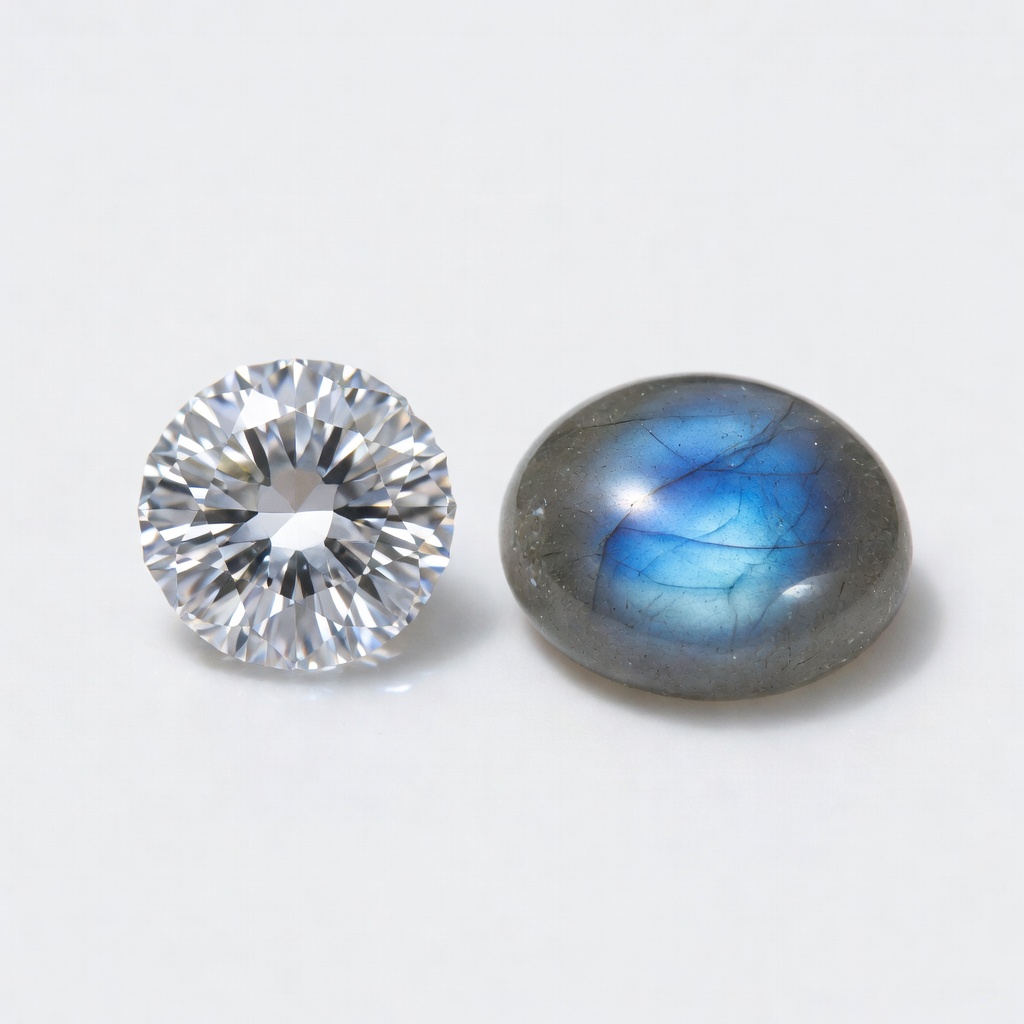
Diamond vs Labradorite: Two Distinctive Gemstones
When exploring the vast world of precious and semi-precious stones, the comparison between diamond and labradorite presents a fascinating study in contrasts that reveals much about how we value beauty, durability, and rarity in the gemstone market. Diamonds have reigned supreme as the premier precious gemstone for centuries, serving as the traditional benchmark for luxury, eternal commitment, and wealth preservation across virtually every culture. In stark contrast, labradorite emerges as a mesmerizing feldspar mineral renowned not for crystalline perfection but for its captivating optical phenomenon that seems to capture the aurora borealis within its depths. Understanding the distinctions between these vastly different gems helps discerning buyers recognize that true value extends far beyond price tags alone, encompassing factors such as wearability, personal symbolism, and the unique geological stories each stone tells.
Both gemstones occupy important niches in the jewelry industry, yet they appeal to distinctly different sensibilities and practical requirements. While diamonds represent the pinnacle of hardness and traditional prestige, labradorite offers an accessible entry point into gemstone collecting with its otherworldly visual effects and rich metaphysical associations. Whether you are selecting a center stone for an engagement ring that will endure daily wear for decades or seeking a statement piece that reflects your spiritual journey, comparing these two remarkable minerals provides essential insights for making an informed purchasing decision.
Geological Origins: Carbon vs Feldspar
The formation of diamonds represents one of nature's most extreme geological processes, occurring deep within Earth's mantle approximately 100 miles below the surface where pure carbon crystallizes under staggering conditions of 725,000 PSI and temperatures exceeding 2,200°F. These precious crystals form over billions of years, with some specimens dating back 1 to 3.3 billion years, creating the isometric crystal structure that gives diamonds their legendary hardness and light performance. The journey to the surface requires violent volcanic eruptions through kimberlite pipes, making accessible diamond deposits extraordinarily rare and geographically concentrated in specific regions such as Botswana, Russia, and Canada.
Labradorite stone properties reveal a completely different geological story, as this calcium-rich plagioclase feldspar forms through magmatic cooling within igneous rocks like basalt and anorthosite. First discovered in Labrador, Canada in 1770, this gemstone develops its characteristic internal structures when alternating layers of calcium and sodium-rich feldspar cool at different rates, creating the microscopic lamellae responsible for its signature optical effect. Unlike diamonds, labradorite forms in larger, more accessible deposits across Madagascar, Finland, Norway, and Australia, making it significantly more abundant and affordable while still offering unique beauty to collectors and jewelry enthusiasts.
Physical Properties & Durability
When evaluating gemstone durability scale ratings, the disparity between these two minerals becomes immediately apparent and critically important for jewelry applications. Diamond hardness rating stands at a perfect 10 on the Mohs scale, making it the hardest known natural substance capable of scratching any other material while remaining virtually impervious to damage from daily wear. This exceptional hardness stems from the strong covalent bonding between carbon atoms in an isometric crystal structure, allowing diamonds to maintain their polish and facet edges indefinitely even under demanding conditions.
Labradorite measures significantly lower at 6 to 6.5 on the Mohs scale, placing it in the same durability category as feldspar minerals like moonstone and sunstone, which renders it vulnerable to scratching from everyday materials like steel, quartz, and even household dust containing silica particles. Beyond hardness, both stones exhibit distinct cleavage properties that affect their toughness; diamonds possess perfect octahedral cleavage in four directions, meaning they can split along specific planes if struck sharply, while labradorite displays two-directional cleavage that requires protective setting designs to prevent chipping along these natural fracture lines.
Specific gravity differences also impact how these gems behave in jewelry settings, with diamonds weighing approximately 3.52 grams per cubic centimeter compared to labradorite's 2.68 to 2.72 range, requiring different prong tensions and setting security considerations. The refractive index of diamond (2.42) creates intense brilliance through total internal reflection, while labradorite's lower index (1.56-1.57) produces a more subdued luster except when viewed from specific angles that reveal its labradorescence effect.
Optical Characteristics: Brilliance vs Labradorescence
Diamond brilliance derives from what gemologists call the "triple threat" of optical performance: brilliance (the return of white light to the eye), fire (the dispersion of light into spectral colors), and scintillation (the pattern of light and dark areas created by reflections within the stone). These effects result from diamond's high refractive index and precise cutting proportions that maximize light return, creating the characteristic sparkle that has made diamonds the standard for engagement rings and fine jewelry. When properly cut, a diamond will display consistent sparkle from virtually any viewing angle, maintaining its visual impact regardless of how the wearer moves.
The labradorescence effect presents an entirely different visual phenomenon that captivates observers with its seemingly magical color play. This schiller effect occurs when light enters the stone and reflects off the microscopic lamellar structures formed by intergrown feldspar layers, producing iridescent flashes of blue, green, yellow, orange, and occasionally purple that appear to float beneath the surface. Unlike diamond's consistent sparkle, labradorescence is angle-dependent, requiring the stone to be oriented correctly during cutting so that the flash appears when viewed from the front, making each piece of labradorite jewelry a unique optical experience that changes with the wearer's movement.
Practical examples illustrate these differences clearly: a diamond tennis bracelet will sparkle uniformly whether the wearer is typing at a computer or dancing at a gala, while a labradorite pendant may show a quiet gray base color when viewed straight on, only revealing its spectacular blue-green flash when the wearer turns or the lighting shifts. This directional quality makes labradorite particularly suited for pendants and earrings that move naturally with the body, whereas diamonds excel in static settings like solitaire rings where consistent brilliance is desired from every perspective.
Value and Pricing Factors
Understanding the diamond 4Cs provides essential knowledge for navigating the exponential pricing structure that can range from $1,500 to over $20,000 per carat depending on quality characteristics. Carat weight affects price geometrically rather than linearly, meaning a two-carat diamond costs significantly more than twice the price of a one-carat stone of similar quality, while cut quality determines how effectively the stone returns light and creates visual beauty. Clarity grades from Flawless to Included and color grades from D (colorless) to Z (light yellow or brown) create complex matrices where seemingly small differences in specifications can result in thousands of dollars in price variation, particularly for investment-grade stones.
Labradorite valuation follows a completely different paradigm, with prices typically ranging from $5 to $100 per carat based on factors distinct from the diamond grading system. Color flash intensity represents the primary value determinant, with specimens displaying vivid blue, violet, or rare red-orange flashes commanding premium prices compared to those showing predominantly gray or green bases. Body tone (the darkness of the underlying stone), size of the flash area, and geographic origin also influence pricing, with spectrolite from Finland often achieving higher values due to its particularly intense multicolor labradorescence compared to material from Madagascar or Norway.
| Characteristic | Diamond | Labradorite |
|---|---|---|
| Mohs Hardness | 10 (Highest) | 6-6.5 |
| Primary Optical Effect | Brilliance, Fire, Scintillation | Labradorescence (Schiller Effect) |
| Price Range per Carat | $1,500 - $20,000+ | $5 - $100 |
| Durability for Daily Wear | Excellent (Lifetime wear) | Fair (Requires protection) |
| Chemical Composition | Carbon (C) | Calcium Sodium Aluminosilicate |
| Crystal System | Isometric | Triclinic |
| Best Jewelry Applications | Engagement rings, Daily wear | Pendants, Earrings, Occasional rings |
| Investment Potential | High (50-70% resale value) | Low (Except rare spectrolite) |
Market positioning reflects these valuation differences, with diamonds functioning as luxury investments and status symbols supported by century-old marketing campaigns and established resale markets. Labradorite occupies the artisanal and collector niche, offering dramatic aesthetic impact at accessible price points that allow jewelry designers to create bold statement pieces without the financial barrier associated with precious gems. This democratization of beauty makes labradorite particularly popular in bohemian and metaphysical jewelry markets where spiritual significance outweighs financial investment considerations.
Symbolism and Metaphysical Properties
Diamond symbolism spans millennia and cultures, representing eternal love, invincibility, and clarity of mind since ancient Sanskrit texts first documented their significance approximately 6,000 years ago. In Western traditions, diamonds became associated with engagement and marriage in the 15th century, while Eastern philosophies viewed diamonds as vajra or thunderbolts representing indestructible spiritual power and the ability to cut through illusion. The stone's clarity and purity have made it a universal symbol of wealth, status, and unbreakable commitment, with the practice of wearing diamonds on the left hand dating back to the ancient Roman belief in the vena amoris or "vein of love" connecting directly to the heart.
The metaphysical properties of labradorite center on transformation, psychic protection, and auric strengthening, drawing from Inuit legends that describe the stone as frozen fire captured from the Northern Lights. Crystal healers value labradorite as a stone of magic and protection, believing it creates a shielding force throughout the aura that prevents energy leakage while deflecting unwanted vibrations from the environment. Unlike diamonds, which are thought to amplify energy and intention, labradorite functions as an energetic filter and stabilizer, making it particularly prized by those undergoing significant life changes, engaging in psychic development, or seeking to balance intellectual analysis with intuitive wisdom.
Energy work practitioners often recommend diamonds for individuals seeking to amplify their personal power, manifest abundance, or strengthen the clarity of their thoughts and intentions, while suggesting labradorite for those needing psychic protection during spiritual work or transformation during major life transitions. Case studies from crystal healing traditions suggest that diamonds work synergistically with other stones to enhance their effects, whereas labradorite stands alone as a guardian stone that should be cleansed regularly under moonlight rather than sunlight to preserve its delicate energetic properties.
Jewelry Applications and Design Considerations
Diamond engagement rings represent the most ubiquitous application of this gemstone, capitalizing on its unmatched durability to create heirlooms that withstand daily wear for generations without showing signs of abrasion or damage. Beyond bridal jewelry, diamonds excel in tennis bracelets, stud earrings, and solitaire pendants designed for continuous wear, with their versatility extending to both classic prong settings and modern bezel designs that protect the girdle from chipping. Jewelry designers appreciate diamonds for their ability to accommodate intricate cutting styles from traditional round brilliants to fancy shapes like cushions and radiants, each maximizing different aspects of light return while maintaining structural integrity.
Labradorite jewelry requires more thoughtful design considerations due to the stone's relative softness and directional optical properties. Statement pendants and earrings represent ideal applications, as these pieces experience less physical impact than rings while allowing the stones to move freely, maximizing opportunities to display the labradorescence effect as the wearer turns. When used in rings, labradorite demands protective bezel settings or halo designs that elevate the stone above the finger to prevent surface abrasion, with designers often recommending occasional-wear cocktail rings rather than daily-worn bands.
Setting requirements differ significantly between these materials; diamonds tolerate standard four or six-prong settings that expose maximum surface area to light, while labradorite benefits from partial bezels or protective baskets that shield the vulnerable edges and pavilion from direct impact. Case studies from jewelry repair shops indicate that labradorite rings require stone replacement or repolishing every 5-10 years under normal wear conditions, whereas diamond rings typically need only routine maintenance such as prong tightening and cleaning to maintain their original beauty indefinitely.
Care and Maintenance Requirements
Diamond cleaning requires minimal effort thanks to the stone's exceptional hardness and chemical inertness, allowing owners to use ultrasonic cleaners, steam cleaners, or simple solutions of warm water with mild dish soap and a soft brush to restore brilliance. The non-porous surface of diamond resists oils and lotions that might dull other gemstones, though regular cleaning remains important to remove buildup from hand creams and soap residue that can temporarily reduce light return. Unlike many colored gemstones, diamonds tolerate exposure to household chemicals, temperature fluctuations, and physical abrasion without sustaining damage, making them ideal for individuals with active lifestyles who cannot dedicate significant time to jewelry maintenance.
Labradorite care demands significantly more attention and gentleness to preserve its surface polish and internal structure over time. Owners must avoid ultrasonic cleaners entirely, as the vibrations can cause existing fractures to expand or worsen the stone's cleavage planes, potentially leading to catastrophic breakage. Harsh chemicals including chlorine, bleach, and even some commercial jewelry cleaners can etch the feldspar surface or affect the thin film interference that creates labradorescence, while sudden temperature changes from hot water or steam can cause thermal shock fractures.
Storage guidelines highlight the importance of keeping diamonds separate from other jewelry not because diamonds risk damage, but because they can scratch virtually any other material including gold, silver, and softer gemstones. Labradorite requires individual soft cloth pouches or dedicated compartments to prevent contact with harder materials that could abrade its surface, with particular care taken to avoid storing it alongside quartz, tourmaline, or other common jewelry stones that rate higher on the Mohs scale. Practical tips include removing labradorite rings before gardening, cooking, or cleaning, while diamond owners need only remove their jewelry during activities involving heavy impact or exposure to abrasive materials like sand or construction dust.
Investment Potential and Resale Value
Diamond investment strategies rely on the established secondary market that allows certified stones to retain approximately 50-70% of their retail value, with rare, high-quality specimens sometimes appreciating over time depending on market conditions and global supply constraints. Certified diamonds from reputable grading laboratories such as GIA or AGS command premium liquidity, as buyers can verify specifications independently without relying solely on seller representations. However, investment success requires purchasing at wholesale or near-wholesale prices, as retail markup in traditional jewelry stores often exceeds 100-200%, making immediate resale unprofitable for the average consumer purchasing at full retail.
Labradorite value remains primarily aesthetic rather than financial, with common material showing minimal appreciation and limited resale markets outside of specialized gem and mineral shows. Exceptions exist for rare spectrolite from Finland, which displays a full spectrum of colors including rare reds and oranges, or exceptional large specimens with intense flash covering the entire surface, which may appeal to serious mineral collectors. Unlike diamonds, which function as portable wealth preservation tools accepted by pawn shops, estate buyers, and auction houses worldwide, labradorite transactions typically occur between private collectors or through artisan jewelers with no standardized pricing guidelines.
Long-term outlook suggests that diamonds will continue serving as wealth preservation vehicles and inflation hedges for high-net-worth individuals, particularly fancy colored diamonds which have shown stronger appreciation than colorless stones. Labradorite should be purchased for personal enjoyment, spiritual significance, or artistic appreciation rather than financial return, with buyers advised to select pieces based on emotional resonance and visual impact rather than speculative investment potential. Financial advisors generally recommend allocating no more than 5-10% of an investment portfolio to diamonds or colored gems, while labradorite purchases should be treated as discretionary spending similar to art or decorative objects.
Making Your Final Choice
When deciding whether to choose diamond or labradorite for a specific jewelry application, begin with an honest assessment of your lifestyle and intended wear patterns. Active individuals who work with their hands, engage in sports, or prefer low-maintenance luxury should gravitate toward diamonds for pieces intended for daily wear, while those seeking occasional statement jewelry for social events or spiritual practice may find labradorite perfectly suited to their needs. Consider whether you prioritize longevity and heirloom potential or immediate visual impact and unique aesthetic expression, as these priorities will guide you toward the appropriate material.
Budget reality checks reveal that the 10x or greater price difference between these gemstones creates distinct accessibility tiers, with labradorite offering dramatic beauty at price points accessible to most consumers, while diamonds represent significant financial commitments requiring careful planning and budgeting. This disparity allows jewelry enthusiasts to build collections featuring both materials strategically: investing in a diamond engagement ring or stud earrings for timeless daily wear, while incorporating labradorite pendants or cocktail rings for affordable variety and color. Case studies show that many collectors successfully combine both gemstones, using diamonds for milestone celebrations and labradorite for personal growth markers or artistic expression.
Personal meaning ultimately serves as the most important factor in gemstone selection, whether you resonate with the traditional symbolism of eternal love and invincibility associated with diamonds or the transformative, protective energy attributed to labradorite. Let intention guide your selection process, recognizing that the best gemstone choice aligns with your values, aesthetic preferences, and practical requirements rather than external pressures or marketing messages. Whether you select the timeless brilliance of diamond or the mystical flash of labradorite, ensuring the stone speaks to your personal journey will create a more satisfying and meaningful jewelry ownership experience than focusing solely on market value or social expectations.
Frequently Asked Questions
Which is more durable for everyday wear, diamond or labradorite?
Diamond is significantly more durable with a Mohs hardness of 10, making it perfect for daily wear. Labradorite at 6-6.5 will scratch over time in rings or bracelets. Choose diamond for engagement rings and labradorite for protected pieces like pendants or occasional-wear rings.
Why are diamonds exponentially more expensive than labradorite?
Diamonds command premium prices due to extreme formation conditions, marketing-controlled supply, and the 4Cs grading system. Labradorite is more abundant, forms in larger deposits, and lacks the luxury market positioning that drives diamond prices to $1,500-$20,000+ per carat versus labradorite's $5-$100 range.
What exactly is labradorescence and how does it compare to diamond sparkle?
Labradorescence is labradorite's unique schiller effect—an internal blue-green-yellow flash from light reflecting off microscopic lamellar structures. Diamond sparkle (brilliance, fire, scintillation) comes from light refraction and dispersion through a precise crystal lattice. Labradorescence appears at specific angles; diamond sparkles from all directions.
Can labradorite be used as an engagement ring alternative to diamond?
Labradorite can work for engagement rings but requires protective bezel settings and acceptance of eventual scratching. For active lifestyles, it's not recommended. Consider it only if you prioritize unique aesthetic over long-term durability and are willing to replace the stone periodically.
Do diamonds and labradorite have different metaphysical meanings?
Yes. Diamonds represent eternal love, invincibility, and clarity, amplifying energy. Labradorite is a stone of transformation, psychic protection, and intuition, acting as an energetic shield. Choose based on whether you seek amplification (diamond) or protection (labradorite) in crystal healing traditions.
How can I tell if my labradorite is genuine or synthetic?
Real labradorite shows natural inclusions, uneven color flash distribution, and a hardness that scratches glass (6.5). Synthetic versions lack depth in labradorescence. Test by checking for angle-dependent flash—genuine stones only show color from specific directions. When in doubt, have it certified by a gemological lab.
Which gemstone holds better investment value over time?
Diamonds are superior investments, retaining 50-70% resale value with established markets and liquidity. Labradorite has minimal investment value except rare spectrolite from Finland. Buy diamonds for wealth preservation; purchase labradorite for personal enjoyment and aesthetic value rather than financial return.
What special care does labradorite require compared to diamond?
Labradorite requires gentle care: avoid ultrasonic cleaners, harsh chemicals, and temperature changes. Clean with soft cloth and mild soap. Store separately to prevent scratches. Diamond care is simple—ultrasonic cleaning is safe, and it withstands daily wear, chemicals, and temperature variations without damage.