Understanding the Diamond vs Lab-Created Ruby Debate
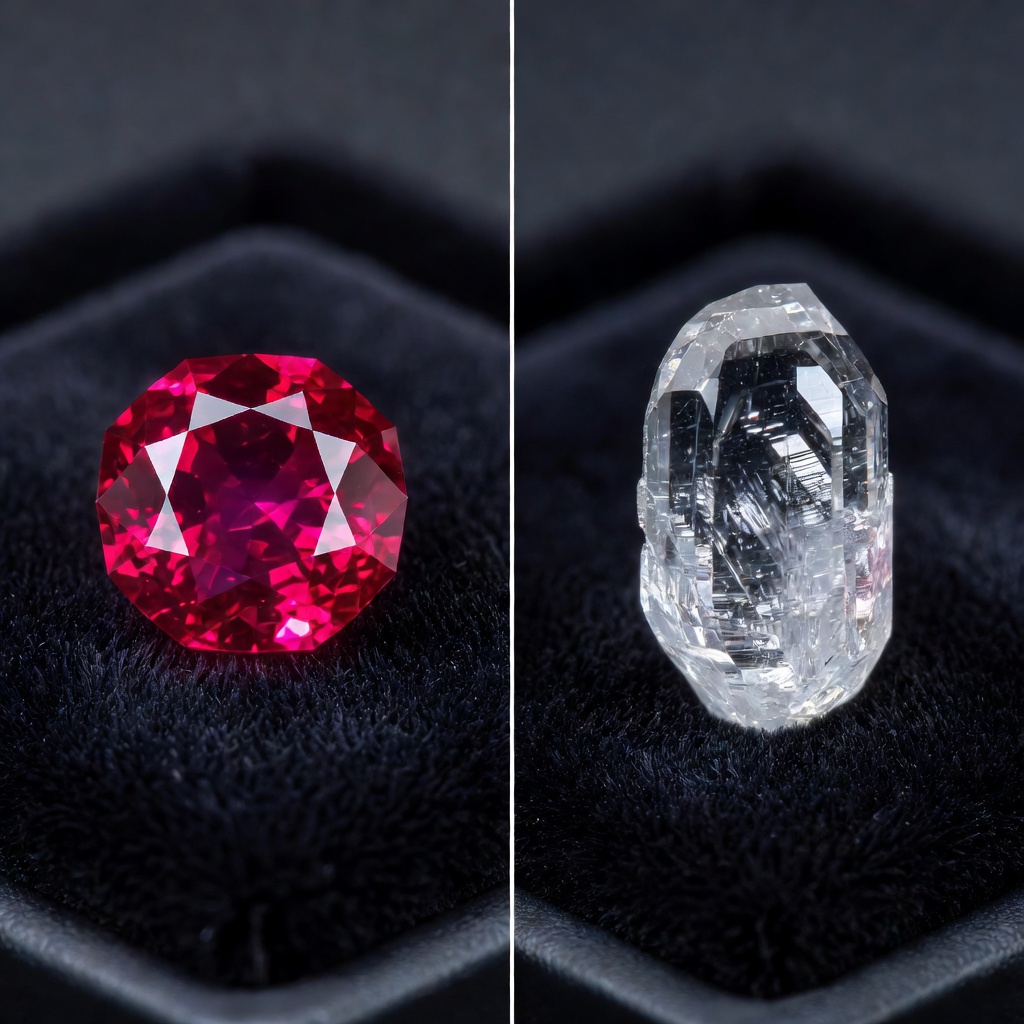
When selecting the perfect centerpiece for fine jewelry, modern consumers increasingly find themselves weighing the merits of two distinct yet equally captivating options. Natural diamonds represent the pinnacle of carbon-based precious gemstones, formed through extraordinary geological processes spanning one to three billion years deep within Earth's mantle. In contrast, lab-created rubies emerge as scientifically engineered marvels, possessing the exact chemical composition of their natural counterparts—aluminum oxide corundum infused with chromium—yet born from human ingenuity rather than geological chance.
The comparison between these gemstones has intensified as budget-conscious buyers seek alternatives to traditional diamond engagement rings without sacrificing beauty or authenticity. Consumers compare Diamond vs Lab-Created Ruby options for numerous reasons, including dramatic price differentials, ethical sourcing concerns, and the desire for unique color expression in an era where personalization reigns supreme. This comprehensive analysis will equip you with the knowledge to determine which gemstone aligns with your specific aesthetic preferences, lifestyle requirements, budget constraints, and long-term value expectations.
Origins and Composition: Natural vs Synthetic Formation
The fundamental distinction between these gemstones begins at the molecular level and extends back through eons of time or weeks of laboratory precision. Natural diamonds crystallize approximately 90 to 150 miles beneath Earth's surface, where carbon atoms arrange themselves into isometric crystal structures under temperatures exceeding 2,000 degrees Fahrenheit and pressures 50,000 times greater than atmospheric levels. This remarkable journey from deep mantle to surface through volcanic kimberlite pipes creates gemstones with unique inclusions and characteristics impossible to replicate exactly.
Conversely, lab-grown ruby characteristics include origins in high-tech manufacturing facilities utilizing either the flame fusion (Verneuil) process or the more sophisticated flux melt method. Flame fusion creates rubies by dripping purified aluminum oxide through an oxyhydrogen flame, producing boules that crystallize over several days, while flux growth mimics natural conditions more closely by dissolving alumina in a molten flux at 1,200 degrees Celsius over two to three months. These synthetic ruby vs natural diamond comparisons reveal that while both are genuine gemstones, their formation stories differ radically—one shaped by tectonic forces over geological epochs, the other by human engineering over mere weeks.
The chemical divergence proves equally significant when evaluating synthetic ruby vs natural diamond compositions. Diamonds consist exclusively of carbon atoms arranged in a tetrahedral lattice structure, making them the only gemstone composed of a single element. Lab-created rubies, however, constitute aluminum oxide (Al₂O₃) with chromium impurities creating the distinctive red hue, identical to natural rubies but distinguishable through microscopic examination of growth patterns. This origin disparity profoundly influences market perception, with natural formation contributing to diamond rarity premiums while lab production eliminates scarcity value in rubies.
Durability and Physical Properties Compared
When evaluating gemstones intended for daily wear, understanding diamond durability relative to alternative options becomes crucial for long-term satisfaction. The Mohs hardness scale provides the primary metric for comparison, with natural diamonds ranking at the absolute maximum of 10, making them the hardest known natural substance and remarkably resistant to scratching from everyday encounters. Lab-created rubies score slightly lower at 9 on the same scale, which still places them among the most durable gemstones available, though they may eventually show abrasions from decades of contact with diamond jewelry or industrial materials.
However, hardness represents only one dimension of durability, as toughness—the resistance to chipping and breaking—tells a different story. Diamonds possess perfect cleavage in four directions, meaning a sharp blow at the correct angle can split even a high-quality stone, a vulnerability that has doomed many heirloom pieces during accidental impacts against granite countertops or metal door handles. Lab-created rubies demonstrate superior toughness with no cleavage planes, allowing them to absorb impacts that might fracture diamonds, making them surprisingly practical for active lifestyles and professions involving manual labor.
Thermal conductivity further distinguishes these materials, with diamonds conducting heat five times faster than copper, creating that characteristic cold feel when touched to the lips. This property makes diamonds ideal for industrial cutting applications but offers minimal practical advantage in jewelry settings. For everyday wear resistance, both gemstones perform admirably, though diamonds require more careful setting protection against direct blows while rubies better withstand the bumps and knocks of daily rings and bracelets. Long-term maintenance for both involves professional cleaning and prong inspection every six months, though diamonds typically need repolishing less frequently due to their superior scratch resistance.
Case Study: The Active Lifestyle Choice
Sarah Chen, a rock climbing instructor from Colorado, discovered these durability differences firsthand after destroying two diamond engagement rings through impact damage during belaying activities. After consulting with a gemologist, she selected a lab-created ruby set in a protective bezel setting, which has survived three years of intensive outdoor use without chipping, whereas her previous diamonds had developed significant fractures from similar impacts. This practical example illustrates how toughness sometimes trumps hardness for specific lifestyle applications.
Visual Characteristics: Brilliance vs Color
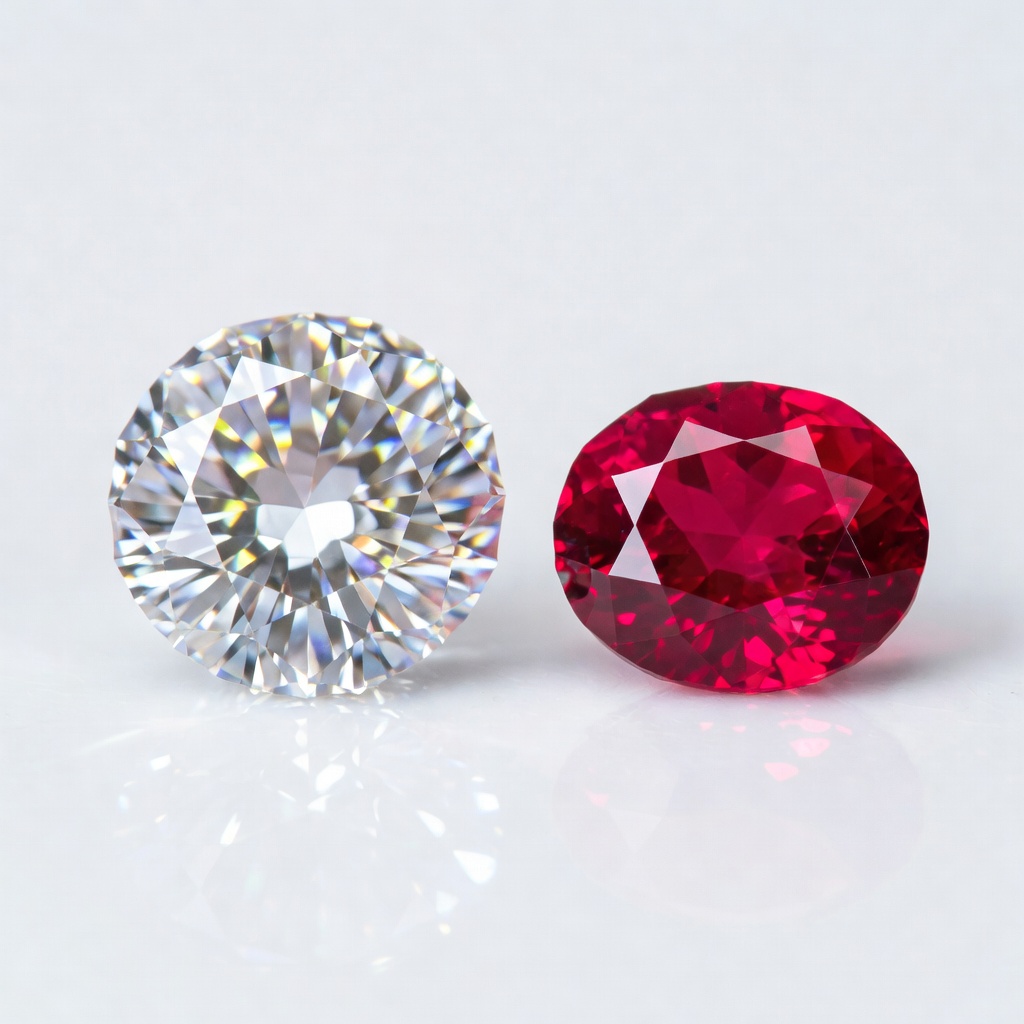
The aesthetic distinction between these gemstones centers on fundamentally different approaches to beauty—one emphasizing optical physics, the other celebrating chromatic intensity. Diamonds captivate through their ability to refract white light into spectral components, creating the interplay of brilliance (white light reflection), fire (rainbow dispersion), and scintillation (sparkle from movement) that has defined luxury jewelry for centuries. Master cutters calculate precise angles and proportions to maximize these effects, with ideal cut diamonds returning virtually all entered light through the crown rather than leaking through the pavilion.
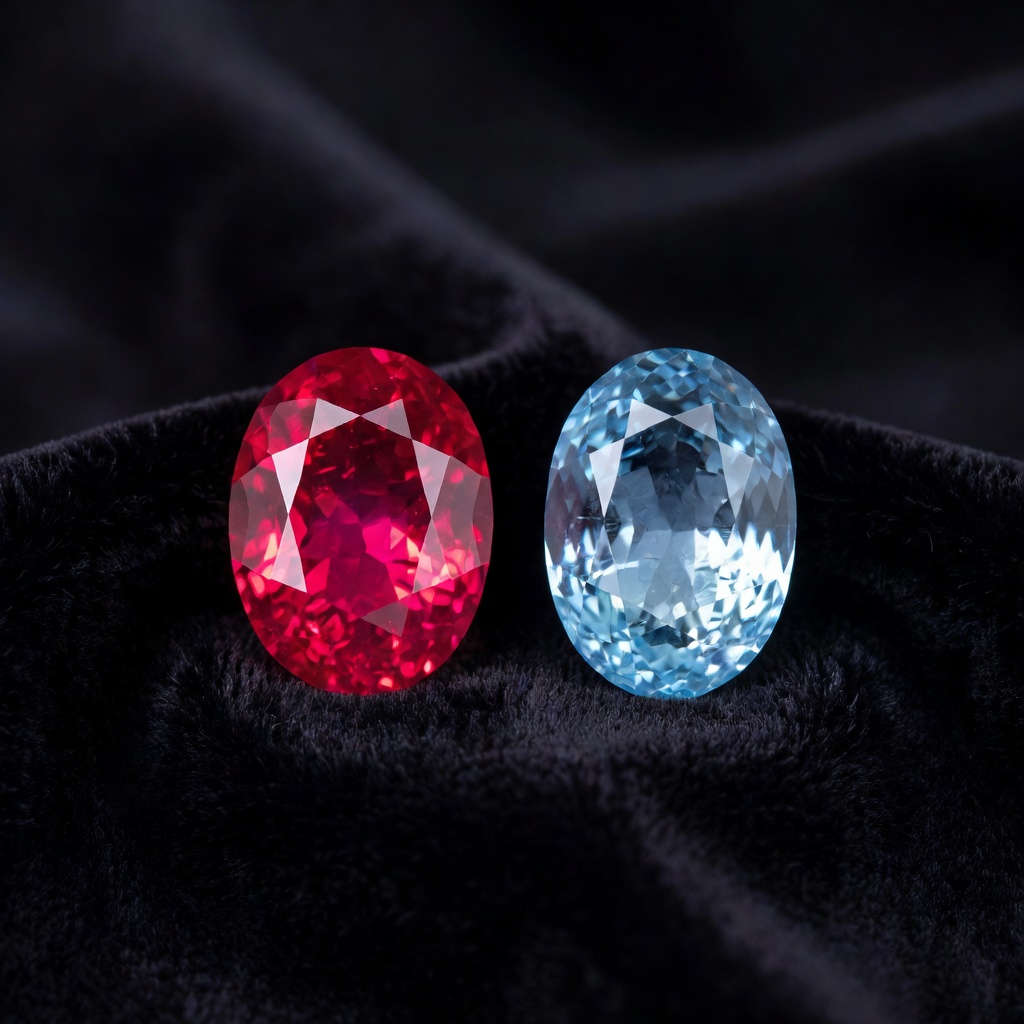
Lab-grown ruby characteristics, however, prioritize saturated color over optical complexity, with premium specimens displaying the coveted "pigeon's blood" red—a pure, vivid crimson with subtle blue undertones that signals chromium content of approximately 0.5-2%. Unlike diamonds where clarity represents a primary value factor, rubies are graded primarily on color intensity and uniformity, with slight inclusions often accepted if they don't significantly affect transparency. Cutting philosophies differ accordingly: diamond cutters maximize light performance through complex facet arrangements, while ruby cutters focus on preserving carat weight and orienting the stone to display optimal color saturation through the table.
Inclusion patterns provide fascinating diagnostic differences between these gemstones. Natural and lab-created diamonds may contain graphite inclusions, feather fractures, or pinpoint crystals, graded on a scale from Flawless to Included. Lab-created rubies typically display curved growth striations or flux inclusions under magnification—features that identify their synthetic origin but rarely impact visual beauty to the naked eye. Lighting conditions dramatically affect each stone's presentation: diamonds sparkle magnificently under direct spot lighting or sunlight, while rubies show their best color in diffused natural daylight or LED lighting, sometimes appearing darker under incandescent bulbs.
Practical Design Tip
Jewelry designer Marcus Webb recommends considering skin undertones when choosing between these options. "Cool undertones generally complement the icy fire of diamonds set in white gold or platinum, while warm undertones make rubies appear even more vibrant against yellow or rose gold settings. For maximum versatility, consider that diamonds pair effortlessly with any wardrobe palette, whereas rubies make bold statements requiring more intentional fashion coordination."
Price Analysis: Cost Per Carat Breakdown
The financial disparity between these gemstones represents one of the most dramatic value differentials in the jewelry industry, influencing purchase decisions across all market segments. Natural diamond pricing follows the rigorous 4Cs grading system established by the Gemological Institute of America, with quality one-carat stones typically ranging from $3,000 for commercial-grade specimens to $30,000 or more for D-color, Internally Flawless diamonds with excellent cut grades. This pricing structure reflects not only natural scarcity but also the extensive mining, cutting, and distribution infrastructure required to bring each stone to market.
The lab-created ruby price spectrum presents a stark contrast, with premium quality stones ranging from $100 to $500 per carat depending on color saturation and clarity. This 90% cost reduction stems from the unlimited production capacity of laboratory facilities, which can generate gem-quality rubies continuously without geological exploration, mining operations, or the finite constraints of natural deposits. While natural rubies of fine quality can command prices exceeding diamonds due to extreme rarity, their synthetic counterparts offer accessibility previously impossible in the colored gemstone market.
Several factors drive this massive price disparity beyond simple supply and demand. Historical marketing investments by diamond cartels have established cultural premiums that laboratory rubies cannot claim, while diamonds maintain industrial applications in cutting, drilling, and high-tech manufacturing that support baseline pricing. Hidden costs further differentiate these purchases: diamond settings often require more expensive platinum or high-karat gold to match perceived value, insurance premiums run significantly higher for diamond jewelry, and certification costs from GIA or AGS laboratories add $100-$500 to diamond purchases compared to $50-$100 for lab-ruby documentation. When budgeting for a complete jewelry piece, consumers should allocate 15-20% of their total budget for setting and insurance costs with diamonds, versus 5-10% for lab-created rubies.
Investment Value and Resale Potential
Understanding gemstone investment value requires distinguishing between retail purchasing prices and actual secondary market liquidity, a distinction that surprises many first-time buyers. Natural diamonds, despite popular perception as stable investments, typically retain only 30-50% of their original retail purchase price when sold to dealers or through auction houses, though exceptional rare stones (fancy colored diamonds, large flawless whites) may appreciate over decades. This depreciation occurs because retail pricing includes significant markups for branding, store overhead, and design work that don't transfer to resale value.
Lab-created rubies face even more challenging resale prospects, currently holding virtually no secondary market value due to their unlimited reproducibility and lack of collector interest. Unlike natural rubies, which can appreciate significantly—Burmese pigeon's blood specimens have outperformed many traditional investments over the past two decades—synthetic rubies function purely as consumable luxury goods rather than stores of value. This reality should inform purchasing decisions: buy lab-created rubies for immediate enjoyment and aesthetic satisfaction, not for wealth preservation or future profit.
The rarity factor fundamentally underpins these divergent investment profiles. Natural diamond deposits are depleting, with major mines like Argyle (Australia) closing and no significant new discoveries replacing them, suggesting potential long-term scarcity premiums. Conversely, lab-created ruby production capacity expands continuously as technology improves and manufacturing costs decrease, virtually guaranteeing that today's purchase will be producible more cheaply tomorrow. For consumers prioritizing financial investment, only natural diamonds or exceptionally rare natural rubies warrant consideration, while those valuing experiential enjoyment over asset appreciation will find lab-created rubies deliver superior immediate value.
Expert Financial Perspective
Wealth advisor Jennifer Parkins counsels clients to view engagement ring purchases as consumption rather than investment. "If you're spending $20,000 on a natural diamond expecting it to fund your retirement, you'll be disappointed. However, if you spend $2,000 on a lab-created ruby and invest the remaining $18,000 in index funds, you'll likely see actual financial growth while still enjoying a beautiful symbol of commitment."
Ethical and Environmental Impact Assessment
Modern consumers increasingly prioritize ethical provenance and environmental sustainability when making luxury purchases, creating complex considerations in the Diamond vs Lab-Created Ruby comparison. Natural diamond mining operations, particularly open-pit excavations, displace approximately 250 tons of earth per carat of diamond recovered, consuming vast quantities of water and fossil fuels while altering local ecosystems permanently. The carbon footprint of mined diamonds averages 160 kg of CO₂ per carat, though this varies significantly between alluvial deposits and deep kimberlite mining operations.
Lab-grown ruby characteristics include a different environmental profile, requiring significant electricity for crystal growth furnaces operating at extreme temperatures for weeks or months, plus chemical inputs including flux materials and purified alumina. While avoiding land displacement, these facilities generate industrial waste streams and carbon emissions dependent on local energy grids—facilities powered by renewable sources offer genuinely sustainable options, while those relying on coal-generated electricity may exceed the carbon footprint of efficiently mined natural stones.
Ethical considerations extend beyond environmental metrics to human welfare concerns. The Kimberley Process Certification Scheme attempts to prevent conflict diamonds from entering legitimate markets, though critics argue loopholes allow human rights abuses to persist in certain mining regions. Lab-created rubies offer guaranteed conflict-free origins with transparent supply chains from manufacturer to consumer, eliminating concerns about funding warfare or exploitative labor practices. For conscious consumers prioritizing ethical certainty, lab-created rubies provide peace of mind impossible to guarantee with natural diamonds short of expensive blockchain-tracked provenance systems. A comprehensive sustainability scorecard might favor lab rubies for ethics and land use, while natural diamonds potentially win on total carbon footprint if sourced from efficient Canadian or Botswana operations versus coal-powered laboratories.
Jewelry Applications: Best Uses for Each Stone
Selecting between these gemstones requires careful consideration of intended use, as their distinct properties suit different jewelry applications and lifestyle contexts. For ruby vs diamond engagement ring choices, tradition and symbolism heavily influence decisions: diamonds represent enduring commitment through their unparalleled hardness and cultural association with eternal love, while rubies symbolize passion, courage, and vitality through their fiery red hue. Historical precedent favors diamonds for bridal jewelry in Western cultures, though rubies appear increasingly in alternative engagement rings for couples seeking distinctive expressions of individuality.
Daily wear durability concerns vary significantly by jewelry type. Engagement rings face maximum exposure to impacts, chemicals, and abrasion, making diamond's scratch resistance advantageous for decades of continuous wear, though protective settings become essential given cleavage vulnerabilities. Lab-created rubies excel in bracelets and necklaces, where they encounter fewer direct blows than rings, and their toughness provides security against the accidental strikes that occur during active wear. Earrings present ideal applications for both stones, with minimal impact risk and maximum visibility for either diamond brilliance or ruby color.
Design versatility differs markedly between these options. Diamonds function as neutral, versatile centerstones compatible with any metal color—from platinum to rose gold—and any fashion style from vintage to ultra-modern. Their colorless nature allows them to complement rather than compete with clothing choices. Rubies demand more intentional design integration, traditionally pairing with yellow gold for classic looks or white metals for contemporary contrast, and requiring wardrobe coordination to avoid color clashes. Current 2024 trends show celebrities like Zendaya and Florence Pugh sporting ruby statement rings at red carpet events, while minimalist diamond solitaires dominate bridal markets. For fashion jewelry and statement pieces where color makes the design, lab-created rubies offer dramatic impact at accessible prices, while diamonds remain the standard for heirloom-quality bridal jewelry intended to last generations.
Professional Application Guide
Medical professionals and mechanics should consider bezel or flush settings for either gemstone to prevent snagging on gloves or machinery. For those in desk-based professions, prong-set diamonds maximize light return in office lighting, while creative professionals might prefer rubies for their artistic connotations and distinctive visual identity.
Making Your Final Decision: Key Considerations
Navigating the synthetic ruby vs natural diamond decision requires honest assessment of personal priorities across multiple dimensions. Budget allocation strategies should consider not just the initial purchase but long-term costs: a $5,000 diamond purchase might require $200 annual insurance premiums and expensive professional maintenance, while a $500 lab-ruby allows significant savings for other life priorities or complementary jewelry pieces. Consider whether you prefer one exceptional centerpiece or a versatile collection of quality pieces when determining your spending approach.
Personal style matching extends beyond current fashion preferences to fundamental aesthetic temperament. Those drawn to classic, timeless elegance and maximum light performance naturally gravitate toward diamonds, while individuals expressing bold, creative, or romantic personalities often find rubies better represent their identity. Consider your existing wardrobe palette: neutral closets favor diamonds, while those incorporating reds, purples, and earth tones complement rubies beautifully. Lifestyle factors including profession, hobbies, and activity levels should influence your choice—active outdoor enthusiasts might prioritize ruby toughness, while those in formal business environments may prefer diamond sophistication.
Perhaps most importantly, distinguish between sentimental value and financial investment in your personal calculus. If you prioritize the emotional significance and symbolic meaning of your jewelry, either gemstone serves admirably, though diamonds carry heavier cultural weight for bridal applications. If you view the purchase primarily through a financial lens, neither option represents a strong investment vehicle, though diamonds retain liquidity advantages. For many modern couples, the decision ultimately hinges on whether they prefer to allocate resources toward a traditional status symbol or embrace alternative values of sustainability, uniqueness, and financial pragmatism that lab-created rubies represent.
Final Verdict: Which Gemstone Should You Choose?
After examining every facet of the Diamond vs Lab-Created Ruby comparison, the optimal choice depends entirely on your specific circumstances, values, and intentions for the jewelry piece. To simplify this complex decision, consider the following comprehensive comparison highlighting critical differences:
| Characteristic | Natural Diamond | Lab-Created Ruby |
|---|---|---|
| Hardness (Mohs Scale) | 10 (Maximum) | 9 (Excellent) |
| Toughness | Good (cleavage vulnerability) | Excellent (no cleavage) |
| Price per Carat | $3,000 - $30,000+ | $100 - $500 |
| Resale Value | 30-50% of retail | Negligible |
| Primary Appeal | Brilliance, Fire, Scintillation | Color Saturation (Pigeon's Blood Red) |
| Ethical Certainty | Requires certification (Kimberley Process) | Guaranteed conflict-free |
| Environmental Impact | High (land displacement, mining) | Moderate (energy consumption) |
| Best Application | Heirloom engagement rings, Investment pieces | Fashion jewelry, Statement pieces, Budget bridal |
| Origin Rarity | Extremely rare (billions of years) | Unlimited reproducibility |
| Symbolism | Eternal love, Purity, Status | Passion, Courage, Vitality |
For traditional engagement rings intended as family heirlooms, natural diamonds remain the recommended choice despite their premium pricing, offering unmatched brilliance, cultural significance, and liquidity should future financial needs arise. Choose diamonds when you prioritize scratch resistance above all other factors, desire the traditional symbolism associated with bridal jewelry, or view the purchase as a long-term asset rather than pure consumption.
Select lab-created rubies for fashion-forward statement pieces, alternative engagement rings for non-traditional couples, or situations where budget constraints would otherwise prevent owning genuine precious gemstone jewelry. They excel when color impact matters more than optical physics, when ethical sourcing is non-negotiable, or when you prefer to allocate savings toward experiences or investments rather than geological rarity.
Expert gemologists increasingly suggest considering hybrid approaches for comprehensive jewelry wardrobes: perhaps a modest natural diamond for an engagement ring to satisfy traditional expectations, supplemented by lab-created ruby earrings or pendants for colorful variety at reasonable cost. Alternatively, those committed to sustainability might explore lab-created diamonds as a middle ground, combining diamond optical properties with ruby-like ethical certainty and pricing. Ultimately, both gemstones offer genuine beauty and durability—the right choice reflects your unique story, values, and the specific narrative you wish your jewelry to convey.
Frequently Asked Questions
Which is more durable for everyday wear, diamond or lab-created ruby?
Diamonds are slightly more durable with a Mohs hardness of 10 compared to lab-created ruby's 9. However, rubies are actually tougher and less prone to chipping since diamonds have perfect cleavage. For everyday rings, both perform excellently, but diamonds resist scratches slightly better while rubies handle impacts better.
Are lab-created rubies considered real rubies?
Yes, lab-created rubies are chemically, physically, and optically identical to natural rubies. Both are corundum (aluminum oxide) with chromium traces creating the red color. The only difference is origin. Gemological laboratories can identify synthetic origin through growth patterns, but they are genuine rubies, not imitations.
Why do diamonds cost 10-50x more than lab-created rubies?
Diamonds command premium prices due to natural scarcity, billion-year formation time, De Beers' historical marketing creating perceived value, and controlled supply chains. Lab-created rubies can be produced unlimitedly in weeks, eliminating rarity value. Additionally, diamonds have broader industrial applications driving demand beyond jewelry.
Can jewelers easily distinguish between diamonds and lab-created rubies?
Yes, trained jewelers can immediately distinguish them using basic tools. Diamonds are colorless/white with exceptional light refraction, while rubies are distinctly red. Thermal conductivity testers differentiate them instantly. Gemological labs use spectroscopy and magnification to confirm lab-created ruby origin through curved growth striations or flux inclusions.
Which gemstone holds better resale value?
Natural diamonds retain significantly better resale value, typically 30-50% of retail price, due to sustained market demand and natural scarcity. Lab-created rubies have virtually no resale value because they can be reproduced indefinitely and aren't considered investment assets. Only rare natural rubies appreciate in value.
Is a lab-created ruby or diamond better for an engagement ring?
Diamonds remain the traditional choice for engagement rings due to unmatched brilliance and cultural significance. However, lab-created rubies offer a unique, colorful alternative at 90% lower cost. Choose diamonds for tradition, investment, and maximum sparkle. Choose lab rubies for distinctive style, ethical peace of mind, and staying within a smaller budget while still getting a genuine precious gemstone.
Do lab-created rubies have the same inclusions as natural rubies?
Lab-created rubies have inclusions but different types than natural ones. Natural rubies contain mineral crystals, silk rutile needles, and fingerprint inclusions. Lab rubies typically show curved striations (in flame fusion stones), flux remnants, or gas bubbles. These diagnostic features help gemologists identify origin but don't affect beauty in eye-clean stones.
Which gemstone is more ethical and environmentally friendly?
Lab-created rubies are generally more ethical with guaranteed conflict-free origins and lower environmental impact than mining. However, they require significant energy consumption. Natural diamonds from responsible sources with Kimberley Process certification can be ethical, but mining always impacts land and ecosystems. For minimal environmental footprint, lab rubies have the edge.