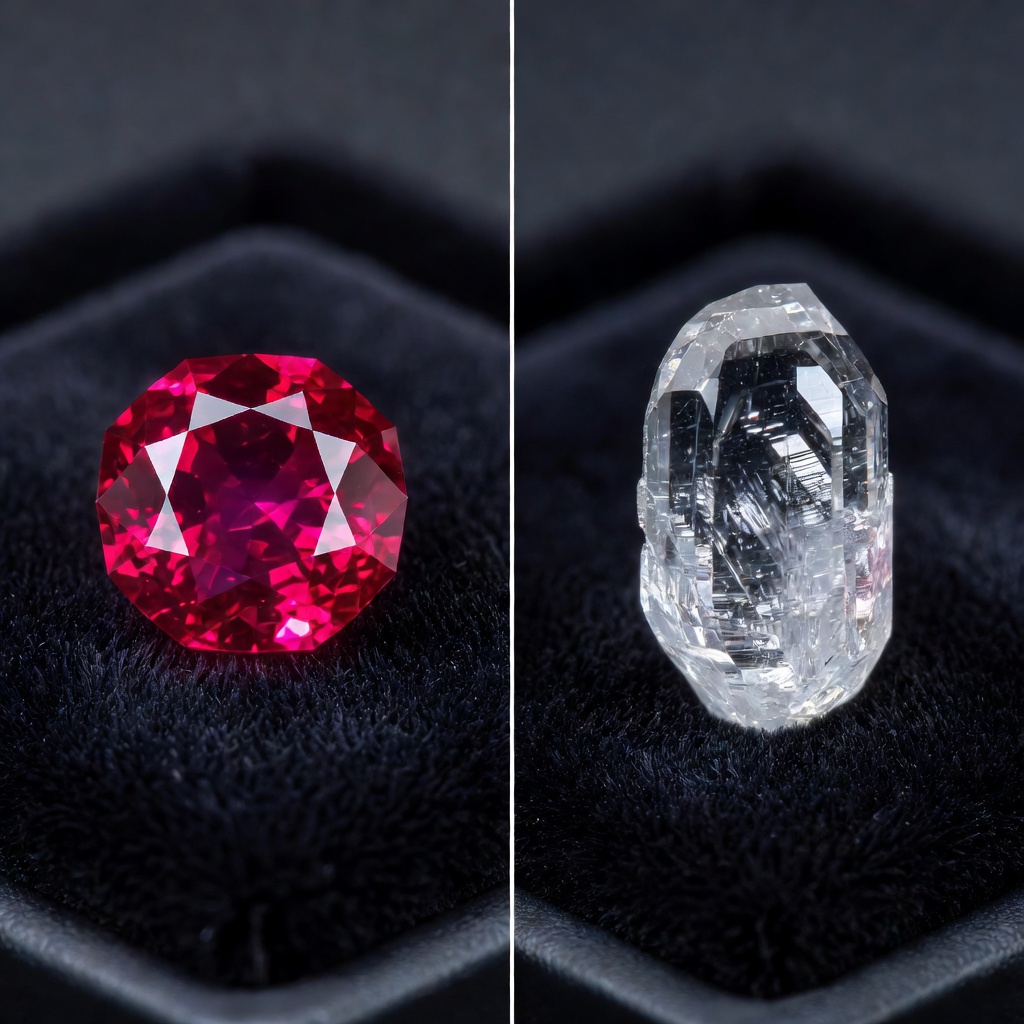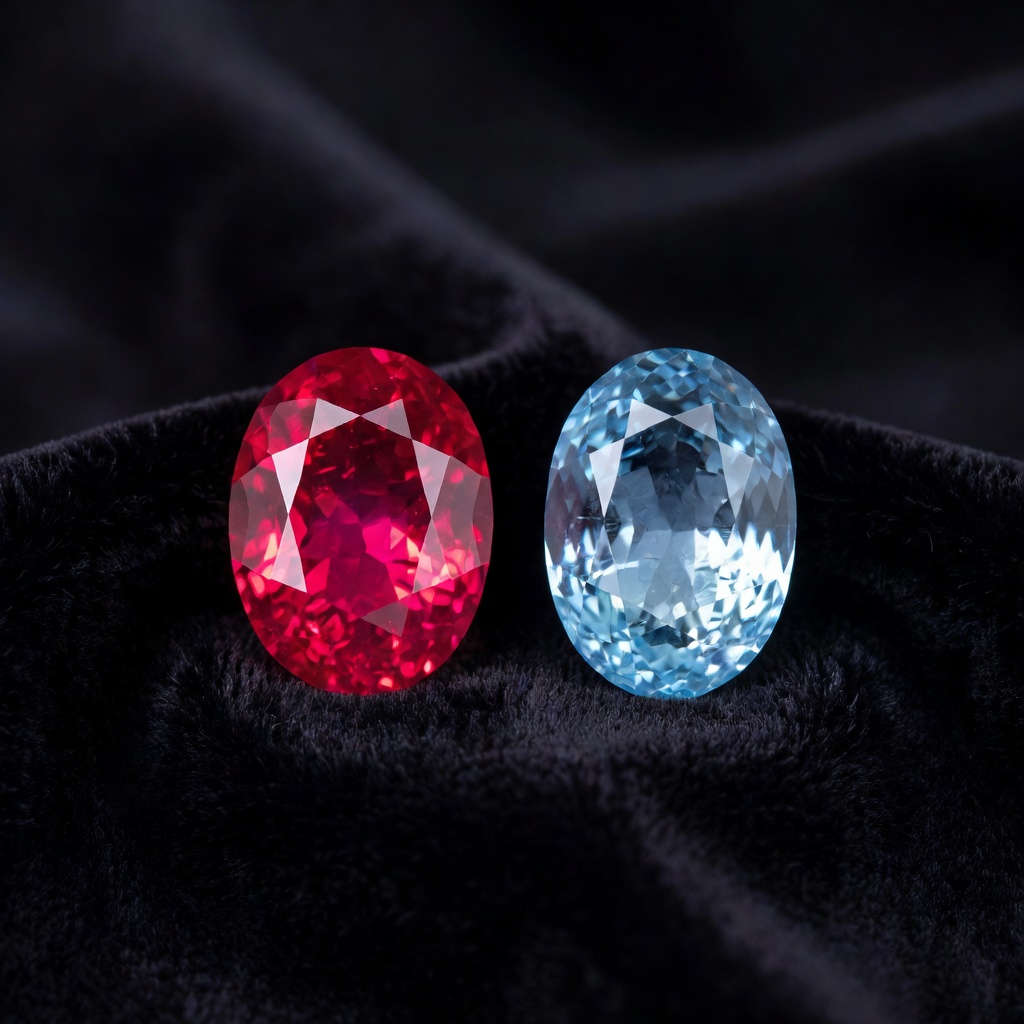
Understanding the Basics of Diamond vs Lab-Created Moissanite
When selecting a center stone for an engagement ring or fine jewelry piece, modern consumers face an expanding array of choices beyond traditional mined diamonds. Lab-created moissanite has emerged as a compelling contender in the luxury jewelry market, offering exceptional brilliance and durability at a fraction of the cost of natural diamonds. Understanding the fundamental differences between these two gemstones requires examining their geological origins, chemical compositions, and the technological innovations that have made high-quality moissanite widely accessible to today's buyers.
Natural diamonds form deep within the Earth's mantle under extreme pressure and temperature conditions over billions of years, composed entirely of carbon atoms arranged in an isometric crystal structure. In contrast, lab-created moissanite consists of silicon carbide (SiC), a compound originally discovered in meteorite craters by Nobel Prize-winning chemist Henri Moissan in 1893. While natural moissanite exists only in microscopic quantities, modern laboratories use advanced thermal growing processes to create gem-quality crystals that rival the optical properties of diamonds while maintaining a distinct chemical identity.
Many consumers confuse synthetic gemstones with simulated stones, yet this distinction proves crucial when comparing Diamond vs Lab-Created Moissanite. Synthetic refers to materials with the same chemical composition as their natural counterparts, whereas moissanite is neither a synthetic diamond nor a mere simulation—it is a unique gemstone category with superior hardness and optical properties compared to diamond imitations like cubic zirconia. This clarification helps buyers understand that choosing moissanite represents selecting a genuine precious stone rather than accepting a inferior substitute.
Physical Properties: Hardness and Durability
The Mohs hardness scale comparison reveals why both diamonds and moissanite serve as excellent choices for daily-wear jewelry, though with nuanced differences in performance characteristics. Diamonds rank at the absolute peak of the scale with a rating of 10, making them the hardest known natural material and virtually impervious to scratching from any other substance. Lab-created moissanite closely follows at 9.25, positioning it ahead of rubies and sapphires (9.0) and significantly harder than other diamond alternatives, ensuring resistance to surface abrasions that could dull lesser gemstones over decades of wear.
However, hardness measures only scratch resistance, not overall toughness or resistance to chipping and breaking. Interestingly, moissanite exhibits superior toughness compared to diamonds due to its hexagonal crystal structure, which lacks the cleavage planes present in diamond's cubic formation. This structural advantage means that while a diamond might chip if struck at the wrong angle against a hard surface, moissanite better withstands accidental impacts, making it particularly suitable for individuals with active lifestyles or hands-on professions such as healthcare workers, fitness instructors, or mechanics who cannot remove their rings during physical activities.
Consider the case of Sarah, a rock climbing instructor who chose a 2-carat moissanite solitaire for her engagement ring three years ago. Despite regular exposure to abrasive surfaces and occasional impacts against granite climbing walls, her stone remains flawless without the chipped edges or feathered inclusions that sometimes plague diamond rings subjected to similar treatment. For heirloom potential, both gemstones promise longevity, though diamonds maintain their status as traditional generational keepsakes while moissanite represents a modern choice that challenges conventional notions of permanence in fine jewelry.
Optical Characteristics: Brilliance and Fire
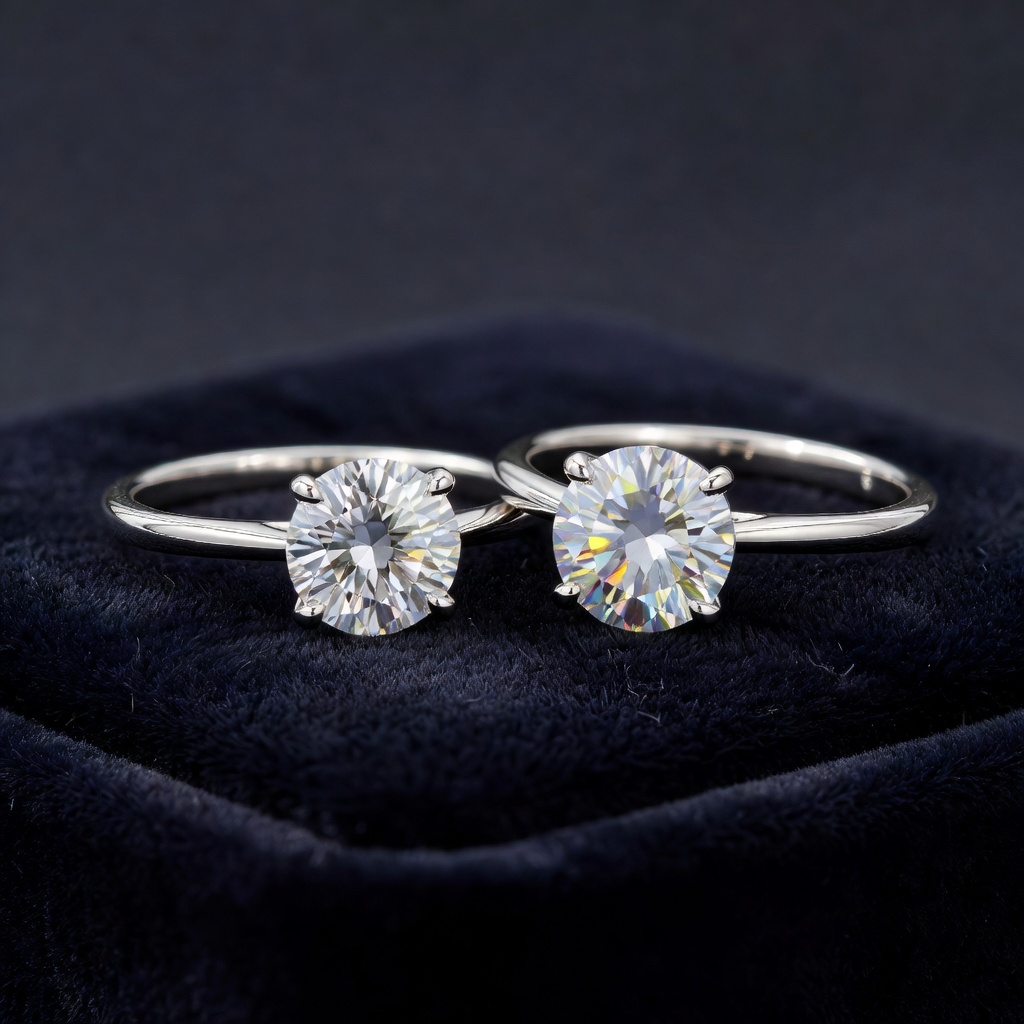
The visual performance of these gemstones diverges most noticeably in how they interact with light, creating distinct aesthetic signatures that appeal to different preferences. Diamond sparkle vs moissanite fire presents a fascinating study in optical physics, with moissanite possessing a higher refractive index (2.65-2.69) compared to diamond's 2.42. This higher refractive index means moissanite bends light more aggressively, potentially creating greater overall brilliance, though the quality of that light display differs significantly between the two stones.
Fire, or dispersion, refers to the separation of white light into spectral colors—the rainbow flashes visible when rotating a gemstone. Moissanite exhibits approximately 2.4 times the fire of diamonds, producing vivid rainbow refractions that some enthusiasts find mesmerizingly beautiful while others consider slightly theatrical or "disco-ball" like. Diamonds, conversely, prioritize white light return (brilliance) over colorful dispersion, creating a more subtle, icy sparkle that traditionalists often associate with sophisticated elegance. When evaluating cut quality, both gemstones perform optimally with precision cutting; however, moissanite's optical properties make it more forgiving of minor cutting imperfections, whereas diamonds require excellent or ideal cuts to maximize their inherent light performance.
Practical observation reveals these differences most clearly under direct sunlight or spot lighting. A round brilliant moissanite might display flashes of red, green, and blue across its table when moved under jewelry store lighting, while a similarly cut diamond returns predominantly white scintillation with occasional subtle prismatic effects. For evening events under candlelight or dim restaurant ambiance, both stones perform admirably, though moissanite maintains its fiery character while diamonds may appear more subdued and mysterious.
Visual Differences: Can You Tell Them Apart?
Discerning between these gemstones requires understanding subtle visual cues that distinguish them even when mounted in identical settings. Color grades present the first potential giveaway, as diamonds range from D (colorless) to Z (light yellow or brown), while moissanite typically falls within the near-colorless to faint color range. Premium colorless moissanite (graded D-E-F) closely matches high-grade diamonds, though some specimens exhibit faint green, yellow, or gray undertones under certain lighting conditions, particularly in larger carat weights above 2.5 carats.
Clarity characteristics differ fundamentally between the two stones. Natural diamonds often contain inclusions such as feathers, crystals, or clouds formed during their geological creation, whereas lab-created moissanite grows in controlled environments that typically yield eye-clean stones with minimal visible inclusions. The most definitive visual difference involves double refraction in moissanite versus single refraction in diamonds. When examining a moissanite through its table facet with a jeweler's loupe, the culet (bottom point) and pavilion facets appear doubled or ghosted, whereas diamonds maintain sharp, singular facet lines throughout.
For consumers attempting to tell moissanite from diamond at home, several practical methods exist beyond professional testing. Moissanite typically weighs approximately 15-18% less than diamond of equivalent size due to lower specific gravity, meaning a 6.5mm moissanite weighs roughly 0.88 carats while a same-size diamond weighs 1.00 carat. Additionally, observing the stone through a newspaper test—where text viewed through the side of a diamond appears distorted or illegible while moissanite may show double vision—provides a quick, though not definitive, identification method. Professional jewelers utilize electrical conductivity testers or spectroscopes to differentiate the materials conclusively, as moissanite conducts electricity while diamonds typically do not (except rare blue diamonds).
Price Comparison: Value for Money
The economic advantages of choosing lab-created moissanite price points become immediately apparent when examining per-carat costs, with moissanite typically retailing for 80-90% less than natural diamonds of equivalent size and visual quality. While a high-quality 1-carat natural diamond might command $4,000 to $6,000 depending on cut, color, and clarity specifications, a premium colorless moissanite of the same carat weight generally ranges from $400 to $800. This dramatic price differential allows couples to allocate savings toward wedding expenses, future investments, or significantly larger center stones that would prove financially prohibitive in diamond.
However, the Diamond vs moissanite cost analysis extends beyond initial purchase price to include long-term value retention and insurance considerations. Diamonds traditionally maintain resale value, though often at 40-60% of retail price unless purchased through investment-grade channels, while moissanite currently possesses minimal secondary market value due to its unlimited production potential. Insurance premiums reflect this disparity, with annual coverage for a $5,000 diamond ring potentially costing $50-100 annually versus $10-20 for a $600 moissanite equivalent. Yet for many buyers, the ability to purchase a 3-carat moissanite center stone for less than the cost of a 0.75-carat diamond provides greater immediate satisfaction and perceived value than future resale potential.
Consider the financial flexibility illustrated by the Martinez family, who budgeted $8,000 for an engagement ring. Selecting a natural diamond limited them to a 1.2-carat solitaire with good specifications, whereas choosing moissanite enabled a 3-carat emerald-cut stone with custom platinum setting and matching wedding band while remaining under budget. This budget flexibility particularly appeals to younger couples prioritizing experiences, debt reduction, or home ownership over traditional asset accumulation through jewelry.
| Characteristic | Natural Diamond | Lab-Created Moissanite |
|---|---|---|
| Chemical Composition | Carbon (C) | Silicon Carbide (SiC) |
| Mohs Hardness | 10 (Maximum) | 9.25 (Excellent) |
| Refractive Index | 2.42 | 2.65-2.69 |
| Fire/Dispersion | 0.044 (Low) | 0.104 (High) |
| Price per Carat | $4,000-$6,000+ | $400-$800 |
| Environmental Impact | High (Mining required) | Low (Lab-grown) |
| Optical Refraction | Single | Double |
| Heat Resistance | Excellent | Excellent (up to 1,800°F) |
Ethical and Environmental Considerations
The modern jewelry consumer increasingly prioritizes ethical gemstone alternatives that align with environmental stewardship and social responsibility values. Traditional diamond mining, whether through open-pit operations or alluvial mining, requires moving approximately 250 tons of earth per carat of diamond recovered, resulting in significant habitat disruption, water table alterations, and carbon emissions from heavy machinery operation. Conversely, creating moissanite in controlled laboratory environments eliminates mining entirely, reducing land use impact to manufacturing facility footprints and minimizing ecosystem disruption.
Carbon footprint analysis reveals that lab-created moissanite production generates approximately 0.5% of the carbon emissions associated with mined diamonds when accounting for the entire supply chain from rough material to polished gem. While diamond mining operations have improved through initiatives like the Kimberley Process, which aims to prevent conflict diamonds from entering legitimate markets, the certification system has faced criticism for loopholes and limited enforcement capabilities. Lab-created moissanite offers guaranteed conflict-free provenance without requiring complex chain-of-custody documentation, providing peace of mind for consumers concerned about funding regional conflicts or exploitative labor practices sometimes associated with artisanal mining in developing nations.
The sustainable engagement rings movement has embraced moissanite as a cornerstone of eco-conscious bridal jewelry, appealing particularly to millennials and Gen Z consumers who demonstrate willingness to pay premiums for verified sustainable products. Jewelers specializing in sustainable engagement rings often highlight moissanite's zero-mining status alongside recycled precious metals to create completely ethical jewelry pieces. This environmental advantage extends to water usage, with diamond mining consuming roughly 480 liters of water per carat compared to negligible water requirements for moissanite crystal growth, making moissanite particularly attractive in regions facing water scarcity concerns.
Maintenance and Longevity
Both gemstones require regular care to maintain optimal appearance, though their maintenance protocols differ slightly due to their surface properties and interaction with environmental substances. Moissanite possesses a slightly higher tendency to attract oils and grease compared to diamonds, meaning it may require more frequent cleaning to maintain maximum brilliance, particularly for individuals with naturally oily skin or those who apply hand creams regularly. A simple solution of mild dish soap and warm water with a soft toothbrush effectively cleans both stones, though moissanite's silicon carbide composition makes it resistant to harsh chemicals and ultrasonic cleaning methods that might damage more porous gemstones.
Setting security presents distinct considerations for each material over decades of wear. Platinum and gold prongs securing diamonds may require retipping or tightening every 5-10 years depending on wear patterns, while moissanite's lighter weight actually reduces stress on settings, potentially extending prong longevity. However, because moissanite costs significantly less to replace, some jewelers recommend less elaborate security settings, though this approach contradicts best practices for protecting any valuable gemstone. Professional maintenance schedules should include annual inspections for both stones to check for loose prongs, worn channels, or structural damage to the mounting that could risk stone loss.
Surface scratching concerns favor diamonds due to their perfect hardness rating, though in practical daily wear, both materials resist scratching from household dust (which contains silica at 7 on the Mohs scale), keys, countertops, and other common contact surfaces. Neither gemstone clouds or yellows with age, unlike softer simulants such as cubic zirconia, ensuring that heirloom-quality pieces maintain their appearance indefinitely with proper care. For active individuals, removing rings during high-impact activities protects both the stone and setting regardless of material, though moissanite's superior toughness provides slightly greater forgiveness for those who occasionally forget this precaution.
Making Your Choice: Which is Right for You?
Selecting between these exceptional gemstones ultimately depends on aligning material properties with personal priorities, lifestyle requirements, and aesthetic preferences. Active individuals or those working in hands-on professions should carefully weigh Moissanite vs diamond durability factors, recognizing that while diamonds resist scratching better, moissanite withstands chipping and breaking more effectively. Nurses, construction workers, and athletes often find moissanite's toughness advantage particularly beneficial, whereas individuals in office environments or those who remove jewelry during physical activities may prioritize diamond's scratch-proof status and traditional prestige.
Budget constraints significantly influence the decision for many couples, with moissanite enabling larger carat weights, higher-quality settings, or additional wedding jewelry within fixed budgets. Those viewing engagement rings as financial investments or future heirlooms with resale potential might favor diamonds despite higher initial costs, while couples prioritizing immediate visual impact and debt-free weddings often find moissanite's value proposition irresistible. Aesthetic preferences play equally important roles; traditionalists drawn to subtle, icy white brilliance typically prefer diamonds, while those attracted to maximum sparkle and rainbow fire often find moissanite's optical performance more captivating.
Symbolism and personal value systems ultimately guide many decisions beyond physical properties. Diamonds carry centuries of cultural significance representing eternal love and commitment, while moissanite appeals to modern values of scientific innovation, environmental consciousness, and financial pragmatism. Some couples choose hybrid approaches, selecting diamond center stones with moissanite side stones to balance tradition with value, or vice versa. Consulting with reputable jewelers who offer both options without bias allows buyers to examine stones side-by-side under various lighting conditions, ensuring the final selection resonates with both emotional desires and practical requirements.
The Verdict on Modern Gemstones
The comparison between Diamond vs Lab-Created Moissanite reveals no universally superior choice, but rather two exceptional materials serving different consumer needs and values within the fine jewelry market. Diamonds maintain their position as the ultimate luxury symbol, offering unmatched hardness, traditional investment potential, and cultural significance accumulated over millennia. Lab-created moissanite challenges conventional definitions of preciousness by delivering superior fire, excellent durability, and ethical production at accessible price points, democratizing access to beautiful, sizable gemstones for broader demographics.
Consumer profiles suggest that diamond selections best serve traditionalists, investment-minded buyers, and those prioritizing subtle, classic elegance above maximum sparkle. Conversely, moissanite ideally suits environmentally conscious consumers, budget-conscious couples desiring impressive carat weights, active individuals requiring chip-resistant stones, and modern aesthetic enthusiasts who appreciate rainbow brilliance. Future trends indicate continued growth in lab-created gemstone markets as technology improves and younger generations prioritize sustainability alongside beauty.
Ultimately, authenticity in jewelry selection derives not from geological origin or chemical composition, but from the genuine satisfaction and emotional resonance the piece provides its wearer. Whether choosing a billion-year-old carbon crystal formed deep within the earth or a precisely engineered silicon carbide gem created through human ingenuity, both selections represent valid expressions of love, commitment, and personal style. The modern luxury market embraces this diversity, recognizing that true value lies in the meaning ascribed to these enduring symbols rather than rigid adherence to traditional categories.
Frequently Asked Questions
Is lab-created moissanite a real diamond?
No, lab-created moissanite is not a diamond. It is a distinct gemstone composed of silicon carbide, while diamonds are made of carbon. Although they look similar and moissanite serves as a popular diamond alternative, they have different chemical compositions, physical properties, and optical characteristics.
Which sparkles more, diamond or moissanite?
Moissanite actually exhibits more sparkle, or 'fire,' than diamonds due to its higher refractive index (2.65-2.69 vs. diamond's 2.42). This creates more rainbow-colored flashes of light. However, diamonds produce more white light return (brilliance), which some prefer for a classic, subtle sparkle.
Can a jeweler tell the difference between diamond and moissanite?
Yes, trained jewelers can distinguish between diamond and moissanite using specialized equipment. Moissanite exhibits double refraction (doubling of facets when viewed through magnification) and conducts electricity differently than diamond. Standard diamond testers that measure thermal conductivity may give false positives with moissanite.
Does moissanite look cheap or fake compared to diamond?
High-quality lab-created moissanite does not look cheap; it is a premium gemstone with exceptional brilliance. However, some people notice its higher dispersion (rainbow fire) which can appear slightly different from a diamond's white sparkle. Modern colorless moissanite (D-E-F range) closely resembles high-grade diamonds to the untrained eye.
Which is better for daily wear, diamond or moissanite?
Both are excellent for daily wear, but diamonds rank higher on the Mohs hardness scale (10 vs. 9.25), making them slightly more resistant to scratching. However, moissanite is tougher (more resistant to chipping and breaking) than diamond due to its crystal structure, making it highly suitable for active lifestyles and everyday jewelry.
Why is moissanite so much cheaper than diamond?
Moissanite costs significantly less (typically 80-90% less per carat) because it is lab-created rather than mined, eliminating extensive mining costs, rarity factors, and supply chain markups. While production requires advanced technology, the controlled environment allows consistent supply, whereas natural diamonds are finite resources requiring expensive extraction.
Does moissanite lose its sparkle over time?
No, moissanite does not lose its sparkle or become cloudy over time. Unlike cubic zirconia or other diamond simulants, moissanite is a stable, durable gemstone that maintains its optical properties indefinitely. Any temporary dullness is usually due to accumulated dirt, oil, or soap residue that can be easily cleaned away.
Is lab-created moissanite considered ethical?
Yes, lab-created moissanite is generally considered highly ethical. It requires no mining, eliminating environmental disruption, habitat destruction, and potential conflict concerns associated with diamond mining. The production process has a smaller carbon footprint and avoids labor issues sometimes associated with diamond extraction in certain regions.