Understanding Diamond vs Jet: A Comprehensive Guide to Carbon-Based Gemstones
When exploring the fascinating world of gemstones, the comparison of diamond vs jet presents one of the most intriguing studies in contrasts within the jewelry industry. Both materials originate from carbon, yet they represent polar opposites in terms of formation, durability, and application. Diamonds stand as the hardest known natural mineral, forged under extreme pressure billions of years deep within Earth's mantle, while jet emerges as a delicate organic gemstone created from fossilized wood during the Jurassic period approximately 180 million years ago. Novice collectors often confuse these two black gemstones, particularly when encountering black diamonds or poorly lit jet specimens, yet understanding their distinct properties reveals why they serve entirely different purposes in jewelry design and collecting.
Origins and Geological Composition
The formation processes behind these carbon based gemstones illustrate nature's remarkable versatility in creating beauty from the same elemental foundation. Diamonds require formation depths exceeding 140 kilometers within Earth's mantle, where temperatures reach 900 to 1,300 degrees Celsius and pressure exceeds 50 kilobars. These conditions enable carbon atoms to crystallize into isometric crystal structures, which volcanic eruptions then transport to the surface via kimberlite and lamproite pipes. Primary diamond sources include the mines of Botswana, Russia, Australia, and Canada, with each region producing stones exhibiting slightly different trace element compositions and crystal habits.
Jet originates through an entirely organic process involving the decay of Araucaria trees (ancient monkey puzzle relatives) under specific anaerobic conditions. As wood settled into marine sediment during the Jurassic period, intense pressure compacted the material over millions of years while preventing complete decomposition. Unlike diamond's crystalline carbon structure, jet consists of compressed hydrocarbon compounds derived from lignin and cellulose. The finest quality specimens, known as Whitby jet, come from the Yorkshire coast of England, while Spanish jet from Asturias offers a softer, less dense alternative. This fundamental difference between mineral and organic origins creates the foundation for all subsequent variations in their physical properties.
Physical Properties and Hardness Comparison
Examining the Mohs hardness scale reveals the most dramatic difference between these materials, directly impacting their practical applications. Diamonds rank at the absolute maximum of 10, making them the reference standard for hardness and capable of scratching any other material. Conversely, jet measures merely 2.5 to 4 on the same scale, comparable to fingernails or copper pennies, rendering it susceptible to scratching from everyday dust particles which often contain quartz (hardness 7). This disparity means that while diamonds require diamond-coated tools to cut and polish, artisans can carve jet using steel blades and sandpaper.
Specific gravity measurements further distinguish these gemstones, with diamonds weighing 3.52 grams per cubic centimeter compared to jet's lightweight 1.30 to 1.35 grams per cubic centimeter. When held in the hand, diamonds feel noticeably heavier and colder due to their superior thermal conductivity—the ability to disperse heat immediately upon contact. Jet, being an insulator, feels warm to the touch and retains body heat. Structural differences also appear in their breakage patterns: diamonds exhibit perfect octahedral cleavage, allowing them to split along specific planes, while jet displays conchoidal fracture patterns similar to glass or obsidian, creating curved breakage surfaces when struck.
Visual Characteristics and Aesthetic Appeal
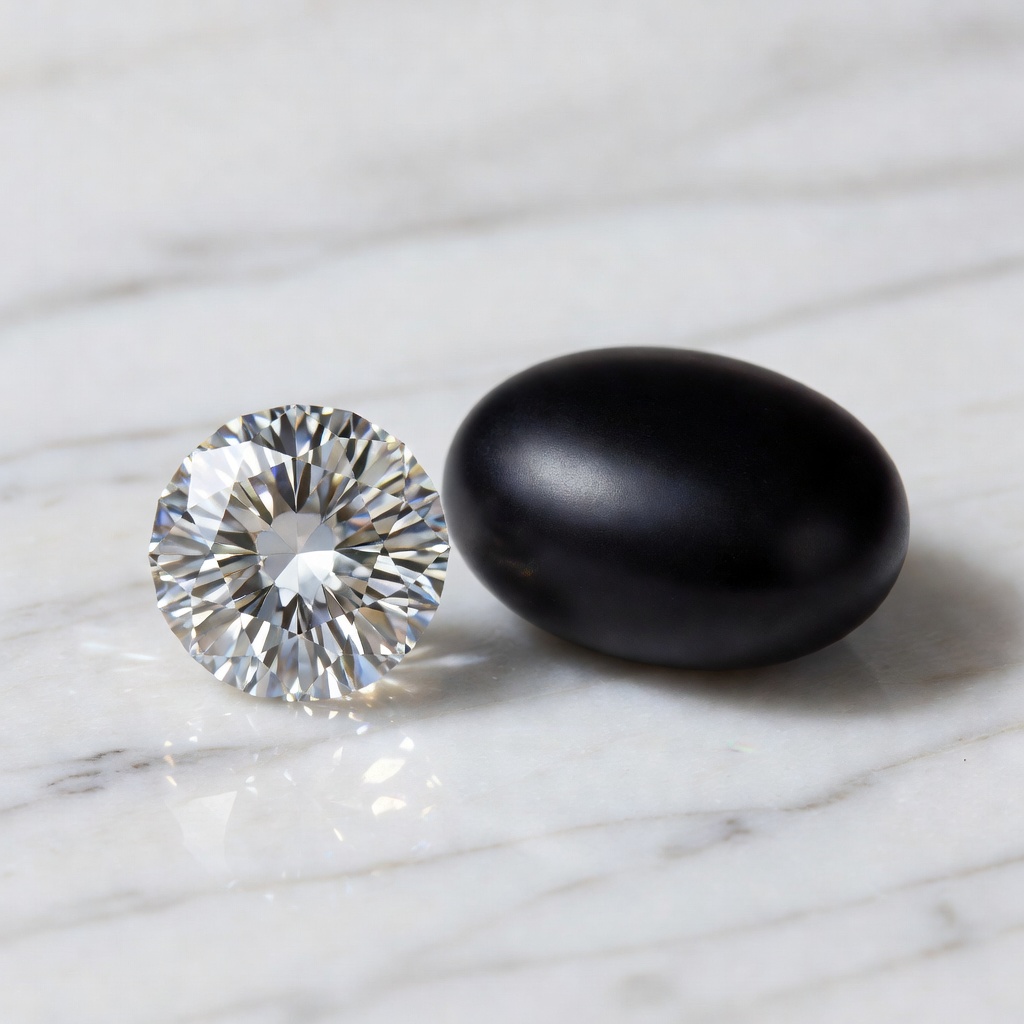
The aesthetic differences between these black jet gemstone specimens and their diamond counterparts create distinct visual statements in jewelry design. Diamonds display adamantine luster, characterized by exceptional brilliance, fire (dispersion of light into spectral colors), and scintillation (sparkle when moved). Even black diamonds, which appear opaque due to dense graphite inclusions, retain metallic luster and sharp facet edges that catch light dramatically. High-quality diamonds range from completely transparent to translucent, allowing light to penetrate and reflect internally.
Jet presents a deep, velvety black appearance with vitreous to submetallic luster when polished to perfection. Unlike diamonds, jet remains completely opaque, absorbing rather than refracting light to create a mysterious, absorbent quality that appears to swallow illumination. Surface characteristics differ markedly: diamonds typically receive faceted cuts with sharp edges to maximize light return, while jet artisans prefer cabochon cuts, intricate carvings, or beaded forms that showcase the material's uniform color and smooth texture. When examined under magnification, jet may show wood grain patterns or pyrite inclusions, whereas diamonds reveal characteristic crystal growth patterns or mineral inclusions depending on their formation environment.
Durability and Everyday Wearability
Practical considerations regarding gemstone durability significantly influence how these materials function in daily life. Diamonds excel as everyday wear stones, particularly in engagement rings and wedding bands, due to their supreme scratch resistance and ability to withstand impacts that would shatter softer gems. Their chemical inertness allows them to resist damage from perfumes, household cleaners, and environmental exposure, maintaining their polish for generations with minimal maintenance.
Jet requires significantly more careful handling and protective settings to preserve its beauty. Due to its softness, jet proves unsuitable for rings that encounter hard surfaces during daily activities, but works beautifully in pendants, earrings, and brooches that receive less physical contact. Chemical sensitivity poses particular concerns for jet owners, as the hydrocarbon composition reacts adversely to alcohol-based perfumes, hairsprays, and cosmetics, which can etch the surface or cause permanent discoloration. Heat tolerance varies dramatically between the two: diamonds withstand jeweler's torches exceeding 700 degrees Celsius, while jet may crack, craze, or even burn when exposed to high temperatures or prolonged sunlight, requiring removal before bathing or sunbathing.
Value, Pricing, and Investment Potential
The gemstone value comparison between diamond and jet reflects their relative scarcity, durability, and market demand. Diamond pricing follows the established Four Cs system (Carat, Cut, Color, Clarity), with high-quality stones commanding hundreds to thousands of dollars per carat. Investment-grade diamonds, particularly those exceeding one carat with D-F color and IF-VVS clarity grades, serve as portable wealth stores and hedge against inflation, maintaining liquidity in global markets.
Authentic Whitby jet commands modest prices ranging from $10 to $100 per piece depending on size, craftsmanship, and historical provenance, though rare antique Victorian pieces may fetch higher premiums among collectors. Unlike diamonds, jet rarely serves as a financial investment but rather appeals to niche markets specializing in historical jewelry, mourning artifacts, and gothic fashion. Treatment considerations further differentiate the markets: enhanced black diamonds undergo irradiation or heat treatment to achieve uniform color, while natural jet's value depends heavily on verification of untreated, authentic Whitby origin rather than Spanish or simulated alternatives. Collectors should request provenance documentation for expensive jet pieces, as plastic imitations and reconstructed materials flood the lower end of the market.
Historical Significance and Cultural Symbolism
Cultural associations with these gemstones reveal fascinating contrasts in human symbolism across different eras. Diamonds represent eternal love, unbreakable commitment, and social status in modern Western culture, serving as the traditional April birthstone and the cornerstone of engagement traditions since De Beers' 1947 "A Diamond is Forever" campaign. Their brilliance symbolizes clarity, purity, and invincibility, adorning royalty and celebrities as ultimate status symbols.
Victorian mourning jewelry represents jet's most significant historical application, reaching peak popularity following Prince Albert's death in 1861 when Queen Victoria adopted strict mourning protocols. The deep black color symbolized grief and remembrance, with strict etiquette requiring widows to wear jet jewelry exclusively during the first two years of bereavement. Ancient Romans similarly valued jet for protective amulets, believing the material could ward off evil spirits and the evil eye. While diamonds celebrate life's joyful milestones, jet traditionally commemorates loss and serves memorial functions, though contemporary fashion has reinterpreted jet for gothic, bohemian, and minimalist aesthetic movements.
Identification and Testing Methods
Accurate gemstone identification requires understanding the distinct testing methods that differentiate these materials. Visual inspection provides initial clues: when rubbed against unglazed porcelain, jet leaves a characteristic brown streak due to its organic composition, while diamonds leave no streak. The static electricity test proves particularly effective for jet identification, as the material exhibits pyroelectric properties—when rubbed vigorously with wool or silk, jet attracts lightweight objects like paper or hair, whereas diamonds remain inert.
Gemological testing offers definitive differentiation through refractive index measurements: diamonds register 2.42 while jet measures 1.66, easily distinguished using a refractometer. Professional laboratories employ advanced spectroscopy and X-ray fluorescence analysis to confirm chemical composition, detecting the pure carbon signature of diamonds versus the complex hydrocarbon profile of jet. Thermal conductivity probes provide immediate field identification, as diamonds disperse heat so rapidly that they feel immediately cold to the lip, while jet feels neutral or warm. Specific gravity testing using hydrostatic weighing can confirm suspicions, as diamonds sink rapidly in heavy liquids while jet floats or suspends in certain solutions.
Jewelry Applications and Styling Options
Design applications for fossilized wood jewelry versus diamond pieces reflect their respective physical properties and cultural associations. Diamonds offer unparalleled versatility, appearing in solitaire engagement rings, tennis bracelets, eternity bands, pavé settings, and intricate halo designs. Their durability permits prong settings that expose maximum surface area to light, while their brilliance complements any metal choice from platinum to rose gold.
Jet traditionally appears in beaded necklaces, carved cameos depicting mourning scenes or classical profiles, brooches with intricate floral designs, and religious rosaries. Metal pairings differ significantly between the two: diamonds typically mount in platinum, white gold, or yellow gold to enhance brilliance, while jet historically paired with silver, gunmetal, or blackened steel to maintain the somber aesthetic appropriate for mourning wear. Contemporary fashion has revitalized jet in gothic jewelry, steampunk accessories, and bohemian statement pieces, often combined with silver or leather for edgy modern looks. While diamonds transcend fashion trends as timeless luxury items, jet offers seasonal versatility for autumn wardrobes and alternative fashion subcultures.
Comprehensive Comparison: Diamond vs Jet
| Characteristic | Diamond | Jet |
|---|---|---|
| Mohs Hardness | 10 (Highest) | 2.5-4 (Soft) |
| Specific Gravity | 3.52 g/cm³ | 1.30-1.35 g/cm³ |
| Refractive Index | 2.42 | 1.66 |
| Thermal Conductivity | High (feels cold) | Low (feels warm) |
| Origin | Mineral (Mantle) | Organic (Fossilized Wood) |
| Transparency | Transparent to Translucent | Opaque |
| Typical Cut | Faceted | Cabochon or Carved |
| Price Range | $1,000-$50,000+ per carat | $10-$100 per piece |
| Best Use | Daily wear, Engagement rings | Occasional wear, Pendants |
| Chemical Resistance | Resistant to most chemicals | Damaged by perfumes/acids |
Making Your Final Decision
Selecting between diamond vs jet ultimately depends on assessing your lifestyle, budget constraints, aesthetic preferences, and maintenance commitment. Active individuals or those seeking heirloom engagement pieces should prioritize diamonds for their unparalleled durability and ability to withstand daily activities including handwashing, exercise, and physical work. The significant price differences between these materials make jet an accessible option for collectors seeking statement pieces or historical reproductions without substantial financial investment.
Consider your aesthetic goals carefully: diamonds provide brilliant sparkle and light performance suitable for traditional luxury and celebratory occasions, while jet offers deep, mysterious black beauty perfect for gothic fashion, autumn styling, or memorial jewelry. Maintenance requirements differ substantially—diamonds need only occasional professional cleaning and inspection of settings, whereas jet demands careful storage in soft cloth, avoidance of chemical exposure, and gentle cleaning with plain water only. For those choosing gemstones for specific occasions, diamonds serve lifelong daily wear while jet excels as specialty pieces for evenings, ceremonies, or fashion statements where their delicate nature can be protected and appreciated.
Frequently Asked Questions
Is jet stone worth anything compared to diamond?
While jet is significantly less valuable than diamond, authentic Whitby jet commands collector prices due to scarcity. Unlike diamonds which serve as investments, jet holds sentimental and historical value, particularly in Victorian mourning jewelry pieces.
Can you wear jet jewelry every day like diamond?
No, jet is not suitable for daily wear due to its 2.5-4 Mohs hardness rating. It scratches easily and is damaged by chemicals in perfumes and cosmetics. Reserve jet for occasional wear while diamonds withstand daily activities including handwashing and physical work.
How can you tell the difference between black diamond and jet?
Black diamonds feel cold and heavy with metallic luster and may show surface facets, while jet feels warm, lightweight, and displays a velvety matte finish. The thermal conductivity test is definitive: diamonds disperse heat instantly while jet retains warmth.
Why is jet considered a gemstone while it's just fossilized wood?
Jet meets all criteria for organic gemstones: it is rare (specific geological conditions required), possesses beauty when polished, has been used in adornment for 10,000+ years, and is durable enough for carving. Like amber and pearl, its organic origin doesn't disqualify it from gem classification.
Which is better for mourning or memorial jewelry?
Jet is historically preferred for mourning jewelry due to its deep black color and Victorian associations with grief. However, black diamonds are increasingly chosen for modern memorial pieces offering permanence and durability that jet cannot match for heirloom longevity.
Do diamonds and jet have the same spiritual properties?
No, they possess distinct metaphysical associations. Diamonds amplify energy, promote clarity, and symbolize invincibility and purity. Jet is used for grounding, protection against negative energy, and alleviating grief. They serve opposite but complementary purposes in crystal healing practices.
Is jet harder than other organic gems like amber or pearl?
Yes, jet (2.5-4 Mohs) is slightly harder than amber (2-2.5) and comparable to pearl (2.5-4.5). However, all three organic gems require similar care: protection from chemicals, heat, and scratching. Jet is denser and less brittle than amber but more fragile than pearl against acids.
Can jet be faceted like a diamond?
Jet is rarely faceted because its softness causes edges to round quickly and its opacity prevents light reflection through facets. Instead, jet is traditionally carved, polished en cabochon, or bead-cut to showcase its uniform color and smooth texture. Faceting would compromise its structural integrity.