Introduction: Understanding Diamond vs Ivory
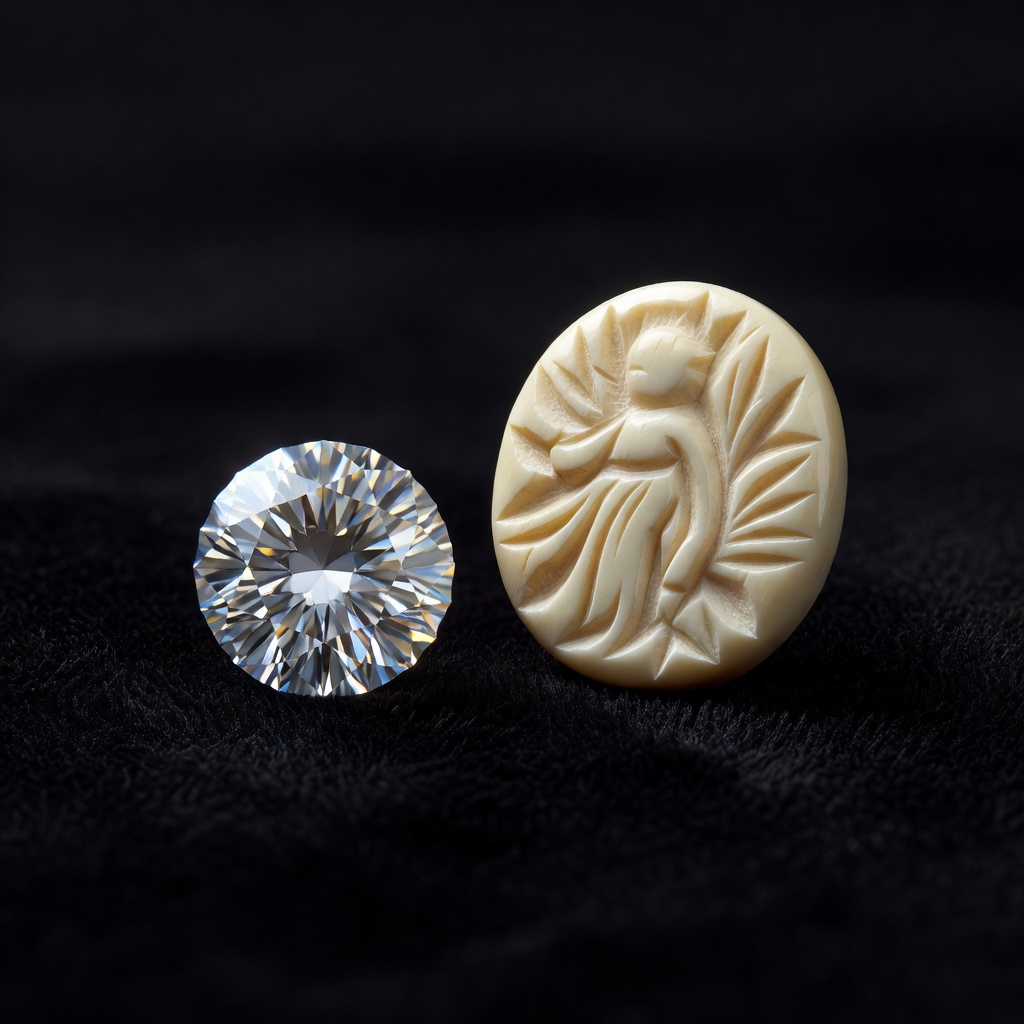
When examining the fundamental differences between crystallized carbon and biological dentin, the diamond vs ivory comparison reveals two materials that occupy vastly different positions in both geological classification and ethical consciousness. Diamonds represent the ultimate mineral gemstone, formed under immense pressure deep within Earth's mantle over billions of years, while ivory consists of modified tooth structure harvested from elephant tusks, walrus teeth, or extinct mammoth remains. This comparison matters profoundly for modern consumers who prioritize ethical gemstones in their purchasing decisions, as well as for investors seeking portable wealth that aligns with evolving legal frameworks and environmental values.
The distinction between these materials extends far beyond their chemical compositions into complex territories of international law, conservation ethics, and long-term asset retention. While diamonds have faced scrutiny regarding conflict sourcing—addressed through modern certification schemes—ivory carries the irreversible burden of wildlife exploitation and species endangerment. Prospective buyers must understand that these materials differ fundamentally in durability, with one offering permanence suitable for daily heirloom wear and the other requiring delicate preservation; in legality, with one maintaining robust global markets and the other facing strict prohibition; and in value retention, where market dynamics have diverged dramatically over recent decades.
Origins and Formation: Geological vs Biological
The creation of diamonds begins approximately 90 to 120 miles beneath Earth's surface, where temperatures exceed 2,000 degrees Fahrenheit and pressures reach 725,000 pounds per square inch. Over 1 to 3 billion years, carbon atoms crystallize into the isometric lattice structure we recognize as diamond, eventually reaching the surface through rare volcanic eruptions called kimberlite pipes. This geological process results in conflict-free diamonds when sourced from regulated mines that adhere to environmental restoration standards and fair labor practices, particularly in Canadian territories where blockchain tracing technology now provides immutable provenance records from mine to market.
Ivory formation follows an entirely biological trajectory, developing as elongated incisor teeth in elephants, walruses, narwhals, and prehistoric mammoths. Composed primarily of dentin—the calcified tissue beneath tooth enamel—ivory consists of microscopic tubules arranged in intersecting patterns that create its characteristic grain. Unlike diamonds, which exist as organic vs mineral gemstones categorization debates actually place ivory firmly in the organic camp while diamonds remain mineral. Modern ethical alternatives include fossilized mammoth ivory, sourced from Siberian permafrost where ancient remains emerge as glaciers retreat, offering legal ivory options that do not contribute to current poaching pressures. However, even mammoth ivory raises paleontological concerns regarding the destruction of scientific specimens.
Physical Properties and Durability Comparison
The gemstone hardness comparison between these materials reveals extreme disparities that directly impact their utility in jewelry applications. Diamonds rank at the absolute peak of the Mohs hardness scale at 10, meaning they can scratch virtually any other material and resist abrasion from daily wear. However, diamonds possess perfect cleavage along four crystallographic planes, making them vulnerable to chipping if struck at specific angles—jewelers must exercise caution when setting princess or emerald cut stones to avoid damage during mounting. Their exceptional thermal conductivity allows diamonds to disperse heat rapidly, which gemologists actually use as an identification method since few other materials transfer heat so efficiently.
Ivory durability presents a stark contrast, measuring merely 2.5 to 3 on the Mohs scale—comparable to a human fingernail. This softness makes ivory highly susceptible to scratching from metal jewelry, dust particles, or even fingernail contact. Furthermore, ivory demonstrates poor thermal stability, expanding and contracting with temperature fluctuations that can induce cracking or "checking"—the development of fine surface cracks. Prolonged UV exposure causes irreversible yellowing as the organic proteins within the dentin break down, whereas diamonds maintain their optical properties indefinitely under normal conditions.
| Characteristic | Diamond | Ivory |
|---|---|---|
| Mohs Hardness | 10 (Highest rating) | 2.5-3 (Very soft) |
| Formation Process | Geological (1-3 billion years) | Biological (tusk growth) |
| Thermal Conductivity | High (heat dispersal) | Low (temperature sensitive) |
| Scratch Resistance | Resistant to all materials | Scratches easily |
| UV Sensitivity | Stable indefinitely | Yellows and degrades |
| Chipping Risk | Moderate (cleavage planes) | High (organic structure) |
Legal Status and Ethical Considerations
The regulatory landscape governing these materials reflects fundamentally different conservation challenges and international responses. CITES wildlife trade regulations—the Convention on International Trade in Endangered Species—placed African and Asian elephants on Appendix I in 1989, effectively banning international commercial trade in elephant ivory. The United States implemented a near-total ban on African elephant ivory in 2016, with limited exceptions for documented antique pieces, while the UK prohibits ivory sales for items manufactured after 1947. These ivory ban regulations have created complex legal minefields for collectors, where possession of undocumented ivory can result in confiscation and criminal penalties, even if the material was acquired decades ago.
Diamond regulation operates through the Kimberley Process Certification Scheme, established in 2003 to prevent conflict-free diamonds from entering legitimate supply chains. While imperfect, this system requires participating nations to certify that rough diamonds are exported in secure containers with documentation proving they do not finance rebel movements. Leading jewelers now exceed these baseline requirements by sourcing Canadian diamonds with blockchain verification or participating in the Diamond Producers Association's sustainability standards. Unlike ivory, where new material inevitably requires animal death or fossil destruction, modern ethical diamonds offer traceable provenance that satisfies both legal requirements and consumer conscience.
Market Value and Investment Potential
Diamonds maintain robust liquidity in global markets supported by standardized grading systems that assess Cut, Color, Clarity, and Carat weight—the famous 4Cs established by the Gemological Institute of America. This standardization allows investors to purchase certified stones with confidence that resale values remain relatively stable, particularly for high-color (D-F) and high-clarity (IF-VVS) specimens above one carat. Blue-chip auction houses like Christie's and Sotheby's regularly feature important diamonds that appreciate consistently, while retail consumers benefit from the material's portability and universal recognition as a crisis-resistant store of wealth.
Ivory markets have experienced catastrophic collapse since international bans took effect. While black markets continue operating in某些 regions, legal trade restrictions have eliminated legitimate resale channels for most collectors. Pre-ban antique ivory that qualifies for legal trade typically sells at fractions of historical values due to limited buyer pools and the stigma associated with ownership. Insurance companies increasingly refuse to cover ivory collections at replacement value, recognizing that compensation would require illegal market purchases. For investment gemstones, diamonds offer superior capital preservation, while ivory has transformed from luxury asset to depreciating liability burdened by storage restrictions and regulatory risk.
Visual Identification and Authentication
Professional gemologists distinguish diamonds through optical characteristics including adamantine luster—the intense reflective quality that creates the stone's famous "fire" or dispersion of light into spectral colors. Under 10x magnification, diamonds display sharp facet junctions and, in some cases, natural inclusions like feathers or crystals that confirm natural origin. Advanced testing employs thermal conductivity probes that instantly identify diamonds based on their unique heat dispersal properties, while spectroscopy can detect laboratory-grown stones from mined equivalents.
Identifying ivory requires examination for Schreger lines—the distinctive cross-hatching patterns visible under magnification or UV light that resemble intersecting engine turning marks. These lines form at angles specific to elephant ivory (typically less than 90 degrees) versus extinct mammoth ivory (greater than 115 degrees), allowing experts to distinguish between illegal elephant material and legal mammoth alternatives. The "hot needle test," where a heated pin touched to an inconspicuous area produces an organic burning smell with ivory but not with plastic imitations, remains a field test for authentication. However, ethical dealers now avoid destructive testing, instead relying on certified documentation for antique pieces.
Care, Maintenance, and Longevity
Diamond jewelry requires minimal but specific maintenance to preserve brilliance. Ultrasonic cleaners safely remove accumulated oils and dirt from diamond settings, while steam cleaning effectively restores fire to stones dulled by hand creams and environmental pollutants. Professional jewelers recommend annual inspections of prong settings to prevent stone loss, particularly for engagement rings subjected to daily wear. Storage presents few complications—diamonds can be kept together without mutual damage, though individual wrapping prevents scratching of metal settings or adjacent gemstones.
Gemstone care for ivory demands archival-level conservation protocols. Collectors must maintain stable humidity levels between 45-55% to prevent the organic material from drying and cracking; silica gel packets or climate-controlled display cases become essential investments. Direct sunlight causes catastrophic photochemical degradation, requiring ivory to be stored in dark environments or displayed under UV-filtered museum glass. Cleaning involves only slightly dampened soft cloths—never submersion in water or chemical cleaners, which can penetrate microscopic tubules and cause internal deterioration. Ivory preservation specialists recommend annual conditioning with mineral oil applied sparingly to prevent desiccation, a maintenance regimen far more demanding than any mineral gemstone requires.
Sustainable Alternatives and Ethical Replacements
Modern consumers seeking ethical gemstones increasingly turn to laboratory-grown diamonds, which share identical chemical composition and optical properties with mined stones while reducing carbon footprints by approximately 40% compared to traditional extraction. These sustainable options eliminate concerns regarding ecosystem disruption or labor exploitation while offering price advantages of 20-30% below comparable mined stones. Leading brands now market these as "created diamonds" or "cultured diamonds," emphasizing their technological achievement rather than geological rarity.
For those seeking the organic aesthetic of ivory without ethical complications, vegetable ivory alternatives derived from tagua nuts (Phytelephas species) provide sustainable solutions. These rainforest seeds, native to South America, carve similarly to animal ivory while developing a comparable creamy patina with age. Artisans in Ecuador and Colombia have revived traditional tagua carving industries, creating buttons, jewelry, and sculpture that satisfy demand for organic materials without wildlife impact. Synthetic alternatives like cellulose nitrate or casein plastics offer additional options for vintage restoration work, though they lack the warmth and depth of natural materials. These elephant ivory alternatives allow collectors to appreciate organic aesthetics while supporting conservation rather than exploitation.
Making the Right Choice: Jewelry Selection Guide
Selecting between these materials for specific applications requires balancing aesthetic desires against practical constraints and ethical considerations. For engagement rings and daily-wear heirlooms, diamonds provide the only rational choice given their permanence, legal clarity, and resistance to damage. Canadian or lab-grown options offer particular appeal for environmentally conscious couples, providing conflict-free diamonds with documented chain of custody. The stone's resistance to scratching ensures that anniversary bands and solitaire rings maintain their appearance across generations with minimal maintenance.
For artistic carving, scrimshaw, or decorative objects where ivory's workability appeals, legal mammoth ivory or vegetable ivory alternatives provide ethical substitutes that respect both wildlife and international law. Collectors pursuing antique ivory must verify documentation proving pre-1947 (UK) or pre-1973 (US) manufacture, maintaining CITES permits and appraisals for insurance purposes. Insurance considerations differ markedly between materials—diamonds require GIA or AGS certificates detailing 4C specifications for accurate replacement valuation, while ivory policies increasingly exclude coverage or require specialized riders acknowledging that replacement may prove legally impossible. Ultimately, ethical jewelry choices favor diamonds for wearable luxury and sustainable alternatives for organic aesthetics, leaving modern elephant ivory in the realm of conservation history rather than contemporary commerce.
Frequently Asked Questions
Is it legal to buy or sell ivory jewelry?
It depends on age and location. In the US, UK, and most countries, raw ivory and post-1976 ivory jewelry are banned under CITES. Only documented antique ivory (pre-1947 in UK, pre-1973 in some US states) may be traded, with strict documentation requirements. Always verify local laws before purchasing.
How can I tell diamond and ivory apart visually?
Diamonds exhibit brilliant sparkle with rainbow fire (dispersion) and perfect clarity, while ivory has a warm, creamy appearance with visible grain lines called Schreger lines. Under magnification, diamonds show sharp facet edges; ivory shows organic cross-hatching patterns.
Are lab-grown diamonds more ethical than antique ivory?
Yes. Lab-grown diamonds provide guaranteed conflict-free origins with verified environmental standards, while even antique ivory creates demand that potentially fuels poaching markets. Lab diamonds also offer superior durability and legal clarity for modern jewelry.
Which holds value better: diamonds or ivory?
Diamonds maintain value significantly better due to liquid global markets, standardized grading, and legal tradeability. Ivory has become a depreciating asset in legal markets due to ownership restrictions, sale limitations, and shifting ethical standards.
What is vegetable ivory and can it replace both materials?
Vegetable ivory comes from tagua nuts (corozo) and offers an ivory-like organic material for carving without ethical concerns. However, it cannot replace diamonds in jewelry settings due to different hardness (2.5-3 vs 10) and optical properties.
Do diamonds and ivory require different insurance documentation?
Absolutely. Diamonds require GIA or equivalent certification with 4C grading for valuation. Ivory requires CITES documentation proving antique status (typically pre-1973) and may be uninsurable for full replacement value due to trade restrictions.
Why is ivory controversial while diamonds are considered acceptable?
Ivory requires killing endangered elephants or other wildlife, causing species decline and ecosystem damage. While diamonds faced conflict concerns (addressed by the Kimberley Process), they are minerals requiring no animal harm. Modern ethical diamonds offer traceable, sustainable sourcing impossible with new ivory.
Can ivory be restored or repaired like diamonds?
Ivory is difficult to repair; cracks often require stabilization rather than invisible repair, and yellowing is irreversible. Diamonds can be re-polished to remove surface scratches and reset multiple times without degradation, making them superior for heirloom jewelry.