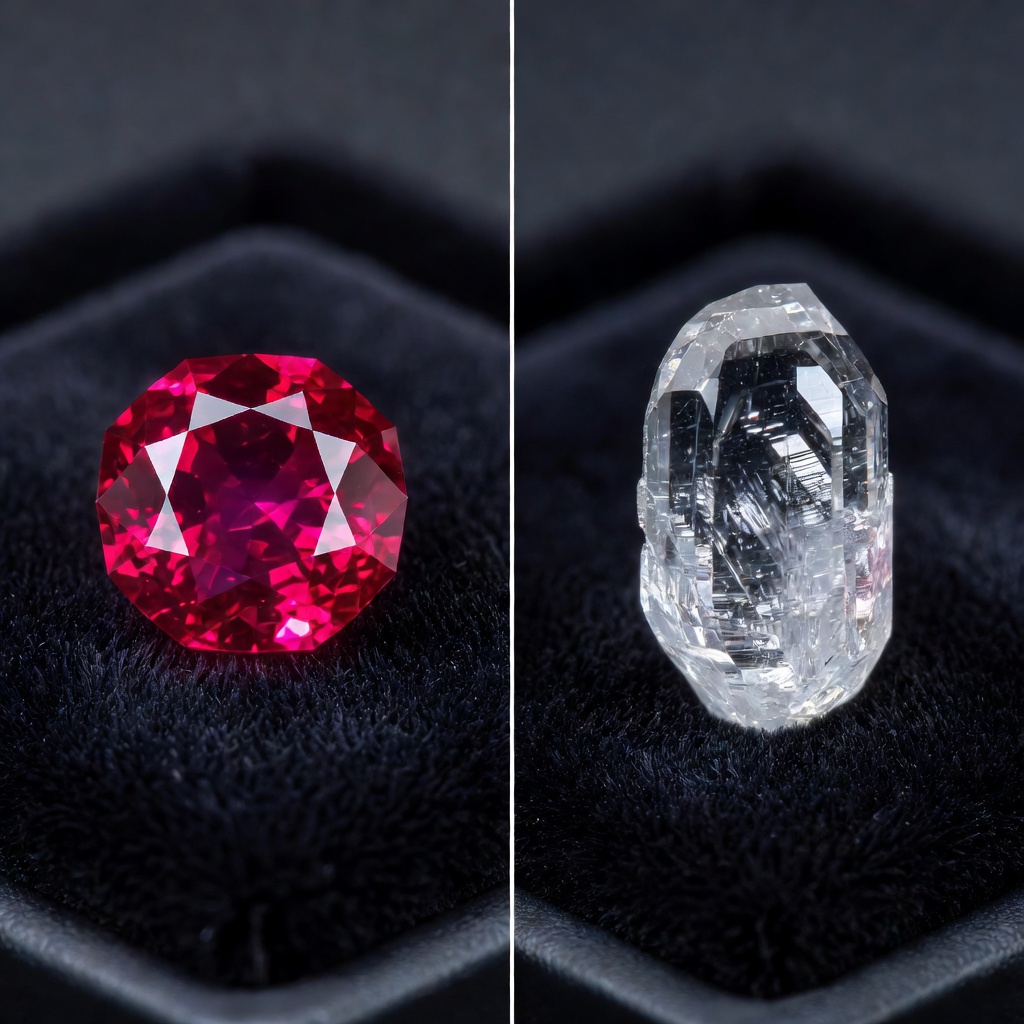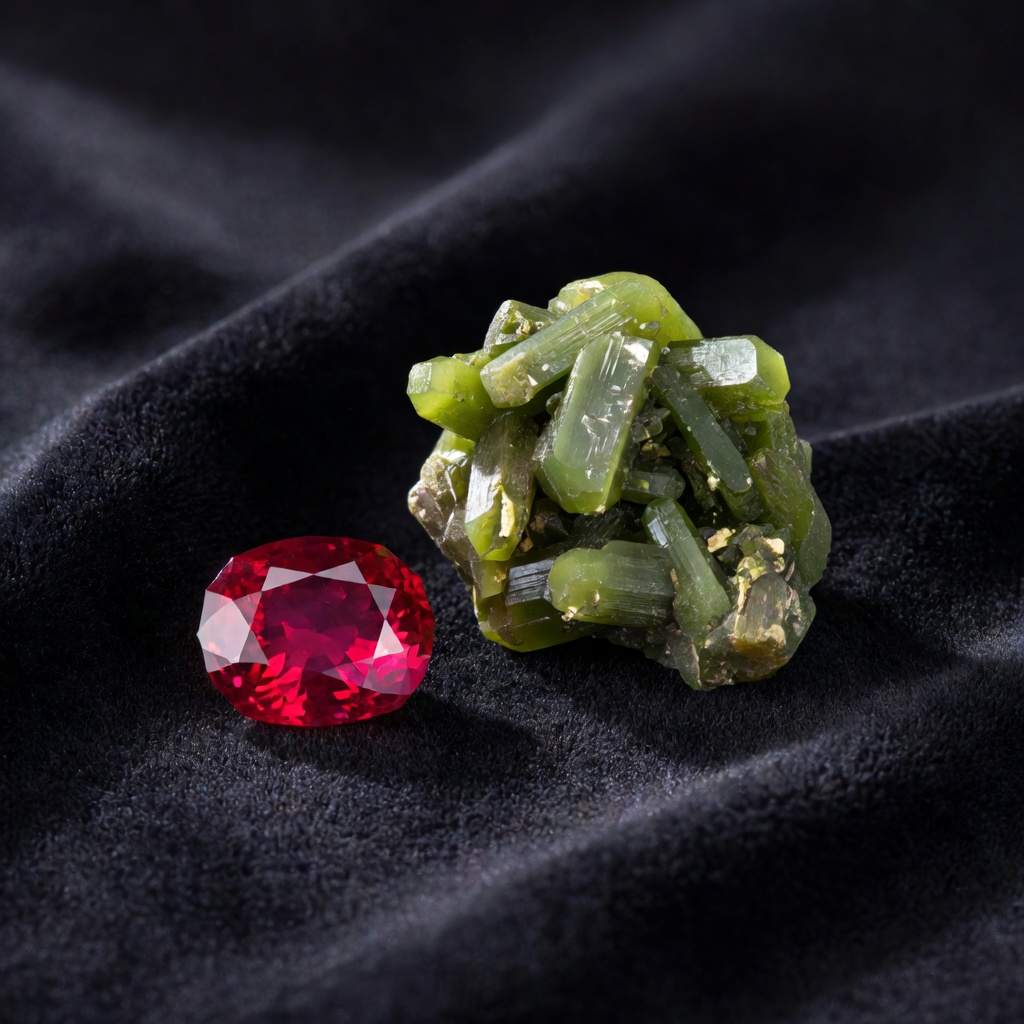
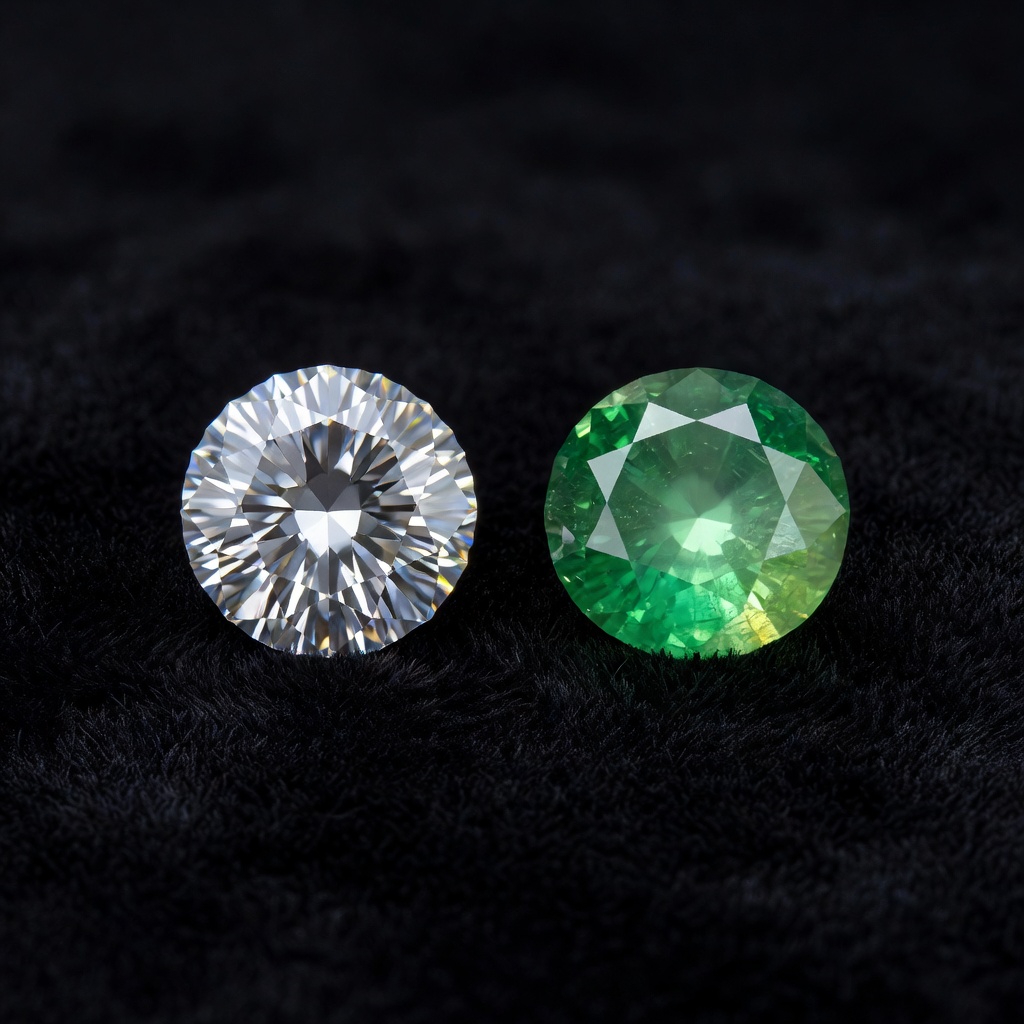
Understanding the Contenders: Diamond vs Hiddenite Basics
When exploring the world of precious gemstones, the comparison between diamond and hiddenite presents a fascinating study in contrasts that appeals to both novice collectors and seasoned gemologists. Diamond represents pure carbon crystallized in an isometric cubic structure, formed under extreme pressure approximately 140 to 190 kilometers deep within the earth's mantle over billions of years. In stark contrast, hiddenite is the green variety of spodumene, a lithium aluminum silicate mineral that crystallizes in pegmatite formations much closer to the earth's surface, containing lithium, aluminum, and silicon in its chemical makeup.
These two gemstones occupy opposite ends of the rarity and accessibility spectrum in the jewelry marketplace, making the diamond vs hiddenite debate particularly interesting for consumers seeking distinctive options. While diamonds have achieved universal recognition as the standard for bridal jewelry and luxury accessories, hiddenite remains a collector's secret, prized for its natural green hues and historical significance. Understanding these fundamental differences helps potential buyers appreciate why one stone commands mainstream premiums while the other offers unique value for those seeking green spodumene gemstone alternatives to traditional clear diamonds.
Chemical Composition and Crystal Structure Differences
The geological origins of these gemstones reveal dramatically different formation environments that directly impact their physical properties and visual characteristics. Diamonds form under crushing pressures of 45 to 60 kilobars and temperatures exceeding 900 to 1,300 degrees Celsius in the stable continental mantle, creating the strongest atomic bonds found in nature. This extreme genesis results in the isometric crystal system where carbon atoms arrange themselves in a tetrahedral lattice, allowing light to travel through the stone with minimal resistance while maintaining structural integrity.
Hiddenite, conversely, develops within lithium-rich pegmatite dikes and granite formations through hydrothermal processes, crystallizing in the monoclinic crystal system with distinct prismatic habits. The gemstone composition of hiddenite includes trace amounts of chromium and vanadium that replace aluminum in the crystal lattice, creating the characteristic green coloration that distinguishes it from other spodumene varieties like kunzite. Unlike diamonds that may contain nitrogen impurities causing yellow tints, hiddenite derives its color specifically from chromium content similar to emeralds, though in different concentration levels within the green spodumene matrix.
The Hardness Factor: Mohs Scale Reality Check
Practical durability represents one of the most significant distinctions when conducting a gemstone hardness comparison between these two materials, directly influencing their suitability for various jewelry applications. Diamond ranks a perfect 10 on the Mohs hardness scale, making it the hardest known natural substance capable of scratching any other material while remaining impervious to damage from daily wear. This exceptional hardness allows diamond jewelry to withstand decades of continuous use, maintaining polish and facet integrity through activities that would destroy lesser gemstones.
Hiddenite registers between 6.5 and 7 on the Mohs scale, placing it in a category with quartz and softer than popular jewelry stones like sapphire and ruby, which necessitates careful consideration regarding hiddenite durability in active lifestyles. While suitable for occasional wear, hiddenite exhibits perfect cleavage in two directions, making it susceptible to chipping or splitting if struck against hard surfaces during daily activities. Jewelry designers typically recommend protective settings such as bezels or halo mounts that shield the girdle and pavilion from impact, rather than exposed prong settings that leave the stone vulnerable to accidental blows.
Color Characteristics: White Brilliance vs Natural Green
The visual appeal of these gemstones diverges dramatically in their approach to color, with each offering distinct aesthetic values that cater to different personal preferences and stylistic expressions. Natural green diamonds rank among the rarest and most expensive colored diamonds in existence, typically resulting from millions of years of natural radiation exposure affecting the crystal lattice, with prices often exceeding hundreds of thousands of dollars per carat for vivid specimens. Most diamonds available in the commercial market achieve colorlessness through the absence of nitrogen or other trace elements, maximizing light return and brilliance.
Hiddenite naturally exhibits yellowish-green to emerald-green hues without requiring artificial treatment or irradiation, offering an affordable entry point for collectors seeking genuine green gemstones. The phenomenon of hiddenite pleochroism adds another dimension to its visual character, as the stone displays different colors—ranging from clear green to yellowish-green or even colorless—when viewed from different crystallographic directions. This pleochroic effect creates a subtle color shift that changes with the viewing angle, unlike diamond's adamantine luster which maintains consistent brilliance regardless of orientation.
Rarity and Geographic Origins
The geographic distribution and historical discovery of these gemstones contribute significantly to their market positioning and collector value in contemporary jewelry markets. Hiddenite originally discovered in Alexander County, North Carolina in 1879 by mineralogist William Earl Hidden, after whom the stone was named, remains the type locality for this rare green spodumene variety. While subsequent deposits have been identified in Afghanistan, Madagascar, Brazil, and Myanmar, fine gem-quality hiddenite from the original North Carolina locality commands premium prices due to its historical significance and typically superior color saturation.
Diamonds sourced from multiple continents including Africa, Russia, Canada, and Australia benefit from extensive global distribution networks and standardized mining operations that ensure steady commercial availability. However, fine gem-quality hiddenite is significantly rarer than commercial-grade diamonds found in typical mall jewelry stores, creating an inverse relationship where the "common" diamond actually refers to industrial or lower-grade material while investment-quality hiddenite appears less frequently at auction houses. This rarity factor makes hiddenite particularly appealing to connoisseurs seeking conversation pieces that distinguish their collections from standard diamond inventories.
Jewelry Applications: Engagement Rings vs Statement Pieces
Selecting appropriate jewelry designs requires understanding the practical limitations and optimal applications for each gemstone based on their physical properties and wear resistance. Diamonds universally recommended for engagement rings and daily wear bands due to their unmatched toughness, resistance to scratching, and ability to maintain fire and brilliance through decades of continuous use without requiring special protective measures. Modern bridal designs featuring diamonds range from delicate solitaires to elaborate halo settings, all suitable for 24/7 wear including sleeping, exercising, and manual labor.
Hiddenite best suited for pendants, earrings, and protected cocktail rings where the stone receives minimal impact and remains shielded from harsh contact with hard surfaces. When incorporating hiddenite into engagement ring alternatives, designers strongly recommend bezel settings that wrap the girdle in metal, or halo designs where surrounding diamonds absorb potential impacts before they reach the softer center stone. Practical examples include Victorian-inspired brooches where hiddenite's green color complements rose gold settings, or Art Deco style earrings where the stones remain stationary and protected from the knocks and bumps that rings typically endure.
Investment Value and Market Pricing Analysis
Financial considerations play crucial roles in gemstone acquisition, with diamond and hiddenite offering fundamentally different value propositions regarding liquidity, appreciation potential, and market stability. Diamonds maintain global liquidity and standardized grading through the 4Cs system (cut, color, clarity, carat), allowing for relatively straightforward valuation and resale through established dealer networks and auction houses worldwide. This standardization creates a robust secondary market where certified diamonds function as portable wealth stores, though retail margins on new diamond purchases typically require significant market appreciation before investors realize profits.
High-grade hiddenite appreciates in collector markets but remains niche, with gemstone investment value dependent heavily on provenance, color intensity, and transparency rather than standardized grading scales. Price per carat comparisons reveal that while commercial-grade diamonds may range from $3,000 to $25,000 per carat depending on quality, fine hiddenite specimens from North Carolina can command $500 to $2,000 per carat for exceptional material, making them accessible to collectors with moderate budgets while still offering appreciation potential. However, hiddenite lacks the immediate liquidity of diamonds, often requiring specialized auction houses or mineral shows to achieve full market value upon resale.
Optical Properties: Brilliance, Fire, and Color Shifts
The interaction of light with these gemstones creates distinctly different visual experiences that influence their desirability for various aesthetic applications and lighting conditions. Diamond exhibits superior brilliance with a refractive index of 2.42 and exceptional dispersion (fire) of 0.044, creating the characteristic sparkle that splits white light into spectral colors, particularly noticeable in well-cut round brilliant stones. This optical performance makes diamonds appear alive with movement, flashing rainbow colors across facets even under subdued lighting conditions.
Hiddenite displays distinct hiddenite pleochroism showing different colors when viewed from different angles, typically revealing combinations of emerald green, yellowish-green, and near-colorless tones depending on the crystal orientation relative to the light source. With a refractive index of approximately 1.66 and vitreous luster, hiddenite lacks the explosive fire of diamond but offers a subtle, sophisticated glow that emphasizes depth and color over brilliance. Clarity characteristics differ significantly as well; diamonds often contain microscopic inclusions visible only under magnification, while hiddenite frequently displays visible growth striations or liquid inclusions that gemologists use to confirm natural origin.
| Characteristic | Diamond | Hiddenite |
|---|---|---|
| Chemical Composition | Pure Carbon (C) | Lithium Aluminum Silicate (LiAlSi₂O₆) |
| Mohs Hardness | 10 (Highest) | 6.5-7 |
| Crystal System | Isometric (Cubic) | Monoclinic |
| Refractive Index | 2.42 | 1.66 |
| Primary Color Cause | Nitrogen (Yellow), Boron (Blue), Radiation (Green) | Chromium & Vanadium |
| Pleochroism | None | Strong (Green/Yellow/Colorless) |
| Optimal Jewelry Use | Daily Wear, Engagement Rings | Occasional Wear, Pendants, Earrings |
| Price Range (Per Carat) | $3,000 - $100,000+ | $100 - $2,000+ |
| Rarety Level | Commercially Available | Significantly Rare (Gem Quality) |
| Care Requirements | Minimal (Ultrasonic Safe) | Protective Storage, Avoid Heat |
Making Your Choice: Lifestyle and Aesthetic Considerations
Selecting between these gemstones ultimately depends on aligning material properties with personal lifestyle requirements and aesthetic preferences that reflect individual values and daily routines. Active lifestyles and daily wear favor diamond's superior toughness, making it the practical choice for medical professionals, athletes, or individuals working with their hands who cannot remove jewelry during activities. Diamonds accommodate modern life without requiring conscious protection, allowing wearers to focus on their activities rather than babysitting their jewelry.
Hiddenite appeals to collectors seeking unique, conversation-starting pieces that demonstrate sophisticated knowledge of gemology beyond mainstream diamond consumption. Budget considerations often favor hiddenite for those desiring substantial green gemstones without the extreme price premiums associated with rare green diamonds, allowing for larger carat weights and bold design statements at accessible price points. When choosing gemstones for specific wardrobes, hiddenite's verdant tones complement autumn color palettes and earth-toned metals like rose and yellow gold, while diamonds offer universal versatility across all color schemes and metal choices.
Care Requirements and Long-term Maintenance
Proper maintenance protocols ensure that fine jewelry retains its beauty and structural integrity across generations, though the specific requirements differ substantially between these two gemstones. Diamonds require minimal maintenance beyond regular cleaning with mild soap and warm water or professional ultrasonic cleaning, as their hardness prevents scratching from dust particles and household grime that might damage softer stones. Annual inspections by professional jewelers help ensure that prongs remain secure and the stone hasn't loosened from its setting, though the diamond itself remains essentially unchanged by normal wear.
Hiddenite needs protective storage separate from harder gemstones to prevent surface scratches from diamonds, sapphires, or even quartz dust commonly found in household environments. Professional cleaning considerations for hiddenite exclude ultrasonic cleaners and steam cleaning, as the stone's perfect cleavage makes it vulnerable to thermal shock and vibration damage. Heat sensitivity warnings for hiddenite prohibit exposure to jewelry torches during repair work or prolonged sunlight exposure in hot cars, as thermal expansion can stress internal inclusions and cleavage planes. Store hiddenite pieces in individual soft cloth pouches and clean them only with mild soap, lukewarm water, and soft brushes to preserve their polish and prevent accidental damage.
Frequently Asked Questions
Is hiddenite durable enough for an engagement ring?
While hiddenite can be used in engagement rings, its 6.5-7 hardness on the Mohs scale makes it susceptible to scratching from daily wear. It requires protective settings like bezels and is better suited for occasional wear rings rather than daily-wear engagement rings compared to diamond's perfect 10 hardness.
Why is hiddenite green while most diamonds are clear?
Hiddenite gets its green color from chromium and vanadium impurities within the spodumene crystal structure. Natural green diamonds, conversely, are extremely rare and usually get their color from natural radiation exposure over millions of years, making untreated green diamonds significantly more expensive than hiddenite.
Which gemstone is more expensive - diamond or hiddenite?
High-quality diamonds generally command higher prices per carat than hiddenite, especially for colorless or fancy green varieties. However, fine gem-quality hiddenite from North Carolina can be quite valuable to collectors, while commercial-grade diamonds may be similarly priced or cheaper than top-tier hiddenite specimens.
Can hiddenite scratch easily compared to diamond?
Yes, hiddenite can be scratched by harder materials including dust particles (quartz), household items, and other gemstones. Diamond is the hardest known natural material and can only be scratched by another diamond. Hiddenite requires careful storage away from other jewelry to prevent surface damage.
Does hiddenite have the same sparkle as diamond?
No, hiddenite does not possess the same brilliance or fire as diamond. While hiddenite has a vitreous luster and can be beautiful, diamond's higher refractive index (2.42 vs hiddenite's 1.66) creates significantly more sparkle. However, hiddenite exhibits pleochroism, showing different green shades when viewed from different angles, which diamond does not.
Where does the best quality hiddenite come from?
The finest hiddenite historically comes from Alexander County, North Carolina, specifically the Adams Mine and Hiddenite area. Other sources include Afghanistan, Madagascar, and Brazil, but North Carolina material is considered the standard for the deepest green color and highest transparency in gem-quality specimens.
Is hiddenite rarer than diamond?
Gem-quality hiddenite is rarer than commercial-grade diamonds found in typical jewelry stores. However, fancy green diamonds are far rarer than hiddenite. While diamonds are more abundant overall, fine hiddenite with intense green color and good clarity is exceptionally rare in the current market.
Can you wear hiddenite every day like a diamond?
Hiddenite is not recommended for everyday wear like diamond due to its moderate hardness and perfect cleavage, which makes it prone to chipping if struck. It's best reserved for special occasion jewelry, pendants, or earrings that don't receive impact, whereas diamond's superior toughness makes it ideal for daily wear including rings and bracelets.