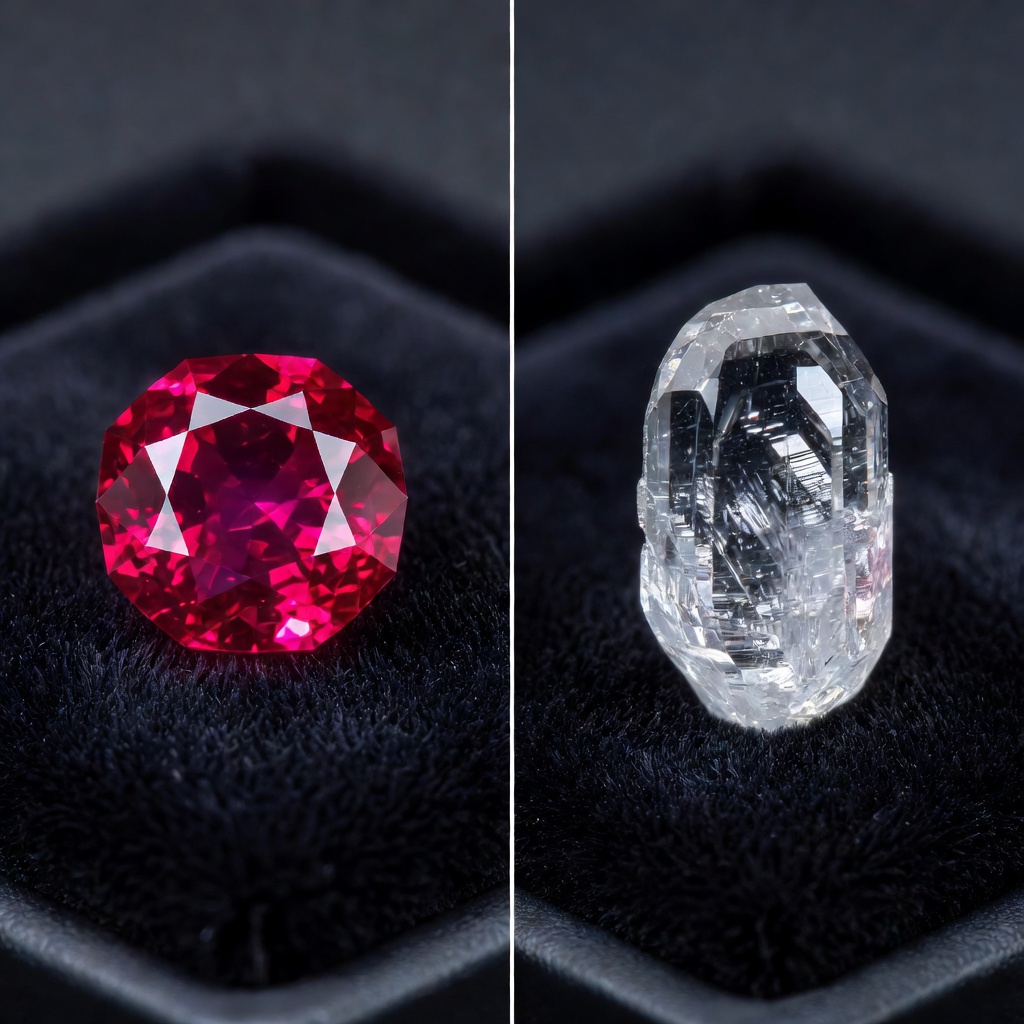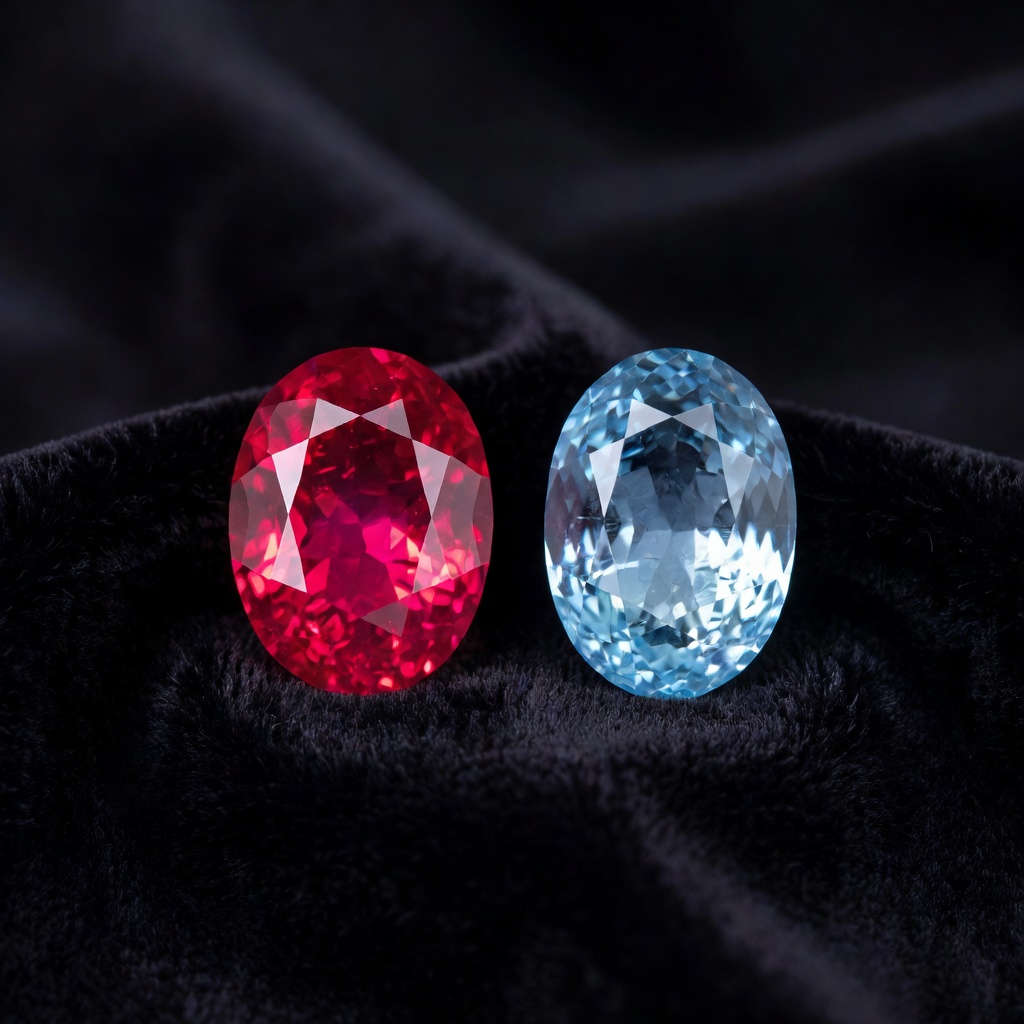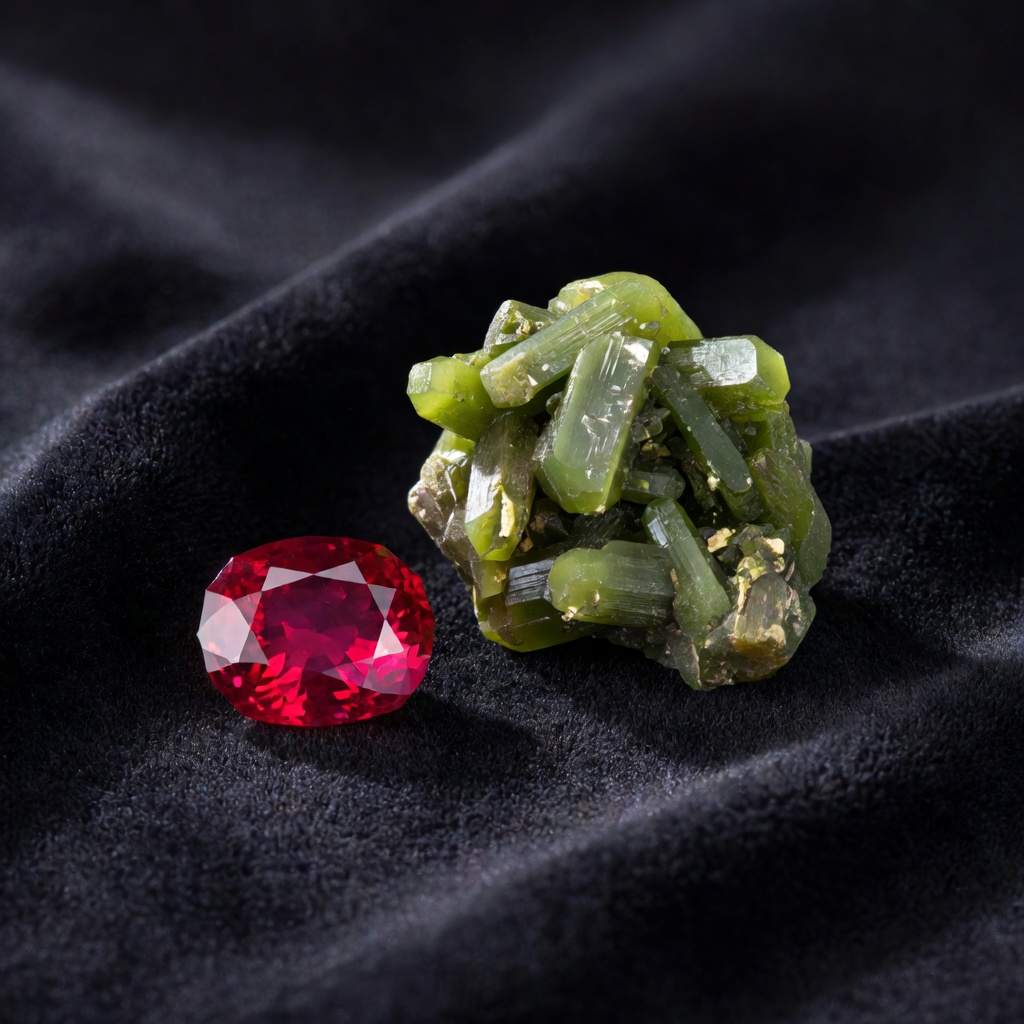
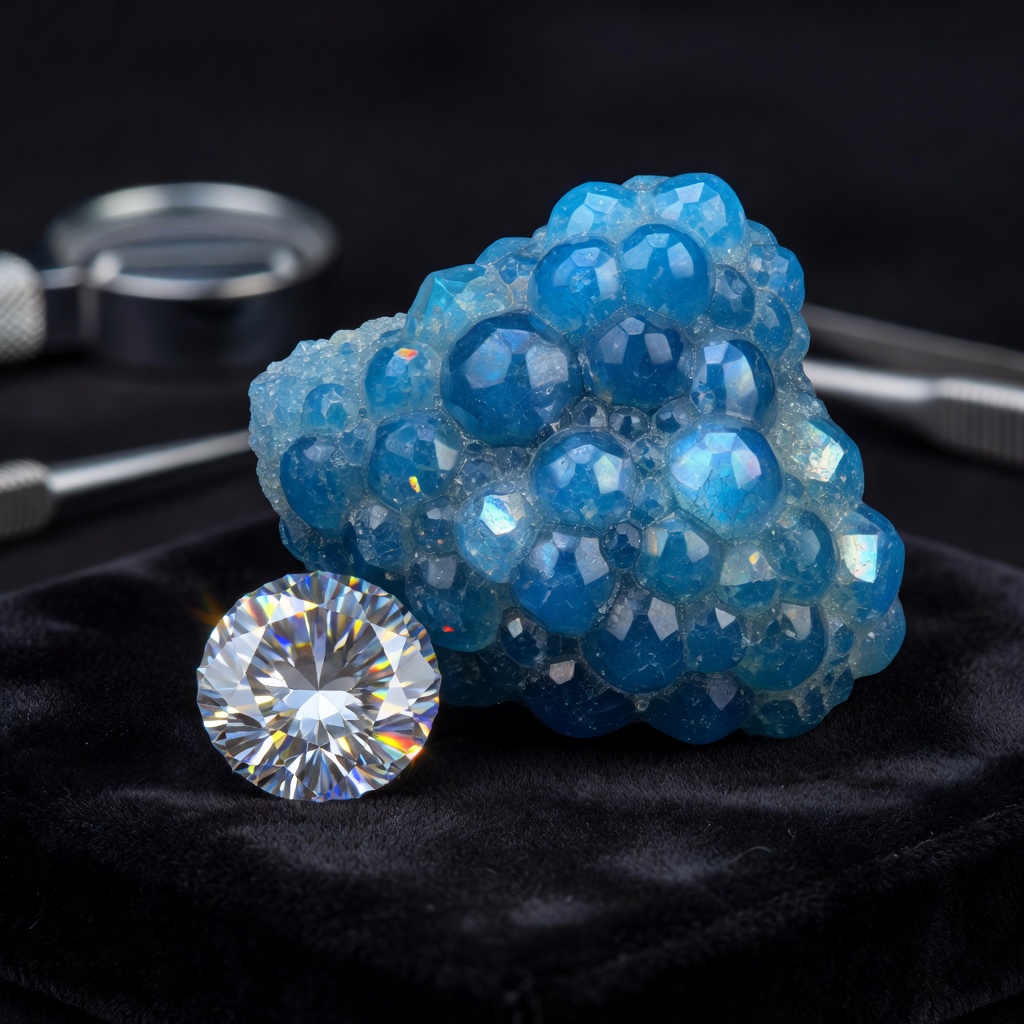
Introduction: Understanding Diamond and Hemimorphite
When exploring the fascinating world of gemstones and collectible minerals, the comparison between Diamond and Hemimorphite presents an intriguing study in contrasts that every collector and jewelry enthusiast should understand. Diamond represents the pinnacle of precious gemstones, formed from pure carbon under extreme pressure and temperatures exceeding 1,400 degrees Celsius deep within the Earth's mantle over billions of years, emerging as the hardest known natural substance with unmatched optical properties. In stark contrast, hemimorphite is a zinc silicate mineral with the chemical formula Zn₄Si₂O₇(OH)₂·H₂O that forms as a secondary mineral in the oxidized zones of zinc ore deposits, primarily valued by mineral collectors rather than mainstream jewelry consumers for its distinctive crystal formations and delicate blue coloration.
Understanding these two materials side by side serves essential educational purposes for geology enthusiasts and provides crucial guidance for collectors and buyers navigating the complex gemstone marketplace with confidence. While both can exhibit captivating blue hues that catch the eye, they diverge dramatically in hardness, market value, durability, and intended applications, making this gemstone comparison guide vital for anyone considering either material for collection, investment, or personal adornment. Whether you are drawn to the eternal brilliance of diamond or the unique mineralogical significance of hemimorphite, recognizing their fundamental differences ensures you make informed decisions aligned with your specific needs and expectations.
Chemical Composition and Crystal Structure
The atomic architecture of diamond and hemimorphite reveals why these materials possess such vastly different physical properties and formation requirements. Diamond crystallizes in the isometric cubic crystal system, where each carbon atom forms strong covalent bonds with four neighboring carbon atoms in a tetrahedral arrangement, creating an incredibly dense and rigid lattice that accounts for its legendary durability and thermal conductivity. This pure carbon crystal structure requires specific geological conditions found only in kimberlite pipes or alluvial deposits, where volcanic eruptions transport these deep-earth formations to accessible depths through violent, rapid ascents that preserve the carbon lattice from degradation.
Hemimorphite, classified distinctly as a zinc silicate mineral, adopts an orthorhombic crystal system characterized by unequal axes intersecting at right angles, resulting in the mineral's namesake hemimorphic crystal development where the two ends of a crystal display different forms. The complex hydrated zinc silicate composition incorporates water molecules within its structure, making it chemically distinct from carbon-based diamonds and contributing to its lower density and distinct cleavage properties. Formation environments for hemimorphite occur exclusively in secondary enrichment zones within zinc ore bodies, where weathering and oxidation processes alter primary zinc sulfide minerals like sphalerite, creating the specific chemical conditions necessary for hemimorphite precipitation in the oxidized upper portions of ore deposits.
Crystal habits provide immediate visual differentiation between these two minerals, with diamonds typically displaying perfect octahedral crystals, dodecahedrons, or cubes with sharp edges and glass-like faces that gem cutters maximize for brilliance. Hemimorphite exhibits distinctive capillary or botryoidal forms, often appearing as radiating clusters of needle-like crystals, rounded grape-like aggregations, or crusty coatings that mineral collectors prize for their aesthetic complexity rather than geometric perfection. These structural differences fundamentally determine how each material interacts with light, withstands mechanical stress, and responds to cutting and polishing techniques used in lapidary arts.
Hardness and Durability Comparison
The Mohs hardness scale provides the most dramatic contrast between diamond and hemimorphite, establishing the foundation for understanding their respective durability profiles and practical applications. Diamond occupies the apex position at 10 on the Mohs hardness scale, representing the hardest known naturally occurring material capable of scratching any other substance while remaining impervious to damage from daily contact with common materials. Hemimorphite ranks significantly lower at 4.5 to 5 on the same scale, placing it in the same hardness range as apatite and fluorite, meaning it can be scratched by materials including steel knives, copper coins, and even prolonged exposure to household dust containing silica particles.
Cleavage properties and fracture patterns further differentiate these materials regarding their resistance to breaking under impact or pressure. Diamond possesses perfect cleavage in four directions parallel to the octahedral faces, allowing skilled cutters to split rough diamonds along specific planes, yet it exhibits conchoidal fracture patterns when broken irregularly, maintaining sharp edges that contribute to its industrial cutting applications. Hemimorphite displays perfect cleavage in one direction with imperfect cleavage in another, combined with an uneven to subconchoidal fracture that makes it more susceptible to chipping and cracking when subjected to accidental impacts or thermal shock during jewelry manufacturing processes.
Impact resistance and susceptibility to scratching create vastly different scenarios for daily wear scenarios, directly influencing jewelry design choices and longevity expectations. A diamond engagement ring withstands decades of continuous wear against metal surfaces, countertops, and accidental bumps without losing polish or structural integrity, making it suitable for heirloom jewelry intended for generational inheritance. Conversely, hemimorphite jewelry requires protective settings and limited exposure to abrasive environments, as daily wear would result in surface scratching, loss of vitreous luster, and potential structural damage within months rather than years, limiting its viability as a daily-wear gemstone.
Comparative Analysis Table
| Characteristic | Diamond | Hemimorphite |
|---|---|---|
| Chemical Composition | Pure Carbon (C) | Hydrated Zinc Silicate (Zn₄Si₂O₇(OH)₂·H₂O) |
| Crystal System | Isometric (Cubic) | Orthorhombic |
| Mohs Hardness | 10 (Highest rating) | 4.5 - 5 |
| Luster | Adamantine (Brilliant) | Vitreous to Pearly |
| Typical Colors | Colorless, Yellow, Brown, Fancy Colors | Blue, White, Colorless, Rare Green |
| Transparency | Transparent to Subtransparent | Translucent to Transparent |
| Specific Gravity | 3.51 - 3.53 | 3.45 - 3.48 |
| Price Range (Per Carat) | $1,000 - $50,000+ (Gem quality) | $5 - $100 (Collector specimens) |
| Durability for Daily Wear | Excellent - Lifetime wear | Poor - Occasional wear only |
| Primary Sources | Botswana, Russia, Canada, Australia | Mexico, Namibia, China |
Visual Characteristics and Optical Properties
Diamond's visual dominance in the gemstone world stems from its exceptional brilliance, fire (dispersion), and adamantine luster that collectively create the iconic sparkle recognized across cultures. The high refractive index of 2.42 causes light to slow dramatically when entering a well-cut diamond, bending significantly before reflecting internally and externally to produce intense brilliance, while the dispersion rate of 0.044 separates white light into spectral colors creating flashes of fire that distinguish diamond from imitations. This adamantine luster—literally meaning diamond-like luster—produces a mirror-like reflectivity that remains unmatched by any other natural material, contributing to diamond's status as the premier choice for engagement rings and statement jewelry pieces.
Hemimorphite presents a distinctly different aesthetic appeal characterized by vitreous to pearly luster and typically blue, white, or colorless appearance that attracts mineral collectors seeking rare blue gemstones with unique formation characteristics. The blue coloration in hemimorphite results from copper content within the zinc silicate matrix, ranging from pale sky blue to intense azure shades that rival more expensive blue gemstones, though the pearly luster on crystal surfaces creates a softer, more subdued glow compared to diamond's brilliant flash. Unlike diamond's consistent transparency, hemimorphite often displays translucency in thicker specimens or botryoidal formations, with light penetrating the outer layers but diffusing within the stone rather than transmitting clearly through the material.
Transparency differences create distinct optical experiences, with high-quality diamonds typically achieving transparency that allows for detailed examination of internal characteristics and precise light return calculations used in gemological grading. Hemimorphite specimens frequently exhibit translucency or opacity in massive forms, with only thin crystals or specific localities producing transparent material suitable for faceting, though even transparent hemimorphite lacks the refractive power to produce diamond-like brilliance. Color zoning and inclusions patterns unique to each mineral type provide identification keys, as diamonds may display growth patterns, mineral inclusions, or graining, while hemimorphite often shows banded coloration, internal radial structures, or associated mineral inclusions like smithsonite and aurichalcite that indicate its specific formation environment.
Rarity, Mining, and Geographic Sources
Global diamond production centers operate across multiple continents, with Botswana, Russia, Canada, and Australia currently dominating the market through sophisticated large-scale mining operations that extract kimberlite pipes and alluvial deposits. The Jwaneng and Orapa mines in Botswana represent some of the world's richest diamond deposits, while Russia's Alrosa operations in Siberia access pipes beneath permafrost layers, and Canadian mines in the Northwest Territories utilize open-pit methods to access high-grade deposits discovered in the 1990s. These industrial operations produce millions of carats annually, creating a controlled supply chain that, while substantial in volume, carefully manages the release of gem-quality stones to maintain market stability and pricing structures.
Hemimorphite mining occurs exclusively as a secondary mineral found in oxidized zinc deposits, with significant deposits located in Mexico (Mapimi and Durango regions), Namibia (Tsumeb and Berg Aukas mines), and China (Guangxi and Yunnan provinces), where it forms through the weathering of primary zinc sulfide ores. Unlike diamond mining, hemimorphite extraction typically occurs as a byproduct of zinc mining operations or through specialized specimen mining by mineral collectors and small-scale operations targeting specific oxidized zones within abandoned or active zinc mines. The relative abundance of industrial diamond availability contrasts sharply with hemimorphite specimen scarcity, as high-quality display pieces with intense blue coloration and well-formed crystals remain genuinely rare, particularly from historically significant localities that have been depleted or closed to collecting.
Sustainable mining considerations and ethical sourcing present different challenges for both materials, with the diamond industry implementing the Kimberley Process to prevent conflict diamond trade while facing ongoing scrutiny regarding environmental impact and labor practices in artisanal mining sectors. Hemimorphite mining generally carries lower environmental impact due to its association with existing zinc mining infrastructure, though collectors must verify that specimens are legally collected and exported, particularly from protected mining districts or countries with strict mineral export regulations. The zinc ore deposits yielding fine hemimorphite specimens are finite geological resources, with many classic localities like Tsumeb in Namibia having ceased primary mining operations, thereby increasing the rarity and value of existing high-quality specimens in the collector market.
Market Value and Investment Considerations
Price per carat analysis reveals the stark economic divergence between these materials, with high-quality diamonds commanding thousands of dollars per carat depending on the 4Cs grading system, while even exceptional hemimorphite specimens typically trade for modest prices ranging from five to one hundred dollars per carat. A one-carat, VS1 clarity, G-color diamond with excellent cut might retail between $5,000 to $8,000, whereas a similarly sized faceted hemimorphite, if available, might sell for under $50, with raw collector specimens pricing based on aesthetic appeal and crystal size rather than standardized gemological metrics. This hemimorphite vs diamond value comparison reflects not only rarity but market demand, established luxury branding, and functional durability that supports diamond's position as a store of value and symbol of permanence.
Factors driving diamond value center on the 4Cs (cut, color, clarity, carat) established by the Gemological Institute of America, creating standardized grading that allows for liquid international trading, insurance valuation, and consumer confidence in purchasing decisions. Hemimorphite valuation depends primarily on crystal size, color intensity (with electric blue specimens commanding premiums), crystal formation quality (well-terminated crystals preferred over massive material), and provenance from specific historic mines, lacking the standardized grading system that enables diamond's commodity-like trading characteristics. Investment potential and liquidity differ dramatically, as diamonds enjoy established resale markets through jewelers, auction houses, and diamond bourses, while hemimorphite functions primarily within the specialized mineral collecting community with limited liquidity and price appreciation dependent on collector trends rather than fundamental industrial demand.
Industrial applications of diamond extend far beyond jewelry, encompassing cutting tools, drill bits, heat sinks, and high-tech applications in quantum computing and optics, creating additional demand that supports pricing even during fluctuations in the luxury goods market. Hemimorphite finds no significant industrial application, serving purely ornamental and decorative purposes as a collector's mineral or occasional jewelry component, meaning its value derives entirely from aesthetic appreciation and collecting interest rather than functional utility. However, for mineral collectors, exceptional hemimorphite specimens from depleted localities like Tsumeb have demonstrated consistent appreciation over decades, often outperforming commodity diamonds in percentage gains, though with significantly higher liquidity risks and narrower buyer pools when divestment becomes necessary.
Jewelry Applications and Wearability Factors
Diamond's versatility in jewelry design spans all categories including high-impact engagement rings, wedding bands, tennis bracelets, and daily wear pieces that withstand the mechanical stresses of active lifestyles without compromise to appearance or structural integrity. Jewelry designers utilize diamond's exceptional hardness to create delicate prong settings, tension mounts, and intricate pave work that exposes the stone to daily contact while maintaining security, knowing that the gemstone will not abrade or lose polish even after decades of continuous wear against metal and environmental surfaces. This durability allows for traditional solitaire engagement rings, stackable bands, and statement pieces that accompany wearers through all activities, from office work to outdoor recreation, without requiring removal or special precautions beyond standard jewelry care.
Hemimorphite jewelry faces significant limitations due to its 4.5-5 Mohs hardness rating, making it suitable only for pendants, earrings, and protected settings where the stone avoids direct impact with hard surfaces during normal daily activities. Practical case studies from jewelry manufacturers indicate that hemimorphite rings worn daily show visible scratching and loss of polish within three to six months, while bezel-set pendants worn occasionally may maintain their appearance for years with proper care, demonstrating that design choice directly impacts longevity for this delicate mineral. Setting requirements mandate bezel, halo, or protective box mounts that shield hemimorphite's edges and surface from contact, contrasting sharply with diamond's compatibility with elevated prong settings that maximize light exposure and visual impact.
Design considerations and metal compatibility require careful planning when incorporating hemimorphite into jewelry, as the setting must accommodate the mineral's sensitivity to heat during soldering processes and its susceptibility to thermal shock. Jewelers typically create hemimorphite settings using pre-fabricated bezels that allow cold connections or very careful soldering with heat shields to prevent damage to the stone, whereas diamonds withstand the high temperatures of jewelry repair and manufacturing without damage. Metal choices for hemimorphite often favor protective gold bezels or sterling silver settings with substantial metal coverage, while diamond settings maximize open work and minimal metal to enhance brilliance, reflecting the fundamental difference in how these materials interact with wear environments and manufacturing techniques.
Care, Maintenance, and Longevity
Cleaning protocols for diamonds allow for aggressive methods including ultrasonic cleaners, steam cleaning, and immersion in ammonia-based solutions that remove accumulated oils and debris without risking damage to the stone's surface or structural integrity. Professional jewelers routinely use steam cleaners to restore diamond brilliance in seconds, while home care can involve soaking in warm water with mild dish soap followed by soft brushing, making diamond maintenance convenient for owners who desire consistently sparkling jewelry with minimal effort. These robust cleaning options ensure that diamond jewelry maintains its optical performance indefinitely, with professional cleaning recommended every six months to check setting security and remove buildup from hard-to-reach areas.
Hemimorphite care requires significantly gentler approaches, as ultrasonic vibrations can cause internal fractures to propagate through the relatively soft mineral, and steam cleaning risks thermal shock that may crack the stone due to its hydrated chemical structure and lower thermal conductivity. Owners should clean hemimorphite using only a soft, damp cloth without abrasive chemicals, gently wiping the surface to remove oils while avoiding soaking that might affect any matrix material or adhesives used in protective settings, preserving the pearly luster without mechanical or chemical stress. Storage requirements mandate separate soft pouches or individual compartments in jewelry boxes to prevent hemimorphite from contacting harder gemstones like diamonds, sapphires, or quartz that would scratch its surface, whereas diamonds can be stored together without risk of mutual damage.
Professional maintenance schedules for diamond jewelry include annual prong inspections, tightening, and repolishing of metalwork, with the stones themselves requiring no restoration unless damage occurs from extreme impact that might chip even this hard material along cleavage planes. Hemimorphite pieces require more frequent inspection of protective bezels to ensure the stone remains secure, with repolishing of the gemstone itself sometimes necessary every few years if worn occasionally, though many collectors choose to display hemimorphite as mineral specimens rather than jewelry to avoid degradation. Repair considerations reveal that damaged diamonds can often be recut to remove chipped areas, maintaining value albeit with reduced carat weight, while damaged hemimorphite typically cannot be recut due to its scarcity in facetable material and low value relative to cutting costs, making prevention of damage essential for preservation.
Final Verdict: Choosing Between Diamond and Hemimorphite
Determining the best use cases for these materials requires honest assessment of intended purpose, with diamond serving as the optimal choice for heirloom jewelry, daily wear pieces, and investment-grade purchases intended to appreciate while withstanding generational transfer. Couples seeking engagement rings, individuals wanting worry-free daily jewelry, or investors seeking liquid assets should prioritize diamond for its unmatched durability, established resale markets, and cultural significance that transcends passing fashion trends. The gemstone buying guide consensus confirms that no other material matches diamond's combination of brilliance, durability, and universal recognition for symbols of lasting commitment and personal milestones.
Hemimorphite excels in specific niches including mineral collection displays, educational geological specimens, and occasional-wear jewelry pieces where unique aesthetic qualities outweigh durability concerns. Collectors fascinated by secondary mineral formations, zinc ore geochemistry, or rare blue gemstones find hemimorphite specimens from classic localities like Tsumeb or Mapimi to be worthy centerpieces in mineral collections, offering geological stories and visual beauty that diamonds cannot provide despite their monetary value. Budget considerations favor hemimorphite for those seeking blue gemstones without diamond-level investment, though buyers must accept that these pieces function as costume jewelry or art objects rather than durable assets suitable for daily adornment.
Aesthetic preferences ultimately drive the final decision, with traditional brilliance seekers naturally gravitating toward diamond's fire and scintillation, while those appreciating unique mineral specimen beauty, botryoidal formations, and the subtle pearly luster of zinc silicates find hemimorphite more aligned with their personal tastes. Recommendations for collectors versus fashion-conscious consumers suggest that serious mineral collectors should acquire fine hemimorphite specimens for display cabinets where their crystal forms can be appreciated without wear damage, while fashion-conscious consumers seeking blue jewelry for occasional events might consider hemimorphite earrings or pendants as affordable alternatives to blue diamonds or sapphires. Understanding that Diamond vs Hemimorphite represents a choice between eternal durability and delicate beauty ensures satisfaction regardless of which path you choose, provided expectations align with each material's inherent physical limitations and strengths.
Frequently Asked Questions
Is hemimorphite as hard as diamond?
No, hemimorphite is significantly softer than diamond. While diamond ranks 10 on the Mohs hardness scale (the highest possible rating), hemimorphite ranks only 4.5 to 5. This means hemimorphite can be scratched by many common materials including steel knives and even household dust, whereas diamond can only be scratched by another diamond.
Can hemimorphite be used in engagement rings like diamond?
Hemimorphite is generally not recommended for engagement rings due to its low hardness (4.5-5 Mohs). Daily wear would quickly scratch and damage the stone. Unlike diamond, which withstands constant wear, hemimorphite is better suited for protected jewelry settings like pendants or earrings, or pieces worn only occasionally.
Why is hemimorphite less expensive than diamond?
Hemimorphite costs less because it lacks the rarity grading, global demand, and industrial applications of diamond. While hemimorphite is relatively rare as a collectible mineral, it doesn't have the established jewelry market, hardness durability, or cultural significance that drives diamond prices into thousands of dollars per carat.
What colors does hemimorphite come in compared to diamond?
Hemimorphite typically appears in blue (most valued), white, colorless, or rarely green shades. Diamonds occur in colorless (most popular), yellow, brown, and rare fancy colors including blue, pink, and red. While both can be blue, diamond's blue is caused by boron impurities and commands extreme prices, whereas hemimorphite's blue comes from copper content and is more affordable.
Is hemimorphite a real gemstone or just a mineral?
Hemimorphite is classified as a mineral species that occasionally qualifies as a semi-precious gemstone, though it's primarily collected as a mineral specimen. Unlike diamond, which is universally recognized as a precious gemstone, hemimorphite is softer and rarer in jewelry contexts, making it more popular among mineral collectors than mainstream jewelry consumers.
How can I tell the difference between diamond and hemimorphite?
You can distinguish them through several tests: diamond feels cold to the touch and has adamantine (diamond-like) brilliance with high dispersion (fire), while hemimorphite has a more pearly or vitreous luster. A hardness test will immediately differentiate them—hemimorphite scratches easily with a steel file, while diamond remains unscratched. Additionally, hemimorphite often shows botryoidal (grape-like) formations unlike diamond's octahedral crystals.
Which is more rare, diamond or hemimorphite?
While high-quality gem-grade diamonds are rare, diamond as a mineral is more abundant globally than fine hemimorphite specimens. However, diamonds are mined in much larger quantities industrially. Museum-quality hemimorphite crystals from depleted localities can be extremely rare and valuable to collectors, while industrial-grade diamonds are relatively common. For jewelry purposes, large flawless diamonds remain rarer than display-grade hemimorphite.
Can you wear hemimorphite jewelry every day?
Daily wear of hemimorphite is not recommended due to its 4.5-5 Mohs hardness rating. It scratches easily from contact with harder materials commonly encountered daily, including metal doorknobs, countertops, and even other jewelry. If worn daily, hemimorphite would quickly lose its polish and develop surface scratches, unlike diamond which maintains its finish indefinitely with proper care.