Diamond vs Hematite: An Unlikely but Fascinating Comparison
When exploring the vast world of gemstones, few comparisons seem as stark as diamond vs hematite. While diamonds reign supreme as the ultimate symbol of luxury and eternal commitment, hematite serves as an accessible, earthy mineral prized for its metallic beauty and grounding properties. Both stones capture human imagination for entirely different reasons, driving collectors, jewelers, and spiritual practitioners to evaluate their unique characteristics side by side. Understanding these fundamental differences helps discerning buyers make informed decisions whether they seek investment-grade jewelry, fashion accessories, or metaphysical tools.
The comparison between these two materials typically arises in three distinct contexts: jewelry design, metaphysical healing practices, and industrial applications. Diamonds command attention in high-end engagement rings and investment portfolios, while hematite attracts those seeking affordable alternatives with distinctive aesthetic appeal and alleged protective energies. Despite their vastly different market positions, both stones share fascinating geological histories and practical uses that extend far beyond adornment. This comprehensive gemstone buying guide examines every facet of these remarkable materials to help you determine which stone aligns with your specific needs and budget constraints.
Chemical Composition and Natural Formation
The Carbon Deep Earth Origins of Diamond
Diamonds represent nature's ultimate compression of pure crystalline carbon, formed approximately 90 to 200 miles beneath Earth's surface under extreme pressure exceeding 725,000 pounds per square inch and temperatures around 2,200 degrees Fahrenheit. These extraordinary conditions occur primarily in the mantle's lithospheric keel, where carbon atoms arrange themselves into the tetrahedral crystal structure that gives diamonds their unmatched hardness. The formation process spans 1 to 3 billion years, with volcanic eruptions eventually transporting these precious crystals to the surface through kimberlite pipes at rapid velocities.
Geologists study diamond inclusions to understand ancient Earth conditions, as these stones literally capture time capsules from our planet's early history. The rarity of suitable formation environments combined with the specific geological events required to bring diamonds to mineable depths contributes significantly to their premium valuation. Unlike many gemstones that form in Earth's crust, diamonds require the extreme conditions only found in the upper mantle, making them true miracles of geological probability.
Hematite Stone Properties and Iron Oxide Formation
Hematite, chemically known as iron oxide (Fe2O3), forms through diverse geological processes across sedimentary, igneous, and metamorphic environments worldwide. This mineral typically develops when iron-rich waters precipitate in sedimentary layers or when iron-bearing rocks undergo oxidation and weathering over millions of years. Unlike diamonds' singular formation depth, hematite crystallizes in various settings ranging from hot springs and volcanic activity to simple rust formation on iron-bearing minerals exposed to oxygen and water.
The timeframe for significant hematite deposits ranges from millions to hundreds of millions of years, considerably shorter than diamond formation but still representing vast geological epochs. Massive hematite deposits often indicate ancient iron-rich oceans or extensive hydrothermal activity. This abundance and varied formation environment explain why hematite serves as the primary ore for iron production globally while remaining affordable for jewelry and decorative purposes. The stone's distinctive blood-red streak (from which it derives its name, Greek for "blood-like") reveals its iron content, differentiating it from other dark metallic minerals.
Physical Properties: Hardness and Durability
Understanding the Diamond Hardness Scale Superiority
When evaluating gemstone durability, the Mohs hardness scale provides the definitive comparison point, with diamonds occupying the apex position at 10, representing the hardest known natural substance. This supreme hardness enables diamonds to scratch any other material while remaining immune to damage from daily contact with other surfaces. However, jewelry professionals understand that hardness alone doesn't guarantee invincibility, as diamonds possess perfect cleavage along four crystallographic directions, making them susceptible to splitting or chipping if struck at precise angles.
Specific gravity measurements reveal another interesting contrast: diamonds register at 3.52, relatively light for their size, while hematite feels substantially heavier in hand due to its iron content. This density difference affects jewelry design considerations, as large hematite pieces require sturdy settings and chains to support their weight. When considering long-term wear, diamond's resistance to scratching ensures that facets remain crisp and brilliant for generations, maintaining the stone's optical performance indefinitely under normal conditions.
Hematite Durability Limitations and Care Requirements
Hematite ranks significantly lower on the Mohs hardness scale at 5.5 to 6.5, placing it in the same durability category as feldspar or opal, meaning it scratches relatively easily during daily activities. While this hardness exceeds that of window glass (5.5), it falls far below quartz (7) and topaz (8), making hematite unsuitable for rings subjected to constant impact or abrasion. The mineral's brittle nature combined with its specific gravity of 5.26 creates a heavy yet fragile stone that requires protective settings and careful handling.
Practical testing demonstrates these differences clearly: a diamond will effortlessly scratch hematite, leaving permanent grooves, while hematite cannot mark diamond surfaces. Jewelers often observe that hematite beads and cabochons develop surface scratches and lose their metallic polish after months of regular wear, whereas diamonds maintain pristine surfaces for decades. This durability gap fundamentally determines appropriate applications, with hematite better suited for occasional wear pieces, earrings, or pendants rather than daily-wear rings or bracelets.
Visual Appearance and Optical Characteristics
Diamond Brilliance and Light Performance
Diamonds captivate viewers through three distinct optical phenomena: brilliance (white light reflection), fire (dispersion of light into spectral colors), and scintillation (sparkle from movement). These effects result from diamond's high refractive index of 2.42 and careful faceting that maximizes light return to the viewer's eye. Transparent to translucent in nature, diamonds range from completely colorless (D grade) through fancy vivid colors including yellow, blue, pink, and rare red hues, with each color variation commanding different market premiums based on rarity.
The cutting process dramatically impacts a diamond's visual performance, with round brilliant cuts specifically designed to optimize light handling. When set in jewelry, diamonds create focal points of intense sparkle that draw attention from across rooms, explaining their dominance in engagement rings and statement pieces. This optical complexity contrasts sharply with hematite's visual character, establishing diamonds as the benchmark for precious gemstone beauty in Western jewelry traditions.
Metallic Gemstones Comparison and Hematite's Distinctive Luster
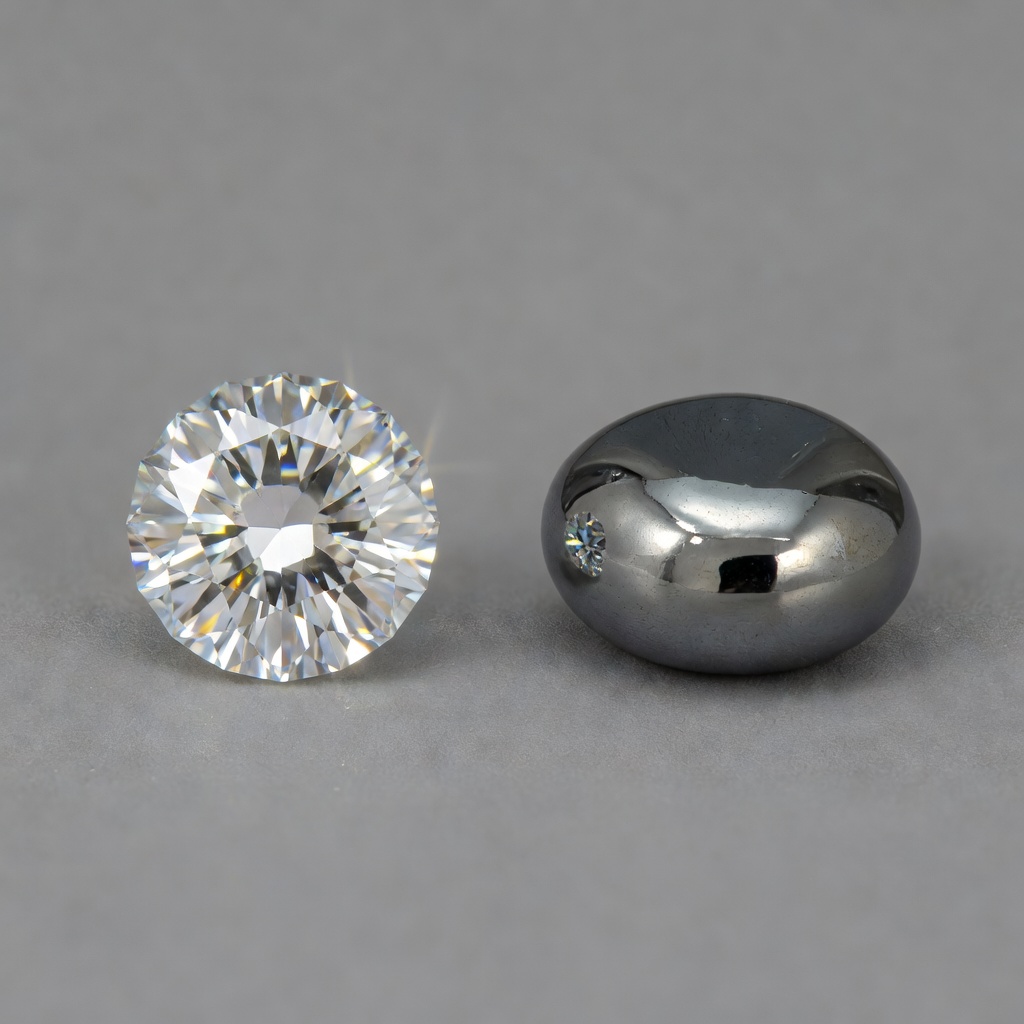
Hematite presents a completely different aesthetic through its opaque, metallic to submetallic luster that resembles polished steel or gunmetal gray to black mirror surfaces. Unlike diamonds' transparency, hematite absorbs light rather than transmitting it, creating a solid, substantial appearance that appeals to those seeking bold, contemporary jewelry statements. High-quality specimens display a distinctive specular or "micaceous" quality with visible crystalline structures that flash when moved under light.
When comparing these stones as metallic gemstones versus traditional gems, hematite offers an industrial-chic aesthetic that complements modern fashion trends while diamonds provide classic elegance. Some jewelry designers combine both materials, using hematite beads with diamond accents to create textural contrast between matte metallic surfaces and brilliant transparent facets. This combination highlights how these materials serve different design purposes—diamonds provide sparkle and prestige, while hematite contributes weight, color depth, and architectural presence.
Market Value and Pricing Factors
Diamond Value Factors and Investment Considerations
Diamond pricing follows the internationally recognized 4Cs system: Carat weight, Cut quality, Clarity grade, and Color grade, with prices ranging from several hundred dollars per carat for commercial-grade stones to millions for rare, flawless fancy colors. A one-carat, G-color, VS1 clarity, excellent cut diamond typically commands $5,000 to $8,000, while similar sized stones with lower grades might cost $2,000 to $4,000. Investment-grade diamonds—those exceeding 5 carats with D-flawless specifications—appreciate over time and serve as portable wealth storage, though liquidity depends on certification and market conditions.
The diamond vs black stone value comparison becomes particularly interesting when examining black diamonds, which despite sharing hematite's dark coloration, command prices of $1,000 to $3,000 per carat due to their diamond classification and durability. This price differential highlights how material properties and market positioning affect value more than mere appearance. When purchasing diamonds, always request GIA or AGS certification to verify specifications, as untreated natural diamonds maintain value better than enhanced or synthetic alternatives in the secondary market.
Hematite Price Guide and Accessibility
Hematite remains one of the most accessible gemstones for budget-conscious consumers, with rough specimens and tumbled stones typically costing $1 to $5 per carat, and even high-quality jewelry-grade cabochons rarely exceeding $20 per carat. Exceptional specimens with iridescent surfaces or rare crystal formations might command premium prices among mineral collectors, but generally, hematite jewelry focuses on design artistry rather than material value. This affordability enables fashion-forward consumers to own substantial, eye-catching pieces without significant financial investment.
Unlike diamonds, hematite does not function as an investment vehicle or store of value; instead, it serves purely decorative and metaphysical purposes. When evaluating hematite purchases, buyers should focus on craftsmanship, setting quality, and design uniqueness rather than hoping for appreciation. For example, a sterling silver hematite ring might retail for $50 to $150, with the metal often constituting more value than the stone itself. This democratic pricing structure makes hematite ideal for trend-based jewelry collections and experimental fashion statements.
Jewelry Applications and Design Considerations
Diamond Engagement Rings and Fine Jewelry Settings
Diamonds dominate the bridal market due to their exceptional durability and symbolic associations, with prong settings, bezel mounts, and pavé arrangements specifically engineered to maximize light exposure while protecting the girdle from impact. Platinum and 18k gold provide ideal settings for diamond engagement rings, offering secure foundations for daily wear that spans decades. Jewelry designers utilize diamonds in diverse applications from micro-pavé halo settings to solitaire statement pieces, taking advantage of the stone's ability to pair seamlessly with any metal color or accompanying gemstones.
When designing with diamonds, craftsmen must account for the stone's cleavage planes by ensuring prongs protect vulnerable points and advising owners to remove rings during high-impact activities. The versatility of diamonds extends beyond traditional jewelry into watchmaking, where they serve as hour markers and crown embellishments, demonstrating their suitability for precision luxury items. For heirloom-quality pieces intended for generational transfer, diamonds remain the unequivocal choice due to their resistance to scratching and environmental degradation.
Hematite Jewelry Durability and Design Constraints
Hematite jewelry requires thoughtful design approaches that acknowledge the material's limitations while showcasing its unique appearance. Bezel settings and protective rim mounts prove essential for hematite rings, as raised edges prevent the stone surface from contacting hard surfaces during wear. Designers frequently incorporate hematite into men's jewelry collections, utilizing the stone's masculine, industrial aesthetic for cufflinks, tie clips, and bold signet rings that complement business attire.
Practical limitations restrict hematite primarily to earrings, pendants, and occasional-wear rings rather than daily-wear bands or bracelets. The stone's weight necessitates substantial findings and chains, particularly for statement necklaces featuring large hematite beads or plates. Fashion jewelry brands often pair hematite with sterling silver, gunmetal, or black rhodium finishes to create cohesive monochromatic looks. When purchasing hematite jewelry, inspect setting security carefully, as the stone's brittleness makes it vulnerable to dislodging if struck, and verify that the piece allows for the dry storage conditions necessary to prevent rusting.
Industrial and Practical Uses Beyond Jewelry
Industrial Diamonds and Technological Applications
Beyond adornment, industrial diamonds serve critical functions in manufacturing, with synthetic and natural diamonds utilized for cutting, grinding, and drilling operations where extreme hardness proves essential. Diamond-impregnated drill bits penetrate the hardest rock formations in mining operations, while diamond cutting wheels slice through concrete, stone, and ceramics with precision impossible to achieve with other materials. The thermal conductivity of diamonds—five times higher than copper—makes them invaluable as heat sinks in high-power electronics and specialized windows for laser applications.
The semiconductor industry increasingly utilizes chemical vapor deposition (CVD) diamond films for thermal management in high-frequency devices, while quantum computing research explores diamond nitrogen-vacancy centers for quantum bit applications. These technological applications demonstrate how diamond's unique crystalline structure provides solutions to engineering challenges far removed from jewelry counters. Even diamond dust serves practical purposes as an abrasive compound in polishing pastes and grinding wheels, ensuring that every grade of diamond material finds productive use.
Hematite Uses in Steel Production and Manufacturing
Hematite's primary industrial role involves serving as the principal ore for iron extraction and subsequent steel production, with massive deposits feeding global infrastructure development. The mineral's high iron content (approximately 70%) makes it economically efficient for smelting operations, while its abundance ensures consistent supply chains for manufacturing sectors. Beyond metallurgy, finely ground hematite produces red ochre pigments used in paints, cosmetics, and historical art materials, providing the characteristic rust-red color seen in cave paintings and barn exteriors.
Polishing compounds represent another significant application, with hematite powder (often called "jeweler's rouge" though true rouge is iron oxide from different sources) providing fine abrasion for optical lenses and metal finishing. Some water treatment systems utilize hematite for heavy metal removal through adsorption processes, leveraging the mineral's chemical reactivity. While lacking diamond's technological prestige, hematite underpins modern civilization through its role in construction, transportation, and manufacturing infrastructure.
Care, Cleaning, and Maintenance Requirements
Gemstone Care Guide for Diamond Preservation
Maintaining diamond jewelry requires regular but straightforward care routines that preserve brilliance while preventing damage despite the stone's hardness. Ultrasonic cleaners provide safe and effective cleaning for most diamond jewelry, using high-frequency sound waves to dislodge accumulated oils and debris from setting crevices. However, avoid ultrasonic cleaning for fracture-filled or treated diamonds, and always inspect prongs before cleaning to prevent stones from loosening during vibration. Mild soap solutions with soft brushes offer gentler alternatives for frequent maintenance.
While diamonds resist scratching, they attract grease and oils that significantly diminish brilliance, necessitating monthly cleaning for frequently worn pieces. Store diamond jewelry in individual soft cloth pouches or compartmentalized boxes to prevent stones from scratching each other or other jewelry pieces. Remove diamond rings before engaging in heavy manual labor, sports, or exposure to harsh chemicals like chlorine bleach, which can damage certain metal settings despite not affecting the diamond itself.
Hematite Maintenance Tips and Moisture Avoidance
Hematite maintenance demands stringent moisture avoidance, as the iron content makes the stone susceptible to rusting when exposed to water, perspiration, or humidity over time. Never submerge hematite in water, clean it with wet cloths, or wear it during activities involving moisture exposure, including swimming, bathing, or exercising. Instead, maintain hematite's metallic luster using only a dry, soft microfiber cloth to gently buff away fingerprints and dust, storing pieces immediately after wear in airtight containers with desiccant packets.
Due to hematite's relative softness, scratches prove inevitable with regular wear, so rotate hematite pieces with other jewelry to minimize abrasion. If rust spots develop, professional restoration becomes difficult, making prevention paramount. When traveling, wrap hematite jewelry in soft cloth and cushion it to prevent impact damage, as the brittle nature makes chips and cracks likely if dropped on hard surfaces. These maintenance constraints make hematite unsuitable for daily wear rings but perfectly appropriate for occasional statement pieces and protected settings.
Symbolism, Metaphysical Properties, and Cultural Meaning
Diamond Symbolism Meaning and Cultural Prestige
Diamonds carry profound cultural weight as symbols of eternal love, unbreakable commitment, and status achievement, largely cemented by De Beers' twentieth-century marketing campaigns but rooted in ancient beliefs about the stone's invincibility. As the April birthstone, diamonds represent clarity of thought, purity of intention, and the manifestation of abundance for those born in that month. Royal treasuries throughout history—including the British Crown Jewels and French Regalia—featured diamonds as expressions of sovereign power and divine right, with famous stones like the Hope Diamond and Koh-i-Noor carrying centuries of historical narrative.
Metaphysically, diamonds amplify energy, enhance inner vision, and promote fearlessness according to crystal healing traditions, though these beliefs play secondary roles to the stone's material value in mainstream markets. The tradition of diamond engagement rings, established widely in the 1940s, created a cultural imperative that persists globally, with diamond size and quality often interpreted as measures of devotion and success. This symbolism ensures that diamonds remain the default choice for significant life milestones and generational wealth transfer.
Hematite Healing Properties and Warrior Traditions
Hematite's metaphysical reputation centers on grounding and protection, with crystal healers associating the stone with the root chakra and claiming it helps stabilize energy, improve concentration, and shield against negative electromagnetic frequencies. Historical records indicate that Ancient Roman warriors adorned themselves with hematite amulets, believing the stone's blood-like streaks would protect them in battle and promote blood-related healing. This warrior association persists in modern metaphysical communities, where hematite serves as a "stone for the mind" believed to enhance memory, original thinking, and technical knowledge.
Alternative medicine practitioners sometimes use hematite in layouts intended to improve blood circulation and address anemia, drawing on the stone's iron content and historical connections to blood. While scientific evidence doesn't support these healing claims, the psychological benefits of wearing a weighty, cool stone that serves as a tactile reminder of intention shouldn't be dismissed. For those seeking mindfulness aids, hematite's substantial feel provides sensory grounding that can complement meditation practices and stress management techniques.
Final Verdict: Choosing Between Diamond and Hematite
Deciding whether to invest in diamond or hematite jewelry ultimately depends on your lifestyle, budget, and intended use, as these materials serve fundamentally different purposes despite both being classified as gemstones. Diamonds justify their premium pricing through unmatched durability, brilliance, and investment potential, making them essential for engagement rings, heirlooms, and daily wear pieces intended to last generations. Conversely, hematite offers immediate accessibility, distinctive aesthetic character, and metaphysical appeal for those prioritizing fashion flexibility and spiritual practice over long-term value retention.
Consider your specific circumstances: if you seek a symbol of eternal commitment that withstands decades of daily wear while appreciating in value, diamonds provide the only suitable option. However, if you desire bold, contemporary jewelry for occasional wear, wish to experiment with grounding crystal energies, or need budget-friendly fashion accessories, hematite delivers remarkable visual impact without financial strain. Both stones deserve appreciation for their unique contributions to jewelry design and human culture, representing opposite ends of the gemstone spectrum from ultimate luxury to democratic accessibility.
Diamond vs Hematite Comparison Table
| Characteristic | Diamond | Hematite |
|---|---|---|
| Mohs Hardness | 10 (Hardest natural substance) | 5.5-6.5 (Can be scratched by steel) |
| Chemical Composition | Pure crystalline carbon (C) | Iron oxide (Fe2O3) |
| Appearance | Transparent, brilliant sparkle, fire and scintillation | Opaque, metallic steel-gray to black luster |
| Specific Gravity | 3.52 (relatively light) | 5.26 (heavy, substantial feel) |
| Price Range | $2,000-$50,000+ per carat (depending on 4Cs) | $1-$20 per carat (highly affordable) |
| Best Jewelry Use | Engagement rings, daily wear fine jewelry, heirlooms | Statement pieces, earrings, occasional wear, men's jewelry |
| Care Requirements | Ultrasonic cleaning safe, avoid harsh impacts | Keep completely dry, clean with dry cloth only, avoid water |
| Investment Potential | High (retains and appreciates value) | None (consumable fashion item) |
| Industrial Uses | Cutting tools, drill bits, heat sinks, electronics | Iron ore for steel, pigments, polishing compounds |
| Symbolic Meaning | Eternal love, purity, strength, April birthstone | Grounding, protection, blood health, warrior stone |
Frequently Asked Questions
Which is harder: diamond or hematite?
Diamond is significantly harder, ranking 10 on the Mohs scale (the highest possible), while hematite ranks 5.5-6.5. This means diamond can easily scratch hematite, but hematite cannot scratch diamond.
Can hematite scratch glass?
Yes, hematite can scratch glass since glass has a Mohs hardness of about 5.5, and hematite ranks 5.5-6.5. However, it's not as effective as harder minerals like quartz or diamond.
Is hematite a real gemstone or just a rock?
Hematite is a genuine iron oxide mineral that is considered a semi-precious gemstone. While it's an ore of iron, its metallic luster and polishability make it popular for jewelry and ornamental use.
Why is diamond thousands of times more expensive than hematite?
Diamonds are rarer, require extensive mining and processing, and are graded on strict 4C standards. Their unmatched hardness, brilliance, and cultural status as symbols of love drive premium pricing. Hematite is abundant, easy to mine, and lacks the optical properties that command high prices.
Can I wear hematite rings every day?
Daily wear is not recommended for hematite jewelry. Its 5.5-6.5 hardness makes it prone to scratches and chips. Additionally, hematite can rust with moisture exposure. Reserve hematite for occasional wear and protect it from water and impacts.
Do diamonds and hematite look similar in jewelry?
No, they look very different. Diamonds are transparent with brilliant sparkle and rainbow fire, while hematite is opaque with a distinctive metallic, steel-gray to black appearance and no sparkle. Hematite's appearance is often compared to polished metal rather than gemstone.
Which stone is better for engagement rings?
Diamond is the superior choice for engagement rings due to its exceptional hardness (10 on Mohs scale), brilliance, durability for daily wear, and traditional symbolism of eternal love. Hematite is too soft and prone to damage for lifelong daily wear.
What does hematite do spiritually?
In metaphysical beliefs, hematite is considered a grounding stone that helps with focus, concentration, and protection from negative energy. It's associated with the root chakra, believed to support blood circulation, and was historically used by warriors for protection in battle.