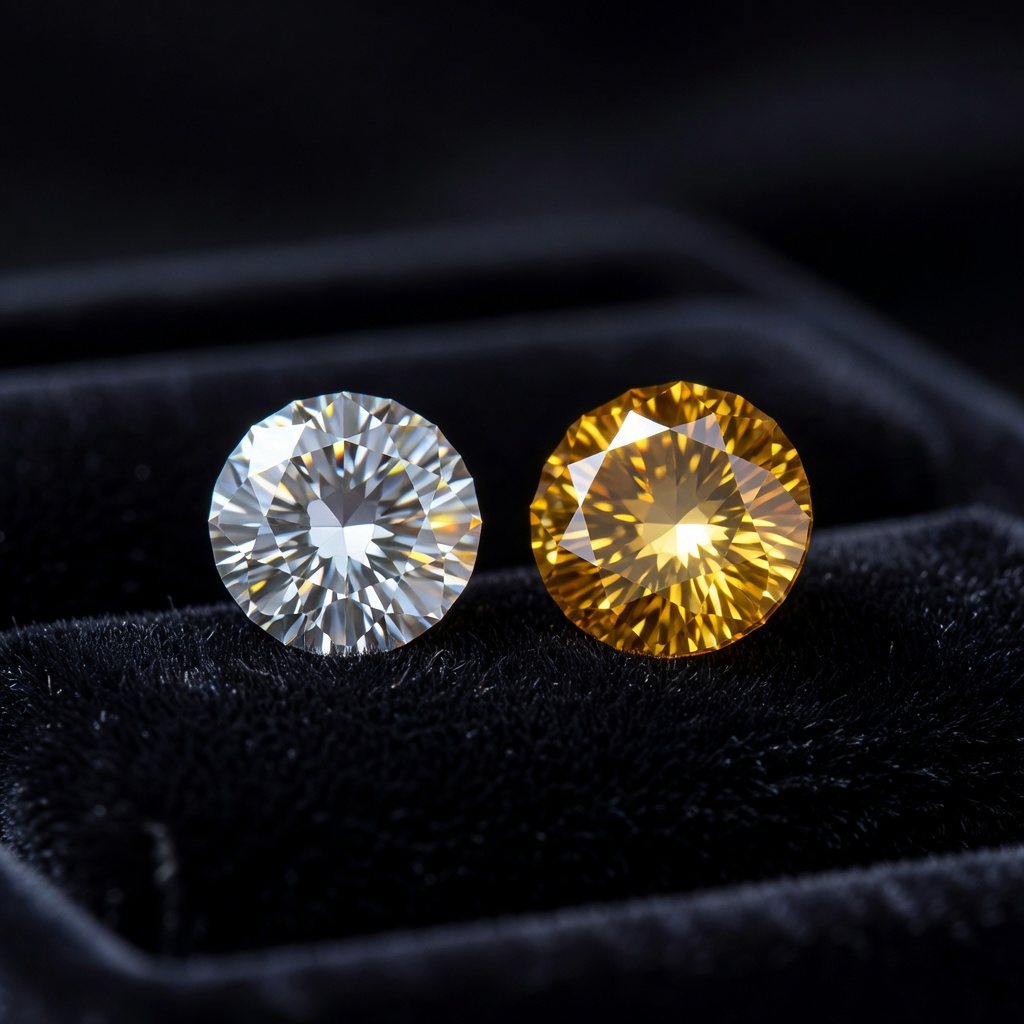
Introduction to Diamond vs Heliodor
When selecting a centerpiece for fine jewelry, the debate between diamond vs heliodor represents a fascinating crossroads between tradition and individuality. Diamonds have long reigned as the undisputed monarch of precious stones, symbolizing eternal commitment and luxury through decades of cultural reinforcement and remarkable physical properties. In contrast, heliodor emerges as a captivating golden alternative, offering warm, sun-kissed hues that distinguish the wearer as someone who values uniqueness over convention. This comparison between these two distinct gems addresses a growing desire among modern consumers to understand whether durability and prestige justify premium pricing, or if beauty and affordability can coexist in a single, meaningful stone.
The question of why these particular stones are compared despite their vastly different color profiles reveals much about contemporary jewelry purchasing decisions. While diamonds typically present as colorless or near-colorless spectrums, and heliodor displays characteristic golden yellow to champagne tones, both gems appeal to buyers seeking lasting beauty in wearable art. The comparison often arises when budget-conscious shoppers explore engagement ring alternatives that do not sacrifice aesthetic impact for financial practicality. Additionally, the rise of fancy yellow diamonds has created a visual bridge between these categories, prompting consumers to question whether a golden beryl might satisfy their desire for warm tones without the astronomical price tag associated with canary or fancy vivid yellow diamonds.
Navigating the precious stones comparison between diamond and heliodor requires careful consideration of several critical factors that extend beyond mere appearance. Prospective buyers must evaluate gemstone hardness and its implications for daily wear, particularly for rings subjected to constant contact with hard surfaces. Price differentials spanning from under one hundred dollars to tens of thousands per carat demand thoughtful analysis of value propositions and long-term investment potential. Furthermore, understanding optical performance characteristics, care requirements, and symbolic meanings enables informed decision-making that aligns with individual lifestyles, aesthetic preferences, and emotional connections to these remarkable minerals.
Chemical Composition and Geological Origins
The fundamental distinction between beryl vs diamond begins at the molecular level, where radically different chemical structures create divergent physical properties and formation environments. Diamonds consist of pure carbon atoms arranged in an isometric crystal structure, forged under extraordinary conditions approximately 90 to 200 miles beneath Earth's surface. These gems require temperatures exceeding 2,000 degrees Fahrenheit and pressures around 725,000 pounds per square inch to crystallize within the Earth's mantle, typically brought to surface level through rare volcanic eruptions via kimberlite pipes. Major diamond mining operations concentrate in Botswana, Russia, Canada, and Australia, where ancient geological activity transported these carbon crystals from their primordial depths to accessible deposits.
Heliodor, conversely, belongs to the illustrious beryl mineral family, sharing chemical kinship with emerald and aquamarine as a beryllium aluminum silicate (Be₃Al₂Si₆O₁₈). This golden beryl variety obtains its characteristic sunny coloration from iron impurities embedded within the crystal lattice during formation, specifically Fe³⁺ ions that create the distinctive yellow to golden-green spectrum. Unlike diamonds' subterranean origins, heliodor typically forms within pegmatite formations—coarse-grained igneous rocks that crystallize from hydrothermal fluids during the final stages of magma chamber cooling. Notable deposits occur throughout Brazil, Madagascar, Namibia, and Ukraine, with the Volyn deposits of Ukraine producing some of the world's finest specimens featuring exceptional clarity and rich golden saturation.
The geological timeline for these gemstones differs dramatically, influencing their relative abundance and market availability. Diamond formation occurred primarily between one billion to 3.3 billion years ago during the Precambrian era, making many stones older than terrestrial life itself. Heliodor formation, while still requiring millions of years, generally occurs during more recent geological periods associated with granite intrusion and pegmatite development. These formation differences explain why gem-quality diamonds command such premium prices—they require specific ancient conditions, survival through violent volcanic transport, and recovery from ore bodies—whereas heliodor forms under more common geological circumstances that produce larger, cleaner crystals with greater frequency.
Hardness, Durability, and Daily Wearability
Understanding gemstone hardness proves essential when evaluating these materials for jewelry applications subjected to daily mechanical stress. The Mohs hardness scale provides a standardized measurement of scratch resistance, ranking diamond as the definitive standard at 10—making it the hardest known natural material capable of scratching every other mineral. Heliodor occupies a respectable position at 7.5 to 8 on the same scale, rendering it harder than popular jewelry stones like opal (5.5-6.5) or pearl (2.5-4.5), yet significantly softer than sapphire or ruby (9). This hardness differential manifests practically when considering that heliodor can be scratched by household dust (which contains silica at 7 hardness) and common jewelry metals, while diamonds remain impervious to all but other diamonds or specialized industrial materials.
However, absolute hardness tells only part of the story regarding durable gemstones, as the concept of toughness—or resistance to breaking and chipping—operates independently from scratch resistance. Diamonds possess perfect cleavage in four directions, meaning they can split cleanly along specific crystallographic planes when struck with sufficient force at particular angles. This characteristic necessitates careful setting procedures and avoidance of sharp impacts that could potentially cleave the stone. Heliodor demonstrates superior toughness relative to its hardness, lacking the perfect cleavage that makes diamonds vulnerable to splitting, though it remains susceptible to abrasion and surface wear over extended periods of daily use.
For active individuals considering these stones for engagement rings or frequently worn bracelets, practical case studies illuminate important wearability considerations. A diamond solitaire worn by a healthcare professional during twelve-hour hospital shifts will maintain its polish and facet edges indefinitely, resisting the abrasion from constant hand washing and contact with medical equipment. Conversely, a heliodor ring worn under identical conditions might show surface scratches and facet junction rounding within two to three years, requiring professional repolishing to restore original luster. However, heliodor set in protective bezel settings and removed during high-impact activities can provide decades of beautiful wear, particularly when reserved for special occasions rather than constant daily exposure to mechanical wear.
Color Range and Visual Characteristics
The chromatic distinction between these gemstones represents perhaps their most immediately obvious differentiating factor, appealing to distinctly different aesthetic sensibilities and personal styles. Diamonds traditionally occupy the colorless to near-colorless spectrum graded from D (perfectly colorless) to Z (light yellow or brown), with the most valuable specimens displaying absolute absence of body color. However, the fancy yellow diamond category introduces warm tones ranging from faint yellow through fancy light, fancy intense, to fancy vivid yellow, creating visual overlap with heliodor's color territory. These yellow diamond variations result from nitrogen impurities replacing carbon atoms in the crystal structure, with the most saturated examples commanding prices rivaling or exceeding colorless stones due to their rarity.
Heliodor presents a focused palette centered on heliodor color variations spanning pale lemon-yellow through rich golden hues to subtle greenish-yellow or champagne tones. The most prized specimens display a pure, saturated golden color reminiscent of afternoon sunlight, often exhibiting exceptional clarity due to the relatively inclusion-free nature of pegmatite-formed beryl crystals. Unlike diamonds, where larger stones often reveal more apparent color concentration, heliodor tends to display consistent color saturation across various carat weights, though very large specimens may show slight color zoning. The stone's natural clarity often exceeds that of emeralds (its beryl cousin), with eye-clean specimens being common rather than exceptional.
Visual impact considerations extend beyond mere hue to encompass how these colors interact with different metal settings and skin tones. Yellow gemstones like heliodor create striking warm harmonies when paired with yellow or rose gold settings, enhancing the stone's sunny disposition while complementing warmer skin undertones. Fancy yellow diamonds offer similar warmth but with increased brilliance, creating a more dramatic light return that can appear almost incandescent under direct illumination. For cooler skin tones or platinum preferences, colorless diamonds provide neutral versatility, while heliodor might require strategic design choices to avoid clashing with white metal settings. When selecting between these options, consider viewing stones under various lighting conditions—natural daylight reveals true body color, while incandescent lighting enhances warm tones in both heliodor and fancy yellow diamonds.
Comparison of Diamond vs Heliodor Characteristics
| Characteristic | Diamond | Heliodor (Golden Beryl) |
|---|---|---|
| Mohs Hardness | 10 (Hardest natural material) | 7.5-8 (Good hardness, softer than topaz) |
| Chemical Composition | Pure Carbon (C) | Beryllium Aluminum Silicate (Be₃Al₂Si₆O₁₈) |
| Refractive Index | 2.42 (High brilliance) | 1.57-1.58 (Soft vitreous luster) |
| Dispersion (Fire) | 0.044 (Strong rainbow flashes) | 0.014 (Subtle light separation) |
| Color Range | Colorless (D-Z) to Fancy Yellow/Brown | Golden yellow, lemon-lime, champagne, greenish-yellow |
| Price per Carat | $3,000-$30,000+ (depending on quality) | $50-$500 (affordable luxury) |
| Best Setting Types | Prong, bezel, tension, pave (versatile) | Bezel, halo, protective settings recommended |
| Daily Wear Suitability | Excellent (scratch-proof, chip-resistant with care) | Good with precautions (protect from abrasion) |
| Primary Sources | Botswana, Russia, Canada, Australia | Brazil, Madagascar, Namibia, Ukraine |
| Symbolic Meaning | Eternal love, strength, purity | Hope, vitality, sunshine, intellectual clarity |
Brilliance, Fire, and Optical Performance
The optical properties separating these gemstones fundamentally determine their visual impact and the subjective experience of "sparkle" that many jewelry wearers prioritize. Diamond's legendary performance stems from its exceptionally high refractive index of 2.42, which measures how much light slows and bends when entering the material from air. This high refractive index creates the intense brilliance—the return of white light to the viewer's eye—that distinguishes diamonds from imitations and lesser gems. Additionally, diamond dispersion rating of 0.044 describes its ability to separate white light into spectral colors, creating the "fire" or rainbow flashes particularly visible in well-cut stones under point-source lighting such as candles or spotlights.
Heliodor exhibits more modest optical properties consistent with its beryl family classification, possessing a refractive index between 1.57 and 1.58 and significantly lower dispersion. Rather than the intense brilliance and fire characteristic of diamonds, heliodor displays a soft, warm vitreous luster reminiscent of looking into clear honey or liquid sunlight. While this creates an attractive glow, particularly in larger stones or cabochon cuts, it does not produce the dramatic light return and scintillation patterns that make diamonds instantly recognizable across crowded rooms. The difference becomes particularly apparent when comparing a one-carat round brilliant diamond against a similarly cut heliodor of equal size—the diamond will appear to flash with internal light sources, while the heliodor presents a more static, depth-oriented beauty.
Cut quality and proportions dramatically influence how each material performs optically, requiring different approaches from lapidaries to maximize beauty. Diamonds demand precise facet angles and proportions to achieve total internal reflection, with ideal cut parameters well-established through centuries of optical research and modern computer modeling. Deviations from these ideal proportions result in light leakage and reduced brilliance, making cut the most critical of the four Cs for diamond beauty. Heliodor forgives cutting deviations more readily due to its lower refractive index, though emerald cuts, cushions, and step cuts particularly suit this material by emphasizing its clarity and color while minimizing the windowing effect that can occur when light passes through rather than reflecting within the stone. For optimal gemstone brilliance in heliodor, select stones cut with slightly steeper crown angles and smaller tables than typically used for diamonds, maximizing light return despite the material's inherent optical limitations.
Pricing and Value Analysis
The economic disparity between these gemstones reflects fundamental differences in rarity, market dynamics, and cultural positioning rather than merely aesthetic quality. Quality diamonds command prices ranging from $3,000 to well over $30,000 per carat for exceptional colorless specimens or vivid fancy colors, with price escalating exponentially as carat weight increases due to the rarity of large, clean crystals. This pricing structure incorporates the extensive mining infrastructure required to extract approximately 250 tons of ore to produce a single one-carat gem-quality diamond, coupled with sophisticated cutting processes that maximize weight retention while optimizing optical performance. Investment-grade diamonds with D color, Internally Flawless clarity, and excellent cut proportions maintain or appreciate in value over time, particularly those accompanied by grading reports from recognized laboratories like GIA or AGS.
Heliodor presents an entirely different gemstone value proposition, with fine specimens typically retailing between $50 and $500 per carat depending on color saturation, clarity, and size. This affordable diamond alternative accessibility stems from the relative abundance of gem-quality material, the larger crystal sizes typical of pegmatite formations (often yielding faceted stones exceeding ten carats without significant price premiums), and the absence of cartel-controlled supply chains that historically influenced diamond markets. While heliodor lacks the investment potential and resale liquidity of diamonds, it offers consumers the opportunity to acquire substantial, beautiful center stones for engagement rings or statement jewelry without the financial burden associated with diamond purchases. A practical example illustrates this value differential: a three-carat, eye-clean heliodor with rich golden color might cost $600, while a three-carat fancy vivid yellow diamond of similar clarity could exceed $150,000.
Depreciation factors and long-term value retention differ significantly between these materials, influencing purchasing decisions for buyers considering heirloom potential or future resale. Diamonds generally retain 20-60% of retail value upon resale depending on market conditions, brand premiums paid initially, and documentation quality, though they rarely appreciate beyond inflation except for exceptional colored diamonds or historic provenance pieces. Heliodor, like most colored gemstones outside the "big three" (ruby, sapphire, emerald), experiences significant depreciation from retail pricing, with resale values typically ranging from 10-30% of original purchase price unless sold to specialized collectors or during periods of increased market interest. However, the lower initial investment means that heliodor buyers face less absolute financial risk while still acquiring a genuine precious stone with natural beauty and durability suitable for generational transfer when properly maintained.
Jewelry Applications and Setting Recommendations
Selecting appropriate jewelry settings for these divergent materials requires understanding their physical vulnerabilities and aesthetic strengths to ensure both security and beauty. For engagement ring alternatives, diamonds offer virtually unlimited setting flexibility, thriving in delicate four-prong solitaires that maximize light exposure, tension settings that appear to suspend the stone in mid-air, and intricate pavé arrangements where multiple diamonds create scintillating surfaces. The stone's hardness allows for ultra-thin prongs and open galleries that might compromise security with softer gems, while its durability permits daily wear without constant worry about surface damage during routine activities. Platinum and white gold settings enhance the icy brilliance of colorless diamonds, though yellow gold creates sophisticated contrast with fancy yellow stones by complementing their warm body color.
Heliodor demands more strategic setting choices that acknowledge its relative softness while maximizing its distinctive color advantages. Protective settings such as bezels, where metal surrounds the entire girdle, or halo designs where a diamond or metal border frames the center stone, provide essential protection against impact and abrasion that could chip or scratch the beryl material. Prong settings remain possible but require thicker, more substantial metal work than typically used for diamonds, with six prongs offering superior security to four-prong arrangements for active wearers. The warm golden tones of heliodor create stunning visual harmony when paired with yellow or rose gold metals, enhancing the stone's sunny disposition, though white metals can provide striking contrast that makes the yellow color pop against cooler backgrounds.
Case studies of successful jewelry applications demonstrate how these stones serve different lifestyle needs and fashion sensibilities. A professional violinist requiring a ring that withstands constant hand movement and occasional contact with instrument wood might choose a low-profile diamond bezel setting that sits close to the finger, eliminating snagging risks while maintaining brilliance through diamond's inherent durability. Conversely, an art gallery owner seeking a distinctive cocktail ring for evening events might select a ten-carat cushion-cut heliodor in a vintage-inspired yellow gold halo setting, capitalizing on the stone's impressive size potential and warm glow without concern for workplace abrasion. For wedding band pairings, diamonds accommodate flush settings and eternity bands that sit perfectly against engagement rings, while heliodor center stones work beautifully in bridal sets where the wedding band features complementary golden citrine or yellow sapphire accents that echo the center stone's warm palette.
Care Requirements and Maintenance Protocols
Proper gemstone care protocols differ substantially between these materials, reflecting their hardness disparities and chemical sensitivities. Diamonds tolerate aggressive cleaning methods including ultrasonic cleaners and steam cleaners, which utilize high-frequency sound waves or pressurized vapor to remove accumulated dirt and oils from behind stones and within settings. These methods prove safe for diamonds because their hardness prevents damage from vibration or thermal shock, though they should be used cautiously if the diamond contains significant inclusions that might expand under thermal stress. For routine maintenance, a simple solution of warm water with mild dish soap and a soft toothbrush effectively removes hand lotions and environmental grime that dull diamond brilliance over time.
Heliodor requires gentler jewelry maintenance approaches that preserve its surface polish and prevent cumulative damage. Avoid ultrasonic and steam cleaning entirely, as the thermal shock and vibration can potentially damage the stone or loosen it within its setting, particularly if the heliodor contains liquid inclusions or internal fractures common in beryl family minerals. Instead, clean heliodor using only lukewarm water with mild soap, gently brushing with a soft-bristled toothbrush to remove debris from behind the stone and along the girdle where dirt accumulation most affects optical performance. Rinse thoroughly to remove soap residue that can create filmy buildup, and dry with a soft, lint-free cloth rather than paper towels that might contain abrasive wood fibers.
Storage solutions play a critical role in maintaining both gemstones' beauty, particularly regarding the hardness differential that makes diamonds potential hazards to heliodor. Never store diamond jewelry in direct contact with heliodor pieces, as diamond's superior hardness will inevitably scratch the softer beryl material during the natural movement of jewelry boxes or travel cases. Utilize individual fabric pouches, compartmentalized jewelry boxes with padded dividers, or separate drawers to prevent contact between different hardness stones. For professional maintenance, schedule annual inspections for diamond rings to check prong security and ensure the stone hasn't loosened from settings, while heliodor pieces benefit from biannual professional cleaning and setting checks, with repolishing services every five to ten years depending on wear patterns to restore surface luster dulled by microscopic abrasions.
Final Verdict: Choosing Your Perfect Gemstone
The ultimate decision between diamond vs heliodor requires honest assessment of lifestyle factors, budget parameters, and personal values regarding jewelry symbolism and uniqueness. Active individuals with physically demanding careers, those who rarely remove their rings, or buyers prioritizing heirloom durability should gravitate toward diamonds despite the premium investment. The unmatched hardness ensures that diamond engagement rings maintain their factory-fresh appearance through decades of daily wear, from gym workouts to gardening, without requiring the mindful removal and protective consciousness that heliodor demands. Consider the practical example of a construction manager or emergency physician whose hands constantly contact abrasive surfaces—only diamond provides the resilience necessary for such environments without rapid degradation.
Budget-conscious decision makers need not sacrifice aesthetic impact or emotional significance when choosing gemstones, as heliodor offers genuine precious stone status at accessible price points. Couples allocating limited funds toward home purchases, travel experiences, or debt reduction might find that a substantial heliodor center stone provides the visual presence and natural beauty they desire without the financial strain of diamond acquisition. The money saved could fund elaborate custom settings, complementary wedding bands, or simply provide financial security during the early years of marriage. When choosing gemstones for fashion jewelry rather than bridal applications, heliodor particularly shines as an option for statement pieces, cocktail rings, and pendants where large carat weights create impressive visual impact without proportional cost increases.
Symbolic meanings ultimately guide many buyers toward their ideal stone, transcending practical considerations of hardness and price. Diamonds carry the weight of tradition, representing eternal love, invincibility, and purity through centuries of cultural association and modern marketing reinforcement. They speak to continuity, permanence, and the enduring nature of committed relationships. Heliodor offers equally profound but distinct symbolism, deriving its name from the Greek "helios" (sun) and "doron" (gift), literally meaning "gift of the sun." This etymology imbues heliodor with associations of hope, vitality, intellectual clarity, and the warmth of sunshine—qualities particularly resonant for couples beginning new chapters with optimistic outlooks. The stone's relative rarity in jewelry contexts compared to diamonds also appeals to those who value individuality and reject mass-market conventions, making heliodor perfect for wearers who view their jewelry as expressions of unique personal narratives rather than adherence to traditional expectations.
Frequently Asked Questions
Is heliodor durable enough for an engagement ring?
Heliodor ranks 7.5-8 on the Mohs hardness scale, making it suitable for engagement rings with proper care, though it requires protective settings like bezels to prevent scratches from daily wear. It's softer than diamond (10 Mohs) but harder than many popular alternatives like opal or pearl. While it can withstand the occasional bumps and knocks of daily life, heliodor rings should be removed during activities involving abrasive materials or heavy manual labor to preserve their polish and prevent surface scratching that would require professional repolishing.
How can you tell the difference between a yellow diamond and heliodor?
Yellow diamonds display intense fire and brilliance due to their high refractive index (2.42) and superior dispersion, while heliodor has a softer, more subdued glow with lower refractive index (1.57-1.58). Professional gemological testing can confirm identity through hardness testing and spectroscopic analysis. Visually, yellow diamonds will show rainbow flashes of color (fire) and bright white light return (brilliance) even under modest lighting conditions, whereas heliodor presents a more static, depth-oriented appearance with a glass-like vitreous luster rather than the adamantine sparkle characteristic of diamonds.
Why is heliodor significantly cheaper than diamond?
Heliodor is more abundant in nature and easier to mine than gem-quality diamonds, plus it lacks the decades of marketing monopoly that established diamonds as luxury status symbols. While beautiful, heliodor doesn't possess the extreme hardness or light performance that commands premium diamond pricing. The economic reality of supply and demand plays a significant role—large, clean heliodor crystals occur frequently enough in pegmatite deposits that they don't command scarcity pricing, whereas gem-quality diamonds require mining approximately 250 tons of kimberlite ore to produce a single one-carat polished stone.
Does heliodor have the same sparkle as diamond?
No, heliodor does not possess the same brilliance or fire as diamond. While heliodor offers an attractive vitreous luster and good transparency, diamond's superior refractive index and dispersion create the distinctive intense sparkle and rainbow flashes that diamonds are famous for. Heliodor's beauty manifests instead in its clarity, color depth, and size potential, offering a more subtle, warm glow reminiscent of captured sunlight rather than the brilliant, dancing light performance that characterizes well-cut diamonds. This difference makes heliodor ideal for those who prefer understated elegance over dramatic optical effects.
Can heliodor scratch or damage a diamond?
No, heliodor cannot scratch diamond since diamond is the hardest known natural material (10 Mohs) while heliodor is significantly softer (7.5-8 Mohs). However, diamonds can easily scratch heliodor, so they should never be stored together in the same jewelry box or compartment. When wearing both diamond and heliodor jewelry simultaneously, be mindful that contact between the pieces—such as a diamond ring bumping against a heliodor bracelet—will result in damage exclusively to the heliodor surface, potentially creating permanent scratches that require professional repolishing to remove.
What does heliodor symbolize compared to diamond?
Heliodor derives its name from Greek words meaning 'gift of the sun,' symbolizing warmth, hope, vitality, and intellectual clarity. Diamonds traditionally symbolize eternal love, invincibility, and purity. Heliodor appeals to those seeking unique, sunny optimism while diamonds represent classic endurance. The solar associations of heliodor make it particularly meaningful for individuals born in summer months, those with naturally optimistic dispositions, or couples who view their relationship as a source of warmth and illumination in their lives rather than merely a promise of permanence.
Is heliodor treated or enhanced like some diamonds?
Most high-quality heliodor on the market is natural and untreated, though some specimens may undergo heat treatment to enhance their golden color. Unlike many diamonds that undergo HPHT treatment or irradiation, heliodor typically requires less intervention to achieve marketable color. When heat treatment is applied to heliodor, it usually serves to reduce greenish tints and intensify the desirable yellow to golden hues, and such treatments are generally stable and permanent. As with all gemstone purchases, requesting disclosure of any treatments from reputable dealers ensures transparency and appropriate valuation of the specific stone.
Which is better for daily wear: diamond or heliodor?
Diamond is superior for daily wear due to its unmatched hardness (10 Mohs) and resistance to scratching, chipping, and abrasion. Heliodor can be worn daily but requires more mindful care, protective settings, and occasional repolishing to maintain its beauty over decades of wear. For individuals with active lifestyles, manual occupations, or those who simply prefer low-maintenance jewelry that requires minimal thought during daily activities, diamond provides the worry-free durability that justifies its premium pricing. Heliodor suits daily wear best when set in protective bezels and worn by individuals with office-based careers or those willing to remove their rings during high-impact activities.