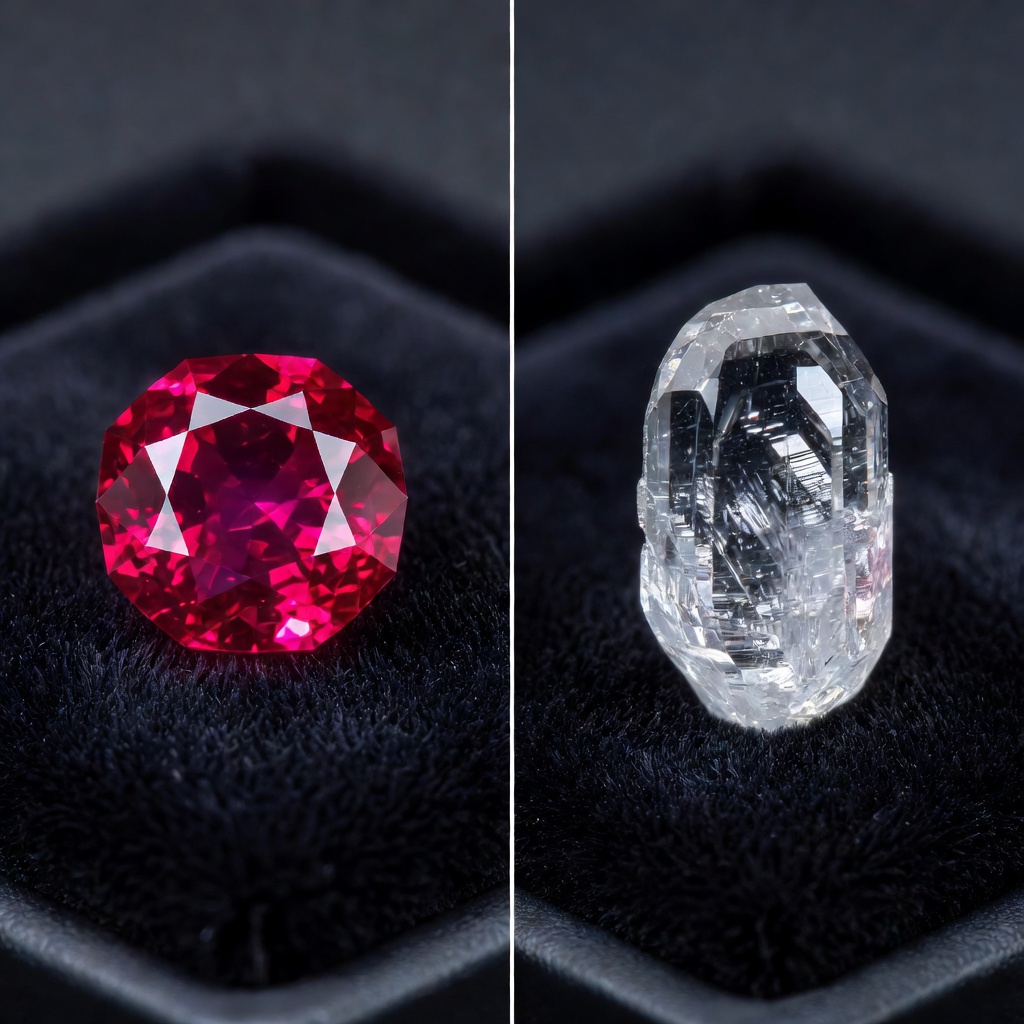
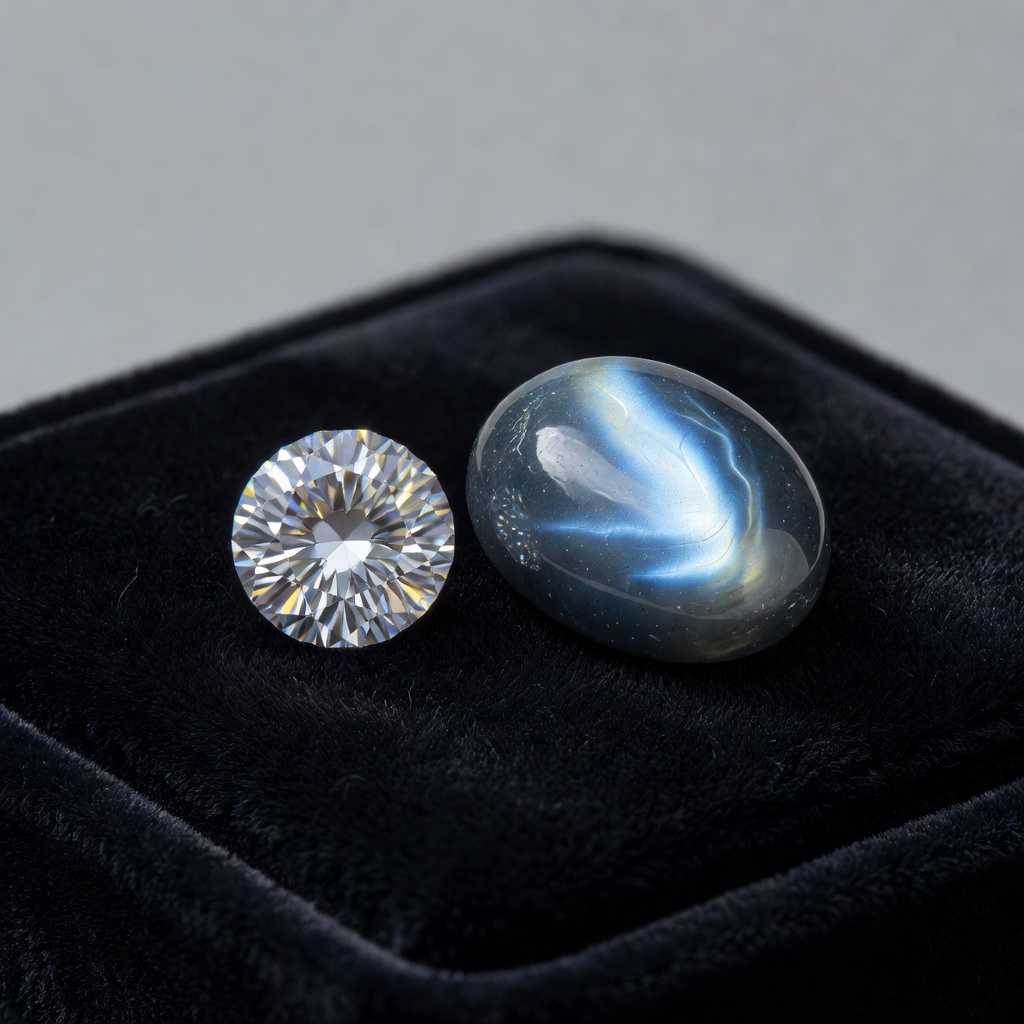
Introduction to Diamond and Hawk's Eye
When exploring the vast spectrum of precious and semi-precious gemstones, few comparisons illustrate the diversity of mineralogy quite like Diamond vs Hawk's Eye. Diamonds represent the pinnacle of gemological achievement as the hardest known natural substance, formed billions of years ago under crushing pressure deep within Earth's mantle. In stark contrast, Hawk's Eye emerges as a mesmerizing chatoyant variety of tiger's eye, distinguished by its striking blue-gray coloration derived from silica-replaced crocidolite asbestos fibers. This gemstone comparison becomes particularly relevant for collectors seeking to diversify their portfolios and jewelry buyers navigating the spectrum between traditional luxury and unique optical phenomena.
While diamonds dominate the bridal and investment markets with their unparalleled brilliance and durability, Hawk's Eye occupies a specialized niche among enthusiasts of chatoyant gems and metaphysical practitioners. Understanding the fundamental differences between these stones requires examining not just their market values, but their geological origins, physical characteristics, and practical applications in jewelry design. Whether you are selecting a center stone for daily wear or curating a collection of specimens with unique optical properties, recognizing how these gemstones complement and contrast with each other enhances your appreciation for Earth's mineral diversity.
Geological Origins and Formation Processes
The formation histories of Diamond and Hawk's Eye could not differ more dramatically, representing opposite ends of the geological timeline and process spectrum. Diamonds crystallize approximately 150 to 200 kilometers beneath Earth's surface in the upper mantle, where temperatures exceed 1,050 degrees Celsius and pressures reach 45 to 60 kilobars. This extreme environment transforms carbon atoms into isometric cubic crystals over periods ranging from one to three billion years, making diamonds among the oldest minerals available to collectors. Volcanic eruptions subsequently transport these crystals to the surface via kimberlite and lamproite pipes, where miners extract them from primary deposits or alluvial gravels.
Hawk's Eye formation occurs through a fascinating geological process called pseudomorphism, where one mineral replaces another while maintaining the original mineral's external form. Specifically, silica-rich solutions permeate seams of blue crocidolite asbestos, gradually replacing the asbestos fibers with chalcedony and quartz while preserving the fibrous structure. Unlike diamonds' high-pressure mantle genesis, this transformation occurs within sedimentary rock formations at relatively shallow crustal levels over millions rather than billions of years. The blue coloration characteristic of Hawk's Eye results specifically from iron oxide staining during this replacement process, distinguishing it from the golden-brown tiger's eye that forms when the blue asbestos oxidizes.
The timeline disparity between these gemstones creates distinct collecting philosophies: diamond enthusiasts often prize the ancient, unaltered nature of their stones, while Hawk's Eye collectors appreciate the dynamic transformation from hazardous asbestos to beautiful silica gemstone. This pseudomorphism process renders the originally dangerous crocidolite asbestos inert and safe for handling, though lapidaries must exercise caution when cutting rough material to avoid inhaling residual dust. Understanding these formation differences helps gemologists authenticate specimens and predict their behavior under various environmental conditions.
Physical Properties and Mineral Composition
Examining the mineral composition of Diamond vs Hawk's Eye reveals fundamental structural differences that dictate their cutting, polishing, and setting requirements. Diamonds consist of pure carbon arranged in an isometric crystal system where each carbon atom bonds tetrahedrally with four neighbors, creating the strongest atomic structure in the mineral kingdom. This configuration yields a specific gravity of 3.52, meaning diamonds feel noticeably heavier than most other transparent gems of similar size. The cubic crystal structure allows diamond cutters to exploit specific cleavage planes and growth directions to maximize brilliance while minimizing weight loss during faceting.
Hawk's Eye comprises silicon dioxide (SiO2) in the form of chalcedony and macrocrystalline quartz, placing it in the same chemical family as amethyst and citrine but with a distinctive fibrous internal architecture. Its specific gravity ranges between 2.64 and 2.71, significantly lighter than diamond and closer to other quartz varieties. The presence of iron oxide inclusions within the replaced asbestos fibers creates the characteristic blue-gray to blue-green coloration, while the parallel alignment of these fibrous inclusions distinguishes it from massive quartz varieties. Unlike diamond's defined crystal faces, Hawk's Eye typically forms in nodular or seam deposits without distinct crystal habits, requiring lapidaries to work with the stone's natural grain to preserve the chatoyant effect.
These compositional differences directly impact gemstone processing methodologies. Diamond cutters utilize the stone's octahedral cleavage and cubic crystal structure to determine optimal cutting angles for light return, while Hawk's Eye artisans must orient cabochon cut stones perpendicular to the fibrous inclusions to maximize the cat's eye effect. Specific gravity testing serves as a quick diagnostic tool for distinguishing diamonds from simulants like cubic zirconia (heavier at 5.6-6.0), while Hawk's Eye's quartz-based density helps gemologists differentiate it from synthetic cat's eye glass or fiber-optic stone imitations.
Visual Characteristics and Optical Phenomena
The optical phenomena displayed by Diamond and Hawk's Eye represent two distinct approaches to light interaction, each captivating observers through different mechanisms. Diamonds achieve their legendary appearance through a combination of brilliance (white light reflection), fire (spectral color dispersion), and scintillation (sparkle from light and dark patterning). These effects result from diamond's high refractive index of 2.42, which bends entering light dramatically, combined with expert faceting that creates total internal reflection. When properly cut, diamonds return up to 100% of incident light to the viewer's eye, creating the characteristic "life" that defines premium gemstones.
Hawk's Eye captivates through chatoyancy, commonly called the cat's eye effect, created by the reflection of light from parallel asbestos fiber inclusions within the silica matrix. When cut en cabochon—a smooth, domed shape without facets—these aligned fibers reflect light as a single, sharp, silky band that appears to glide across the stone's surface as it rotates. This optical phenomenon requires precise orientation during cutting, with the base of the cabochon positioned perpendicular to the fiber direction. The resulting visual effect resembles the alert, watchful eye of a hawk, lending the stone its poetic name and mystical associations.
Color ranges further distinguish these gemstones: diamonds span the spectrum from completely colorless (D grade) through faint yellows and browns to rare fancy colors including blue, pink, and red, with coloration derived from trace elements like nitrogen or boron. Hawk's Eye maintains a narrower palette of blue-gray, blue-green, and occasionally bluish-black tones, with the most valuable specimens displaying a sharp silver or bluish chatoyant band against a deep, uniform background. Unlike diamond's transparency, which allows for complex faceting, Hawk's Eye typically occurs in opaque to semi-translucent forms that showcase the silky luster created by the fibrous structure, making cabochon cut stones the standard presentation for this unique gem.
Durability Assessment: Mohs Hardness and Toughness
Understanding the distinction between hardness and toughness proves essential when comparing Diamond vs Hawk's Eye for jewelry applications. Diamond ranks as the definitive 10 on the Mohs hardness scale, meaning it can scratch every other mineral and resists abrasion from daily wear better than any natural substance. This exceptional hardness makes diamonds ideal for engagement rings and daily-wear jewelry that must withstand decades of contact with hard surfaces, metal edges, and environmental particulates. However, diamond possesses perfect cleavage in four directions along its octahedral planes, creating a vulnerability to sharp impacts that can cause the stone to split or chip if struck at specific angles.
Hawk's Eye registers between 6.5 and 7 on the Mohs hardness scale, comparable to other quartz varieties like amethyst and agate. While significantly softer than diamond, this hardness level still allows Hawk's Eye to resist scratching from common materials like fingernails (2.5), copper coins (3.5), and window glass (5.5), though it remains susceptible to abrasion from harder gems like topaz (8), corundum (9), and obviously diamond itself. Where Hawk's Eye compensates for its moderate hardness is in its exceptional toughness—the stone's resistance to breaking or chipping—derived from its interlocking fibrous structure. Unlike crystalline gems that fracture along cleavage planes, Hawk's Eye's silica-replaced asbestos fibers create a resilient, somewhat flexible matrix that absorbs impact without shattering.
Practical implications for wearability differ significantly between these stones. Diamond jewelry requires settings that protect vulnerable points and edges while allowing light entry, necessitating periodic inspection of prongs to prevent stone loss. Hawk's Eye demands protective settings like bezels that shield the dome of the cabochon from direct impact and scratches, making it better suited for pendants, earrings, and occasional-wear rings rather than daily-wear solitaires. For active individuals or those working with their hands, diamond remains the superior choice despite its cleavage vulnerability, while Hawk's Eye serves better as a statement piece for special occasions or spiritual practice where its unique appearance outweighs durability concerns.
Market Value, Pricing and Investment Potential
Gemstone valuation follows radically different methodologies for Diamond vs Hawk's Eye, reflecting their disparate scarcity, demand patterns, and market infrastructures. Diamond pricing operates within a highly standardized framework based on the Four Cs: Carat weight, Cut quality, Color grade, and Clarity rating. Premium diamonds—those exceeding one carat with D-F color grades and Flawless to VVS clarity—command prices ranging from $10,000 to $50,000 or more per carat, while commercial-quality stones suitable for mass-market jewelry typically fall between $1,000 and $5,000 per carat. This pricing structure reflects both the stone's natural rarity and the extensive marketing infrastructure supporting diamond liquidity, including certified grading reports from institutions like GIA and IGI that facilitate international trade.
Hawk's Eye remains remarkably affordable despite its striking appearance and relative rarity compared to common quartz varieties. Quality cabochons typically retail between $3 and $30 per carat, with premium specimens featuring sharp, centered chatoyant bands and deep, uniform blue coloration commanding prices at the higher end of this spectrum. Large display pieces or rare matrix specimens containing both Hawk's Eye and tiger's eye (where partial oxidation has occurred) may fetch higher prices among specialized collectors, but the stone generally lacks the investment-grade liquidity of diamonds. This affordability makes Hawk's Eye accessible to beginning collectors and allows jewelry designers to create substantial, eye-catching pieces without the budget constraints imposed by precious gems.
Investment considerations favor diamonds for those seeking portable wealth storage and liquidity, as certified diamonds maintain recognized value across global markets and can be resold through auction houses, dealers, or private sales with relative ease. Hawk's Eye functions better as a speculative collectible or aesthetic investment, where value appreciation depends on shifting fashion trends in chatoyant gems and the finite supply of high-quality rough material. Savvy collectors might acquire exceptional Hawk's Eye specimens while prices remain low, anticipating increased interest in asbestos-replacement gemstones as awareness of pseudomorphism processes grows, though this strategy carries higher risk than diamond acquisition. For budget optimization, consider allocating resources toward a modest diamond for daily wear while exploring Hawk's Eye for larger, more dramatic pieces where size and visual impact matter more than intrinsic material value.
Metaphysical Properties and Symbolic Meanings
The crystal healing properties associated with Diamond and Hawk's Eye reflect their contrasting energetic signatures and spiritual applications. Diamond resonates with high-frequency vibrations associated with purity, invincibility, and divine connection, traditionally linked to the crown chakra and the ability to amplify the energies of other stones or intentions. Metaphysical practitioners value diamonds for their clarity-enhancing properties, believing they help dispel mental fog, strengthen commitment to spiritual practices, and manifest abundance through focused intention. The stone's ancient formation and unbreakable nature symbolize eternal love and unwavering truth, explaining its dominance in Western bridal traditions and meditation practices aimed at achieving enlightenment.
Hawk's Eye carries distinctly different energetic qualities centered on protection, grounded insight, and enhanced perception. Named for its resemblance to a hawk's vigilant eye, this blue asbestos-derived stone connects to the hawk spirit animal and its associations with keen observation, higher perspective, and tactical precision. Crystal healers assign Hawk's Eye to both the root chakra (for grounding and physical protection) and the third eye chakra (for psychic vision and intuitive development), creating a unique energetic bridge between earthly stability and spiritual sight. Unlike diamond's amplifying properties, Hawk's Eye functions as a protective shield, believed to deflect negative energies while providing the clarity to recognize potential threats or opportunities before they fully manifest.
Practitioners often use these stones in complementary rather than competitive ways: diamonds might crown a crystal grid or meditation altar to elevate consciousness and magnify programmed intentions, while Hawk's Eye accompanies the practitioner during travel, business negotiations, or divination work to maintain grounded awareness. Case studies from crystal healing practitioners suggest that individuals experiencing anxiety or scattered energy benefit from Hawk's Eye's stabilizing influence, while those seeking to break through spiritual plateaus or amplify manifestation work gravitate toward diamond's high-vibrational clarity. For daily energetic maintenance, wearing Hawk's Eye jewelry during daylight hours supports vigilant, protected awareness, while keeping diamonds in the bedroom or meditation space facilitates dream clarity and crown chakra activation during rest.
Jewelry Applications and Design Considerations
Successful jewelry design with Diamond vs Hawk's Eye requires understanding how each stone's physical properties dictate optimal cutting styles, setting techniques, and metal pairings. Diamonds achieve maximum impact through brilliant cuts featuring numerous facets—round brilliants, princess cuts, cushions, and ovals—that maximize light return through the crown. These stones excel in pavé settings where multiple small diamonds create continuous sparkle, solitaire presentations that showcase individual stone quality, and mixed-metal designs where white gold or platinum enhances the diamond's colorless appearance. The precision of modern diamond cutting allows for complex geometries that optimize brilliance while minimizing the visibility of inclusions, making even slightly included stones appear eye-clean when properly faceted.
Hawk's Eye demands fundamentally different treatment as a cabochon cut stone, where the lapidary shapes the gem into a smooth, domed oval or round form without facets to display the chatoyant effect. The cutting process requires meticulous orientation to ensure the fibrous inclusions align perpendicular to the base, creating the distinctive moving eye effect when the stone is rotated under light. Bezel settings prove ideal for Hawk's Eye, wrapping the stone's edge in metal to protect the relatively soft quartz from chipping while providing a frame that draws attention to the chatoyant band. Prong settings risk snagging on clothing and offer less protection for the cabochon's dome, though they may be used for larger statement pieces where security is less critical than dramatic presentation.
Metal selection enhances each stone's natural characteristics: diamonds pair beautifully with white gold, platinum, and palladium to emphasize their colorless quality, while yellow or rose gold settings create warm contrasts that complement faintly tinted diamonds. Hawk's Eye's blue-gray tones harmonize exceptionally well with sterling silver, which echoes the stone's cool coloration, or with yellow gold that creates a striking complementary contrast reminiscent of ancient Egyptian jewelry. Design case studies demonstrate that Hawk's Eye works magnificently in retro or Art Deco revival pieces where its mysterious luster complements geometric metalwork, while diamonds dominate modern minimalist designs where their brilliance requires little architectural support. For versatile collections, consider pairing a classic diamond solitaire with a Hawk's Eye cocktail ring, allowing the wearer to shift between timeless elegance and intriguing optical phenomena depending on the occasion.
Care, Cleaning and Maintenance Requirements
Proper gemstone care protocols differ significantly between Diamond and Hawk's Eye due to their hardness disparities and chemical sensitivities. Diamond jewelry tolerates aggressive cleaning methods that would damage softer gems, including ultrasonic cleaners that shake loose accumulated debris, steam cleaners that dissolve oils, and ammonia-based solutions that remove buildup from lotions and soaps. These methods exploit diamond's chemical inertness and hardness; however, owners should still inspect settings regularly to ensure vibrations haven't loosened stones. Despite their durability, diamonds can scratch other jewelry items, necessitating separate storage in soft pouches or compartmentalized boxes to prevent damage to gold settings or adjacent gemstones.
Hawk's Eye requires gentler handling appropriate to its quartz composition and fibrous structure. Clean these stones using only lukewarm water with mild dish soap and a soft-bristled brush, avoiding ultrasonic and steam cleaners that might weaken the stone's structure or damage any treatments. Acidic cleaners, including jewelry dips containing hydrochloric or sulfuric acid, will etch the quartz surface and dull the chatoyant luster, while prolonged water exposure may loosen adhesives if the stone is doublet-mounted or backed. After cleaning, pat Hawk's Eye dry immediately with a soft cloth rather than allowing it to air-dry, preventing water spots that might temporarily obscure the chatoyant effect.
Storage strategies should account for the Mohs hardness scale hierarchy: store diamonds separately from all other jewelry to prevent them from scratching softer stones like Hawk's Eye, which should itself be kept away from harder gems like topaz or sapphire. Travel cases with individual padded compartments work best for protecting cabochon cut stones from pressure points that might chip the dome. For maintenance schedules, plan professional inspections of diamond settings annually to check for loose prongs or chips along girdle edges, while Hawk's Eye pieces benefit from gentle cleaning after each wear to remove skin oils that can temporarily diminish the chatoyancy. By respecting these distinct care requirements, owners ensure both stones maintain their optical properties and structural integrity across generations of wear.
Comparison Table: Diamond vs Hawk's Eye
| Characteristic | Diamond | Hawk's Eye |
|---|---|---|
| Mohs Hardness | 10 (Hardest natural substance) | 6.5-7 (Moderate hardness, good toughness) |
| Chemical Composition | Pure Carbon (C) | Silicon Dioxide (SiO2) with iron oxide inclusions |
| Formation Process | High-pressure, high-temperature crystallization in Earth's mantle (1-3 billion years) | Pseudomorphism replacing crocidolite asbestos fibers (millions of years) |
| Optical Phenomena | Brilliance, fire, and scintillation through faceting | Chatoyancy (cat's eye effect) in cabochon cuts |
| Specific Gravity | 3.52 | 2.64-2.71 |
| Typical Price Range | $1,000-$50,000+ per carat | $3-$30 per carat |
| Ideal Jewelry Use | Daily wear rings, earrings, pendants; faceted brilliant cuts | Occasional wear pendants, earrings; cabochon cut stones |
| Cleaning Method | Ultrasonic, steam, or ammonia solutions | Mild soap and water only; no ultrasonic or acids |
| Investment Liquidity | High; global market with standardized grading | Low; niche collector market |
| Metaphysical Associations | Crown chakra, amplification, clarity, abundance | Root and third eye chakras, protection, vision, grounding |
Final Verdict: Choosing Between Diamond and Hawk's Eye
Selecting between Diamond vs Hawk's Eye ultimately depends on lifestyle assessment, budget parameters, and intended usage rather than inherent superiority of either stone. For active professionals or individuals seeking a lifelong daily wear gem, diamond remains the undisputed champion due to its perfect Mohs hardness scale rating and resistance to environmental damage. The investment value and liquidity of diamonds provide additional security for significant purchases, while their versatility across cutting styles and jewelry designs ensures timeless appeal. Consider diamond acquisition for milestone celebrations—engagements, anniversaries, or significant achievements—where the stone's symbolism of endurance and clarity aligns with the occasion's gravity.
Hawk's Eye excels as a distinctive choice for fashion-forward collectors, spiritual practitioners, and those seeking dramatic visual impact without premium pricing. Its unique chatoyancy effect creates conversation pieces that stand apart from conventional faceted jewelry, making it ideal for cocktail rings, pendants, and statement earrings worn on special occasions. Budget optimization strategies might include selecting a modest, high-quality diamond for daily wear while investing in a substantial Hawk's Eye piece for maximum visual presence at social events, effectively allocating funds across both durability and aesthetic impact. The stone's affordability also allows for experimentation with custom cabochon cut stones and protective bezel settings that might prove prohibitively expensive with diamond carat weights.
Occasion-appropriate selection guides the optimal use of both gemstones: choose diamond for ceremonies marking permanence and commitment, relying on its brilliance to symbolize unwavering devotion. Select Hawk's Eye for personal growth milestones, spiritual initiations, or artistic expression, leveraging its protective energy and observational qualities to support new ventures or transitions. For the comprehensive collector, these stones complement rather than compete with each other, representing the full spectrum from hardest natural substance to transformed asbestos, from brilliant refraction to silky chatoyancy. By understanding the distinct gifts each stone offers—diamond's invincible clarity and Hawk's Eye's watchful insight—you can build a jewelry collection that serves both practical durability needs and soul-level aesthetic desires.
Frequently Asked Questions
Which is harder, Diamond or Hawk's Eye?
Diamond ranks 10 on the Mohs hardness scale, making it the hardest known natural material, while Hawk's Eye ranks 6.5-7. This means diamond can easily scratch Hawk's Eye, but Hawk's Eye cannot scratch diamond. The significant hardness difference dictates their respective suitability for daily wear versus occasional wear.
Is Hawk's Eye safe to wear since it contains asbestos?
Yes, Hawk's Eye is generally safe to wear because the asbestos fibers are completely encapsulated by silica (quartz) during formation. However, cutting or grinding rough Hawk's Eye requires proper respiratory protection to avoid inhaling dust. Once polished and set in jewelry, the stone presents no health hazard to the wearer.
Can I use Hawk's Eye in an engagement ring instead of Diamond?
While possible, Hawk's Eye is not recommended for daily-wear engagement rings due to its 6.5-7 hardness rating, making it susceptible to scratching and abrasion. Diamond remains the superior choice for lifelong daily wear. If you prefer Hawk's Eye for symbolic reasons, consider it for a ceremonial ring worn only on special occasions rather than the primary engagement band.
What causes the blue color in Hawk's Eye compared to Diamond's color?
Hawk's Eye's blue-gray color comes from iron oxide staining within silica-replaced crocidolite (blue asbestos) fibers. Diamond's color results from trace elements (nitrogen for yellow, boron for blue) or structural defects during carbon crystallization. While both can display blue hues, Hawk's Eye appears opaque to semi-translucent with a silky luster, whereas blue diamonds remain transparent with brilliant sparkle.
Which gemstone is more valuable for investment purposes?
Diamonds typically offer better investment liquidity and value retention, especially high-quality stones with excellent cut, color, and clarity. Hawk's Eye, while affordable and beautiful, is considered a collector's curiosity rather than a serious investment vehicle. The established global market for certified diamonds provides resale opportunities absent from the niche Hawk's Eye market.
How can I tell the difference between genuine Hawk's Eye and imitation?
Authentic Hawk's Eye displays a sharp, silky chatoyant band that moves when the stone is rotated under light, with visible fibrous structure under magnification. Imitations often show painted lines or glassy uniformity without natural fiber inclusions. Additionally, genuine Hawk's Eye feels cool to the touch and exhibits conchoidal fracture patterns when broken, unlike glass imitations that show curved fracture surfaces.
Do Diamond and Hawk's Eye have different metaphysical uses?
Yes, diamonds are associated with clarity, abundance, and crown chakra activation, believed to amplify energies. Hawk's Eye is used for grounding, protection, and enhancing psychic vision, particularly associated with the third eye and root chakras. Practitioners often use diamonds to elevate spiritual practices while employing Hawk's Eye for practical protection during travel or business dealings.