Introduction to Diamond and Hackmanite
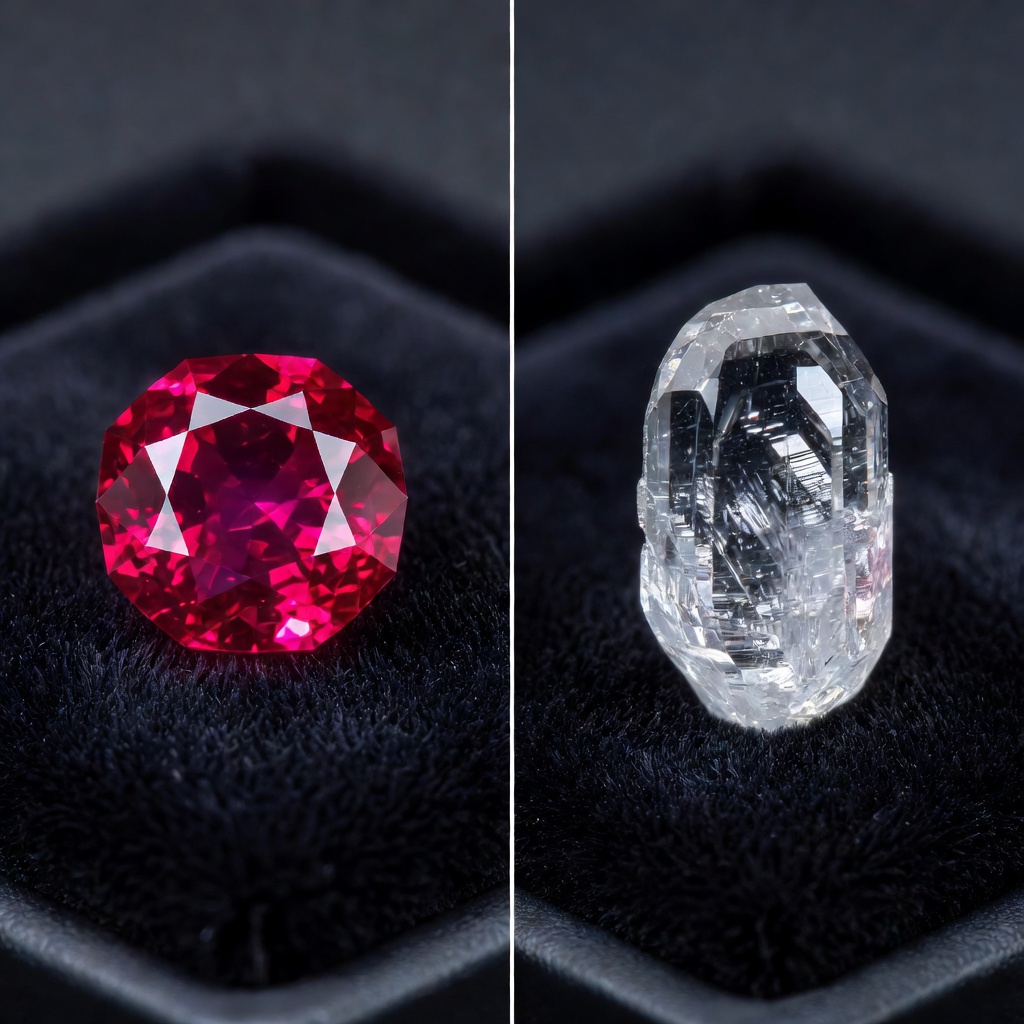
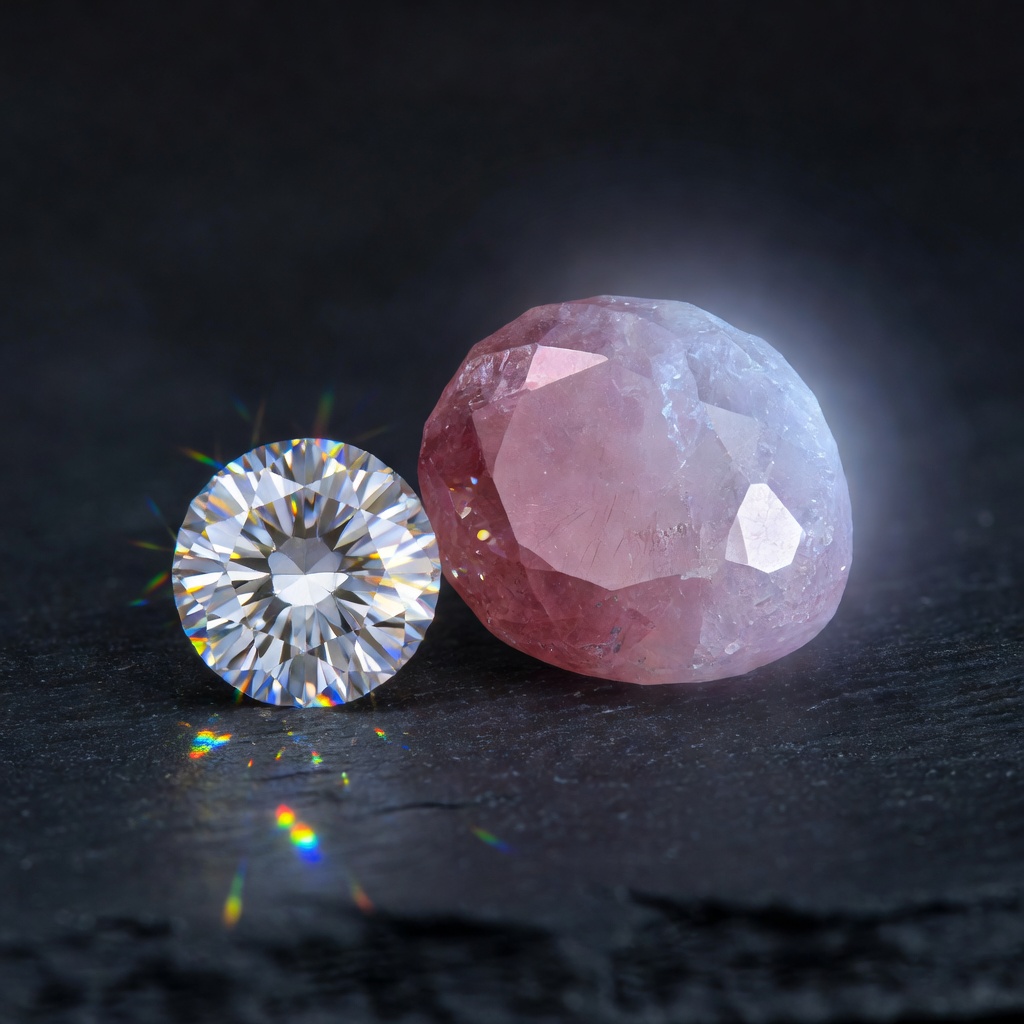
When exploring the vast spectrum of precious gemstones, the comparison between diamond and hackmanite represents one of the most fascinating studies in contrasts within the mineral kingdom. Diamond has reigned supreme for centuries as the traditional king of gemstones, composed entirely of pure carbon atoms arranged in an isometric crystal system that grants it unparalleled hardness and brilliance. This gemstone has become synonymous with luxury, commitment, and enduring value, dominating engagement ring markets and high jewelry collections worldwide with its predictable sparkle and status symbolism.
In stark contrast stands hackmanite, an extraordinarily rare sodalite variety that captivates collectors and mineral enthusiasts through its remarkable reversible photochromic properties rather than conventional beauty metrics. This tenebrescent gemstone undergoes a magical transformation when exposed to ultraviolet light, shifting from creamy white or pale pink to intense violet or raspberry hues before gradually fading back to its original state in darkness. Understanding the differences between these two extreme opposites helps serious collectors appreciate the diverse factors that determine gemstone value, from geological rarity and optical phenomena to practical wearability and investment potential.
Chemical Composition and Crystal Structure
The fundamental distinction between diamond and hackmanite begins at the molecular level, where their vastly different chemical compositions dictate their physical properties and visual characteristics. Diamond consists of pure carbon atoms arranged in a face-centered cubic lattice structure, formed under extreme conditions approximately 100 miles beneath Earth's surface where temperatures exceed 2,000 degrees Fahrenheit and pressure reaches 725,000 pounds per square inch. This perfect tetrahedral bonding creates the strongest natural material known to science, with each carbon atom connecting to four neighbors in a rigid three-dimensional network that resists deformation and scratching.
Hackmanite, conversely, presents a far more complex chemical formula as a variety of sodalite with the composition Na₈Al₆Si₆O₂₄(SO₄)S₂, essentially a sodium aluminum silicate chloride containing crucial sulfur impurities that enable its signature color-changing abilities. This gemstone crystallizes in the cubic or hexagonal systems depending on formation conditions, typically occurring in silica-undersaturated igneous rocks such as nepheline syenites and phonolites. The sulfur content within hackmanite's framework acts as photochromic centers that respond to UV radiation by trapping electrons, creating the temporary color centers responsible for tenebrescence. While diamond's structure prioritizes strength through simplicity, hackmanite's complex chemistry sacrifices durability for optical uniqueness, resulting in a mineral that is scientifically fascinating but mechanically vulnerable compared to its carbon counterpart.
Hardness, Durability and Wearability
Understanding the practical implications of gemstone hardness becomes crucial when comparing diamond and hackmanite for jewelry applications, as their positions on the Mohs scale create vastly different wearability profiles. Diamond occupies the pinnacle position at 10, making it the hardest known natural material and capable of scratching any other substance while remaining impervious to damage from daily contact with metals, other gemstones, or environmental factors. This exceptional hardness allows diamonds to maintain their polish and facet edges indefinitely, even in high-impact settings like engagement rings that endure constant knocking against hard surfaces during everyday activities.
Hackmanite ranks significantly lower at 5.5 to 6 on the Mohs hardness scale, placing it in the same category as feldspars and opals, meaning it can be scratched by everyday materials like steel files, quartz dust, and even household dust particles over time. Beyond simple hardness, hackmanite exhibits granular fracture patterns and extreme sensitivity to thermal shock, making it vulnerable to cracking when subjected to sudden temperature changes such as moving from cold outdoor environments into heated buildings. For practical wear, this means diamonds suit active lifestyles and daily wear across all jewelry types, while hackmanite requires protective bezel settings and should be reserved for occasional wear in pendants, earrings, or collector specimens rather than rings or bracelets that receive frequent impact.
Optical Properties: Brilliance vs Tenebrescence
The optical performance of diamond and hackmanite diverges dramatically, offering collectors a choice between timeless brilliance and dynamic color transformation. Diamond possesses an exceptional refractive index of 2.42 combined with a dispersion rating of 0.044, creating the famous "fire" effect where white light splits into spectral colors as it passes through precisely cut facets. This adamantine luster produces the intense sparkle and scintillation that has defined luxury jewelry for centuries, with light performance remaining constant regardless of environmental lighting conditions or viewing angles.
Hackmanite offers a completely different optical experience centered on tenebrescence, a rare photochromic phenomenon where the gemstone reversibly changes color upon exposure to UV light sources such as sunlight or blacklights. In its faded state, hackmanite typically appears creamy white, pale green, or light pink, but after UV exposure transforms to rich shades of violet, raspberry pink, or deep purple, with the intensity and speed of change varying by specimen quality and origin. Greenland hackmanite typically shows pink to violet changes, while Afghan material may shift from white to deep purple. This vitreous to greasy luster gemstone lacks diamond's brilliance but compensates with interactive optical properties that make each viewing experience unique, particularly appealing to collectors fascinated by UV reactive stones and color changing gemstones that respond to their environment.
Rarity, Sourcing and Availability
The geological rarity and market availability of diamond versus hackmanite present a fascinating paradox where commercial abundance contrasts with natural scarcity. Diamonds, while geologically rare in terms of formation requirements, benefit from extensive global mining operations across Russia, Botswana, Canada, and Australia, with controlled market distribution creating consistent availability despite the gemstone's natural rarity. Modern mining technology and established supply chains ensure that consumers can access diamonds in virtually any quality, size, or price range through retail jewelry stores worldwide.
Hackmanite represents true geological scarcity as one of the rarest collectible gemstones, with gem-quality material emerging from only three primary localities worldwide: the Ilimaussaq alkaline complex in Greenland, the Badakhshan province of Afghanistan, and the Mogok Stone Tract in Myanmar. Even within these limited sources, hackmanite occurs sporadically as secondary deposits within sodalite formations, with only a small percentage exhibiting the intense tenebrescence that defines fine specimens. This extreme rarity means that high-quality hackmanite appears on the market unpredictably, often selling immediately to collectors who recognize its significance as a rare sodalite variety. Unlike diamonds, which maintain steady inventory levels through commercial mining, acquiring exceptional hackmanite requires patience, specialized dealer relationships, and attendance at mineral shows where new discoveries first appear.
Market Value and Investment Potential
Evaluating the investment characteristics of diamond versus hackmanite requires understanding both absolute monetary value and liquidity within secondary markets. Commercial diamonds typically command prices ranging from $3,000 to $30,000 or more per carat for high-quality stones, with established grading systems and certification processes creating standardized valuation metrics that facilitate resale through pawn shops, auction houses, and diamond exchanges. This liquidity makes diamonds relatively stable stores of value, though retail markup losses and market fluctuations mean investment returns typically require decades rather than years.
Hackmanite operates within a completely different value paradigm, with fine specimens typically priced between $100 and $500 per carat, making them accessible to serious collectors without requiring the capital outlay of significant diamonds. However, the hackmanite value proposition centers on scarcity appreciation rather than liquidity, as no established secondary market exists comparable to diamond exchanges. Investment potential lies in the geological reality that major new hackmanite discoveries remain unlikely, meaning existing fine specimens from depleted mines like Greenland's Ilimaussaq complex may appreciate significantly as collector demand increases while supply remains fixed. For portfolio diversification, combining diamonds provides stability and liquidity, while hackmanite offers the potential for significant appreciation driven by extreme rarity and growing recognition among connoisseurs of unusual gemstones.
Jewelry Applications and Setting Requirements
The divergent physical properties of diamond and hackmanite dictate distinct approaches to jewelry design, mounting techniques, and wear scenarios. Diamond's supreme hardness and toughness make it suitable for every conceivable jewelry application, from high-impact solitaire engagement rings subjected to daily knocks and abrasion to delicate pavé bands, tennis bracelets, and statement necklaces that maintain their beauty despite constant exposure to environmental challenges. Jewelers can confidently set diamonds in prong, bezel, or tension settings using platinum, white gold, yellow gold, or rose gold without concern for the gemstone's ability to withstand the setting process or subsequent wear.
Hackmanite jewelry requires thoughtful design constraints that prioritize protection over dramatic display, given the gemstone's relative softness and environmental sensitivities. Protective bezel settings that fully encircle the gemstone's girdle provide essential defense against edge chipping, while closed-back settings help shield the stone from sudden temperature changes and excessive light exposure that might accelerate fading. Hackmanite works beautifully in pendant designs where the stone remains protected against impact, or in earrings where contact with hard surfaces remains minimal. Metal pairing considerations favor protective gold bezels over exposed prong settings, and designers often incorporate hackmanite into pieces that allow easy removal for dark storage when not being worn, ensuring the tenebrescent properties remain vivid for generations.
Care, Maintenance and Longevity
Proper maintenance protocols for diamond and hackmanite reflect their vastly different tolerances to environmental factors, cleaning methods, and storage requirements. Diamond care remains remarkably straightforward due to the gemstone's chemical inertness and thermal stability; owners can safely clean diamonds using ultrasonic cleaners, steam cleaners, or simple soap and water without risk of damage. Diamonds resist attack from acids, bases, and household chemicals, maintaining their brilliance indefinitely with minimal maintenance beyond occasional professional inspections to ensure settings remain secure.
Hackmanite maintenance demands meticulous attention to preserve its unique optical properties and physical integrity over time. Owners must avoid ultrasonic cleaning and steam treatment due to thermal shock risks and potential structural damage, instead using only mild soap and lukewarm water with soft brushes for cleaning. Crucially, hackmanite requires storage in dark conditions when not worn, as prolonged exposure to sunlight or even bright indoor lighting can cause temporary or permanent fading of the tenebrescent effect. The gemstone also shows sensitivity to acids and harsh chemicals, necessitating removal before applying perfumes, lotions, or cleaning products. With proper care including dark storage in acid-free boxes and gentle handling, hackmanite can maintain its magical color-changing properties indefinitely, though it will never achieve the worry-free durability that makes diamonds heirlooms passed down through centuries.
Symbolic Meaning and Cultural Significance
The cultural narratives surrounding diamond and hackmanite reflect their positions within mainstream luxury markets versus specialized collector communities. Diamond carries immense symbolic weight as the ultimate representation of eternal love and commitment, largely shaped by twentieth-century marketing campaigns that established the stone as the definitive engagement ring choice while associating it with status, success, and April birthstone traditions. This cultural penetration means diamonds function as universal currency in expressions of romance, achievement, and social standing, recognized across global cultures as markers of significant life milestones.
Hackmanite occupies a fascinating niche as an emerging metaphysical stone associated with transformation, intuition, and adaptability, reflecting its physical ability to change color in response to environmental stimuli. Among crystal healing practitioners, hackmanite represents the capacity for personal evolution and the embracing of change, while scientifically-minded collectors value it as a conversation piece demonstrating rare geological phenomena. Unlike diamonds, which signify permanence and constancy, hackmanite symbolizes dynamic potential and the beauty of impermanence, appealing to individuals who prefer exclusive collector's secrets over mainstream luxury recognition. This distinction makes hackmanite particularly attractive to those seeking color changing gemstones that tell stories of geological rarity and optical wizardry rather than conventional romance.
Comprehensive Comparison: Diamond vs Hackmanite
| Characteristic | Diamond | Hackmanite |
|---|---|---|
| Mohs Hardness | 10 (Hardest known mineral) | 5.5-6 (Similar to feldspar) |
| Optical Phenomenon | Brilliance and fire through light dispersion (RI 2.42) | Tenebrescence (color change under UV light) |
| Primary Sources | Global: Russia, Botswana, Canada, Australia, South Africa | Limited: Greenland, Afghanistan, Myanmar |
| Price Range (Per Carat) | $3,000-$30,000+ for fine quality | $100-$500 for collectible specimens |
| Best Jewelry Applications | Engagement rings, daily wear pieces, high-impact settings | Pendants, earrings, collector specimens, occasional wear |
| Setting Requirements | Versatile: prong, bezel, tension settings in any metal | Protective bezel or closed-back settings essential |
| Care and Cleaning | Ultrasonic safe, chemically inert, heat resistant | Gentle soap only, avoid heat/chemicals/ultrasonics |
| Storage Needs | Flexible: no special environmental requirements | Must store in darkness to preserve tenebrescence |
| Investment Liquidity | High: established resale markets and certification | Low: niche collector market, limited buyers |
| Symbolism | Eternal love, permanence, status, April birthstone | Transformation, intuition, scientific rarity |
Final Verdict: Choosing Your Perfect Gemstone
Selecting between diamond and hackmanite ultimately requires honest assessment of lifestyle needs, aesthetic preferences, and collection goals rather than simply comparing price points or prestige levels. Active individuals seeking daily-wear jewelry that withstands rigorous activity, frequent handwashing, and environmental exposure should prioritize diamond for its unmatched durability and low-maintenance requirements, particularly for engagement rings or bracelets that receive constant impact. The diamond remains the pragmatic choice for those who value permanence, established resale value, and universal recognition as symbols of significant commitments.
Conversely, hackmanite suits collectors and jewelry enthusiasts who prioritize uniqueness and conversation value over practicality, accepting the responsibility of careful handling in exchange for owning one of nature's rarest optical phenomena. Budget-conscious buyers seeking diamond alternatives that offer genuine geological rarity rather than synthetic substitutes will find hackmanite provides exceptional value and potential appreciation, provided they commit to protective settings and proper storage protocols. For the sophisticated collector, the ultimate strategy involves portfolio diversification: acquiring diamonds for daily wear and investment stability while adding hackmanite as a specialty piece that demonstrates the fascinating diversity of the mineral kingdom beyond conventional brilliance, creating a collection that spans both timeless durability and ephemeral, light-responsive beauty.
Frequently Asked Questions About Diamond vs Hackmanite
What is the main difference between diamond and hackmanite?
The primary difference lies in their composition and optical properties. Diamond is pure carbon with exceptional hardness (Mohs 10) and brilliant light dispersion, while hackmanite is a rare sodalite variety (Mohs 5.5-6) famous for tenebrescence—reversibly changing from white to pink/violet under UV light exposure.
Is hackmanite durable enough for daily wear like diamond?
No, hackmanite is not recommended for daily wear. With a hardness of only 5.5-6, it's susceptible to scratching, thermal shock, and light sensitivity. Unlike diamond, which withstands constant use, hackmanite is best reserved for occasional wear in protective settings like pendants or earrings.
Why does hackmanite change color while diamond remains constant?
Hackmanite contains sulfur impurities that create a photochromic effect called tenebrescence. When exposed to UV light, electrons rearrange causing a color shift to pink or violet; this fades in darkness. Diamond's pure carbon structure lacks these reactive impurities, maintaining consistent optical properties regardless of lighting conditions.
Which gemstone is more valuable: diamond or hackmanite?
High-quality diamonds command significantly higher prices ($3,000-$30,000+ per carat) compared to hackmanite ($100-$500 per carat). However, exceptional hackmanite specimens with intense tenebrescence are extremely rare to collectors, potentially appreciating in niche markets despite lower absolute monetary value.
Can hackmanite be used in engagement rings?
While possible, hackmanite is generally unsuitable for engagement rings due to its relative softness and sensitivity to light and chemicals. It requires protective bezel settings and careful handling. Diamonds remain the standard for engagement jewelry because of their durability and symbolism of permanence.
How rare is hackmanite compared to diamond?
Hackmanite is significantly rarer than diamond in nature. While diamonds are commercially abundant through controlled mining, gem-quality hackmanite occurs in only a few locations worldwide (Greenland, Afghanistan, Myanmar) and is found in extremely limited quantities, making fine specimens highly prized by collectors.
Does hackmanite lose its color-changing ability over time?
Under normal conditions, hackmanite's tenebrescence is reversible and theoretically permanent. However, prolonged exposure to intense heat, sunlight, or harsh chemicals can potentially damage the crystal structure and diminish the effect. Proper dark storage helps preserve this unique property indefinitely.
Where can I buy authentic hackmanite jewelry?
Authentic hackmanite is available through specialized gemstone dealers, mineral shows, and high-end custom jewelers rather than mainstream retail stores. Due to its rarity, purchase only from reputable sellers who provide origin documentation (typically Greenland or Afghanistan) and verify the tenebrescent effect with UV light demonstration.