Introduction: Understanding Diamond And Goshenite
When selecting a colorless gemstone for fine jewelry, the debate of Diamond vs Goshenite has gained significant traction among modern consumers seeking both beauty and value. Diamond, composed of pure carbon arranged in an isometric cubic crystal system, represents the pinnacle of geological rarity and optical performance, formed under immense pressure nearly 100 miles beneath Earth's surface over billions of years. In contrast, goshenite emerges as the transparent, colorless variety of beryl—sharing mineralogical lineage with emerald and aquamarine—yet distinguished by its absence of trace elements like chromium or iron that tint its cousins. This colorless beryl has experienced a resurgence in popularity as couples and collectors seek affordable diamond alternatives that provide substantial carat weight and clarity without the premium price tag associated with carbon-based precious stones.
The growing interest in goshenite reflects shifting priorities in the jewelry market, where ethical sourcing, budget consciousness, and unique aesthetic preferences drive purchasing decisions. While diamond maintains its status as the traditional choice for engagement rings and investment pieces, goshenite offers compelling advantages for specific applications where extreme durability is less critical than visual impact and cost efficiency. Understanding the fundamental differences between these two white gemstone comparison candidates requires examining their geological origins, physical properties, and practical performance in daily wear scenarios. Both stones present distinct value propositions: diamond delivers unmatched hardness and brilliance for heirloom pieces, while goshenite provides accessible elegance and impressive clarity for fashion-forward designs and occasional wear statements.
Chemical Composition And Crystal Formation
The fundamental distinction between these gemstones begins at the molecular level, where diamond composition consists entirely of carbon atoms arranged in a tetrahedral lattice structure, creating the strongest naturally occurring substance known to science. These precious crystals form in the Earth's mantle under pressures exceeding 725,000 pounds per square inch and temperatures around 2,000 degrees Fahrenheit, typically between 1 billion and 3.3 billion years ago, before volcanic eruptions transported them rapidly to the surface via kimberlite pipes. Major diamond mining operations concentrate in Botswana, Russia, Canada, and Australia, where ancient geological activity created the specific conditions necessary for carbon crystallization.
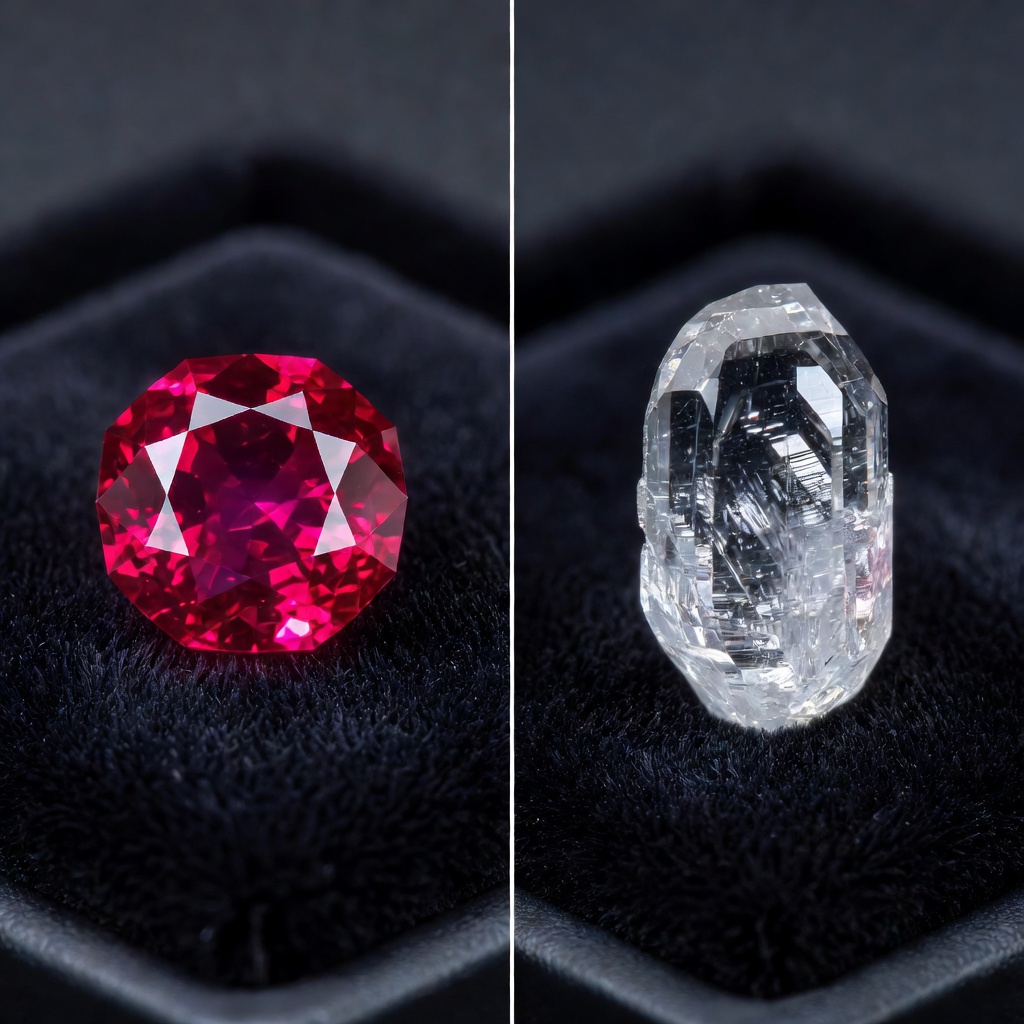
Conversely, goshenite crystal structure belongs to the hexagonal crystal system, chemically classified as beryllium aluminum silicate with the formula Be₃Al₂(SiO₃)₆, forming in pegmatite deposits and hydrothermal veins under significantly less extreme conditions than its carbon counterpart. Goshenite crystallizes when beryl forms without the trace impurities that create emerald's green hue or aquamarine's blue tint, resulting in a pure, water-clear appearance that rivals diamond's transparency. Notable deposits occur in Brazil, Colombia, Madagascar, and the Goshen, Massachusetts locality that provided the mineral its name, with formation timelines spanning millions rather than billions of years. This difference in genesis affects not only availability and pricing but also the internal stress patterns and inclusion characteristics that gemologists examine to determine authenticity and origin.
Hardness And Durability: The Mohs Scale Reality
Evaluating gemstone suitability for jewelry requires careful consideration of the goshenite hardness mohs scale rating compared to diamond's legendary durability. Diamond occupies the apex position at 10 on the Mohs hardness scale, representing absolute resistance to scratching and establishing the standard against which all other minerals are measured. This exceptional diamond durability stems from the strong covalent bonding between carbon atoms, allowing diamonds to resist abrasion from daily contact with household dust, metal surfaces, and accidental impacts that would damage lesser stones. However, diamond possesses perfect cleavage in four directions, meaning a sharp blow at the correct angle can split the stone—a characteristic that requires skilled setting techniques to mitigate.
Goshenite ranks between 7.5 and 8 on the Mohs scale, indicating good hardness suitable for jewelry but significantly softer than diamond, placing it in the same durability category as quartz and topaz. While resistant to light scratching, goshenite exhibits conchoidal fracture patterns rather than cleavage, meaning it breaks with curved, shell-like surfaces when subjected to significant impact. For daily wear applications, this hardness differential translates to practical concerns: a goshenite ring worn constantly for five years may show microscopic surface abrasions and edge rounding, particularly along facet junctions, whereas a diamond maintains its polish indefinitely. When considering heirloom quality, diamond's superior hardness ensures multi-generational preservation of optical properties, while goshenite pieces may require periodic re-polishing or protective setting adjustments to maintain their original luster over decades of ownership.
Visual Characteristics: Brilliance, Fire, And Luster
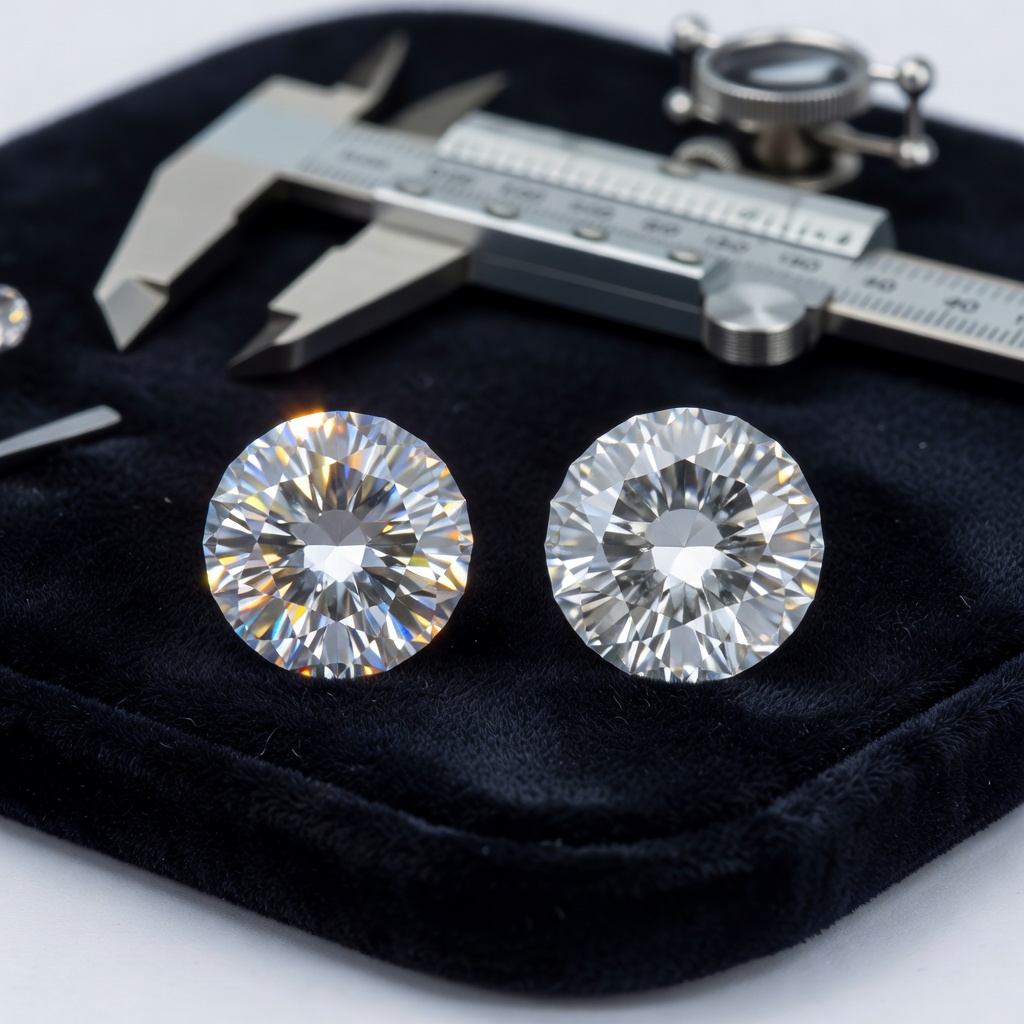
The optical performance differences between these gemstones create distinct visual signatures that trained observers can identify immediately. Diamond possesses a refractive index of 2.42, one of the highest among transparent gemstones, which causes light to bend dramatically upon entering the stone, creating intense brilliance through total internal reflection. Additionally, diamond exhibits strong dispersion (0.044), the ability to separate white light into spectral colors, producing the rainbow flashes known as "fire" that characterize high-quality cuts. This white gemstone comparison reveals diamond's adamantine luster—a metallic, mirror-like reflectivity that contributes to its distinctive sparkle and perceived value in jewelry settings.
Goshenite demonstrates a refractive index between 1.57 and 1.60, significantly lower than diamond, resulting in less dramatic light bending and a softer, more subdued brilliance often described as "watery" or "glassy." The stone displays vitreous luster rather than adamantine, creating a transparent, window-like appearance that emphasizes clarity over fiery dispersion. While high-quality goshenite achieves excellent transparency with few inclusions, it lacks the scintillation and spectral color separation that define goshenite brilliance relative to diamond. For practical selection, consumers seeking maximum sparkle and light performance should prioritize diamond, whereas those appreciating subtle elegance and pure transparency without optical distraction may find goshenite's gentler appearance perfectly suited to their aesthetic preferences.
Comparison Table: Diamond Versus Goshenite
| Property | Diamond | Goshenite |
|---|---|---|
| Chemical Composition | Pure Carbon (C) | Beryllium Aluminum Silicate (Be₃Al₂Si₆O₁₈) |
| Crystal System | Isometric (Cubic) | Hexagonal |
| Mohs Hardness | 10 (Highest Rating) | 7.5 - 8 |
| Refractive Index | 2.42 | 1.57 - 1.60 |
| Dispersion (Fire) | 0.044 (High) | 0.014 (Low) |
| Luster | Adamantine | Vitreous |
| Price Per Carat | $3,000 - $30,000+ | $20 - $200 |
| Best Applications | Engagement Rings, Heirlooms, Daily Wear | Earrings, Pendants, Occasional Rings |
| Cleaning Methods | Ultrasonic, Steam, Chemical Safe | Soft Brush, Mild Soap Only |
Price Analysis And Value Proposition
The economic disparity between these gemstones represents one of the most compelling factors for budget-conscious consumers exploring affordable diamond alternatives. High-quality diamonds command prices ranging from $3,000 to $30,000 or more per carat depending on cut, color, clarity, and carat weight—the renowned 4Cs grading system that determines market value. This pricing reflects controlled supply chains, extensive marketing investments, certification costs from laboratories like GIA, and genuine rarity factors for colorless, inclusion-free specimens. Investment-grade diamonds with D-color and Flawless clarity ratings retain value exceptionally well, often appreciating over time, while commercial-grade stones face significant depreciation upon resale.
Goshenite price vs diamond comparisons reveal dramatic accessibility, with fine quality goshenite typically costing between $20 and $200 per carat, allowing buyers to acquire substantial statement pieces for the price of a small diamond accent stone. Pricing for this colorless beryl depends primarily on clarity, cut quality, and carat size, with untreated, eye-clean stones commanding premium positions within the beryl market. While goshenite lacks diamond's investment potential and resale liquidity, it enables consumers to prioritize size and setting quality over material costs. For example, a couple could commission a custom-designed 3-carat goshenite solitaire in platinum for less than the cost of a 0.5-carat diamond of similar visual clarity, redirecting budget toward superior metalwork or complementary accent stones while achieving impressive visual presence.
Jewelry Applications And Setting Requirements
Selecting appropriate jewelry designs requires matching gemstone durability to intended use cases, particularly when evaluating goshenite engagement ring potential versus diamond's universal adaptability. Diamond's unparalleled hardness makes it suitable for all jewelry categories, including heavy-use pieces like daily-wear rings, bracelets subjected to frequent impact, and heirloom broaches that survive decades of handling without protective constraints. Prong settings, tension mounts, and exposed edge designs work excellently with diamond, as the stone resists both surface scratching and chipping under normal wear conditions, allowing light to enter from multiple angles for maximum brilliance.
Goshenite performs optimally in protective settings that shield its girdle and corners from direct impact, making bezel settings, halo designs, and channel-set arrangements ideal for this softer beryl variety. While a goshenite engagement ring can serve beautifully for individuals with careful lifestyles or occasional wear intentions, active professionals, healthcare workers, or fitness enthusiasts should consider alternative applications where the stone faces less mechanical stress. Earrings and pendants represent excellent venues for goshenite, as these pieces avoid the direct impacts and abrasive contact common to hand jewelry. For example, a goshenite halo pendant suspended from a platinum chain provides impressive visual weight and clarity at minimal cost, while preserving the stone's integrity through protected placement away from hard surfaces.
Care, Maintenance, And Cleaning Protocols
Proper maintenance protocols differ significantly between these gemstones, with diamond maintenance offering considerable flexibility due to the stone's chemical inertness and physical durability. Diamonds tolerate ultrasonic cleaning devices, steam cleaners, and commercial jewelry cleaning solutions without risk of damage, allowing for convenient restoration of brilliance at home or through professional services. The stone's resistance to scratching ensures that storage alongside other jewelry pieces rarely causes damage, though diamonds can scratch other gemstones, necessitating separate compartments or soft cloth wraps when traveling.
Goshenite care requires gentler approaches reflecting its lower hardness and potential vulnerability to thermal shock. Ultrasonic cleaners and steam devices risk causing internal fractures or loosening inclusions within goshenite, making soft brush cleaning with mild dish soap and lukewarm water the safest home maintenance method. Storage practices must prevent contact with harder materials like sapphire, ruby, or diamond jewelry that could abrade goshenite's surface; individual soft pouches or lined jewelry boxes with separate compartments prove essential for preservation. Professional inspection every six months allows jewelers to check for loose prongs or bezel wear that might expose the goshenite to chipping hazards, particularly for rings worn during physical activities.
Making Your Decision: Lifestyle And Budget Considerations
Finalizing your choice between Diamond vs Goshenite requires honest assessment of lifestyle factors, financial parameters, and symbolic priorities. Active individuals working in manual professions, healthcare environments, or athletic pursuits should prioritize diamond's resilience, as occupational hazards present constant threats to softer gemstones. Conversely, those seeking maximum visual impact within strict budget constraints, or collectors desiring unique pieces for rotating wardrobes, may find beryl vs diamond comparisons favoring goshenite for its impressive size availability and pure transparency.
Consider the symbolic meaning: diamond carries centuries of romantic tradition and permanence associations, while goshenite offers understated elegance and the uniqueness of a less common choice. Create a final checklist evaluating daily wear intensity, desired longevity (decades versus generations), maintenance willingness, and whether the piece serves as investment or pure adornment. For a corporate attorney seeking an everyday engagement ring, diamond provides worry-free durability, while a fashion influencer wanting statement cocktail jewelry might prefer a 5-carat goshenite set in a protective bezel for red-carpet events. Ultimately, both gemstones offer legitimate pathways to owning beautiful, clear jewelry—the decision rests upon aligning material properties with personal reality.
Frequently Asked Questions
What Exactly Is Goshenite And How Does It Differ From Diamond?
Goshenite is the colorless, transparent variety of the mineral beryl, sharing the same family as emerald and aquamarine but without trace elements that cause color. While both appear clear to the eye, diamond is pure carbon with a cubic crystal structure, whereas goshenite is beryllium aluminum silicate with a hexagonal crystal structure. This fundamental difference creates variations in hardness, brilliance, and optical properties between the two gemstones.
Is Goshenite Durable Enough For Daily Wear In An Engagement Ring?
Goshenite rates 7.5-8 on the Mohs hardness scale, making it reasonably durable but significantly softer than diamond's perfect 10 rating. While suitable for engagement rings, goshenite requires protective settings like bezels or halos to prevent chipping or scratching during daily activities. It is better suited for occasional wear rings or jewelry pieces that don't encounter hard impacts, whereas diamond withstands constant daily abuse without damage.
Why Is Goshenite So Much Cheaper Than Diamond?
Goshenite costs significantly less due to abundance, lower demand, and different perceived value in the market. Unlike diamonds, which have controlled supply chains and extensive marketing campaigns establishing them as luxury items, goshenite is more readily available in nature and lacks the same commercial positioning. Additionally, goshenite's lower hardness and brilliance factors reduce its desirability for certain high-end applications, keeping prices accessible.
Can Jewelers Easily Tell The Difference Between Diamond And Goshenite?
Yes, trained gemologists can immediately distinguish between diamond and goshenite using standard gemological tools. Diamond testers that measure thermal conductivity provide instant differentiation, as diamond conducts heat while beryl does not. Refractive index testing also clearly separates them (2.42 for diamond vs approximately 1.58 for goshenite). Visual inspection by experts reveals differences in dispersion, luster, and faceting patterns that indicate identity.
Does Goshenite Have The Same Sparkle And Fire As Diamond?
No, goshenite does not possess the same level of brilliance or fire as diamond. Diamond has a higher refractive index (2.42) and greater dispersion (0.044), creating intense white light reflection and rainbow color flashes. Goshenite has a lower refractive index (1.57-1.60) and vitreous (glassy) luster rather than diamond's adamantine sparkle. While beautiful in its own right with a soft, water-clear appearance, goshenite appears less lively and fiery compared to diamond.
Which Gemstone Is Better For Heirloom Jewelry That Lasts Generations?
Diamond is superior for multi-generational heirloom jewelry due to its unmatched hardness and durability. Diamonds resist scratching, chipping, and environmental damage over centuries, maintaining their polish and structural integrity indefinitely. Goshenite, while durable enough for decades of careful wear, is more susceptible to surface abrasions and edge damage over extended periods, potentially requiring re-polishing or replacement settings to survive as a true heirloom piece.
Are There Any Famous Goshenite Gemstones In History?
While not as historically prominent as diamonds, goshenite has appeared in notable collections. The name derives from Goshen, Massachusetts, where high-quality specimens were first discovered. Some antique jewelry pieces from the Victorian era feature goshenite as diamond substitutes. However, goshenite lacks the famous individual stones and crown jewels associated with diamonds, partly because its softer nature made it less suitable for the most valuable ceremonial pieces throughout history.
Can Goshenite Be Treated Or Enhanced Like Some Diamonds?
Goshenite is typically not treated or enhanced because it naturally occurs colorless, unlike other beryl varieties that undergo heat treatment. However, some goshenite may be irradiated to create other colored beryl varieties. In contrast, many diamonds undergo treatments like laser drilling, fracture filling, or high-pressure high-temperature (HPHT) processing to improve clarity or color. Untreated goshenite is common and expected, whereas untreated high-quality diamonds command premium prices.