Understanding the Fundamental Differences
When evaluating precious gemstones for significant jewelry purchases, the comparison between diamond and garnet represents one of the most common deliberations for modern consumers. Diamonds consist of pure crystalline carbon formed under immense geological pressure, while garnets comprise a complex group of silicate minerals with varying chemical compositions including almandine, pyrope, and spessartine. These stones frequently appear in comparative discussions because both offer exceptional beauty for jewelry applications, yet they serve vastly different functional and economic niches in the marketplace. Whether you are selecting an engagement ring that will endure decades of daily wear or seeking a vibrant fashion piece that maximizes visual impact within a constrained budget, understanding the distinctions between these gemstones ensures you make an informed investment aligned with your lifestyle and aesthetic preferences.
Prospective buyers typically compare these gemstones across four critical dimensions: durability characteristics that determine long-term wearability, optical properties governing brilliance and fire, price differentials that impact budget allocation, and symbolic meanings that resonate with personal values. This comprehensive analysis serves engagement ring shoppers seeking heirloom-quality center stones, gemstone collectors evaluating additions to their portfolios, and jewelry enthusiasts exploring alternatives to traditional diamond jewelry. By examining the geological origins, physical properties, and practical applications of both stones, you will gain the technical knowledge necessary to select the gemstone that best complements your specific needs and wearing habits.
Chemical Composition and Geological Formation
The fundamental distinction between diamond and garnet begins at the molecular level, where their chemical architectures dictate their physical properties and visual characteristics. Diamonds represent pure crystalline carbon arranged in an isometric crystal system, formed approximately 90 to 120 miles beneath Earth's surface in the mantle region under pressures exceeding 725,000 pounds per square inch and temperatures above 2,000 degrees Fahrenheit. These extraordinary formation conditions occur primarily within ancient continental cratons, resulting in gemstones that are typically 1 to 3.5 billion years old, making them among the oldest materials accessible to human touch.
Garnets, conversely, constitute a group of nesosilicate minerals sharing the general chemical formula X3Y2(SiO4)3, where X and Y represent various metal cations that create distinct species. Common varieties include almandine (iron-aluminum silicate), pyrope (magnesium-aluminum silicate), and the rare green tsavorite (calcium-aluminum silicate with trace chromium or vanadium). Unlike diamonds, garnets form in diverse geological environments including metamorphic rocks subjected to regional metamorphism and certain igneous formations, with crystallization occurring at relatively shallower depths and lower pressures. This varied formation process results in garnet deposits that are geologically younger and more geographically widespread than diamond sources.
Geographic sourcing further differentiates these gemstones, with diamonds primarily extracted from kimberlite and lamproite pipes in Russia, Canada, Botswana, and Australia, requiring extensive mining operations to access primary deposits. Garnet deposits occur more accessibly in metamorphic terrains across India, Madagascar, Tanzania, and the United States, particularly in Idaho and New York State, allowing for both industrial-scale mining and artisanal collection. When conducting a diamond and garnet comparison, these geological distinctions explain why diamonds command premium prices related to extraction difficulty and ancient rarity, while garnets offer more accessible entry points for collectors and jewelry designers seeking diverse color options without prohibitive costs.
Visual Characteristics: Color, Brilliance, and Fire
The optical performance of diamonds and garnets diverges significantly due to differences in refractive indices and dispersion values that govern how light interacts with each material. Diamonds possess an exceptionally high refractive index of 2.42, meaning they bend entering light dramatically to create the intense brilliance and scintillation that define their visual appeal. Additionally, diamonds exhibit strong dispersion (0.044), the property responsible for separating white light into spectral colors or "fire," creating those rainbow flashes that captivate observers under direct lighting conditions.
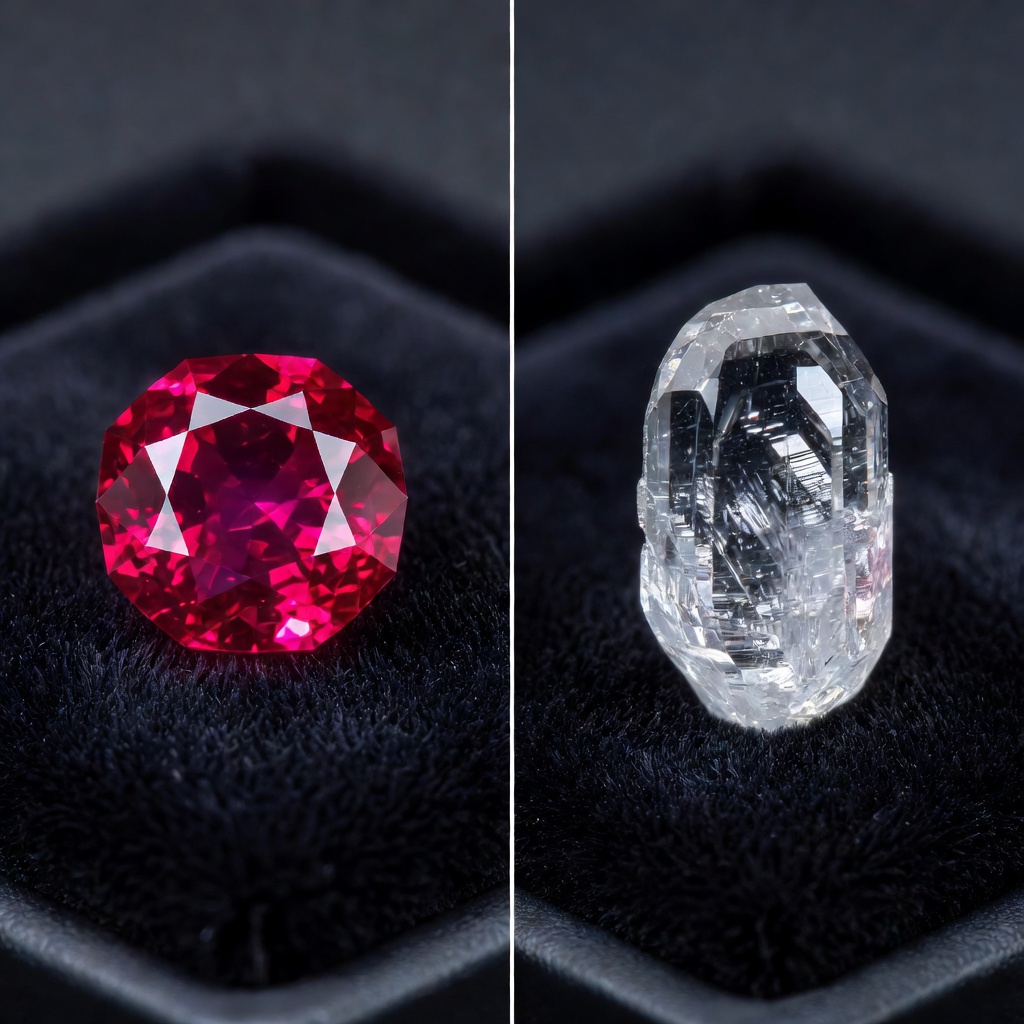
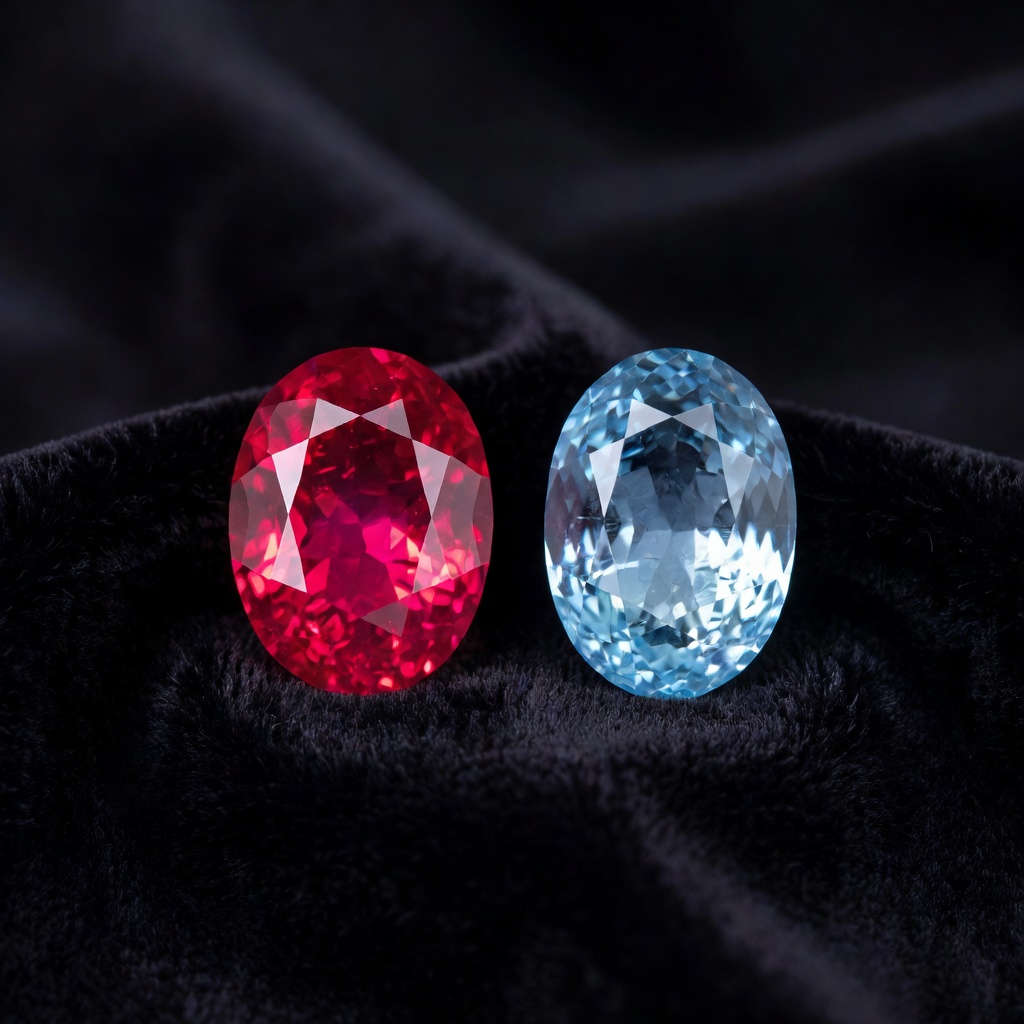
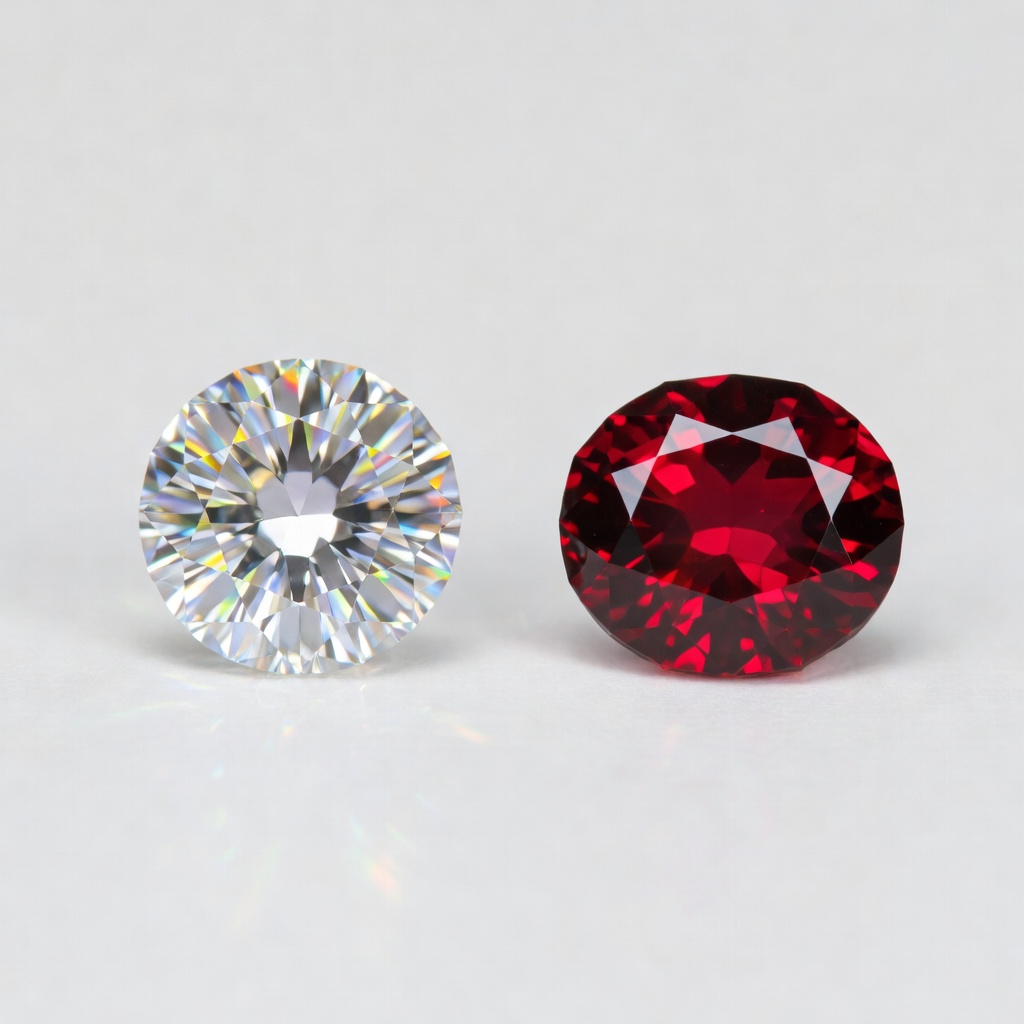
Garnets display more modest optical properties, with refractive indices ranging between 1.72 and 1.89 depending on the specific variety, resulting in subdued brilliance compared to diamonds. While high-quality garnets like demantoid exhibit notable dispersion (0.057, actually exceeding diamond), most common red garnets show limited fire and rely primarily on body color and luster for visual impact. When evaluating red garnet vs diamond appearances side by side, the diamond typically appears significantly more lively and radiant under identical lighting, while the garnet presents a deeper, more saturated color with subtle internal reflections rather than explosive sparkle.
Color ranges represent another stark contrast between these gemstones, as diamonds are graded on the D-Z color scale where D represents completely colorless and Z indicates light yellow or brown tints, with fancy vivid colors occurring rarely and commanding extraordinary premiums. Garnets naturally occur in virtually every hue except true blue, including deep crimson almandine, vibrant orange spessartine, forest green tsavorite, and purple-red rhodolite, providing designers with extensive palette options unavailable in the diamond market. Cut quality impacts these stones differently; diamonds require precision faceting with exact angles to maximize light return, while garnets are more forgiving due to their lower refractive indices, though both benefit from skilled lapidary work to minimize windowing and optimize color saturation.
Clarity characteristics also distinguish these materials, as diamonds typically contain inclusions such as crystals, feathers, clouds, or pinpoint that are graded under 10x magnification according to strict GIA standards. Garnets generally form with fewer visible inclusions than diamonds, often appearing eye-clean even in larger sizes, though certain varieties like hessonite garnet characteristically display "treacle" or roiled inclusions that are accepted as identifying features rather than defects. This clarity difference means that garnet buyers often secure larger, cleaner appearing stones for the same visual impact that would require significant investment in high-clarity diamonds.
Hardness, Durability, and Long-Term Wearability
The disparity in hardness between diamond and garnet represents the most significant practical consideration for jewelry selection, particularly for pieces intended for daily wear. Diamonds rank at the absolute maximum of the Mohs hardness scale with a rating of 10, making them the hardest known natural material capable of scratching any other substance while remaining impervious to abrasion from everyday contact. Garnet hardness vs diamond measurements reveal a substantial gap, with garnets ranking between 6.5 and 7.5 on the Mohs scale depending on species, making them susceptible to scratching from harder materials including quartz (7), topaz (8), and certainly diamonds themselves.
Beyond simple hardness, the internal structure of these gemstones affects their durability in different ways. Diamonds possess perfect octahedral cleavage, meaning they can split along specific planes under sharp impact, requiring protective settings that minimize exposure to hard blows despite their scratch resistance. Garnets exhibit indistinct cleavage and typically fracture in a conchoidal pattern similar to glass, making them less prone to catastrophic splitting but more vulnerable to chipping along girdle edges or facet junctions during accidental impacts. For active individuals who engage in manual labor, sports, or frequent hand-related activities, these durability differences make diamonds the unambiguous choice for center stones in rings that will withstand decades of rigorous daily wear.
When assessing gemstone durability comparison for engagement rings specifically, jewelers generally recommend garnet only for wearers with gentle lifestyles who can commit to removing their rings during household chores, exercise, or any activity involving potential impact. Practical examples illustrate these limitations: a garnet ring worn daily while typing at a computer may remain pristine for years, while the same ring worn during rock climbing or weightlifting will likely exhibit facet abrasion and edge chipping within months. Long-term maintenance expectations differ substantially, as diamonds retain their original polish indefinitely due to their hardness, while garnets gradually develop microscopic scratches that dull their surface luster, necessitating professional repolishing every 5-10 years depending on wear intensity.
Price, Value, and Investment Analysis
The economic differential between diamond and garnet purchases enables distinctly different budget strategies for jewelry acquisition. Quality diamonds typically command prices ranging from $1,500 to over $20,000 per carat depending on the interplay of carat weight, cut quality, color grade, and clarity characteristics known as the 4Cs. In stark contrast, garnet vs diamond price comparisons reveal that most garnet varieties cost between $20 and $500 per carat, with even rare premium types like tsavorite or demantoid garnets generally ranging from $1,000 to $3,000 per carat for exceptional specimens.
Value assessment methodologies differ significantly between these stones. Diamond valuation relies heavily on standardized grading reports from laboratories like GIA or AGS that document precise measurements of the 4Cs, creating transparent pricing structures but also rigid quality tiers that dramatically affect cost. Garnet valuation emphasizes color saturation and hue intensity above all other factors, with size and type rarity serving secondary considerations, meaning a deeply saturated 3-carat rhodolite garnet might cost less than $400 while a similarly sized diamond with equivalent visual impact could exceed $30,000. This pricing structure allows buyers to maximize carat weight and visual presence through garnet selection when budget constraints prohibit diamond acquisition.
Investment potential favors diamonds due to established global markets, standardized certification systems, and consistent resale liquidity through dealers, auction houses, and private sales. High-quality certified diamonds with excellent cuts and D-F color grades typically retain value better than fashion jewelry pieces and can appreciate during periods of supply constraint. While rare garnet varieties occasionally appreciate in value among specialized collectors, the market lacks the liquidity and standardization of diamonds, making garnets generally unsuitable as investment vehicles despite their aesthetic merits. Budget allocation strategies should reflect these realities: allocate funds toward diamond center stones when seeking heirloom-quality pieces with potential resale value, or select garnets when prioritizing immediate size, color impact, and distinctive personal expression over long-term asset appreciation.
Jewelry Applications and Setting Considerations
The selection between diamond and garnet significantly influences jewelry design possibilities and setting requirements based on their respective physical properties. For engagement rings intended for daily wear across decades, diamonds remain the universally recommended choice due to their unmatched durability, allowing prong settings that maximize light exposure while maintaining structural integrity through years of hand contact and environmental exposure. Garnet vs diamond engagement ring selections require more careful evaluation, as garnets suit budget-conscious buyers or those seeking unique colored center stones, but necessitate protective bezel settings or halo designs that shield the girdle from impact and reduce exposure to abrasive surfaces.
Jewelry type suitability varies considerably between these materials. Diamonds excel in every jewelry category from rings and bracelets to earrings and necklaces, thriving in high-contact pieces like tennis bracelets and eternity bands that would quickly damage softer stones. Garnets perform admirably in earrings and pendants that receive minimal mechanical stress, where their rich colors provide striking visual impact without the durability demands of finger rings. Case studies from jewelry repair shops indicate that garnet rings require professional attention 3-4 times more frequently than diamond rings when worn daily, primarily for tightening loose stones after bezel wear or repolishing abraded facets.
Setting styles and metal compatibility require specific technical considerations for each gemstone. Diamonds tolerate tension settings, shared prong designs, and delicate mountings because their hardness prevents the metal from gradually cutting into the stone. Garnets demand more robust settings with substantial metal surrounding the girdle, preferably in bezels or deep channels that provide physical protection while accommodating the stone's specific gravity and thermal expansion properties. Design versatility extends to color coordination, where diamonds provide neutral brilliance complementing any wardrobe palette or metal choice from yellow gold to platinum, while garnets make bold color statements that require thoughtful integration with personal style preferences and skin tones.
Symbolism, Birthstone Significance, and Cultural Meaning
Beyond physical properties and monetary value, the symbolic associations of diamonds and garnets carry distinct emotional resonance that influences buyer preferences. Diamonds have become synonymous with eternal love, unbreakable commitment, and social prestige, largely through twentieth-century marketing campaigns that established them as the default choice for engagement rings and the designated birthstone for April. These stones also commemorate 60th wedding anniversaries, reinforcing their association with longevity and endurance through generations of Western cultural tradition.
Garnets possess historically deeper roots as symbols of protection, passion, and commitment, serving as the January birthstone and carrying documented significance across more than 5,000 years of human civilization. Ancient Egyptian pharaohs wore garnet necklaces for protection in the afterlife, Roman signet rings featured carved garnets for sealing important documents, and medieval warriors carried garnet talismans into battle believing the stones would heal wounds and provide safe passage. This birthstone garnet comparison reveals that while diamonds represent modern marketing-driven aspirations, garnets offer authentic historical mystique that appeals to individuals seeking meaningful connections to ancient traditions.
Cultural perception differences manifest in contemporary jewelry markets, where diamonds often signal social status and adherence to traditional norms, while garnet selections communicate individuality, artistic sensibility, and non-conformist values. Modern couples increasingly select garnets for engagement rings to express unique relationship dynamics distinct from conventional expectations, or choose them as "something different" for right-hand rings and anniversary jewelry. The garnet's association with the root chakra in metaphysical practices also attracts buyers interested in crystal healing properties, adding dimensions of personal meaning unavailable in diamond marketing narratives.
Making Your Choice: A Professional Buyer's Guide
Selecting between diamond and garnet requires systematic evaluation of personal circumstances beyond simple aesthetic preference. Begin with a lifestyle assessment questionnaire: do you work with your hands professionally, engage in contact sports, or frequently perform household maintenance without removing jewelry? Active lifestyle factors strongly favor diamond selection, while gentle office environments or occasional wear scenarios allow viable garnet consideration as a diamond alternative garnet option. Consider your tolerance for maintenance; if you prefer "set it and forget it" jewelry that requires only annual inspections, diamonds provide that convenience, whereas garnets demand more mindful wearing habits and periodic professional attention.
Develop a budget decision matrix that allocates funds strategically between center stone quality and overall design elements. With diamonds, prioritize cut quality above other factors to maximize light performance, accepting slightly lower color or clarity grades if necessary to secure excellent proportions. With garnets, allocate budget toward the rarest color varieties like tsavorite green or color-change garnets rather than size alone, as these subtypes offer better long-term satisfaction and potential value retention. Practical tip: consider a hybrid approach using a modest diamond center stone surrounded by garnet accents, combining the durability of diamond with the color variety of garnet at a moderate price point.
Aesthetic preference evaluation should consider your existing jewelry collection and daily wardrobe. If you predominantly wear neutral colors and classic styles, diamonds provide versatile complementarity, while those with bold fashion sensibilities may find garnets more aligned with their personal brand. When consulting with jewelers, request diamond grading reports from GIA or AGS for any significant diamond purchase, while seeking garnets from reputable dealers who can verify natural origin and absence of treatments. For custom designs, work with bench jewelers experienced in setting softer stones if selecting garnet, ensuring they understand the specific mounting requirements that prevent stone loss or damage during setting procedures.
Care, Cleaning, and Maintenance Protocols
Proper maintenance protocols differ substantially between diamonds and garnets due to their varying hardness and inclusion characteristics. Diamonds tolerate aggressive cleaning methods including ultrasonic cleaners and steam cleaners, which effectively remove accumulated lotions, oils, and debris from behind the stone and within setting details. However, even diamonds require caution with ultrasonic cleaning if they contain significant feather inclusions or if the setting shows wear, as the vibrations can exacerbate existing weaknesses. Annual professional inspections should verify prong integrity and check for loose stones regardless of cleaning methods used.
Garnet care requires significantly gentler approaches to prevent damage to the stone's surface or internal stress fractures. Clean garnet jewelry using only warm water with mild dish soap and a soft-bristled brush, gently scrubbing to remove surface contaminants without applying excessive pressure. Never subject garnets to ultrasonic or steam cleaning, as the thermal shock and vibrational energy can expand liquid inclusions or create new fractures within the crystal structure. This distinction in gemstone durability comparison cleaning protocols means garnet owners must commit to more frequent gentle cleaning rather than occasional aggressive professional treatments.
Storage recommendations emphasize separation to prevent accidental damage. Store garnet pieces in individual soft pouches or compartmentalized jewelry boxes away from harder gemstones like diamonds, sapphires, or rubies that could scratch garnet surfaces during drawer movement. Diamonds can be stored safely with other diamonds or harder materials, though they should still be wrapped to prevent scratching metal settings or softer jewelry pieces. Establish professional maintenance schedules that include annual prong checks for both stone types, but plan for garnet-specific assessments every 6-12 months to evaluate facet condition and determine if repolishing is necessary to restore original luster.
Final Verdict: Which Gemstone is Right for You?
The decision between diamond and garnet ultimately depends on aligning gemstone characteristics with personal priorities regarding durability, budget, aesthetics, and symbolic meaning. To facilitate this determination, consider the following comparison table summarizing key attributes:
| Characteristic | Diamond | Garnet |
|---|---|---|
| Mohs Hardness | 10 (Maximum) | 6.5-7.5 |
| Refractive Index | 2.42 | 1.72-1.89 |
| Price per Carat (Quality Range) | $1,500-$20,000+ | $20-$500 (up to $3,000 for rare varieties) |
| Daily Wear Suitability | Excellent (Lifetime durability) | Moderate (Requires protective settings) |
| Color Range | Colorless to Fancy Colors (Rare/Expensive) | Red, Green, Orange, Purple (Naturally Occurring) |
| Maintenance Requirements | Minimal (Annual inspection) | Moderate (Gentle cleaning, periodic repolishing) |
| Investment Potential | High (Liquid market, certification) | Low-Moderate (Collector market for rare types) |
| Birthstone Association | April | January |
Best candidate profiles emerge clearly from this analysis. Choose diamond if you seek an heirloom-quality engagement ring for daily wear, prioritize long-term durability and minimal maintenance, value certification and resale potential, or prefer classic neutral brilliance that complements any style. Select garnet if you desire maximum size and color impact within a limited budget, appreciate historical significance and unique aesthetic expression, plan to wear the piece occasionally rather than daily, or seek distinctive alternatives to traditional diamond jewelry for fashion pieces or secondary collections.
Consider hybrid approaches that leverage the strengths of both materials, such as diamond center stones accented with garnet halos or side stones, providing durability where it matters most while incorporating garnet's color variety. For actionable next steps, prioritize certification when purchasing diamonds over 0.50 carats, seeking GIA or AGS documentation that verifies natural origin and quality parameters. For garnet acquisitions, work with established colored stone dealers who provide origin reports and disclosure of any treatments. Whether selecting diamond or garnet, invest in custom designs that account for each stone's specific setting requirements, ensuring your chosen gemstone remains secure and beautiful throughout years of enjoyment.
Frequently Asked Questions
Which is harder: diamond or garnet?
Diamond is significantly harder than garnet, scoring a perfect 10 on the Mohs hardness scale (the highest rating for any natural material), while garnet ranks between 6.5-7.5. This means diamond can scratch garnet easily, but garnet cannot scratch diamond. For daily wear jewelry like engagement rings, diamond's superior hardness ensures it maintains its polish and remains scratch-free for generations.
Can garnet be used as a diamond alternative for engagement rings?
Garnet can serve as a budget-friendly diamond alternative for engagement rings, typically costing 90-95% less per carat. However, gemologists recommend garnet only for wearers with gentle lifestyles who accept protective settings like bezels. Unlike diamond's lifetime durability, garnet requires more careful handling, occasional repolishing, and is better suited for occasional-wear rings or as accent stones rather than center stones for active daily wear.
What is the price difference between diamond and garnet?
The price difference is substantial: quality diamonds range from $1,500 to $20,000+ per carat depending on the 4Cs, while garnets typically cost $20-$500 per carat. Rare garnet varieties like tsavorite or demantoid can reach $1,000-$3,000 per carat but remain far less expensive than diamonds. This makes garnet an attractive option for maximizing size and color impact on a limited budget.
How do diamond and garnet compare visually?
Diamond exhibits superior brilliance with a refractive index of 2.42 and exceptional fire (dispersion of 0.044), creating the iconic rainbow sparkle. Garnet has a lower refractive index (1.72-1.89) and less dispersion, resulting in more subtle brilliance. The most obvious visual difference is color—diamonds are prized for colorless grades, while garnets display rich reds, oranges, greens, and purples. Garnet's body color can mask some brilliance compared to diamond's transparent nature.
Is garnet durable enough for everyday jewelry?
Garnet's hardness of 6.5-7.5 makes it moderately durable for everyday jewelry with important caveats. It's suitable for earrings and pendants that receive minimal impact. For rings, garnet requires protective settings and should be removed during household chores, exercise, or manual work. Unlike diamond, garnet can scratch over time and may need repolishing after several years of daily wear. For active lifestyles, diamond remains the gemologist-recommended choice.
What colors do garnets come in compared to diamonds?
While diamonds are prized for colorless grades (D-Z) with fancy colors being exceptionally rare and expensive, garnets naturally occur in virtually every color except true blue. Common garnet colors include deep red (almandine), vibrant green (tsavorite), orange (spessartine), purple-red (rhodolite), and rare color-change varieties. This extensive color palette makes garnet ideal for those seeking unique, colored gemstone jewelry beyond diamond's traditional white sparkle.
Which gemstone is better for investment purposes?
Diamonds are superior for investment due to established global markets, certification standards (GIA), and consistent resale liquidity. High-quality diamonds with proper certification retain value better and are easier to sell. While rare garnet varieties like demantoid or tsavorite can appreciate, the market is smaller and less liquid. Most garnets are considered decorative rather than investment-grade stones. For buyers prioritizing future value, certified diamonds are the gemologist-recommended choice.
How should I clean and care for garnet versus diamond jewelry?
Diamonds can be safely cleaned with ultrasonic cleaners, steam cleaners, or simple soap-and-water solutions due to their exceptional hardness and durability. Garnet requires gentler care: use only warm soapy water with a soft brush, avoiding ultrasonic and steam cleaners that can cause fractures. Store garnet jewelry separately from harder stones like diamonds to prevent scratching. Both stones benefit from professional inspection annually, but garnet may need more frequent polishing to maintain its luster over time.