Introduction: Understanding Diamond vs Eudialyte
When exploring the fascinating world of precious gemstones, the comparison between Diamond vs Eudialyte presents one of the most striking contrasts in the mineral kingdom. Diamond stands as the undisputed champion of durability and brilliance, formed billions of years ago under immense pressure deep within Earth's mantle, while eudialyte represents a delicate rarity prized primarily by mineral collectors and connoisseurs of unique geological specimens. This comprehensive gemstone comparison guide examines two materials that occupy opposite ends of the hardness spectrum, serving vastly different purposes in both jewelry applications and mineral collections. Understanding these distinctions helps collectors and jewelry enthusiasts make informed decisions about acquisition, care, and display of these remarkable earth treasures.
The fundamental differences between these stones extend beyond their physical properties into their geological classifications and market positions. Diamond belongs to the native element class as pure crystallized carbon, commanding premium prices in the commercial jewelry market due to its unparalleled hardness and optical performance. Conversely, eudialyte represents a complex cyclosilicate mineral containing sodium, calcium, iron, manganese, and zirconium, valued not for wearability but for its distinctive raspberry-red coloration and extreme scarcity in specific alkaline igneous formations. Whether you are considering a significant jewelry purchase or expanding a mineral specimen collection, recognizing the unique characteristics of each material ensures appropriate selection for your specific needs and expectations.
Geological Origins and Chemical Composition
The formation processes of diamond and eudialyte illustrate dramatically different geological journeys that occurred at varying depths and time periods within Earth's crust and mantle. Diamonds crystallize approximately 140 to 190 kilometers below the surface under pressures exceeding 50 kilobars and temperatures around 1,200 degrees Celsius, where carbon atoms arrange into the incredibly dense isometric crystal structure we recognize as the hardest natural substance. These ancient crystals, often dating between one to three billion years old, travel to the surface through volcanic eruptions that create kimberlite and lamproite pipes, delivering these mantle treasures to mineable depths. The chemical purity of diamond—consisting exclusively of carbon atoms arranged in a tetrahedral lattice—contributes directly to its exceptional optical and physical properties.
Eudialyte formation occurs under entirely different conditions within alkaline igneous complexes, specifically nepheline syenites and associated pegmatites found in the Kola Peninsula of Russia and select locations in Greenland. This complex silicate mineral crystallizes from magmas rich in sodium and zirconium but poor in silica, creating the distinctive trigonal crystal system that defines eudialyte properties. Unlike the ancient origins of diamond, most eudialyte deposits formed during the Proterozoic era, roughly 350 to 400 million years ago, making them significantly younger than diamond deposits. The chemical formula for eudialyte—Na15Ca6(Fe,Mn)3Zr3Si26O72O4(OH,Cl)2—reveals its complexity compared to diamond's simple carbon composition, explaining why eudialyte rarely achieves gem-quality transparency.
The Kola Peninsula minerals associated with eudialyte represent some of the most geologically unique formations on Earth, particularly the Lovozero and Khibiny Massifs where over 90% of the world's fine eudialyte specimens originate. These peralkaline intrusions create an environment where rare elements concentrate, producing not only eudialyte but also associated minerals like aegirine, nepheline, and rare earth elements. For collectors, specimens from these localities carry provenance significance that directly impacts their scientific and monetary value. Understanding these geological contexts helps enthusiasts appreciate why eudialyte remains a specialist's stone while diamond dominates the commercial market, despite the former's greater geological rarity.
Physical Properties: Hardness, Structure, and Durability
The Diamond hardness vs eudialyte comparison reveals the most significant practical difference between these materials, directly impacting their suitability for various applications. Diamond ranks as the definitive 10 on the Mohs hardness scale, meaning it can scratch any other material and resists abrasion from daily wear, environmental exposure, and accidental impacts that would destroy lesser gemstones. Eudialyte measures only 5 to 5.5 on the same scale, comparable to glass or knife steel, making it susceptible to scratching from common materials including household dust (which contains quartz particles ranking 7 on the scale), metal jewelry, and even prolonged contact with harder gemstones in a jewelry box. This dramatic hardness differential explains why diamond serves as the standard for engagement rings and daily-wear jewelry while eudialyte requires protective settings and careful handling.
Crystal structure differences further distinguish these minerals, with diamond forming in the isometric system characterized by perfect octahedral cleavage and uniform physical properties in all directions. This isometric structure allows diamond cutters to execute precise facet arrangements that maximize light return and brilliance. Eudialyte crystallizes in the trigonal system, often forming complex rhombohedral or prismatic crystals with distinct parting planes and uneven fracture patterns that complicate cutting and polishing efforts. Gemstone durability concerns extend beyond hardness to include tenacity; while diamond possesses perfect cleavage making it vulnerable to sharp impacts along specific planes, eudialyte's uneven fracture and moderate brittleness require jewelers to use specialized techniques during setting to prevent chipping.
Specific gravity measurements provide additional distinguishing characteristics, with diamond registering approximately 3.52 grams per cubic centimeter compared to eudialyte's denser 2.8 to 3.0 range. Density variations affect how each stone feels when handled and influence setting requirements, as eudialyte's lower density means larger stones weigh less than equivalently sized diamonds. Practical testing in gemological laboratories often employs these physical constants alongside refractive index measurements to definitively separate these materials. For jewelry fabricators, understanding these structural limitations proves crucial—attempting to set eudialyte using diamond-appropriate techniques typically results in damaged specimens, as the softer stone cannot withstand the pressure and heat exposure common in traditional jewelry manufacturing.
Visual Characteristics and Aesthetic Appeal
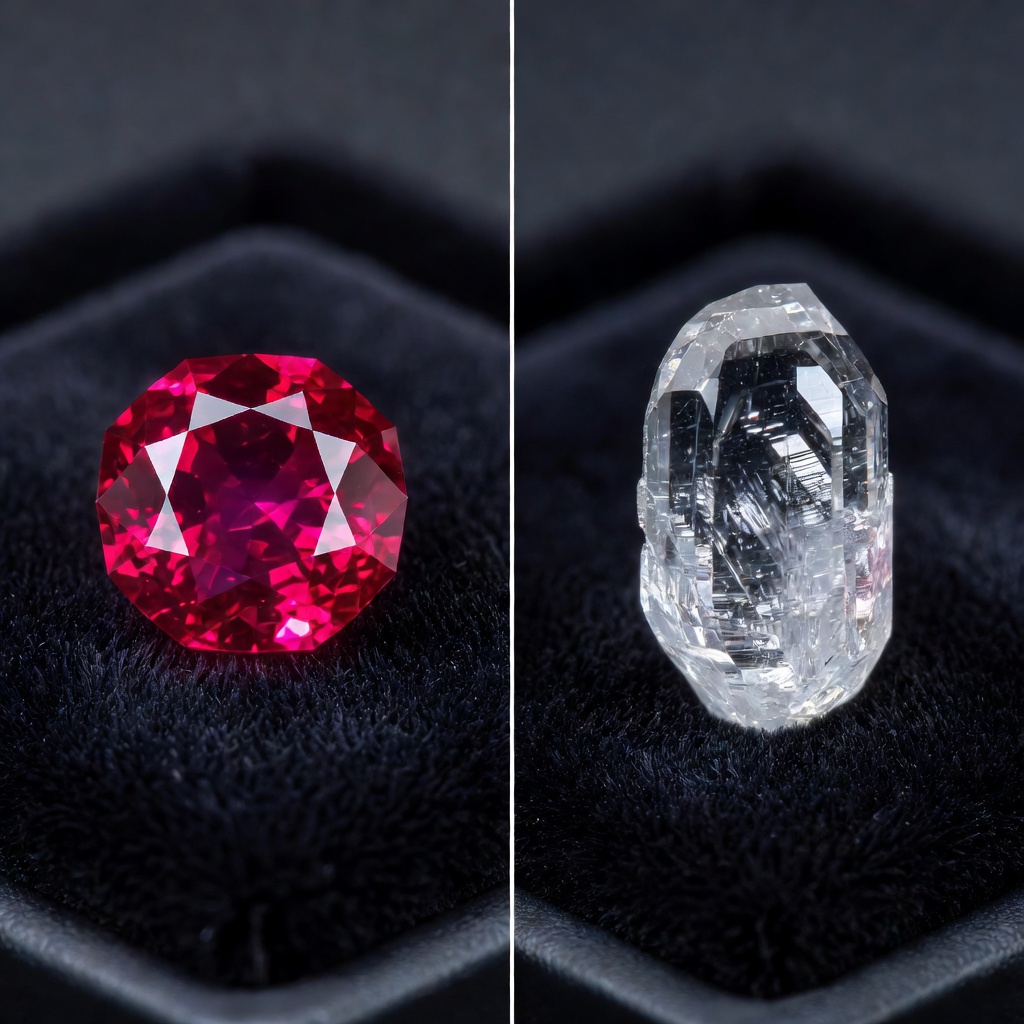
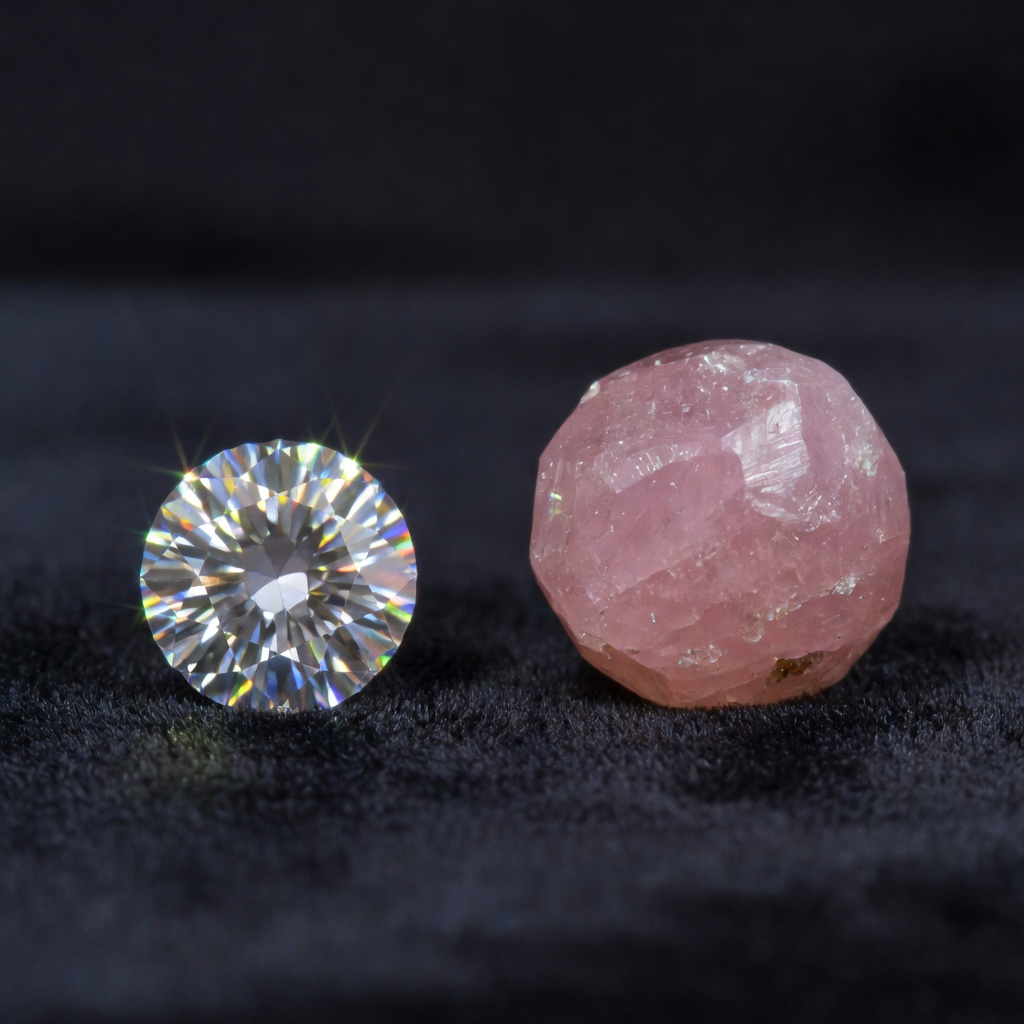
The optical performance and visual aesthetics of diamond and eudialyte cater to entirely different preferences and display requirements within the gem and mineral community. Diamond exhibits the highest refractive index (2.42) and dispersion (0.044) of any natural transparent gemstone, creating the characteristic brilliance (white light reflection), fire (spectral color dispersion), and scintillation (sparkle with movement) that define luxury jewelry standards. Master cutters optimize these properties through precise facet arrangements that maximize light return, creating the hypnotic sparkle that has made diamond the quintessential precious gemstone for centuries. In contrast, eudialyte displays a subdued vitreous to greasy luster with refractive indices ranging from 1.60 to 1.63, producing a gentle glow rather than explosive brilliance, which appeals to collectors seeking subtle, organic beauty over dazzling optical performance.
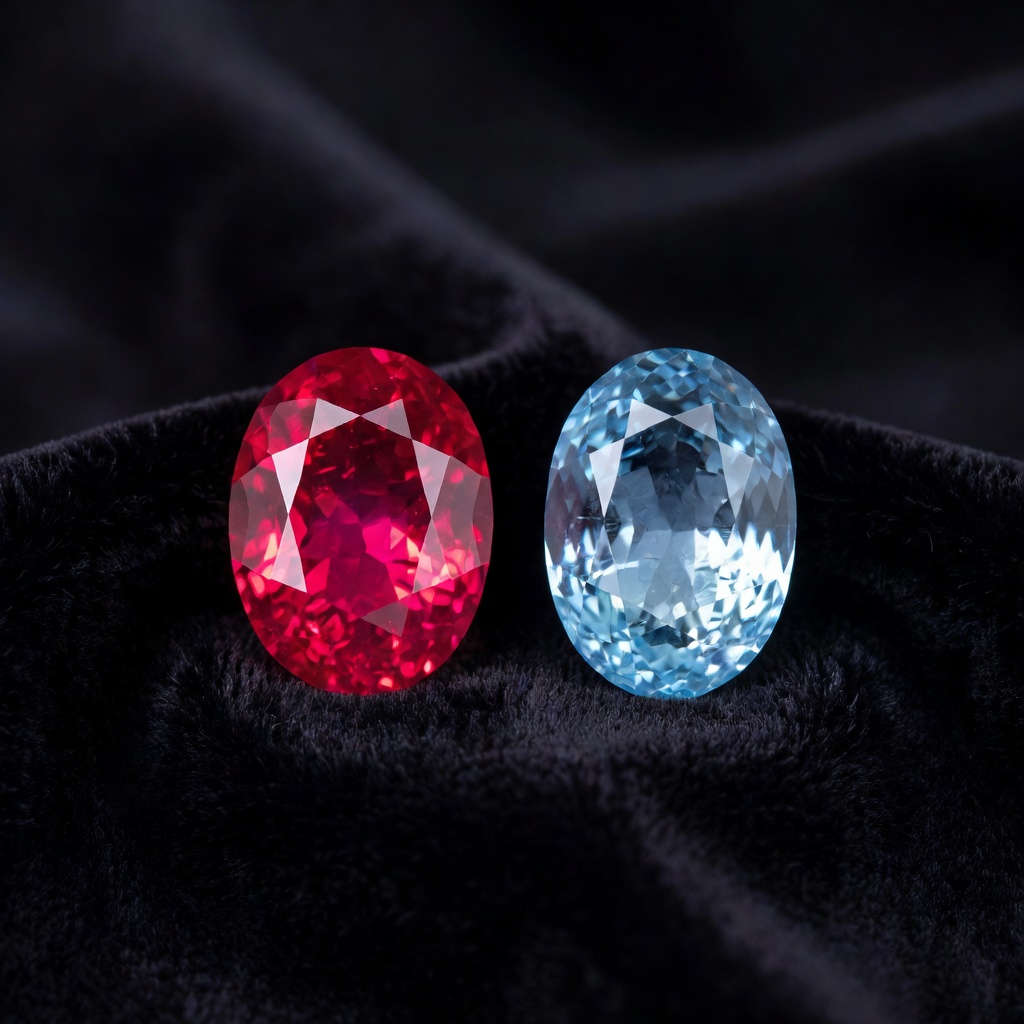
Color ranges between these stones highlight their distinct identities in the marketplace, with diamonds occurring in colorless varieties (graded D-Z) as well as fancy colors including yellow, brown, blue, pink, and the extraordinarily rare red. These Rare red gemstones command millions per carat when they occur in diamond, representing the pinnacle of colored stone value. Eudialyte naturally presents distinctive pink, raspberry-red, cherry-red, and brownish-red tones resulting from manganese content within its chemical structure, occasionally displaying white, black, or yellow mineral inclusions that create striking contrast patterns within specimens. Unlike diamond, where colorlessness typically indicates higher value (except in fancy colors), eudialyte derives its worth from the intensity and saturation of its red tones combined with crystal clarity.
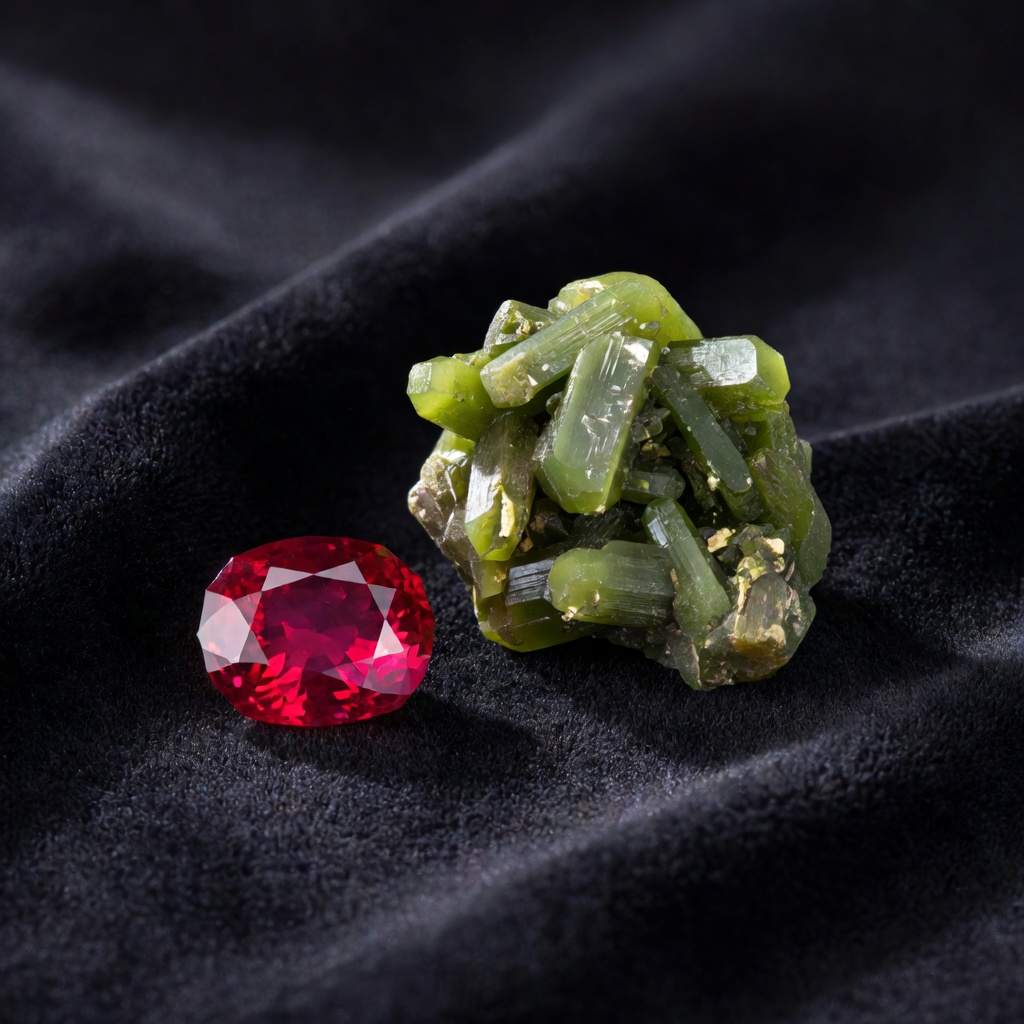
Clarity characteristics diverge significantly between these materials, with high-quality diamonds typically appearing eye-clean (without visible inclusions to the unaided eye) and valued higher for their transparency. Eudialyte almost invariably contains visible inclusions, growth patterns, or associated mineral phases that identify it as a complex silicate rather than a simple gemstone. These inclusions, while reducing transparency, often enhance eudialyte's appeal to mineral collectors who value geological context over gemological perfection. Cutting styles reflect these differences—diamonds undergo precise brilliant, step, or mixed cuts designed to maximize optical performance, while eudialyte is typically fashioned into cabochons, left as natural crystal specimens, or cut into beads that minimize exposure to impact. Practical application suggests that eudialyte specimens display best under diffused lighting that highlights their color saturation, whereas diamonds require direct point-source lighting to activate their full optical potential.
Rarity, Sourcing, and Availability
Understanding the true rarity of diamond versus eudialyte requires distinguishing between commercial availability and geological scarcity, two metrics that produce counterintuitive results in the gemstone market. Eudialyte represents genuine geological rarity, occurring exclusively in specific alkaline igneous complexes with the Lovozero Massif on Russia's Kola Peninsula producing the finest specimens, supplemented by limited finds in Greenland, Canada's Northwest Territories, and Namibia. This extreme locality specificity means that less than a dozen significant deposits worldwide yield material suitable for collecting or cutting, creating true scarcity that should theoretically command premium prices. The Kola Peninsula minerals responsible for eudialyte formation resulted from unique magmatic processes that concentrated rare elements in ways that have not replicated extensively elsewhere on Earth, making each productive locality geologically precious.
Diamond, while geologically rare in absolute terms, benefits from global distribution across multiple continents including Africa, Russia, Australia, Canada, and South America, with established industrial mining operations extracting millions of carats annually. Commercial abundance drives market saturation, with sophisticated supply chain management ensuring consistent availability across all quality grades and price points. However, gem-quality diamonds representing the top 20% of production remain scarce relative to industrial-grade material, creating a tiered market where investment-grade stones maintain value through controlled release rather than absolute rarity. For collectors, this distinction matters significantly—while you can purchase a diamond from virtually any jewelry store worldwide, acquiring fine eudialyte requires specialized mineral dealers, gem shows, or direct connections to Russian mineral exporters.
Ethical sourcing presents distinct challenges for both materials, though transparency standards differ markedly between established diamond protocols and the niche eudialyte market. The diamond industry operates under the Kimberley Process and various blockchain traceability initiatives designed to prevent conflict stones from entering legitimate markets, though challenges persist in artisanal mining sectors. Eudialyte sourcing faces complications related to geopolitical tensions affecting Russian mineral exports, with sanctions and trade restrictions potentially limiting availability of new material from the Kola Peninsula. Collectors seeking eudialyte should verify provenance documentation and purchase from reputable dealers who can confirm specimens were obtained before trade restrictions or through legitimate channels. Case studies from mineral collecting circles indicate that eudialyte specimens with documented Lovozero locality and collection history often appreciate faster than generic material, mirroring how provenance affects fine diamond values.
Jewelry Applications and Wearability Concerns
Practical jewelry applications for diamond and eudialyte diverge dramatically based on hardness, durability, and setting requirements, with Eudialyte jewelry durability concerns limiting its use to specific protective designs. Diamond's supreme hardness makes it ideal for daily-wear pieces including engagement rings, wedding bands, tennis bracelets, and earrings that withstand constant exposure to environmental hazards, household chemicals, and physical impacts without showing wear. Jewelers routinely set diamonds in exposed prong settings that maximize light exposure and visual impact, confident that the stone will maintain its polish and facet integrity indefinitely. The gemstone's resistance to thermal shock also allows repairs, resizing, and refinishing without risking damage to the stone itself, though settings require periodic inspection.
Eudialyte demands entirely different treatment in jewelry contexts, functioning best as a collector's display piece or occasional-wear item rather than a daily accessory. With hardness comparable to turquoise or opal, eudialyte scratches easily from contact with harder materials, including the gold or platinum settings meant to hold it, other jewelry pieces in a box, or even abrasive clothing fabrics. Recommended applications include pendants that minimize contact with hard surfaces, protected earrings with bezel settings that shield the stone's edges, or display specimens mounted in decorative boxes rather than wearable settings. Setting challenges prove significant for jewelers unfamiliar with eudialyte properties—the stone's sensitivity to heat requires stone-in-place setting techniques or specialized protective measures during soldering, while its brittleness necessitates avoiding prong settings that concentrate pressure on specific points.
Metal pairing strategies differ based on color contrast and protective requirements rather than traditional aesthetic matching. Diamonds pair beautifully with white metals (platinum, white gold) that enhance colorless stones, or yellow/rose gold that complement fancy colored diamonds, with setting security prioritized through prongs, bezels, or tension settings depending on the design. Eudialyte benefits from protective bezel or halo settings in yellow gold that complement its warm red tones while providing physical protection against edge chipping. Practical examples from custom jewelry designers demonstrate that eudialyte works best in pendant designs where the stone sits flat against the chest, protected from impact, rather than in rings that encounter constant abrasion. For collectors wishing to wear eudialyte, commissioning custom settings with full bezel protection, recessed stone placement, and rubber or fabric-backed storage compartments ensures the longest possible lifespan for these delicate specimens.
Value, Pricing, and Investment Potential
The gemstone investment comparison between diamond and eudialyte reveals fundamentally different market dynamics, liquidity profiles, and value retention strategies that appeal to distinct investor categories. High-quality diamonds operate within an established global market with standardized pricing based on the 4Cs (cut, color, clarity, carat weight), providing relatively predictable valuation metrics and liquid resale channels through auction houses, dealers, and private sales. Investment-grade diamonds—typically those weighing over one carat with D-F color and IF-VVS clarity grades—maintain value through economic fluctuations and serve as portable wealth storage, though retail markup recovery remains challenging for casual investors. The diamond market's maturity ensures consistent demand, though prices face pressure from laboratory-grown alternatives and changing consumer preferences.
Eudialyte occupies a niche collecting market where value derives from mineralogical significance, specimen quality, and locality provenance rather than standardized grading systems. Pricing varies wildly based on crystal size, color intensity, transparency, and association with other rare minerals, with exceptional specimens from the Lovozero Massif commanding premiums within specialized collecting communities. Unlike diamonds, eudialyte lacks liquid resale markets, requiring patience and specialized knowledge to sell at fair prices, making it unsuitable for investors seeking quick returns or wealth preservation. However, rare mineral specimens including fine eudialyte have shown appreciation rates exceeding traditional investments over decade-long periods, particularly as collecting communities grow and original localities become depleted or inaccessible due to geopolitical factors.
Value factors for each material require distinct evaluation expertise. Diamond valuation relies on gemological laboratory reports from GIA, AGS, or similar institutions that verify authenticity and quality grades, with prices typically ranging from hundreds to tens of thousands per carat depending on specifications. Eudialyte valuation considers crystal habit (euhedral crystals command premiums over massive material), color saturation (vivid raspberry-red preferred over brownish tones), transparency (transparent crystals being extremely rare and valuable), and matrix association (specimens showing eudialyte on characteristic host rocks from the Kola Peninsula carry premium provenance). Case studies from mineral auctions indicate that exceptional eudialyte crystal groups exceeding five centimeters with perfect terminations can fetch prices comparable to mid-range diamonds, though such specimens remain display pieces rather than wearable jewelry. For investors, diamonds offer liquidity and recognized standards, while eudialyte provides portfolio diversification through tangible rare earth assets with historical and scientific value.
Care, Cleaning, and Maintenance Requirements
Proper maintenance protocols for diamond and eudialyte reflect their hardness differential and chemical sensitivities, with diamond requiring minimal precautions while eudialyte demands meticulous care to prevent damage. Diamond care remains remarkably straightforward due to the stone's chemical inertness and hardness; owners can safely use ultrasonic cleaners, steam cleaners, or commercial jewelry cleaning solutions without risking damage to the stone itself, though settings may loosen over time and require periodic professional inspection. The stone's resistance to scratching means it maintains its polish indefinitely, though dirt and oils can accumulate on the surface or beneath settings, temporarily dulling brilliance until cleaning restores optical performance. Regular maintenance involves simple soap and water solutions with soft brushes for home care, or professional cleaning services that also check setting security.
Eudialyte properties include significant vulnerabilities to acids, thermal shock, and mechanical damage that necessitate specialized care protocols entirely different from diamond maintenance. The mineral's complex silicate structure reacts negatively to acids, including common household substances like vinegar, lemon juice, or cleaning products containing hydrochloric or sulfuric compounds, which can etch surfaces and destroy polish. Thermal shock presents another hazard, as rapid temperature changes from hot water or sudden environmental shifts can cause fracturing due to internal stress within the crystal structure. Recommended cleaning methods involve only soft, damp cloths with mild pH-neutral soap, avoiding immersion in water if the stone is mounted on porous matrix material that might absorb moisture and cause deterioration.
Storage requirements emphasize isolation and protection for eudialyte while diamonds require only basic organization to prevent scratching other jewelry. Eudialyte specimens should be stored individually in soft cloth pouches or padded boxes, never contacting harder gemstones like diamond, ruby, or sapphire that would scratch its surface during movement. Climate-controlled environments prevent thermal stress and humidity damage to associated matrix materials. Practical tips for collectors include creating dedicated display cases with glass barriers that prevent dust accumulation while allowing visual enjoyment, as frequent handling risks oil transfer and accidental drops. For those who own both materials, implementing a strict separation system—keeping diamond jewelry in standard organizers while reserving specialized, padded containers for eudialyte—prevents accidental damage that would destroy the softer stone's value and appearance.
Diamond vs Eudialyte: Detailed Comparison
| Characteristic | Diamond | Eudialyte |
|---|---|---|
| Mohs Hardness | 10 (Maximum) | 5-5.5 (Moderate) |
| Chemical Composition | Pure Carbon (C) | Complex Sodium-Calcium-Zirconium Silicate |
| Primary Sources | Global (Botswana, Russia, Canada, Australia) | Kola Peninsula (Russia), Greenland (Limited) |
| Color Range | Colorless to Fancy (Yellow, Blue, Pink, Red) | Raspberry-Red, Pink, Cherry-Red, Brownish-Red |
| Luster | Adamantine (Brilliant) | Vitreous to Greasy |
| Best Jewelry Use | Daily Wear, Engagement Rings, All Applications | Display Specimens, Protective Pendants, Occasional Wear |
| Price Range (Per Carat) | $1,000-$50,000+ (Gem Quality) | $10-$500 (Collector Specimens) |
| True Geological Rarity | Moderate (Commercially Abundant) | Extreme (Limited Localities) |
| Maintenance Level | Low (Ultrasonic Safe) | High (Acid Sensitive, Scratch Prone) |
Making Your Decision: Which Gemstone Suits You?
Selecting between Diamond vs Eudialyte ultimately depends on your lifestyle, collecting goals, and intended use rather than inherent superiority of one material over the other. Active individuals seeking daily-wear jewelry for engagement rings, wedding bands, or professional accessories should choose diamond exclusively, as its unparalleled hardness ensures longevity despite constant exposure to environmental hazards, physical impacts, and cleaning chemicals. Consider your daily activities—if you work with your hands, exercise regularly, or simply prefer low-maintenance luxury, diamond provides the only practical option for precious stone jewelry that maintains its appearance indefinitely without special precautions. Budget considerations also favor diamond for jewelry applications, as the established market offers options across all price points while ensuring resale liquidity if circumstances change.
Collectors and enthusiasts prioritizing geological uniqueness, scientific interest, or distinctive aesthetic statements may find eudialyte more compelling despite (or because of) its limitations. If you appreciate rare minerals, enjoy displaying natural crystal formations, or seek conversation pieces that showcase Earth's chemical diversity, eudialyte offers access to specimens from the legendary Kola Peninsula that few collectors worldwide possess. Budget-conscious buyers seeking red gemstones should note that while eudialyte costs significantly less than red diamonds or fine rubies, it requires acceptance that the stone serves decorative rather than functional purposes. The long-term ownership costs favor eudialyte for collectors who enjoy static displays, as the stone requires no insurance premiums comparable to high-value diamond jewelry, though specialized storage and handling protocols demand attention to detail.
Symbolic meanings differ between these stones, with diamond traditionally representing eternal commitment, unbreakable bonds, and clarity of purpose due to its durability and transparency. Eudialyte carries different symbolic weight, representing individuality, geological rarity, and the beauty of imperfection, appealing to those who value uniqueness over convention. Practical decision-making involves assessing whether you need a functional tool for daily adornment (diamond) or a specialized treasure for occasional appreciation (eudialyte). For the discerning collector, owning both serves complementary purposes—diamond for wearable luxury and eudialyte for mineralogical appreciation—allowing full exploration of what each material offers without compromising the integrity of either through inappropriate use.
Frequently Asked Questions
Is Eudialyte as Hard as Diamond?
No, eudialyte is significantly softer than diamond. While diamond ranks 10 on the Mohs hardness scale (the maximum), eudialyte measures only 5-5.5. This means eudialyte can be scratched by many common materials including steel, quartz, and even household dust, whereas diamonds can only be scratched by other diamonds.
Can Eudialyte Be Used in an Engagement Ring?
Eudialyte is generally not recommended for engagement rings or daily-wear jewelry due to its moderate hardness of 5-5.5. It is prone to scratching, chipping, and abrasion with regular wear. If used in jewelry, eudialyte is best suited for protective settings like pendants, earrings, or occasional-wear cocktail rings.
Why Is Eudialyte Rarer Than Diamond Despite Being Less Expensive?
Eudialyte is geologically rarer, occurring only in specific alkaline igneous formations primarily in Russia's Kola Peninsula and limited Greenland deposits. However, diamond commands higher prices due to massive commercial demand, established marketing, and gemological standards. Eudialyte remains a niche collector's mineral with limited consumer awareness and smaller market demand.
Which Is More Valuable Per Carat, Diamond or Eudialyte?
High-quality diamonds are typically far more valuable per carat than eudialyte. While exceptional diamond specimens can cost thousands to tens of thousands per carat, even fine eudialyte crystals rarely exceed modest collector prices. However, large, transparent, vividly colored eudialyte specimens can command premium prices within the mineral collecting community.
What Colors Do Diamond and Eudialyte Come in Naturally?
Diamonds naturally occur colorless (most valued), but also in yellow, brown, blue, pink, green, and rare red. Eudialyte typically displays distinctive pink, raspberry-red, cherry-red, or brownish-red colors due to manganese content, sometimes showing white, black, or yellow mineral inclusions within the same specimen.
How Can I Tell the Difference Between a Pink Diamond and Eudialyte?
Pink diamonds exhibit extreme brilliance, fire (rainbow flashes), and transparency with a crystalline structure, while eudialyte shows a more subdued vitreous to greasy luster, often with visible inclusions or banding, and may appear slightly translucent to opaque. A simple hardness test (eudialyte scratches with a knife, diamond does not) or refractive index measurement by a gemologist can confirm identity.
Is Eudialyte Treated or Enhanced Like Some Diamonds?
Unlike diamonds, which commonly undergo treatments (HPHT, irradiation, fracture filling), eudialyte is rarely treated or enhanced. Its natural color is stable and generally not improved through heating or irradiation. However, eudialyte specimens may be stabilized with clear consolidants if the material is fragile, which should always be disclosed by reputable sellers.
Where Can I Buy Authentic Eudialyte Gemstones or Specimens?
Authentic eudialyte is best purchased from specialized mineral dealers, gem shows, or reputable online mineral marketplaces. Due to its specific locality (primarily Russia), ensure the seller provides provenance information. Be cautious of imitation materials or mislabeled tourmaline or rhodonite passed off as eudialyte.