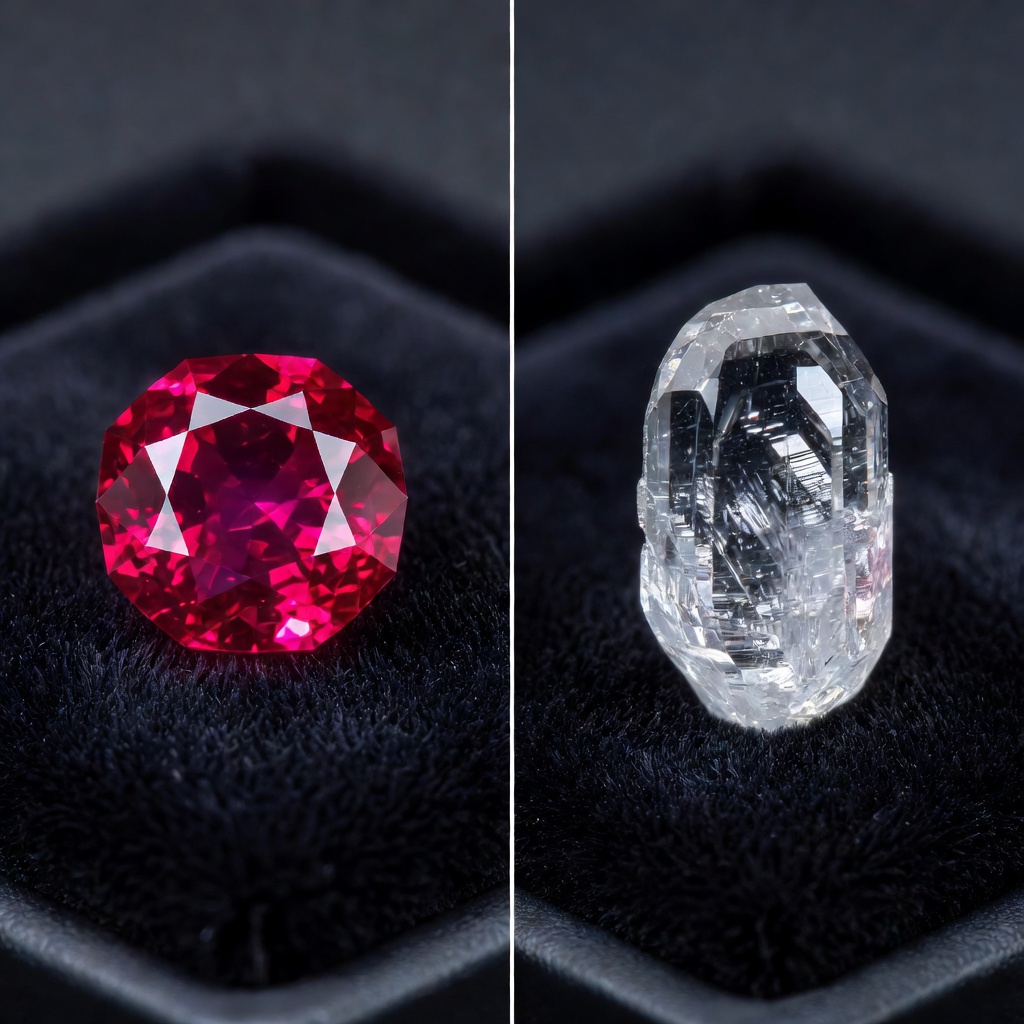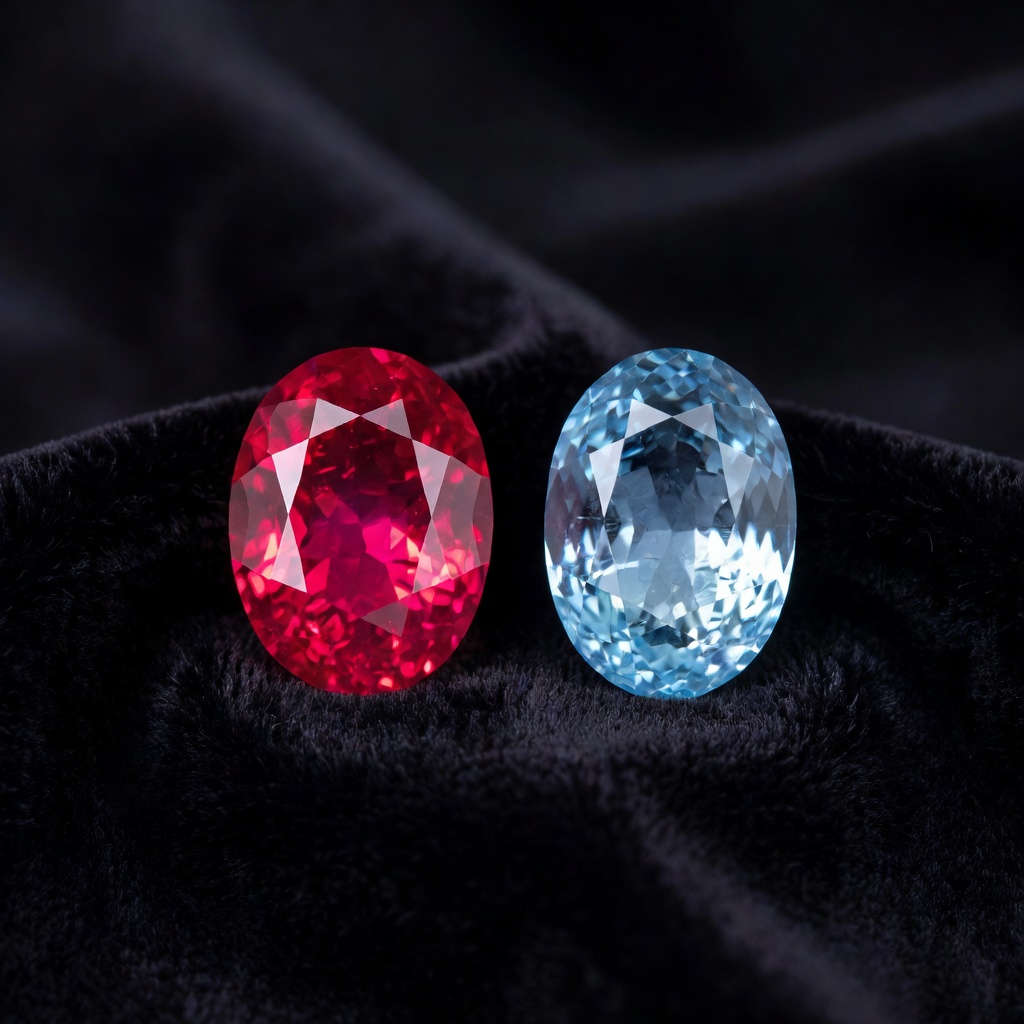
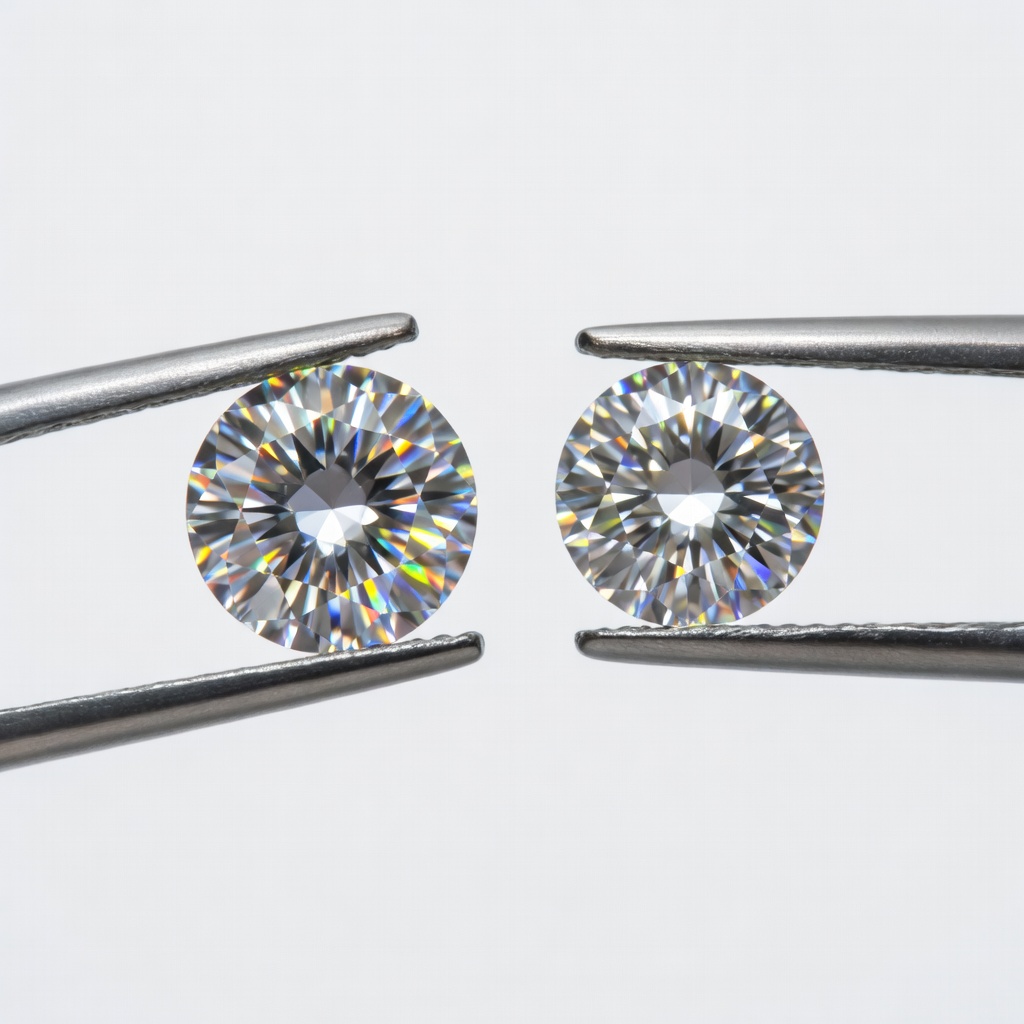
Understanding the Fundamental Differences Between Diamond vs Cubic Zirconia
Choosing between a natural diamond and cubic zirconia represents one of the most significant decisions in fine jewelry purchasing, particularly when selecting engagement rings or investment pieces. While both stones sparkle brilliantly to the untrained eye, the comparison between diamond vs cubic zirconia extends far beyond surface aesthetics into realms of geological rarity, molecular structure, and long-term value retention. This comprehensive analysis examines why millions of consumers face this choice annually and how understanding the critical evaluation criteria—optical performance, durability metrics, price differentials, and generational value—can prevent costly mistakes. Whether you are planning a proposal, building a jewelry collection, or simply seeking the best value for your budget, grasping these fundamental distinctions ensures satisfaction with your purchase for decades to come.
What Is a Natural Diamond? Geological Marvel Explained
The Billion-Year Formation Process
Natural diamonds originate from carbon atoms subjected to incomprehensible geological forces deep within Earth's mantle, approximately 90 to 240 miles beneath the surface. These precious crystals form over 1 to 3 billion years under temperatures exceeding 2,000 degrees Fahrenheit and pressures reaching 725,000 pounds per square inch, conditions that exist only at specific tectonic zones. Volcanic eruptions then transport these rough stones to the surface via kimberlite and lamproite pipes, creating the deposits we mine today. This extraordinary natural history imbues each diamond with absolute uniqueness—no two stones share identical inclusion patterns, growth histories, or crystalline structures, establishing their status as the ultimate geological time capsules.
Pure Carbon and Unparalleled Hardness
The defining characteristic of natural diamond properties centers on its pure carbon composition arranged in an isometric crystal structure called diamond cubic, where each carbon atom bonds covalently with four neighbors in an incredibly rigid tetrahedral lattice. This molecular architecture yields a Mohs hardness rating of 10, making diamonds the hardest known natural substance and resistant to scratching by any other material except another diamond. This exceptional hardness enables diamonds to maintain their polish and facet edges indefinitely, even when subjected to daily wear over multiple generations. The density of 3.52 grams per cubic centimeter also contributes to the satisfying heft and substantial feel that collectors and connoisseurs associate with high-quality gemstones.
The GIA 4Cs Grading System
The Gemological Institute of America (GIA) established the universal 4Cs grading framework—Cut, Color, Clarity, and Carat weight—to standardize diamond quality assessment and pricing across global markets. Cut quality determines light performance and sparkle, with excellent and very good grades commanding premium prices due to superior proportions and symmetry. Color grades range from D (completely colorless) to Z (light yellow or brown), with colorless stones representing less than 1% of all gem-quality diamonds and fetching significantly higher values. Clarity assessments evaluate internal inclusions and external blemishes under 10x magnification, with flawless (FL) and internally flawless (IF) designations representing extreme rarity and investment-grade stones.
Natural Inclusions and Authentication Markers
Every natural diamond contains microscopic birthmarks—inclusions and blemishes—that serve as nature's fingerprints and irrefutable proof of authenticity versus synthetic alternatives. These characteristics include crystal inclusions (other minerals trapped during formation), feather fractures, and cloud formations that gemologists document on diamond grading reports. Unlike cubic zirconia, which grows perfectly clear in laboratory environments, natural diamonds display unique growth patterns visible under magnification, such as internal graining and twinning wisps. When purchasing significant stones, always insist on GIA or AGS certification that maps these natural characteristics, providing not only quality verification but also insurance documentation and resale authentication.
What Is Cubic Zirconia? The Science Behind CZ
Chemical Composition and Crystalline Structure
Cubic zirconia constitutes a synthetic crystalline substance composed primarily of zirconium dioxide (ZrO2) stabilized with either yttrium oxide or calcium oxide to maintain its cubic crystal structure at room temperature. Unlike diamonds, which consist of pure carbon, what is cubic zirconia reveals a completely different chemical family—zirconium silicate derivatives created through industrial processes rather than geological phenomena. The material exhibits a specific gravity of 5.6-6.0, making it approximately 75% heavier than diamond, a characteristic that immediately distinguishes the two stones to experienced gemologists. This substantial weight difference means that a one-carat CZ appears noticeably smaller than a one-carat diamond, requiring different size-to-weight calculations when setting jewelry.
The Skull Melt Manufacturing Process
Modern cubic zirconia production utilizes the skull melt technique, wherein zirconium oxide powder undergoes heating in a radio-frequency induction furnace reaching temperatures of approximately 5,000 degrees Fahrenheit. During this process, the outer shell of the material "sinterizes" into a ceramic crust resembling a skull, while the interior remains molten and gradually crystallizes into cubic formations as controlled cooling proceeds. This manufacturing method, refined since CZ's commercial introduction in 1976, enables mass production of gem-quality stones within hours rather than the eons required for natural diamond formation. The resulting crystals grow without natural inclusions, presenting visually perfect clarity that, paradoxically, serves as a telltale indicator of synthetic origin to trained professionals.
Historical Development and Market Entry
Scientists initially developed cubic zirconia in 1976 for industrial laser applications and optical equipment rather than jewelry, exploiting its high melting point and optical transparency for technical purposes. Soviet researchers perfected the skull melt process, recognizing CZ's potential as a diamond simulant due to its impressive brilliance and colorless appearance compared to earlier imitations like glass or white sapphire. By the 1980s, commercial jewelry production accelerated dramatically, positioning CZ as the most successful diamond alternative in history based on optical similarity and affordability. Today, manufacturers produce thousands of carats daily, with quality variations ranging from costume jewelry grades to high-end "AAAAA" rated stones used in fine fashion pieces.
Distinguishing CZ from Lab-Grown Diamonds
A critical distinction exists between cubic zirconia and laboratory-grown diamonds, as cz vs diamond comparisons often confuse consumers regarding synthetic alternatives. Lab-grown diamonds are chemically, physically, and optically identical to mined diamonds—they are real diamonds composed of carbon atoms arranged in the diamond crystal structure, merely created in controlled environments rather than extracted from earth. Conversely, cubic zirconia represents an entirely different material with distinct chemical composition, thermal properties, and optical characteristics despite superficial visual similarities. This confusion leads some consumers to mistakenly believe CZ offers diamond-equivalent quality at lower prices, when in fact the two materials share only aesthetic parallels while differing fundamentally in durability, value, and light performance.
Visual and Optical Performance: Brilliance, Fire, and Luster
Refractive Index and Light Return
The refractive index—the measure of how much light bends when entering a gemstone—significantly influences the visual intensity and "life" of faceted stones, creating divergent optical personalities between these materials. Diamonds possess a refractive index of 2.42, among the highest of any natural transparent substance, enabling exceptional light return and that signature "crisp" brilliance associated with premium gemstones. Cubic zirconia exhibits a lower refractive index ranging from 2.15 to 2.18, resulting in slightly less intense white light reflection and a somewhat "glassier" appearance compared to diamond's adamantine sparkle. When examining loose stones side-by-side under identical lighting, diamonds typically display more dynamic scintillation with sharper contrast patterns between light and dark areas, while CZ presents a more uniformly bright but less nuanced brilliance.
Dispersion Rates and Fire Display
Perhaps counterintuitively, cubic zirconia actually exceeds natural diamonds in dispersion—the optical property responsible for rainbow-colored "fire" or spectral color separation. CZ dispersion rates measure between 0.058 and 0.066 compared to diamond's 0.044, meaning CZ produces noticeably more colorful flashes when rotated under light sources. However, this excessive fire often appears artificial or "disco-ball" like to experienced observers, particularly in larger stones exceeding two carats, whereas diamond fire remains subtle and elegant. The combination of higher dispersion with lower refractive index creates CZ's characteristic "too much rainbow, not enough white sparkle" appearance that distinguishes it from diamond to trained eyes.
Surface Luster and Reflectivity
Diamonds exhibit adamantine luster—the highest category of surface reflectivity—creating mirror-like flashes from facet surfaces that contribute significantly to their visual magnificence. Cubic zirconia displays sub-adamantine luster, appearing slightly softer and less mirror-like when compared directly with diamond, particularly noticeable on table facets and crown surfaces. Over time, this difference becomes more pronounced as CZ's softer surface accumulates micro-scratches that diffuse light reflection, while diamonds maintain their pristine polish indefinitely. Professional gemologists often identify CZ immediately by observing this slightly "greasy" or vitreous surface quality rather than diamond's sharp, metallic reflectivity.
Long-Term Color Stability
Natural diamonds maintain absolute color stability throughout centuries of wear, never changing hue, clouding, or degrading regardless of exposure to sunlight, household chemicals, or body oils. Conversely, cubic zirconia demonstrates variable long-term optical stability, with lower-quality stones potentially developing a cloudy or milky appearance within months of daily wear due to porosity and surface degradation. High-quality CZ may remain clear for several years, but eventually all cubic zirconia succumbs to accumulation of microscopic scratches and chemical interactions that permanently diminish transparency. This inevitable degradation represents a crucial consideration when evaluating cz vs diamond for jewelry intended to last decades or serve as heirlooms.
Durability and Wearability: Long-Term Performance Analysis
Mohs Hardness and Scratch Resistance
The Mohs hardness scale provides the primary framework for understanding cubic zirconia durability relative to diamond, revealing fundamental differences in wear resistance and longevity. Ranking 8 to 8.5 on the Mohs scale, cubic zirconia scratches significantly more easily than diamond's perfect 10 rating, making it susceptible to damage from everyday dust particles (which contain quartz, hardness 7) and certainly vulnerable to contact with harder materials. Diamonds resist scratching from all substances except other diamonds, enabling them to maintain flawless facet edges and surface polish through generations of daily wear, including exposure to harsh environments. This hardness differential means that while a diamond engagement ring worn daily for fifty years appears identical to its original state, a CZ equivalent shows visible wear within two to five years.
Toughness and Structural Integrity
Beyond hardness, toughness—the resistance to chipping, cracking, and breaking—varies significantly between these materials due to differing crystalline structures and cleavage properties. Diamonds possess perfect cleavage in four directions, making them vulnerable to splitting if struck sharply at specific angles, despite their scratch resistance. Cubic zirconia exhibits an isometric, single-crystal structure without cleavage planes, rendering it actually more resistant to chipping and fracture under impact than diamond, though this advantage diminishes as surface scratches accumulate and create stress points. For active lifestyles involving manual labor or contact sports, neither stone represents an ideal choice, but CZ's lower replacement cost makes it a more practical "sacrificial" option for high-risk activities.
Heat Resistance and Thermal Properties
Diamonds demonstrate extraordinary thermal stability, withstanding temperatures up to 1,562 degrees Fahrenheit (850 Celsius) before potential graphitization, and surviving standard jewelry repair operations involving soldering and polishing without degradation. Cubic zirconia technically withstands higher temperatures—up to 4,000 degrees Fahrenheit—before melting, but suffers from poor thermal shock resistance, meaning rapid temperature changes can cause cracking or crazing. Jewelers must exercise extreme caution when repairing CZ-set jewelry, as standard torch work can shatter the stone, whereas diamonds tolerate such procedures routinely. This thermal sensitivity limits repair options for CZ jewelry and necessitates replacement rather than restoration when settings require modification.
Accumulation of Wear Over Time
Long-term wear testing reveals stark contrasts between these materials: diamonds maintain original weight, dimensions, and optical performance indefinitely, while cubic zirconia demonstrates progressive degradation through measurable material loss and surface damage. Daily-worn CZ stones typically exhibit rounded facet edges, abraded table surfaces, and diminished brilliance within 24 to 60 months, depending on care quality and exposure to abrasive environments. This wear pattern creates a "foggy" or "sleepy" appearance that no amount of cleaning can reverse, as the damage involves physical removal of material rather than removable surface films. For consumers seeking "forever" jewelry, these durability limitations render CZ suitable primarily for occasional wear or fashion pieces with anticipated short lifespans.
Price and Value Comparison: Cost Per Carat Breakdown
Initial Acquisition Costs
The diamond price vs cubic zirconia differential represents the most dramatic contrast between these materials, with implications for budgeting, insurance, and replacement strategies. Natural diamonds command prices ranging from $3,000 to $15,000 per carat for jewelry-quality stones, depending on the 4Cs grading, with exceptional D-flawless specimens exceeding $50,000 per carat. Conversely, high-quality cubic zirconia costs merely $20 to $100 per carat retail, with many fashion jewelry pieces containing multiple carats for under $50 total. This 150-to-1 price ratio enables consumers to purchase elaborate, large-stone CZ jewelry for less than the cost of a small diamond accent, democratizing access to bold, glamorous designs previously reserved for the wealthy.
Resale Value and Secondary Markets
Diamonds maintain established resale markets through auction houses, estate dealers, and diamond-buying services, typically retaining 50% to 70% of original purchase price for high-quality certified stones, with rare specimens appreciating over time. Cubic zirconia possesses virtually no secondary market value—pawn shops and estate buyers typically refuse CZ pieces entirely, and replacement costs remain so low that resale becomes economically meaningless. This value retention disparity means that while diamond purchases represent stored wealth accessible during financial emergencies, CZ acquisitions constitute pure consumption expenditures with zero recoverable investment. Consumers should view CZ as disposable fashion accessories rather than assets, budgeting accordingly without expectation of future liquidation value.
Insurance and Replacement Economics
Diamond jewelry requires specialized insurance riders or separate policies due to high replacement values, with annual premiums typically costing 1% to 2% of appraised value, adding significant ongoing ownership costs. Cubic zirconia requires no specialized insurance—standard homeowner's policies cover such pieces under general personal property limits, and replacement proves cheaper than paying deductibles for most claims. This insurance differential adds hidden costs to diamond ownership exceeding $100-$300 annually for typical engagement rings, while CZ owners enjoy worry-free wear without documentation requirements or premium payments. For travelers, this distinction makes CZ particularly attractive, as loss or theft creates inconvenience rather than financial catastrophe.
Investment and Wealth Storage Perspectives
While diamonds historically served as portable wealth storage and inflation hedges, particularly during geopolitical instability, cubic zirconia offers no investment characteristics whatsoever due to unlimited supply and zero rarity premiums. Investment-grade diamonds—those exceeding two carats with D-F color and IF-VVS clarity—demonstrate price appreciation tracking inflation and sometimes outperforming traditional investments during specific market conditions. CZ prices remain stable at commodity levels determined by manufacturing costs and energy prices, with no appreciation potential regardless of holding period. Financially sophisticated buyers should purchase diamonds for long-term value retention and CZ for immediate aesthetic gratification, never confusing the two categories or expecting CZ to serve as a "starter investment" toward future diamond purchases.
Practical Applications: Which Stone for Which Purpose?
Engagement Ring Considerations
Cubic zirconia engagement rings serve legitimate purposes for specific life circumstances, though transparency between partners regarding stone identity remains essential for relationship trust. Budget-conscious couples facing financial constraints, students, or those prioritizing homeownership over jewelry expenditures may select CZ as temporary place-holders with planned upgrades to natural or lab-grown diamonds later. However, presenting CZ as diamond constitutes fraud by deception, potentially destroying relationship foundations when discovery inevitably occurs through professional appraisal or wear patterns. For couples committed to CZ permanently, choosing high-quality settings in precious metals elevates the presentation, though eventual stone replacement should factor into long-term cost calculations.
Travel and Vacation Jewelry
Smart travelers increasingly pack cubic zirconia replicas of their fine diamond jewelry, eliminating theft anxiety and insurance complications while maintaining elegant appearance during cruises, resort vacations, and international business travel. Professional gemologists recommend this "decoy" strategy particularly for destinations with elevated petty crime risks, allowing enjoyment of sparkling accessories without the psychological burden of guarding irreplaceable heirlooms. Many jewelry retailers now offer "travel sets"—high-quality CZ copies of customers' actual engagement rings and earrings—for rental or purchase at fraction of replacement costs. This application leverages CZ's optical similarity while mitigating its durability limitations through occasional rather than daily wear.
Fashion and Costume Jewelry
Cubic zirconia dominates the fashion jewelry sector because it enables designers to create bold, dramatic pieces featuring large "stones" that would cost millions if executed in diamond. Statement necklaces, cocktail rings exceeding five carats, and elaborate chandelier earrings remain economically accessible only through CZ or similar simulants, democratizing high-fashion aesthetics. For trend-driven pieces expected to cycle out of style within seasons, CZ represents the intelligent choice—why invest in depreciating diamond fashion when the setting style itself becomes dated? This category represents CZ's highest and best use: providing temporary beauty for evolving wardrobes without guilt over sunk costs when tastes change.
Heirloom and Legacy Planning
When creating jewelry intended for generational transfer—pieces symbolizing family continuity, milestone anniversaries, or significant life achievements—diamonds remain the unequivocal standard due to their durability and enduring value. Grandmothers pass diamond rings to granddaughters with confidence that the stones will survive another century of wear; the same cannot be said for cubic zirconia, which would require replacement before inheritance occurs. Legacy jewelry carries emotional weight precisely because of its permanence—the diamond earrings worn at a mother's wedding can grace the daughter's ceremony unchanged decades later. For significant commemorations marking 25th anniversaries, major birthdays, or career achievements, diamonds communicate the gravity of the occasion while CZ suggests temporary or budget-limited sentiment.
Authentication and Testing: How to Tell Them Apart
Professional Gemological Testing Methods
Certified gemologists employ sophisticated instrumentation to definitively distinguish diamonds from simulants, with thermal conductivity testing serving as the primary screening method since diamonds conduct heat five times faster than copper while CZ acts as a thermal insulator. Diamond testers measure how quickly heat dissipates through the stone, providing instant positive/negative indications with near-perfect accuracy for distinguishing diamond from CZ. Ultraviolet fluorescence examination reveals additional diagnostic patterns: approximately 30% of diamonds fluoresce blue under UV light, while CZ typically shows orange, yellow, or no fluorescence. Spectroscopic analysis identifies absorption lines unique to diamond's carbon lattice, creating irrefutable chemical fingerprints impossible for CZ to replicate.
At-Home Identification Techniques
Consumers can perform several preliminary how to tell diamond from cubic zirconia tests at home, though professional confirmation remains advisable for significant purchases. The fog test involves breathing on the stone: diamonds disperse heat instantly, clearing condensation within one to two seconds, while CZ retains fog longer due to lower thermal conductivity. The weight test requires precise scales: cubic zirconia weighs approximately 1.7 times more than an equivalent-sized diamond, so a 6.5mm round CZ weighs roughly 1.75 carats while a same-size diamond weighs 1.00 carat. The newspaper test places the stone table-down over text: diamonds refract light so intensely that you cannot read through them, while CZ allows blurred letter visibility. Loupe examination reveals rounded facet edges on worn CZ versus sharp edges on diamond, plus CZ displays distinct orange/pink flashes from the pavilion unlike diamond's white/blue brilliance.
Certification and Documentation Standards
Legitimate diamond purchases should include GIA (Gemological Institute of America), IGI (International Gemological Institute), or AGS (American Gem Society) certification documents detailing the 4Cs and plotting diagrams of natural inclusions. These certificates provide insurance documentation, resale authentication, and verification that the stone matches the seller's description regarding natural versus synthetic origin. Cubic zirconia carries no comparable certification system—reputable sellers clearly label CZ as "cubic zirconia" or "CZ" on receipts and tags, but no independent laboratory verifies quality grades or authenticity. When sellers offer "certificates" for CZ, these represent marketing materials rather than gemological documentation, often implying false equivalency with diamond grading reports.
Avoiding Scams and Misrepresentation
The secondary market presents particular risks for diamond vs cubic zirconia confusion, as unscrupulous sellers occasionally mount CZ in precious metal settings with inflated appraisals or counterfeit GIA reports. Red flags include prices significantly below market value for claimed specifications, sellers resisting independent verification, and stones appearing "too perfect" without corresponding premium pricing. Always request examination by an independent appraiser before completing private party transactions, particularly for estate jewelry where original documentation may be missing. Remember that thermal conductivity testers available to consumers can malfunction or provide false positives with moissanite, necessitating professional evaluation for any stone of significant claimed value.
The Lab-Grown Diamond Alternative: Middle Ground Option
Chemical and Structural Equivalence
Lab-grown diamonds represent genuine synthetic diamond alternatives that bridge the gap between natural diamonds and cubic zirconia, offering real diamond properties at reduced prices. Unlike CZ, laboratory diamonds consist of 100% carbon arranged in the isometric crystal system—chemically, physically, and optically identical to mined diamonds down to the atomic level. Advanced production methods including High Pressure High Temperature (HPHT) and Chemical Vapor Deposition (CVD) replicate natural formation conditions, creating stones indistinguishable from mined diamonds without specialized equipment. This fundamental identity means lab diamonds share natural diamonds' Mohs 10 hardness, 2.42 refractive index, and thermal conductivity, unlike CZ's distinctly different properties.
Pricing and Market Positioning
Lab-grown diamonds currently retail between $800 and $2,000 per carat for quality comparable to natural stones—positioning them precisely between the $3,000-$15,000 natural diamond range and the $20-$100 CZ market. This pricing enables couples to purchase larger, higher-quality diamonds than budget constraints would allow for mined stones, while maintaining genuine diamond durability and prestige. While resale markets for lab diamonds remain less established than natural stones, they retain significantly more value than CZ and may appreciate as technology improves and mining becomes increasingly restricted. For consumers rejecting CZ's durability limitations but unable to afford premium natural diamonds, laboratory stones offer a scientifically valid compromise.
When to Choose Lab Diamonds Versus CZ
Select lab-grown diamonds when durability requirements exceed CZ capabilities but budget constraints preclude natural stones—particularly for daily-worn engagement rings intended to last decades without stone replacement. Choose cubic zirconia when the jewelry serves purely aesthetic or temporary purposes, such as trendy fashion pieces, travel replicas, or costume elements where long-term durability remains irrelevant. Lab diamonds suit environmentally conscious consumers concerned about mining impacts but unwilling to accept CZ's disposable nature, while CZ appeals to those prioritizing maximum size and sparkle per dollar without heirloom intentions. Understanding this three-tier marketplace—CZ for fashion, lab diamonds for accessible permanence, natural diamonds for ultimate rarity—enables precise alignment of purchase decisions with actual needs and values.
Expert Recommendations: Making the Right Choice
Selecting between these materials requires honest assessment of priorities, lifestyle factors, and financial circumstances rather than defaulting to traditional expectations. The following comparison matrix summarizes key differentiators to guide your decision-making process:
| Characteristic | Natural Diamond | Cubic Zirconia | Lab-Grown Diamond |
|---|---|---|---|
| Chemical Composition | Carbon (C) | Zirconium Dioxide (ZrO2) | Carbon (C) |
| Mohs Hardness | 10 | 8-8.5 | 10 |
| Refractive Index | 2.42 | 2.15-2.18 | 2.42 |
| Dispersion (Fire) | 0.044 | 0.058-0.066 | 0.044 |
| Specific Gravity | 3.52 | 5.6-6.0 | 3.52 |
| Price Per Carat | $3,000-$15,000+ | $20-$100 | $800-$2,000 |
| Lifespan (Daily Wear) | Indefinite | 2-5 Years | Indefinite |
| Resale Value | 50-70% Retained | Negligible | 30-50% Retained |
| Thermal Conductivity | Excellent | Poor | Excellent |
| Certification | GIA/AGS/IGI | None | IGI/GIA |
Who Should Choose Natural Diamonds?
Select natural diamonds if you prioritize generational durability, view jewelry as wealth storage, or desire the geological rarity and romance of billion-year-old stones. Daily wearers who never remove their rings—medical professionals, active parents, outdoor enthusiasts—benefit from diamond's scratch resistance and low maintenance requirements. Investment-minded purchasers seeking portable assets or inflation hedges should focus on natural stones exceeding one carat with high color and clarity grades. Those celebrating significant milestones (25th anniversaries, major career achievements) or creating family heirlooms should choose diamonds to ensure the jewelry survives for grandchildren.
Who Should Choose Cubic Zirconia?
Cubic zirconia serves budget-conscious fashion lovers seeking maximum visual impact without financial strain, particularly for trend-driven pieces unlikely to remain in style for decades. Frequent travelers benefit from CZ's replaceability and theft-risk mitigation, while those in high-risk professions (construction, athletics, military) may prefer "sacrificial" stones over vulnerable diamonds. Experimenters uncertain about preferred stone shapes or setting styles can use inexpensive CZ to test aesthetics before committing to diamond purchases. Finally, individuals prioritizing immediate size and sparkle over long-term durability—such as those wanting impressive cocktail rings for social events—maximize value through CZ's cost advantages.
Final Verdict on Value and Satisfaction
The diamond vs cubic zirconia debate ultimately resolves not to inherent superiority of either material, but to alignment between expectations and reality. Disappointment arises when consumers expect CZ to deliver diamond longevity or when buyers stretch budgets unnecessarily for diamonds serving purely temporary purposes. Natural diamonds reward those seeking permanence, legacy, and stored value; cubic zirconia rewards those prioritizing immediate beauty, fashion flexibility, and risk-free enjoyment. By understanding the genuine trade-offs in durability, optics, and economics outlined in this analysis, you can make confident selections that bring lasting satisfaction rather than buyer's remorse.
Frequently Asked Questions
Can Cubic Zirconia Pass a Diamond Tester?
No, cubic zirconia cannot pass a professional diamond tester. Diamond testers measure thermal conductivity, and diamonds conduct heat exceptionally well while CZ does not. However, some basic electric conductivity testers may give false positives with moissanite, but not with CZ. Professional gemologists use combined thermal/electrical testers for definitive identification.
How Long Does Cubic Zirconia Last Compared to Diamond?
With daily wear, cubic zirconia typically shows visible scratching and clouding within 2-5 years, while diamonds remain pristine indefinitely. CZ's Mohs hardness of 8-8.5 means it can be scratched by common household dust (quartz hardness 7) and certainly by diamonds. Diamonds, with perfect 10 hardness, resist all scratching except from other diamonds and maintain brilliance forever.
Is Cubic Zirconia a Real Diamond?
No, cubic zirconia is not a real diamond. It's a synthetic diamond simulant composed of zirconium dioxide, while diamonds are pure carbon crystals formed naturally over billions of years. CZ mimics diamond's appearance but has completely different chemical composition, physical properties, and optical characteristics. Lab-grown diamonds, however, are real diamonds with identical properties to mined stones.
Which Sparkles More, Diamond or Cubic Zirconia?
Cubic zirconia actually produces more colorful 'fire' (rainbow flashes) due to higher dispersion (0.058-0.066 vs diamond's 0.044), but diamonds exhibit superior brilliance (white light return) with a refractive index of 2.42 vs CZ's 2.15-2.18. The result: CZ looks more rainbow-like and can appear 'fake' to trained eyes, while diamonds show crisp, intense white sparkle with subtle fire.
Can a Jeweler Tell CZ From Diamond Immediately?
Yes, experienced jewelers can typically identify cubic zirconia within seconds using a 10x loupe. Key giveaways include: CZ's sub-adamantine luster (less crisp reflections), rounded facet edges from faster wear, and orange-pink pavilion flash. Professional testing with thermal conductivity probes provides instant confirmation. Some may also check specific gravity, as CZ is about 75% heavier than diamond.
Why Are Diamonds So Much More Expensive Than Cubic Zirconia?
Diamonds command premium prices due to natural rarity (formed over billions of years), exceptional durability (hardest natural material), established resale market, and cultural significance as symbols of love and status. Marketing and controlled supply also factor in. CZ is mass-produced in labs within hours at minimal cost, has no secondary market, and lacks the heirloom qualities that justify diamond pricing.
Is It Okay to Propose With Cubic Zirconia?
While it's physically possible, proposing with cubic zirconia is generally discouraged if presented as a diamond. Honesty matters: if budget is a concern, discuss alternatives openly. Many couples choose temporary CZ settings with plans to upgrade, or opt for lab-grown diamonds (real diamonds at 60-70% lower cost). If choosing CZ, be transparent about it being a place-holder to avoid trust issues later.
Does Cubic Zirconia Get Cloudy Over Time?
Yes, cubic zirconia inevitably becomes cloudy due to micro-scratches accumulating on its softer surface (Mohs 8-8.5) and chemical interactions with skin oils, lotions, and household products. This cloudiness is permanent and cannot be polished away like diamond refinishing. Regular cleaning helps temporarily, but after 2-5 years of daily wear, most CZ stones require replacement to maintain original appearance.