Understanding These Distinctive Gemstones
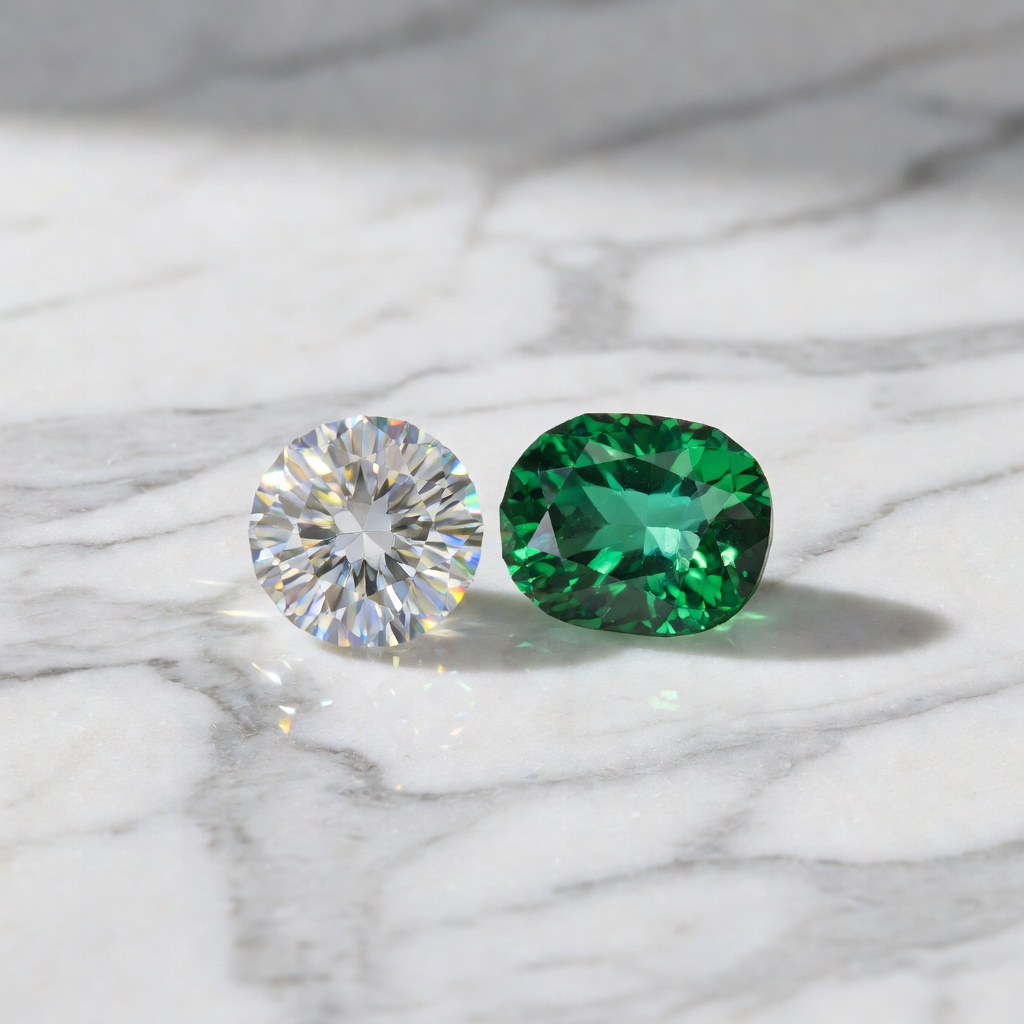
When evaluating precious gemstones for significant jewelry investments, the comparison between Diamond vs Chrome Tourmaline represents a fascinating intersection of tradition and distinctive beauty. Diamonds have maintained their position as the ultimate symbol of eternal commitment for centuries, prized for their unmatched hardness, brilliant optical performance, and cultural significance in bridal jewelry. In contrast, chrome tourmaline, also known as verdelite in its green varieties, emerges as a rare collector's gemstone that captivates with its intense forest green hues rivaling fine emeralds without the inherent brittleness. While these stones occupy vastly different positions in the gemological spectrum, modern consumers increasingly find themselves weighing the classic durability of diamond against the unique chromatic personality of chrome tourmaline when selecting center stones for engagement rings and heirloom pieces.
The decision between these two gemstones ultimately hinges upon three critical factors that discerning buyers must carefully evaluate. Durability considerations become paramount for daily-wear items such as engagement rings, where the stone faces constant exposure to potential impacts and environmental hazards. Aesthetic preferences play an equally vital role, pitting the timeless, colorless brilliance of diamond against the vivid, nature-inspired green that distinguishes high-quality chrome tourmaline from other colored gemstones. Finally, investment potential and long-term value retention differ significantly between these materials, with diamonds offering established liquidity while fine chrome tourmaline specimens present opportunities for appreciation within niche collector markets.
Chemical Composition and Crystal Structure
Diamond represents one of nature's simplest yet most extraordinary chemical achievements, consisting entirely of carbon atoms arranged in an isometric crystal system characterized by tetrahedral bonding. This atomic architecture creates an incredibly dense three-dimensional network where each carbon atom connects to four neighbors through strong covalent bonds, resulting in the material's legendary hardness and thermal conductivity. The isometric structure allows diamond to exhibit single refraction, meaning light travels at the same speed regardless of direction through the crystal, contributing to its distinctive optical performance and ability to display maximum brilliance when properly cut.
Chrome tourmaline presents a dramatically different chemical complexity as a cyclosilicate mineral belonging to the aluminum borosilicate group with a hexagonal crystal system. Its chemical formula incorporates multiple elements including aluminum, boron, silicon, oxygen, hydrogen, and alkali metals such as sodium or calcium, with the crucial addition of chromium and vanadium trace elements that produce its signature vivid green coloration. Understanding these verdelite properties helps gemologists distinguish true chrome tourmaline from other green tourmaline varieties, as the chromium content must exceed iron content to achieve the pure forest green hue that commands premium prices in the marketplace.
The crystallographic differences between these gemstones directly influence their cutting possibilities and optical behaviors in finished jewelry. Diamond cutters exploit the isometric system's uniform optical properties to maximize light return through precise facet arrangements, knowing that the stone will perform consistently regardless of orientation. Conversely, lapidaries working with chrome tourmaline must account for strong pleochroism and directional hardness variations inherent to the trigonal crystal system, often orienting the table perpendicular to the c-axis to minimize color zoning and display the most desirable green face-up appearance while navigating the stone's perfect cleavage parallel to the basal plane.
Hardness, Durability, and Daily Wearability
The Mohs hardness scale provides the fundamental metric for comparing gemstone durability, revealing a dramatic disparity between these two materials that directly impacts their suitability for various jewelry applications. Diamond occupies the pinnacle position at 10, representing the standard against which all other minerals are measured, while chrome tourmaline hardness registers between 7 and 7.5, placing it in the same category as quartz and significantly harder than opal or pearl but substantially softer than corundum varieties. This three-point difference on the logarithmic Mohs scale translates to diamond being approximately ten times harder than tourmaline, meaning that diamond can easily scratch tourmaline surfaces, though tourmaline cannot reciprocate such damage.
Beyond simple hardness measurements, tourmaline durability assessments must consider toughness and stability factors that affect real-world performance in jewelry settings. Diamond possesses perfect cleavage in four directions, creating potential vulnerability to splitting if struck sharply along specific crystallographic planes, though its extreme hardness generally protects against surface abrasion. Chrome tourmaline exhibits imperfect cleavage and conchoidal fracture patterns, making it somewhat more resistant to cleaving than diamond, but its lower hardness renders it susceptible to surface scratching and abrasion during daily wear, particularly at facet junctions where material loss becomes visible over time.
Practical jewelry applications diverge significantly based on these durability characteristics, influencing everything from setting design to wear recommendations. For engagement rings subjected to daily activities including hand washing, gym workouts, and household chores, diamonds tolerate these rigors with minimal maintenance requirements beyond routine cleaning. Chrome tourmaline engagement rings demand more strategic planning, with jewelers typically recommending protective bezel settings or halo designs that shield the girdle and crown from direct impacts, while advising removal during sports, gardening, or manual labor to prevent chipping or scratching that could compromise the stone's beauty and value.
Visual Characteristics: Brilliance, Fire, and Color
Optical performance separates green tourmaline vs diamond into distinctly different aesthetic categories, each offering unique visual experiences that appeal to different sensibilities and style preferences. Diamonds exhibit single refraction with an isometric crystal structure that allows light to enter and exit uniformly, combined with high dispersion (0.044) that separates white light into spectral colors, creating the famous "fire" or rainbow flashes that captivate viewers. The adamantine luster of diamond produces a mirror-like reflectivity that maximizes brilliance through total internal reflection when cut to precise proportions, resulting in the scintillation patterns that have defined luxury jewelry for generations.
Chrome tourmaline presents a fundamentally different visual character rooted in double refraction, where light splits into two rays as it passes through the hexagonal crystal structure, creating a doubling of back facets visible under magnification and a depth perception distinct from diamond's appearance. Strong pleochroism causes chrome tourmaline to display different colors when viewed from different crystallographic directions, typically showing dark green parallel to the c-axis and lighter yellowish-green perpendicular to it, requiring skilled cutting to orient the table for optimal color display. Rather than diamond's spectral fire, chrome tourmaline offers intense body color with vitreous luster, drawing the eye through saturated chromatic presence rather than prismatic light play.
Color psychology plays a significant role in the selection between these gemstones, particularly for modern consumers seeking alternatives to traditional bridal aesthetics. The colorless or near-colorless appearance of diamond emphasizes purity, timelessness, and versatility, coordinating effortlessly with any metal color or wardrobe choice while symbolizing clarity and eternal commitment. Chrome tourmaline's intense chromium-green evokes natural vitality, growth, and renewal, offering a bold personal statement that stands apart from conventional jewelry choices, particularly appealing to individuals born in October (tourmaline's birthstone month) or those seeking distinctive colored gemstone engagement rings that reflect individual personality rather than following mass-market trends.
Comparative Analysis: Diamond vs Chrome Tourmaline
| Characteristic | Diamond | Chrome Tourmaline |
|---|---|---|
| Chemical Composition | Carbon (C) | Complex Aluminum Borosilicate with Cr/V traces |
| Crystal System | Isometric (Cubic) | Trigonal (Hexagonal) |
| Mohs Hardness | 10 | 7 to 7.5 |
| Refractive Index | 2.417 (Single) | 1.616-1.634 (Double) |
| Dispersion (Fire) | High (0.044) | Low (0.017) |
| Color Range | Colorless to Fancy Colors | Vivid Forest Green |
| Price per Carat (Fine Quality) | $15,000 - $50,000+ | $500 - $3,000 |
| Durability Rating | Excellent for Daily Wear | Good with Protective Settings |
| Best Jewelry Applications | All Jewelry Types | Pendants, Earrings, Occasional Rings |
Rarity, Sourcing, and Geographic Origins
The geological distribution and mining economics of these gemstones create vastly different supply dynamics that influence availability, pricing, and ethical sourcing considerations. Diamonds occur across numerous global deposits spanning Africa, Russia, Canada, Australia, and South America, with established industrial mining operations producing millions of carats annually to supply both industrial and gemstone markets. This widespread distribution, combined with sophisticated stockpiling and distribution networks, ensures consistent availability of diamonds across all quality grades, though truly exceptional D-Flawless specimens remain rare and command proportionally higher prices.
Chrome tourmaline presents a dramatically different scarcity profile, with gem-quality specimens originating almost exclusively from limited East African deposits in Tanzania and Kenya, specifically the Tsavo region near the border where these countries meet. The geological conditions required to concentrate both chromium and vanadium in sufficient quantities to produce the intense green coloration occur rarely within tourmaline-bearing pegmatites, making true chrome tourmaline significantly rarer than its iron-colored green tourmaline cousins. This restricted sourcing creates natural limitations on supply that protect the gemstone's exclusivity but also introduce volatility in availability as political conditions, mining regulations, and deposit exhaustion affect production volumes.
Ethical sourcing considerations increasingly influence consumer decisions regarding colored gemstone engagement rings and fine jewelry, with both materials presenting distinct challenges and opportunities for traceability. The diamond industry has implemented the Kimberley Process and various blockchain tracking initiatives to prevent conflict diamonds from entering legitimate supply chains, though challenges remain in ensuring fair labor practices at artisanal mining operations. Chrome tourmaline's limited geographic origin actually facilitates traceability for conscientious buyers, with many specimens now accompanied by documentation identifying specific Tanzanian mines that employ ethical extraction practices, allowing consumers to verify that their verdant green gemstone supports rather than exploits local mining communities.
Price Analysis and Investment Potential
Market valuation reveals striking differences between these gemstones that extend beyond initial purchase price to encompass liquidity, value retention, and appreciation potential over time. High-quality diamonds typically command prices ranging from $15,000 to $50,000 per carat for D-color, Internally Flawless stones, with fancy vivid colors potentially reaching hundreds of thousands per carat, establishing them as portable stores of wealth with global recognition. Chrome tourmaline offers more accessible entry points, with fine one to two-carat specimens generally ranging from $500 to $3,000 per carat depending on color saturation and clarity, though exceptional large stones exceeding five carats with intense green coloration can command premium prices approaching $5,000 per carat within specialized collector markets.
Investment liquidity presents perhaps the most significant divergence between these materials for buyers considering diamond alternative gemstones as wealth preservation vehicles. Diamonds benefit from established grading standards (GIA certifications), global dealer networks, and consumer recognition that facilitate relatively straightforward resale through auction houses, dealers, or private sales, particularly for stones with documentation from reputable laboratories. Chrome tourmaline occupies a more specialized niche where value realization depends heavily upon finding collectors or dealers specifically seeking high-quality green tourmaline, potentially requiring longer marketing periods and accepting lower liquidity premiums compared to the immediate recognition diamond commands.
Long-term value appreciation factors favor untreated, natural specimens in both categories, though market dynamics differ substantially. Investment-grade diamonds (D-F color, IF-VVS clarity, excellent cut) have historically maintained stable value during economic fluctuations, serving as inflation hedges and crisis-resistant assets. Chrome tourmaline appreciation depends more heavily upon scarcity premiums and growing collector interest in fine colored gemstones, with untreated stones showing stronger value retention than heated or clarity-enhanced specimens. Budget-conscious consumers seeking significant visual impact might allocate resources toward a smaller diamond accentuated by a chrome tourmaline center stone, achieving distinctive colored gemstone engagement rings while preserving some investment-grade material within the design.
Jewelry Design Applications and Metal Pairings
The physical and optical properties of Diamond vs Chrome Tourmaline dictate distinct approaches to jewelry design, influencing everything from structural engineering to aesthetic harmony within finished pieces. Diamonds excel in traditional solitaire engagement ring settings where their brilliance becomes the focal point, thriving in delicate four or six-prong configurations that maximize light exposure while minimizing metal interference. The stone's durability allows for sharp, precise cutting styles including princess, emerald, and cushion cuts that maintain structural integrity even with thin girdles, enabling contemporary designers to create airy, minimalist settings that would compromise softer gemstones.
Chrome tourmaline requires more protective design strategies that account for its moderate hardness and potential cleavage vulnerabilities while showcasing its remarkable color. Bezel settings, partial bezels, or halo designs incorporating diamond accents provide optimal protection for the tourmaline's girdle and corners, preventing the chipping that often occurs when softer stones encounter hard surfaces during daily wear. Metal selection significantly impacts the overall aesthetic, with yellow or rose gold enhancing the warm undertones of chrome tourmaline and creating vintage-inspired appearances, while white gold or platinum settings emphasize the stone's cool green tones and contemporary styling preferences.
Accent stone compatibility opens creative possibilities for combining these materials within single designs, leveraging their complementary optical properties. Diamond halos surrounding chrome tourmaline centers create dramatic contrast, with the brilliant white stones amplifying the perceived saturation of the green center through simultaneous contrast effects. Side stone considerations should account for hardness compatibility, avoiding pairing tourmaline with diamond melee in shared prong settings where the harder diamond might gradually abrade the softer tourmaline over years of contact. Fashion jewelry applications favor chrome tourmaline for pendants and earrings where impact risks remain minimal, allowing the stone's distinctive color to command attention without the structural compromises required for ring settings.
Care, Cleaning, and Maintenance Requirements
Proper maintenance protocols reflect the differing durability profiles of these gemstones, with diamond's chemical inertness and hardness permitting aggressive cleaning methods that would damage chrome tourmaline. Steam cleaning and ultrasonic baths represent safe, effective options for diamond jewelry, utilizing high-frequency vibrations and heated pressurized water to remove accumulated oils, cosmetics, and environmental grime from behind settings and between facets. These methods effectively restore diamond's brilliance without risking structural damage, though periodic professional inspection remains essential to ensure prong integrity prevents stone loss during cleaning procedures.
Chrome tourmaline demands gentler approaches that acknowledge tourmaline durability limitations and specific vulnerabilities to thermal shock and chemical exposure. Warm water mixed with mild dish soap and applied with a soft brush provides the safest cleaning method, avoiding ultrasonic vibrations that might exacerbate existing inclusions or internal fractures common in tourmaline crystals. Heat sensitivity requires avoiding steam cleaning and removing tourmaline jewelry before exposure to high temperatures such as sauna visits, hot tub soaking, or cooking over open flames, as rapid temperature changes can cause thermal shock fractures within the crystal structure.
Storage practices must account for the significant hardness differential between these materials to prevent accidental damage to softer specimens. Jewelry boxes should feature separate compartments or soft fabric pouches that prevent diamond pieces from contacting chrome tourmaline items, as diamond's superior hardness will inevitably scratch tourmaline surfaces during casual contact. Professional inspection schedules differ as well, with diamond rings requiring annual prong checks while chrome tourmaline settings benefit from bi-annual examinations to detect early signs of abrasion, loose stones, or mounting wear that might indicate the need for protective setting modifications or temporary retirement from daily wear rotation.
Making Your Final Decision: Lifestyle and Aesthetic Factors
Selecting between green tourmaline vs diamond ultimately requires honest assessment of lifestyle realities, personal aesthetic preferences, and symbolic intentions behind the jewelry acquisition. Active individuals engaging in regular sports, manual labor, or hands-on hobbies should seriously consider whether they can commit to removing a chrome tourmaline ring before such activities, or whether diamond's forgiving durability better suits their daily routines. Occupational hazards present particular concerns for healthcare workers, mechanics, or artists who subject their hands to constant wear, potentially making diamond the more practical choice despite the allure of tourmaline's distinctive coloration.
Personal style alignment plays a crucial role in long-term satisfaction with either gemstone selection. Classic, minimalist wardrobes and traditional bridal aesthetics naturally complement diamond's timeless neutrality, ensuring the jewelry remains appropriate across decades of evolving fashion trends. Conversely, individuals with bold, artistic personal styles or those seeking to distinguish themselves from conventional bridal norms may find chrome tourmaline's vivid forest green more resonant with their identity, particularly when paired with vintage-inspired or nature-themed settings that emphasize the stone's organic beauty.
Symbolic meanings attached to these gemstones offer another dimension for decision-making beyond physical properties. Diamonds carry centuries of cultural weight regarding eternal love, unbreakable commitment, and clarity of purpose, making them the default choice for those prioritizing traditional symbolism. Chrome tourmaline offers alternative significations connected to growth, vitality, and heart-centered energy in crystal healing traditions, potentially appealing to couples who view their partnership as a living, evolving entity rather than an unchanging constant. Heirloom considerations favor diamonds for their ability to withstand generational transfer with minimal degradation, though properly cared-for chrome tourmaline pieces can certainly become meaningful family treasures passed down through careful stewardship.
Frequently Asked Questions
Is chrome tourmaline hard enough for an engagement ring?
Chrome tourmaline ranks 7 to 7.5 on the Mohs scale, making it suitable for engagement rings but requiring protective settings like bezels or halos. While softer than diamond, it can withstand daily wear if you avoid hard impacts and remove it during physical activities.
How can I tell the difference between a green diamond and chrome tourmaline?
Green diamonds show single refraction and typically exhibit lower saturation unless treated, while chrome tourmaline displays strong double refraction (visible doubling of back facets) and intense chromium-green pleochroism. A gemologist can distinguish them immediately using a refractometer or polariscope.
Why is chrome tourmaline more expensive than other green tourmalines?
Chrome tourmaline commands premium prices due to its rare, intense saturated green color caused by chromium and vanadium traces, similar to emerald or tsavorite garnet. Most green tourmalines owe their color to iron and appear lighter or yellowish-green, lacking the vivid forest green of true chrome specimens.
Does chrome tourmaline sparkle like a diamond?
No, chrome tourmaline does not sparkle like diamond. While it possesses good brilliance, it lacks diamond's high dispersion (fire) and single refraction. Tourmaline's double refraction actually splits light rays, creating a different visual effect—depth and color intensity rather than the rainbow flashes and mirror-like reflection characteristic of diamonds.
Which is better for investment, diamond or chrome tourmaline?
Diamonds generally offer better liquidity and stable resale value due to established grading standards and global markets. Chrome tourmaline appeals to collectors seeking rarity appreciation, but has a smaller resale market. Investment-grade diamonds (D-F color, IF-VVS clarity) typically outperform colored gemstones in value retention.
Can chrome tourmaline scratch a diamond?
No, chrome tourmaline cannot scratch a diamond. With a Mohs hardness of 7-7.5, tourmaline is significantly softer than diamond (10 on the Mohs scale). However, diamonds can easily scratch tourmaline, so these gemstones should never be stored together in jewelry boxes.
What does 'chrome' mean in chrome tourmaline?
The term 'chrome' refers to chromium, the trace element responsible for the gemstone's vivid emerald-like green color. This distinguishes it from iron-colored green tourmalines. True chrome tourmaline contains significant chromium and often vanadium content, creating a pure forest green without brown or yellow secondary tones.
Is a chrome tourmaline ring suitable for everyday wear?
Chrome tourmaline rings can be worn daily with proper precautions. Choose protective settings that shield the girdle and corners, avoid wearing during sports or manual labor, and clean regularly to prevent buildup that can dull the stone. While durable enough for jewelry, it requires more care than a diamond ring.