What Are Champagne Diamonds? Understanding the Basics
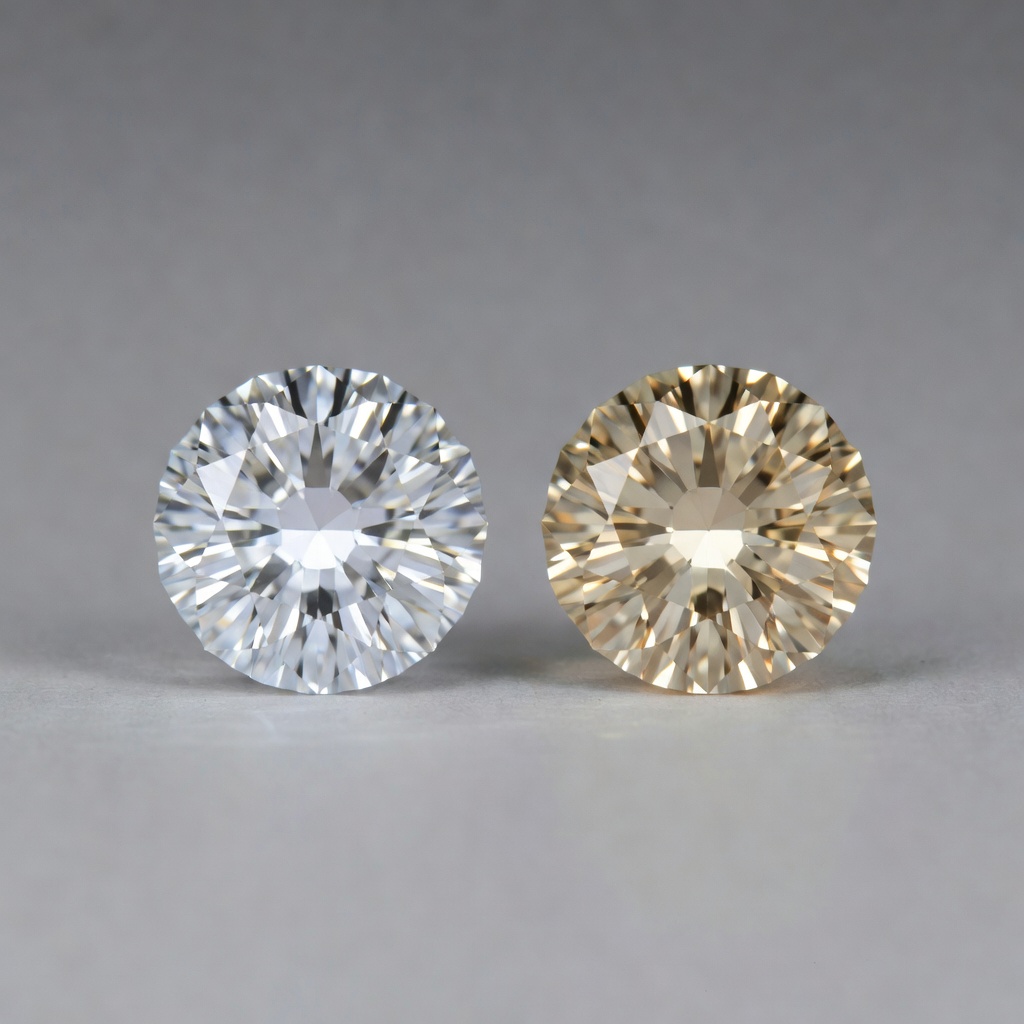
Champagne diamonds represent a captivating subset of the fancy colored diamonds category, distinguished by their warm, earthy tones that range from delicate straw yellows to rich cognac browns. Unlike traditional white diamonds that strive for absolute colorlessness, these natural colored diamonds embrace their nitrogen-induced hues as defining characteristics rather than flaws. The champagne diamond meaning extends beyond mere aesthetics; these stones form under specific geological conditions where nitrogen atoms become trapped within the carbon crystal structure during creation deep within the earth's mantle. Modern jewelry enthusiasts increasingly seek these unique gems for their vintage appeal and distinctive personality, moving away from conventional colorless stones toward more expressive, individualized options that reflect personal style preferences.
The color spectrum for champagne diamonds spans from C1 (light straw) to C7 (deep cognac) on the specialized Argyle champagne diamond scale, offering consumers diverse options from subtle warmth to intense saturation. This broad range allows for significant personalization, as lighter tones provide understated elegance suitable for everyday wear while deeper cognac shades create dramatic, statement-making centerpieces. Understanding these distinctions helps buyers appreciate why champagne diamonds command respect as legitimate alternatives to traditional white stones, offering comparable hardness and brilliance with added character and typically more accessible pricing structures. As awareness grows regarding these beautiful alternatives, many consumers discover that champagne diamond meaning encompasses not just color, but a philosophy of embracing natural uniqueness over conventional perfection.
Color Grading Systems: D-Z vs Champagne Scale
Understanding diamond color grades requires familiarity with two distinct valuation systems that serve different purposes in the gemstone industry. Traditional white diamonds utilize the D-to-Z scale established by the Gemological Institute of America (GIA), where D represents absolutely colorless stones commanding premium prices, progressing through near-colorless ranges until Z indicates obvious yellow or brown tints. In contrast, champagne diamonds and other fancy colored diamonds employ alternative grading methodologies, specifically the C1-C7 champagne scale developed by the Argyle mine, or descriptive GIA terminology ranging from Fancy Light Brown to Fancy Deep Brown. The fundamental chemical difference lies in nitrogen impurities; while white diamonds achieve value through structural purity and absence of elements, champagne diamonds derive their value from specific nitrogen arrangements that absorb blue light and transmit warm brownish-yellow wavelengths.
The D-Z grading system emphasizes absence of color, with each letter grade representing subtle shifts in tint that dramatically affect valuation, particularly in the D-F colorless range where prices escalate exponentially. Champagne diamonds invert this paradigm, gaining value as color intensifies, creating a fascinating market dynamic where "imperfections" in one system become desirable attributes in another. Gemologists identify natural colored diamonds using specialized lighting conditions and comparison stones, recognizing that the same nitrogen content deemed undesirable in white diamonds (causing lower D-Z grades) creates the coveted warm tones in fancy brown categories. This distinction proves crucial for consumers navigating purchases, as a K-grade white diamond with noticeable yellow tint holds different value than a Fancy Light Brown diamond of similar appearance but certified under the colored diamond protocol.
The 4Cs Comparison: Cut, Clarity, Carat and Color Impact
When evaluating the 4Cs for diamond vs champagne diamond selections, significant differences emerge in how each characteristic influences value and appearance. Cut quality remains equally crucial for both varieties, as proper proportions maximize brilliance and fire, though champagne diamonds possess a unique advantage: their inherent color naturally masks minor inclusions and blemishes that would be immediately apparent in colorless stones. Clarity grades shift dramatically in importance between the two types; an SI1 (Slightly Included) champagne diamond often appears cleaner to the naked eye than an equivalent white diamond because the warm tones obscure internal characteristics, allowing buyers to prioritize other factors. Carat weight pricing follows divergent models, with champagne diamonds typically costing 30-50% less per carat than their white counterparts, allowing buyers to purchase significantly larger stones within the same budget parameters without sacrificing visual presence.
For champagne diamonds, color intensity becomes the primary value driver, whereas white diamonds prioritize clarity and colorlessness above all other factors, creating distinctly different shopping strategies. A practical example illustrates this divergence: a 1.5-carat champagne diamond with SI2 clarity but strong C5 color might outperform a similarly sized stone with VS1 clarity but pale C1 color in both beauty and resale value. When assessing are champagne diamonds valuable compared to traditional options, collectors increasingly recognize that intense cognac specimens exhibit rarity premiums approaching those of pink or blue fancy diamonds. The brown diamond comparison reveals that while traditionalists once dismissed these warm tones as inferior, modern markets celebrate them as sophisticated alternatives offering superior size-to-value ratios and distinctive aesthetic appeal.
Price Analysis: Cost Differences and Market Value
The champagne diamond price advantage presents compelling opportunities for budget-conscious buyers seeking substantial, high-quality gemstones without compromising on durability or brilliance. Current market analysis reveals that champagne diamonds typically retail for 40-60% less than comparable quality white diamonds, with specific pricing tiers reflecting color intensity and rarity factors. For instance, a 1-carat champagne diamond of good quality currently averages between $2,500 and $5,000, while a similar white diamond ranges from $6,000 to $18,000 depending on precise cut, clarity, and color grades within the D-Z spectrum. This substantial differential enables consumers to acquire impressive center stones featuring excellent cut grades and substantial carat weights that would remain financially inaccessible within the white diamond category.
Price variations within the champagne category itself correlate strongly with color depth, as cognac-colored stones (C6-C7) command significant premiums over light champagne varieties (C1-C3) due to consumer preference for intense, saturated hues. Market demand trends indicate approximately 20% annual growth in colored diamond popularity, suggesting potential price stabilization or increases as inventory from closed mines like Argyle diminishes and scarcity drives appreciation. Savvy shoppers should note that champagne diamond price trajectories differ from white diamonds, with intense colors showing stronger appreciation potential than pale varieties. When conducting a brown diamond comparison for investment purposes, stones exhibiting rich, even coloration without secondary green or gray undertones typically represent the best value retention within this growing market segment.
| Characteristic | White Diamond | Champagne Diamond |
|---|---|---|
| Color Grading System | D-Z Scale (Colorless to Light Yellow) | C1-C7 Scale or Fancy Light to Deep Brown |
| Average Price per Carat (1ct, VS2) | $6,000 - $12,000 | $2,500 - $5,000 |
| Primary Value Factor | Colorlessness (D-F) and Clarity | Color Intensity (C5-C7 preferred) |
| Rarity Level | Abundant global supply | 10,000 times rarer than colorless; Argyle closure increasing scarcity |
| Best Metal Settings | Platinum and White Gold for maximum brilliance | Rose Gold and Yellow Gold for warmth; Platinum for contrast |
| Inclusion Visibility | High; inclusions easily visible in colorless stone | Low; color masks minor inclusions effectively |
| Investment Liquidity | High; established resale markets | Moderate; growing collector interest post-Argyle |
| Current Market Trend | Stable with modest appreciation | 20% annual growth in demand; scarcity premiums emerging |
Rarity and Sourcing: Where These Gemstones Originate
Rarity and sourcing patterns create fundamental distinctions between these gemstone categories that directly impact long-term availability and value propositions. White diamonds originate from numerous global locations including Russia, Canada, Botswana, and Australia, maintaining relatively abundant supply chains that support consistent market availability across all quality grades. Conversely, champagne diamonds historically relied heavily on production from the legendary Argyle Mine in Western Australia, which permanently closed in 2020 after exhausting its economically viable reserves, creating immediate scarcity for new champagne diamond supply and fundamentally altering market dynamics. Natural formation of these fancy colored diamonds requires highly specific geological conditions where precise nitrogen concentrations interact with unique heat and pressure variables, making them approximately 10,000 times rarer than colorless diamonds in nature.
Current alternative sources include limited production from Brazil, various African nations including the Congo and Angola, and sporadic Russian deposits, though none match the volume or quality consistency previously provided by Argyle operations. This supply contraction creates interesting opportunities for collectors of natural colored diamonds, as existing inventory from defunct mines potentially appreciates due to irreplaceable provenance. Buyers seeking champagne diamonds should prioritize documented origin when possible, as Argyle-sourced stones increasingly command premiums due to their documented closure and historical significance. The geological specificity required for champagne diamond formation—combining exact nitrogen levels with particular mantle conditions—ensures that these stones will remain among the rarest diamond varieties regardless of future mining developments.
Jewelry Applications: Style and Design Flexibility
Jewelry design applications reveal distinct aesthetic strengths for each diamond type, influencing setting choices and overall stylistic outcomes in significant ways. Champagne diamonds excel particularly in vintage-inspired designs, rose gold settings, and halo configurations where their warm undertones complement the metal's pinkish hues and create cohesive, romantic visual narratives that evoke antique elegance. White diamonds maintain dominance in classic solitaire presentations and platinum settings that emphasize maximum brilliance and colorless purity, appealing to traditionalists seeking timeless elegance and universal recognition. Innovative mixed designs increasingly combine both stones, utilizing white diamond accent stones to frame champagne centers, creating sophisticated contrast that appeals to contemporary tastes seeking unique alternatives to conventional engagement rings.
When considering are champagne diamonds valuable for specific jewelry applications, their versatility in fashion-forward designs continues expanding as major houses incorporate them into high collections. Industry data shows champagne diamond engagement rings experienced 35% popularity growth as modern consumers increasingly prioritize individual expression over traditional norms, particularly among millennials and Gen Z buyers. Practical styling tips suggest pairing lighter champagne stones (C1-C3) with yellow gold for subtle warmth, while intense cognac diamonds (C6-C7) create dramatic impact in white gold or platinum settings that emphasize their rich color through contrast. For those questioning the champagne diamond meaning in contemporary contexts, these stones increasingly symbolize conscious individuality and rejection of mass-market conventions while maintaining the durability and prestige associated with diamond jewelry.
Investment Potential and Resale Value Comparison
Investment potential varies significantly between these categories, requiring different acquisition strategies for those viewing diamonds as alternative assets rather than purely ornamental purchases. White diamonds maintain superior liquidity within established resale markets, with certified stones consistently trading through reputable dealers and auction houses based on standardized grading criteria universally recognized by industry professionals. Fancy colored diamonds including champagne varieties demonstrate stronger historical price appreciation, averaging 3-5% annual growth compared to more modest white diamond performance, particularly for stones exhibiting intense color saturation in the C5-C7 range. The permanent closure of the Argyle Mine creates anticipated supply constraints expected to increase champagne diamond values significantly over the next decade, especially for investment-grade specimens exhibiting rich, even color distribution without secondary gray or green undertones.
Investment requirements differ substantively between categories: whereas white diamonds demand high clarity grades (VS2 or better) for retention of value, champagne diamonds prioritize intense, even color distribution as the primary investment criterion. Savvy investors should focus on certified natural stones with documented Argyle origins when possible, as these carry provenance premiums likely to appreciate faster than generic brown diamonds from current sources. When evaluating are champagne diamonds valuable from a portfolio diversification perspective, they offer exposure to the growing colored diamond market while requiring lower capital entry points than pink or blue varieties. However, potential investors must recognize that champagne diamond price liquidity remains thinner than white diamonds, requiring longer holding periods and specialized marketing for optimal returns, making them suitable for patient capital rather than quick turnover strategies.
Lab-Grown Options: Ethical Considerations and Quality
Laboratory-grown alternatives now exist for both categories, presenting ethical and economic considerations that modern consumers increasingly prioritize in their purchasing decisions. Both white and champagne lab-grown diamonds possess identical physical, chemical, and optical properties to their natural counterparts, differing only in origin and typically costing 70-80% less than mined equivalents, dramatically widening accessibility for budget-conscious buyers seeking substantial stones. The brown diamond comparison between natural and laboratory sources becomes particularly relevant as technological advances enable precise control over nitrogen content, creating champagne colors previously difficult to synthesize convincingly. Certification challenges currently complicate the lab-grown champagne diamond market, as GIA documentation categorizes both natural and laboratory-created brown diamonds simply as "Fancy Brown" without consistently clear origin indicators, requiring purchasers to rely on seller transparency and additional verification methods.
The ethical appeal of lab-grown options attracts environmentally conscious buyers concerned with mining impacts, though natural champagne diamonds maintain cachet among collectors seeking rare, earth-formed treasures with historical significance and potential scarcity-driven appreciation. When selecting fancy colored diamonds from laboratory sources, buyers should request specific documentation confirming growth methods, as reputable vendors provide detailed reports distinguishing created stones despite standard GIA color descriptions. Price differentials in the lab-grown sector remain substantial, with created champagne diamonds offering particularly attractive value propositions for fashion jewelry and everyday wear pieces where investment considerations matter less than aesthetic appeal. As technology improves and consumer acceptance grows, lab-grown champagne diamonds may capture increasing market share among younger demographics prioritizing sustainability and affordability over geological rarity.
Care and Maintenance: Keeping Your Diamonds Brilliant
Maintenance protocols remain remarkably consistent across both diamond varieties, though practical wear characteristics offer slight advantages for colored stones in daily use scenarios. Both types require identical cleaning methodologies utilizing mild soap solutions, soft-bristled brushes, or professional ultrasonic cleaners safely housed within jewelry cleaning machines designed for hard gemstones. Champagne diamonds demonstrate superior resistance to visible dirt and oil accumulation between professional cleanings, as their inherent brownish-yellow coloration naturally conceals minor film buildup that immediately dulls the appearance of white diamonds, potentially reducing maintenance frequency for busy wearers. Proper storage recommendations dictate separate jewelry compartments or soft pouches to prevent scratching between pieces, though diamonds' extreme hardness (10 on the Mohs scale) makes them resistant to damage from other materials except fellow diamonds.
Professional inspection every 6-12 months remains essential for both varieties to ensure secure prong settings and structural integrity, particularly for engagement rings subjected to daily wear and potential impact. While natural colored diamonds require no special precautions beyond standard diamond care, owners should note that some champagne diamonds undergo treatments to enhance color, requiring disclosure at purchase and potentially affecting cleaning method recommendations. For those understanding champagne diamond meaning as connected to earth-formed rarity, proper maintenance preserves not only beauty but the integrity of these ancient geological specimens. Ultrasonic cleaning remains safe for both types provided stones are examined beforehand for loose settings, ensuring that both white and champagne diamonds maintain their fire and brilliance throughout decades of wear.
Final Verdict: Which Diamond Should You Choose?
Selecting between these magnificent gemstones ultimately depends on aligning personal priorities with the distinct advantages each category offers for specific applications and lifestyle needs. Budget-conscious buyers seeking maximum visual impact will find that champagne diamonds provide significantly larger carat weights and unique aesthetic character at equivalent price points compared to white diamonds, enabling impressive center stones within modest budgets. Traditionalists and conservative investors typically favor white diamonds for their timeless appeal, universal recognition, and established resale stability within liquid secondary markets that facilitate easy conversion to cash when necessary. Style preferences heavily influence optimal selection, with warm, vintage-inspired looks benefiting enormously from champagne diamond centerpieces, while classic, brilliant-white aesthetics remain the domain of colorless stones expected to maintain perennial popularity.
Consider the specific occasion and intended legacy when making your diamond vs champagne diamond decision; champagne diamonds serve beautifully as fashion pieces and distinctive engagement rings for non-traditional couples seeking individuality, while white diamonds maintain their status as preferred heirlooms expected to retain standardized value across generations. Those questioning are champagne diamonds valuable should recognize that while they currently trade at discounts to white diamonds, increasing scarcity and shifting fashion preferences suggest potential for significant appreciation, particularly in intense cognac shades. Ultimately, neither choice represents compromise—both offer the eternal durability and fire that define diamond beauty, differing primarily in the personality and statement they convey. Your selection should reflect personal values, whether prioritizing maximum size, traditional prestige, unique character, or investment potential.
Frequently Asked Questions
Are champagne diamonds real diamonds?
Yes, champagne diamonds are absolutely authentic natural diamonds that form through the same geological processes as their colorless counterparts deep within the earth's mantle over billions of years. These genuine gemstones receive their distinctive brownish-yellow coloration from nitrogen impurities trapped within the carbon crystal lattice during formation, making them legitimate members of the fancy colored diamond family rather than treated or synthetic stones. Like all natural diamonds, they possess identical hardness, brilliance, and chemical composition to white diamonds, differing only in the trace elements that create their warm, distinctive hues. Reputable gemological laboratories certify these stones using the same rigorous standards applied to all diamonds, confirming their natural origin and authentic characteristics.
How much cheaper are champagne diamonds than white diamonds?
Champagne diamonds typically cost between 40% and 60% less than white diamonds of comparable carat weight, cut quality, and clarity grades, representing substantial savings for budget-conscious consumers. For specific comparison, a high-quality 1-carat champagne diamond currently averages between $2,500 and $5,000 on the retail market, while a similar white diamond ranges from $6,000 to $18,000 depending on precise colorlessness within the D-Z scale and clarity characteristics. This significant price differential allows purchasers to acquire larger stones or higher-quality cuts within champagne varieties while maintaining the same budget parameters required for smaller white diamonds. The pricing gap narrows somewhat for intense cognac-colored stones (C6-C7) which command premiums within the champagne category, though they still typically remain below equivalent white diamond pricing tiers.
Do champagne diamonds sparkle less than white diamonds?
Champagne diamonds possess identical brilliance and fire to white diamonds when cut to proper proportions, as their sparkle depends primarily on cut quality rather than body color. These fancy colored diamonds can actually enhance fire—the dispersion of colored light—creating warm, golden flashes that white diamonds cannot produce under identical lighting conditions. While extremely dark champagne diamonds (deep cognac) may absorb marginally more light than pale stones, well-cut specimens in the C1-C5 range exhibit scintillation and brilliance indistinguishable from colorless diamonds to the casual observer. The cut quality remains the dominant factor determining sparkle performance, making proportion and symmetry more influential than the presence of nitrogen-induced coloration.
Are champagne diamonds a good investment?
High-quality champagne diamonds, particularly those exhibiting intense color saturation in the C5-C7 range, demonstrate strong investment potential especially following the permanent closure of Australia's Argyle Mine which previously supplied the majority of these stones. While white diamonds maintain more liquid secondary markets with established resale channels through certified dealers and auction houses, rare fancy colored diamonds including champagne varieties have historically appreciated at rates of 3-5% annually, outpacing traditional colorless stones. Investment-grade champagne diamonds require intense, even color distribution as the primary value criterion rather than the clarity-focused standards applied to white diamonds. The anticipated supply constraints resulting from Argyle's closure suggest significant value appreciation potential over the coming decade for premium specimens with documented natural origins and strong color characteristics.
What causes the champagne color in diamonds?
Champagne diamonds derive their characteristic warm hues from nitrogen atoms incorporated into the carbon crystal structure during formation deep within the earth's mantle billions of years ago. Light champagne diamonds (C1-C3) contain relatively lower concentrations of nitrogen impurities, resulting in subtle straw or beige tones, while deep cognac varieties (C6-C7) feature higher nitrogen densities creating rich, intense brown coloration. The specific arrangement and concentration of these nitrogen atoms determine the exact hue and intensity, with some stones exhibiting secondary pink or orange undertones that increase rarity and value. Unlike treated stones that receive color through artificial irradiation or heat processes, natural champagne diamonds owe their beauty entirely to geological conditions present during their creation.
Which metal setting works best for champagne diamonds?
Rose gold and yellow gold settings create harmonious, complementary effects with champagne diamonds, enhancing their warm undertones and creating cohesive vintage-inspired aesthetic presentations. White gold and platinum settings offer striking contrast that makes the champagne center stone appear more intensely colored by comparison, popular among those seeking contemporary, eye-catching designs. Vintage-inspired halo settings prove particularly effective, surrounding the champagne center with smaller white diamonds that accentuate the unique color while adding brilliance and perceived size. When selecting settings, consider that darker champagne stones (cognac) often benefit from white metal contrast, while lighter champagne diamonds appear more brilliant when surrounded by warm-toned metals that complement rather than compete with their subtle coloration.
Can champagne diamonds be lab-grown?
Yes, laboratory-grown champagne diamonds are readily available and possess identical physical, chemical, and optical properties to natural champagne diamonds, differing only in their origin above ground rather than below. These created stones typically cost 70-80% less than their natural counterparts, making fancy colored diamond aesthetics accessible to significantly broader consumer demographics while reducing environmental impact associated with mining. However, certification challenges complicate purchases, as GIA documentation often categorizes both natural and laboratory-grown brown diamonds simply as "Fancy Brown" without clear origin differentiation, requiring buyers to seek additional verification from sellers regarding growth methods. Reputable vendors provide specific documentation confirming laboratory origins for created stones, though natural champagne diamonds maintain higher collector value and investment potential for those prioritizing rarity and geological authenticity.