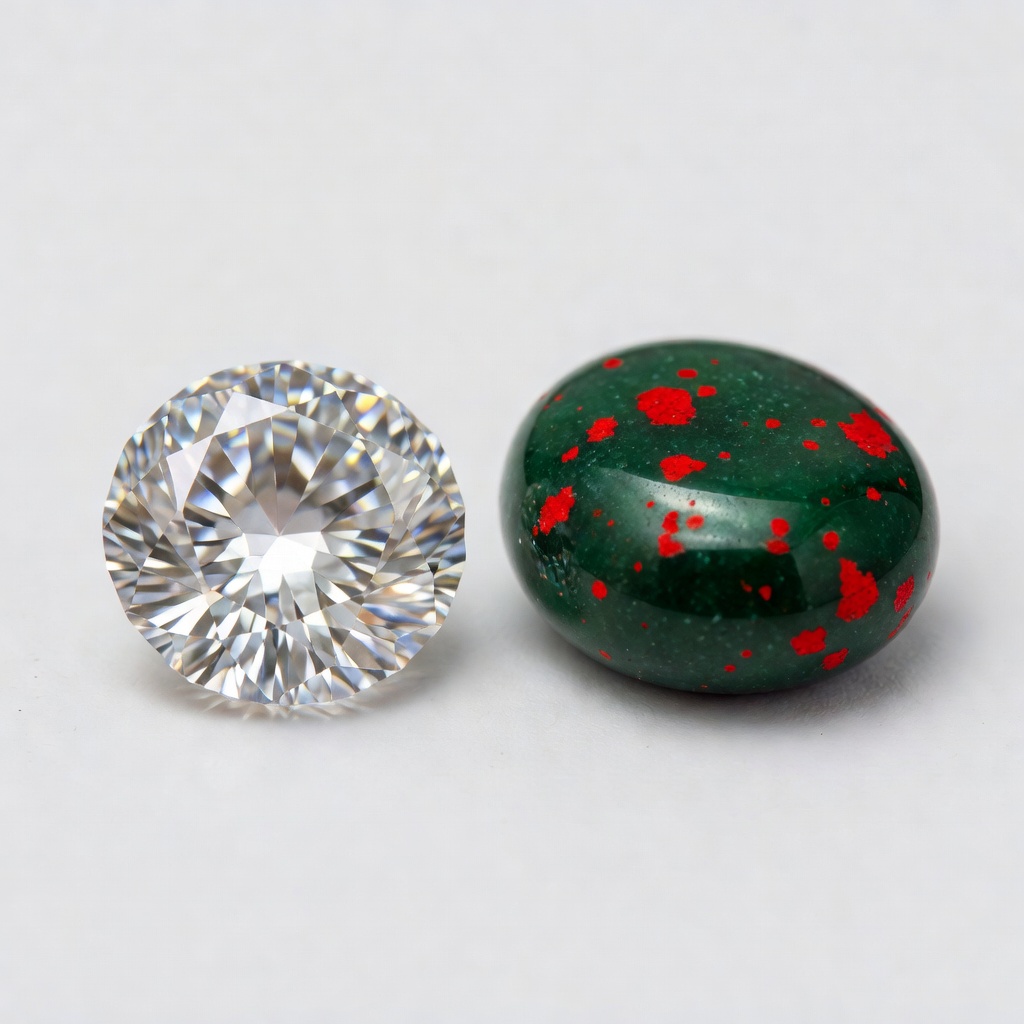
Understanding the Diamond vs Bloodstone Distinction
When exploring the vast world of gemstones, the comparison between diamond and bloodstone presents one of the most fascinating contrasts in mineralogy and jewelry design. Diamond stands as the undisputed king of precious gemstones, commanding premium prices and representing the pinnacle of geological rarity and optical performance. Bloodstone, also known by its historical name heliotrope gemstone, occupies a distinguished position among semi-precious stones, offering rich historical significance and distinctive visual character at accessible price points. This comprehensive gemstone comparison examines why these two minerals attract vastly different audiences while both deserving appreciation for their unique attributes.
Understanding the distinction between these stones matters significantly for buyers, collectors, and jewelry enthusiasts navigating today's diverse market. Whether you are considering an investment gemstones purchase for long-term value retention or seeking a meaningful personal talisman, the choice between these stones impacts not only your budget but your daily wearing experience and symbolic connection. This analysis will explore critical comparison areas including geological formation, physical durability, visual appearance, market valuation, cultural symbolism, and practical applications to help you make an informed decision aligned with your specific needs and preferences.
Origins and Geological Formation
Deep Earth Origins of Diamond Formation
Diamonds originate from depths exceeding 100 miles within Earth's mantle, where extreme pressure of 725,000 pounds per square inch and temperatures around 2,000 degrees Fahrenheit transform carbon atoms into crystalline structures over 1 to 3 billion years. These precious stones reach the surface through rare volcanic eruptions called kimberlite pipes, which act as natural elevators bringing the gems from the depths rapidly enough to preserve their structure. Major diamond mining operations currently focus on Russia's Yakutia region, Botswana's Jwaneng mine, and Canada's Northwest Territories, where sophisticated extraction methods recover these ancient crystals from both primary deposits and alluvial secondary sources.
The geological rarity of diamond formation contributes significantly to its classification as a precious stone, with viable kimberlite pipes discovered in only limited regions worldwide. Modern mining employs advanced X-ray transmission technology and automated sorting systems to identify rough diamonds within massive quantities of host rock, reflecting the substantial investment required to bring these gems to market. Each diamond carries within its structure a billion-year history of Earth's formation, making it not merely a decorative object but a tangible piece of planetary history.
Bloodstone's Hydrothermal Beginnings
Bloodstone forms through distinctly different geological processes as a variety of chalcedony, which is cryptocrystalline quartz deposited in hydrothermal veins and cavities within volcanic rocks and ancient lava flows. The stone's characteristic dark green color comes from chlorite and hornblende inclusions within the silica structure, while the distinctive red spots represent iron oxide or jasper inclusions that create the blood-like speckling giving the stone its name. Unlike diamonds' deep mantle origins, bloodstone crystallizes much closer to Earth's surface through the gradual deposition of silica-rich fluids in rock fractures and gas bubbles within volcanic formations.
Primary sources for quality bloodstone include the Deccan Traps region of India, particularly Gujarat and Maharashtra, where ancient volcanic activity created ideal conditions for chalcedony formation. Additional significant deposits occur in Brazil's Minas Gerais region, Australia's Northern Territory, and scattered locations throughout China and the United States. The accessibility of bloodstone deposits and the relatively straightforward extraction process contribute to its classification as a semi-precious stone, though specimens with particularly vivid red spotting and deep green base color still command respect among serious collectors.
Physical and Scientific Properties Compared
Mohs Hardness and Durability Analysis
The most dramatic difference in gemstone durability between these two materials appears in their Mohs hardness ratings, where diamond ranks at the absolute maximum of 10, making it the hardest known natural substance. This exceptional hardness means diamonds resist scratching from any other material except another diamond, allowing them to maintain their polish and facet edges indefinitely under normal wear conditions. Bloodstone properties place it at 6.5 to 7 on the Mohs scale, which while reasonably hard, leaves it vulnerable to scratching from common materials including quartz dust, steel files, and harder gemstones.
This hardness differential significantly impacts long-term wearability and maintenance requirements for jewelry containing these stones. Diamond jewelry can withstand decades of daily wear including exposure to household dust and accidental impacts that would damage softer materials. Bloodstone requires more careful handling and protective settings to prevent surface abrasion and chipping, particularly when worn in rings or bracelets that encounter hard surfaces during normal activities.
Crystal Structure and Optical Properties
Diamond possesses an isometric crystal structure where carbon atoms bond in a tetrahedral lattice, creating exceptional thermal conductivity and the ability to slow light dramatically, resulting in the stone's famous brilliance. Bloodstone, as a heliotrope gemstone, exhibits a trigonal crystal structure characteristic of quartz minerals, with microcrystalline formation that prevents transparency and creates the stone's characteristic waxy luster. Specific gravity measurements show diamonds at 3.52 compared to bloodstone's 2.58-2.64, making diamonds noticeably heavier for their size.
The refractive index differs substantially between these stones, with diamonds measuring 2.42 and exhibiting strong dispersion that separates white light into spectral colors, creating fire. Bloodstone's refractive index of approximately 1.54 produces minimal optical effects, relying instead on its opaque coloration and patterning for visual interest. These physical distinctions determine cutting approaches, with diamonds receiving complex faceting to maximize light return while bloodstone typically undergoes cabochon cutting or carving to showcase its color patterns.
| Property | Diamond | Bloodstone |
|---|---|---|
| Chemical Composition | Carbon (C) | Silicon Dioxide (SiO₂) with inclusions |
| Mohs Hardness | 10 (Highest) | 6.5-7 |
| Crystal System | Isometric | Trigonal (Hexagonal) |
| Specific Gravity | 3.52 | 2.58-2.64 |
| Refractive Index | 2.42 | 1.54 |
| Transparency | Transparent to Translucent | Opaque |
| Toughness | Good to Excellent | Good |
| Thermal Conductivity | Extremely High | Low |
Visual Characteristics and Appearance
Diamond's Optical Performance
Diamonds captivate viewers through three distinct optical phenomena: brilliance (white light reflection), fire (spectral color dispersion), and scintillation (sparkle from light and dark patterning). Master diamond cutters employ precise angles and facet arrangements, typically using the round brilliant cut with 57 or 58 facets, to maximize these effects and create the mesmerizing sparkle associated with luxury jewelry. The clarity grading system for diamonds ranges from Flawless (FL) to Included (I3), with microscopic inclusions potentially affecting light performance and value.
Color variations in diamonds extend from the prized colorless grades (D-F) through faint yellow tints (G-J) and into fancy colors including pink, blue, and yellow, which derive their hues from trace elements or structural anomalies. The value relationship with color follows an inverse pattern for white diamonds, where absence of color increases worth, while fancy colors command premiums based on saturation and rarity. This color versatility allows diamonds to complement any metal setting or design aesthetic while maintaining their characteristic luminosity.
Bloodstone's Earthy Aesthetic
Bloodstone presents a completely different visual experience characterized by its opaque, deep forest green base color punctuated by distinctive red to orange-red spots of iron oxide or jasper. Unlike diamonds where inclusions typically diminish value, bloodstone's natural inclusions and color variations constitute its primary appeal, with specimens featuring vivid red spotting against a dark green background considered most desirable. The stone typically receives cabochon cuts, smooth domed surfaces that showcase its color patterns, or intricate carvings including cameos, intaglios, and religious iconography.
While diamonds undergo rigorous clarity grading, bloodstone evaluation focuses on color intensity, spot distribution, and overall craftsmanship of the cut or carving. The stone's appearance connects to ancient earth energies and organic processes, offering an aesthetic alternative to the technological precision of faceted diamonds. This distinction between precious vs semi-precious stones becomes evident in their visual presentation, with diamonds emphasizing optical physics and bloodstone celebrating natural artistic patterning.
Market Value and Investment Potential
Diamond Pricing and Investment Markets
Diamond valuation follows the internationally recognized 4Cs system evaluating Cut, Color, Clarity, and Carat weight, with certificates from GIA (Gemological Institute of America) or AGS (American Gem Society) providing essential documentation for investment gemstones. Prices range dramatically from approximately $1,000 per carat for commercial quality stones to $25,000 or more per carat for exceptional D-color, Internally Flawless specimens. The established resale markets for certified diamonds include auction houses, estate dealers, and diamond exchanges, providing liquidity unavailable to most other gemstones.
Investment-grade diamonds typically require specific characteristics including weights over one carat, color grades of D through F, and clarity ratings of VVS2 or better to maintain appreciation potential. Ethical sourcing considerations increasingly influence diamond markets, with CanadaMark diamonds and Kimberley Process certification addressing consumer concerns about conflict stones. While diamonds historically retain value better than most consumer goods, they rarely appreciate faster than inflation except for rare fancy colors or historically significant stones.
Bloodstone Affordability and Collector Value
Bloodstone offers exceptional accessibility in the gemstone market, with prices typically ranging from $1 to $10 per carat for quality specimens, making elaborate carvings and substantial pieces affordable for most collectors. Unlike diamonds, bloodstone lacks standardized grading systems, with value determined by color intensity, spot prominence, size, and artistry of any carving or cutting. The stone appeals primarily to collectors, metaphysical practitioners, and enthusiasts of antique jewelry rather than financial investors seeking appreciation.
While bloodstone lacks the investment potential of diamonds, fine antique bloodstone carvings, particularly Roman or Victorian intaglios, can command significant premiums based on historical provenance and craftsmanship. Modern jewelry designers increasingly incorporate bloodstone into men's accessories and alternative engagement rings, creating niche markets that support steady but modest valuation. For buyers prioritizing unique appearance and historical significance over financial return, bloodstone represents exceptional value within the gemstone comparison landscape.
Symbolism, History and Cultural Significance
Diamond: Modern Symbols of Eternity
Diamonds have become synonymous with eternal love and commitment largely due to De Beers' influential marketing campaigns beginning in the 1940s, which established the diamond engagement ring as a cultural standard in Western societies. Beyond modern romantic symbolism, diamonds historically represented invincibility and divine favor, with ancient Greeks believing them to be tears of gods or splinters from falling stars. The stone's name derives from the Greek "adamas," meaning unconquerable or indestructible, reflecting its supreme hardness and association with lasting strength.
In contemporary contexts, diamonds signify status, achievement, and purity, with the crown chakra energy associated with diamonds in metaphysical practices emphasizing clarity of thought and spiritual enlightenment. Famous diamonds like the Hope Diamond and Cullinan Diamond carry histories of royalty, curses, and geopolitical significance that enhance their legendary status. The stone's ability to refract white light into rainbow colors has made it a symbol of perfection and the integration of diverse elements into unified beauty.
Bloodstone: Ancient Talisman of Vitality
Bloodstone meaning derives from its distinctive red spots, which ancient civilizations associated with blood and life force, leading to its use as a talisman for courage, health, and protection in battle. Greek and Roman athletes wore bloodstone amulets to increase endurance and strength, while Medieval Christians associated the red spots with the blood of Christ, using the stone to carve scenes of the crucifixion and martyrdom. As the traditional March birthstone alongside aquamarine, bloodstone connects to spring renewal and the zodiac sign Aries.
Historically known as heliotrope gemstone, derived from Greek words meaning "to turn the sun," ancient lore suggested that placing bloodstone in water could cause the sun to turn blood-red, particularly during lunar eclipses. Warriors carried bloodstone into combat believing it could staunch bleeding and grant invulnerability, while alchemists used it in purification rituals. The stone's healing crystal reputation persists in modern metaphysical practices, where practitioners associate it with circulation, detoxification, and grounding energy, distinguishing it from diamond's crown chakra associations.
Practical Applications and Uses
Diamond Applications in Jewelry and Industry
Diamonds dominate the fine jewelry market, appearing in engagement rings, wedding bands, tennis bracelets, and statement necklaces designed for daily wear and special occasions. Beyond adornment, industrial diamonds serve critical functions in cutting, grinding, and drilling tools utilized in mining, construction, and manufacturing sectors due to their unmatched hardness. Emerging applications in quantum computing research utilize diamond nitrogen-vacancy centers for quantum information processing, while thermal conductivity properties make diamonds valuable for heat sinks in high-performance electronics.
For jewelry consumers, diamonds offer versatility across design styles from classic solitaires to contemporary tension settings, with their durability supporting wear in active lifestyles. High-net-worth individuals increasingly commission bespoke diamond pieces as portable wealth stores, while the secondhand market for vintage diamond jewelry provides sustainable options for environmentally conscious buyers. When selecting diamond jewelry, consider lifestyle factors such as hand dominance and profession, as even durable diamonds can chip if struck against hard surfaces at vulnerable angles.
Bloodstone Uses in Artisan and Metaphysical Crafts
Bloodstone finds primary application in men's jewelry, particularly signet rings, cufflinks, and tie pins that leverage the stone's masculine, earthy aesthetic and historical association with warrior strength. Artisans favor bloodstone for carved intaglios, cameos, and religious objects, utilizing the contrasting red and green colors to create detailed pictorial scenes and heraldic crests. Bead bracelets and pendulum weights represent popular uses in metaphysical practices, where bloodstone properties supposedly enhance vitality and courage during meditation or energy work.
When incorporating bloodstone into jewelry, designers typically employ protective bezel settings that shield the stone's edges from impact, acknowledging its moderate hardness compared to diamond. The stone suits occasional wear pieces rather than daily-worn engagement rings, though vintage bloodstone signet rings have survived decades of use when properly maintained. For collectors, bloodstone spheres, obelisks, and natural specimens serve as display pieces that highlight the stone's unique patterning and geological characteristics.
Care, Maintenance and Longevity
Maintaining Diamond Brilliance
Diamonds require minimal maintenance to retain their appearance, with ultrasonic cleaning devices safely removing accumulated oils and debris from facet junctions without damaging the stone. While highly resistant to scratching, diamonds can chip or fracture if subjected to hard blows, particularly along cleavage planes or thin girdle edges, necessitating periodic professional inspections of mountings and prongs. Storage recommendations include keeping diamond jewelry separate from other pieces to prevent the diamond from scratching softer gemstones or metal settings.
Insurance considerations for diamond jewelry should include comprehensive coverage with agreed value policies or replacement cost riders, given the significant financial investment represented by quality stones. Annual professional cleaning and inspection services typically cost between $50-$150 but help ensure that settings remain secure and stones maintain optimal light performance. Environmental factors such as extreme heat or household chemicals rarely affect diamonds, though chlorine exposure over time can damage certain metal mountings.
Bloodstone Preservation Techniques
Bloodstone maintenance requires gentler approaches, with cleaning limited to mild soap and lukewarm water using soft brushes, avoiding ultrasonic cleaners and harsh chemicals that could damage the stone's surface or any dye treatments. Prolonged exposure to direct sunlight may cause bloodstone's green color to fade over time, suggesting storage in jewelry boxes rather than display cases exposed to window light. Separate storage prevents scratching from harder gemstones, particularly diamonds, quartz, and sapphires that could mar bloodstone's polished surface.
Over decades of wear, bloodstone may require professional re-polishing to remove surface scratches and restore luster, a service that removes minimal material and costs significantly less than diamond recutting. Insurance needs for bloodstone jewelry remain minimal due to replacement costs, though sentimental value may warrant scheduled personal property coverage for antique or carved specimens. Regular examination of settings helps prevent loss, as bloodstone's moderate weight and typical bezel settings require secure mounting to prevent dislodgement during active wear.
Making Your Choice: Which Gemstone Is Right for You?
Selecting between diamond and bloodstone requires honest assessment of budget constraints, intended use, and personal aesthetic preferences. Investment-minded buyers seeking portable wealth and established resale markets should prioritize certified diamonds, while those desiring unique character and historical resonance without significant financial outlay will find bloodstone compelling. Consider your lifestyle carefully: active professionals, athletes, or individuals working with their hands benefit from diamond's durability, while bloodstone suits those seeking occasional statement pieces or spiritual talismans.
Aesthetic preference plays a crucial role in this decision, with diamonds appealing to those drawn to brilliance, fire, and modern luxury aesthetics, while bloodstone attracts individuals who appreciate organic patterns, earthy colors, and historical craftsmanship. For engagement rings, diamonds remain the practical choice for daily wear spanning decades, though non-traditional couples might choose bloodstone for promise rings or alternative commitment jewelry that emphasizes uniqueness over convention. Ultimately, neither stone supersedes the other objectively; rather, they serve different purposes within personal adornment and collecting.
Conclusion: Key Takeaways in the Diamond vs Bloodstone Debate
The fundamental differences between diamond and bloodstone extend far beyond their classification as precious vs semi-precious stones, encompassing distinct geological origins, physical properties, market valuations, and cultural narratives. Diamonds represent the pinnacle of gemstone durability, investment stability, and optical brilliance, suited for lifetime daily wear and significant financial investment. Bloodstone offers accessible entry into gemstone collecting, rich historical symbolism, and distinctive visual character that distinguishes wearers seeking alternatives to conventional luxury.
For luxury investors and those marking lifetime commitments, certified diamonds from reputable dealers provide security and enduring value. Spiritual collectors, history enthusiasts, and budget-conscious buyers will find bloodstone specimens from Indian or Australian sources equally rewarding for different reasons. Both gemstones occupy unique and respected positions within the mineral kingdom, and the most sophisticated collections often include both, recognizing that true appreciation of gemstones encompasses both the scientifically perfect and the historically significant.
Frequently Asked Questions
Is bloodstone more valuable than diamond?
No, diamonds are significantly more valuable than bloodstone. While diamonds can cost $1,000-$25,000+ per carat, bloodstone typically ranges from $1-$10 per carat. Diamonds are rare precious gemstones with established investment markets, whereas bloodstone is a semi-precious stone valued for its unique appearance and historical significance rather than monetary investment.
Can I use bloodstone for an engagement ring instead of a diamond?
While possible, bloodstone is not recommended for traditional engagement rings. With a Mohs hardness of 6.5-7, bloodstone is more prone to scratching and chipping compared to diamond's perfect 10 hardness. However, bloodstone can work in protective bezel settings for non-traditional couples seeking unique, meaningful symbolism and an earthy aesthetic at a fraction of the cost.
What is the main visual difference between diamond and bloodstone?
Diamonds are transparent to translucent with exceptional brilliance, fire, and sparkle when faceted. Bloodstone is opaque with a dark green base color and distinctive red spots of iron oxide. Diamonds reflect and refract light dramatically, while bloodstone exhibits a subtle, waxy luster with its characteristic earthy appearance being the main attraction.
Is bloodstone really a birthstone?
Yes, bloodstone (also called heliotrope) is the traditional birthstone for March, along with aquamarine. It has been associated with March since ancient times and is recognized by the American Gem Trade Association. Diamonds are the birthstone for April, making these stones consecutive birth month gems.
How durable is bloodstone compared to diamond for daily wear?
Diamonds are the most durable gemstone for daily wear, resisting scratches from virtually all other materials. Bloodstone, while reasonably durable at 6.5-7 on the Mohs scale, can be scratched by harder substances like quartz (7) and requires more careful wear. Bloodstone jewelry should be removed during heavy activities and stored separately from harder gems.
What does bloodstone symbolize that diamond doesn't?
Bloodstone carries unique symbolism tied to its red spots representing blood, making it historically associated with courage, sacrifice, and martyrdom. Ancient warriors carried it as a talisman for wounds and strength. Unlike diamond's modern symbolism of romantic love and status, bloodstone represents vitality, health, protection, and is strongly connected to ancient healing traditions and Christian martyrdom lore.
Can bloodstone be lab-created like diamonds?
No, there is no commercial lab-created bloodstone. While synthetic diamonds are widely produced and chemically identical to natural diamonds, bloodstone's unique formation as a natural chalcedony with iron oxide inclusions cannot be economically replicated in laboratories. All bloodstone on the market is naturally mined, which adds to its organic appeal.
Which gemstone is better for investment purposes?
Diamonds are vastly superior for investment. They have established grading systems (4Cs), internationally recognized certification (GIA, AGS), liquid resale markets, and historically hold value. Bloodstone has minimal investment potential due to its abundance and lack of standardized grading, making it a collector's or personal enjoyment stone rather than a financial asset.