Understanding the Fundamentals: What Are These Stones?
When exploring the fascinating world of precious gemstones, understanding the fundamental differences between traditional white diamonds and their mysterious black counterparts forms the essential foundation for any purchasing decision. Traditional diamonds are pure carbon crystals formed under extreme heat and pressure deep within the earth's mantle over billions of years, prized universally for their exceptional brilliance and graded meticulously on the D-Z color scale where D represents completely colorless perfection. In stark contrast, black diamonds, scientifically known as carbonado, represent a polycrystalline structure containing millions of tiny diamond crystals fused together with dense graphite inclusions that create their distinctive opaque appearance, found almost exclusively in alluvial deposits in Brazil and the Central African Republic.
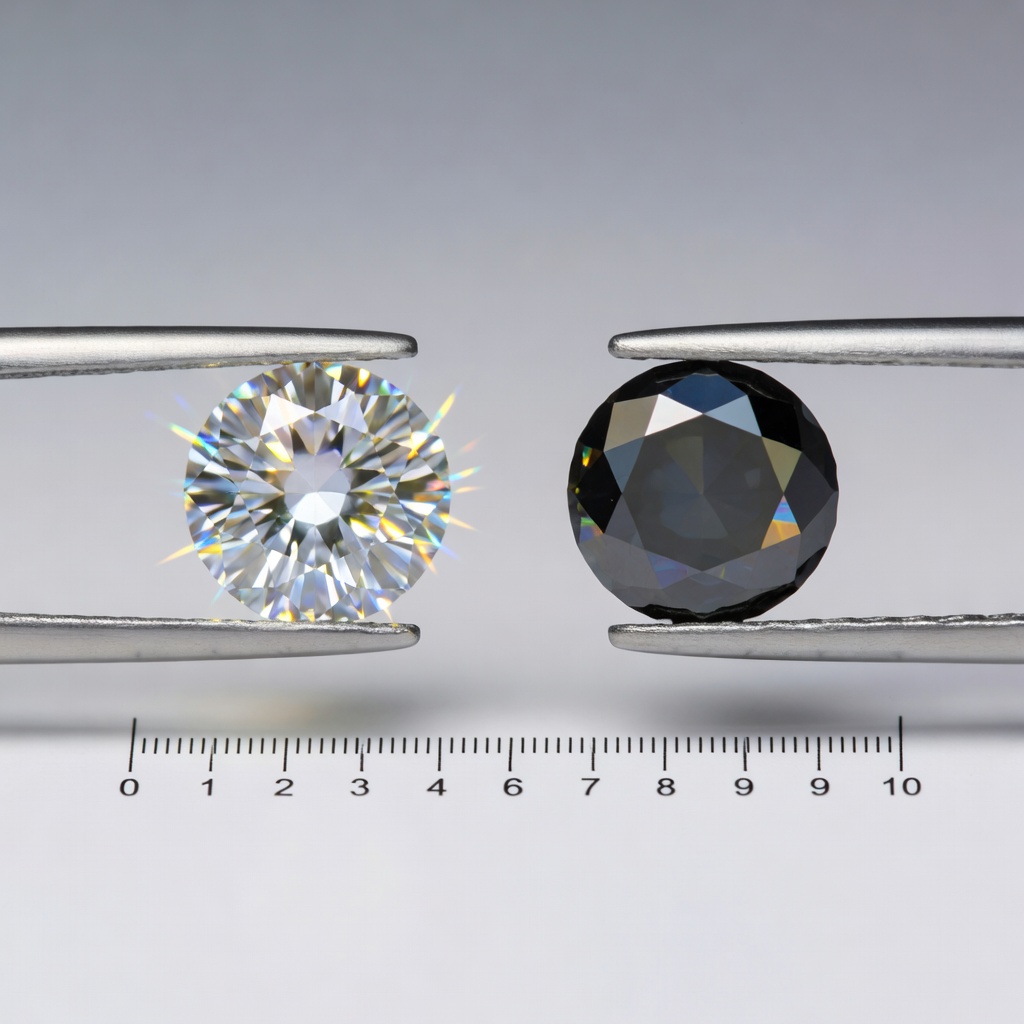
The most critical distinction between these stones lies in their interaction with light, creating fundamentally different visual properties that appeal to different aesthetic sensibilities. While white diamonds refract and disperse light to create that signature sparkle we associate with luxury jewelry, natural black diamonds absorb nearly all incoming light due to their unique composition, resulting in a deep, mysterious appearance rather than brilliant scintillation. This leads many first-time buyers to ask, "are black diamonds real diamonds?" The answer is absolutely yes—both share the same chemical composition of crystalline carbon and register 10 on the Mohs hardness scale, though their formation processes and structural integrity differ significantly. However, prospective buyers should understand that natural black diamonds are extremely rare in the commercial market, with the majority of available black diamonds being color-enhanced through high-energy irradiation or heat treatment processes that create their dark appearance artificially.
Optical Properties and Visual Appeal Compared
The visual experience of wearing a diamond versus a black diamond engagement ring could not be more distinct, representing opposite ends of the light spectrum in gemstone optics. White diamonds exhibit the coveted combination of brilliance (white light reflection), fire (spectral color dispersion), and scintillation (flashes of light) due to their superior light reflection capabilities through precise faceting and a high refractive index of 2.42, making them literal prisms that dance with light with every movement. Master cutters spend years perfecting the art of maximizing these optical properties, calculating exact proportions and angles to ensure that light entering the stone bounces internally before returning to the viewer's eye in a dazzling display.
Black diamonds, conversely, display a unique metallic luster and surface shine rather than internal sparkle, often resembling polished onyx or hematite in their visual presentation. Because these stones absorb up to 99% of incoming light rather than refracting it, their beauty emerges from depth, mystery, and an adamantine surface sheen that creates a bold, contemporary aesthetic. Cut quality impacts white diamonds dramatically, with ideal proportions commanding significant premiums, but matters less for black diamonds since light doesn't penetrate the stone to create internal reflection; cutters instead focus on weight retention and creating interesting geometric shapes that showcase the stone's surface character. Interestingly, due to their depth of color and density, black diamonds appear smaller per carat than white diamonds of identical weight, meaning a 1-carat black diamond will look more petite than its colorless counterpart when viewed from above.
Practical Example: The Engagement Ring Dilemma
Consider Sarah, a graphic designer seeking an engagement ring that reflects her avant-garde aesthetic, compared to Emma, who desires timeless elegance. Sarah chose a 2-carat cushion-cut black diamond set in black rhodium-plated white gold, creating a monochromatic statement piece that draws attention through its unconventional sophistication rather than sparkle. Emma selected a 1.5-carat round brilliant white diamond with excellent cut proportions, ensuring maximum light performance that catches attention across crowded rooms. Both rings cost approximately $8,000, illustrating the black diamond price advantage, yet serve completely different stylistic purposes—Sarah's ring whispers mystery while Emma's sings with brilliance.
The 4Cs Applied to Diamond vs Black Diamond
The traditional framework for evaluating diamonds—Color, Clarity, Cut, and Carat weight—applies differently when comparing white and black diamonds, requiring buyers to adjust their expectations and valuation criteria significantly. Color grading represents perhaps the most dramatic divergence: white diamonds are evaluated on a nuanced D-Z scale where experts detect subtle tints of yellow or brown that dramatically affect value, while black diamonds are simply categorized as "Fancy Black" with no sub-grades, as their opaque nature renders subtle color variations irrelevant. This fundamental difference means that while a D-color white diamond commands astronomical prices compared to a K-color stone, all natural black diamonds exist within the same color category regardless of their specific shade intensity.
Clarity assessment takes on an almost opposite meaning between these varieties, as white diamond value derives from approaching flawlessness where inclusions are considered defects that obstruct light performance. In black diamonds, however, value comes from uniform opacity, and the very inclusions (primarily graphite) that create the black color are not merely tolerated but are actually desirable as the source of the stone's character. The Cut parameter also diverges sharply: white diamonds require ideal mathematical proportions for maximum light performance, with specific table percentages, crown angles, and pavilion depths strictly defined, whereas black diamonds are cut primarily for weight retention and aesthetic shape since light performance isn't a consideration. Perhaps most significantly for budget-conscious shoppers, carat weight impacts black diamond price far less dramatically than white diamonds, with black specimens typically costing 30-50% less per carat than comparable white diamonds, though natural black diamonds still command premiums over treated alternatives.
Durability and Wearability for Daily Use
Both white and black diamonds share the prestigious 10 rating on the Mohs hardness scale, indicating exceptional resistance to scratching that makes them suitable for daily wear in engagement rings and other jewelry subjected to constant handling. However, hardness—resistance to scratching—differs critically from toughness, which measures resistance to breaking or chipping, and this is where black diamond durability concerns emerge for prospective buyers. Black diamonds possess poorer toughness compared to their white counterparts due to their polycrystalline structure and numerous internal cleavage planes where the microscopic crystal formations meet, creating potential fracture points throughout the stone rather than just at the edges.
White diamonds can chip primarily at vulnerable girdle edges or points if struck with sufficient force, but black diamonds are more prone to fracturing throughout the entire stone body if subjected to hard impacts, making them less suitable for wearers with highly active lifestyles or manual occupations. For this reason, jewelry designers recommend protective settings for black diamond engagement rings, such as bezels that encircle the stone completely or halo designs where smaller accent stones provide a protective buffer, while white diamonds thrive in traditional prong settings that maximize light exposure. Maintenance routines also differ between the two varieties, as the dark surface of black diamonds shows fingerprints, skin oils, and dust more readily than white diamonds, requiring more frequent cleaning with mild soap and soft brushes to maintain their dramatic luster and appearance.
Case Study: The Active Lifestyle Choice
Michael, a rock climbing instructor, learned about these durability differences firsthand when his fiancée's black diamond engagement ring developed a small crack after being knocked against climbing equipment, despite the stone's scratch-resistant surface. The couple replaced the ring with a bezel-set black diamond that provided superior protection during outdoor activities, illustrating that while black diamonds resist surface scratches admirably, their internal structure requires thoughtful protection from sharp impacts. This contrasts with his sister's white diamond solitaire, which has survived fifteen years of desk work and social events with only minor prong tightening needed, though it too would have chipped if subjected to similar climbing impacts.
Price Analysis and Investment Value
Understanding the financial implications of choosing between these gemstones requires examining both immediate acquisition costs and long-term value retention in the secondary market. Quality white diamonds (G-H color, VS2 clarity, excellent cut) currently average $5,000-$7,000 per carat in the retail market, with prices increasing exponentially for larger stones due to rarity factors, while natural black diamonds average $1,500-$3,000 per carat for comparable weights. Treated black diamonds offer even more accessible entry points at $300-$500 per carat, making them attractive for fashion jewelry or budget-conscious buyers, though this affordability comes with significant caveats regarding resale potential.
From an investment perspective, white diamonds historically appreciate 3-5% annually depending on market conditions, offering relatively liquid resale markets and standardized pricing through the Rapaport Diamond Report that facilitates transparent valuation. Black diamonds, conversely, experience volatile market demand with limited investment liquidity, particularly for treated stones which carry minimal resale value due to their artificial color origin. Natural black diamonds hold value better than treated ones but still lack the standardized pricing mechanisms of white diamonds, creating both negotiation opportunities for savvy buyers and valuation challenges for sellers. Collectors seeking investment-grade stones should prioritize white diamonds in the near-colorless to colorless range with excellent cut grades, while viewing black diamonds primarily as aesthetic purchases rather than financial instruments.
Jewelry Applications: Engagement Rings and Beyond
White diamonds remain the overwhelming traditional choice for engagement rings, accounting for approximately 87% of the market due to their association with bridal tradition, timeless brilliance, and universal appeal across cultural boundaries. Their versatility allows them to complement any metal choice, though they particularly excel when set in white gold or platinum that enhances their icy brilliance and colorless appearance. Black diamonds create dramatic, unconventional statements in engagement rings, appealing to individuals with alternative, gothic, or avant-garde aesthetics who reject traditional norms while still desiring the durability and prestige of genuine diamond jewelry.
Metal pairing strategies differ significantly between these stones to maximize visual impact. While white diamonds achieve maximum contrast and brightness against white metals, black diamond engagement rings pop strikingly against rose gold, yellow gold, or black rhodium plating that creates cohesive dark aesthetics or dramatic two-tone effects. Current fashion jewelry trends show black diamonds gaining significant popularity in men's wedding bands, stud earrings, and avant-garde designer pieces where their bold presence creates architectural, modern silhouettes. Celebrities including Carmen Electra and Kat Von D have popularized black diamond engagement rings in recent years, gradually shifting public perception and acceptance of these mysterious stones as legitimate centerpieces for serious bridal jewelry rather than mere fashion novelties.
Authenticity, Certification and Treatments
Navigating the black diamond market requires particular vigilance regarding treatments and authenticity, as the vast majority of commercially available black diamonds have undergone color enhancement processes. Reputable laboratories including the Gemological Institute of America (GIA) and International Gemological Institute (IGI) certify natural black diamonds as "Fancy Black" with detailed origin reports, while clearly labeling treated stones as "irradiated" or "heat-treated" to ensure consumer transparency. These certifications matter tremendously because natural black diamonds command prices five to ten times higher than treated alternatives, creating financial incentive for undisclosed treatments in unregulated markets.
Identification tests for distinguishing natural from treated stones require gemological expertise, though educated consumers can observe certain indicators. Natural black diamonds typically show uniform color distribution throughout the crystal structure when examined under magnification, while treated stones may reveal color concentrations near surface-reaching fractures or uneven saturation patterns resulting from the enhancement process. Certification for white diamonds includes detailed 4Cs grading plots showing the location and nature of inclusions, whereas black diamond certificates are necessarily simpler due to opacity preventing detailed internal mapping. Industry experts strongly recommend requesting origin disclosure and laboratory certification when purchasing black diamonds priced over $2,000 per carat to verify natural status and ensure fair value exchange.
Practical Tip: The Loupe Test
When examining a black diamond without laboratory equipment, request viewing through a jeweler's loupe (10x magnification) and look for surface-reaching pits or fractures that appear darker than the surrounding stone, which often indicate treatment in irradiated diamonds. Natural black diamonds should appear uniformly opaque throughout, though their surface may show natural pitting characteristic of carbonado rough. Always purchase from jewelers who provide written guarantees of natural versus treated origin, and consider independent appraisal for stones exceeding $3,000 to verify that the certificate matches the actual gemstone.
Symbolism and Cultural Significance
The symbolic weight carried by these contrasting stones reflects divergent cultural narratives and personal expression philosophies that extend far beyond their physical properties. White diamonds symbolize purity, eternal love, and unbreakable commitment, meanings reinforced by decades of sophisticated De Beers marketing campaigns embedding "A Diamond is Forever" into global consciousness as the ultimate representation of marital devotion. This symbolism has become so entrenched that white diamonds now function as cultural shorthand for traditional romance, success, and social status across Western and increasingly global societies.
Black diamonds carry more complex, multifaceted symbolism centered on power, mystery, individuality, and non-conformity, with historical connections to Italian culture where they represent "amore" and reconciliation between quarreling lovers. Medieval texts occasionally reference black diamonds as protection stones or "vengeance stones" capable of absorbing negative energy, while modern interpretations emphasize their appeal to those seeking bold self-expression and rejection of mainstream expectations. This black diamond meaning resonates particularly with individuals viewing their jewelry as statements of personal identity rather than conformity to tradition. The choice between these stones increasingly represents a philosophical decision between timeless tradition and contemporary individualism, with neither being superior but rather serving different psychological and aesthetic needs.
Comprehensive Comparison: White vs Black Diamonds
| Characteristic | White Diamonds | Black Diamonds |
|---|---|---|
| Chemical Composition | Single-crystal pure carbon | Polycrystalline carbon with graphite inclusions |
| Color Grading | D-Z scale (colorless to light yellow/brown) | Fancy Black (no sub-grades) |
| Light Performance | High brilliance, fire, and scintillation | Absorbs light; metallic surface luster |
| Price per Carat (1ct) | $5,000-$7,000 (G-H, VS2) | $1,500-$3,000 (natural); $300-$500 (treated) |
| Hardness | 10/10 Mohs | 10/10 Mohs |
| Toughness | Good; chips at edges if struck | Fair; prone to internal fracturing |
| Ideal Settings | Prong settings to maximize light entry | Bezel or halo for protection |
| Investment Value | 3-5% annual appreciation; liquid market | Volatile demand; limited resale market |
| Symbolism | Purity, eternal love, tradition | Power, mystery, individuality |
| Maintenance | Quarterly professional cleaning | Weekly cleaning (shows oils readily) |
Pros and Cons Summary: Making Your Final Choice
Selecting between these remarkable gemstones ultimately requires honest assessment of personal values, lifestyle requirements, and aesthetic preferences rather than following prescribed norms. White diamonds offer timeless value, exceptional sparkle that commands attention across rooms, strong resale markets that protect investment capital, and universal desirability that ensures appreciation across generations. However, they demand higher financial outlay, may feel overly traditional to those seeking unique expression, and require careful maintenance to preserve their optical performance over decades.
Black diamonds provide unique aesthetic distinction that guarantees conversation starters, significantly lower price points that allow larger carat weights within modest budgets, identical scratch resistance to white diamonds, and modern appeal that signals contemporary sophistication. Conversely, their brittle nature requires protective settings and cautious wear, they offer limited investment value with minimal appreciation potential, and their lack of traditional sparkle may disappoint those seeking classic bridal brilliance. For brilliance seekers and traditional romantics, white diamonds remain the unequivocal choice, while statement makers and non-conformists will find black diamonds perfectly suited to their expressive needs. Consider also a hybrid approach featuring white diamond center stones with black diamond accents, creating balanced contemporary designs that capture the benefits of both varieties while minimizing individual drawbacks.
Frequently Asked Questions
Are black diamonds real diamonds or a different gemstone?
Black diamonds are absolutely real diamonds composed of crystalline carbon, but their polycrystalline structure contains numerous inclusions (primarily graphite) that make them opaque. Unlike white diamonds formed from single crystals, natural black diamonds (carbonado) consist of millions of tiny diamond crystals fused together. Gemologically, they're classified as 'Fancy Black' diamonds and are just as 'real' as their colorless counterparts, though their formation and appearance differ significantly.
Which is more expensive: black diamonds or white diamonds?
White diamonds are significantly more expensive per carat than black diamonds. A quality 1-carat white diamond (G-H color, VS clarity, excellent cut) typically costs $5,000-$7,000, while a natural black diamond of the same weight averages $1,500-$3,000. Treated black diamonds are even more affordable at $300-$500 per carat. The price gap exists because white diamonds are rarer in gem quality, have higher demand, and possess superior light performance that commands premium pricing in the market.
Can black diamonds be used in engagement rings, and are they durable enough?
Yes, black diamonds work beautifully in engagement rings for those seeking unconventional style, but require specific considerations. While they share the same 10/10 Mohs hardness as white diamonds, their polycrystalline structure makes them more brittle and prone to fracturing from hard impacts. Jewelers recommend protective settings like bezels or halo designs rather than delicate prongs. Black diamonds also show fingerprints and oils more readily, requiring weekly cleaning to maintain their dramatic luster.
Do black diamonds sparkle like regular diamonds?
No, black diamonds do not sparkle in the traditional sense. White diamonds exhibit brilliance (white light reflection), fire (spectral color dispersion), and scintillation (flashes of light) because they're cut to maximize light return. Black diamonds absorb up to 99% of incoming light due to their dense graphite inclusions, so they display a metallic, almost metallic 'adamantine' luster on the surface rather than internal sparkle. Their beauty comes from depth and mystery, not glitter.
How can I tell if a black diamond is natural or treated?
Distinguishing natural from treated black diamonds requires gemological expertise, but key indicators exist. Natural black diamonds show uniform color distribution throughout the crystal structure under magnification, while irradiated or heat-treated stones may have color concentrated near surface-reaching fractures. Always request GIA or IGI certification that clearly states origin. Natural stones are certified as 'Fancy Black' with origin reports, while treated stones must be disclosed as 'irradiated' or 'heat-treated.' For stones over $2,000 per carat, certification is essential.
What is the investment value of black diamonds compared to white diamonds?
White diamonds historically outperform black diamonds as investments. Quality white diamonds appreciate 3-5% annually with liquid resale markets and standardized Rapaport pricing. Black diamonds, particularly treated ones, have limited investment potential due to lower demand, lack of standardized pricing, and minimal resale market. Natural black diamonds hold better value but remain niche. If investment is your primary goal, white diamonds in the G-H, VS2, excellent cut range offer the best balance of liquidity and appreciation.
What do black diamonds symbolize compared to traditional diamonds?
Traditional white diamonds symbolize purity, eternal love, and unbreakable commitment, cemented by decades of marketing. Black diamonds carry more complex symbolism: power, mystery, individuality, and non-conformity. In Italian culture, they represent 'amore' and reconciliation. Medieval texts reference them as 'vengeance stones.' Modern wearers choose black diamonds to express bold, unconventional personalities and reject traditional norms. This makes them perfect for statement pieces and alternative engagement rings.
Which setting styles work best for black diamonds versus white diamonds?
White diamonds excel in prong settings that maximize light entry from all angles, enhancing their signature sparkle. Four-prong and six-prong solitaires are classic choices. Black diamonds perform best in protective settings: bezel settings that encircle the stone, halo designs with white diamond accents that create contrast, or tension settings in robust metals. Metal choice matters too—white diamonds pop in platinum and white gold, while black diamonds create striking contrast in rose gold or black rhodium-plated settings.