Introduction: The Classic vs The Collector's Dream
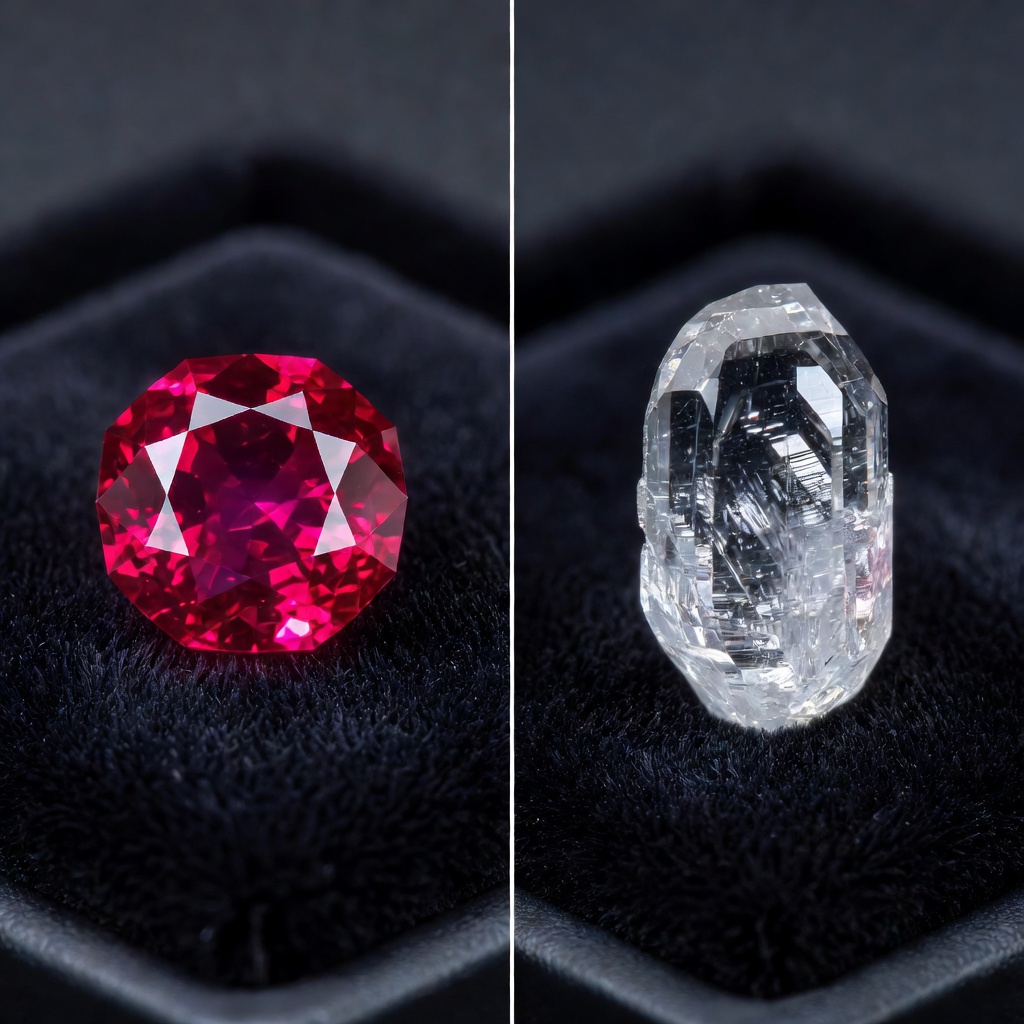
When considering precious gemstones for fine jewelry or investment portfolios, the comparison of Diamond vs Benitoite presents a fascinating study in contrasts. Diamonds have dominated the global jewelry market for over a century, backed by massive marketing campaigns and established as the universal symbol of eternal commitment. Meanwhile, benitoite remains one of the most exclusive secrets in the gemological world, known primarily to serious collectors and connoisseurs who seek rarity over recognition.
This rare gemstones comparison matters because it challenges conventional assumptions about value, durability, and desirability. While diamonds represent accessibility and traditional luxury, benitoite offers something increasingly rare in today's globalized market: true geological exclusivity. As the official California state gem, benitoite carries American heritage significance alongside its scientific rarity, creating a compelling alternative for those who prioritize uniqueness over ubiquity.
Throughout this comprehensive guide, you will discover the critical differences in hardness, brilliance, and investment potential between these two remarkable stones. We will examine why benitoite's extreme scarcity hasn't translated to diamond-level pricing, how their optical properties create distinctly different visual experiences, and which stone best suits your lifestyle, budget, and collecting philosophy.
What is Diamond? The Carbon King
Diamond represents pure carbon crystallized under immense pressure and temperature deep within the Earth's mantle, emerging as the hardest known natural substance with a perfect 10 rating on the gemstone hardness scale. This unique cubic crystal structure allows diamonds to accept exceptional polish and maintain their luster indefinitely, making them the premier choice for heirloom jewelry intended to last generations. Global mining operations across Botswana, Russia, Canada, and Australia extract approximately 130 million carats annually, though only about 20% possess gem-quality clarity and color suitable for jewelry.
The gemstone industry evaluates diamonds through the rigorous 4Cs grading system established by the Gemological Institute of America (GIA). Cut quality determines brilliance and fire, color grades range from D (colorless) to Z (light yellow), clarity assesses internal inclusions and external blemishes, and carat weight directly correlates to rarity and price. For example, a one-carat D-flawless brilliant-cut diamond might command $15,000-$25,000, while a similar-sized stone with visible inclusions and slight yellow tint could cost under $3,000, demonstrating how precise grading affects gemstone investment decisions.
Culturally, diamonds have maintained their status as the ultimate symbol of romance and achievement since the De Beers "A Diamond is Forever" campaign launched in 1947. This marketing mastery created emotional value beyond the material, establishing diamonds as the standard for engagement rings and significant life milestones. Historical crown jewels, celebrity red carpets, and royal collections consistently feature diamonds, reinforcing their position as the ultimate store of value and prestige in the precious stone hierarchy.
What is Benitoite? California's Exclusive Treasure
Benitoite (chemical formula BaTiSi₃O₉) stands as one of the rarest gemstones on Earth, a barium titanium silicate crystallizing in the hexagonal system that produces stunning sapphire-blue to colorless specimens found nowhere else in gem-quality quantities. Discovered in 1907 by prospector James Couch in the remote headwaters of the San Benito River in California, this gemstone remained misidentified as sapphire until 1909 when Dr. George D. Louderback correctly classified it as a new mineral species. The stone's name derives from its type locality in San Benito County, forever linking it to California geological history.
In 1985, the California State Legislature officially designated benitoite as the California state gem, recognizing both its extraordinary beauty and its exclusive American origin story. Unlike diamonds that form in kimberlite pipes across multiple continents, gem-quality benitoite occurs almost exclusively within the serpentinite rocks of the Dallas Gem Mine (also known as the Benitoite Gem Mine), located in the New Idria district of the Diablo Range. This single-source limitation creates extreme scarcity, with the primary commercial mine closing to public production in the early 2000s, leaving only limited sporadic collecting opportunities.
The benitoite rarity factor cannot be overstated in the rare gemstones comparison conversation. While diamond miners unearth millions of carats annually suitable for cutting, the total documented production of facet-grade benitoite since 1907 amounts to merely thousands of carats. Crystals exceeding one carat constitute less than 5% of total finds, and stones surpassing two carats immediately achieve museum-grade status, appearing in institutions like the Smithsonian and the Los Angeles County Museum of Natural History rather than commercial jewelry cases.
Physical Properties: Hardness, Brilliance, and Fire
Understanding the gemstone hardness scale proves essential when comparing these stones for jewelry applications, as diamond's perfect 10 hardness contrasts sharply with benitoite's 6-6.5 rating. This significant difference means diamond can scratch virtually any material including other diamonds, while benitoite remains vulnerable to scratching from everyday objects like steel keys, kitchen countertops, or even accumulated dust containing silica particles. For collectors considering wearability, this hardness differential represents the primary functional distinction between the two gemstones.
However, benitoite brilliance reveals surprising advantages in optical performance metrics. Benitoite possesses a dispersion rate of 0.046, actually exceeding diamond's 0.044, meaning it can separate white light into spectral colors more effectively, creating intense "fire" or rainbow flashes under direct lighting. This high dispersion combines with benitoite's refractive index of 1.757-1.804 (compared to diamond's 2.42) to create a distinctive visual character. While diamond appears brighter overall due to its higher refractive index and better light return, benitoite displays more colorful sparkle, particularly under incandescent lighting or sunlight.
Color variations further distinguish these stones in the blue diamond vs benitoite comparison. Diamonds occur naturally across the entire color spectrum from colorless (D-grade) to fancy vivid blues, pinks, and yellows, with blue diamonds obtaining their hue from trace boron impurities. Benitoite naturally occurs in sapphire-blue (the most valuable), colorless, white, and rarely pinkish or purple hues, with its distinctive color resulting from iron and titanium substitutions within the crystal lattice. The pleochroism phenomenon in benitoite—where the stone appears colorless or pale when viewed from certain crystallographic angles—requires expert cutting orientation to maximize the face-up blue appearance.
| Characteristic | Diamond | Benitoite |
|---|---|---|
| Mohs Hardness | 10 (Highest) | 6-6.5 (Moderate) |
| Dispersion (Fire) | 0.044 | 0.046 (Higher) |
| Refractive Index | 2.42 | 1.757-1.804 |
| Crystal System | Cubic | Hexagonal |
| Primary Sources | Botswana, Russia, Canada, Australia, Africa | San Benito County, California (Single Source) |
| Typical Color Range | Colorless to Fancy Colors (Blue, Pink, Yellow) | Sapphire-Blue, Colorless, Rare Pink |
| Price Per Carat (High Quality) | $2,000 - $50,000+ | $3,000 - $10,000+ |
| Annual Gem Production | ~26 million carats (gem quality) | <100 carats (faceted gems) |
| Best Jewelry Application | Daily wear, Engagement rings | Occasional wear, Collectible pieces |
Rarity and Origins: The Availability Factor
The fundamental scarcity differential between these stones defines their market positions and collector appeal. Diamond mining operations span six continents with industrial-scale extraction using open-pit and underground methods, producing approximately 150 million total carats annually of which roughly 20% qualify as gem-grade material. This global distribution ensures steady supply chains feeding jewelry markets worldwide, with massive corporations like De Beers, Alrosa, and Rio Tinto managing extraction, cutting, and distribution networks that maintain market liquidity.
Conversely, the benitoite mine situation represents geological happenstance of the rarest order. While trace amounts of benitoite have been identified in Japan, Arkansas, and Australia, only the Dallas Gem Mine in California has produced gem-quality crystals suitable for faceting. The mine operated commercially from 1907 through the early 2000s, with intermittent collecting periods since then. During peak production, miners might recover only a few high-quality crystals per month, and the mine's current status allows only limited public fee-digging opportunities rather than commercial extraction.
Size limitations compound benitoite's rarity in ways that fundamentally differ from diamond availability. While diamonds exceeding five carats command premium prices, they remain commercially available through major auction houses and dealers. In contrast, faceted benitoite over two carats constitutes extreme rarities with fewer than two dozen known specimens worldwide. The largest documented faceted benitoite, a 15.42-carat masterpiece, resides in a private collection and would likely command seven figures if offered at auction. This size ceiling means that diamond alternatives like benitoite suit jewelry designs emphasizing intricate detail over bold statement pieces.
Visual Characteristics: Distinguishing Blue from Blue
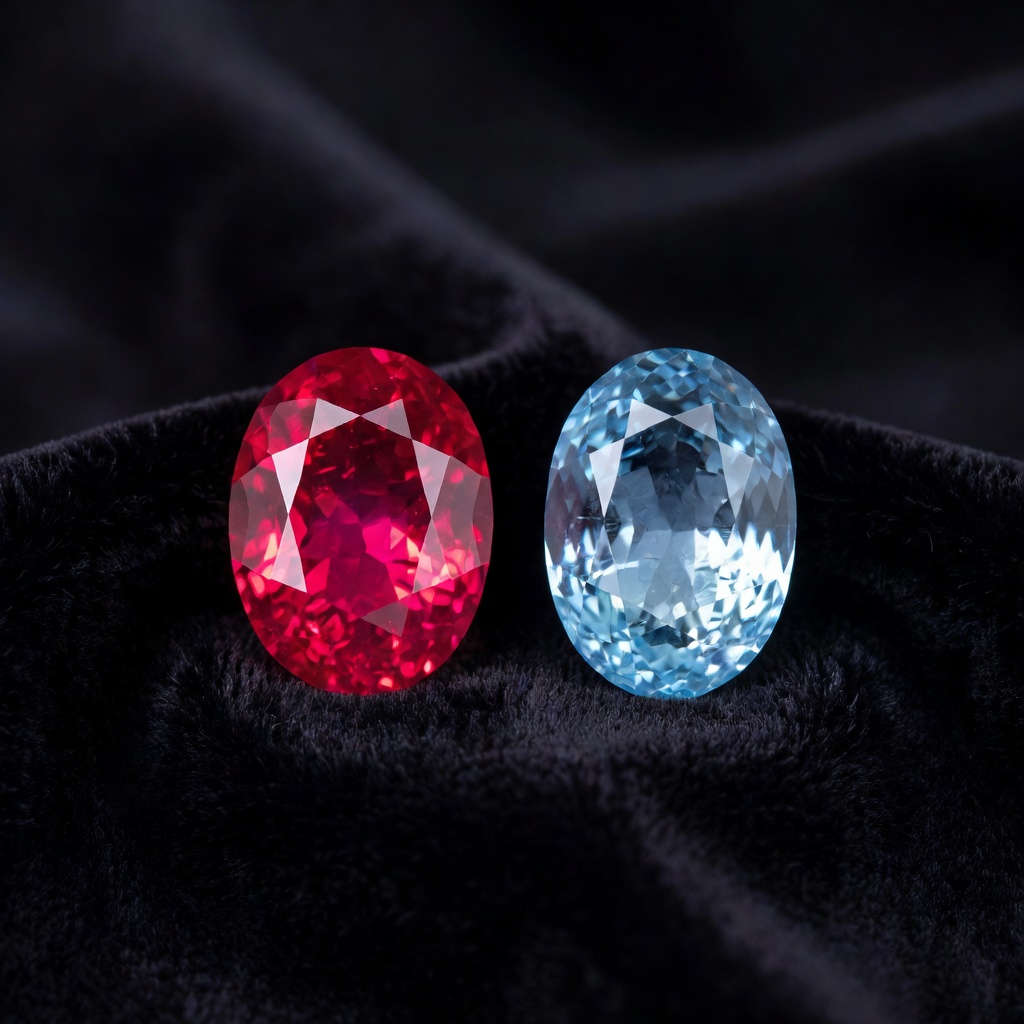
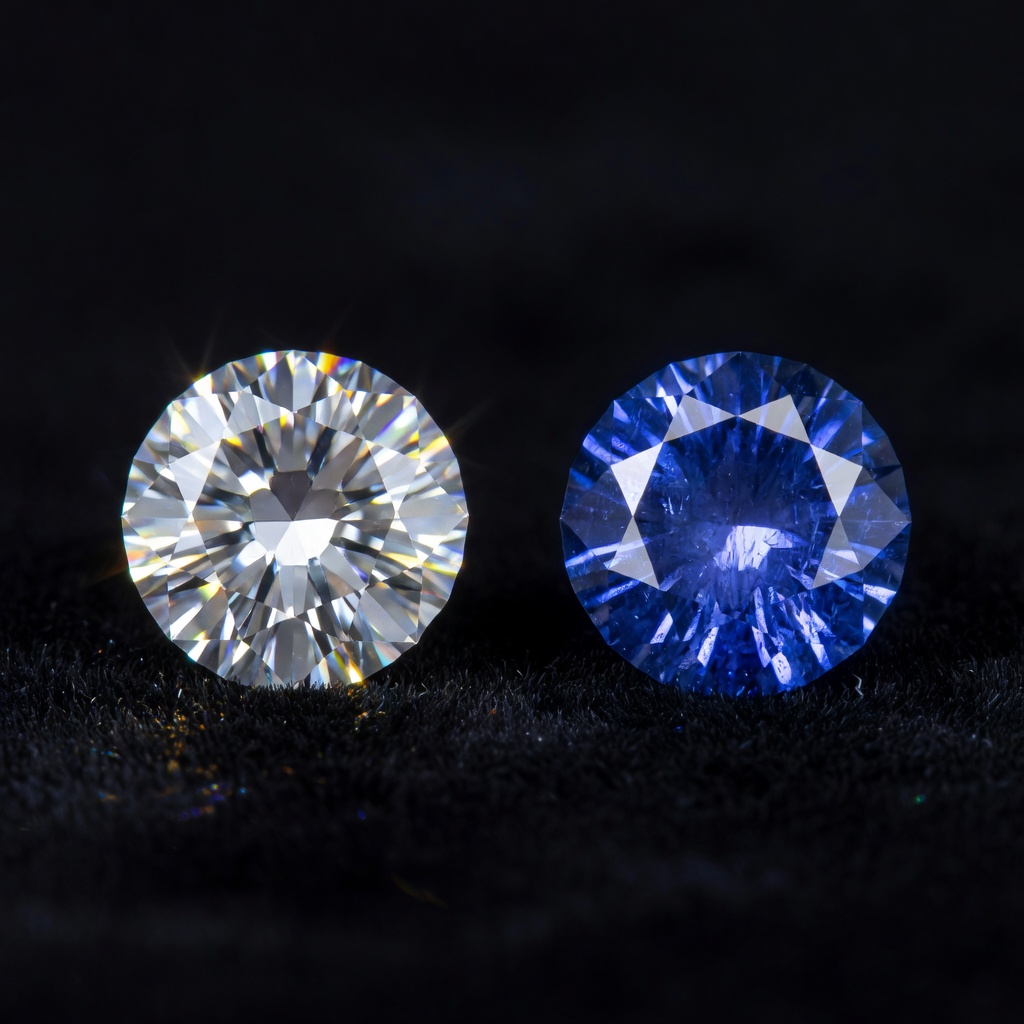
When examining blue diamond vs benitoite specimens side by side, subtle optical differences reveal themselves to the trained eye despite superficial color similarities. Fancy blue diamonds derive their color from boron impurities absorbing yellow light, creating a steely, often grayish-blue appearance in lower grades or vivid electric blue in the rarest Type IIb stones. Benitoite displays a more saturated, velvety sapphire-blue tone caused by charge transfer between iron and titanium ions within the crystal structure, occasionally showing violet undertones absent in blue diamonds.
The phenomenon of dispersion creates distinctly different visual fireworks between these stones. Diamond's fire manifests as discrete flashes of spectral colors against a background of brilliant white light, creating the classic "sparkle" associated with engagement rings. Benitoite's slightly higher dispersion produces more frequent but sometimes softer color separation, giving the stone a "sleepy" or mystical quality under candlelight or incandescent bulbs. This difference becomes particularly noticeable in dim restaurant lighting, where benitoite may actually out-sparkle diamond despite its lower overall brilliance.
Pleochroism presents unique challenges and opportunities when cutting benitoite compared to the isotropic nature of diamond. Because benitoite appears colorless or pale blue depending on viewing angle, lapidaries must orient the table facet perpendicular to the c-axis to maximize face-up color. This constraint limits cutting options and requires sacrificing more rough material than diamond cutting, where orientation matters primarily for maximizing weight retention rather than color optimization. Expert cutters specializing in benitoite often choose modified brilliant cuts or custom designs that protect the stone's vulnerable edges while showcasing its exceptional fire.
Jewelry Applications and Everyday Wearability
For consumers considering a benitoite engagement ring versus traditional diamond settings, practical durability concerns must outweigh emotional preferences. Diamond's unmatched hardness makes it the only gemstone truly suitable for daily wear over decades without showing surface wear, maintaining perfect polish despite constant contact with household surfaces, metal objects, and environmental dust. Wedding rings experience extraordinary mechanical stress through hand-washing, gardening, sports activities, and workplace tasks, environments where diamond thrives but softer stones risk damage.
Benitoite requires protective setting strategies that acknowledge its 6-6.5 hardness rating. Jewelers experienced with this rare stone recommend bezel settings that surround the girdle with metal, protecting vulnerable edges from chipping and impacts. V-prongs offer another protective option for the pointed tips of pear or marquise cuts, though these shapes remain risky for benitoite regardless of setting. Halo designs provide both aesthetic enhancement and physical protection, surrounding the center stone with harder diamond melee that absorbs incidental contact. Unlike diamond rings that tolerate prong settings exposing the girdle, benitoite engagement ring designs must prioritize protection over maximum light exposure.
Maintenance protocols differ significantly between these stones in the diamond vs benitoite care comparison. Diamond rings withstand ultrasonic cleaning and steam treatments that would fracture benitoite due to its cleavage planes and inclusions. Benitoite jewelry requires gentle cleaning using warm soapy water and soft brushes, with immediate removal before physical activities, chemical exposure, or temperature extremes. For collectors seeking diamond alternatives for occasional statement pieces rather than daily wearers, benitoite offers extraordinary beauty that rewards careful handling, but it cannot serve as a direct functional substitute for diamond in high-wear applications.
Price Analysis and Investment Potential
Current market pricing reveals the paradox of rarity versus demand in the benitoite price per carat analysis. Fine blue benitoite specimens ranging from 0.5 to 1.0 carats typically command $3,000 to $6,000 per carat, while exceptional stones over one carat with intense color may reach $8,000 to $10,000+ per carat. This pricing positions high-quality benitoite comparably to mid-range diamonds but significantly below fancy colored diamonds, which can command $50,000 to $500,000+ per carat depending on hue intensity and size.
Market liquidity presents the primary gemstone investment distinction between these options. Diamonds benefit from a robust global resale market with standardized pricing based on Rapaport reports and established dealer networks. An investor can typically liquidate a certified diamond within days through auction houses or dealers, albeit sometimes at 20-40% below retail. Benitoite lacks this liquidity, requiring specialized rare gem dealers or collector networks for resale, potentially taking months or years to find appropriate buyers willing to pay premium prices for extreme rarity.
Long-term appreciation potential favors benitoite for patient collectors willing to hold assets for decades. With the Dallas Gem Mine essentially depleted and no new significant deposits discovered despite extensive geological surveys, benitoite represents a finite resource with increasing scarcity. Historical auction data shows top-quality benitoite appreciating 200-300% over the past two decades, outpacing white diamonds though trailing fancy colored diamonds. For portfolio diversification, sophisticated investors might allocate 5-10% of precious gem holdings to rare American gemstones like benitoite while maintaining diamond positions for liquidity and stability.
Making Your Choice: Collector vs Wearer Priorities
Deciding between Diamond vs Benitoite ultimately requires honest assessment of your lifestyle, values, and intentions for the stone. Active individuals who never remove their jewelry—whether due to professional demands, athletic pursuits, or simple convenience—should select diamond without hesitation, as no other gemstone matches its durability for constant wear. Conversely, those who view jewelry as occasional adornment for special events, or who maintain careful wearing habits, might find benitoite's exclusivity worth the extra precautions.
Budget optimization strategies differ significantly between these options. A $5,000 budget might purchase a modest 0.5-carat diamond with good color and clarity, or a stunning 1-carat benitoite with intense blue color and exceptional fire. For maximum visual impact in cocktail rings or pendant designs where stone size matters more than hardness, benitoite delivers extraordinary presence per dollar spent. However, for pieces intended to become family heirlooms passed through generations of daily wear, diamond's longevity justifies higher initial costs through extended service life.
Symbolic preferences play crucial roles in this decision matrix. Diamonds carry universal recognition as tokens of eternal love and success, communicating status and commitment instantly across cultures. Benitoite offers narrative richness—the story of California mining history, geological uniqueness, and the exclusivity of owning something rarer than diamond. For engagements, a benitoite ring signals unconventional thinking and deep research into gemstone lore, though couples should discuss the practical limitations openly. Serious collectors building diversified portfolios should certainly acquire both, using diamonds as market anchors while benitoite serves as the speculative appreciation component of a balanced rare gem collection.
Frequently Asked Questions
Is Benitoite Rarer Than Diamond?
Yes, gem-quality benitoite is significantly rarer than diamond. While diamonds are mined globally across multiple continents with annual production measured in millions of carats, fine benitoite crystals over 1 carat come almost exclusively from one location in San Benito County, California. The primary Dallas Gem Mine is now closed to commercial production, and the total documented amount of facet-grade benitoite recovered since 1907 amounts to only a few thousand carats compared to billions of carats of diamonds extracted during the same period.
Can Benitoite Be Used in an Engagement Ring Like Diamond?
Benitoite can be used in engagement rings but requires protective settings due to its 6-6.5 hardness on the Mohs scale compared to diamond's perfect 10. It's best suited for occasional wear or protected bezel settings rather than daily wear, whereas diamond is ideal for everyday use without special precautions. Couples choosing benitoite for engagement jewelry should understand that the stone may show surface scratches over time and could chip if struck against hard surfaces, requiring eventual repolishing or replacement.
Why Does Benitoite Cost Less Than Diamond Despite Being Rarer?
Benitoite costs less due to limited market recognition and liquidity rather than intrinsic value. Diamonds benefit from massive marketing campaigns dating back to the mid-20th century, established international grading standards, and a global trading network involving millions of participants. Benitoite appeals mainly to specialized collectors and connoisseurs, creating a smaller, specialized market with lower demand but extreme scarcity. Without the De Beers cartel's pricing influence or the emotional marketing associations that drive diamond demand, benitoite remains undervalued relative to its geological rarity.
What Makes Benitoite Different From a Blue Diamond?
While both can appear blue, benitoite displays higher dispersion (fire) than diamond and exhibits strong pleochroism (appearing colorless from certain angles). Blue diamonds get their color from boron impurities within the carbon lattice, while benitoite's color comes from iron and titanium within its barium titanium silicate composition. Benitoite is also much softer than diamond and exclusively from California, whereas blue diamonds originate from various mines worldwide including the Cullinan mine in South Africa and the Argyle mine in Australia.
Does Benitoite Have More Brilliance Than Diamond?
Benitoite actually has a higher dispersion rate (0.046) than diamond (0.044), meaning it can display more colorful fire under certain lighting conditions. However, diamond has a higher refractive index (2.42 vs 1.76-1.80), giving it more overall brilliance and "life" under light with better light return and scintillation. Both are exceptionally brilliant but display light differently—diamond emphasizes white light return and crisp sparkle, while benitoite produces softer, more frequent rainbow flashes particularly noticeable under incandescent lighting.
Where Can I Buy Authentic Benitoite?
Authentic benitoite should be purchased from reputable gem dealers specializing in rare stones, established auction houses like Bonhams or Heritage Auctions, or directly from the California State Gem Mine (Benitoite Mining Company) during limited public digs. Always request certification from recognized laboratories like the Gemological Institute of America (GIA) or American Gemological Laboratories (AGL) to verify authenticity due to synthetic corundum and glass imitations appearing on the secondary market. Avoid purchasing uncertified stones from general online marketplaces where misidentification is common.
Is Benitoite a Good Investment Compared to Diamond?
Benitoite can be an excellent long-term investment for collectors due to its extreme rarity and finite supply, potentially appreciating faster than white diamonds over extended holding periods. However, it lacks the liquidity of diamonds, which have a robust resale market through dealers and auction houses. Benitoite suits investors willing to hold rare assets for decades rather than seeking quick turnover, and should represent a smaller portion of a diversified gemstone portfolio compared to more liquid diamond holdings.
What Is the Largest Benitoite Ever Found Compared to Diamonds?
The largest faceted benitoite is approximately 15.42 carats (museum quality), while the Cullinan Diamond was 3,106 carats rough before cutting into multiple famous stones including the Great Star of Africa. Most gem-quality benitoite crystals are under 1 carat, with stones over 2 carats considered extremely rare collector's items worth tens of thousands of dollars per carat. In contrast, diamonds over 2 carats, while expensive, are commercially available through high-end jewelers worldwide, with stones over 100 carats appearing regularly at major auction houses.