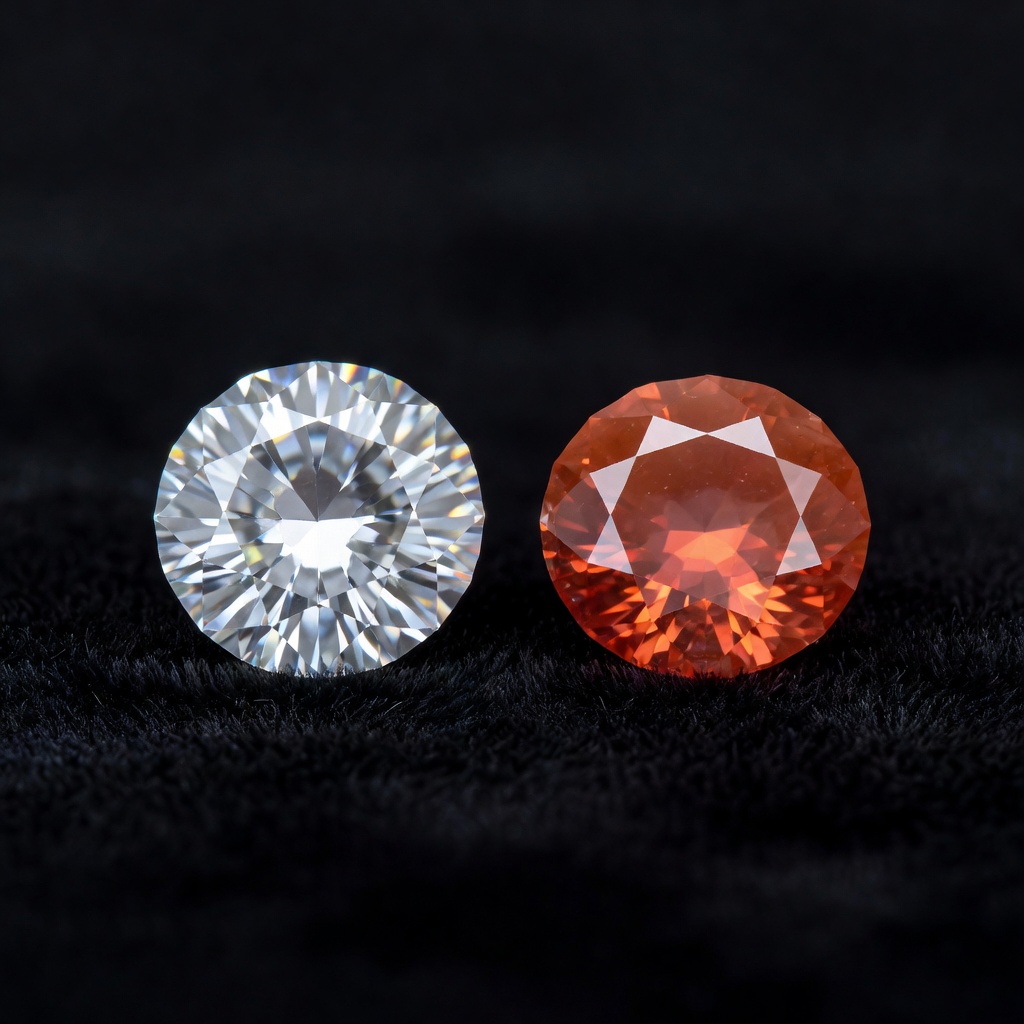
Introduction to Diamond vs Andesine
The world of fine jewelry presents consumers with an ever-expanding array of choices, yet few comparisons prove as intriguing as the diamond vs andesine debate. For generations, diamonds have reigned supreme as the ultimate symbol of eternal love and luxury, commanding premium prices and occupying center stage in engagement rings worldwide. However, modern collectors and budget-conscious buyers are increasingly turning their attention toward andesine, a rare feldspar variety that offers distinctive colorations and accessibility without the astronomical price tags associated with precious diamonds.
This comprehensive gemstone comparison emerges from a growing market segment seeking diamond alternative gemstones that provide visual impact and uniqueness. While diamonds represent the pinnacle of durability and traditional value, andesine captivates with its copper-infused reds and sunset oranges, appealing to those who prioritize individual expression over convention. Understanding the fundamental differences between these two stones requires examining their geological origins, physical properties, and practical applications in jewelry design.
Whether you are selecting a center stone for an engagement ring, investing in collectible gemstones, or simply expanding your jewelry knowledge, comparing these distinct minerals reveals important considerations about durability, maintenance, and long-term value. The following analysis provides detailed insights into how these stones differ across every significant metric, helping you make an informed decision aligned with your lifestyle needs and aesthetic preferences.
Chemical Composition and Geological Formation
Diamonds represent nature's remarkable ability to transform simple carbon into extraordinary crystalline structures through immense geological forces. Formed approximately 100 miles beneath Earth's surface under pressures exceeding 725,000 pounds per square inch and temperatures around 2,000 degrees Fahrenheit, diamonds consist of 99.95% pure carbon arranged in an isometric cubic crystal system. These stones journey to the surface through rare volcanic eruptions via kimberlite pipes, ancient geological channels that act as elevators for these precious minerals, with major deposits found in Botswana, Russia, Canada, and Australia.
Andesine belongs to the plagioclase feldspar mineral group, specifically occupying the intermediate position between albite (sodium aluminum silicate) and anorthite (calcium aluminum silicate) with a chemical formula ranging from NaAlSi₃O₈ to CaAl₂Si₂O₈. Unlike diamonds' deep mantle origins, andesine feldspar forms within volcanic and magmatic environments at relatively shallow crustal depths, typically appearing in basaltic lavas and pegmatite deposits. The stone's name derives from the Andes Mountains, where mineralogists first identified significant deposits, though contemporary gem-quality material primarily originates from the Democratic Republic of Congo and Tibet.
The diamond composition creates unparalleled hardness through strong covalent bonding between carbon atoms, while andesine's silicate framework produces distinct cleavage planes and moderate durability. These fundamental structural differences explain why diamonds survive billions of years and extreme extraction conditions intact, whereas andesine requires more careful handling during mining, cutting, and jewelry setting processes. Understanding these geological distinctions helps collectors appreciate why certain settings and wear patterns suit one stone while potentially compromising the other.
Physical Properties and Durability Analysis
When evaluating gemstones for jewelry applications, hardness and durability stand as primary considerations that directly impact longevity and wearability. Diamonds occupy the apex of the Mohs hardness scale at 10, making them the hardest known natural material capable of scratching any other substance while remaining impervious to damage from daily wear. This exceptional gemstone hardness comparison reveals that andesine durability measures significantly lower at 6 to 6.5 on the Mohs scale, rendering it susceptible to scratches from common materials including steel, quartz particles in dust, and even prolonged contact with other jewelry pieces.
Beyond surface hardness, gemstone toughness—the resistance to breaking and chipping—varies dramatically between these minerals. Diamonds exhibit perfect cleavage in four directions, meaning they can split cleanly if struck at specific angles, though their extreme hardness generally prevents surface scratching. Andesine displays perfect cleavage in two directions and good cleavage in a third, creating multiple planes where the stone may fracture under impact or pressure changes. This characteristic necessitates protective jewelry designs for andesine, whereas diamonds tolerate more exposed setting styles including tension settings and delicate prong configurations.
| Property | Diamond | Andesine |
|---|---|---|
| Mohs Hardness | 10 (Hardest known mineral) | 6-6.5 (Moderate hardness) |
| Refractive Index | 2.42 (Exceptional brilliance) | 1.548-1.555 (Subtle luster) |
| Dispersion | 0.044 (High fire/rainbow flashes) | 0.012 (Low dispersion) |
| Cleavage | Perfect in four directions | Perfect in two directions |
| Specific Gravity | 3.52 | 2.65-2.68 |
| Toughness | Good to excellent | Fair to poor |
| Daily Wear Suitability | Excellent for all jewelry types | Best for occasional wear or protected settings |
| Price per Carat | $3,000-$30,000+ depending on quality | $20-$200 depending on color and treatment |
Practical application of these properties suggests that while diamonds accommodate active lifestyles including manual labor, sports, and daily handwashing without degradation, andesine requires more conscientious wear patterns. For example, a diamond engagement ring survives decades of continuous wear with minimal maintenance, whereas an andesine ring worn during gardening, cleaning, or gym activities would likely accumulate surface scratches and potential chips within months. Jewelry designers recommend bezel settings, halo protections, or pendant designs for andesine to maximize its lifespan while preserving its unique color characteristics.
Color Variations and Visual Characteristics
Diamonds present a fascinating spectrum of color possibilities ranging from the highly prized D-grade colorless stones through faint yellow and brown tints classified as Z-grade, alongside rare fancy vivid colors including pink, blue, yellow, and green that command extraordinary premiums. The diamond color grades system evaluates stones based on the absence of color, with truly colorless diamonds allowing maximum light transmission and refraction, creating the signature brilliance that has captivated jewelry enthusiasts for centuries. Fancy colored diamonds derive their hues from trace elements or structural anomalies during formation—nitrogen creates yellows, boron produces blues, while plastic deformation generates pinks and reds.
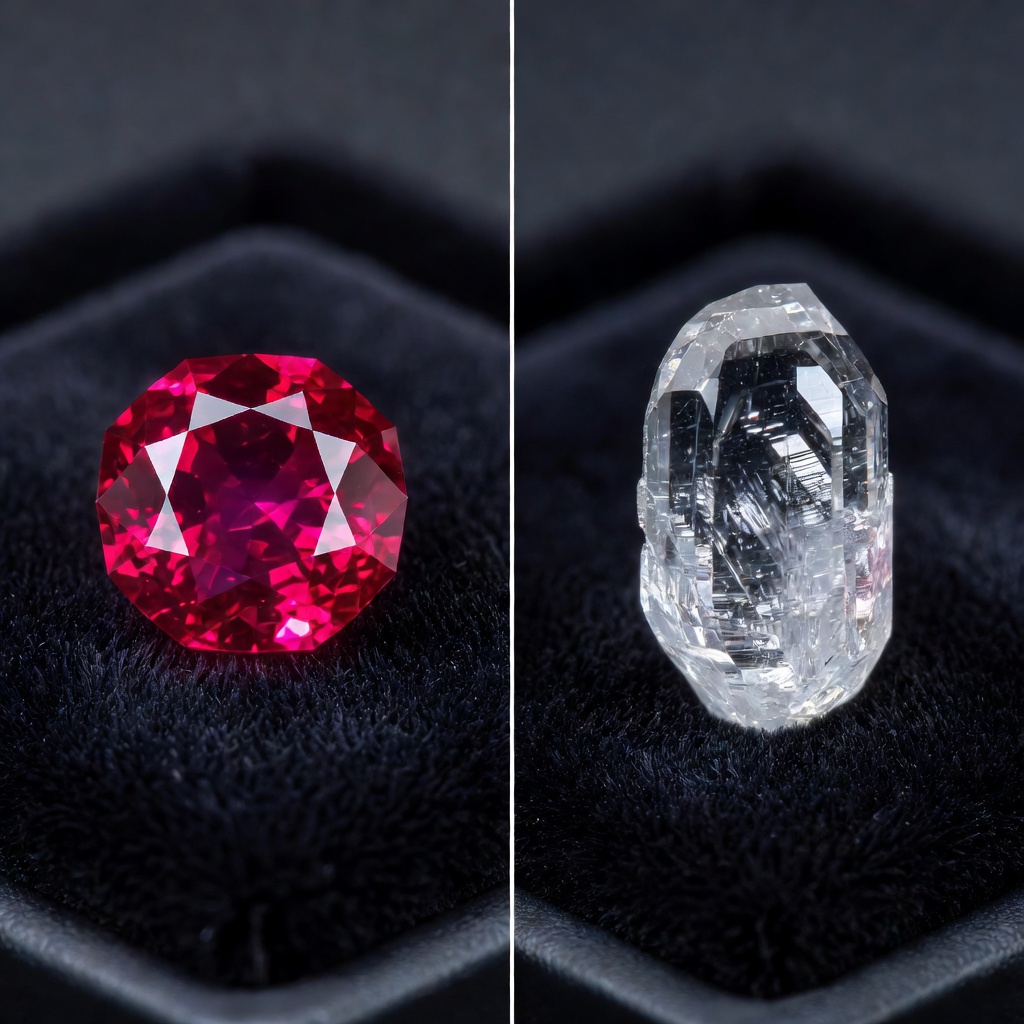
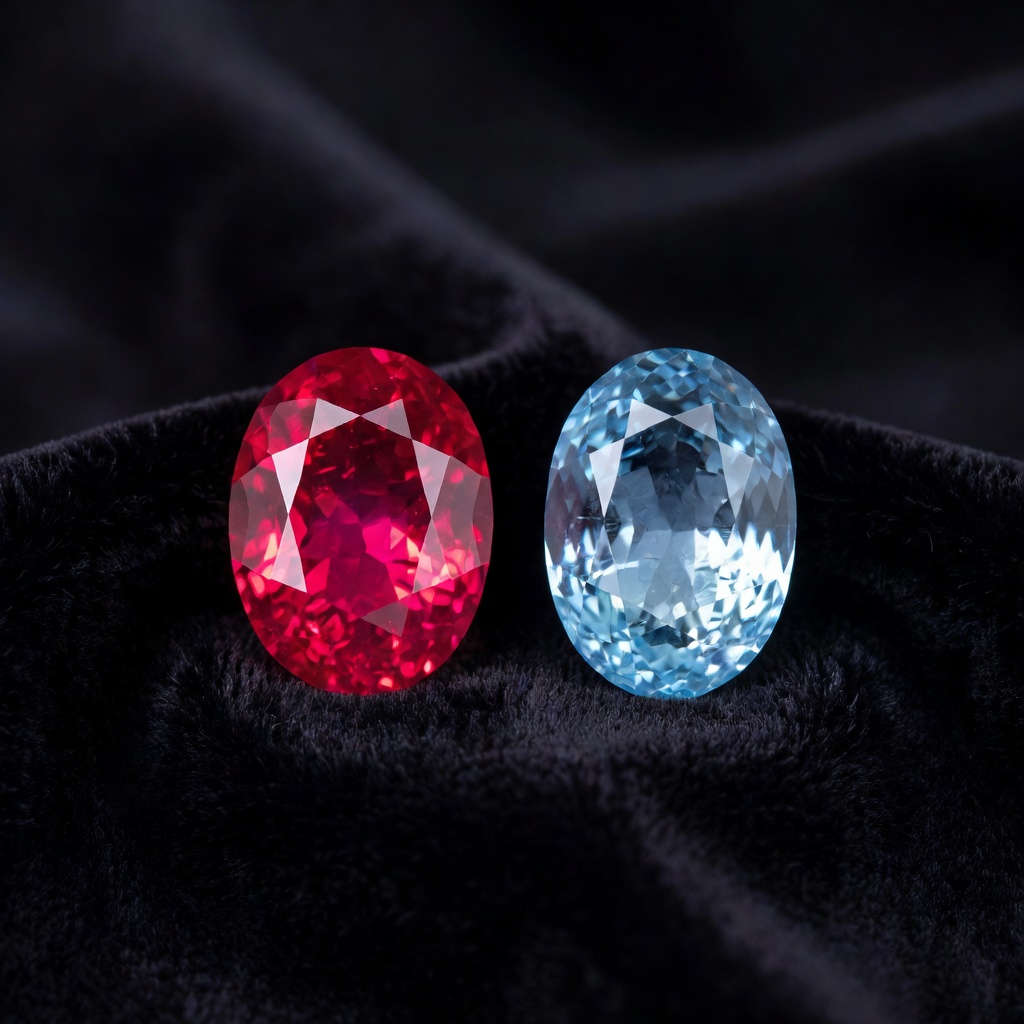
Red andesine and its color variants offer a distinctly different aesthetic appeal centered on body color rather than optical dispersion. Natural andesine occurs in colorless, white, gray, and pale yellow forms, but gem enthusiasts primarily seek the copper-infused red, orange-red, and occasionally green varieties that distinguish this feldspar from common labradorite or sunstone. These warm, sunset-inspired hues result from copper inclusions and specific light interference phenomena within the crystal lattice, creating colors that appear to glow from within the stone rather than reflecting surface light.
Visual differentiation between these gemstones becomes apparent when examining brilliance, fire, and luster. Diamonds exhibit an adamantine luster with exceptional brilliance (white light reflection) and fire (spectral color dispersion) due to their high refractive index of 2.42. Andesine displays a vitreous to pearly luster with significantly less brilliance and minimal fire, relying instead on its saturated body color for visual impact. When viewed side by side, diamonds sparkle with rainbow flashes and mirror-like reflections, while andesine presents a more subdued, glassy appearance with subtle color zoning and occasional schiller effects similar to labradorite but less pronounced.
Rarity, Sourcing and Ethical Considerations
The global diamond industry operates through established mining infrastructures spanning several continents, with major producers including De Beers operations in Botswana, Alrosa mines in Russia, and Canadian Arctic deposits. Modern conflict-free diamonds rely on the Kimberley Process Certification Scheme, established in 2003 to prevent rough diamonds from financing rebel movements against legitimate governments. While this system has reduced the flow of conflict diamonds significantly, ethical consumers increasingly seek stones with blockchain traceability or Canadian origin guarantees to ensure environmental responsibility and fair labor practices throughout the supply chain.
Andesine sources remain more limited and geographically concentrated, with gem-quality material primarily emerging from the Democratic Republic of Congo and the Tibetan region of China. However, the andesine market faces significant authenticity challenges, particularly regarding the controversial copper diffusion treatment process. In 2008, the gemological community discovered that much of the "natural" red andesine entering the market had actually undergone laboratory treatment where colorless or pale feldspar was heated with copper to create the desirable red hues. This revelation sparked debates about disclosure standards and dramatically impacted market confidence in untreated material.
Ethical considerations extend beyond conflict minerals to include environmental mining impacts and treatment disclosure. Diamond mining, while highly regulated in many jurisdictions, involves substantial land disturbance and energy consumption. Andesine mining typically occurs on smaller scales with less environmental footprint, though political instability in some source regions raises concerns about artisanal mining conditions. Consumers should request independent laboratory certifications from reputable institutions like the Gemological Institute of America (GIA) or American Gemological Laboratories (AGL) to verify both the natural origin of color in andesine and the ethical sourcing of diamonds.
Market Value and Investment Potential
The andesine value vs diamond comparison reveals dramatic disparities reflecting differences in durability, market demand, and industrial utility. High-quality diamonds typically command prices ranging from $3,000 to $30,000 per carat for investment-grade stones, with exceptional fancy vivid colors fetching millions at auction. These prices reflect not only aesthetic qualities but also diamond's established role as a store of value, hedge against inflation, and critical industrial material used in cutting, drilling, and high-precision manufacturing applications.
Andesine remains remarkably accessible by comparison, with prices typically ranging between $20 and $200 per carat depending on color intensity, clarity, and whether the stone has undergone copper diffusion treatment. Natural red andesine without treatment commands premium prices potentially reaching $1,000 per carat for exceptional specimens, though such material rarely appears on the general market. This accessibility makes andesine attractive for fashion jewelry and collectors seeking unique colors without substantial financial commitment, though it simultaneously limits the stone's potential as a long-term investment vehicle.
Investment analysts note that diamonds generally retain value better due to liquid secondary markets, standardized grading systems, and consistent global demand driven by cultural traditions surrounding engagement and marriage. Andesine's value remains more volatile, influenced by color trends, treatment controversies, and limited collector recognition. For example, a one-carat VS1 clarity G-color diamond purchased today will likely maintain 50-70% of its retail value upon resale, while andesine typically depreciates significantly unless it represents a rare natural color specimen with documented provenance. Buyers should view andesine as a wearable art purchase rather than a financial investment, whereas high-quality diamonds potentially offer both emotional and monetary returns.
Jewelry Design Applications and Setting Requirements
Diamonds demonstrate unparalleled versatility in jewelry design, accommodating virtually every setting style from delicate micro-pavé bands to bold solitaire tension mounts and intricate vintage-inspired filigree work. Diamond engagement rings benefit from the stone's hardness and toughness, allowing designers to create low-profile settings that sit flush against the finger or elevated cathedral styles that maximize light exposure. Platinum and 18-karat gold provide optimal settings for diamonds, securing these valuable stones while complementing their colorless brilliance or enhancing fancy colored varieties through contrasting metal hues.
Red andesine jewelry requires more thoughtful design considerations to protect the stone's moderate hardness and perfect cleavage. Jewelers strongly recommend bezel settings that wrap the gemstone's perimeter with metal, halo designs featuring diamond accents that provide physical buffering, or pendant and earring formats that minimize impact risks compared to rings. Prong settings, while possible, require thicker, more substantial metal work than those used for diamonds, and andesine rings should feature higher profiles that prevent the table (top surface) from contacting hard surfaces during daily activities.
Metal selection for andesine settings often emphasizes warm tones that complement the stone's natural color palette. Rose gold enhances red and orange andesine varieties, creating cohesive warm aesthetic statements, while yellow gold provides classic contrast that highlights the gem's unique hues. White metals like platinum or white gold suit green andesine varieties but may create stark contrasts with red stones that some designers find jarring. Case studies from custom jewelry designers indicate that andesine works exceptionally well in cocktail rings, statement pendants, and special-occasion earrings where visual impact outweighs concerns about daily durability.
Care, Maintenance and Cleaning Protocols
Maintaining diamond jewelry requires minimal effort thanks to the stone's chemical inertness and extreme hardness. Professional jewelers routinely use ultrasonic cleaners and steam cleaners to restore diamond brilliance, as these methods effectively remove accumulated lotions, oils, and debris without risking damage to the stone. Home maintenance involves simple solutions of warm water and mild dish soap applied with a soft-bristled brush, though owners should periodically inspect prongs and settings to ensure these harder metals haven't worn down from constant contact with the diamond's abrasive surface.
Andesine maintenance demands significantly gentler approaches to preserve surface polish and structural integrity. Owners must avoid ultrasonic cleaners entirely, as the vibrations can exploit cleavage planes and cause internal fracturing or complete stone breakage. Steam cleaning similarly poses risks due to thermal shock potential. Instead, gemstone care for andesine involves lukewarm water with mild soap, using only soft cloths or extremely soft brushes to clean surface debris without scratching the relatively soft surface.
Storage protocols differ substantially between these stones. Diamonds can scratch virtually any other jewelry material, requiring separate storage compartments or individual soft pouches to prevent them from damaging other pieces. Andesine requires protection from harder materials including not only diamonds but also sapphires, rubies, and even quartz-containing dust. Jewelry boxes with fabric-lined individual slots work best, and andesine pieces should never be tossed into mixed jewelry drawers where contact with metal settings or harder gemstones could mar the surface. Travelers should pack andesine jewelry in rigid boxes with padded interiors, whereas diamond jewelry tolerates more compact travel cases provided other stones are protected from the diamond's abrasive nature.
Making Your Decision: Lifestyle and Budget Factors
Selecting between these distinct gemstones ultimately requires honest assessment of your lifestyle, wearing habits, and financial parameters. Active individuals who use their hands frequently for cooking, typing, sports, or manual labor will find diamonds far more suitable for daily-wear pieces, particularly engagement rings or wedding bands worn continuously. Those seeking diamond alternative gemstones primarily for occasional wear—such as cocktail parties, special dinners, or ceremonial events—may find andesine perfectly adequate, provided they accept the responsibility of removing the jewelry before engaging in activities that could expose the stone to impact or abrasion.
Budget considerations extend beyond initial purchase price to include long-term value retention and insurance costs. While diamonds require higher upfront investment, they typically justify comprehensive insurance coverage and maintain substantial resale potential. Andesine's lower price point allows buyers to acquire larger, more visually impressive stones for the same expenditure, creating dramatic presence in statement pieces without the insurance overhead associated with high-value diamonds. For example, a $3,000 budget might secure a modest 0.5-carat diamond of good quality or a spectacular 10-carat andesine with intense coloration, offering very different aesthetic impacts for the same financial outlay.
Symbolic meaning and personal significance increasingly influence modern gemstone selections beyond traditional associations. Diamonds continue representing eternal love, unbreakable commitment, and achievement, while andesine appeals to those valuing individuality, artistic expression, and the uncommon. Collectors drawn to rare feldspar gemstones appreciate andesine's mineralogical story and the conversation-starting uniqueness of copper-red feldspar, whereas traditionalists gravitate toward diamond's timeless prestige and recognized cultural status. Consider whether you prioritize wearing a universally recognized symbol of luxury or expressing distinct personal style through lesser-known but visually striking alternatives.
Frequently Asked Questions
Is andesine a good alternative to diamond for engagement rings?
Andesine is not recommended for daily-wear engagement rings due to its 6-6.5 Mohs hardness compared to diamond's 10. While andesine offers unique red-orange colors at a fraction of the cost, it requires protective settings and careful wear to prevent scratching and chipping.
How can you visually tell the difference between diamond and andesine?
Diamonds exhibit superior brilliance and fire (rainbow flashes) due to higher refractive index, while andesine shows a more glassy luster with subtle color zoning. Andesine typically displays red, orange, or green body color unlike the colorless or yellow tint of most diamonds, and lacks diamond's distinctive adamantine luster.
Is red andesine natural or treated?
Most red andesine on the market has been color-enhanced through copper diffusion treatment. Natural red andesine is extremely rare and commands premium prices. Always request lab certification when purchasing red andesine to verify whether the color is natural or treated.
Why is andesine so much cheaper than diamond?
Andesine costs significantly less due to lower hardness (6-6.5 vs 10), abundant feldspar mineral availability, and limited demand in the luxury market. Additionally, treatment controversies and lack of industrial applications keep andesine prices accessible, typically ranging $20-$200 per carat versus thousands for diamonds.
Can andesine scratch or damage easily compared to diamond?
Yes, andesine can be scratched by everyday materials like steel files, quartz, and even household dust over time, while diamond can only be scratched by another diamond. Andesine's perfect cleavage also makes it prone to splitting if struck, requiring bezel or protective prong settings.
Which gemstone holds its value better, diamond or andesine?
Diamonds historically retain value better due to established grading systems, consistent global demand, and industrial applications. Andesine's value is more volatile due to treatment controversies, limited market recognition, and reliance on color fashion trends, making it less suitable as a long-term investment.
What are the healing properties of andesine compared to diamond?
Crystal practitioners attribute different metaphysical properties to each stone: diamonds are associated with clarity, strength, and invincibility, while andesine is believed to promote creativity, self-awareness, and emotional healing. However, these properties are not scientifically proven.
Where should I buy certified diamond or andesine jewelry?
Purchase diamonds from retailers offering GIA or AGS certification with detailed 4C grading. For andesine, seek sellers providing independent lab reports (GIA, AGL) verifying natural vs treated color origin. Avoid unverified online marketplaces for both stones to ensure authenticity and ethical sourcing.