Introduction: Two Worlds of Brilliance
When exploring the fascinating realm of gemstone jewelry, the comparison between diamond vs amethyst represents one of the most striking contrasts in the mineral kingdom. These two stones occupy fundamentally different positions in the gemstone hierarchy, with diamonds standing as the quintessential precious stone while amethyst serves as the crown jewel of semi-precious varieties. Despite their vastly different market values and physical properties, modern consumers frequently find themselves weighing these options when making significant jewelry purchases, particularly when balancing budget constraints against aesthetic desires and symbolic meaning.
The decision to compare these stones often arises from their shared popularity in birthstone jewelry and engagement ring alternatives, creating an interesting intersection where practicality meets passion. While diamonds command attention through unrivaled brilliance and durability, amethyst captivates with its regal purple hues and accessible price points, making it an attractive option for those seeking color and character without extraordinary expense. Understanding the nuanced differences between these gems requires examining not just their physical characteristics, but also their cultural significance, maintenance requirements, and long-term value propositions.
This comprehensive diamond and amethyst comparison will guide you through every essential factor, from the gemstone hardness scale differences to investment potential, helping you make an informed decision whether you're selecting an April birthstone diamond for a lifelong commitment or considering February birthstone amethyst for personal expression. By exploring their distinct properties side by side, you'll discover which stone aligns with your lifestyle, values, and aesthetic vision.
Physical & Chemical Properties Breakdown
Atomic Structure and Composition
Diamonds represent nature's ultimate creation in carbon chemistry, forming under extreme pressure and temperature conditions approximately 100 miles beneath Earth's surface. Composed of 100% pure crystalline carbon arranged in an isometric cubic crystal system, diamonds create the strongest atomic bonds found in any natural material, giving them unparalleled hardness and thermal conductivity. This unique cubic structure allows light to enter and exit the stone with minimal refraction, creating the spectacular brilliance that has made diamonds the standard for fine jewelry.
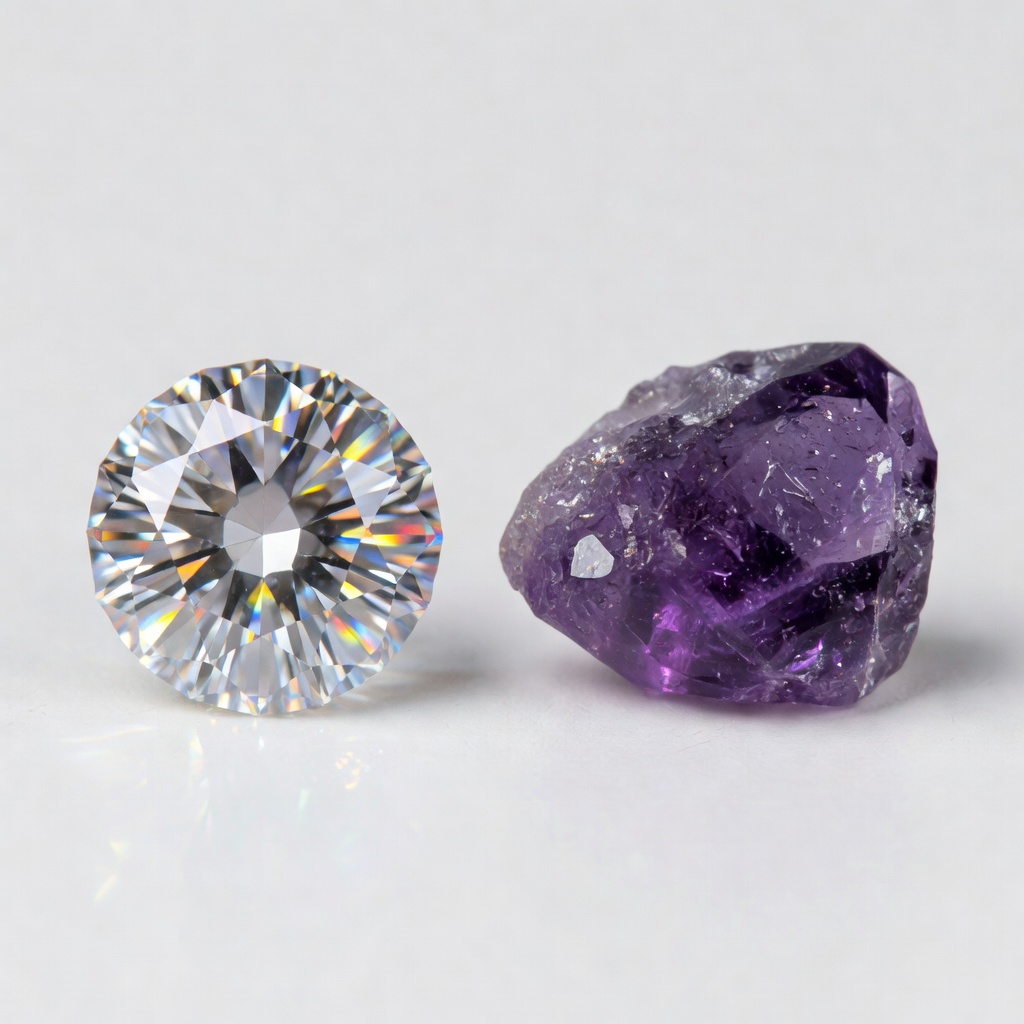
Amethyst, conversely, belongs to the quartz family, chemically composed of silicon dioxide (SiO₂) with trace amounts of iron and aluminum responsible for its distinctive purple coloration. Crystallizing in a hexagonal system, amethyst forms six-sided prisms with pyramidal terminations, often displaying distinctive color zoning where deeper purple concentrations alternate with lighter lilac bands. This hexagonal structure, while beautiful, creates different optical properties and significantly less durability than diamond's compact cubic formation, fundamentally affecting how each stone performs in daily wear situations.
Understanding the Gemstone Hardness Scale
The Mohs scale of mineral hardness provides crucial insight into how these gems withstand daily wear, with diamond occupying the apex position at 10, making it the hardest known natural material. This absolute hardness means diamonds can scratch any other substance while remaining impervious to damage from everyday contact with metals, other stones, or environmental factors, explaining their dominance in engagement rings and daily-wear jewelry. In practical terms, a diamond's hardness ensures that facet edges remain sharp and polished surfaces retain their luster indefinitely, even after decades of continuous wear.
Amethyst registers 7 on the Mohs scale, which, while respectable among gemstones, places it in a vulnerable position for jewelry that experiences regular impact or abrasion. This hardness level means amethyst can be scratched by harder substances including topaz, corundum (sapphire and ruby), and of course diamond, as well as everyday materials like steel files or unglazed porcelain. For jewelry enthusiasts considering amethyst for rings or bracelets, this hardness differential necessitates protective settings and mindful wearing habits to prevent surface damage that would compromise the stone's beauty over time.
Color, Clarity & Visual Characteristics
Diamond Light Performance and Grading
Diamonds exhibit extraordinary optical properties characterized by three distinct light behaviors: brilliance (white light reflection), fire (dispersion of light into spectral colors), and scintillation (the sparkle pattern created by light and dark areas). The Gemological Institute of America grades diamond color on a scale from D (completely colorless) to Z (light yellow or brown), with colorless stones commanding premium prices due to their ability to act as perfect prisms. Clarity assessment involves examining stones under 10x magnification to identify internal inclusions and external blemishes, with flawless diamonds representing extreme rarities that fetch astronomical prices at auction.
Beyond traditional colorless varieties, fancy colored diamonds—including yellows, pinks, blues, and the ultra-rare reds—derive their hues from structural defects or trace elements like nitrogen or boron, often exceeding colorless stones in value when saturation is intense. The cutting process critically impacts a diamond's visual performance, with round brilliant cuts featuring 57 or 58 precisely angled facets designed to maximize light return, while fancy shapes like emerald or oval cuts emphasize clarity and size over pure brilliance. Professional gem cutters must account for a diamond's natural crystal structure and inclusion patterns to determine the optimal cut that balances weight retention with optical excellence.
Amethyst Color Spectrum and Pleochroism
Amethyst color ranges from delicate lilac and lavender to deep, intense violet and reddish-purple, with the most valuable specimens displaying saturated royal purple without visible color zoning or brownish tints. This purple coloration results from iron impurities combined with natural irradiation within the earth, creating the stone's signature hue that has adorned royalty and religious figures throughout history. Unlike diamonds, amethyst exhibits pleochroism, meaning the stone displays different colors when viewed from different angles—typically showing purple and bluish-purple or reddish-purple tones depending on the crystal orientation.
Natural amethyst typically contains inclusions such as liquid-filled cavities, needle-like hematite crystals, or "tiger stripes" of color banding that gemologists use to distinguish natural stones from synthetics. While eye-clean amethyst commands higher prices, collectors sometimes value specimens with interesting inclusion patterns that create unique visual effects, particularly when cut as cabochons or carved into decorative objects. The cutting style significantly impacts amethyst appearance, with step cuts emphasizing the stone's depth of color while brilliant cuts maximize light return, though amethyst cannot match diamond's fire due to its lower refractive index of 1.54 compared to diamond's 2.42.
Value & Pricing: A Dramatic Contrast
The Economics of Diamond Valuation
Diamond pricing follows the internationally recognized 4Cs system—Cut, Color, Clarity, and Carat weight—with prices increasing exponentially rather than linearly as quality improves, creating dramatic jumps between grades. A one-carat, D-color, internally flawless diamond might retail for $20,000 or more, while a similar-sized stone with J color and SI1 clarity could cost merely $3,000-$4,000, illustrating how subtle differences create massive value disparities. This pricing structure reflects genuine rarity, as gem-quality diamonds with perfect color and clarity represent a minute fraction of mined material, combined with sophisticated marketing that has positioned diamonds as essential symbols of wealth and commitment.
The diamond industry maintains controlled supply chains and established certification systems through organizations like the GIA, ensuring that high-quality stones retain recognized value across international markets. However, retail markups significantly affect consumer prices, with traditional jewelry stores often applying 100-300% margins over wholesale costs, though online retailers and wholesale clubs have begun disrupting these traditional pricing models. Investment-grade diamonds typically require minimum specifications—usually one carat or larger, with D-F color and VS clarity or better—to maintain liquidity in secondary markets.
Amethyst Accessibility and Market Dynamics
Amethyst presents a dramatically different value proposition, with fine quality stones typically ranging from $5 to $50 per carat, making them accessible to virtually any jewelry enthusiast regardless of budget constraints. Unlike diamonds, amethyst pricing depends primarily on color saturation and depth, with deep Siberian or Uruguayan purples commanding premium prices while lighter Brazilian material remains inexpensive and widely available. The thousand-fold price difference between these gems stems fundamentally from supply dynamics—while diamonds require specific geological conditions found in limited locations and involve expensive deep mining operations, amethyst occurs in abundant quantities within large geodes that can yield tons of gem-quality material.
This abundance makes amethyst an ideal choice for fashion jewelry, statement pieces, and birthstone jewelry where size and color impact matter more than rarity or investment potential. Large amethyst specimens exceeding ten carats remain affordable, allowing designers to create bold cocktail rings and pendants that would be prohibitively expensive with diamonds. However, collectors seek rare "Deep Russian" amethyst with red and blue flashes, or historic specimens from depleted mines, which can achieve prices exceeding $100 per carat—still modest compared to diamonds but representing significant premiums within the amethyst market.
Birthstone Significance & Symbolism
Diamond: The Eternal Stone of April
As the official April birthstone, diamonds carry profound cultural weight as symbols of eternal love, unbreakable commitment, and invincibility, derived from the Greek word "adamas" meaning unconquerable. This symbolism has been carefully cultivated through centuries of tradition and modern marketing, establishing diamonds as the default choice for engagement rings and significant anniversary gifts in Western cultures. Ancient civilizations believed diamonds possessed supernatural powers, with Hindus placing them in the eyes of deities and medieval Europeans carrying them as talismans against poison, plague, and negative energy, attributing to the stones the ability to amplify positive energies while dispelling evil.
In contemporary crystal healing practices, diamonds represent clarity of thought, abundance, and manifestation, believed to enhance the energy of other crystals and promote fearlessness in the wearer. For those born in April, wearing diamonds supposedly strengthens personal clarity and purpose while providing protection against negative influences, making April birthstone diamond jewelry particularly meaningful for celebrating personal milestones and achievements beyond romantic contexts.
Amethyst: February's Stone of Spiritual Wisdom
February birthstone amethyst carries equally rich but distinctly different symbolism, rooted in ancient Greek mythology where the stone was believed to prevent intoxication—the name deriving from the Greek "amethystos" meaning "not drunk." Greek and Roman nobility would fashion drinking vessels from amethyst or wear the stones during celebrations to maintain mental clarity and prevent overindulgence, a tradition that evolved into representing sobriety and clear-minded decision-making. Medieval Catholic bishops wore amethyst rings to symbolize spiritual wisdom and piety, while Egyptian pharaohs included amethyst in their burial goods to protect them in the afterlife.
Modern metaphysical practitioners associate amethyst with the crown and third-eye chakras, believing the stone enhances intuition, spiritual awareness, and protection against negative energies. Many people choose amethyst for meditation practices or place it in sleeping areas to promote restful sleep and lucid dreaming, valuing the stone for its supposed ability to calm the mind and enhance cognitive function. For February birthdays or those seeking spiritual connection without the expense of diamonds, amethyst offers meaningful symbolism that transcends mere aesthetic appeal.
Jewelry Applications & Design Versatility
Diamond Dominance in Bridal and Fine Jewelry
Diamonds reign supreme in bridal jewelry, where their unmatched durability makes them the only practical choice for engagement rings intended for daily, lifelong wear. The traditional solitaire setting, featuring a single diamond elevated in prongs to maximize light exposure, remains the most popular design, though modern variations include halo settings that surround the center stone with smaller diamonds to enhance perceived size and brilliance. Wedding bands often incorporate channel-set or pavé diamonds to create continuous circles of light, while anniversary bands featuring multiple stones celebrate relationship milestones with increasing carat weights or fancy colored varieties.
Beyond bridal applications, diamonds serve as essential accent stones in high jewelry, their colorless nature allowing them to complement any colored gemstone while adding sparkle and perceived value to pieces. Tennis bracelets, diamond stud earrings, and classic line necklaces represent timeless investments that transition seamlessly from daytime professional settings to evening formal events, justifying their higher cost through versatility and longevity. For those with active lifestyles or careers requiring manual work, diamond jewelry requires minimal removal and maintenance compared to softer gemstones.
Amethyst in Fashion and Alternative Bridal Design
Amethyst shines in fashion jewelry where its vivid purple color creates statement pieces that command attention without commanding exorbitant prices. Cocktail rings featuring large cushion or emerald-cut amethysts surrounded by diamond halos offer dramatic presence at cocktail parties and social events, while amethyst drop earrings frame the face with flattering violet hues that complement both warm and cool skin tones. The stone's relative affordability allows designers to experiment with bold, architectural settings and mixed-metal designs that might be cost-prohibitive with diamonds alone.
For couples seeking engagement ring alternatives that prioritize color and individuality over tradition, amethyst presents an attractive option when set in protective bezels or surrounded by diamond guards that shield the corners from impact. Victorian-era inspired designs often feature amethyst paired with seed pearls or rose gold, while Art Deco styles emphasize geometric cuts and contrasting white diamond accents. However, jewelers typically recommend reserving amethyst rings for occasional wear or ensuring protective settings that prevent the stone from contacting hard surfaces during daily activities.
Combining Diamonds and Amethyst in Complementary Designs
Jewelry designs that combine both stones leverage the strengths of each gem, using diamonds as accent stones to frame and enhance amethyst's purple color while providing structural protection to the softer center stone. This combination appears frequently in birthstone jewelry for couples where one partner has a February birthday and the other April, or in pieces celebrating significant dates in February. The colorless brilliance of diamonds creates striking contrast against amethyst's rich purple, making the colored stone appear more vivid while the amethyst provides the personality and color that all-diamond pieces sometimes lack.
Popular combined designs include three-stone rings with amethyst flanked by diamonds, halo settings where diamonds surround a central amethyst, and alternating tennis bracelets that create a purple-and-white pattern. These pieces offer the prestige of diamonds while keeping overall costs manageable, making them excellent choices for right-hand rings, graduation gifts, or "push presents" that celebrate new beginnings without the solemnity of bridal jewelry.
Durability, Care & Maintenance Requirements
Diamond Maintenance: Effortless Longevity
Diamond jewelry requires remarkably little maintenance to retain its beauty, thanks to the stone's chemical inertness and resistance to scratching, heat, and most household chemicals. Professional jewelers routinely clean diamond pieces using ultrasonic cleaners that vibrate away accumulated dirt and oil from behind the stone, while steam cleaning removes stubborn residues without damaging the gem or setting. Home maintenance involves simple soaking in warm water with mild dish soap followed by gentle brushing with a soft toothbrush, making diamond care accessible for weekly maintenance routines that keep stones looking their best.
Despite their hardness, diamonds can chip if struck at vulnerable points along cleavage planes, particularly pointed shapes like marquise or pear cuts, though such damage is rare with normal wear. Annual professional inspections ensure that prongs remain tight and settings secure, preventing stone loss that represents the primary risk for diamond jewelry. Unlike many gemstones, diamonds never fade, cloud, or change color with sun exposure, ensuring that heirloom pieces maintain their original appearance across generations when properly cared for.
Amethyst Care: Protecting Your Purple Investment
Amethyst demands more attentive care due to its sensitivity to light, heat, and chemicals, requiring owners to adopt specific habits to preserve the stone's vibrant color. Prolonged exposure to direct sunlight or high heat can cause amethyst to fade permanently, turning rich purple stones into pale lilac or grayish shadows of their former selves, necessitating storage in jewelry boxes away from windows and removal before sunbathing or sauna use. Thermal shock presents another risk, as sudden temperature changes can cause internal fractures, meaning amethyst should never be cleaned with boiling water or steam cleaners that jewelers use for diamonds.
Chemical exposure including chlorine, bleach, and even prolonged contact with cosmetics or hairspray can damage amethyst surfaces or affect color stability, requiring removal before swimming, cleaning, or applying beauty products. Gentle cleaning involves lukewarm water with mild soap and a soft cloth rather than brushes that might scratch the surface, with monthly cleaning sufficient for pieces worn regularly. For amethyst rings, consider removing the jewelry during physical activities, gardening, or household chores to prevent both impact damage and chemical exposure, essentially treating the stone as "special occasion" wear rather than daily equipment.
Rarity, Mining & Ethical Sourcing
Diamond Mining and Conflict-Free Certification
Natural diamonds originate from kimberlite pipes and alluvial deposits in specific geological regions, with major production concentrated in Russia (Alrosa), Botswana (Debswana), Canada, and Australia, each location producing stones with slightly different characteristic inclusions and crystal habits. The Kimberley Process Certification Scheme, established in 2003, attempts to prevent conflict diamonds—stones mined in war zones and sold to finance armed conflict—from entering legitimate markets, though the system faces criticism for loopholes and limited enforcement. Canadian diamonds often command premiums due to strict environmental regulations and the CanadaMark program that tracks stones from mine to market, ensuring ethical labor practices and minimal ecological disruption.
Lab-grown diamonds have emerged as ethical alternatives, created using High Pressure High Temperature (HPHT) or Chemical Vapor Deposition (CVD) methods that produce chemically identical stones without mining impacts. These sustainable options typically cost 30-40% less than natural diamonds while offering guaranteed conflict-free origins, appealing to environmentally conscious consumers who still desire diamond properties. However, natural diamonds generally retain better resale value than lab-grown alternatives, creating a decision point between ethical sourcing and investment considerations.
Amethyst Abundance and Geographic Sources
Amethyst occurs in abundant quantities within volcanic rock cavities called geodes, with primary sources including Brazil (producing the majority of commercial material), Zambia (known for deep, saturated colors), Uruguay (famous for intense "grape jelly" purples), and South Korea. Unlike diamond mining, which involves moving tons of rock per carat recovered, amethyst geodes can yield hundreds of pounds of gem-quality crystals from single cavities, explaining the stone's accessibility and affordable pricing. Artisans in regions like Brazil and Uruguay have developed sophisticated techniques for cutting geodes into cathedral-like display pieces, jewelry, and home décor items that showcase the stone's natural beauty.
Ethical concerns in amethyst mining generally focus on small-scale artisanal mining operations in developing countries, where fair-trade initiatives work to ensure miners receive living wages and safe working conditions. The relatively low value of amethyst compared to precious gems means less incentive for funding conflicts through its trade, though environmental concerns regarding land use and water pollution remain relevant. Consumers seeking ethically sourced amethyst should look for dealers who provide provenance information or support fair-trade cooperatives that reinvest mining revenues into local community development.
Investment Potential & Resale Value
Diamonds as Investment Vehicles
High-quality diamonds have historically served as portable wealth stores and inflation hedges, with certified stones from reputable labs like GIA or AGS maintaining liquid secondary markets through auction houses and diamond bourses. Investment-grade diamonds typically require minimum specifications: round brilliant cuts over one carat, D-F color grades, IF-VVS clarity, and excellent cut grades, with fancy colored diamonds (particularly pinks and blues) showing remarkable appreciation due to mine depletion and increasing rarity. However, retail consumers rarely achieve investment returns due to significant markups at purchase; a diamond bought for $10,000 at retail might wholesale for only $3,000-$4,000, meaning appreciation must exceed 150% merely to break even.
Market trends show increasing interest in colored diamonds as mines like Argyle (source of 90% of pink diamonds) close, while white diamond prices remain relatively stable with modest annual increases. For those considering diamonds as investments, buying through wholesale channels or estate sales rather than retail stores improves potential returns, though liquidity remains challenging compared to stocks or bonds. Diamonds offer tangible, portable assets that provide psychological security during economic uncertainty, even if their financial returns underperform traditional investments.
Amethyst Collectibility and Market Limitations
Amethyst generally performs poorly as an investment vehicle due to abundant supply and limited secondary markets, with most specimens depreciating immediately upon purchase similar to automobiles or electronics. However, exceptions exist for exceptional specimens including deep Russian or Siberian amethysts from depleted mines, unusual crystal formations with perfect terminations, or historic pieces with documented provenance from royal collections. These collector-grade specimens might appreciate modestly over decades but remain illiquid assets requiring specialized buyers and auction venues focused on mineral specimens rather than jewelry.
The gemstone investment landscape favors rarity and durability, placing amethyst at a significant disadvantage compared to diamonds, rubies, sapphires, and emeralds. While a stunning amethyst necklace might bring joy for generations, families should not expect these pieces to fund retirements or serve as emergency assets. Instead, the value of amethyst lies in its wearability and aesthetic pleasure rather than financial appreciation, making it a consumption good rather than an investment asset despite its beauty and historical significance.
Final Verdict: Which Gemstone Is Right for You?
Selecting between diamond or amethyst ultimately depends on your specific needs, lifestyle, and values, with neither stone being universally superior but rather suited to different applications and priorities. The following comparison table summarizes the key factors to consider when making your decision:
| Characteristic | Diamond | Amethyst |
|---|---|---|
| Mohs Hardness | 10 (Maximum hardness) | 7 (Moderate hardness) |
| Price per Carat | $2,000 - $20,000+ | $5 - $50 |
| Birthstone Month | April | February |
| Primary Symbolism | Eternal love, commitment, strength | Clarity, spiritual wisdom, sobriety |
| Daily Wear Suitability | Excellent - requires minimal care | Limited - requires protection |
| Investment Potential | Moderate to high (certified stones) | Low (consumption good) |
| Color Range | Colorless to fancy colors | Lilac to deep violet |
| Cleaning Method | Ultrasonic, steam, or soap safe | Lukewarm water and mild soap only |
| Best Jewelry Application | Engagement rings, daily wear | Fashion jewelry, occasional wear |
| Light Performance | Exceptional brilliance and fire | Moderate sparkle, rich color |
Decision Framework for Different Needs
Choose diamond if you seek a lifetime bridal symbol that withstands daily wear without compromise, view jewelry as a potential store of value, prefer subtle elegance over bold color, or require a stone that tolerates ultrasonic cleaning and active lifestyles without special precautions. Diamonds suit individuals who prioritize durability and tradition over budget constraints, and who view their jewelry as heirlooms intended to last for generations without degradation.
Select amethyst if you desire expressive color and personal style at accessible price points, need February birthstone jewelry, appreciate spiritual or metaphysical symbolism, or want statement pieces that don't require mortgage-level financing. Amethyst works beautifully for right-hand rings, pendants, earrings, and bracelets that experience less impact than rings, appealing to fashion-forward individuals who enjoy rotating their jewelry collections seasonally without worrying about massive depreciation.
Personal Style and Practical Considerations
Modern brilliance versus regal color represents the fundamental aesthetic choice between these stones, with diamonds offering timeless versatility that pairs with any wardrobe while amethyst provides distinctive personality and purple sophistication. Consider your daily activities carefully—if you work with your hands, engage in sports, or prefer never removing your jewelry, diamond's durability justifies its cost; if you work in professional environments where you can remove rings during manual tasks and value color coordination with clothing, amethyst offers beautiful options.
For those torn between the two, consider mixed designs that feature both stones, allowing you to enjoy diamond's durability as protective accents around a central amethyst, or alternate between pieces depending on occasion. Ultimately, the right choice honors your personal values, whether that means the eternal commitment symbolized by April's birthstone or the spiritual clarity associated with February's purple gem.
Frequently Asked Questions
Which is more expensive, diamond or amethyst?
Diamonds are exponentially more expensive, typically costing $2,000-$20,000+ per carat for quality stones, while fine amethyst ranges from $5-$50 per carat. This 100-1000x price difference reflects diamonds' rarity, marketing, and status as precious gems versus amethyst's abundance as a semi-precious stone.
Can amethyst be used in an engagement ring?
Yes, but with important considerations. Amethyst's Mohs 7 hardness makes it vulnerable to scratching and chipping with daily wear. Choose protective settings like bezels or halos, avoid wearing during physical activities, and be prepared for potential stone replacement every 5-10 years. For active lifestyles, diamond is the superior choice for longevity.
What's the hardness difference between diamond and amethyst?
Diamond is the hardest natural material at 10 on the Mohs scale, making it extremely scratch-resistant. Amethyst rates 7 on the Mohs scale, meaning it's significantly softer and can be scratched by everyday substances like steel (5.5-6.5) or quartz (7). This hardness gap dramatically affects durability and long-term wearability in jewelry.
Do diamonds and amethysts have different meanings?
Yes, culturally and symbolically. Diamonds represent eternal love, strength, and commitment, making them traditional for engagement rings. Amethyst is February's birthstone, historically believed to prevent intoxication and promote clarity of mind. In crystal healing, amethyst is associated with spiritual wisdom and protection, while diamonds amplify energy.
Can you wear diamond and amethyst jewelry together?
Absolutely. Diamonds' colorless brilliance beautifully complements amethyst's rich purple hues. Many jewelry designs feature diamond accents around a central amethyst or alternating stones in eternity bands. This combination offers visual contrast while keeping costs lower than all-diamond pieces, making it popular for fashion and right-hand rings.
Which gemstone is better for daily wear?
Diamond is superior for daily wear due to its unmatched hardness (10/10) and resistance to scratching, chemicals, and thermal shock. Amethyst requires more careful handling—remove before household cleaning, gardening, or exercise. For jewelry worn constantly like wedding rings, diamond is the practical lifetime choice; reserve amethyst for occasional wear or well-protected settings.
How can I tell a diamond apart from an amethyst?
Use these quick tests: 1) Hardness - diamond scratches glass easily while amethyst struggles. 2) Brilliance - diamonds show rainbow 'fire' while amethyst displays purple flashes. 3) Fog test - breathe on the stone; diamond clears instantly due to heat conductivity, amethyst fogs for seconds. 4) Professional gemological testing measures refractive index (diamond 2.42, amethyst 1.54).